
Entry Nos. 3700–3799
99 Garrison-Morton entries in this range.
1911 –1912
#1047
On the chemical nature of the substance which cures polyneuritis in birds induced by a diet of polished rice.
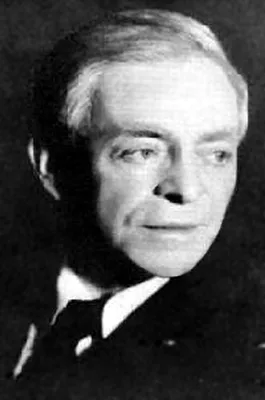
One of the earliest attempts to isolate what later became known as vitamin B1.See No. 1051. Funk determined the chemical nature of the substance in rice polishings which could cure beriberi.
1926
#1058
Antineuritische Vitamine.
Isolation of vitamin B1 (aneurine, thiamine), lack of which is a cause of beri-beri.
1936
#1073
Synthesis of vitamin B1.
Synthesis of aneurine.
1938
#1077
The isolation and identification of the anti-black tongue factor.
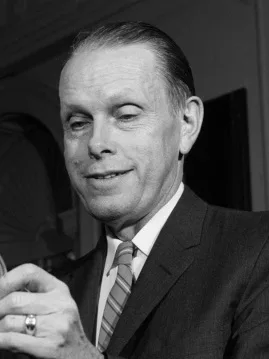
Isolation of nicotinic acid, the pellagra-preventing factor (Vitamin B3). With R. J. Madden, F. N. Strong, and D. W. Woolley.
1910
#1123
Innere Sekretion.
Biedl showed that the adrenal cortex is essential for life. His classic work shows the rapid development of the knowledge concerning endocrinology. In 1890 there were few publications dealing with internal secretion, …
1762
#1771
Historia natural, y medica de el Principado de Asturias.
The first recognizable description of pellagra is included on pp. 327-60 of this book, which was written in 1735 but not published until 1762, after the writer’s death. He called the disease mal de la rosa. Reprinted,…
1617
#2144
The surgions mate, or, A treatise discouering faithfully and plainely the due contents of the surgions chest: the uses of the instruments, the vertues and operations of the medicines, the cures of the most frequent diseases at sea: namely, wounds, apostumes, vlcers, fistulaes, fractures, dislocations, with the true maner of amputation, the cure of the scuruie, the fluxes of the belly, of the collica and illiaca passio, tenasmus, and exitus ani, the callenture; with a briefe explanation of sal, sulphur, and mercury; with certaine characters, and tearmes of arte.
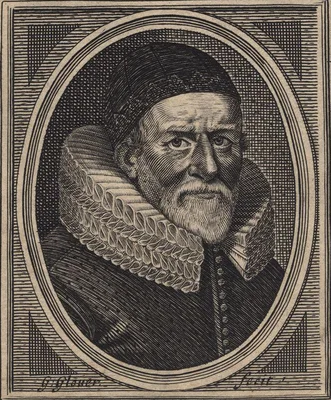
Woodall was the surgeon-general to the East India Company. This was the first textbook for naval surgeons. Woodall, surgeon to Saint Bartholomew's Hospital, was an early advocate of limes and lemons as a preventive me…
1785
#2158
Observations on the diseases incident to seamen.
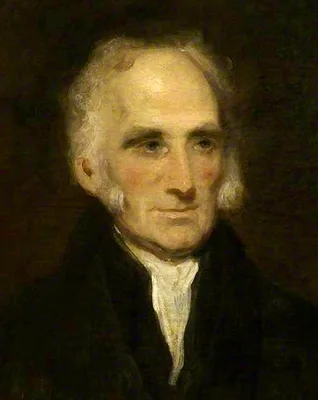
William Hunter recommended Blane as private physician to Admiral Rodney; Blane sailed with him to the W. Indies and became physician to the British Fleet. He was held in great esteem in the navy and was instrumental i…
1623
#2262.1
Tratado de las siete enfermedades, de la inflammacion universal del higado, zirbo, pyloron, y riñones, y de la obstrucion, de la satiriasi, de la terciana y febre maligna, y passion hipocondriaca. Lleva otros tres tratados, del mal de Loanda, del guzano, y de las fuentes y sedales.
The first important work on tropical diseases. Only six copies of the original edition of this book are known. It includes full accounts of malaria, typhoid, and scurvy, and the first accurate descriptions of yellow f…
1642
#2263
De medicina Indorum.
Bontius was probably the first to regard tropical medicine as an independent branch of medical science. He spent the last four years of his life in the Dutch East Indies, and his book incorporates the experience he ga…
1893
#2623
Ueber Lympho-Sarkomatosis.
Kundrat separated lymphosarcoma (“Kundrat’s disease”) from other malignant tumors involving the lymphatic system.
1866
#3119
Ein Fall von Anaemia splenica bei einem Kinde
First reported case of (infantile) splenic anemia.
1882
#3127
De l’epithélioma primitif de la rate; hypertrophie idiopathique de la rate sans leucémie.
“Gaucher’s disease” – familial splenic anemia. Digital facsimile from wellcomecollection.org at this link.
1935
#3700
Die Zahnheilkunde im achtzehnten Jahrhundert.
1945
#3701
Die Zahnheilkunde im neunzehnten Jahrhundert.
1948
#3702
A history of dentistry. 2nd edition.
1948
#3703
An introduction to the history of dentistry. 2 vols.
The first volume covers the history to 1800; the second deals solely with the history of dentistry in America.
1949
#3704
A dental bibliography: British and American, 1692-1880.
1952
#3705
Old instruments used for extracting teeth.
1927
#3706
Avitaminosen und verwandte Krankheitszustände. Edited by W. Stepp and P. György.
Digital facsimile from Google Books at this link.
1938
#3707
Riboflavin deficiency in man; a preliminary note.
Ariboflavinosis
1939
#3708
Methods for assessing the level of nutrition of the human subject: estimation of vitamin B1 in urine by the thiochrome test.
Wang’s test for avitaminosis.
1946
#3709
The vitamins in medicine.
4th edition, 2 vols, 1980.
1564
#3710
De magnis Hippocratis lienibus, Pliniique stomacace, ac sceletyrbe, seu vulgo dicto scorbuto, libellus.
Jean de Joinville was probably the first, about 1250, to describe scurvy; Vasco da Gama noted its occurrence at sea, and Jacques Cartier mentioned it. Ronsse gave an early medical account describing how sailors cured …
1753
#3713
A treatise of the scurvy.
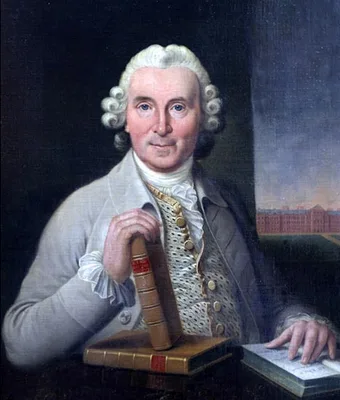
Lind, founder of naval hygiene in England, wrote a classic treatise on scurvy, in which he described many important experiments he made on the disease. These experiments have been called “the first deliberately planne…
1776
#3714
The method taken for preserving the health of the crew of H.M.S. the Resolution during her late voyage round the world. In: Sir John Pringle, A discourse upon some late improvements in the means for preserving the health of mariners.
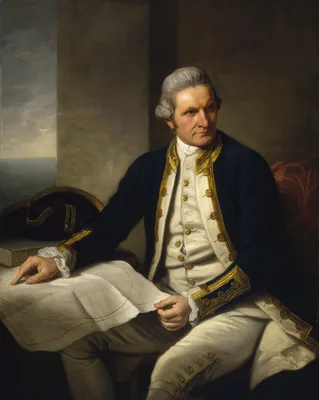
Following the scurvy-preventing suggestions of James Lind, Cook lost only one man to disease on his second voyage from 1768-1771. Reprinted in Phil. Trans., 1776, 66, 402-06. See No. 2156.
1786
#3716
Observations on the scurvy.
1836
#3717
Der Scorbut in geschichtlich-literarischer, pathologischer, prophylactischer und therapeutischer Beziehung.
1859
#3718
Ueber akute Rachitis.
Möller was the first to describe the acute form of rickets combined with scurvy now associated with the name of Barlow (No. 3720).
1878
#3719
Three cases of scurvy supervening on rickets in young children.
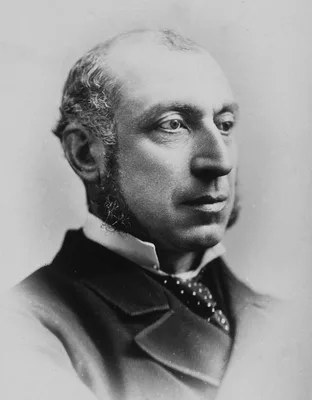
Infantile scurvy was confused with rickets until Cheadle differentiated between the two conditions.
1883
#3720
On cases described as “acute rickets” which are probably a combination of scurvy and rickets, the scurvy being an essential, and the rickets a variable, element.
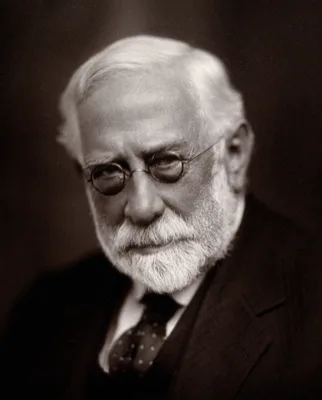
Classic description of infantile scurvy (“Barlow’s disease”), which includes the pathology of the condition. See also his earlier paper in Trans. int. med. Congr., 1881, 4, 116-28. Reprinted, but without the colored l…
1907
#3721
Experimental studies relating to “ship-beri-beri” and scurvy
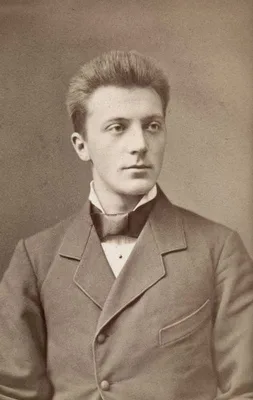
Experimental production of scurvy in guinea-pigs. Holst published further papers on the subject in the same journal, 1907, 7, 634-71, and in Z. Hyg., 1912, 72, 1-120, both with Theodor Froelich. Their work made it pos…
1919
#3722
Der Skorbut.
1920
#3723
Scurvy, past and present.
Includes a history and bibliography.
1927
#3724
The effect of desiccation upon the nutritive properties of egg-white.
Demonstration of the effect of deprivation of biotin.
1933
#3725
Scurvy treated with ascorbic acid.
First case of infantile scurvy cured by the administration of ascorbic acid.
1986
#3726
The history of scurvy and vitamin C.
1645
#3727
Disputatio medica inauguralis, de morbo puerili Anglorum, quem patrio idiomate indigenae vocant The Rickets.
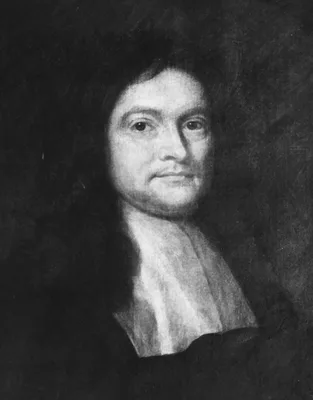
In his 26th year Whistler published his graduation thesis at Leiden; this was the first description of rickets as a definite disease manifesting itself by a more or less constant association of symptoms. Still (No. 63…
1649
#3728
Observationes medicae de affectibus omissis.
Boate who spent many years in Ireland, included a full first-hand account of rickets in Chapter 12 of the above book (“De tabe pectorea”). He showed how widespread the disease was at that time. Reprinted in Opuscula S…
1650
#3729
De rachitide sive morbo puerili, qui vulgo The Rickets dicitur tractatus.
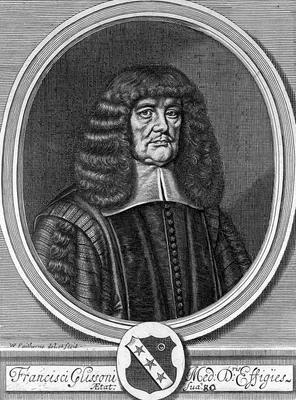
Although anticipated by Whistler and others in the description of infantile rickets, Glisson’s account was the fullest that had till then appeared. He was first (Chap. 22) to describe infantile scurvy. Glisson’s book …
1824
#3730
Beobachtungen Über den Nutzen des Berger Leberthrans (Oleum jecoris Aselli, von Gadus asellus L.)
First report of the value of cod-liver oil in the treatment of rickets.
1885
#3731
Untersuchungen über Osteomalacie und Rachitis.
Hess considered this the foremost contribution to the subject during the 19th century.
1919
#3732
Heilung von Rachitis durch künstliche Höhensonne.
Rickets cured by ultraviolet irradiation.
1918 –1919
#3733
The part played by an “accessory factor” in the production of experimental rickets.
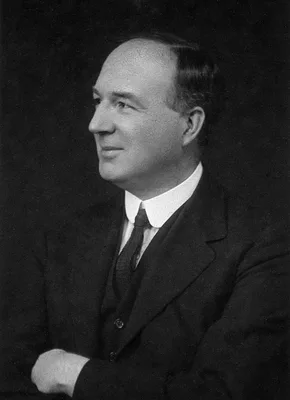
First convincing experimental evidence that rickets is a deficiency disease, curable by correct diet.
1919
#3734
An experimental investigation on rickets.
In his important experiments on rickets, Mellanby both induced and controlled the disease by diet.
1929
#3735
Rickets, including osteomalacia and tetany.
Hess made numerous clinical observations on rickets and scurvy and discovered that antirachitic properties could be imparted to certain oils and to food by exposing them to ultra-violet rays. His book includes an impo…
1652
#3737
Observationes medicae.
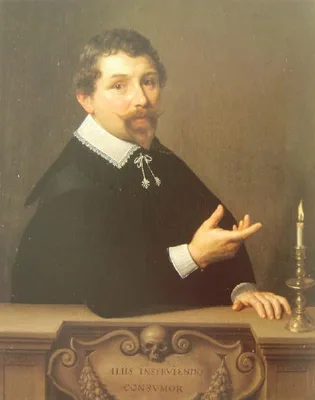
One of the earliest accounts of beri-beri is on pp. 300-05 of this work. Tulp, notable as the demonstrator in Rembrandt’s “Anatomy Lesson”, was among the first, in the same book, to describe the ileo-caecal valve (“Tu…
1835
#3738
A practical essay on the history and treatment of beriberi.
A classic account, in which the author brought together all that was known about the disease in his day.
1880 –1884
#3739
Kakke (Beriberi).
In his important account of beriberi, Baelz dealt with the Tokyo outbreak of 1881.
1885
#3740
On the cause and prevention of kakke.
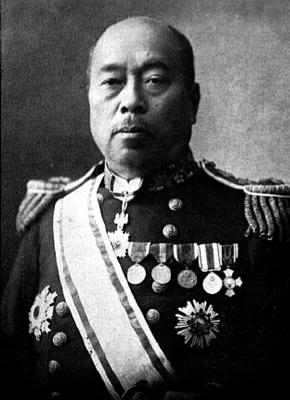
Takaki was the first conclusively to show the dietary origin of beriberi. Measures introduced by him resulted in its eradication from the Japanese Navy, where it had previously been a serious problem.