
Facets
Browse across eight MeSH (opens in new tab) facets — era, geography, science, specialty, technology, history, culture, and reference. Select one tag per group; counts update across the others. What’s new in facet browse how facets relate to subjects and MeSH.
Clear filtersFacet filters
Geography
Specialties & Disease
- Anatomy & Pathology 765
- Cardiology & Blood 914
- Neurology & Psychiatry 1,258
- Obstetrics & Reproductive 551
- Infectious Disease (General) 147
- Surgery & Anesthesia 1,553
- Public Health 1,129
- Immunology & Dermatology 1,405
- General Clinical Medicine 487
- Military Medicine 436
- Psychology 202
- Alternative & Fringe Medicine 383
- Pediatrics 247
- Ophthalmology & Vision 412
- ENT & Hearing 293
- Urology & Nephrology 309
- Gastroenterology & Hepatology 316
- Pulmonary & Respiratory 233
- Rheumatology, Rehab & Pain 189
- Internal, Emergency & Geriatric 123
- Veterinary Medicine 165
- Epidemiology & Demography 397
- Physiology & Embryology 924
- Dentistry 259
- Plagues & Epidemics 1,279
- Microbiology & Virology 1,080
Social & Historical Studies
Institutions & Culture
Reference & Scholarly Works
1,279 entries match Plagues & Epidemics [C01.252]
#13552
A catalogue of rare syphilis books held in the Special Collections Department of the University of Glasgow.
https://www.gla.ac.uk/media/Media_389083_smxx.pdf Describes and illustrates in color over 200 rare books from the 15th century to 1820, including those in the Hunterian Collection, with links to more extensive online …
1473
#5114
Büchlein der Ordnung (Pest Regiment)
Steinhöwel was a Swabian author, humanist, and translator who was much inspired by the Italian Renaissance. His translations of medical treatises and fiction were an important contribution to early Renaissance Humanis…
c. 1474
#5113
De epidemia et peste.
One of the earliest works written on public health, and one of the earliest printed medical books. It was first printed in Arnaldus de Villanova’s De arte cognoscendi venena (Padua, 1473; Mantua, 1473). Above is the f…
1478 –1482
#5115
Tractatus de pestilentia.
The most widely disseminated of all plague tracts from the time of the Black Death, of which 33 printed editions appeared in the 15th century. A French rhymed version appeared in 1476, but this version is very differe…
1480
#8369
Practica, seu Lilium medicinae.
Includes descriptions of plague, tuberculosis, scabies, epilepsy, anthrax, and leprosy. ISTC No. ib00447000.
1483
#6812
Regimen contra pestilentiam [English] Treatise on the Pestilence.
The earliest medical work printed in English. It was published without printer's name or date, but has been attributed to the press of William Machlinia, in London, and estimated to have been published in 1483."Althou…
1491
#363
Fasciculus medicinae. Add: Petrus de Tussignano: Consilium pro peste evitanda.
A collection of short medical treatises which circulated widely in manuscript, some as early as the 13th century, and was perhaps attributed by the printers to its former owner, Johannes von Kirchheim, a professor of …
1493 –1494
#363.1
Fascicolo di medicina. Tr: Sebastianus Manilius. Add: Petrus de Tussignano: Consilium pro peste evitanda. Mundinus: Anatomia (Ed: Petrus Andreas Morsianus).
This Italian translation contains an entirely new and more extensive series of woodcuts and additional text. The dramatically improved and more realistic illustrations, which were reproduced in the numerous later edit…
1496 –1497
#2362
Tractatus de pestilentiali scorra sive mala de Franzos: originem remediaqu[ue] eiusdem continens.
Grünpeck was first to record mixed primary lesions, multiple primary lesions, and to note the second incubation period of syphilis. A translation of the above is in Arch. Derm. Syph. (Chicago), 1930, 22, 430. Digital …
1497
#2363
Libellus de Epidemia, quam uulgo morbum Gallicum uocant,
One of the earliest treatises on syphilis, and one of the few medical books printed by Aldus Manutius in the 15th century. Leoniceno included a good description of syphilitic hemiplegia. He believed that syphilis was …
1498
#2363.1
El sumario de la medicina, con un tratado sobre las pestiferas buuas.
H. Goodman considers this treatise, written in verse, among the best of all works on the syphilis in the 15th and 16th centuries. Reprinted Salamanca, 1973. For English translation see Bull. Inst. Hist. Med., 1939, 7,…
1507
#2270
De abditis nonnulus ac mirandis morborum et sanationum causis. Edited by Girolamo Benivieni.
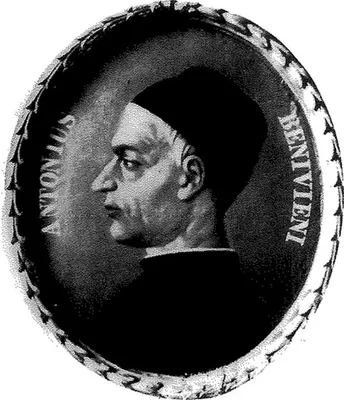

Antonio Benivieni's The hidden causes of diseases was the first book on pathological anatomy, presenting the first reports of autopsies made specifically to determine the cause of death. The work records twenty post-m…
1514
#5559.1
Practica in arte chirurgica copiosa… continens novem libros.
The first complete system of surgery after that of Guy de Chauliac. In 1503 Vigo became the personal surgeon to Pope Julius II. His Practica in arte chirurgia copiosa was completed in 1514 and first published in Latin…
1518
#4850.2
Tractatus de fractura calve sive cranei.
The first separate treatise on head wounds and their surgical treatment. Berengario described several types of skull fractures and grouped the resulting lesions according to their symptoms, citing the relation between…
1519
#9847
De guaiaci medicina et morbo gallico liber unus.
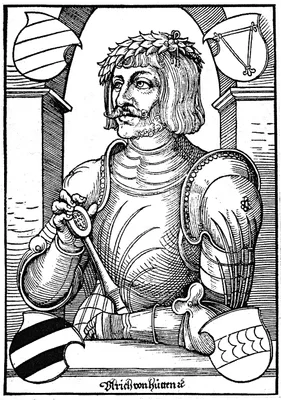
The German scholar, poet, satirist and reformer von Hutten issued a remarkably widely published and influential account of his suffering from syphilis and his treatment with gum from Guaiacum wood. This is considered …
1527
#2365
Liber de morbo gallico.
Includes a description of the neurological manifestations of syphilis. Though this work bears the date 1507, Peter Krivatsy, provided evidence that this edition was printed in 1527. See Krivatsy, "Nicola Massa's Liber…
1529
#5520
Ein Regiment: wie man sich vor der newen Plage der Englische Schwaisz genannt, bewaren, und so mann damit ergryffen wirt, darinn halten sall.
Euricius Cordus, father of Valerius, wrote an important account of sweating sickness. Another edition was published at Nuremberg, also in 1529. Reproduced in Gruner’s Scriptores, 1847 (No. 5524).
1530
#2364
Syphilis sive morbus gallicus.
The most famous of all medical poems. It epitomized contemporary knowledge of syphilis, gave to it its present name, and recognized a venereal cause. Fracastorius refers to mercury as a remedy. First complete English …
1531
#5521
De peste Brittanica commentariolus vere aureus.
Schyller’s book on sweating sickness deals with the German epidemic of 1528-30.
1533
#2366
Morbi gallici novum ac utilissimum opusculum quo vera et omnimoda ejus cura percipi potest.
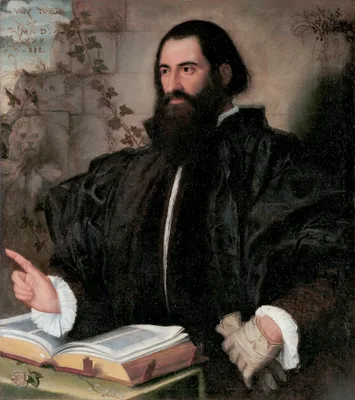
Mattioli considered mercury a specific in the treatment of syphilis. He was probably the first to work extensively on syphilis of the newborn. He is better known for his commentary on Dioscorides.
1536
#5370
De malo recentiorum medicorum medendi usu libellus.
![CARDANO, Girolamo [Gerolamo; Hieronymus Cardanus] (1501 – 1576)](/media/portraits/7679)
Includes (cap. XXXVI) an early account of typhus, morbus pulicaris. English translation in Major, Classic descriptions of disease, 3rd ed., Springfield: Charles C Thomas, 1945, p. 163.
1539
#2367
Tractado cótra el mal serpentino.
Diaz de Isla, a Barcelonese surgeon, wrote of a disease “previously unknown, unseen and undescribed”, which appeared in Barcelona in 1493 and which was obviously syphilis. This is probably the earliest reference to th…
1546
#1810.1
Epistola, rationem modumque propinandi radicis Chynae decocti…
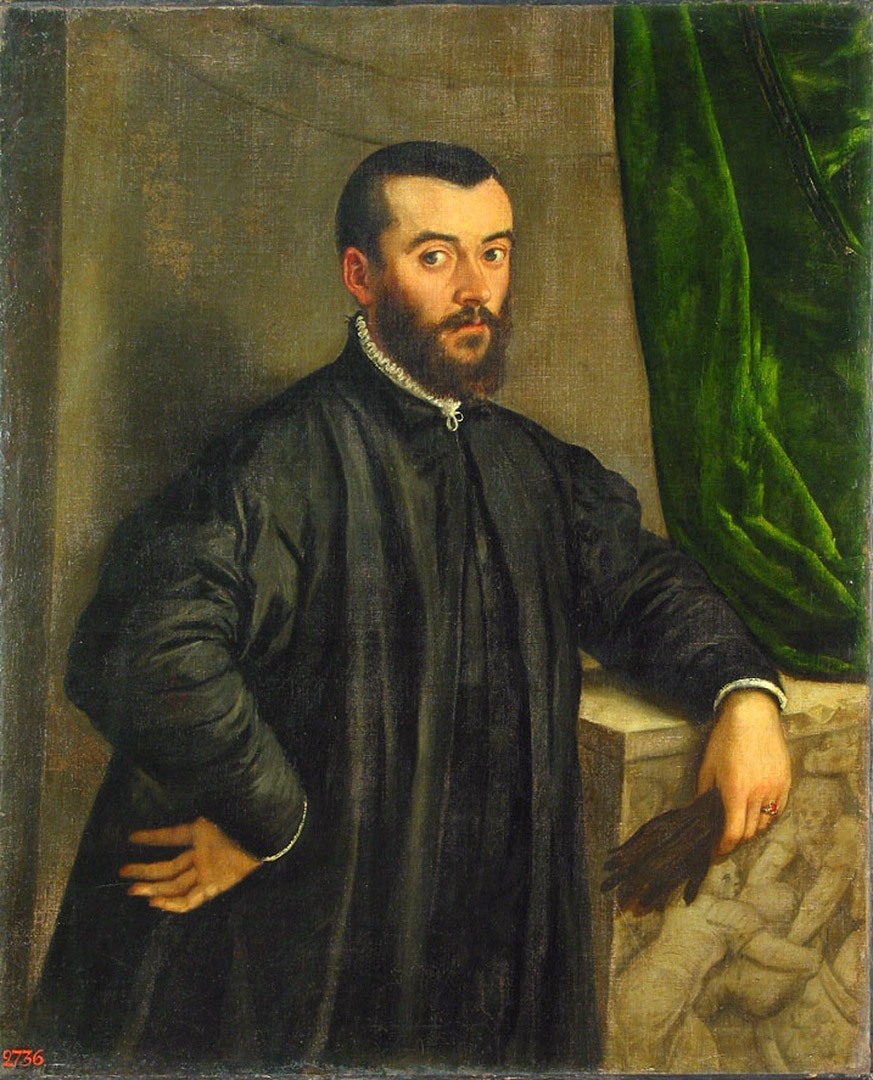
In this work on the discovery and therapeutic use of the china root (Smilax china) in the treatment of syphilis, Vesalius described the first attempt to formulate methods of identification of an exotic drug. He also o…
1546
#2528
De sympathia et antipathia rerum liber unus. De contagione et contagiosis morbis et curatione.
Though Fracastoro wrote this book more than a century before Leewenhoek invented the microscope, and could only express the theory of contagion in very general terms, this book represents a landmark in the development…
1548
#11111
Alexandrū Trallianū Iatrū Biblia Dyokaideka. Alexandri Tralliani medici libri XII. Rhazae De pestilentia libellus ex Syrorum lingua in Graecam translatus. Edited by Jacques Goupil.
First edition of the Greek text of the works of Alexander of Tralles, together with an edition of Rhazes on the plague. Both texts were edited by Jacques Goupil. The work was issued by the distinguished scholar printe…
1552
#2368
La méthode curatoire de la maladie venerienne.
De Héry made a fortune from treating syphilitic patients. He recommended mercurial inunctions and guaiac internally.
1552
#5522
A boke, or conseill against the disease commonly called the sweate, or sweatyng sicknesse.
First English book on sweating sickness, and the first devoted to a single disease to be published in England. Caius’s work appeared a year after the last epidemic visit of the disease. From it we learn that the disea…
1553
#2369
Von der frantzösischen kranckheit drey Bücher.
Paracelsus suggested the hereditary transmission of syphilis and advocated mercury internally, as an antisyphilitic. He called the disease “French gonorrhoea” and thus started the confusion over the geographic origins…
1553
#5073
De tumoribus praeter naturam.
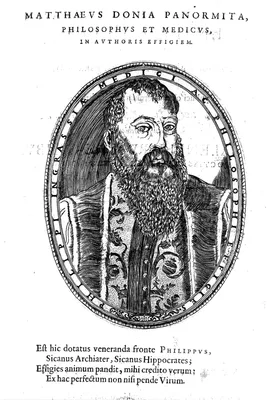
This treatise on tumors includes (p. 194) the first known description of an epidemic disease resembling scarlet fever. This was a malady prevalent in Italy, and was commonly called rossania or rossalia. Ingrassia was …
1554
#2271
Medicina. 3 pts.
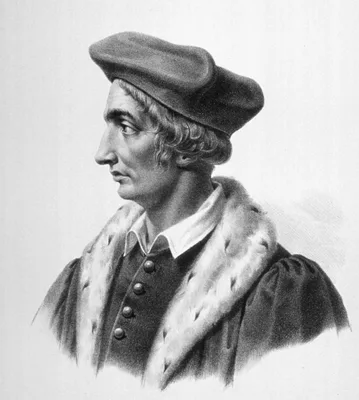
The first systematic treatise on pathology, which also introduced the names for the sciences of pathology and physiology. In the second part, entitled “Pathologia”, Fernel provided the first systematic essay on the su…
1563
#1815
Colóquios dos simples, e drogas he cousas mediçinais da Índia e assi dalgũas frutas achadas nella onde se tratam algũas cousas tocantes a medicina, pratica, e outras cousas boas pera saber.
![ORTA, Garcia de [Garcia d'Orta] (1501 – 1568)](/media/portraits/2236)
The first account of Indian materia medica and the first textbook on tropical medicine written by a European. It includes a classic account of Asiatic cholera, the first account of this disease by a European. This is …
1563
#2370
De morbo gallico.
Falloppius was one of the first prominent opponents of the use of mercury in syphilis. He distinguished syphilitic and non-syphilitic condylomata.
1563
#2371
Certaine works of chirurgerie.
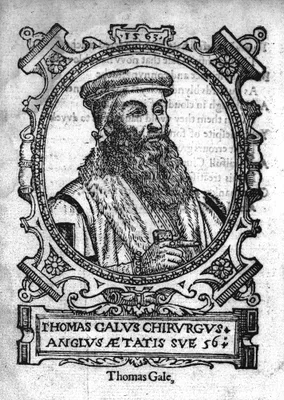
Includes the first mention of syphilis in the English literature. Facsimile reprint, New York, Da Capo Press, 1971.
1565
#6318
Cinq livres, de la manière de nourrir et gouverner les enfans dès leur naissance.
The first French work on pediatrics. Vallambert considered a wider range of diseases than any previous writer, including the first reference to syphilis in children, and gave the best commentary up to his time on infa…
1566 –1567
#2372
De morbo gallico omnia quae extant. 3 vols.
A collection of important writings on syphilis to 1500. Boerhaave published a revision of this work in 1728, covering the period 1495-1566.
1567
#9053
Secretos de chirurgia, en especial de la enfermedades de morbo-galico y lamparones, y asimismo la manera como se curan los indos las llgas y heridas, y otras pasiones en las Indias, muy útil y provechoso par España, y otros muchos secretos de chirugia hasta ahora no escritos.
Arias de Benevides travelled to the New World where he observed native remedies and reported them in this book. In the book he also described his performance in Mexico City (1561) of the first neurosurgical interventi…
1570
#5372
Opera medicinalia.
Opera medicinalia was the first medical book printed in the Western Hemisphere, and its botanical images were the first illustrations of plants printed in the Western Hemisphere. Of the original edition only two copie…
1575
#5565
Les oeuvres de M. Ambroise Paré.
Paré was the greatest of the army surgeons before Larrey. Born in poor circumstances, he became the most famous surgeon in France. He is particularly remembered for his abandonment of boiling oil and the cautery (No. …
1578
#5372.1
De febre purpura epidemiali et contagiosa libri duo.
Coytard distinguished between petechial typhus and typhoid.
1579
#2373
A short and profitable treatise touching the cure of the morbus gallicus by unctions.
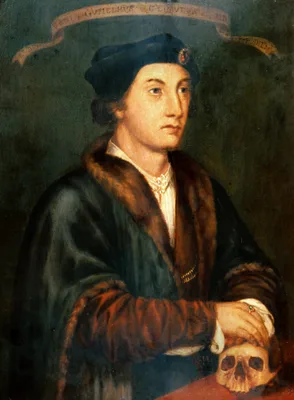
William Clowes, the greatest of the Elizabethan surgeons, published the first original English treatise on syphilis. It was his first work; it demonstrates the prevalence of the disease at that time (Clowes says that …
1579
#2374
Deluis venereae curatione perfectissima liber.
French translation, Paris, 1879.
1598
#2262
The cures of the diseased, in remote regions. Preventing mortalitie, incident in forraine attempts, of the English nation.
This book is the earliest work in English devoted to tropical medicine. It discusses sunstroke, tabardilla (possibly typhus or yellow fever), prickly heat, dysentery, erysipelas and scurvy. Facsimile reproduction, wit…
1603
#6821
True bill of the vvhole number that hath died at London.
BILL OF MORTALITY
The collection, recording, and publishing of medical statistics in the form of Bills of Mortality began in England as a result of the epidemic of plague in 1592-93. The earliest surviving copy of the Bills of Mortalit…
1623
#2262.1
Tratado de las siete enfermedades, de la inflammacion universal del higado, zirbo, pyloron, y riñones, y de la obstrucion, de la satiriasi, de la terciana y febre maligna, y passion hipocondriaca. Lleva otros tres tratados, del mal de Loanda, del guzano, y de las fuentes y sedales.
The first important work on tropical diseases. Only six copies of the original edition of this book are known. It includes full accounts of malaria, typhoid, and scurvy, and the first accurate descriptions of yellow f…
1624
#5229
De semitertiana libri quatuor.
First extensive account of malaria.
1640
#1673
Epidemiorum et ephemeridum libri duo.
A pupil of Fernel, De Baillou was a follower of Hippocrates in his advancement of the doctrine of “epidemic constitutions”. Crookshank regards him as the first modern epidemiologist. This work includes the first descr…
1641
#5074
De febribus libri IV.
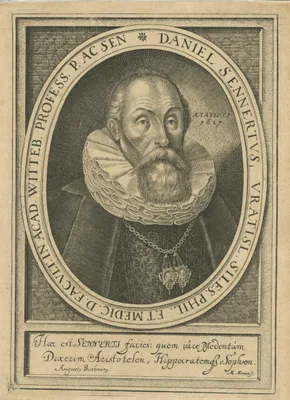
Sennert gave the first scientific description of scarlet fever. He was the first to mention the scarlatinal desquamation, the early arthritis, and post-scarlatinal edema, but made no mention of sore throat.
1642
#2263
De medicina Indorum.
Bontius was probably the first to regard tropical medicine as an independent branch of medical science. He spent the last four years of his life in the Dutch East Indies, and his book incorporates the experience he ga…
1646
#5117
De peste libri quatuor, truculentissimi morbi historiam ratione et experientiâ confirmatum exhibentes.
English translation, 1722. Digital facsimile of the Amsterdam 1665 edition revised and expanded by the author from Google Books at this link.
1648
#2263.1
Historia naturalis Brasiliae.
Piso's study of the natural history of Brazil was also a pioneer work on tropical medicine, and also the largest work from the standpoint of format published by the Elzeviers. The folio includes De medicina brasiliens…