
Facets
Browse across eight MeSH (opens in new tab) facets — era, geography, science, specialty, technology, history, culture, and reference. Select one tag per group; counts update across the others. What’s new in facet browse how facets relate to subjects and MeSH.
Clear filtersFacet filters
Geography
Specialties & Disease
- Anatomy & Pathology 59
- Cardiology & Blood 48
- Neurology & Psychiatry 49
- Obstetrics & Reproductive 10
- Infectious Disease (General) 2
- Surgery & Anesthesia 14
- Public Health 31
- Immunology & Dermatology 60
- General Clinical Medicine 169
- Military Medicine 8
- Psychology 9
- Alternative & Fringe Medicine 3
- Pediatrics 3
- Ophthalmology & Vision 26
- ENT & Hearing 19
- Urology & Nephrology 13
- Gastroenterology & Hepatology 10
- Pulmonary & Respiratory 5
- Rheumatology, Rehab & Pain 3
- Internal, Emergency & Geriatric 1
- Veterinary Medicine 1
- Epidemiology & Demography 31
- Physiology & Embryology 34
- Dentistry 8
- Plagues & Epidemics 55
- Microbiology & Virology 49
Social & Historical Studies
Institutions & Culture
Reference & Scholarly Works
757 entries match Diagnostics & Imaging [E01]
#9355
History of Medicine Finding Aids Consortium
https://www.nlm.nih.gov/hmd/consortium/index.html "Welcome to the History of Medicine Finding Aids Consortium, a discovery tool providing keyword search services across a union catalog of finding aids describing archi…
#12486
Medicine's moving pictures: Medicine, health, and bodies in American film and television. Edited by Leslie J. Reagan, Nacy Tomes, and Paula A. Treichler.
#13552
A catalogue of rare syphilis books held in the Special Collections Department of the University of Glasgow.
https://www.gla.ac.uk/media/Media_389083_smxx.pdf Describes and illustrates in color over 200 rare books from the 15th century to 1820, including those in the Hunterian Collection, with links to more extensive online …
#13766
Profiles in science.
https://profiles.nlm.nih.gov/ "Explore digitized archival collections to learn about prominent scientists, physicians, and other 20th-century leaders in biomedical research and public health."
#13767
FDA Notices of Judgment Collection, 1908-1966.
https://fdanj.nlm.nih.gov/ "The FDA Notices of Judgment Collection is a digital archive of the published federal notices of judgment (a summary of the final outcome of a court case) for manufacturers and products pros…
1630
#259
Persio tradotto.
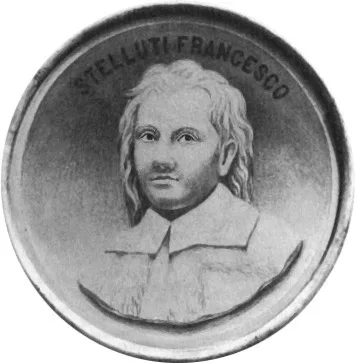
The first book to contain illustrations of natural objects as seen through the microscope— specifically an engraving of the exterior surface of bees. The work includes the Latin text of the Satyrae VI of Aulus Persius…
1651
#467.1
The history of generation…
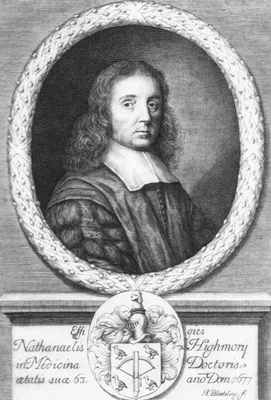
Highmore’s account of the development of the chick is the first embryological study based on microscopical examination, predating Malpighi (No. 468) by more than twenty years. This is also the first book in English to…
1653
#260
Historiarum et observationum medico-physicarum centuria prima (-secunda).
The first work to apply microscopy to medicine. Borel described 200 observations and applications; he probably saw the blood corpuscles and Sarcoptes scabiei.
1655
#261
De vero telescopii inventore.
Borel collected evidence to show that Zacharias (sometimes called Zacharias Janssen) invented the compound microscope about 1590. Zacharias was a spectacle-maker of Middelburg, Holland.
1665
#262
Micrographia, or some physiological descriptions of minute bodies made by magnifying glasses; with observations and inquiries thereupon.
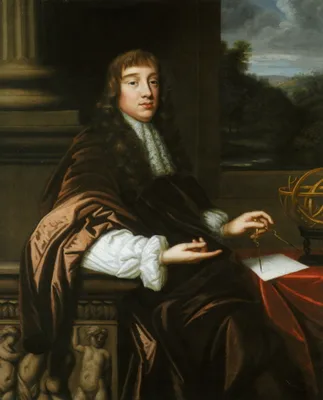
Hooke, at one time research assistant to Robert Boyle, was one of the greatest inventive geniuses of all time. This was the first book devoted entirely to microscopical observations, and also the first book to pair it…
1678
#13233
Microscopium, or some new discoveries made with and concerning microscopes. Lectures and Collections made by Robert Hooke, Secretary of the Royal Society, pages 81-112.
On his title page Hooke listed the contents of this section as follows: "Mr. Leeuwenhoeck's two letters concerning some late microscopical discoveries. "The author's discourse and description of microscopes, improved …
1685 –1686
#263
Oculus artificialis teledioptricus sive telescopium. 3 pts.
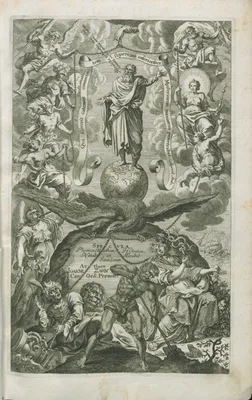
Includes the first complete history of early microscopes.
1686 –1718
#265
Ontledingen en ontdekkingen.... 6 vols.
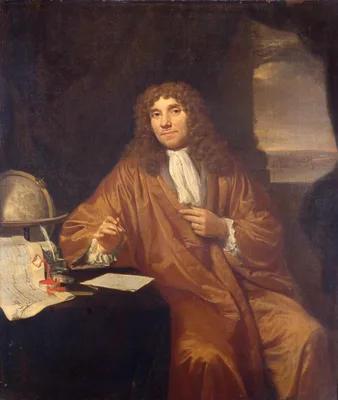
Leeuwenhoek, one of the first and also one of the greatest of the microbiologists, communicated many of his discoveries to the Royal Society in London. This set is a collection in Dutch of many contributions that van …
1686
#66
Opera omnia. 2 vols.
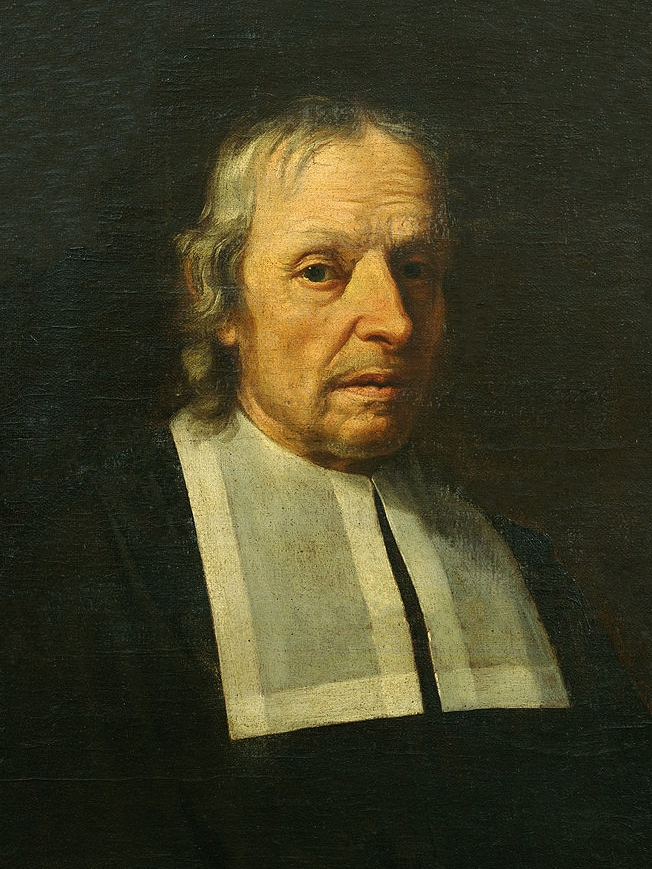
Malpighi was the founder of histology. In 1660 he was the first to see the capillary anastomosis between the arteries and the veins, thus contributing to the completion of Harvey’s work on the circulation. Malpighi wa…
1691
#264
Observationes circa viventia, quae in rebus non viventibus reperiuntur. Cum micrographia curiosa siue Rerum minutissimarum obseruationibus, quæ ope microscopij recognitæ ad viuum exprimuntur. His accesserunt aliquot animalium testaceorum icones non antea in lucem editae. Omnia curiosorum naturæ exploratorum vtilitati & iucunditati expressa & oblata.
Illustrates several early microscopes, including the famous microscopes of the Bolognese Joseph Campani. Contradicting Redi, Bonanni tried to show that spontaneous generation was possible in animals "without blood and…
1694
#10455
Raguaglio historico del contaggio occorso nella provincia di Bari negli anni 1690, 1691 e 1692.
Arrieta published two very early disease maps in this work showing locations of plague in the province of Bari, Italy, and his employment of troops to isolate those areas. Digital facsimile from the Internet Archive a…
1717
#5232
De noxiis paludum effluviis, eorumque remediis.
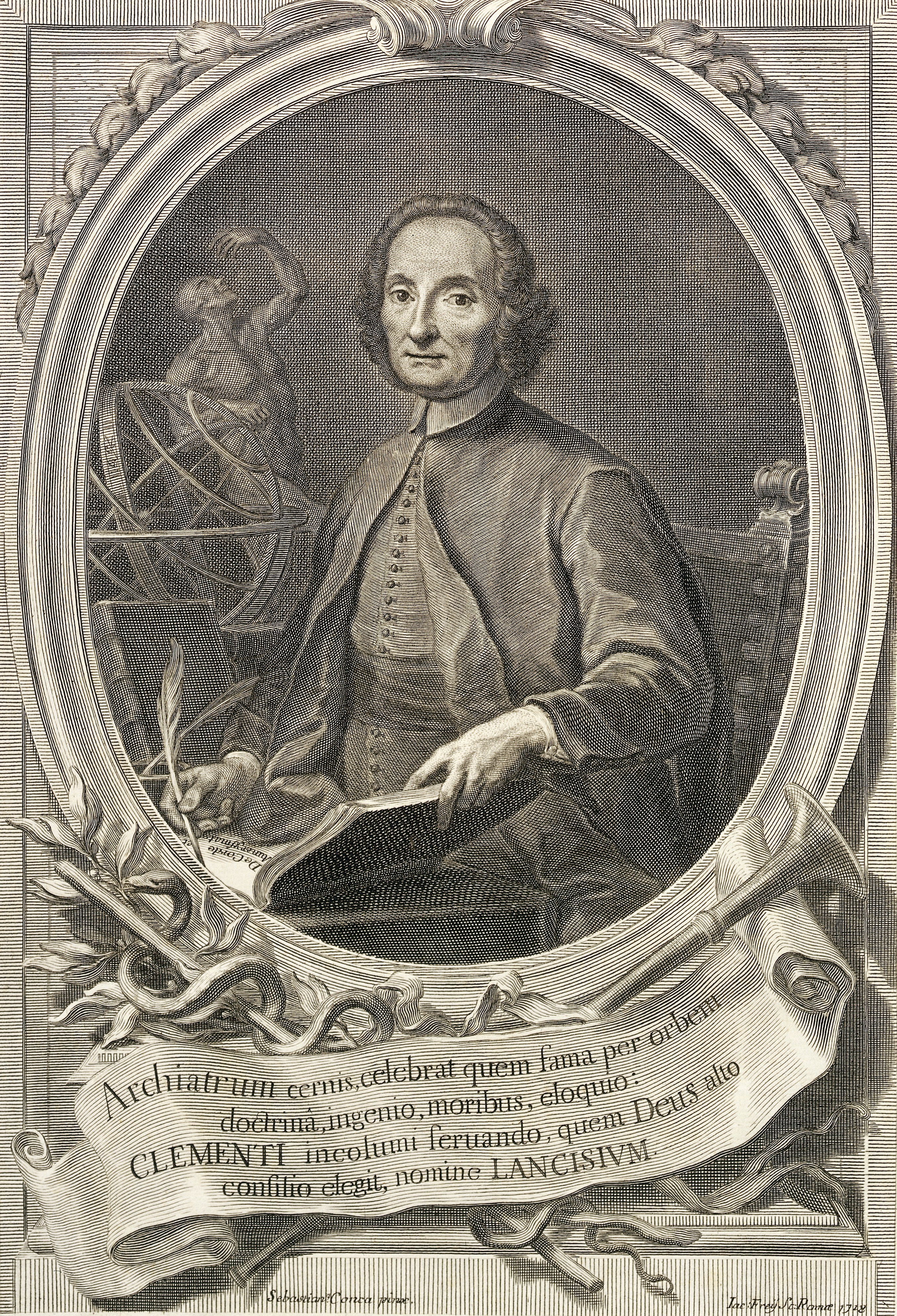
Lancisi suggested that since malaria disappears after drainage it was due to some sort of poison emanating from marshes and possibly transmitted by mosquitoes. He planned a drainage scheme for marshy regions. His work…
1762
#305
Traité anatomique de la chénille, qui ronge le bois de saule. Augmenté d'une explication abrégée des planches, et d'une description de l'instrument et des outils dont l'auteur s'est servi pour anatomiser à la loupe et au microscope, & pour déterminer la forcer de ses verres, suivant les règles de l'optique, & méchaniquement.
Lyonet’s monograph on the goat moth caterpillar remains a famous example of anatomical examination. It is also a thorough treatise on the microscope and lenses that Lyonet used. Digital facsimile from Biodiversity Her…
1763
#8370
An essay towards solving a problem in the doctrine of chances
Bayes's paper enunciated Bayes's Theorem for calculating "inverse probabilities”—the basis for methods of extracting patterns from data in decision analysis, data mining, statistical learning machines, Bayesian networ…
1777
#145.53
Specimen zoologiae geographicae, quadrupedem domicilia et migrationes sistens dedit, tabulamque mundi zoographicam adjunxit.
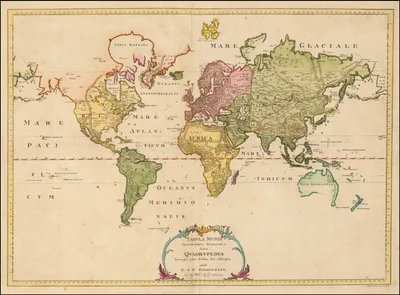
The first textbook of zoogeography, containing the first world map showing the distribution of mammals. French translation of part 1 only by Jakob Mauvillon: Zoologie géographique. Premier article, L'homme (Cassel: Im…
1778
#2465
Abhandlung fiber die Saamen- und Infusionsthierchen, und über die Erzeugung: nebst mikroskopischen Beobachtungen des Saamens der Thiere, und verschiedener Infusionen.
Gleichen was probably the first to attempt to stain bacteria; he used carmine and indigo.
1778 –1793
#8222
Geographische Geschichte des Menschen und der allgemein verbreiteten vierfüßigen Thiere: nebst einer hieher gehörigen Zoologischen Weltcharte. 3 vols.
Digital facsimile from the Bayerische StaatsBibliothek at this link.
1797
#7687
An inquiry into the cause of the prevalence of the yellow fever in New-York.
Includes four early plot maps; Seaman was one of the first to create maps that attempted to show the spread of contagious disease.
1800
#537
Traité des membranes en général et diverses membranes en particulier.
Bichat conceived the idea of a science of anatomy and pathology based upon an accurate classification of the various tissues of the body, their distribution in the various organs and parts, and their particular suscep…
1801
#403
Anatomie générale, appliquée à la physiologie et à la médecine. 4 vols.
Bichat revolutionized descriptive anatomy. Where Morgagni and others had conceived of whole organs being diseased, Bichat showed how individual tissues could be separately affected. He covered tissue pathology, system…
1807
#265.1
Kort bericht der trapsgewijze verbeteringen aan achromatische verrekijkers.
Van Deijl introduced an achromatic objective.
1819
#10456
A statement of the occurrences during a malignant yellow fever in the city of New-York, in the summer and autumnal months of 1819; and of the check given to its progress, by the measures adopted by the Board of Health. With a list of cases and names of sick persons, and a map of their places of residence within the infected and proscribed limits: With a view of ascertaining, by comparative arguments, whether the distemper was engendered by domestic causes, or communicated by human contagion from foreign ports.
Pascalis mapped this yellow fever outbreak using a method similar to Valentine Seaman, but with a more extensive and detailed list of cases. A condensation of his 60-page pamphlet with a reissue of his map appeared in…
1820
#266
De' microscopj catadiottrici memoria.
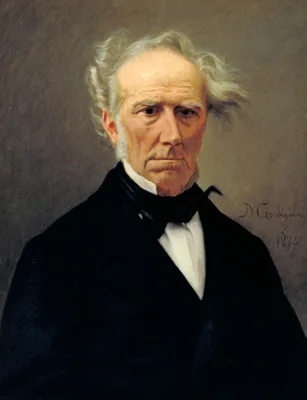
Amici constructed the first microscope with achromatic lenses and suggested water-immersion for improved achromatic lenses of the compound microscope. The 1820 publication of his paper indicates that it was "Approvata…
1822
#7695
Grundtræk til en almindelig Plantegeographie.
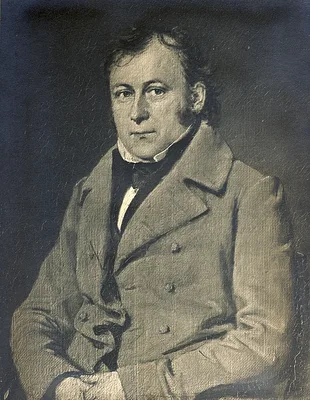
The first atlas of the geography of plants, including distribution maps for the eastern and western hemisphere. Schouw translated the work into German and had the translation published the following year: Grundzüge ei…
1823
#1492.1
Commentatio de examine physiologico organi visus et systematis cutanei.
Purkynĕ was first to examine the interior of the human eye and the dog eye, using only a candle and a concave spherical lens. He thus invented the ophthalmoscope three decades before Helmholtz (1851; No. 5866). Reprin…
1827
#266.1
On Mr. Tulley’s thick aplanatic object-glasses, for diverging rays; with an account of a few microscopic test objects.
Goring was an Edinburgh medical practitioner. He commissioned Tulley and others to make various modifications to the microscope. The above paper reports the first effective achromatic object-glass.
1827
#10507
Charte über die geographische Ausbreitung der Krankheiten.
The first world map of the distribution of human disease. For Schnurrer's work in epidemiology and his map, which was published separately from his books, see Brömer, "The first global map of the distribution of human…
1827
#13262
Notice of some microscopic observations of the blood and animal tissues.
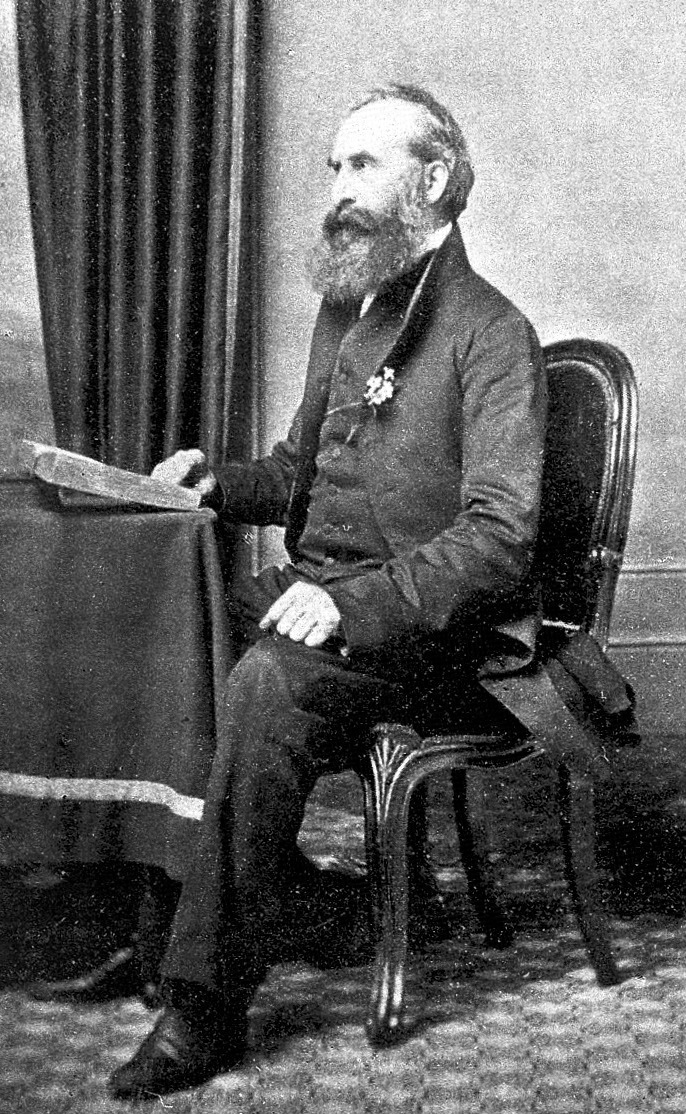
Hodgkin and Lister determined that blood cells are bioconcave discs and accurately measured their diameter as "1/5000 of an inch." Digital facsimile from Google Books at this link.
1829
#3327
[Description of the glottiscope.]
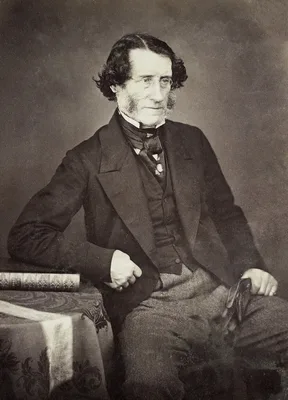
Babington was responsible for the introduction of laryngoscopy. He demonstrated a crude “glottiscope” to the Hunterian Society on March 18, 1829, but his effort attracted little attention.
1830
#538
De glandularum secernentium structura penitiori.
Müller’s most important histological work. In it he described the microscopic anatomy of a large series of secreting glands. Müller’s greatest influence was not so much through his own work as through the influence he…
1830
#2611
A short tract on the formation of tumours, and the peculiarities that are met with in the structure of those that have become cancerous; with their mode of treatment.
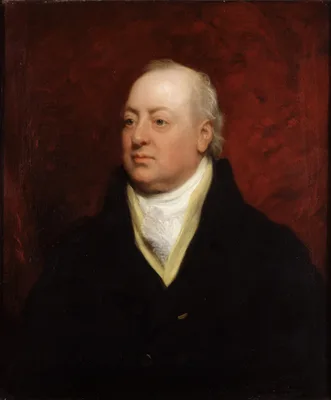
Contains the first illustrations of microscopic sections of cancer; however, Home drew no worthwhile conclusion from his microscopic studies. Digital facsimile from the Internet Archive at this link.
1830
#267
On some properties in achromatic object-glasses applicable to the improvement of the microscope.
The principle of the modern microscope was worked out by Joseph Jackson Lister, father of Lord Joseph Lister. His important improvements in achromatic lenses make him one of the most prominent figures in the history o…
1830
#13909
Recherches expérimentales sur le sang human considérè à l'état sain.
Denis discovered the presence of cholesterol (“cholestérine”) in the blood. This he announced on p. 110 of his Recherches expérimentales.
1832
#7688
A treatise on epidemic cholera; including an historical account of its origin and progress, to the present period. Compiled from the most authentic sources.
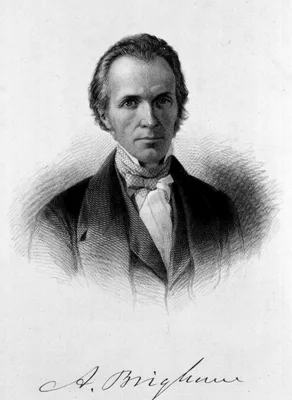
This compendium contains one of the first world charts of a disease, tracing the spread of cholera from two main sources, India (1817) and China (1820), across Asia and the Middle East via trade routes, to France and …
1832
#10457
Relation historique et médicale du choléra-morbus de Pologne, comprenant l'apparition de la maladie, sa march, ses progrès, ses symptômes, son mode de traitement et les moyens préservatifs. Avec une carte.
In his study of the spread of cholera in Poland in 1831 Brière de Boismont used a map to show the progression of the disease from a central point through the country along a red line through principal towns and the da…
1832
#10462
The substance of the official medical reports upon the epidemic, called cholera: Which prevailed among the poor at Dantzick, between the end of May and the first part of September, 1831, as transmitted to their lordships; being an analysis of the said epidemic disease in that city--founded upon actual observation and accurate inquiry: With important and well-authenticated facts relative to the same disease, as it prevailed among the poor in other parts of the North of Europe.
Hamett privately published this report after it was rejected for publication by the British government. He included hospital admission tables in his book and produced perhaps the first map based on hospital reports of…
1832
#10463
A treatise on the epidemic cholera, as it has prevailed in India; together with the reports of the medical officers, made to the medical boards of the presidencies of Bengal, Madras, and Bombay, for the purpose of ascertaining a successful mode of treating that destructive disease; And a critical examination of all the works that have hitherto appeared on the subject.
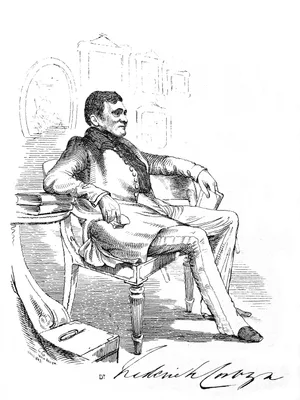
Corbyn mapped the history of cholera in India within British regimental stations. He included the date of each reported outbreak in a table of British regimental locations to describe the temporal progression of the d…
1832
#10526
A geographical and statistical account of the epidemic cholera: From its commencement in India to its entrance into the United States: Comprehended in a series of maps and tables, exhibiting the names of places visited by the pestilence, the time of its commencement, the number of cases, and deaths, and duration, at each place: Compiled from a great variety of printed and manuscript documents.
Tanner, a prolific cartographer, wished to provide a geographic account of the spread of the worldwide cholera epidemic of 1817. Statistics concerning the epidemic, he complained, were "given in such a loose and uncon…
1834
#7480
Rapport sur la marche et les effets du choléra-morbus dans Paris et les communes rurales du département de la Seine par la commission nommée, avec l'approbation de M. le ministre du commerce et des travaux publics, par MM. les préfets de la Seine et de police; année 1832.
This work contained one of the earliest applications of spatial analysis in epidemiology—an early thematic map by geographer and cartographer Charles Picquet, in which the 48 districts of Paris were represented by gra…
1837
#539
Symbolae ad anatomiam villorum intestinalium, imprimis eorum epithelii et vasorum lacteorum.
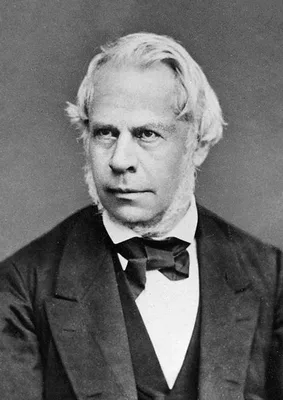
Henle first described the epithelia of the skin and intestines, and defined the structure and function of columnar and ciliated epithelium. He applied the term “epithelium” to all mucous membranes in the body. Modern …
1837
#3328
Practical surgery.
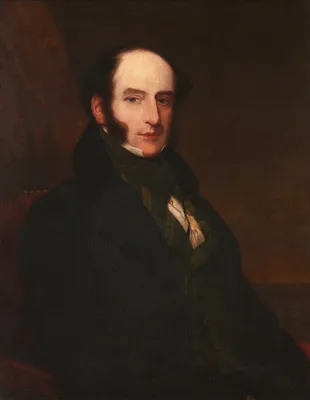
In his day Liston was the most dexterous and resourceful surgeon in the British Isles. He was the first in the country to remove the scapula and the first – on 21 Dec. 1846 – to perform a major operation with the aid …
1837
#8803
Notes on the medical topography of Calcutta.
Digital facsimile from the Internet Archive at this link.
1838 –1857
#11117
Anatomie microscopique. Tome premier: Histologie. Atlas de cinquante-deux planches. Tome second: Histogénèse. Atlas de quarante planches. 2 vols.
This work was issued in parts over nearly 20 years. Parts concerned specific subjects and were sold separately. Digital facsimile from Google Books at this link, and at this link.
1841
#543
Allgemeine Anatomie. Lehre von den Mischungs- und Formbestandtheilen des menschlichen Körpers.
Many of the histological discoveries of Henle are described in the above. He classified tissues histologically. In the section on Gefässnerven (pp. 510, 690) Henle demonstrated the presence of smooth muscle in the end…
1842
#1608
Report…from the Poor Law Commissioners on an inquiry into the sanitary conditions of the labouring population of Great Britain.
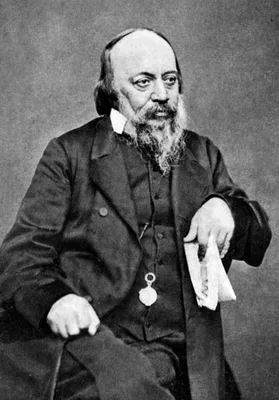
Chadwick devoted his life to social reform. He was secretary to the Poor Law Commission when he made the above report to Parliament. In it he included a careful analysis of causes of death in 1838 and 1839 and gave a …