
Facets
Browse across eight MeSH (opens in new tab) facets — era, geography, science, specialty, technology, history, culture, and reference. Select one tag per group; counts update across the others. What’s new in facet browse how facets relate to subjects and MeSH.
Clear filtersFacet filters
Geography
Specialties & Disease
- Anatomy & Pathology 2
- Cardiology & Blood 43
- Neurology & Psychiatry 9
- Obstetrics & Reproductive 29
- Infectious Disease (General) 0
- Surgery & Anesthesia 78
- Public Health 3
- Immunology & Dermatology 4
- General Clinical Medicine 7
- Military Medicine 5
- Psychology 2
- Alternative & Fringe Medicine 0
- Pediatrics 2
- Ophthalmology & Vision 25
- ENT & Hearing 25
- Urology & Nephrology 11
- Gastroenterology & Hepatology 9
- Pulmonary & Respiratory 14
- Rheumatology, Rehab & Pain 2
- Internal, Emergency & Geriatric 13
- Veterinary Medicine 0
- Epidemiology & Demography 1
- Physiology & Embryology 38
- Dentistry 22
- Plagues & Epidemics 5
- Microbiology & Virology 0
Social & Historical Studies
Institutions & Culture
Reference & Scholarly Works
311 entries match Instruments & Devices [E07]
1478
#3666.83
Chirurgia [French]. Translated by Nicolaus Panis.
Guy de Chauliac studied medicine and surgery in Montpellier and Paris, and served as the personal physician to Popes Clement VI, Innocent VI and Urban V. His Chirurgia magna, written in the early 1360s, remained a sta…
1500 –1501
#3666.82
Chirurgia cum formis instrumentorum (Tr: Gerardus Cremonensis). IN: Guy de Chauliac: Chirurgia parva. Add: Albulcasis: Chirurgia cum formis instrumentorum. Jesus filius Hali: De oculis (Tr: Dominicus Marrochinus). Canamusali de Baldach: De oculis.
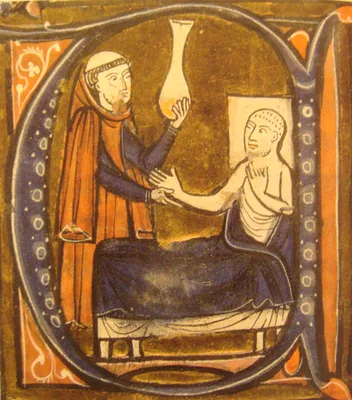
The surgical section of Albucasis’s Altasrif, the first rational, complete and illustrated treatise on surgery and surgical instruments. The author was an Arab Muslim physician and surgeon who lived in Al-Andalus. Dur…
1525
#12773
Opuscula nuper in lucem aedita quorum nomina proxima habentur pagella.
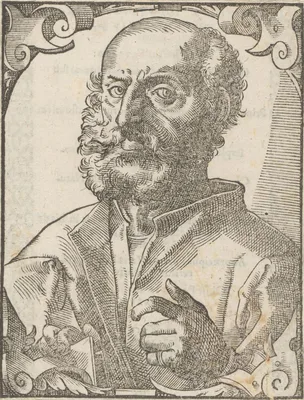
Thomaeus's commentary on Aristotle's Mechanica includes an explanation of the action of a dental forceps illustrated with two small woodcut illustrations on page XXXXI. This was the first printed dental illustration. …
1554
#463
Ein schön lustig Trostbüchle von den Empfengknussen und Geburten der Menschen…
An improved version of Rösslin’s Swangern frawen. This contains the first true anatomical pictures in an obstetrics book. Rueff described smooth-edged forceps for delivery of a live baby, preceding Chamberlen, and a t…
1564
#3668.1
Dix livres de la chirurgie avec le magasin des instruments necessaires à icelle.
Paré’s first general treatise on surgery, and the most comprehensive of his treatises before his collected works (1575). Dix livres included Paré's first description of the use of the ligature in amputations, one of h…
1573
#4850.4
Chirurgiae Ioannis Andrea a Cruce, Veneti medici libri septem, Quamplurimis instrumentorum imaginibus arti chirurgicae opportunis suis locis exornati, theoricam, practicam ac verissimam experientiam continentes....
Croce improved the instruments for trephination, and published classic woodcuts depicting the operation, including the first illustration of a neurological surgery operation actually taking place. The work is also imp…
1594
#3669
La chirurgie françoise recueillie des antiens médecins et chirurgiens.
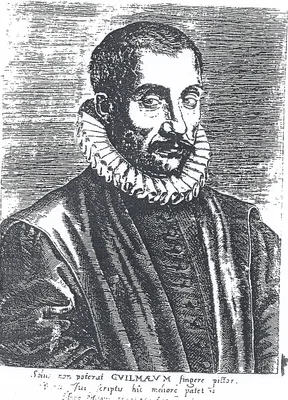
Guillemeau was Paré’s son-in-law. His splendidly illustrated work is of special importance for dentistry and for surgery for cleft lip. It describes pyorrhea alveolaris for the first time and is also the first work to…
1603
#572.1
Methodi vitandorum errorum omnium, qui in arte medica…
First mention of Santorio’s pulse-clock (“pulsilogium”) and his scale. Through most of the 17th and 18th centuries Santorio’s name was linked with that of Harvey as the greatest figure in physiology and experimental m…
1612
#572.2
Commentaria in artem medicinalem Galeni.
First printed mention of the air thermometer, an instrument that played a vital part in the creation of static medicine. This device was similar to Galileo’s open-air thermoscope, of which Santorio may have known, but…
1614
#573
Ars…de statica medicina aphorismorum sectionibus septem comprehensa.
This collection of aphorisms is the work by which Santorio’s ideas became widely known. Santorio used a beam balance to measure metabolism. See also nos. 572.1 & 572.2. For description of his experiments, see No. 2668…
1625
#2668
Commentaria in primam fen primi libri canonis Avicennae.
The chief value of this work is in its cautious revelation of the principles of construction of various instruments that Santorio had invented, including a hygrometer, a pendulum for measuring pulse rate, a syringe fo…
1655
#3669.1
Χειροπλοθήκη seu armamentarium chirurgicum.
Scultetus is famous for his illustrations of surgical procedures and both surgical and dental instruments. With respect to dentistry he describes and illustrates stomatological operations and includes fine illustratio…
1667
#1963
Chirurgia infusoria.
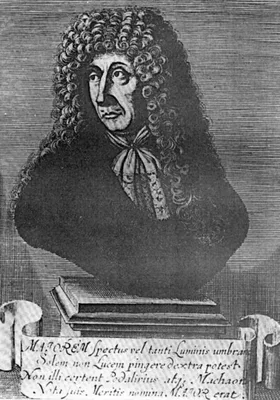
Major, the first Professor of Medicine at Kiel, was the first to make successful intravenous injections of drugs into the human body, in 1662. Sir Christopher Wren in 1656 had injected wine and ale into the veins of a…
1668
#6147
Des maladies des femmes grosses et accouchées.
The outstanding textbook of the time. Mauriceau, leading obstetrician of his day, introduced the practice of delivering his patients in bed instead of in the obstetrical chair. It was to Mauriceau that Hugh Chamberlen…
1707 –1710
#2670
The physician’s pulse-watch. 2 vols.
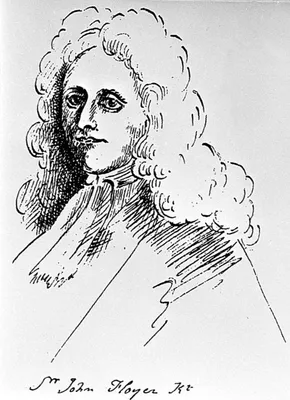
Before watches had hands to record the seconds, Floyer invented a pulse-watch which divided the minute. He was the first to count the pulse with the aid of a watch and to make regular observations on the pulse-rate. T…
1727 –1733
#765
Vegetable staticks: Or, an account of some statical experiments on the sap in vegetables. Statical essays, containing haemastaticks. 2 vols.
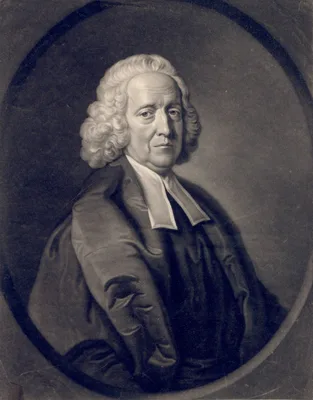
Hales initiated a new stage in physiological experimentation with his "statical" methods, which were characterized by precise quantitative measurements, repetition and the used of controls, and were based on the assum…
1733
#6156.2
An essay on the improvement of midwifery.
Gives the first published account of the forceps, kept secret by the Chamberlen family for generations. Chapman was the second person in England to teach midwifery publicly. The first edition of his book was not illus…
1734
#6156.3
Cases in midwifry. Revised by Edward Hody.
Giffard was one of the first, after the Chamberlens, to use the forceps. His book contains, under case 14, the earliest published record of the use of the hitherto secret Chamberlen forceps, in 1726, together with ill…
1740
#2671
Essays medical and philosophical.
First important work on clinical thermometry, and the only scientific treatment of the subject before Wunderlich.
1744
#3355
Instruments proposed to remedy some kinds of deafness proceeding from obstructions in the external and internal auditory passages.
Cleland, an army surgeon, devised the method of catheterization of the Eustachian tube by way of the nose; he designed the instruments necessary for the operation.
1747
#6152
Observations sur les causes et les accidens de plusieurs accouchemens laborieux.
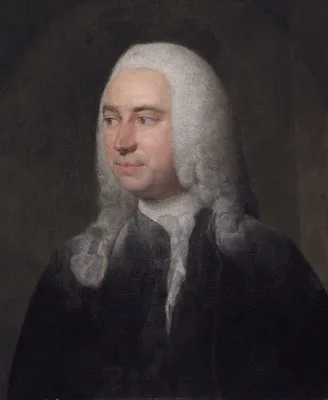
Levret, who improved the obstetric forceps, was a famous teacher in Paris.
1752
#6154
A treatise on the theory and practice of midwifery.
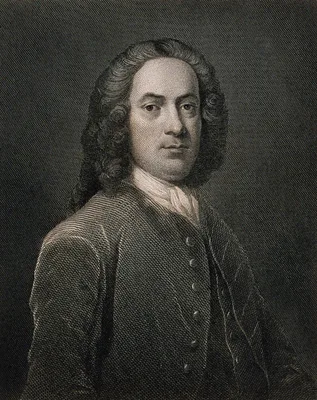
Smellie contributed more to the fundamentals of obstetrics than virtually any individual. In his Treatise he described more accurately than any previous writer the mechanism of parturition, stressing the importance of…
1753
#6153
L’art des accouchemens.
Besides introducing a curved forceps (see No. 6152) Levret invented several other obstetric instruments and made fundamental observations on pelvic anomalies. His book covered the whole field of obstetrics and remaine…
1754
#12848
Nouveaux élémens d’odontologie, contenant l’anatomie de la bouche ou la description de toutes les parties qui la composent et de leur usage; et la pratique abrégée du dentiste.
Lecluse treated in a succinct but correct manner the anatomy of the mouth; invented some and perfected other instruments, the most important of which is the elevator that still bears his name, and . . . he frequently …
1759
#6848
Abregé de l'art des accouchements, dans lequel on donne les préceptes nécessaires pour le mettre heureusement en pratique, et auquel on a joint plusieurs observations intéressantes sur des cas singuliers.
After ten years as a midwife in Paris, Madame du Coudray was hired by King Louis XV to travel across France to better train rural midwives.There were political motivations for this; Louis wanted to boost a “declining”…
1766
#7808
Descrizione degl'instrumenti, delle macchine, e delle suppellettili raccolte ad uso chirurgico e medico dal P. Don Ippolito Rondinelli...
Catalogue of the private museum of surgical and medical instruments established by Father Ippolito Rondinelli in Ravenna, which Soldo described as “the first museum of medicine and surgery.” Extensively illustrasted. …
1781
#10715
Instrumentarium chirurgicum Viennense oder, Wiennerische chirurgische Instrumenten-Sammlung.
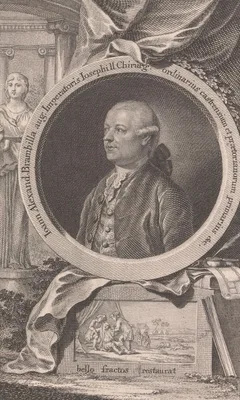
Brambilla was a personal physician to Holy Roman Emperor Joseph II and the first director of the Vienna hospital and the Josefinum school for military surgeons (now a medical museum). Brambilla provided a history of s…
1784
#592
Mémoire sur la chaleur.
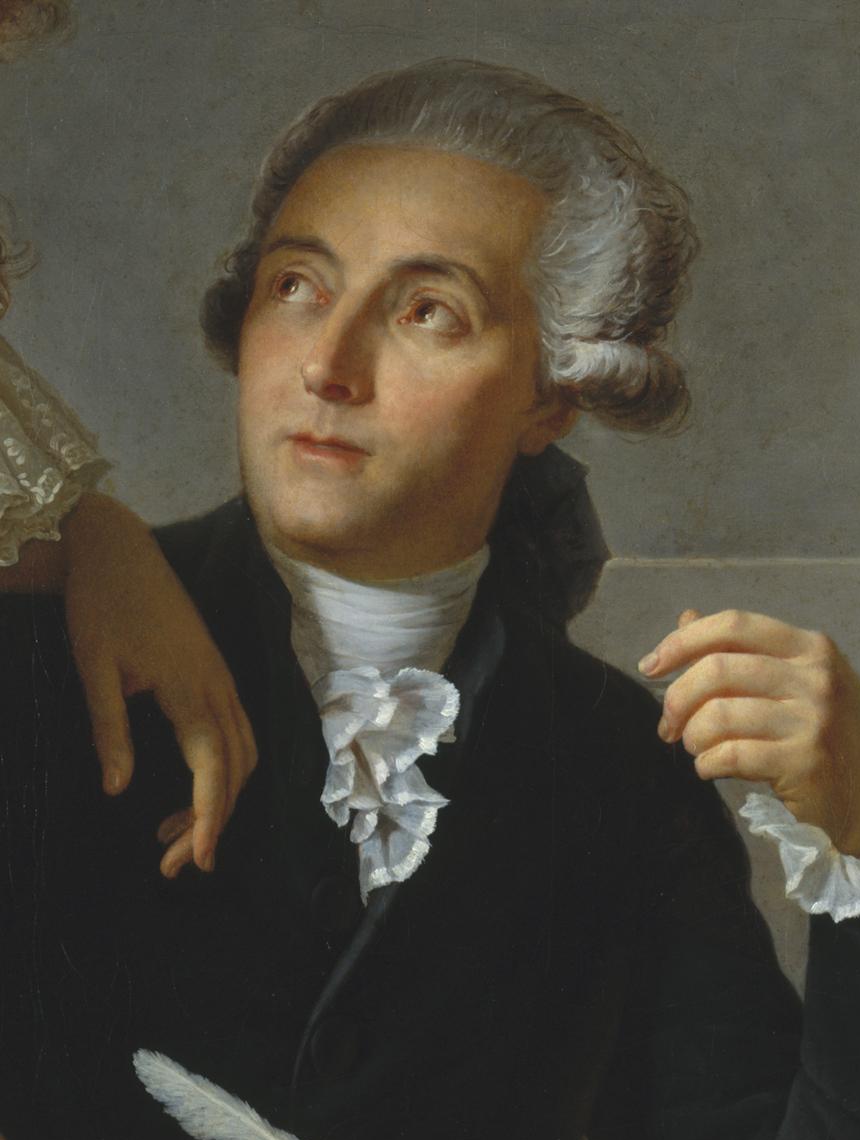
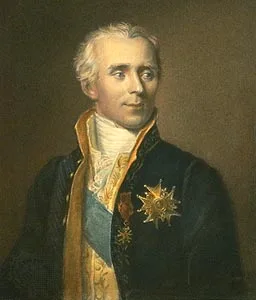
These workers invented an ice calorimeter, with it measured the respiratory quotient of a pig, and demonstrated the analogy between respiration and combustion.
1786
#11534
The first American edition, An abridgement of the practice of midwifery: and a set of anatomical tables.
An abridgement of Smellie's obstetrical writings, with plates engraved by the editor and publisher, John Norman, was the first medical book with engraved illustrations published in North America, and also the first bo…
1797
#1988
Medical reports, on the effects of water, cold and warm, as a remedy in fever and febrile diseases.
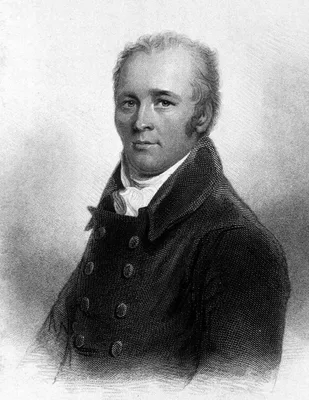
Currie was among the first in Britain to use cold water packs in the treatment of fever. He made some original observations on the clinical use of the thermometer. It was Currie who first edited Robert Burns’s Collect…
1803
#4308.1
Practical observations in surgery.
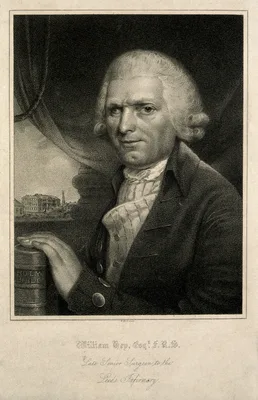
Hey is remembered for “Hey’s saw” and “Hey’s internal derangement of the knee,” a phrase that he coined. He was an outstanding surgeon in his day; he founded and was senior surgeon of the General Infirmary, Leeds. He …
1805
#12855
Traité des maladies de la bouche d'après l'état actuel des connoissances en medécine et en chirurgie, qui comprend la structure et les fonctions de la bouche, l'histoire de ses maladies, les moyens d'en conserver la santé et la beauté et les operations particulières à l'art du dentiste.
Gariot promoted himself as "Dentist to King of Spain." "The invention of articulators for holding the casts of artifical teeth is attributed to ...J. B. Gariot. Gariot designed his first model in 1805 from impressions…
1806
#2672.1
Lichtleiter, eine Erfindung zur Anschauung innerer Theile und Krankheiten nebst der Abbildung.
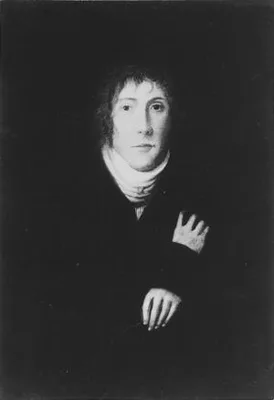
Bozzini introduced a speculum in which the idea of illumination and reflection by mirrors was utilized. English translation in Urology, 1974, 3, 119-23. Bozzini published his work in book form, Der Lichtleiter, Weimar…
1811
#4676
A treatise on a malignant epidemic, commonly called spotted fever.
First book on cerebrospinal meningitis; in it North recommended the use of the clinical thermometer, not in general use until the time of Wunderlich. For more information on this book, see the article by F. L. Pleadwe…
1818
#2015
Experiments on the transfusion of blood by the syringe.
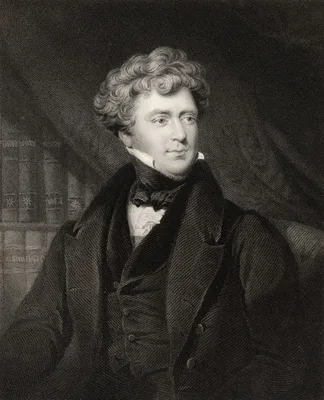
Blundell invented a syringe by means of which he was able to transfuse dogs.
1819
#2673
De l’auscultation médiate, ou traité du diagnostic des maladies des poumons et du coeur. 2 vols.
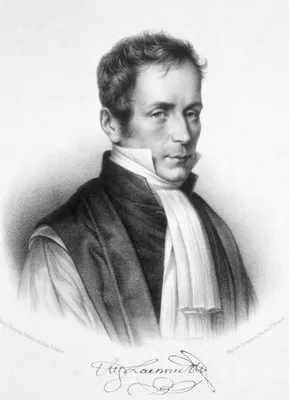
This book revolutionized the study of diseases of the chest. Auscultation in the instrumental sense dates from Laennec’s invention of the stethoscope (at first merely a roll of stiff paper) with a view to amplifying t…
1819
#11801
Bdellomètre du docteur Sarlandière.
Privately printed pamphlet describing Sarlandière's "artificial leech," a mechanical bleeding device designed to replace leeches when they were not available. Digital facsimile from Google Books at this link.
1823
#1492.1
Commentatio de examine physiologico organi visus et systematis cutanei.
Purkynĕ was first to examine the interior of the human eye and the dog eye, using only a candle and a concave spherical lens. He thus invented the ophthalmoscope three decades before Helmholtz (1851; No. 5866). Reprin…
1824
#11599
Original cases with dissections and observations illustrating the use of the stethoscope and percussion in the diagnosis of diseases of the chest: Also commentaries on the same subjects selected and translated from Auenbrugger, Corvisart, Laennec and others
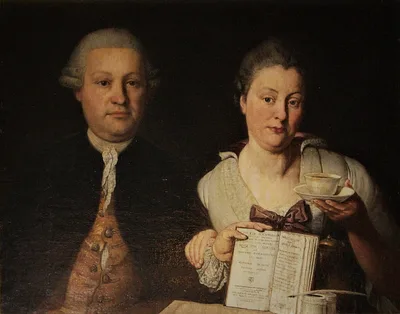
This is the earliest English work on the stethoscope. It "includes the first English translation of Auenbrugger's book on percussion, selected sections from Laennec's book on auscultation, and detailed reports from 39…
1825
#2674
An introduction to the use of the stethoscope.
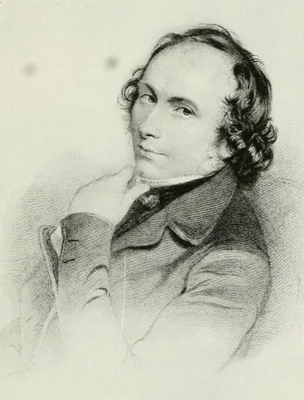
Stokes, famous member of the Irish school of medicine, published the first systematic treatise on the use of the stethoscope – and this before his qualification at Edinburgh. His name is perpetuated in medical literat…
1826
#14323
Traité de l'auscultation médiate ou traité diagnostic des maladies des poumons et du coeur. 2 vols.
Second edition, hugely revised, expanded, and improved. The pagination of the first edition (1819) was 456 pp. in vol. 1 and 472 pp. in vol. 2. The second edition was expanded to 728pp. in vol. 1 and 790 pp. in vol. 2…
1827
#3365
Essai sur les maladies de l’oreille interne.
Saissy described a Eustachian bougie; he was probably the first to use this instrument. Besides dealing with the labyrinth, his book discusses diseases of the tympanum and Eustachian tube. English translation, Baltimo…
1827
#4165.1
Un moyen d’éclairer l’urètre et la vessie de manière à voir dans l’intérieur de ces organes.
Urethro-cystic speculum (endoscope).
1828
#767
Recherches sur la force du coeur aortique.
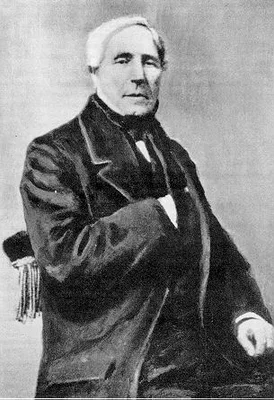
Poiseuille was the first after Stephen Hales to make any important addition to the knowledge of the physiology of circulation. In his graduation thesis, above, he described a “hemodynamometer” invented by himself and …
1828
#2675
De la percussion médiate.
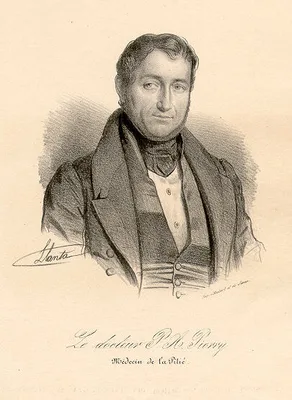
Piorry, pioneer of mediate percussion, introduced the percussor and the pleximeter in 1826. He also developed refinements to Laennec’s stethoscope.
1828
#3255
Description of a forceps, employed to facilitate the extirpation of the tonsil.
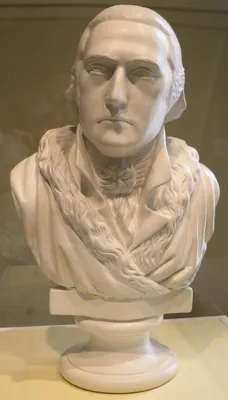
Invention of the modern tonsillotome.
1828
#3679.6
Traité complet de l’art du dentiste, d'après l'état actuel des connaissances. Par F. Maury. 2 vols.
Maury probably invented the dental probe. His book also shows one of the earliest illustrations of a dental mouth mirror. According to Quérard, F. Maury is the pseudonym of Auguste Tillet: "Table alphabétique de la pl…
1829
#3327
[Description of the glottiscope.]
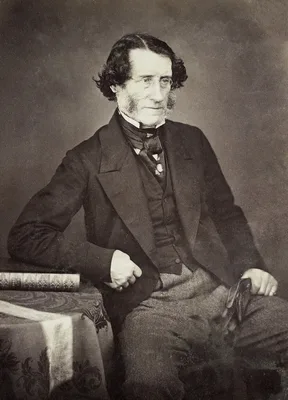
Babington was responsible for the introduction of laryngoscopy. He demonstrated a crude “glottiscope” to the Hunterian Society on March 18, 1829, but his effort attracted little attention.
1831
#12865
A practical guide to operations on the teeth. To which is prefixed a historical sketch of the rise and progress of dental surgery.
In this work Snell described and illustrated his "operating chair," the first reclining dental chair with adjustable headrest. The chair also had a convenient mirror mounted on one of the arms for the patient to look …
1834
#2748.2
Le sphygmomètre; instrument qui traduit à l’oeil toute l’action des artères.
Hérisson invented an instrument for recording blood pressure. Translated into English as The sphygmometer, an instrument which renders the action of the arteries apparent to the eye. A memoir... with an improvement of…