
Facets
Browse across eight MeSH (opens in new tab) facets — era, geography, science, specialty, technology, history, culture, and reference. Select one tag per group; counts update across the others. What’s new in facet browse how facets relate to subjects and MeSH.
Clear filtersFacet filters
Geography
Specialties & Disease
- Anatomy & Pathology 765
- Cardiology & Blood 914
- Neurology & Psychiatry 1,258
- Obstetrics & Reproductive 551
- Infectious Disease (General) 147
- Surgery & Anesthesia 1,553
- Public Health 1,129
- Immunology & Dermatology 1,405
- General Clinical Medicine 487
- Military Medicine 436
- Psychology 202
- Alternative & Fringe Medicine 383
- Pediatrics 247
- Ophthalmology & Vision 412
- ENT & Hearing 293
- Urology & Nephrology 309
- Gastroenterology & Hepatology 316
- Pulmonary & Respiratory 233
- Rheumatology, Rehab & Pain 189
- Internal, Emergency & Geriatric 123
- Veterinary Medicine 165
- Epidemiology & Demography 397
- Physiology & Embryology 924
- Dentistry 259
- Plagues & Epidemics 1,279
- Microbiology & Virology 1,080
Social & Historical Studies
Institutions & Culture
Reference & Scholarly Works
309 entries match Urology & Nephrology [C13]
1476
#4204
Summa conservationis et curationis. Chirurgia.
![SALICETO, Guglielmo da [WILLIAM OF SALICETO] (1210 – 1277)](/media/portraits/6798)
Contains (Cap. cxl) his classic account of renal edema: De duritie in renibus, an English translation of which is in Major, Classic descriptions of disease, 3rd ed., 1945, p. 527. ISTC no. is00032000.
1477
#10725
Liber phsionomiae [and other works].
![SCOT, Michael [Michael Scotus] (1175 – 1232)](/media/portraits/12461)
"Composed between 1209 and 1226, the first of the two primary texts discusses human generation — anatomy, physiology, astrology, sexual behavior, conception and the health of the fetus. The second part, the Physiognom…
1478
#20
De medicina. Ed: Bartholomaeus Fontius.
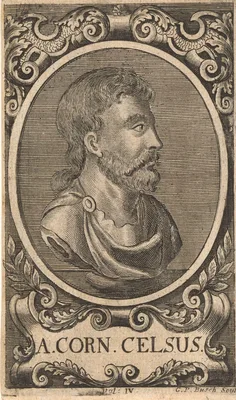
De Medicina is the oldest Western medical document after the Hippocratic writings. Written about 30 CE, it remains the greatest medical treatise from ancient Rome, and the first Western history of medicine. Celsus’s s…
1483
#8341
De urinis by Gilles de Corbeil, with commentary by Gentilis de Fulgineo. Edited by Venantius Mutius.
Gilles de Corbeil's medical poem De urinis was based on writings by Theophilus Protospatharius by way of the Articella. Poems such as this were intended as mnemonic aids for students, and they tended to be widely used…
1490
#47
Liber Teisir, sive rectificatio medicationis et regiminis. Antidotarium. Translated from Arabic into Hebrew by Jacobus Hebraeus; into Latin by Paravicius. Add: Averroes: Colliget.
This is a Latin translation from a Hebrew version dating from 1280. Avenzoar, the greatest Muslim physician of the Western Caliphate, described the itch-mite, Sarcoptes scabiei, serous pericarditis, mediastinal absces…
1513
#2269
Galen: De affectorum locorum notitia libri vi.
![GALEN, [Κλαύδιος Γαληνός; Galen of Pergamon] (129 – 216)](/media/portraits/21)
First separate dated Latin translation of De locis affectis, made by Wilhelm Copp of Basel. In this work devoted to pathology, Galen made many valuable deductions on inflammation and on tumors. He was familiar with ch…
1521
#367
Commentaria cum amplissimis additionibus super anatomia Mundini una cum textu ejusdem in pristinum et verum nitorem redacto.
Giacomo Berengario da Carpi (Jacobus Berengarius Carpensis, Jacopo Barigazzi, Giacomo Berengario da Carpi or simply Carpus) introduced iconography and independent anatomical observation into the teaching of anatomy. H…
1522
#368
Isagoge breves perlucide ac uberime in anatomiam humani corporis a communi medicorum academia usitatam.
One year after publishing his Commentary on Mondino, Giacomo Berengario da Carpi issued an abbreviated version or Isagoge, with most of the same woodcuts. This was the book by which Berengario's contributions to anato…
1535
#4278
De lapide renum curiosum opusculum nuperrime in lucem aeditum. Eiusdem De lapide vesicae per incisionem extrahendo sequitur aureus libellus.
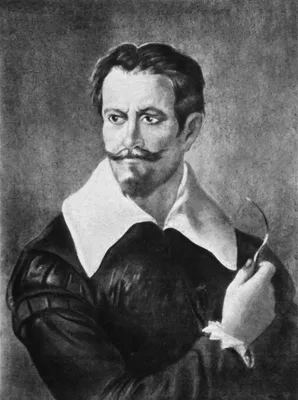
Marianus Sanctus Barolitanus popularized the operation of lithotomy introduced by the father of Giovanni Vigo of Rapallo. This method passed on to Giovanni di Romani and from him to Marianus. It became known as the “M…
1536
#1536
Liber introductorius anatomiae sive dissectionis corporis humani; in quo quam plurima membra, operationes, & utilitates tam ab antiquis, quam a modernis praetermissa manifestantur.
A practical manual for dissection, showing how to carry out an anatomy from the first incision onwards. Massa based his work on his experience gained from numerous dissections that he had undertaken in the hospital of…
1551
#4159
Methodus cognoscendi, extirpandique excrescentes in vesicae collo carunculas.
In the above work, Laguna, the "Spanish Galen," described a method of excising vesical caruncles for the first time. Digital facsimile from the Internet Archive at this link.
1554
#23
De vesicae renumque morbis. De purgantibus medicamentis. De partibus corporis humani...
First printed edition in Greek, edited by Jacques Goupyl. Rufus was a Greek physician who lived during the rule of Trajan. He wrote wrote treatises on dietetics, pathology, anatomy, and patient care. His De partibus c…
1556
#3573
Petit traité contenant une des parties principalles de chirurgie, laquelle les chirurgiens hernieres exercent.
Clifford Allbutt considered Franco the best lithotomist of the 16th century. His skill in extracting the stone by the perineal route was of a high order; in 1556 he introduced the operation of suprapubic cystotomy in …
1561
#1208
Observationes anatomicae.
Observationes anatomicae, a work of 232 leaves printed in the comparatively small octavo format, with no illustrations, was the only work Fallopio published before his death from tuberculosis at age thirty-nine, and i…
1561
#3574
Traité des hernies... et autres excellentes parties de chirurgie assavior de la pierre, des cataractes des yeux, & autres maladies...
Greatly expanded second edition, including Franco's operations for cataract and urinary calculi. Digital facsimile from BnF Gallica at this link.
1563 –1564
#1093
Opuscula anatomica.
Eustachius is credited with several anatomical discoveries, among them the tensor tympani muscle and the Eustachian tube, published in his chapter entitled De auditus organis. In the last respect, however, he was anti…
1564
#3668.1
Dix livres de la chirurgie avec le magasin des instruments necessaires à icelle.
Paré’s first general treatise on surgery, and the most comprehensive of his treatises before his collected works (1575). Dix livres included Paré's first description of the use of the ligature in amputations, one of h…
1565
#11489
Calculorum qui in corpore ac membris hominum innascuntur, genera XII. depicta descriptaque, cum historiis singulorum admirandis.
The first treatise to specifically on urinary calculi and gallstones, with each of the 12 chapters exploring a part of the human body where such stones are found (gall bladder, kidneys, bladder, etc.). Additionally, t…
1586
#3417
De medica historia mirabili.
An early history of diseases, with extensive sections on ophthalmology (ff. 66-77) and urology (ff. 260-271). Lib. IV, Cap. iii, page 196 contains the first recorded case of gastric ulcer. Lib. VI. cap. iii contains t…
1588
#4160
Tratado de todas las enfermedades de los riñones, vexiga, y carnosidades de la verga, y urina.
First treatise on diseases of the urinary tract. Also describes the high operation for stone. Diaz is sometimes called the “Father of Urology”.
1630
#1721
Disputatio medica de notis virginitatis.
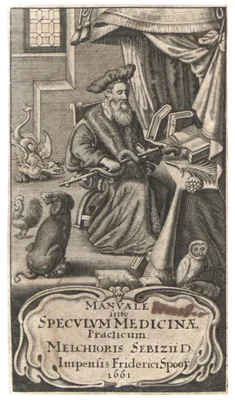
Details the methods of previous and contemporary writers concerning the determination of virginity. Digital facsimile from Google Books at this link.
1637
#4160.1
The pisse-prophet; or, certaine pisse-pot lectures. Wherein are newly discovered the old fallacies, deceit, and jugling of the pisse-pot science, used by all those… who pretend knowledge of diseases, by the urine….
Brian attacked the “pisse-mongers” and “pisse-prognosticators” hoping to eliminate the frauds of uromancy. He warned patients against diagnosis “prescribed only by the sight of the Urine”, and argued that uroscopy sho…
1638
#11647
De calculo renum & vesicae liber singularis. Cum epistolis & consultationibus magnorum virorum.
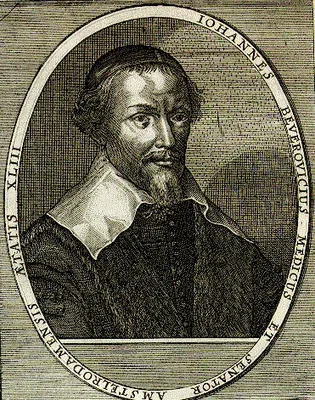
The first medical book to contain an endorsement of Harvey's theory of the circulation of the blood (originally published ten years earlier in 1628). Beverwijck began his work with a treatise on urinary and renal calc…
1662
#1229
Exercitatio anatomica de structura et usu renum.
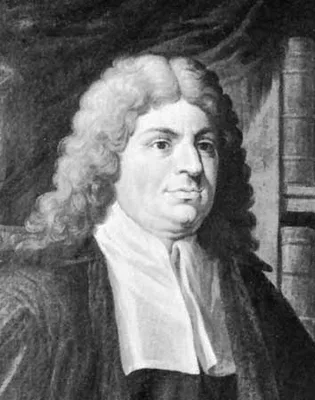
Classic description of the gross anatomy of the kidney. Bellini discovered the renal excretory ducts (“Bellini’s ducts”) and advanced a physical theory of the secretion of the urine. A translation of an extract from t…
1666
#1230
De viscerum structura exercitatio anatomica.
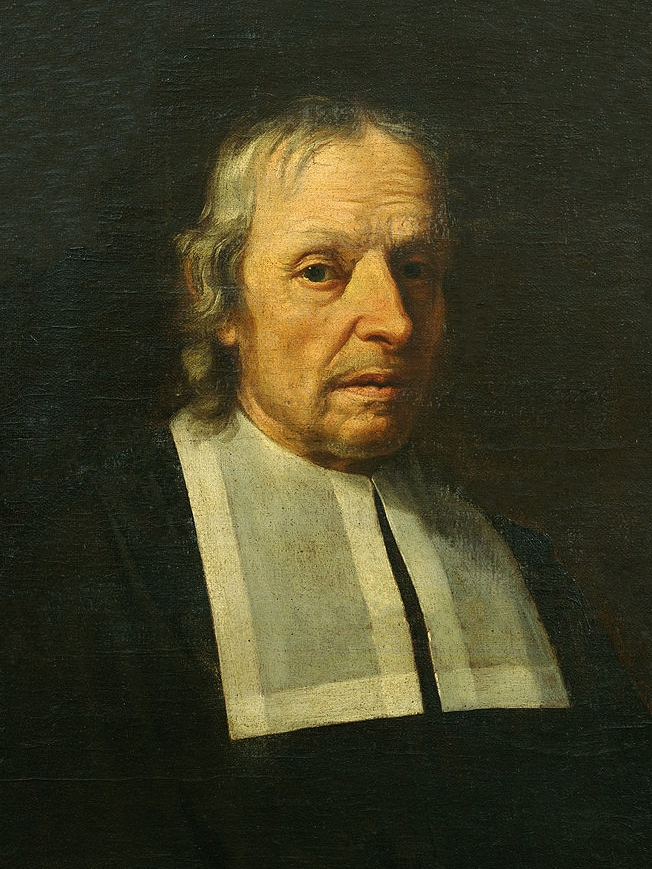
Includes (pp. 71-100) his essay, De renibus, in which he described the uriniferous tubules and the “Malpighian bodies”. The great detail and clarity of Malpighi’s description was unsurpassed until Bowman (No. 1231). T…
1668
#1210
De virorum organis generationi inservientibus, de clysteribus et de usu siphonis in anatomia.
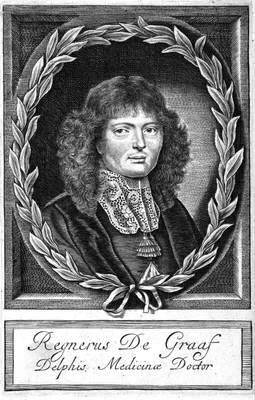
Exact and detailed account of the male reproductive system. This work and No. 1209 were translated into English and published as Suppl. 17 to J. Reprod. Fertil, 1972. Facsimile of originals, Nieuwkoop, De Graaf, 1965.
1672
#1209
De mulierum organis generationi inservientibus.
De Graaf demonstrated ovulation anatomically, pathologically and experimentally. In the above work he included the first account of the “Graafian follicle”. Translation of Chapter XII, dealing with the ovaries, by G. …
1672
#1211
Miraculum naturae, sive uteri muliebris fabrica.
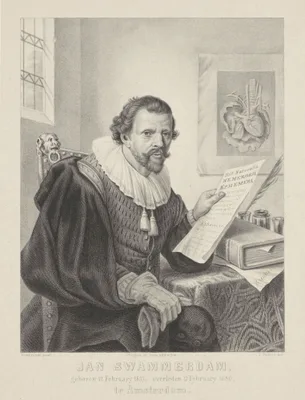
After de Graaf published his work on ovulation (No. 1209), Swammerdam asserted his priority in the above work, noting that his researches had been acknowledged in 1668 by van Horne.
1673
#4161
Exercitationes medicae practicae circa medendi methodum.
This work contains the first clear description of proteinuria, noting precipitation of urine with heat or acetic acid. Albuminuria was first described by Dekkers (Chapter V). A translation of this chapter is in Major,…
1682
#14336
Traité de la lithotomie ou de l'extraction de la pierre hors la vessie.
In Tolet's day lithotomy was one of the major and most dangerous of operations. Tollet provided explicit directions for the operation in children as well as adults of both sexes. He particularly stressed the need for …
1683
#4162
De urinis et pulsibus de missione sanguinis de febribus de morbis capitis, et pectoris.
Bellini began to develop his hydraulic iatromechanics in this work, in which he considered the blood as a physical fluid with simple mechanical and mathematicizable properties. He realized the value of the urine as an…
1683
#8934
Trattado unico das bexigas, e sarampo, offerecido a D. João de Sousa, composto por Romaõ Mõsia Reinhipo.
One of the first works on medicine practiced in Brazil, published by Mourão under the pseudonym Romaõ Mõsia Reinhipo. Mourão distinguished clearly between smallpox and measles. There was still much confusion in the se…
1684
#1212
Observations anatomiques.
Includes a brief description of “Cowper’s glands”.
1691
#1213
Adenographia curiosa et uteri foeminei anatome nova.
Description of the “canal of Nuck”.
1699
#1214
An account of two new glands and their excretory ducts, lately discovered in human bodies.
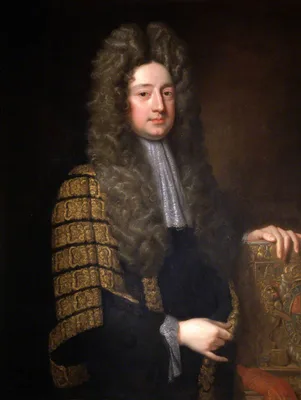
Cowper’s description of the glands which bear his name. He was forestalled in their discovery by Jean Méry.
1700
#11894
Observations sur la maniere de tailler dans les deux sexes pour l'extraction de la pierre, pratiqué par Frere Jacques. Nouveau system de la circulation du sang pour le trou ovale dans le foetus humain, avec les réponses aux objections qui ont été faites contre cette hypothese.
"Méry became closely associated with the comparative-anatomical work led by Claude Perrault and J.-G. Duverney. As a member of this group, Méry made contributions to their joint publications, in which each man’s speci…
1707
#1216
De sterilitate mulierum.
The Nabothian cysts and glands of the cervix uteri first described (sect. xv).
1707
#4279.1
Litotomia…
A renowned specialist and pupil of Bellini, Alghisi was probably the first to use an indwelling urethral catheter to drain urine away from the wound after lithotomy. The inclined position of the patient with the head …
1710
#4280
A compleat treatise of the stone and gravel.
Groenveldt was a famous lithotomist, using the suprapubic technique. He also enjoyed a rather unsavoury reputation as a quack for his determination to promote the use of cantharides. He changed his name to Greenfield …
1719
#1215
Description de l’urèthre de l’homme.
“Littre’s glands” described.
1720
#4281
Lithotomia Douglassiana; or, an account of a new method of making the high operation, in order to extract the stone out of the bladder.
Douglas accused Cheselden of plagiarizing his work, although the latter had acknowledged his indebtedness to Douglas. It is possible that this was the reason which prompted Cheselden to drop the high operation in favo…
1723
#4282
A treatise on the high operation for the stone.
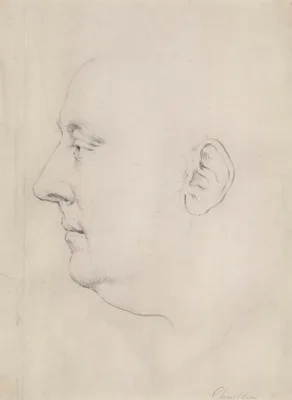
Cheselden was surgeon to St. Thomas’s Hospital and an outstanding figure in British surgery in the first half of the 18th century. The above work describes his method of performing suprapubic lithotomy, a method which…
1727
#4282.1
Traité de l’opération de la taille.
François Colot was the last and best-known member of the Colot family, itinerant lithotomists.
1730
#1217
A description of the peritonaeum, and of that part of the membrane cellularis which lies on its outside. With an account of the true situation of all the abdominal viscera, in respect of these two membranes.
Douglas described the peritoneum in detail; his name is perpetuated in the “pouch”, “line”, and “fold of Douglas”. He was a friend of John Hunter and brother of John Douglas, the lithotomist.
1730
#4283
Parallèle des différentes manières de tirer la pierre hors de la vessie.
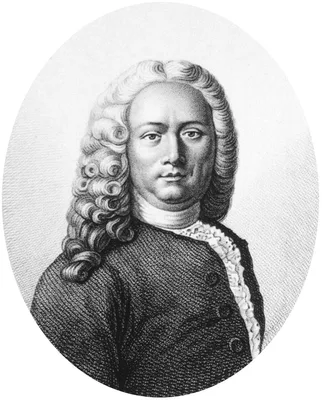
Le Dran, famous French lithotomist, improved the operation of lithotomy. Murphy credits him for originating the lateral lithotomy usually attributed to Cheselden, whose method he discusses. Le Dran was one of Haller’s…
1743
#4163
Mémoire sur quelques obstacles qui s’opposent à l’éjaculation naturelle de la semence.
“Peyronie’s disease”, a noncancerous condition resulting from fibrous scar tissue that develops on the penis and causes curved, and sometimes painful erections.
1748
#4284
A remarkable case of a person cut for the stone in the new way, commonly called the lateral, by William Cheselden, Surgeon to Her late Majesty; communicated to Martin Folkes, Pr. R. S
Cheselden’s lateral lithotomy first described in this brief paper by Alexander Reid. Digital facsimile from royalsocietypublishing.org at this link.
1762
#4164
Practical remarks on the hydrocele or watry rupture.
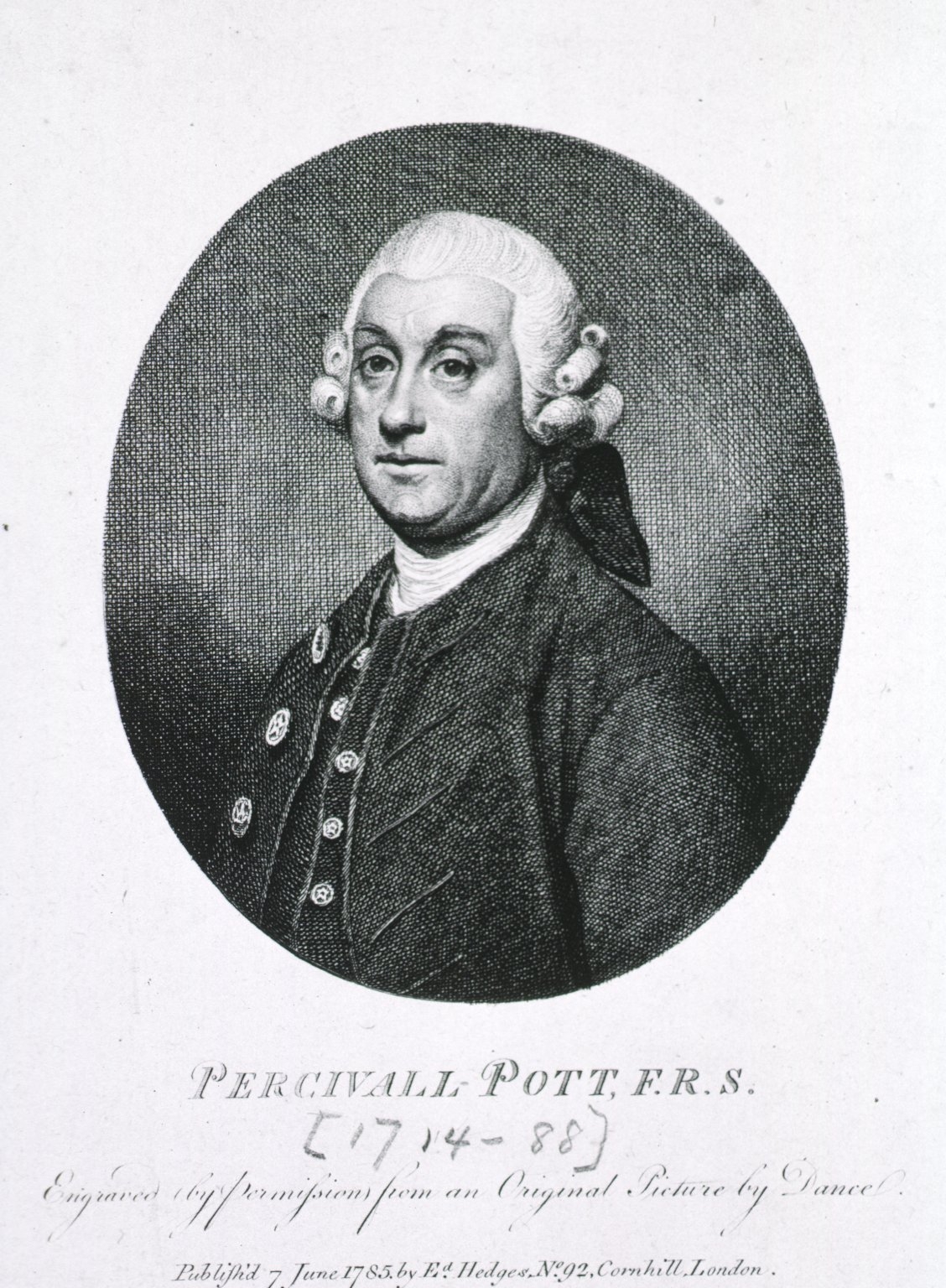
Classic description of hydrocele.
1764
#1382
De ischiade nervosa commentarius.
Cotugno published a classic description of sciatica, which is useful even today. He recognized two types – arthritic and nervous; the latter has been called “Cotugno’s disease”, and his book is confined to that type. …
1775
#2122
Chirurgical observations relative to the cataract, the polypus of the nose, the cancer of the scrotum, etc.
Includes the first description of occupational cancer. By describing chimney sweeps” cancer of the scrotum, Pott was the first to trace the origin of a type of cancer to a specific external cause. The above work also …