
Facets
Browse across eight MeSH (opens in new tab) facets — era, geography, science, specialty, technology, history, culture, and reference. Select one tag per group; counts update across the others. What’s new in facet browse how facets relate to subjects and MeSH.
Clear filtersFacet filters
Geography
Specialties & Disease
- Anatomy & Pathology 765
- Cardiology & Blood 914
- Neurology & Psychiatry 1,258
- Obstetrics & Reproductive 551
- Infectious Disease (General) 147
- Surgery & Anesthesia 1,553
- Public Health 1,129
- Immunology & Dermatology 1,405
- General Clinical Medicine 487
- Military Medicine 436
- Psychology 202
- Alternative & Fringe Medicine 383
- Pediatrics 247
- Ophthalmology & Vision 412
- ENT & Hearing 293
- Urology & Nephrology 309
- Gastroenterology & Hepatology 316
- Pulmonary & Respiratory 233
- Rheumatology, Rehab & Pain 189
- Internal, Emergency & Geriatric 123
- Veterinary Medicine 165
- Epidemiology & Demography 397
- Physiology & Embryology 924
- Dentistry 259
- Plagues & Epidemics 1,279
- Microbiology & Virology 1,080
Social & Historical Studies
Institutions & Culture
Reference & Scholarly Works
397 entries match Epidemiology & Demography [N02.350 / K01.400.680]
1497
#2363
Libellus de Epidemia, quam uulgo morbum Gallicum uocant,
One of the earliest treatises on syphilis, and one of the few medical books printed by Aldus Manutius in the 15th century. Leoniceno included a good description of syphilitic hemiplegia. He believed that syphilis was …
1529
#5520
Ein Regiment: wie man sich vor der newen Plage der Englische Schwaisz genannt, bewaren, und so mann damit ergryffen wirt, darinn halten sall.
Euricius Cordus, father of Valerius, wrote an important account of sweating sickness. Another edition was published at Nuremberg, also in 1529. Reproduced in Gruner’s Scriptores, 1847 (No. 5524).
1531
#5521
De peste Brittanica commentariolus vere aureus.
Schyller’s book on sweating sickness deals with the German epidemic of 1528-30.
1546
#2528
De sympathia et antipathia rerum liber unus. De contagione et contagiosis morbis et curatione.
Though Fracastoro wrote this book more than a century before Leewenhoek invented the microscope, and could only express the theory of contagion in very general terms, this book represents a landmark in the development…
1552
#5522
A boke, or conseill against the disease commonly called the sweate, or sweatyng sicknesse.
First English book on sweating sickness, and the first devoted to a single disease to be published in England. Caius’s work appeared a year after the last epidemic visit of the disease. From it we learn that the disea…
1603
#6821
True bill of the vvhole number that hath died at London.
BILL OF MORTALITY
The collection, recording, and publishing of medical statistics in the form of Bills of Mortality began in England as a result of the epidemic of plague in 1592-93. The earliest surviving copy of the Bills of Mortalit…
1640
#1673
Epidemiorum et ephemeridum libri duo.
A pupil of Fernel, De Baillou was a follower of Hippocrates in his advancement of the doctrine of “epidemic constitutions”. Crookshank regards him as the first modern epidemiologist. This work includes the first descr…
1662
#1686
Natural and political observations mentioned in a following index, and made upon the Bills of Mortality.
The first book on vital statistics. Graunt, a draper, studied the Bills of Mortality, which began as weekly lists of deaths and their causes, compiled by parish clerks. They gained much in importance after Graunt’s wo…
1665
#5119
London’s dreadful visitation, or, a collection of all the Bills of Mortality for the present year: beginning the 27th of December 1664, and ending the 19th of December following…By the Company of Parish Clerks of London.
BILLS OF MORTALITY
This is a valuable statistical record of the great plague of 1665. (No. 6052 in the Bibliotheca Osleriana.)
1684
#1311
Dr. Willis's practice of physick.
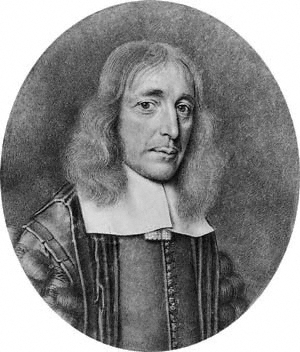
The only complete edition of Willis's works in English, translated by the poet Samuel Pordage. It contains the translations of all his works except his Affectionum quae dicuntur hystericae (1671). The collection inclu…
1685
#5407
Observationes medicae circa morborum acutorum historiam et curationem. Ed. quarta.

Contains (Book 3, Cap. 2; Book 5, Cap. 4) an important account of smallpox, particularly the epidemics of 1667-69 and 1674-75. Sydenham attributed smallpox to a specific inflammation of the blood; he clearly distingui…
1693
#1687
An estimate of the degrees of mortality of mankind, drawn from curious tables of the births and funerals at the city of Breslaw, with an attempt to ascertain the price of annuities upon lives.
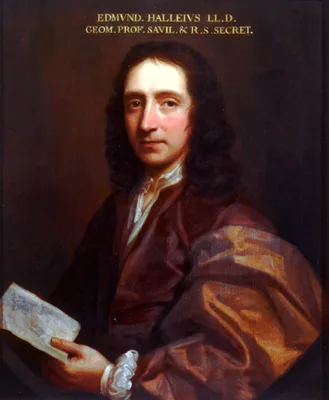
Halley, the astronomer, compiled the “Breslau tables” to show “the proportion of men able to bear arms … to estimate mortality rates, to ascertain the price of annuities upon lives, and was thus the virtual founder of…
1694
#8930
Trattado unico da constituiçam pestilencial de Pernambuco, offerecido a ElRey N.S. por ser servido ordenar por seu Governador aos Medicos da America, que assistem aonde ha este contagio, que o compusessem para se conferirem pelos Coripheos da Medicina aos dictames com que he trattada esta pestilencial febre.
The first scientific description of yellow fever in Brazil by the first European physician to treat the disease in Brazil, and perhaps in all of Latin America. It includes the description of the first autopsy of a yel…
1699
#1688
Several essays in political arithmetic.
A pioneer statistician, Petty took the first census of Ireland. He was Professor of Anatomy at Oxford and later Graham Professor of Music. SeeNo. 1686.
1710
#12498
An argument for Divine Providence, taken from the constant regularity observed in the births of both sexes.
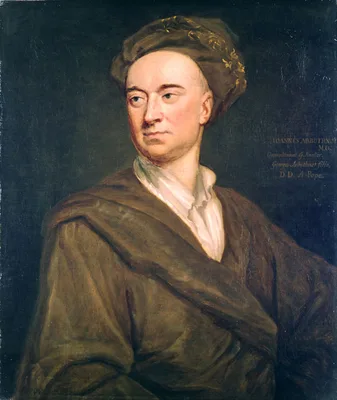
"Arbuthnot examined birth records in London for each of the 82 years from 1629 to 1710 and the human sex ratio at birth: in every year, the number of males born in London exceeded the number of females. If the probabi…
1717
#5232
De noxiis paludum effluviis, eorumque remediis.
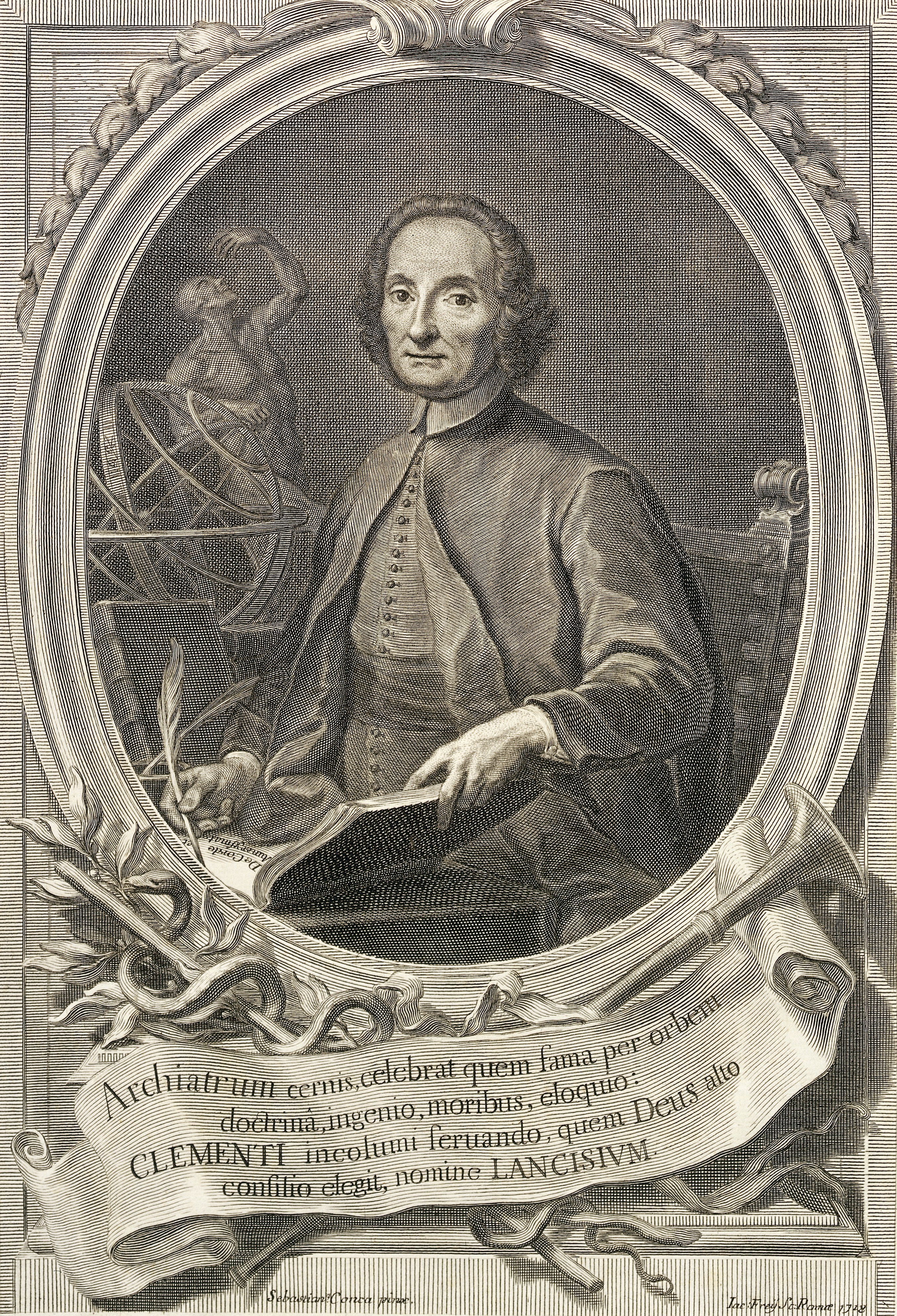
Lancisi suggested that since malaria disappears after drainage it was due to some sort of poison emanating from marshes and possibly transmitted by mosquitoes. He planned a drainage scheme for marshy regions. His work…
1718
#71
Jo. Mariae Lancisii archiatri pontificii. Opera quae hactenus prodierunt omnia; dissertationibus nonnullis adhuc dum ineditis locupletata, & ab ipso auctore, recognita atque emendata. Collegit, ac in ordinem digessit Petrus Assaltus. 2 vols.
Lancisi's collected works edited by Pietro Assalti. Lancisi was the first to describe cardiac syphilis; he was also notable as an epidemiologist, with a clear insight into the theory of contagion. He was physician to …
1720
#5123
A short discourse concerning pestilential contagion, and the methods to be used to prevent it.
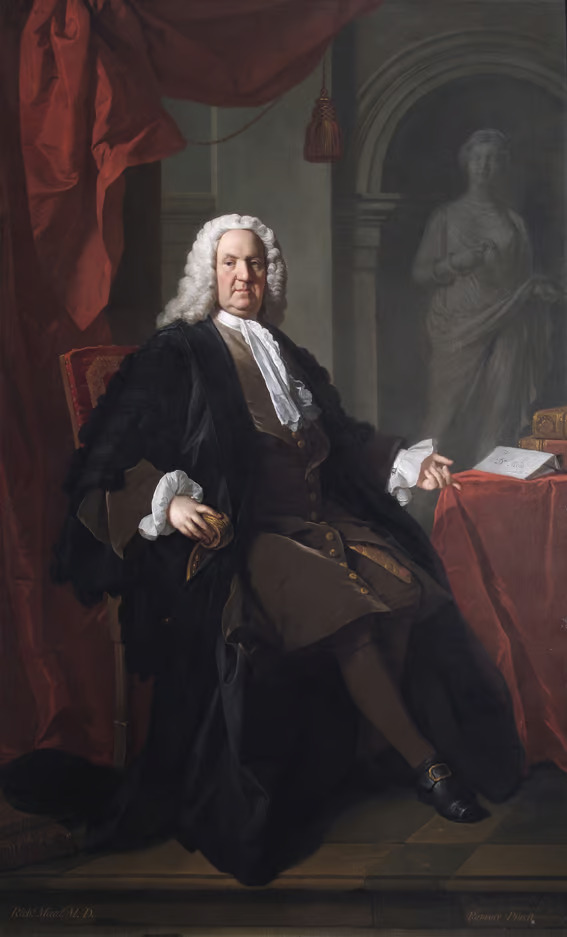
In 1719 Mead was asked for advice concerning an outbreak of plague in Marseilles, and replied with the above tract of 59 pages, which has been called the first epidemiological report produced by a physician at the com…
1723
#1689
A letter … containing, a comparison between the mortality of the natural small pox, and that given by inoculation.

Jurin was an enthusiastic supporter of inoculation against smallpox, and proved statistically that the fatality of inoculated smallpox is very much less than the fatality of natural smallpox. This is one of the earlie…
1725
#1690
Annuities upon lives; or, the valuation of annuities upon any number of lives; as also, of reversions. To which is added, an appendix concerning the expectations of life and probabilities of survivorship.
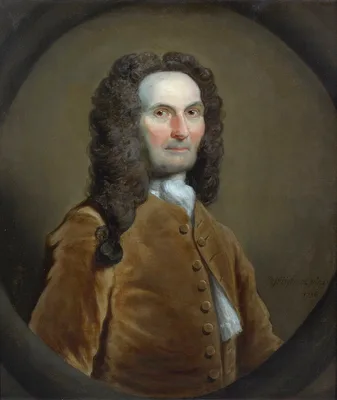
De Moivre, French Huguenot mathematician and demographer, formulated the hypothesis that among a body of persons over a certain age the successive annual decreases by death are nearly equal.
1731
#9461
Tabular observations recommended as the plainest and surest way of practising and improving physick. In a letter to a friend.
Clifton argued that physicians should base their judgments about the effects of treatments on a sufficient number of their own observations, or trusted observations by other physicians, rather than on the correlation …
1732
#9460
The state of physick, ancient and modern, briefly considered: with a plan for the improvement of it.
Instead of assessing the efficacy of therapies by their correlation with theories, Clifton argued that physicians should base their judgments about the effects of treatments on a sufficient number of their own observa…
1734 –1736
#60
Opera medica omnia. 4 vols.
De Baillou, “the first epidemiologist of modern times”, foreshadowed much that was afterwards taught by Sydenham. He first described whooping-cough and is often credit with introducing the term “rheumatism”. Baillou w…
1736
#5076
The practical history of a new epidemical eruptive miliary fever, with an angina ulcusculosa, which prevailed in Boston New England in the years 1735 and 1736.
Douglass left the first adequate clinical description of scarlet fever, which he called angina ulcusculosa, in his account of New England’s first scarlet fever epidemic. He was one of the first American physicians to …
1742
#1691
Die göttliche Ordnung in denen Veränderungen des menschlichen Geschlechts.
Süssmilch, a German army chaplain, produced an important book on vital statistics, the title of which translates as The divine order in the circumstances of the human sex, birth, death and reproduction. Among other th…
1746
#1691.1
Essai sur les probabilitiés de la durée de la vie humaine: d’où l’on déduit la manière de déterminer les rentes viagères, tant simples qu’en tontines.
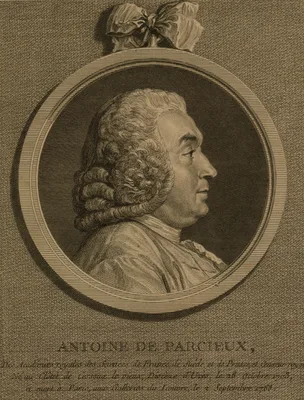
Deparcieux was the first to construct correct life tables. Appendix in 1760. Digital facsimile from Google Books at this link.
1750
#1692
New observations, natural, moral, civil, political, and medical, on city, town, and country bills of mortality.
Original and suggestive work on vital statistics, showing vividly the changing conditions of life as he saw it (Greenwood).
1751
#1674
Observations on the epidemical diseases in Minorca. From the year 1744 to 1749.
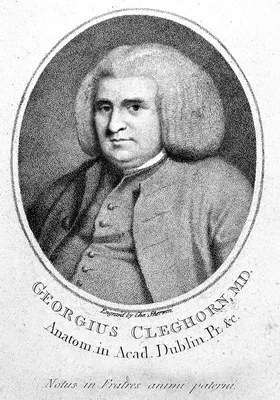
Cleghorn left a good account of several diseases and conditions not previously observed, among them epidemic jaundice. He included accounts of many post-mortems. Digital facsimile from the Internet Archive at this link.
1752 –1770
#1675
Observationes de aëre et morbis epidemicis. 3 vols.
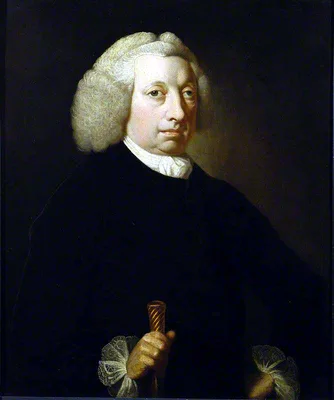
Huxham made daily records of the weather and prevailing diseases; his aim was to establish a relationship between atmospheric conditions and disease. The work was first published in 1728; vol. 1 and 2 of the edition g…
1759
#1692.1
A collection of the yearly bills of mortality, from 1657 to 1758 inclusive. Together with several other bills of an earlier date. To which are subjoined I. Natural and political observations on the bills of mortality; by Capt. John Graunt, F.R.S. reprinted from the sixth edition, in 1676. II. Another essay in political arithmetic, concerning the growth of city of London; with the measures, periods, causes, and consequences thereof. By Sir William Petty, Kt. F.R.S. reprinted from the edition printed at London in 1683. III. Observations on the past growth and present state of the city of London; reprinted from the edition printed at London in 175.1; with a continuation of the tables to the end of the year 1756
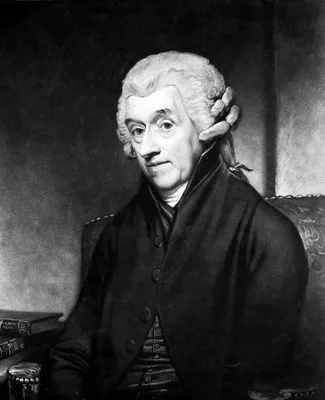

The only collected edition of early bills of mortality, which were generally published as broadsides and are not available separately. Includes reprints of Nos. 1686 and 1688. This work has traditionally been attribut…
1759
#1770
Observations on the changes of the air and the concomitant epidemical diseases, in the Island of Barbados.
Hillary included good accounts of lead colic and infective hepatitis, and probably the first description of sprue (celiac disease).
1761 –1762
#11816
Die gottliche Ordnung in den Veranderungen des menschlichen Geschlechts, aus der Geburt, dem Tode und der Fortpflanzung desselben erwiesen. Zwote und ganz umgearbeitete Ausgabe. 2 vols.
Twenty years after publication of the first edition (No. 1691), Süssmilch published a second edition "that was so different from the earlier book that it may well be called a separate work. While maintaining his origi…
1767
#13557
A comparative history of the increase and decrease of mankind in England, and several countries abroad, according to the different soils, situations, business of life, use of the non-naturals, &c. faithfully collected from, and attested by, above three hundred vouchers, and many of them for a long course of years, in two different Periods. To which is added a syllabus of the general States of health, air, seasons, and food for the last three hundred years; and also a meteorological discourse.
Digital facsimile from Google Books at this link.
1776 –1778
#12272
(1) Observations sur les maladies épidemiques, Année 1770, ouvrage rédigé d'après le tableau des epidémiques d'Hippocrate, et dans lequel on indique la meilleure méthode d'observer ce genre de maladies ... Publié par ordre du gouvernement, et aux fraix du roi. (2) Collection d'observations sur les maladies et constitutions épidémiques; ouvrage qui expose une suite de quinze années d'observations, & dans lequel les épidémies, les constitutions régnantes & intercurrentes, sont liées, selon le voeu d'Hippocrate, avec les causes météorologiques, locales & relatives aux différens climats, ainsi qu'avec l'histoire naturelle & médicale de la Normandie. On y a joint un appendix sur l'ordre des constitutions épidémiques ... Pub. par ordre du gouvernement .… 3 vols.
The first title, in 1 volume, was published in 1776; the second work in 2 vols., supplementing the first work, was published in 1778. In these two bioclimatological and biogeographical studies of disease in Normandy, …
1778
#13852
Collection d'observations sur les maladies et constitutions épidémiques: Ouvrage qui expose une suite de quinze années d'observations, & dans lequel les épidémies, les les constitutions régnantes & intercurrentes, sont liées, selon le voeu d'Hippocrate, avec les causes météorologiques, locales & relatives aux différens climats, ainsi qu'avec l'histoire naturelle & médicale de la Normandie. On y joint un appendix sur l'ordre des constitutions épidémiques ... 2 vols.
This work is divided into four parts: "The first, which occupies the first volume, contains a general description of Normandy, considerations about its climate, its people, their morals and habits, and the most common…
1779
#5079
An account of the scarlet fever and sore throat, or scarlatina anginosa; particularly as it appeared at Birmingham in the year 1778.
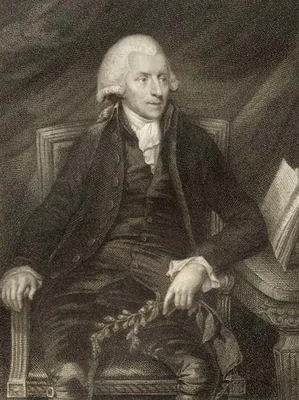
Withering, best remembered for his book on the foxglove, described the epidemics of scarlet fever which occurred in England in 1771 and 1778.
1780
#5488
Tableau historique et raisonné des épidémies catharrales vulgairement dites la grippe; depuis 1510 jusques et y compris celle de 1780.
1780
#5469
Korte aantekening wegens eene algemeene ziekte, doorgaans genaamd knokkel-koorts.
Bylon described an epidemic of dengue which appeared in the Dutch East Indies in 1779, the first definite description of the disease. O. H. P. Pepper published a photographic reproduction of the article in Ann. med. H…
1784
#10484
Dictamen del mismo doctor Don Joseph Masdevall dado de órden del rey sobre Si las fábricas de algodon y lana son perniciosas ó no á la salud pública de las ciudades donde están establecidas. IN: Relacion de las epidemias de calenturas putridas y malignas....
Digital facsimile of Masdevall's work on occupational medicine from helvia.uco.es at this link. Digital facsimile of the complete epidemiological work from Google Books at this link.
1786
#7806
Tableau des variétés de la vie humaine. 2 vols.
Massive and early study of puberty among Europeans, with comparative data including mortality tables. Daignan was especially interested in the plight of urban youth. He concluded his work with tables of life expectanc…
1788
#9896
Recherches, mémoires et observations sur les maladies épizootiques de Saint-Dominique, recueillis & publiés par le Cercle des Philadelphes du Cap-François.
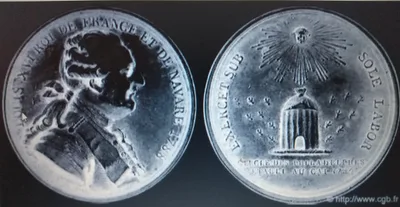
The Cercle des Philadelphes, of which Charles Arthaud was president, was an academic scientific society in Saint-Domingue, in existence between 1784 and 1791. It was the most prominent academic society in the Americas…
1789
#5470
An account of the bilious remitting fever. In his Medical inquiries and observations, 1, 104-21
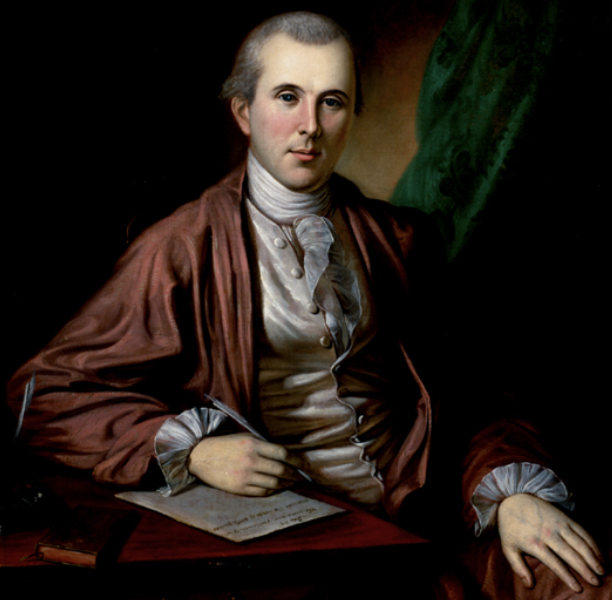
One of the first important accounts of dengue (“breakbone fever”). Rush described the Philadelphia outbreak of 1780.
1789
#8371
An arithmetical and medical analysis of the diseases and mortality of the human species.
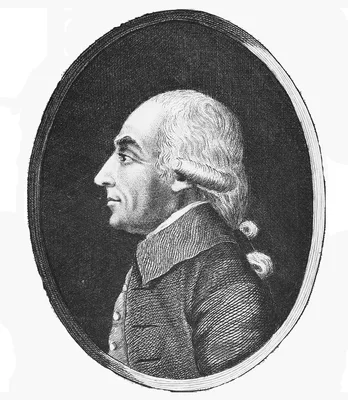
Black analyzed the London bills of mortality from 1701-1776. His work was the only study to provide a numerical account of insanity, a disease on people's minds because of George III's illness.
1791
#8580
Return of the whole number of persons with the several districts of the United States, according to "An Act Providing for the Enumeration of the Inhabitants of the United States," passed March the first, one thousand seven hundred and ninety-one.
The first Census of the United States was conducted on August 2, 1790. The results were used to allocate Congressional seats (congressional apportionment), electoral votes, and funding for government programs.The fede…
1793
#5451
A short account of the malignant fever, lately prevalent in Philadelphia: With a statement of the proceedings that took place on the subject in different parts of the United States.
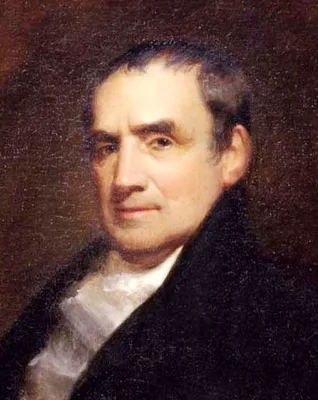
Carey was a Philadelphia publisher and economist rather than a physician. In this little book, which passed through four editions in a few months, Carey left a graphic description of the great yellow fever epidemic of…
1794
#5453
An account of the bilious remitting yellow fever, as it appeared in the city of Philadelphia in the year 1793.
Benjamin Rush was the most eminent figure in Philadelphia medicine in his day. His description of the yellow fever epidemic of 1793 is classic. He did magnificent work in treating the sick during the epidemic and in p…
1794
#5453.1
A narrative of the proceedings of the black people during the late awful calamity in Philadelphia, in the year 1793: and a refutation of some censures thrown upon them in some late publications.
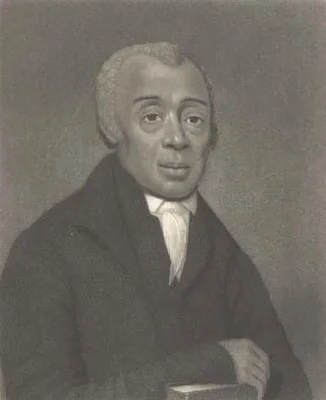
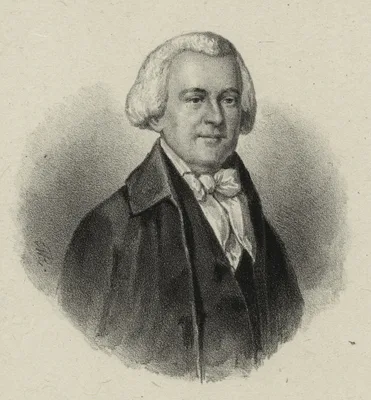
A refutation of slights by Matthew Carey in his Short account of the malignant fever, lately prevalent in Philadelphia (1793; No. 5451) to the important contributions of black people, many of whom served as nurses and…
1796
#13162
An account of the epidemic fever which prevailed in the city of New York, during part of the summer and fall of 1795.
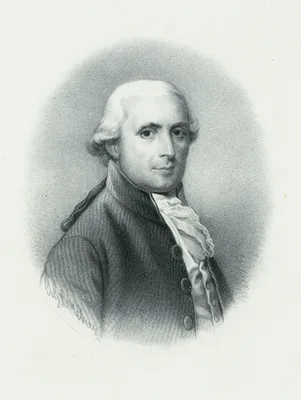
Traces the spread of yellow fever in late July, 1795, to the ship Zephyr, recently arrived from the West Indies. After spreading to nearby ships and then into the neighborhoods surrounding the port, the epidemic kille…
1797
#7687
An inquiry into the cause of the prevalence of the yellow fever in New-York.
Includes four early plot maps; Seaman was one of the first to create maps that attempted to show the spread of contagious disease.
1798
#1693
An essay on the principle of population, as it affects the future improvement of society.
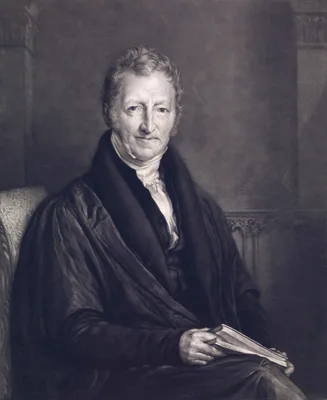
Malthus laid down the principle that populations increase in geometrical ratio, but that subsistence increases only in arithmetical ratio. He argued that a stage is reached where increase of populations must be limite…