
Entry Nos. 1900–1999
93 Garrison-Morton entries in this range.
1824
#145.56
De l’influence des agens physiques sur la vie.
Edwards studied the influence of environmental factors on animal life, concluding that vital processes depend on external physical and chemical forces but are not entirely controlled by them. The work includes an acco…
1910
#1900
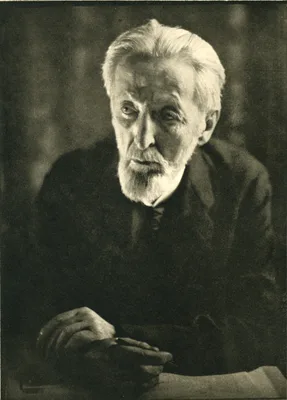
Die experimentelle Pharmakologie als Grundlage der Arzneibehandlung.
1911 –1912
#1901
Two crystalline pharmacological agents obtained from the tropical toad Bufo agua.
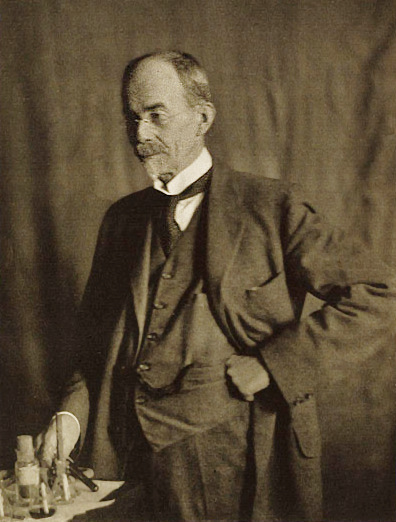
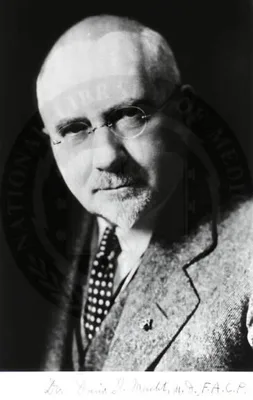
Isolation of bufagin. Preliminary communication in J. Amer. med. Assoc., 1911, 56, 1531-35.
1913
#1903
La synthèse des glucosides par les ferments.
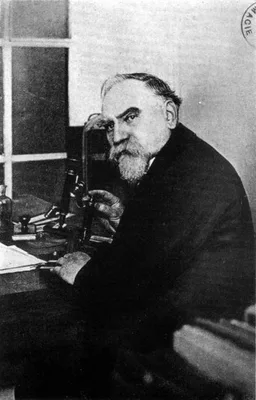
Bourquelot did important work on the synthesis of glucosides; several more papers followed the one given above.
1916
#1904
Digitaliswirkung am isolierten Vorhof des Frosches.
An important analysis of the action of digitalis on the isolated heart.
1917
#1905
Flavine and brilliant green, powerful antiseptics with low toxicity to the tissues: their use in the treatment of infected wounds.
Introduction of acriflavine. With R. Gulbransen, E. L. Kennaway, and L. H. D. Thomton.
1917 –1927
#1906
Handbuch der Pharmakognosie. 3 vols, and Register.
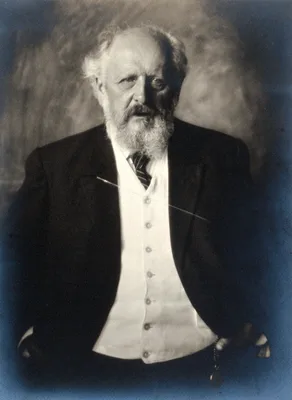
Includes detailed accounts of the history of each drug.
1919
#1907
Chemotherapy of trypanosome and spirochete infections. Chemical series. I. N-phenylglycineamide-p-arsonic acid.
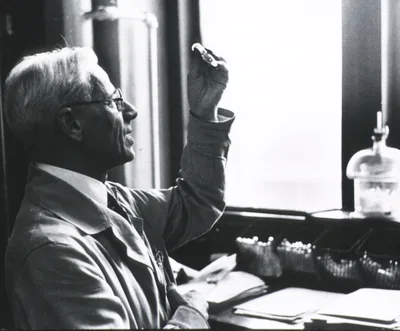
Introduction of tryparsamide.
1919
#1908
A new germicide for use in the genito-urinary tract; “mercurochrome-220”.
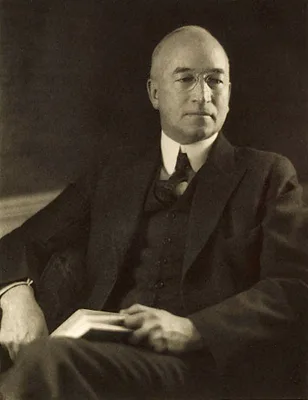
Introduction of mercurochrome. With E. C. White and E. O. Swartz.
1920
#1909
Handbuch der experimentellen Pharmakologie … Hrsg. von A. HEFFTER. Vol. 1-.
1921
#1910
Ueber die wirksamen Substanzen des Mutterkorns.
Isolation of ergotamine.
1925
#1911
Intravenous use of dyes.
Churchman demonstrated the selective bactericidal action of gentian violet against staphylococci. See also J. exp. Med., 1912, 16, 221-47; J. Urol., 1924, 11, 1-18.
1925
#1912
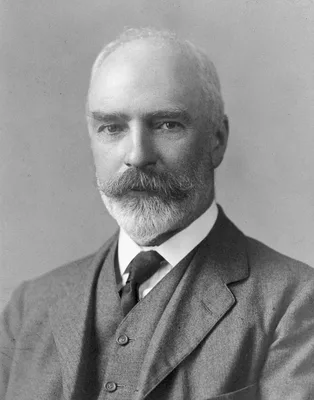
The action and uses in medicine of digitalis and its allies.
1926
#1913
Vergleichende Messungen über die Gewöhnung des Atemzentrums an Morphin, Dicodid und Dilaudid.
Introduction of dilaudid (Hydromorphone)
1926
#1914
Actions and uses of the salicylates and cinchophen in medicine.
Republished in book form, Baltimore, 1927.
1926
#1915
On the chemotherapy of neurosyphilis and trypanosomiasis.
Study of the effect of twelve different substances in neurosyphilis and trypanosomiasis.
1927
#1916
The nature of the vaso-dilator constituents of certain tissue extracts.
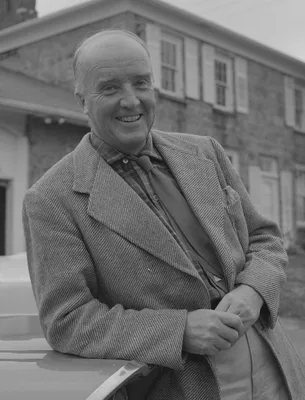
Proof that histamine occurs in certain organs in amounts sufficient to account for the depressant action of extracts of these organs. With H. H. Dale, H. W. Dudley, and W. V. Thorpe.
1926
#1917
The action of adrenalin and ergotamine on the uterus of the rabbit.
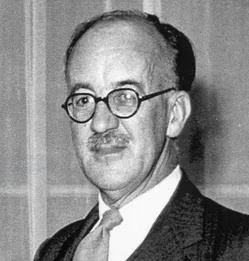
Gaddum produced concentration-effect curves of antagonistic drugs, showing the dose-ratio linearly related to antagonistic concentration. See also No. 1925.1
1930
#1918
Ephedrine and related substances.
A digest of the literature, together with an excellent bibliography. By their earlier work (J. Pharmacol., 1924, 24, 339-57) Chen and Schmidt aroused worldwide interest in ephedrine.
1930
#1919
Histamin: seine Pharmakologie und Bedeutung für die Humoralphysiologie.
1930
#1920
Digoxin, a new digitalis glucoside.
Isolation of digoxin from Digitalis lanata.
1932 –1934
#1921
Handbuch der Chemotherapie. 2 vols.
1933
#1923
The pharmacological action of an alkaloid obtained from Rauwolfia serpentina Benth. A preliminary note.
R. N. Chopra, J. C. Gupta, and B. Mukherjee demonstrated the sedative and hypotensive effect of an alkaloid isolated from Rauwolfia serpentina (reserpine).
1933
#1924
The mode of action of drugs on cells.
1937
#1925
Action protectrice des éthers phénoliques au cours de l’intoxication histaminique.
First description of structure and action of an antihistamine. In 1957 Bovet was awarded the Nobel Prize in Physiology or Medicine “for his discoveries relating to synthetic compounds that inhibit the action of certai…
1938
#1926
The action of substances allied to 4:4'-diaminodiphenylsulphone in streptococcal and other infections in mice.
G. A. H. Buttle, T. Dewing, G. E. Foster, W. H. Gray, S. Smith, and D. Stephenson discovered the potency of dapsone (DDS).
1939
#1927
Dolantin, ein neuartiges Spasmolytikum und Analgetikum. (Chemisches und pharmakologisches.)
Synthesis of pethidine (dolantin) (Demoral).
1939
#1928
The pharmacological actions and therapeutic uses of some compounds related to adrenaline.
1945
#1929
British anti-lewisite (BAL).
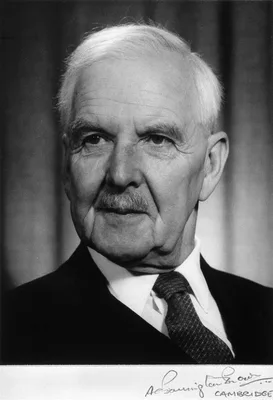
British Anti-Lewisite BAL (dimercaprol), a medication used to treat acute poisoning by arsenic, mercury, gold, and lead, was discovered during the 1939-45 war. With L. A. Stocken and R. H. S. Thompson.
1949
#1930
Bradykinin, a hypotensive and smooth muscle stimulating factor releases from plasma globulin by snake venoms and by trypsin.
Discovery of bradykinin. With W. T. Beraldo and G. Rosenfeld.
1952
#1931
Reserpin, der sedative Wirkstoff aus Rauwolfia serpentina Benth.
Isolation of reserpine. With E. Schlittler and H. J. Bein.
1876
#1932
The optical deportment of the atmosphere in relation to the phenomena of putrefaction and infection.
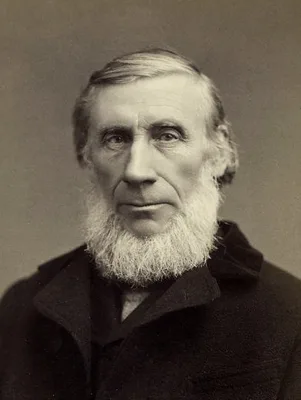
Tyndall observed the selective bacteria-inhibiting effect of Penicillium and the resistance of Ps. pyocyanea to it. See No. 2495.
1929
#1933
On the antibacterial action of cultures of a penicillium, with special reference to their use in the isolation of B. influenzae.
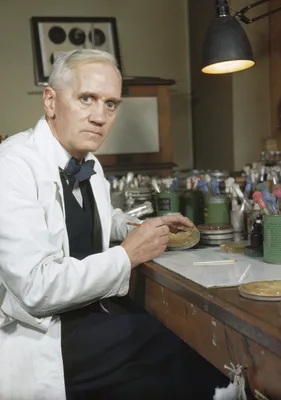
Discovery of the growth-inhibiting action of Penicillium on certain bacteria. In 1945 Fleming shared the Nobel Prize in Physiology or Medicine with Ernst Boris Chain and Sir Howard Walter Florey "for the discovery of …
1940
#1934
Penicillin as a chemotherapeutic agent.
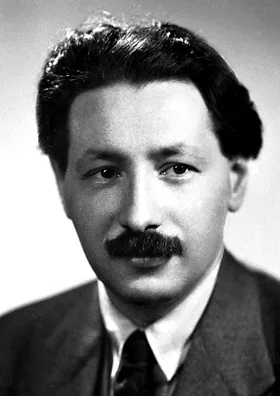
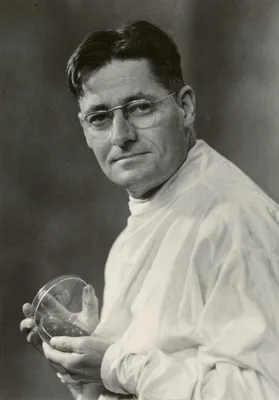
Proof of the therapeutic action in vivo of penicillin against streptococcal and other bacterial infections. Building upon Fleming’s work (No. 1933 and 10784), the consequences of which had originally been widely unapp…
1944
#1935
Streptomycin, a substance exhibiting antibiotic activity against Grampositive and Gram-negative bacteria.
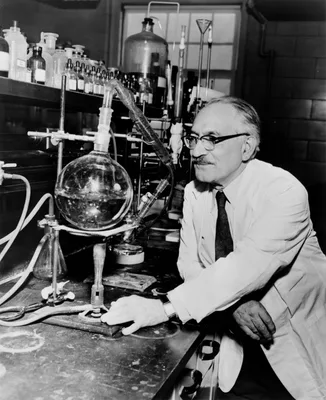
Introduction of streptomycin. Order of authorship: Schatz, Gregory, Waksman. In 1952 Waksman was awarded the Nobel Prize in Physiology or Medicine "for ingenious, systematic, and successful studies of the soil microbe…
1945
#1936
Bacitracin: a new antibiotic produced by a member of the B, subtilis group.
With H. Anker and F. L. Meleney.
1947
#1937
“Aerosporin”, an antibiotic produced by Bacillus aerosporus Greer.
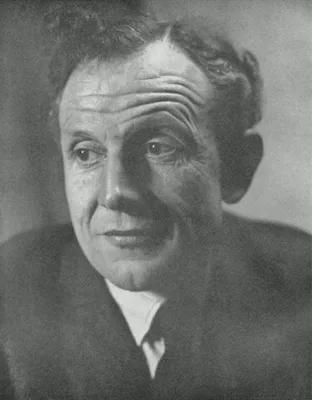
Discovery of aerosporin (polymyxin). With A. M. Brown and G. Brownlee.
1947
#1938
Chloromycetin, a new antibiotic from a soil actinomycete.
Production of chloramphenicol from Streptomyces venezuelae. With Q. R. Bartz, R. M. Smith, D. A. Joslyn and P. R. Burkholder.
1947
#1939
Procaine penicillin G (duracillin); a new salt of penicillin which prolongs the action of penicillin.
Procaine benzylpenicillin also known as penicillin G procaine was developed by Herrell and colleagues. With D.R. Nichols.
1947
#1940
Chloromycetin, an antibiotic with chemotherapeutic activity in experimental rickettsial and viral infections.
Introduction of chloramphenicol, used in treatment of typhus.
1947
#1941
Polymyxin: a new chemotherapeutic agent.
With R. G. Shepherd and H. J. White.
1948
#1943
Ricerche su di un nuovo antibiotico.
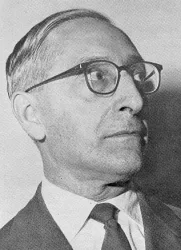
Brotzu showed that a Cephalosporium acremonium filtrate inhibited the growth of Gram-positive and -negative organisms.
1949
#1944
Neomycin, a new antibiotic active against streptomycin-resistant bacteria, including tuberculosis organisms.
Isolation of neomycin.
1949
#1945
An antiphage agent isolated from Aspergillus sp.
Isolation of fumagillin, an antibiotic with amoebicidal activity. See also Science, 1951, 113, 202-3.
1952
#1946
“Ilotycin”, a new antibiotic.
Discovery of erythromycin. With R. L. Bunch, R. C. Anderson, H. E. Boaz, E. H. Flynn, H. M. Powell, and J. W. Smith.
1954
#1947
Purification and some properties of cephalosporin N, a new penicillin.
With G. G. F. Newton and C. W. Hale.
1908
#1948
Ueber Sulfamide der p-Amidobenzolsulfonsäure.
Para-aminobenzenesulfonamide (sulphanilamide) first prepared.
1935
#1949
Ein Beitrag zur Chemotherapie der bakteriellen Infektionen.
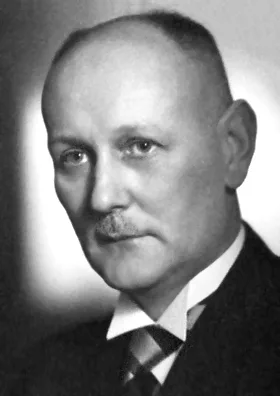
Introduction of Prontosil, the first drug containing sulfanilamide. In 1939 Domagk was awarded the Nobel Prize in Physiology or Medicine "for the discovery of the antibacterial effects of prontosil."
1935
#1950
Activité du p-aminophénylsulfamide sur les infections streptococciques expérimentales de la souris et du lapin.
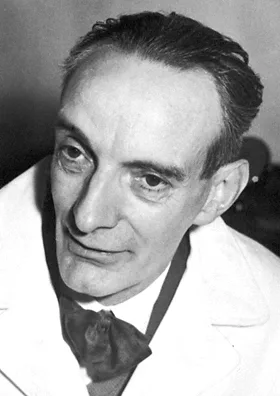
The Tréfouëls and colleagues assumed that the sulfonamide group was responsible for the results obtained with Domagk’s Prontosil. Their work led them to introduce sulfanilamide.
1938
#1951
Chemotherapy of pneumococcal and other infections with 2-(p-aminobenzenesulphonamido) pyridine.
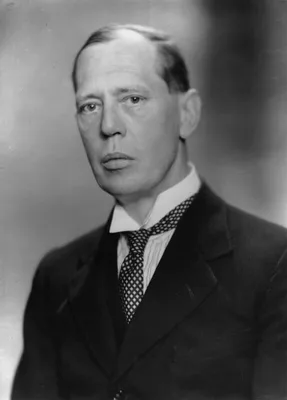
Experimental proof of the efficacy of sulfapyridine (M & B 693) in pneumococcal pneumonia.