
Facets
Browse across eight MeSH (opens in new tab) facets — era, geography, science, specialty, technology, history, culture, and reference. Select one tag per group; counts update across the others. What’s new in facet browse how facets relate to subjects and MeSH.
Clear filtersFacet filters
Geography
Specialties & Disease
- Anatomy & Pathology 765
- Cardiology & Blood 914
- Neurology & Psychiatry 1,258
- Obstetrics & Reproductive 551
- Infectious Disease (General) 147
- Surgery & Anesthesia 1,553
- Public Health 1,129
- Immunology & Dermatology 1,405
- General Clinical Medicine 487
- Military Medicine 436
- Psychology 202
- Alternative & Fringe Medicine 383
- Pediatrics 247
- Ophthalmology & Vision 412
- ENT & Hearing 293
- Urology & Nephrology 309
- Gastroenterology & Hepatology 316
- Pulmonary & Respiratory 233
- Rheumatology, Rehab & Pain 189
- Internal, Emergency & Geriatric 123
- Veterinary Medicine 165
- Epidemiology & Demography 397
- Physiology & Embryology 924
- Dentistry 259
- Plagues & Epidemics 1,279
- Microbiology & Virology 1,080
Social & Historical Studies
Institutions & Culture
Reference & Scholarly Works
1,258 entries match Neurology & Psychiatry [C10 / F04]
1470
#13696
Rhetorica ad C. Herennium.
First description of the "method of loci," the memory technique as known as the "memory palace." Because of its wide use during the Middle Ages this text survives in hundreds of medieval manuscripts. Fourteen printed …
1480
#8369
Practica, seu Lilium medicinae.
Includes descriptions of plague, tuberculosis, scabies, epilepsy, anthrax, and leprosy. ISTC No. ib00447000.
1481
#6929
De natura hominis. Add: De victu; De tuenda valetudine; Medicinae lex; Iusiurandum; Demonstratio quod artes sunt; Invectiva in obtrectatores medicinae. Tr: Andreas Brentius.
![HIPPOCRATES, [Ἱπποκράτης; Hippocrates of Kos] (-460 – -370)](/media/portraits/50)
The writings of Hippocrates began to appear in print in the 1480s, and only a few of the works attributed to Hippocrates were printed in the 15th century. Though the date of this edition is unstated within the book it…
1490
#6949
Philosophia pauperum, sive Isagoge in libros Aristotelis physicorum, de coelo et mundo, de generatione et corruptione, meteororum et de anima.
This edition, chronologically the fourth printed, of Albertus's commentaries on various works of Aristotle, contains the first printed illustration of the brain, showing in profile the three-cell theory of brain funct…
1491
#4511.01
De omnibus ingeniis augendae memoriae.
An early work on memory disorders and aids to memory. ISTC no. ia00210000. Digital facsimile from the Bayerische Staatsbibliothek at this link.
1499
#363.2
Philosophie naturalis compendium.
The last section of this commentary on Aristotle is an illustrated summary of anatomy, the text of which was derived, with some modifications, from medieval manuscripts. The series of eleven woodcuts has been called “…
1501
#363.3
Antropologium de ho[min]is dignitate, natura, et p[ro]prietatibus.
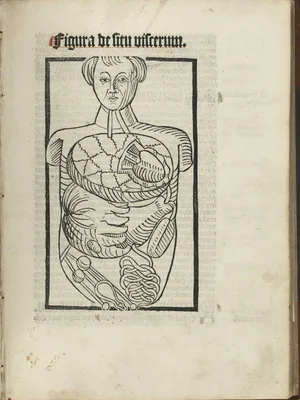
Includes the first illustrations of the viscera in a printed book. The four woodcuts are derived with modifications from Peyligk (No. 363.2). This work also contains the first mention ever of the word anthropology (in…
1512
#571
Divini Gregorii Nyssae episcopi qui fuit frater Basilii Magni libri octo. I. De homine. II. De anima. III. De elementis. IIII. De viribus animae. V. De voltario etinuoltario. VI. De fato. VII. De libero arbitrio. VIII. De prouidentia.
Nemesius’ De natura hominis, a physiological and psychological study of man, was highly esteemed during the Middle Ages. Nemesius, who wrote in the 4th century CE, was one of the first to propose that mental processes…
1518
#4850.2
Tractatus de fractura calve sive cranei.
The first separate treatise on head wounds and their surgical treatment. Berengario described several types of skull fractures and grouped the resulting lesions according to their symptoms, citing the relation between…
1522
#368
Isagoge breves perlucide ac uberime in anatomiam humani corporis a communi medicorum academia usitatam.
One year after publishing his Commentary on Mondino, Giacomo Berengario da Carpi issued an abbreviated version or Isagoge, with most of the same woodcuts. This was the book by which Berengario's contributions to anato…
1527
#2365
Liber de morbo gallico.
Includes a description of the neurological manifestations of syphilis. Though this work bears the date 1507, Peter Krivatsy, provided evidence that this edition was printed in 1527. See Krivatsy, "Nicola Massa's Liber…
1529
#1959.1
Caelii Aureliani Siccensis Tardarum passionum libri V. D. Oribasii Sardi Iuliani Caesaris archiatri Euporiston lib: III. Medicinae comperi: lib: 1. Curationum lib: 1. Trochiscoru confect: lib: 1.
From a clinical point of view, the two works of Caelius Aurelianus, which were translated into Latin from Greek originals by Soranus of Ephesus that were later lost, represent the high-point of Graeco-Roman medical ac…
1536
#370
Anatomia capitis humani.
The first work on the anatomy of the head. Elegantly illustrated with 11 woodcuts. English translation in No. 461.3.
1536
#1536
Liber introductorius anatomiae sive dissectionis corporis humani; in quo quam plurima membra, operationes, & utilitates tam ab antiquis, quam a modernis praetermissa manifestantur.
A practical manual for dissection, showing how to carry out an anatomy from the first incision onwards. Massa based his work on his experience gained from numerous dissections that he had undertaken in the hospital of…
1536
#11748
De palpitationes, tremore, rigore, convulsione. Intreprete Nicolao Lauachio, medico Florentino.
![GALEN, [Κλαύδιος Γαληνός; Galen of Pergamon] (129 – 216)](/media/portraits/21)
First separately published printed edition of Galen's writings on neuropathology. Digital facsimile from Google Books at this link.
1537
#371
Anatomiae, hoc est, corporis humani dissectionis pars prior.
Dryander was among the first to make illustrations after his own dissections. His unfinished guide to dissection entitled Anatomiae, expanded from the Anatomia published the previous year, is one of the most important…
1538
#4963.2
De anima et vita libri tres.

Vives anticipated Bacon and Descartes in developing an empirical psychology in which the mind was to be studied both through introspection and observation of others. From his exhaustive analysis of memory he developed…
1541
#373.1
Des aller fürtrefflichsten…erschaffen. Das is des menchen…warhafftige beschreibung oder Anatomi…
This plagiarism of Vesalius’s Tabulae anatomicae sex contains 25 woodcuts by Hans Baldung Grien (1484/1485-1545), and represents the artist’s only contribution to medical illustration. The woodcuts include the best il…
1549
#4511.02
De cerebri morbis…
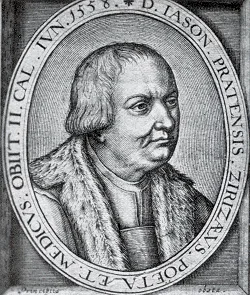
The first book devoted entirely to brain disorders, including tremor, tetanus, vertigo, epilepsy and hemicrania.
1563
#4916
De praestigiis daemonum.
Weyer was the first European physician to take an empirical, scientific approach to the study of mental illness. At the height of the witchcraft delusion he argued that witches were mentally ill women who deserved hum…
1567
#4916.1
Von den Kranckheyten so die vernunfft berauben als da sein S. Veyts Thantz…
In this work on the “diseases that deprive man of his reason” Paracelsus anticipated the descriptive method in psychiatry, giving a purely medical account of the clinical manifestations of epilepsy, mania, and hysteri…
1570
#4916.2
De spectris…
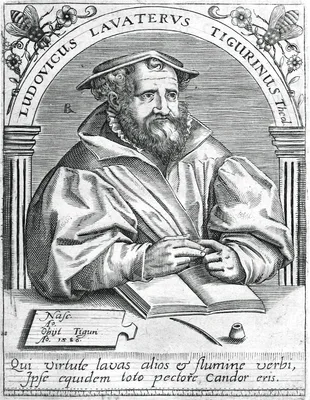
This work on ghosts is one of the earliest works on psychic experiences illusions, hallucinations, and delusions. The English translation, London 1572, probably gave Shakespeare some pointers on the behavior of the gh…
1573
#1377.2
De nervis opticis nonnulisque aliis praeter communem opinionem in humano capite observatis.
Varolio described a new method of dissection which enabled him to observe and describe the pons for the first time. By this new method Varolio was able to make some contributions to the knowledge of the course and ter…
1582
#7327
Aigentlich Beschreibung der Raiss, so er vor diser Zeit gegen Auffgang inn die Morgenländer, fürnemlich Syriam, Iudaeam, Arabiam, Mesopotamiam, Babyloniam, Assyriam, Armeniam etc....
Rauwolf provided the first modern descriptions of the flora of the area east of the Levantine coast. He was also the first to describe the riparian flora of the Euphrates, and the first European to publish an account …
1584
#4917
The discoverie of witchcraft.
Scot identified as mentally ill a large group of people who had hitherto been considered to be involved in witchcraft.
1584
#12946
Observationes medicae de capite humano: Hoc est, exempla capitis morborum , causarum signorum, evetuum, curationum, ut singularia, sic abdita & monstrosa, ex clariss. medicorum, veterum simul & recentiorum scriptis.
This work Schenck described his personal observations of language disorders, along with the observations of other physicians. He has been called a pioneer of neurolinguistics. Digital facsimile from Google Books at th…
1585
#7595
Anatomicae praelectiones.
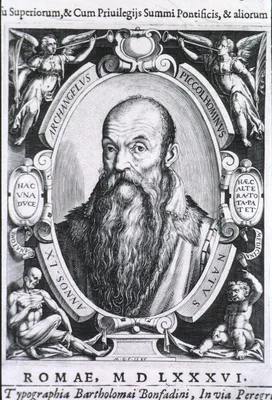
First description of a clear distinction between what is now known as gray and white matter in the central nervous system. The work also includes the first attempt to illustrate the brain in a sagittal view. The nine …
1586
#4918
A treatise of melancholie, containing the causes thereof.
First comprehensive description of depression in English. Bright also produced the first noteworthy geometrical system of shorthand, consisting of circles, half-circles, and straight lines (Characterie, London, 1588).
1587
#7337
De humano foetu liber tertio editus, ac recognitus. Eiusdem anatomicarum observationum liber: ac De tumoribus secundum locos affectos liber nunc primum editi.
First edition of Aranzi's Anatomicarum observationum published with the third edition of De humano foetu. In the Anatomicarum observationum Aranzi pointed out that the eye muscles arise from the margin of the optic ca…
1589 –1591
#8466
Der Bücher und Schriften des Edlen, Hochgelehrten und Bewehrten Philosophi und Medici, Philipi Thephrasti Bombast von Hohen hem, Paracelsi genannt. Edited by Johannes Huser. 10 vols.
First edition of Paracelsus's collected works. Though all the autographs of Paracelsus's writings were later lost, Huber, who was born shortly after Paracelsus's death, was able to collect a great number of autographs…
1603
#13553
A brief discourse of a disease called the suffocation of the mother. Written uppon occasion which hath beene of late taken thereby, to suspect possession of an evill spirit, or some such like supernaturall power. Wherin is declared that divers strange actions and passions of the body of man, which the common opinion, are imputed to the Divell, have their true naturall causes, and do accompanie this disease.
Jorden was the first English physician who viewed women accused of witchcraft as unfortunate persons suffering from some medical condition. "Asserting that there were natural causes for their afflictions, Jorden often…
1611
#6964
Anatomicae institutiones corporis humani.
The elder Caspar Bartholin was the first to describe the workings of the olfactory nerve, and introduced the terms nervus olfactorius and nervus vagus. This was a standard textbook for many years, undergoing numerous …
1614
#3789
Observationum in hominis affectibus plerisque, corpori & animo, functionum laesione, dolore, aliave molestia & vitio incommodantibus, libri tres.
First known report of a case of death from hypertrophy of the thymus, in an infant, is reported on p. 172; it is reproduced on p. 239 of J. Ruhräh’s Pediatrics of the past, New York, 1925. Platter first described flex…
1621
#4918.1
The anatomy of melancholy, what it is. With all the kindes, causes, symptomes, prognostickes, and severall cures of it.
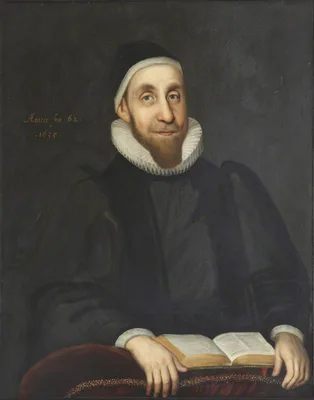
The first psychiatric encyclopedia, citing nearly 500 medical authors, and also a literary tour de force. Burton was prompted write this book because of his own bouts with depression. It is one of the most popular psy…
1632
#2273
De recondita abscessuum natura.
The first textbook of surgical pathology. It treats of all kinds of swelling under the term “abscess” and describes neoplasms of the genital organs and sarcoma of bones. Tumors of the breast are classified into four g…
1641
#1377.3
Institutiones anatomicae, novis recentiorum opinionibus & observationibus, quarum innumerae hactenus editae non sunt, figurisque auctae ab auctoris filio Thoma Bartholino.
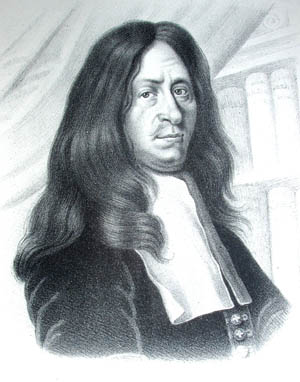
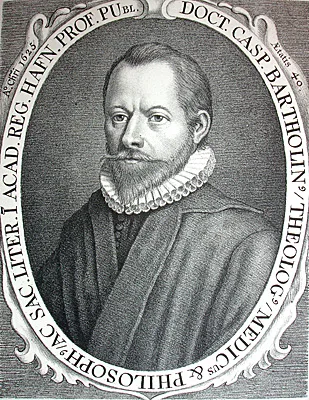
In this revision of his father’s anatomical treatise, Thomas Bartholin included the first depiction of the fissure of Sylvius, the lateral cerebral fissure, and the only part of the surface of the cerebral hemispheres…
1658
#2703
Observationes anatomicae, ex cadaveribus eorum, quos sustulit apoplexia.
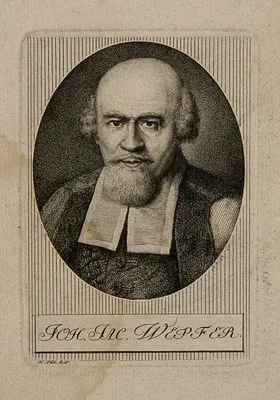
Wepfer showed apoplexy to be a result of hemorrhage into the brain. He described four cases, with clinical and post mortem findings. He preceded Willis (No. 1378) in describing the “circle of Willis”. Partial English …
1662
#574
De homine figuris et latinitate donatus a Florentio Schuyl.
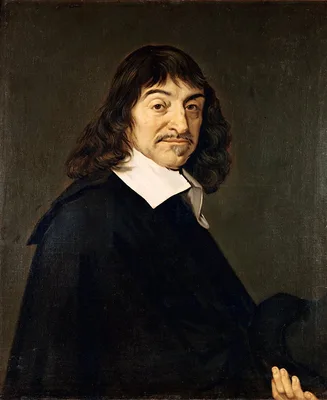
Descartes considered the human body a material machine, directed by a rational soul located in the pineal body. This book was the first attempt to cover the whole field of “animal physiology”. The work is really a phy…
1664
#1378
Cerebri anatome: cui accessit nervorum descriptio et usus.
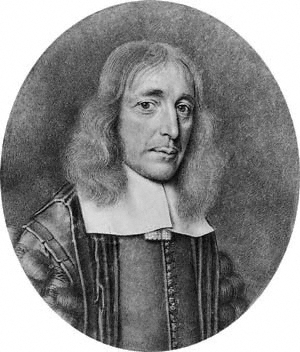
The most complete and accurate account of the nervous system which had hitherto appeared, and the work that coined the term, “neurology". In its preparation Willis was helped by his students Richard Lower and Thomas M…
1666
#1354.9
Anatome medullae spinalis, et nervorum.
The first separate work on the spinal cord. Blasius “illustrated the separate origin of the anterior and posterior roots, the dorsal root ganglia and the differentiation between the gray and white matter of the spinal…
1666
#4992
A brief account of Mr Valentine Greatrakes, and divers of the strange cures by him lately performed. Written by himself in a letter addressed to the Honourable Robert Boyle Esq., 1666.
The earliest scientific account, by a practitioner, and corroborated by witnesses, of healing by the “laying-on of hands”. Greatrakes became known as “the Irish stroker” because of his method of healing by stroking th…
1669
#1378.1
Discours sur l’anatomie du cerveau.
In this remarkably prescient argument for, and critique of, anatomical research into brain function Stensen opposed Descartes (No. 574) arguing that it was idle to speculate about cerebral function when so little was …
1670
#4839
Affectionum quae dicuntur hystericae e hypochondriacae pathologia spasmodica vindicata…
In this treatise on hysteria and hypochondria, Willis showed that hysteria was a nervous disease and not a uterine disorder as had been traditionally believed. He compared hysteria in women to hypochondria in men. He …
1671
#4512
Naturae genius, medicorum Celsus, Jason Argonautarum, Bauschius occubuit.
First authentic case of trigeminal neuralgia. It concerned J. L. Bausch, who died from the condition in 1665. The account is to be found in the unpaged part of the volume, starting at sig. d 3 and occupying the two fo…
1672
#1544
De anima brutorum
Chap. XIV is devoted to the sense of hearing; in it Willis described the “paracusis of Willis” (p. 73). English translation, 1683. A probable description of myasthenia gravis is given in Pars. 2, Cap. IX. In Pars 2, C…
1673
#12972
Nova medicina spirituum: Curiosa scientia & doctrina, unanimiter hucusque neglecta, & à nemine meritò exculta, medicis tamen & physicis utilissima. In quâ Primo Spirituum naturalis constitutio, vita, sanitas temperamenta, ingenia, calidum innatum, phantasiae vires, ideae, astrorum influentiae, μετεμψύχωσις, rerum magnetissimi, sympatiae & antipatiae, qualitates hactenus occultae, aliaq; caeteroquin abstrusa & paradoxa; Dehinc spirituum praeternaturalis seu morbosa Dispositio, causae, curationes per naturam, per diaetam, per arcana majora, palingenesiam, magnetissimum seu sympatheismum, transplantationes, amuleta, ingenuè & dilucidè demonstrantur.
”A very curious work, attributing the causes of many diseases to spirits and basing their cure on this theory. There is a great deal on insanity. The methods of treatment are partly chemical, partly magnetical, even s…
1676 –1680
#62
Opera omnia. 2 vols.
Willis was remarkable for his careful clinical observation. He was second only to Sydenham in his day. To him we owe the original descriptions of several conditions. Digital facsimile of the Lyon, 1681 edition from th…
1682
#9198
Dissertatio epistolaris . . . de observationibus nuperis circa curationem variolarum confluentium nec non de affectione hysterica.
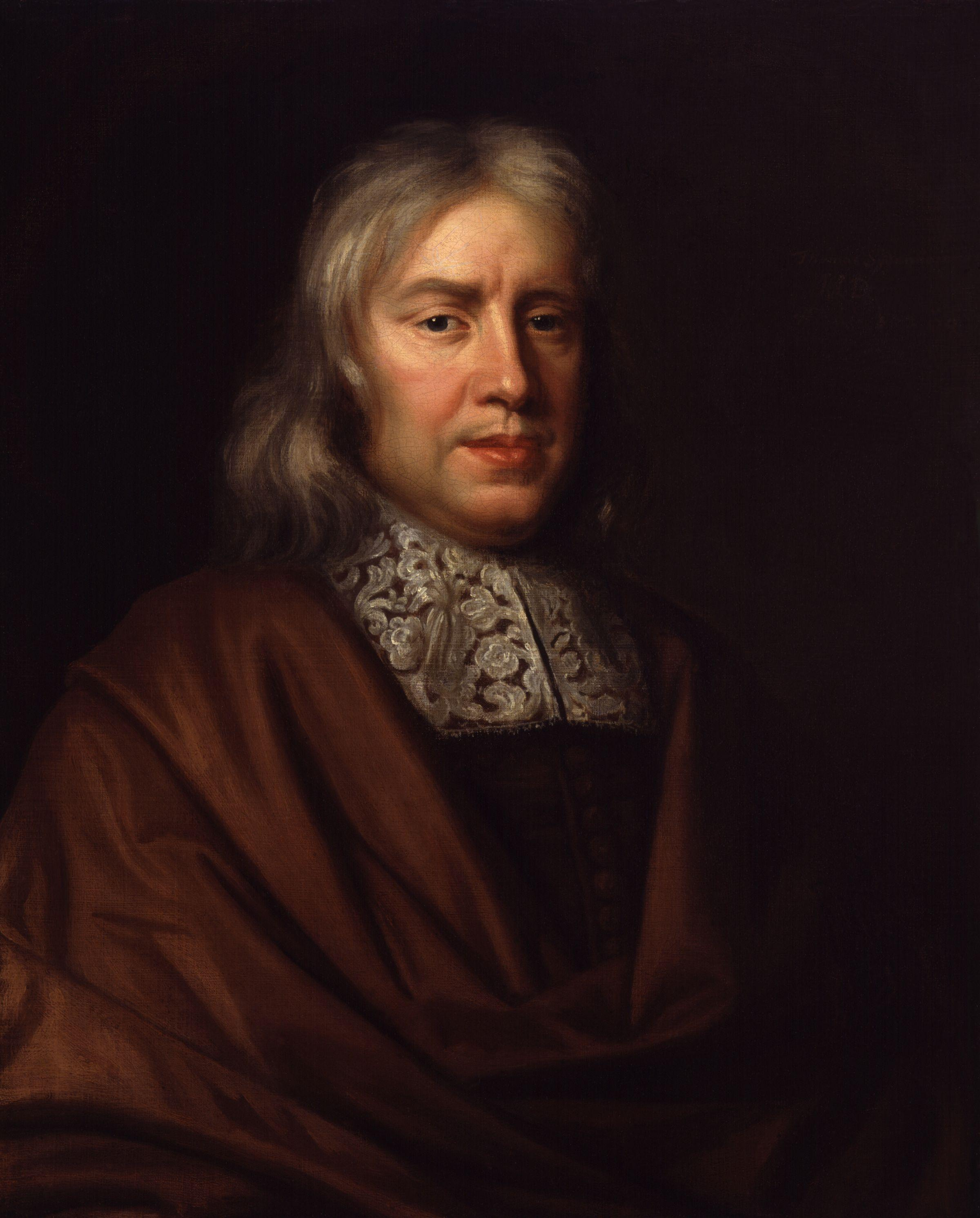
"Sydenham so precisely describes the symptoms of hysteria that even today little can be added to what he said. He maintained that is was the most common chronic disease, and he recognized that in spite of the fact tha…
1684
#1379
Neurographia universalis.
Vieussens, professor at Montpellier, was the first to describe the centrum ovale correctly. The publication of the above work threw new light on the subject of the configuration and structure of the brain, spinal cord…
1684
#1311
Dr. Willis's practice of physick.
The only complete edition of Willis's works in English, translated by the poet Samuel Pordage. It contains the translations of all his works except his Affectionum quae dicuntur hystericae (1671). The collection inclu…