
Entry Nos. 3300–3399
98 Garrison-Morton entries in this range.
1834
#1457
De pulsu, resorptione, auditu et tactu. Annotationes anatomicae et physiologicae.
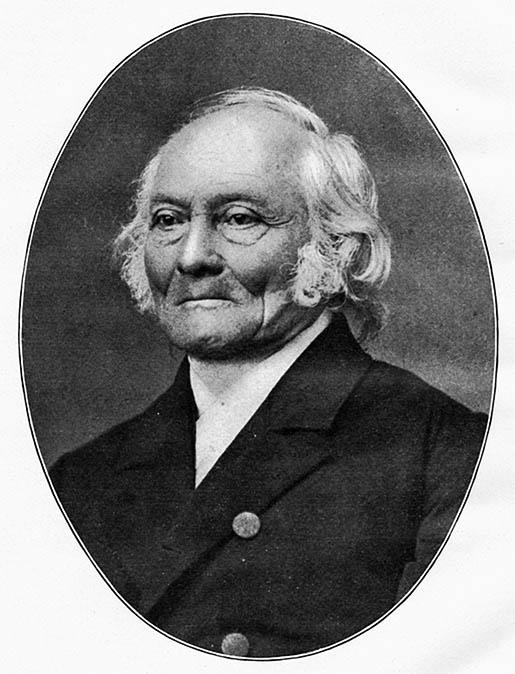
Includes Weber’s law on the relationship between stimulus and sensation. English translation of De tactu, New York Academic Press, 1978. Weber's hearing test is on p.41.
1683
#1545
Traité de l’organe de l’ouie; contenant la structure, les usages et les maladies de toutes les parties de l’oreille.
The first scientific account of the structure, function and diseases of the ear. Du Verney showed that the bony external meatus develops from the tympanic ring and that the mastoid air cells communicate with the tympa…
1889
#3300
Beiträge zur Resection der Cartilago quadrangularis narium zur Heilung der Skoliosis septi.
The Operation of partial excision of the cartilage for the treatment of deflections of the nasal septum was perfected by Krieg.
1889
#3301
Des abscès du sinus maxillaire.
See No. 3305.
1889
#3302
Die ersten Operationen in der Kehlklopfshöhle vom Munde aus, bei der Durchleuchtung des Kehlkopfes von aussen.
The first laryngeal operation through the mouth with external illumination.
1891
#3303
Klinische Beiträge zur halbseitigen Kehlkopflähmungen.
“Avellis’s syndrome”, recurrent paralysis of the soft palate.
1891
#3304
Various forms of disease of the ethmoid cells.
1893
#3305
Diseases of the accessory sinuses of the nose, and an improved method of treatment of suppuration of the maxillary antrum.
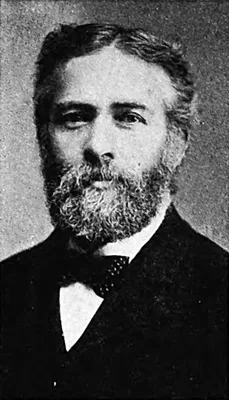
Caldwell–Luc operation (see also No. 3301). Scanes Spicer independently devised a similar operation (Brit. med. J., 1894, 2, 1359-60).
1893
#3306
Die Lehre von den Naseneiterungen.
Grünwald was the first to attempt the surgical treatment of nasal suppuration and disease involving the ethmoid and sphenoid bones. English translation, 1900.
1894
#3307
Le microbe de l’ozène.
Loewenberg found a bacillus of the Friedländer group in ozena.
1894
#3308
The pathological and clinical features of atrophic rhinitis.
Classic paper on atrophic rhinitis (ozena).
1896
#3309
Sur l’étiologie et sur les lésions anatomo-pathologiques de la pourriture d’hôpital.
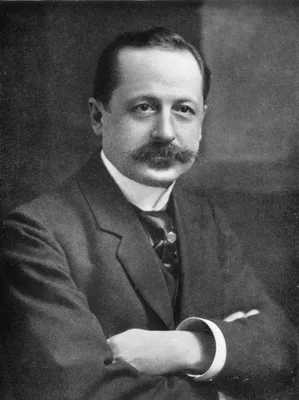
Vincent described a fusiform bacillus and a spirillum which, in association, were responsible for hospital gangrene. Later, in Arch. int. Laryng., 1898, 11, 44-48, he showed these two organisms to be present in “Vince…
1899
#3310
Kehlkopfchirurgie und Laryngoplastik.
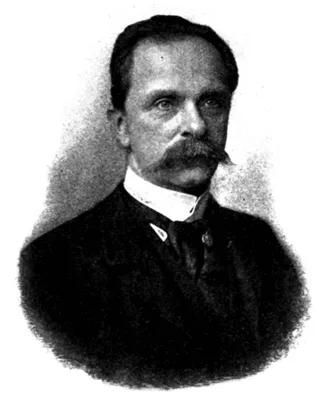
Gluck improved the technique of laryngectomy.
1899
#3311
Pathologie und Therapie der entzündlichen Erkrankungen der Nebenhöhlen der Nase.
Hajek, Professor of Laryngology in Vienna, particularly distinguished himself by his classic work on the acccessory nasal sinuses. Digital facsimile from the Internet Archive at this link. English translation of the f…
1899
#3312
Recherches sur la bactériologie de l’ozène.
Perez isolated an organism from the nose of patients suffering from ozena. He named it Coccobacillus foetidus ozaenae and considered it to be causally related to the disease.
1902
#3313
The correlation of deflections of the nasal septum with a minimum of traumatism.
Improvement of Ingals’s operation (see No. 3289).
1903
#3314
Die Killian’sche Radicaloperation chronischer Stirnhöhleneiterungen.
Killian devised an operation for the treatment of pathological conditions in the nasal sinuses. It consists of excision of the anterior wall of the frontal sinus, removal of the diseased tissue, and formation of a per…
1904
#3315
Die submucöse Fensterresektion der Nasenscheidewand.
1908
#3316
Die entzündlichen Nebenhöhlenerkrankungen der Nase im Röntgenbild.
The first important work on the radiology of the accessory nasal sinuses.
1909
#3317
A simple operation for the complete removal of tonsils, with notes on 900 cases.
Waugh introduced blunt dissection tonsillectomy.
1910
#3318
The enucleation of tonsils with the guillotine.
Reverse guillotine tonsillectomy.
1912
#3320
Diffuse dilatation of the esophagus without anatomic stenosis (cardio spasm): a report of ninety-one cases.
See No. 3321.
1919
#3321
A case of cardiospasm with dilatation and angulation of the esophagus.
See also his later paper in Minnesota Med., 1922, 5, 107-08. The syndrome of dysphagia, glossitis, and hypochromic anemia has become known as the Plummer-Vinson syndrome (see No. 3320). A. Brown Kelly and D. R. Paters…
1921
#3322
Operations on the frontal sinus.
Conservative treatment of sinusitis.
1923
#3323
On the aetiology of the laryngeal papilloma.
In this classic paper Ullmann reported the transmission of the virus to animals.
1924
#3324
Technic of a pan-sinus operation.
Independently of Howarth (No. 3322), Lynch devised an operation for the conservative treatment of sinusitis.
1926
#3325
Displacement irrigation of nasal sinuses; a new procedure in diagnosis and conservative treatment.
Displacement method of treatment of nasal sinusitis; published in book form, St. Louis, 1931.
1930
#3326
Cancer of the larynx.
Thomson’s technique in the laryngofissure procedure for intrinsic cancer of the larynx was published in his Diseases of the nose and throat, London, 1911, pp. 732-37.
1829
#3327
[Description of the glottiscope.]
Babington was responsible for the introduction of laryngoscopy. He demonstrated a crude “glottiscope” to the Hunterian Society on March 18, 1829, but his effort attracted little attention.
1837
#3328
Practical surgery.
In his day Liston was the most dexterous and resourceful surgeon in the British Isles. He was the first in the country to remove the scapula and the first – on 21 Dec. 1846 – to perform a major operation with the aid …
1854 –1855
#3329
Observations on the human voice.
Garcia, a teacher of singing, invented the modern laryngoscope.
1858
#3330
Der Kehlkopfrachenspiegel und die Methode seines Gebrauches.
Türck, at first sceptical of Garcia’s laryngoscope, later adopted it and claimed from Czermak priority in its clinical employment; these two gentlemen fought one another bitterly for some years over this point.
1858
#3331
Physiologie Untersuchungen mit Garcia’s Kehlkopfspiegel.
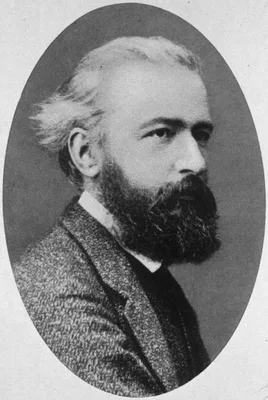
Czermak was the first to demonstrate the utility of the laryngoscope invented by Garcia. He substituted artificial light for sunlight and made other improvements.
1859
#3332
Ueber die Inspektion des Cavum pharyngo-nasale und der Nasenhöhle durch Choanen vermittelstkleiner Spiegel.
Czermak’s method of exploring the nose and nasopharynx with small mirrors.
1860
#3333
Praktische Anleitung zur Laryngoscopie.
1865
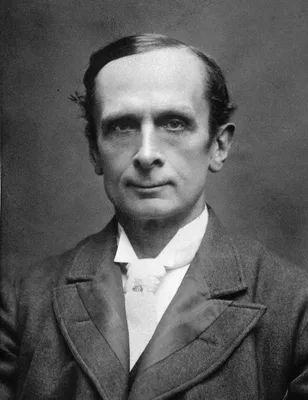
#3334
The use of the laryngoscope in diseases of the throat; with an appendix on rhinoscopy.
1895
#3335
Autoskopie des Larynx und der Trachea. (Laryngoscopia directa, Euthyskopie, Besichtigung ohne Spiegel.)
First direct-vision laryngoscope.
1898
#3336
Ueber directe Bronchoskopie.
Introduction of direct bronchoscopy.
1907
#3337
Tracheo-bronchoscopy, esophagoscopy and gastroscopy.
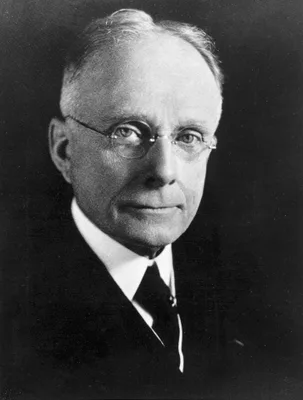
First textbook on endoscopy.
1912
#3338
Die Schwebelaryngoscopie.
Introduction of suspension laryngoscopy. English translation in 1914.
1901 –1906
#3339
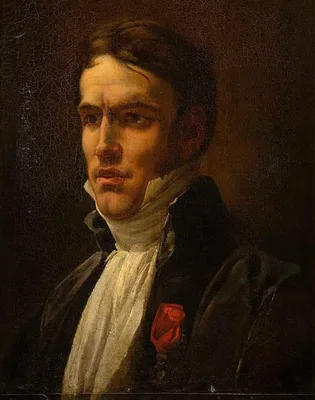
Histoire des maladies du pharynx. 5 vols.
1914
#3340
Geschichte der Nasenheilkunde von ihren Anfängen bis zum 18. Jahrhundert. Vol. 1.

Continued through 18th and part of 19th century in articles in Z. Laryngol., vols. 7, 8, 9, 11, 1914-23. Reprinted, 2 vols., Hildesheim, G. Olms, 1967, with title Geschichte der Nasenheilkunde … bis zum 19 Jahrhundert.
1914
#3341
A history of laryngology and rhinology. 2nd ed.
1949
#3342
A history of oto-laryngology
From antiquity to the beginning of the 20th century.
1590
#3343
De compositione medicamentorum; De morbis oculorum, & aurium….
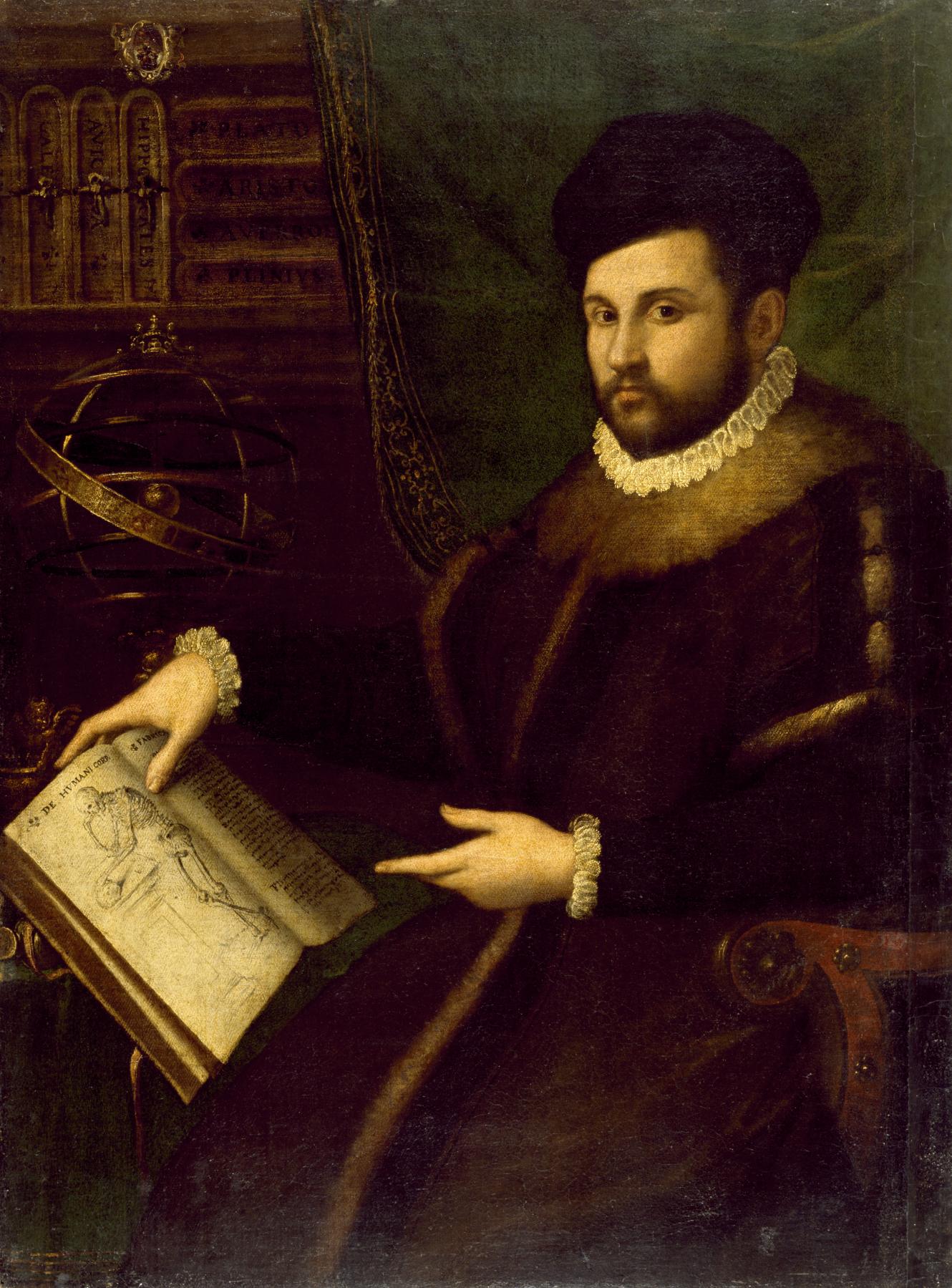
The De oculorum et aurium represents the first “clinical” manual on diseases of the ear. Mercuriali was primarily concerned with treatment.
1616
#3344
L’arte de’ cenni, con quale, formandosi favella visible, si tratta della muta eloquenza.
Bonifacio’s sign-language for the deaf and dumb employed almost every part of the body for conversational purposes.
1620
#3345
Reduction de las letras, y arte para enseñar a ablar los mudos.
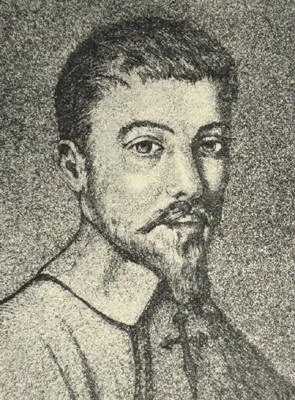
Bonet put into practice the “combined” system of teaching the deaf to speak and the dumb to communicate with others. He showed how the deaf could be taught to speak by reducing the letters to their phonetic value, and…
1644
#3346
Chironomia: or, the art of manuall rhetorique.
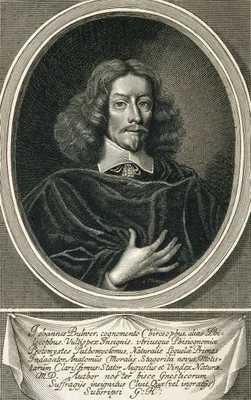
1644
#3347
Chirologia; or the naturall language of the hand. Composed of the speaking motions, and discoursing gestures thereof. Whereunto is added Chironomia: or, the art of manuall rhetoricke.
Bulwer was the first Englishman to write about the teaching of deaf-mutes. "Chirologia is often cited as Bulwer’s link to later Deaf studies because it focuses on hand gestures [15] which have come to be seen as the d…
1653
#3348
Grammatica linguae anglicae. Cui praefigitur, de loquela sive sonorum formatione tractatus grammatico-physicus.
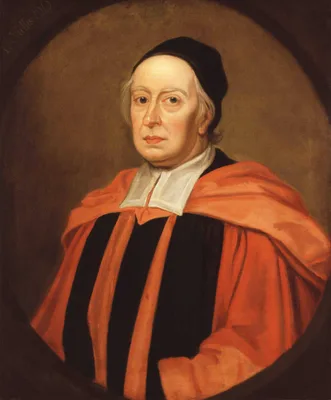
Wallis, a prominent teacher of deaf-mutes, classified the various sounds of the human voice. He taught by writing and gesture. He was Savilian Professor of Mathematics at Oxford.