
Entry Nos. 5500–5599
98 Garrison-Morton entries in this range.
1916
#5537
Torula infection in man.
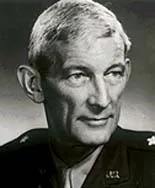
Description of Torula histolytica infection in man, later shown to be identical with Cryptococcus neoformans. Digital facsimile from Google Books at this link.
1920
#5538
Herpetic sore throat.
First description of herpangina, an acute infection associated with Coxsackie viruses.
1930
#5539
Die Ätiologie der Psittakosis.
Discovery of the causal agent of psittacosis, Chlamydia psittaci. Simultaneously A. C. Coles (Lancet, 1930, 1, 1011-12) and R. D. Lillie (Publ. Hlth. Rep., Wash., 1930, 45, 773-78) made the same discovery, and the ele…
1930
#5540
En Bornholmsk epidemi-myositis epidemica.
First full description of epidemic myositis, “Bornholm disease”. See also Sylvest’s monograph on the subject, London, 1934.
1931
#5541
Enzootic hepatitis or Rift Valley fever. An undescribed virus disease of sheep, cattle and man from East Africa.
First description.
1934
#5542
The cultivation and cultural characteristics of Darling’s Histoplasma capsulatum.
Demonstration of the fungal nature of the pathogen.
1934
#5543
An investigation of the etiology of mumps.
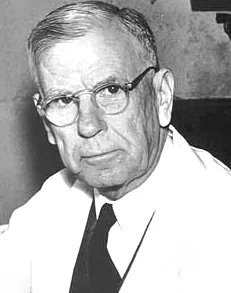
Isolation of mumps virus.
1935
#5544
Diagnosis of psittacosis in man by means of injections of sputum into white mice.
1948
#5545
An unidentified, filterable agent isolated from the feces of children with paralysis.
Isolation of the Coxsackie virus from the stool of a patient residing in Coxsackie, New York.
1949
#5546
Disease resembling nonparalytic poliomyelitis associated with a virus pathogenic for infant mice.
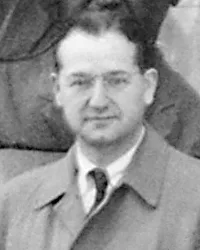
Isolation of the Coxsackie virus from patients with poliomyelitis. With E. W. Shaw.
1778
#5550
De chirurgia. Arabice et Latine cura Johannis Channing. 3 vols.
This parallel Arabic-Latin edition prepared by the apothecary John Channing is the first printed edition in Arabic, and the first modern edition of the text. Digital facsimile of the 1778 edition from Bayerische Staat…
1854
#5551
Glossulae quatuor magistrorum super chirurgiam Rogerii et Rolandi nunc primum ad fidem codicis Mazarinei edidit
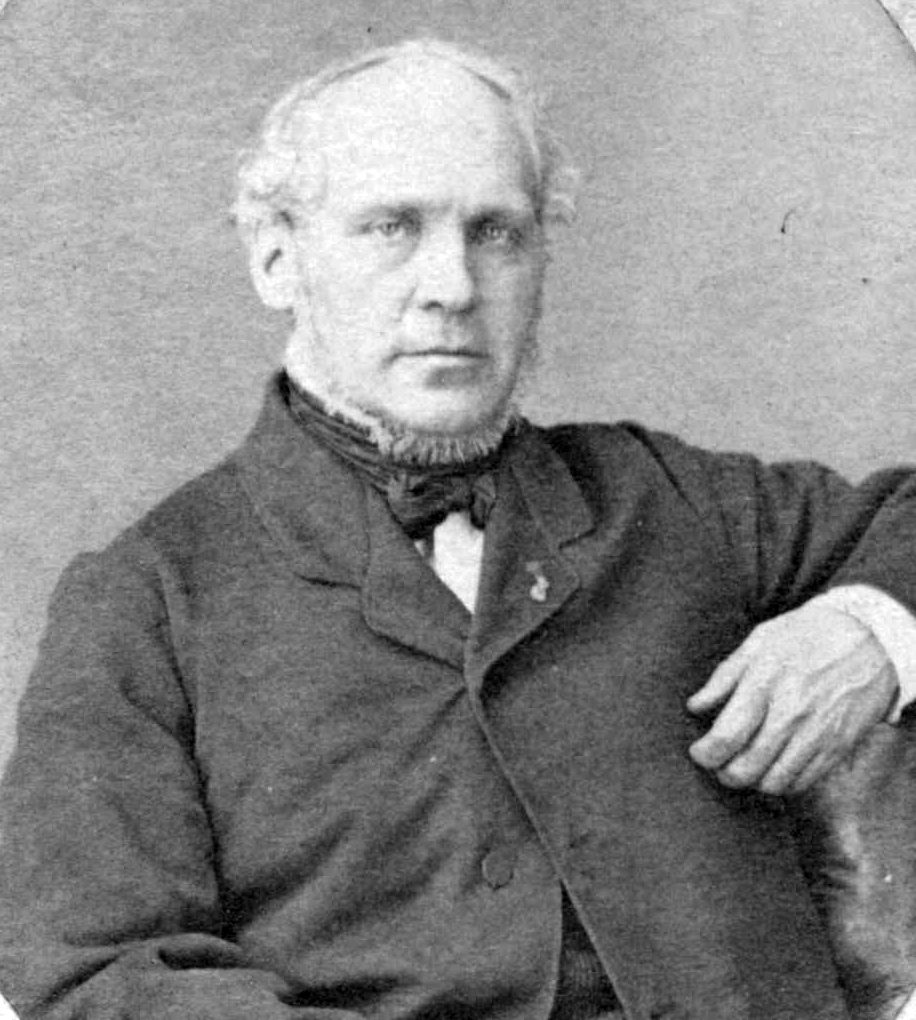
In Roger of Salerno's Practica chirurgiae, which appeared about 1180, end-to-end suture is described, as is the value of mercurial inunction in chronic skin diseases; in his recommendation of seaweed for the treatment…
1474
#5552
La ciroxia vulgarmente fata.
![SALICETO, Guglielmo da [WILLIAM OF SALICETO] (1210 – 1277)](/media/portraits/6798)
Saliceto was Professor of Surgery at Bologna about 1268; his treatise on surgery, written about 1275, was the leading work on the subject in the 13th century. William broke with tradition by claiming that pus formatio…
1490
#5553
La chirurgie da Lanfranc traduit du latin par Guillaume Yvoire.
Lanfranc, the founder of French surgery, was a pupil of William of Salicet. He enjoyed a great reputation for his lecturing and bedside teaching. His Chirurgia magna was completed in 1296. According to Hirsch and othe…
1892
#5554
Die Chirurgie des Heinrich de Mondeville. Hrsg. von Julius Leopold Pagel.
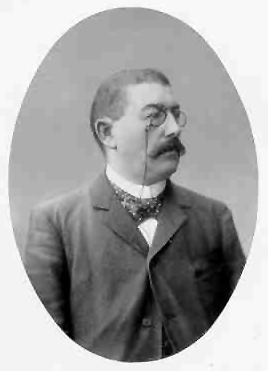
Henri de Mondeville was the teacher of Guy de Chauliac; he belonged to the School of Montpellier. His work was first printed as above; French translations by E. Nicaise, 1893, and A. Bos, 1897; the latter was reprinte…
1854
#5555
La chirurgie de maître Jean Yperman, le père de la chirurgie flamande (1295-1351). Mise au jour et annotée par J. M. F. Carolus.
Jan Yperman, became the first authority on surgery in the Low Countries during the 14th century. He was also the first medical writer in the Dutch language. He probably born in or near Ypres in Belgium, and may have s…
2014
#5557
De arte phisicale et de cirurgia
John of Arderne was the first English surgeon of note. The Stockholm manuscript preserved in the National Library of Stockholm is an illustrated vellum roll nearly 18 feet long and 15 inches wide written in England in…
1868
#5558
Pfolspeundt: Buch der Bündth-Ertznei. Hrsg. von H. Haeser und A. Middeldorpf.
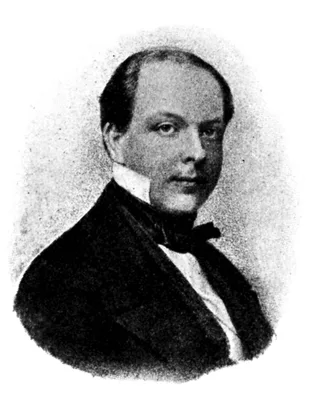
Although not printed until 1868, this treatise was written about 1460, and is the first work of the early German surgeons. Pfolspeundt was a Bavarian army surgeon; his book includes the first allusion to the extractio…
1497
#5559
Das ist das buch der Cirurgia
The first important printed surgical treatise in German. It combines a compilation of the ancient and medieval authorities with Brunschwig’s own extensive experience. It contains the first detailed account of gunshot …
1517
#5560
Feldtbuch der wundartzney.
Gersdorff performed nearly 200 amputations. He opposed Paré’s abandonment of boiling oil for the cauterization of wounds. The book contains some instructive pictures of early surgical procedures and includes the first…
1536
#5561
Grosse Wund Artzney von allen Wunden, Stich, Schüssz, Bränd, Bissz, Beynbrüch, und alles was die Wundartzney begreifft.
Paracelsus was a doctor, chemist, lecturer, and reformer. His novel doctrines gained him many followers. He expressed novel ideas for the treatment of wounds, disbelieving in the use of boiling oil for the purificatio…
1555
#5562
De chirurgia scriptores optimi quique veteres et recentiores, plerique in Germania antehac non editi.
A collection made by Gesner of various surgical works by ancient and recent authors including M. A. Blondus, A. Bolognini, G. Dondi, A. Ferri, Galen, C. Gesner, J.Langius, B. Maggi, Marianus Sanctus, Oribasius, and J.…
1563
#5563
Practica der Wundartzney.
Würtz was a friend of Gessner and an admirer of Paracelsus; his book went through many editions and was translated into English, French, and Dutch. It describes the treatment of gunshot wounds, fractures, and dislocat…
1575
#5565
Les oeuvres de M. Ambroise Paré.
Paré was the greatest of the army surgeons before Larrey. Born in poor circumstances, he became the most famous surgeon in France. He is particularly remembered for his abandonment of boiling oil and the cautery (No. …
1593
#5566
De gangraena et sphacelo.
Fabricius, the “Father of German Surgery”, was the first to advocate the amputation above the gangrenous or injured part. He is accredited with the first amputation of the thigh. In his work he makes no reference to P…
1596
#5567
A discourse on the whole art of chyrurgerie.
The first systematic work on the whole subject of surgery written in England. Lowe was the founder of the Faculty of Physicians and Surgeons of Glasgow. This was the first medical organization in Great Britain to incl…
1610
#5568
Thesaurus chirurgiae.
An anthology of 16th century writers; a good summary of the surgical knowledge of that period.
1633
#5569
Helps for suddain accidents endangering life
The first book on first-aid. Digital facsimile from Google Books at this link.
1606 –1641
#5570
Observationum et curationum chirurgicarum centuriae. 6 vols.
Fabricius’s most important work; it was the best collection of case-records available for many years. Among other things, Fabricius used a magnet to extract an iron splinter from the eye – an idea suggested to him by …
1664
#5572
Observationum medico-chirurgicarum rariorum sylloge.
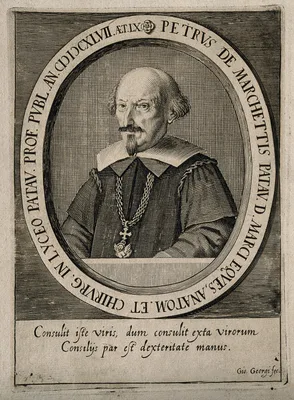
Pietro de Marchetti was Professor of Surgery at Padua. His book contains many valuable observations in surgery.\\
1676
#5573
Severall chirurgicall treatises.
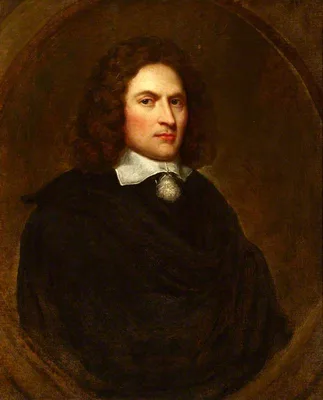
Wiseman ranks in surgery as high as does Sydenham in medicine. He made many valuable contributions to the subject; he was the first to describe tuberculosis of the joints (“tumor albus”) and he gave a good account of …
1695
#5574
La chirurgie complète.
This “quiz-compend” passed through eighteen editions. Among other things it mentions the use of vitriol buttons for checking hemorrhage and the mode of manual compression used at the Hôtel-Dieu. English translation, L…
1707
#5575
Cours d’opérations de chirurgie, de demonstrées au Jardin Royal.
Dionis taught operative surgery at the Jardin-du-Roi, Paris, a famous training ground for surgeons. English translation, London, 1710.
1719
#5576
Chirurgie in welcher Alles was zur Wund-Artzney gehöret, nach der neuesten und besten Art gründlich abgehandelt....
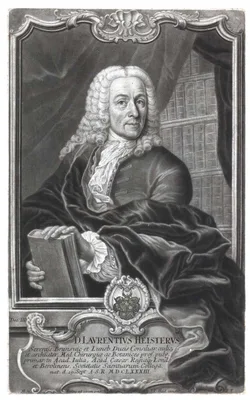
Heister was the founder of scientific surgery in Germany. His book contains many interesting illustrations and includes an account of tourniquets used in his time; Heister introduced a spinal brace. This was the most …
1778
#5578
A treatise on the theory and management of ulcers.
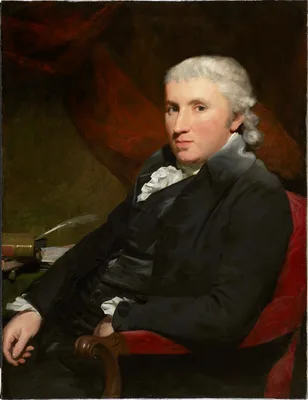
Important classification of ulcers.
1783 –1788
#5579
A system of surgery. 6 vols.
Bell studied under the Monros at Edinburgh. He was surgeon to the Royal Infirmary, Edinburgh, for 29 years. He improved the methods of amputation, introducing the “triple incision of Bell”. Above is his best work.
1807 –1809
#5583
A system of operative surgery. 2 vols.
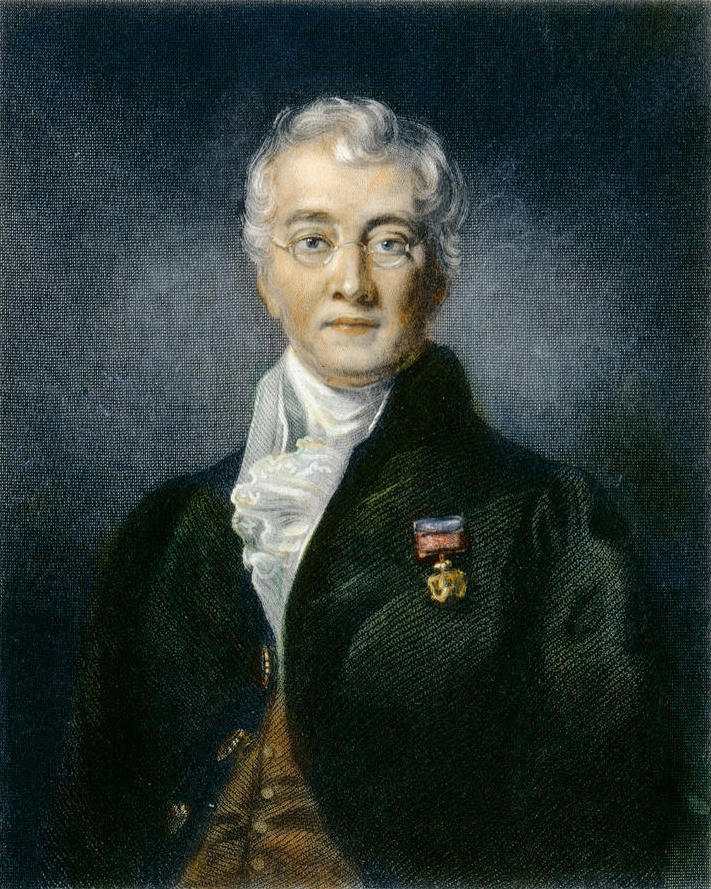
Famous as anatomist, physiologist, and neurologist, Charles Bell was also, like his brother John, an eminent surgeon. His artistic talent was even greater than that of his brother. (See No. 5588.)
1809
#5585
A dictionary of practical surgery.
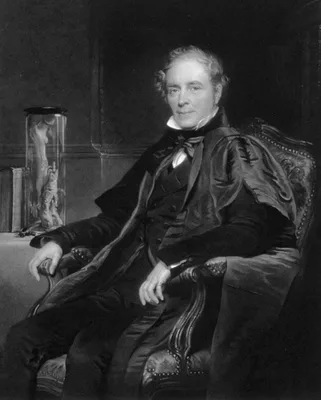
Cooper was surgeon on the field at Waterloo, and was later appointed to the chair of surgery at University College, London. His great dictionary went through seven editions during his lifetime and was translated into …
1816
#5586
Buck-skin and kid ligatures
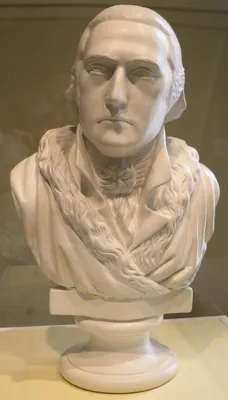
Physick, the “Father of American surgery”, graduated at Edinburgh, having been a pupil of John Hunter. He introduced several new procedures in surgery, one of which was the use of absorbable kid and buckskin ligatures…
1820 –1821
#5588
Illustrations of the great operations of surgery, trepan, hernia, amputation, aneurism, and lithotomy.
One of the most dramatically and beautifully illustrated works in the entire literature of surgery. Hand-colored copies show more blood than is usual for surgical treatises of this period. From publication in fascicul…
1827
#5589
Observations upon traumatic haemorrhage, illustrated by experiments upon living animals.
Jameson was surgeon to Baltimore Hospital for 20 years. This essay described some of the earliest multiple animal experiments used in American medical research.
1834
#5591
Manuel de médecine opératoire.
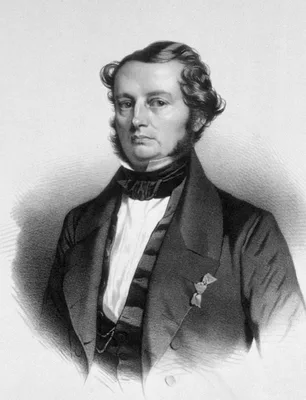
Malgaigne was a brilliant lecturer, notable also as a historian of medieval surgery. His Manuel was an important work on operative surgery, and was translated into English, German, Italian, and Arabic.
1832
#5592
Nouveaux éléments de médecine opératoire. 3 vols. and atlas.
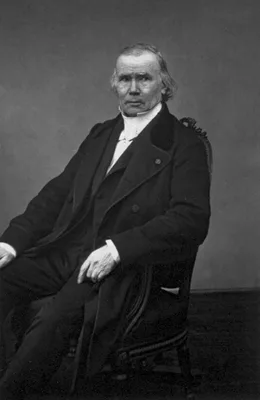
In its time this was the most comprehensive work on operative surgery in France; it contains some useful historical information. The first English translation appeared in New York, 1835. The atlas for that edition was…
1838
#5594
Traité d’anatomie chirurgicale et de chirurgie expérimentale. 2 vols.
1842
#5596
A system of practical surgery.
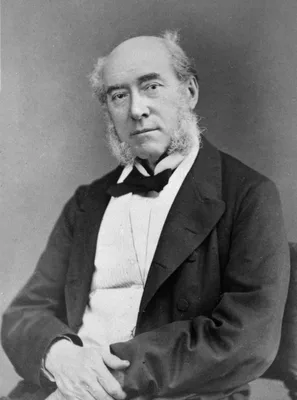
Fergusson was the founder of conservative surgery. He was surgeon of the Royal Infirmary, Edinburgh, before being appointed to the chair of surgery at King’s College Hospital, London, a position to which he was succee…
1844 –1859
#5597
Elémens de pathologie chirurgicale. 5 vols.
Nélaton was a great teacher and operator at the Hôpital St. Louis. He invented several surgical instruments. The description of “Nélaton’s tumor” of bone appears in vol.. 2, p. 46, and on p. 441, “Nélaton’s line”.
1844
#5598
A treatise on operative surgery.
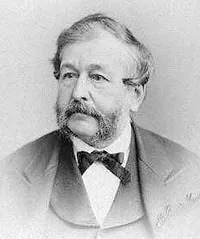
Pancoast was Professor of Anatomy and Surgery at Jefferson Medical College. He was a fine operator and devised a number of new surgical operations and instruments. This was work contains 80 fine lithographed plates, a…
1848
#5599
Contributions to the pathology and practice of surgery.
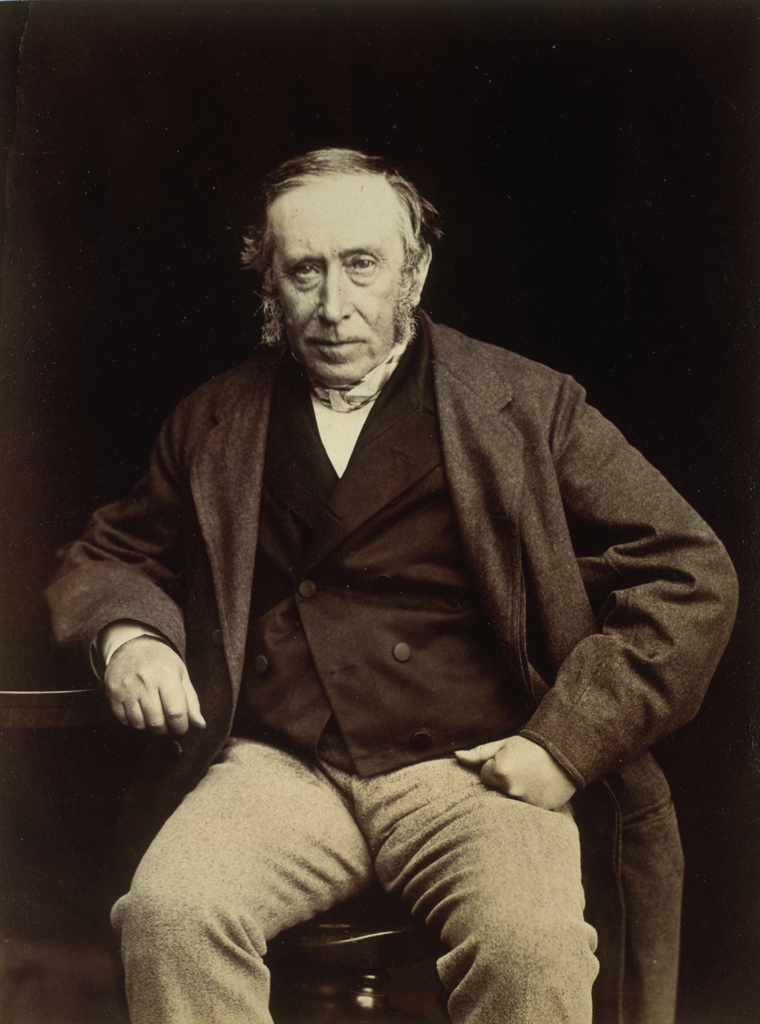
Syme, one-time colleague of Liston, succeeded to the latter’s extensive practice in Scotland. He came to London for a short time as Professor of Surgery at University College, but soon returned to Scotland. He was a p…