
Entry Nos. 5300–5399
98 Garrison-Morton entries in this range.
1907
#5350
Recherches sur un séro-diagnostic du kyste hydatique par la méthode des précipitines.
Precipitin reaction for the diagnosis of hydatid disease.
1928
#5351
Hydatid disease. Its pathology, diagnosis and treatment.
Dew’s book remains the authoritative source. His many contributions to the knowledge of hydatid disease are summarized in it.
1931
#5352
The bibliography of schistosomiasis (bilharziasis).
1843
#5353
Nuovo verme intestinale umano (Agchylostoma duodenale), constituente un sesto genere dei nematoidei proprii dell’uomo.
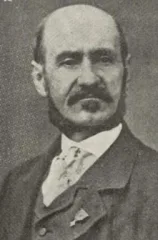
Dubini first found the hookworm of ankylostomiasis in 1838. His account of 1843, describing it, named it Agchylostoma duodenale, a name etymologically erroneous. Partial English translation in Kean (No. 2268.1).
1845
#5354
Bericht über die Leistungen im Gebiete der Helminthologie während des Jahres 1843 und 1844.
![SIEBOLD, Carl Theodor Ernst von [Karl] (1804 – 1885)](/media/portraits/231)
Siebold classified the hookworm as belonging to the Strongyloidae (pp. 220-21).
1854
#5355
Klinische und anatomische Beobachtungen über die Krankheiten von Aegypten.
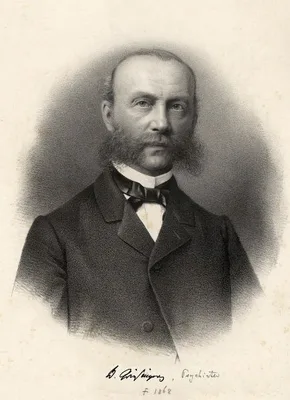
Griesinger connected the worm of ankylostomiasis with Egyptian chlorosis, a condition in which the worm had previously been noted without its being considered the causal agent (pp. 555-61). Apparently Bilharz in 1853 …
1886
#5356
Sobre a molestia vulgarmente denominada oppilaçao ou cançaço.
Wucherer confirmed Griesinger’s conclusion that the cause of tropical anemia was hookworm infestation. See also the same journal, 1869, 3, 170-72, 183-84, 198-200. English translation in Kean (No. 2268.1).
1878
#5357
Intornoall’Anchilostoma duodenale (Dubini).
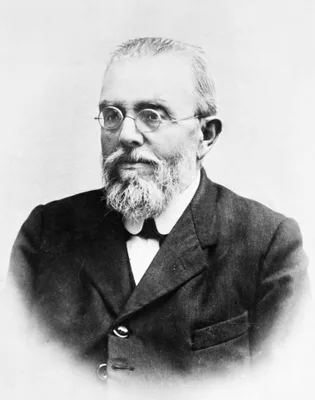
Fecal diagnosis of hookworm disease. Before this time hookworm had been diagnosed only post mortem. With C. Parona and E. Parona. English translation in Kean (No. 2268.1).
1879
#5358
L’anchilostomiasi e l’anemia che ne conseguita (anchilostomanemia).
Introduction of thymol as a hookworm vermifuge.
1886
#5359
Remarks on parasites and scorpions.
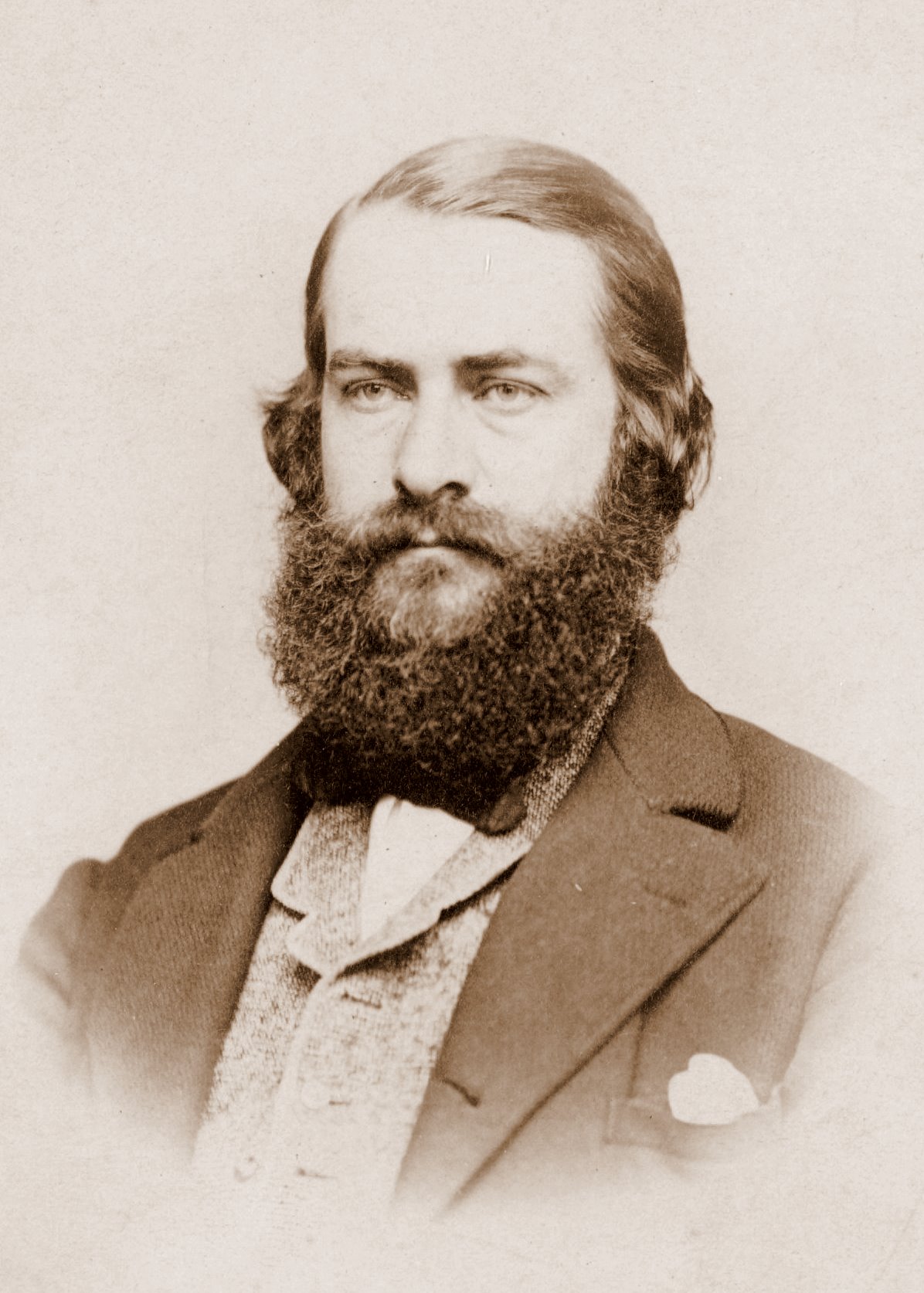
Leidy found the hookworm in the cat and suggested that it might also be found in man as a cause of pernicious anemia.
1893
#5360
A case of ankylostomiasis.
First recognition of ankylostomiasis in America. It had previously been reported and described under various names.
1896
#5361
Notizen zur Helminthologie Aegyptens. Die Lebensgeschichte des Anchylostomum duodenale (Dub.).
Looss elucidated the life cycle and mode of transmission of the hookworm. See also No. 5365. English translation in Kean (No. 2268.1).
1901
#5362
Ueber das Eindringen der Ankylostomalarven in die menschliche Haut.
Looss discovered that hookworms can penetrate the skin; he himself became infected when hookworm culture accidentally spilled on his hands. English translation in Kean (No. 2268.1).
1902
#5363
A new species of hookworm (Uncinaria americana) parasitic in man.
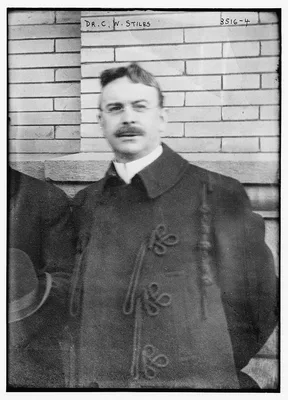
Discovery of the American species of hookworm, afterward re-named Necator americanus. It was later believed to have originated in Africa, being brought over by slaves.
1905 –1911
#5365
The anatomy and life history of Agchylostoma duodenale Dub. A. monograph. 2 pts.
Vols. 3 and 4 of Records of the School of Medicine, Cairo. In 1898 Looss discovered that hookworm larvae can penetrate the skin. His monograph epitomized all knowledge of the condition to 1911.
1910
#5366
La malattia dei minatory dal S. Gottardo al Sempione.
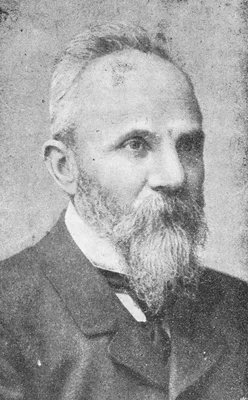
Includes reprints of Perroncito’s earlier papers. He insisted on the parasitic origin of the disease as it occurred among the St. Gotthard tunnellers in 1880, and he introduced Felix mas as a vermifuge against hookworm.
1912
#5367
Das Oleum chenopodii anthelmintici gegen Ankylostomiasis im Vergleich zu anderen Wurmmitteln.
Schüffner and Vervoort introduced oil of chenopodium for the treatment of ankylostomiasis as early as 1900.
1921
#5368
The use of carbon tetrachloride for the removal of hookworms.
Introduction of the carbon tetrachloride treatment of ankylostomiasis.
1922
#5369
Bibliography of hookworm disease.
Contains 5,680 references to all aspects of hookworm disease, prefaced by a short history. Digital facsimile from the Internet Archive at this link.
1536
#5370
De malo recentiorum medicorum medendi usu libellus.
![CARDANO, Girolamo [Gerolamo; Hieronymus Cardanus] (1501 – 1576)](/media/portraits/7679)
Includes (cap. XXXVI) an early account of typhus, morbus pulicaris. English translation in Major, Classic descriptions of disease, 3rd ed., Springfield: Charles C Thomas, 1945, p. 163.
1570
#5372
Opera medicinalia.
Opera medicinalia was the first medical book printed in the Western Hemisphere, and its botanical images were the first illustrations of plants printed in the Western Hemisphere. Of the original edition only two copie…
1685
#5373
Observationum medicarum Castrensium Hungaricarum.
Pp. 49-51: Cober, a German physician, reported the relationship between typhus and pediculosis.
1750
#5374
Observations on the nature and cure of hospital and jayl-fevers.
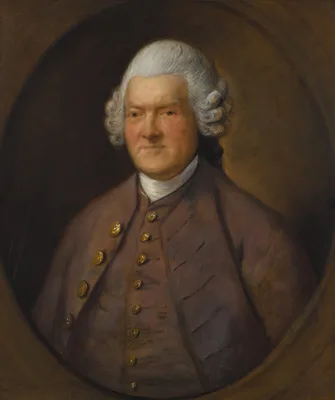
Pringle was a strong advocate of better ventilation in prisons and hospitals as a means of preventing typhus, which he showed to be identical with “hospital fever”.
1810
#5375
Ueber den ansteckenden Typhus.
Hildenbrand gave a classic description of typhus. The French literature sometimes refers to the condition as “Hildenbrand’s disease”. English translation by S. D. Gross, 1829.
1868
#5376
Ueber den Hungertyphus und einige verwandte Krankheitsformen.
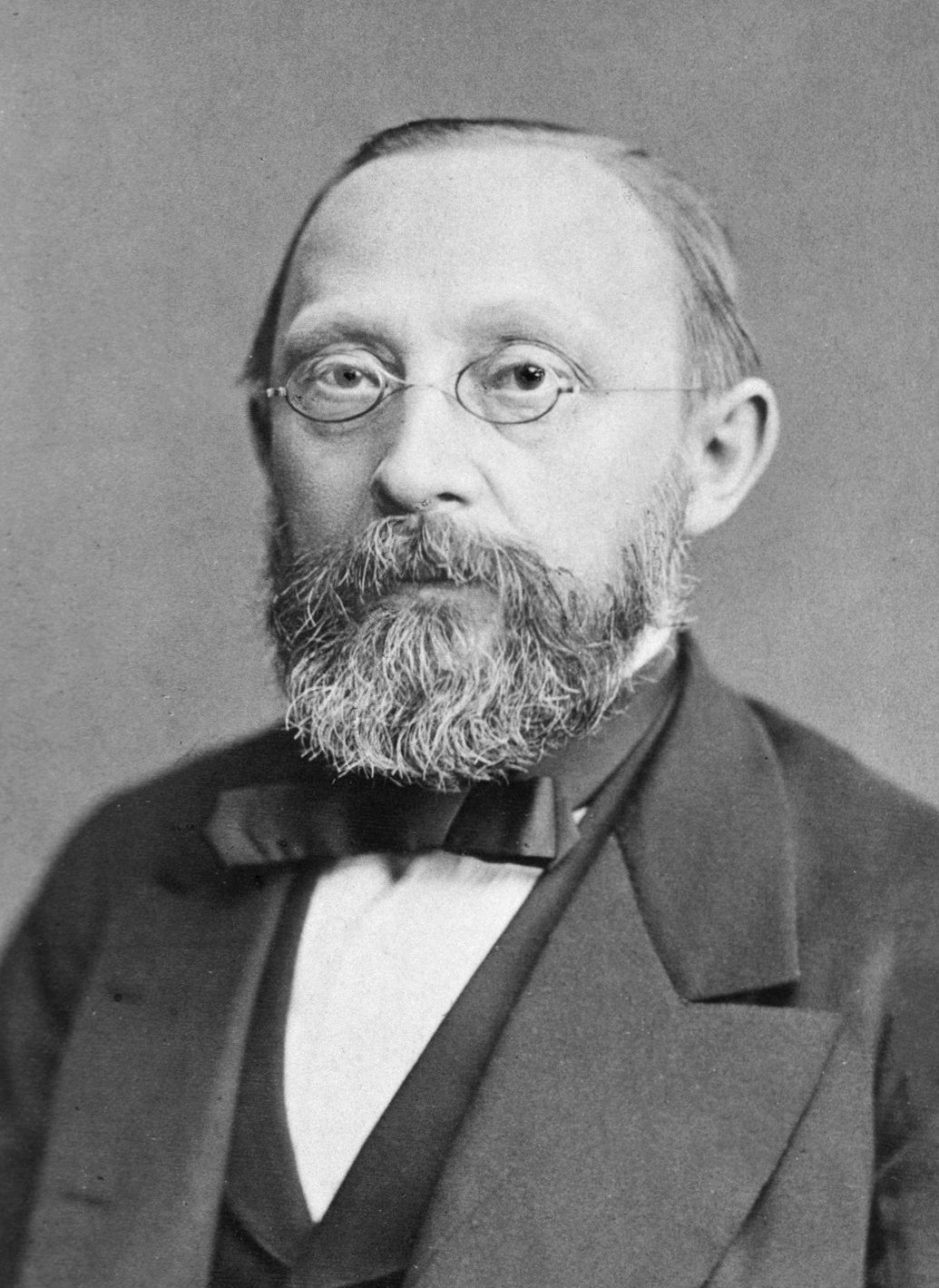
Virchow was instrumental in introducing into Germany an epidemiology based on the study of multiple factors – sociological as well as bacteriological. In the above report on the reappearance of typhus in Berlin and Ea…
1899
#5377
Some observations on the so-called spotted fever of Idaho.
Rocky Mountain spotted fever first described.
1906
#5378
The transmission of Rocky Mountain spotted fever by the bite of the wood-tick (Dermacentor occidentalis).
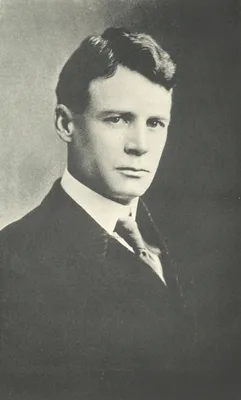
Ricketts (who himself died of typhus) demonstrated that the wood tick Dermacentor andersoni is a vector of Rocky Mountain spotted fever.
1909
#5379
A micro-organism which apparently has a specific relationship to Rocky Mountain spotted fever. A preliminary report.
Description of the causal organism, in blood smears.
1910
#5380
The relation of typhus fever (tabardillo) to Rocky Mountain spotted fever.
Ricketts and Wilder differentiated Rocky Mountain spotted fever and typhus.
1909
#5381
On heterologous agglutinins more particularly those present in the blood serum of cerebro-spinal fever and typhus fever cases.
The reaction described by Wilson was later developed by Weil and Felix and named after them (see No. 5390). See also the paper by Wilson in J. Hyg., 1920, 19, 115-30.
1910
#5382
An acute infectious disease of unknown origin. A clinical study based on 221 cases.
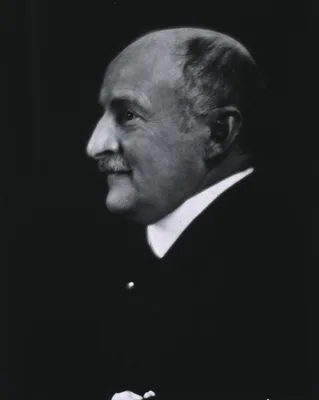
“Brill’s disease” – recrudescent typhus; first description.
1910
#5383
Une fièvre éruptive observée en Tunisie.
First description of fievre boutonneuse, a form of tick-borne typhus found in Tunisia.
1910 –1911
#5384
Recherches experimentales sur le typhus exanthématique.
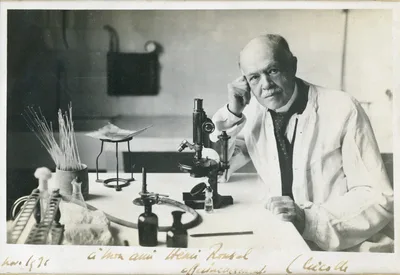
Nicolle demonstrated the transmission of typhus by the body louse Pediculus corporis. He also produced the disease in monkeys and guinea-pigs by the injection of infected blood. Preliminary communication in C. R. Acad…
1915
#5385
A note on a relapsing febrile illness of unknown origin.
First reported case of “trench fever”.
1915
#5386
Intermittent fever of obscure origin, occurring among British soldiers in France. The so-called “trench-fever”.
In this paper trench fever is so named for the first time.
1916
#5387
Ueber eine neue periodische Fiebererkrankung (Febris Wolhynica).
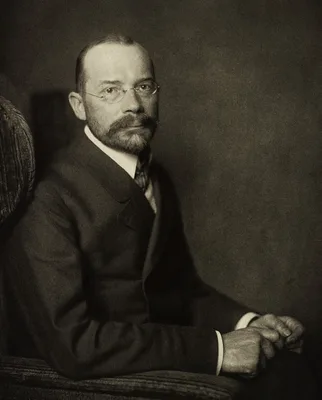
His encountered a form of “trench fever” in Volhynia, Russia, and named it after that district.
1916
#5388
Zur Aetiologie des Fleckfiebers.
Rickettsia prowazeki, cause of epidemic typhus, was first isolated by the Brazilian microbiologist Henrique da Rocha-Lima, who named it after Ricketts and Prowazek, both of whom died of the disease.
1916
#5389
Zur Ursache und Uebertragung des Wolhynischen Fiebers.
Isolation of Rickettsia quintana (now called Bartonella quintana) from lice found on patients suffering from trench fever.
1916
#5390
Zurserologischen Diagnose des Fleckfiebers.
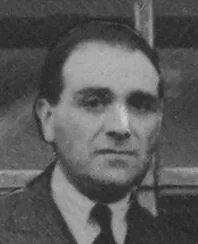
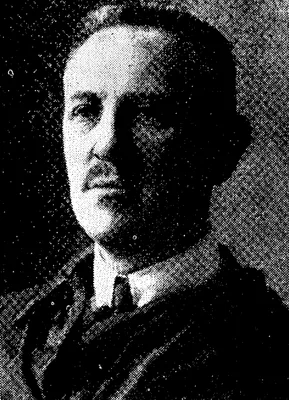
Weil-Felix reaction for the diagnosis of typhus. See also the later paper in the same journal, 1916, 29, 974-78.
1919
#5391
Studies on Rocky Mountain spotted fever.
In his important aetiological and pathological studies of Rocky Mountain spotted fever, Wolbach mentioned the causal agent Dermacentroxenus rickettsi.
1921
#5392
Cultivation of rickettsia-like bodies in typhus fever.
Isolation of Rickettsia prowazeki from the blood. With S. A. Ritter and G. Baehr.
1922
#5393
The etiology and pathology of typhus. Being the main report of the Typhus Research Commission of the League of Red Cross Societies to Poland.
The carefully controlled experiments of Wolbach, Todd, and Palfrey eliminated all doubt that R. prowazeki was the causal agent in typhus. Digital facsimile from the U.S. National Library of Medicine at this link.
1925
#5394
Tropical typhus in the Federated Malay States, with a compilation on epidemic typhus.
Bull. Inst. med. Res., F. M. S., No. 2. Drew attention to scrub typhus in Malaya.
1926
#5395
The Weil-Felix reaction in sporadic tropical typhus.
Bull. Inst. Med. Res., F. M. S., 1926, No. 1. Demonstration that scrub-typhus patients developed agglutinins against the OX-K strain of B. proteus but not the OX-19 strain.
1926
#5396
Clinical observations on endemic typhus (Brill’s disease) in Southern United States.
Maxcy described murine (flea-borne) typhus (“Maxcy’s disease”).
1937
#5397
“Q” fever, a new fever entity: clinical features and laboratory investigation.
First account of “Q” (query) fever. See also No. 5398.
1937
#5398
Experimental studies on the virus of “Q” fever.
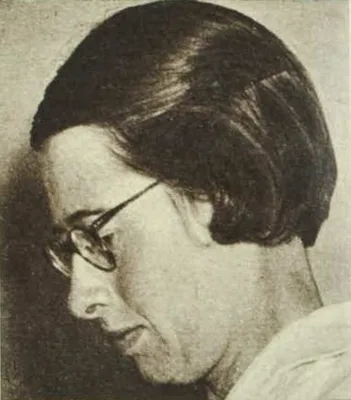
Discovery of Rickettsia burneti, causal agent in Q fever.
1945
#5399
Cultivation of Rickettsia tsutsugamushi in lungs of rodents. Preparation of a scrub-typhus vaccine.
Scrub-typhus vaccine.