
1730–1739
71 entries with publication dates in this decade.
1730
#977
Suspenseurs de l’abdomen.
“Poupart’s ligament”, the inguinal ligament.
1730
#1217
A description of the peritonaeum, and of that part of the membrane cellularis which lies on its outside. With an account of the true situation of all the abdominal viscera, in respect of these two membranes.
Douglas described the peritoneum in detail; his name is perpetuated in the “pouch”, “line”, and “fold of Douglas”. He was a friend of John Hunter and brother of John Douglas, the lithotomist.
1730
#4283
Parallèle des différentes manières de tirer la pierre hors de la vessie.
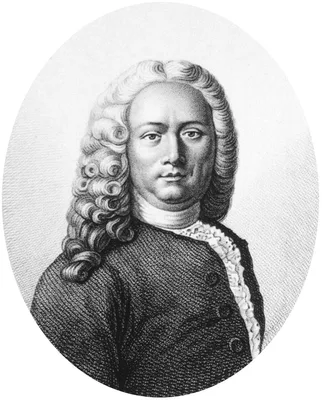
Le Dran, famous French lithotomist, improved the operation of lithotomy. Murphy credits him for originating the lateral lithotomy usually attributed to Cheselden, whose method he discusses. Le Dran was one of Haller’s…
1730
#3421
De motus hemorrhoidalis, et fluxus hemorrhoidum.
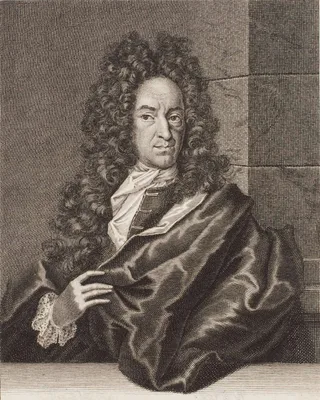
An early work specifically on hemorrhoids.
1730
#5048
Account of the operation of bronchotome, as it was performed at St. Andrews.
Martine was the first to perform tracheotomy for diphtheria.
1730
#10109
Exanthematologia ; or, an attempt to give a rational account of eruptive fevers, especially of the measles and small pox, In two parts. Parts I Of the blood, the air, venoms, Infection: fever of all kinds in general with their varieties, descriptions, names & C but more professedly and fully of the measles ... Part II Of the small pox ... To which is added. An appendix concerning inoculation.
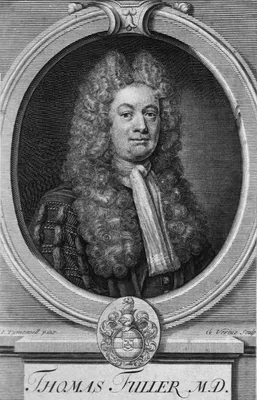
Includes the first clear account of chicken pox as a distinct disease, and the first distinction between the spots made by flea bites from those seen in eruptive fevers.
1730
#11974
Catalogus plantarum, tum exoticarum tum domesticarum.... A catalogue of trees, shrubs, plants, and flowers, both exotic and domestic, which are proposed for Sale, In the gardens near London. Divided, according to their different degrees of hardiness, into particular books, or parts; in each of which the plants are ranged in an alphabetical order. To which are added, the characters of the genus; and an enumeration of all particular species which are at present to be found in the several nurseries near London, with directions for the proper soil and situation, in which each particular kind is found to thrive
A deluxe sale catalogue illustrated with 21 plates, including 7 mezzotints. "The Catalogus Plantarum is notable as one of the earliest flower books to contain plates printed in colors. It is perhaps unique in that one…
1730
#13626
A dissertation upon tea, explaining its nature and properties by many new experiments; and demonstrating from philosophical principles, the various effects it has on different constitutions. To which is added the natural history of tea; and a detection of the several frauds used in preparing it. Also a discourse on the virtues of sage and water, and an enquiry into the reasons why the same food is not equally agreeable to all constitutions....
Digital facsimile from wellcomecollection.org at this link.
1731
#2275
Samuel Sontag: Dissertatio inauguralis medica de metastasi sive sede morborum mutata oder: Wie sich öffters eine Kranckheit in die andere verwandele. Praeside Hoffmanno.
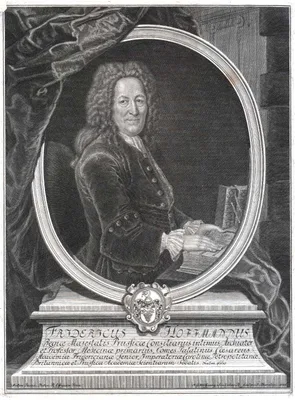
Recamier (1829) is credited with coining the term metastasis with respect to cancer. It is evident that Hoffmann and his pupil Sontag used the term nearly 100 years earlier in this general thesis on disease. They did …
1731
#3110
Godofredus Augustus Emmrich: Disseratione inauguralis De genuina chlorosis indole, origine et curatione. Von der wahren Eigenschaft, Ursprung und Cur der Bleichsucht.
Classic description of chlorosis. Lange accurately diagnosed this condition, but it was left to Hoffmann to separate it as a definite entity. Hoffmann published his contribution to this subject in the thesis of his st…
1731
#4013
An extract from the minutes of the Royal Society, March 16, 1731, containing an uncommon case of a distempered skin.
First known description of Ichthyosis hystrix, a group of rare skin disorders in the ichthyosis family of skin disorders characterized by massive hyperkeratosis with an appearance like spiny scales. Digital facsimile …
1731
#6746.1
Anleitung zur Historie der medicinischen Gelahrheit.
A pioneer history of medical writing, for which the historian, Stolle, collaborated with the medical historian/biographer/bibliographer Kestner. Digital facsimile from the Google Books at this link.
1731
#9461
Tabular observations recommended as the plainest and surest way of practising and improving physick. In a letter to a friend.
Clifton argued that physicians should base their judgments about the effects of treatments on a sufficient number of their own observations, or trusted observations by other physicians, rather than on the correlation …
1731 –1747
#9571
The natural history of Carolina, Florida and the Bahama Islands: Containing the figures of birds, beasts, fishes, serpents, insects, and plants: Particularly, the forest-trees, shrubs, and other plants, not hitherto described, or very incorrectly figured by authors. Together with their descriptions in English and French. To which are added observations on the air, soil and waters: With remarks on agriculture, grain, pulse, roots &c. To the whole is prefixed a new and complete map of the countries treated of. 2 vols.
The only attempt to record the natural history of a region of America during the colonial period. Includes 220 fine handcolored etched plates after and by Catesby and mostly signed with his cipher, excepting plates 61…
1731
#11172
Bibliotheca scriptorum medicorum, veterum et recentiorum ... sicque historia medica vere universalis... 4 vols.
Though the title might be translated as a library of medical writings, the set is an extensive bio-bibliographical dictionary of medical writers. Digital facsimile from Google Books at this link.
1731 –1738
#12877
A natural history of birds. Illustrated with two hundred and five copper plates, curiously engraven from the life. Published by the author Eleazar Albin, and carefully colour'd by his daughter and self, from the originals, drawn from the live birds. 3 vols.
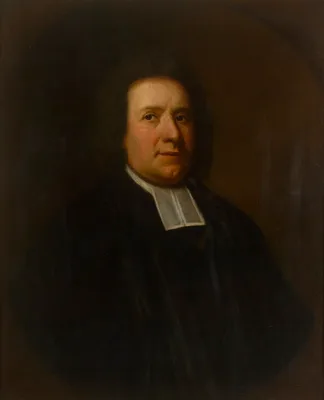
This was the first English bird book issued with hand-colored plates, colored by Albin and his daughter Elizabeth. "For the most part Albin delineated one bird per plate. The birds are placed on a branch or on the gro…
1731
#13393
The gardeners dictionary: Containing the methods of cultivating and improving the kitchen, fruit and flower garden. As also, the physick garden, wilderness, conservatory and vineyard, according to the practice of the most experienc'd gardeners of the present age. Interspers'd with the history of the plants, the characters of each genus, and the names of all the particular species, in Latin and English, and an explanation of all the terms used in botany and gardening.
Miller was chief gardener and curator (or 'Hortulanus') at the Apothecaries' (later Physic) Garden in Chelsea. Besides covering methods of cultivation, Miller's Dictionary provided a systematic botanical compendium of…
1732
#666.1
Elementa chemiae. 2 vols.
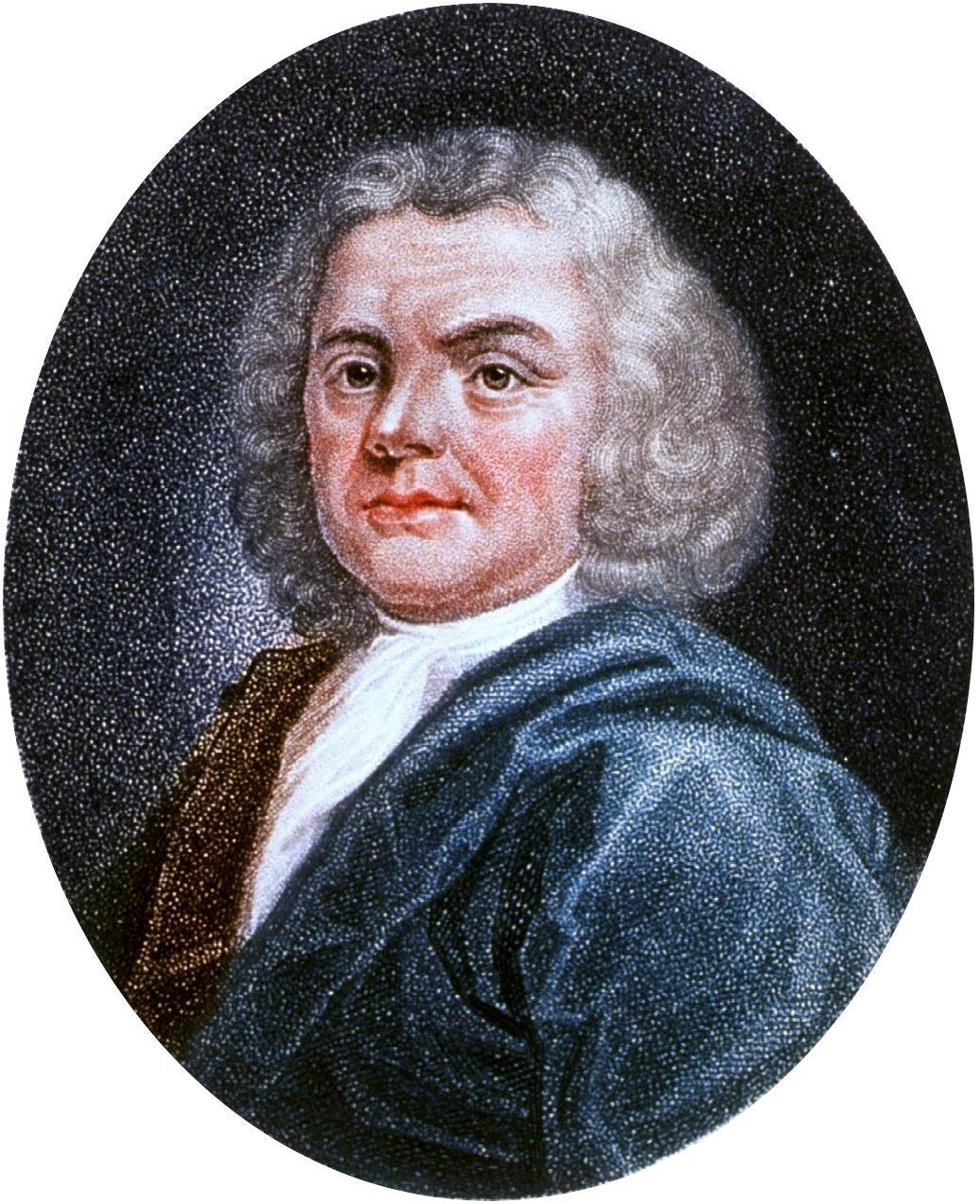
Boerhaave was the first to separate out urea from urine, and to do so without adding chemical substances such as alcohol or nitric acid. He first published his method for isolating it in the above work. English transl…
1732
#393
A syllabus or index, of all the parts that enter the composition of the human body…For the use of those that go through courses of anatomy.
Chovet was born in England and died in Philadelphia. He made many beautiful wax models to illustrate his lectures, and was among the first to popularize the use of wax and natural preparations in the teaching of anato…
1732
#1314
Exposition anatomique de la structure du corps humain.
![WINSLOW, Jacques-Bénigne [Jacob Benignus Winsløw] (1669 – 1760)](/media/portraits/708)
The foramen between the greater and lesser sacs of the peritoneum (described on pages 352-65), is named after Winslow. His Exposition is distinguished as being the first book on descriptive anatomy to discard physiolo…
1732
#3418
Diverses observations anatomiques.
Littré was first to suggest colostomy in intestinal obstruction – “Littré’s operation”.
1732
#9460
The state of physick, ancient and modern, briefly considered: with a plan for the improvement of it.
Instead of assessing the efficacy of therapies by their correlation with theories, Clifton argued that physicians should base their judgments about the effects of treatments on a sufficient number of their own observa…
1732
#11747
Hortus Elthamensis seu plantarum rariorum quas in horto suo Elthami in cantio coluit vir ornatissimus et praestantissimus Jacobus Sherard, M. D. Soc. Reg. et Coll. Med. Lond. Soc. Guilielmi P.M. frater, delineationes et descriptiones quarum historia vel plane non, vel imperfecte a rei herbariae scriptoribus tradita fuit.
Catalogue of the rare plants growing at Eltham, London, in the collection of James Sherard, who, after making a fortune as an apothecary, devoted himself to gardening and music. For this work Dillenius wrote the text …
1733
#395
Osteographia, or the anatomy of the bones.
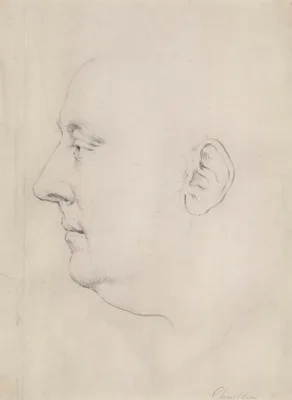
This splendidly designed and illustrated work contained full and accurate descriptions of all the human bones, as well as many of animals. Cheselden is the first person to have used the camera obscura to gain precisio…
1733
#4840
The English malady; or, a treatise of nervous diseases of all kinds.
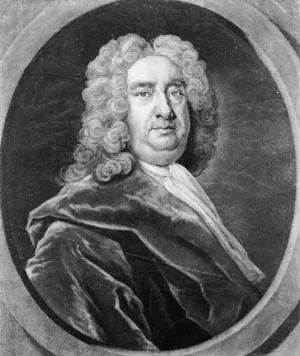
Cheyne attributed hypochondria (“Cheyne’s disease”) to the moisture of the air and variability of the weather in the British Isles. Cheyne himself suffered from this disease and the work includes a careful account of …
1733
#3422
Two examples of children born with preternatural conformations of the guts.

First description of congenital atresia of the ileum.
1733
#4438
An account of a new method of treating diseases of the joints of the knee and elbow.
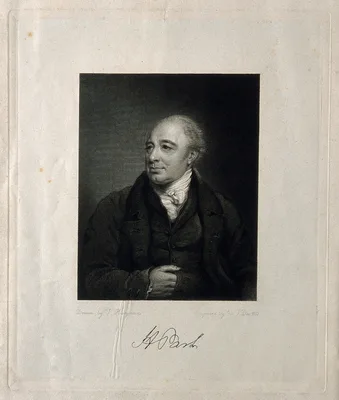
This was originally a letter to Pott. Park became famous for his operation of excision and arthrodesis as a treatment for destructive joint disease. The title page is misprinted “MDCCXXXIII”; the letter is dated 1783.…
1733
#6156.2
An essay on the improvement of midwifery.
Gives the first published account of the forceps, kept secret by the Chamberlen family for generations. Chapman was the second person in England to teach midwifery publicly. The first edition of his book was not illus…
1733
#9361
Opere fisico-mediche stampate e manoscritte del kavalier Antonio Vallisneri; raccolte da Antonio suo Figliuolo, corredate d'una prefazione in genere sopra tutte, e d'una in particolare sopra il vocabolario della storia naturale. 3 vols.
Digital facsimile from the Hathi Trust at this link.
1733
#12499
An essay concerning the effects of air on human bodies.
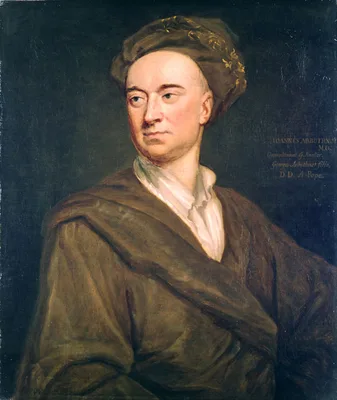
Arbuthnot believed that air had significant effects on personality, and he believed that the air of locations resulted in the characteristics of the people, as well as particular diseaes. He recommended ventilation of…
1734 –1742
#304
Mémoires pour servir à l’histoire des insectes. 6 vols.
Réaumur’s greatest work describes the appearance, habits and locality of all the known insects except the beetles, and includes 267 plates. Posthumously published: Tome VII: Histoire des fourmis, (Paris: Paul Lecheval…
1734 –1736
#60
Opera medica omnia. 4 vols.
De Baillou, “the first epidemiologist of modern times”, foreshadowed much that was afterwards taught by Sydenham. He first described whooping-cough and is often credit with introducing the term “rheumatism”. Baillou w…
1734 –1735
#1547
Tractatus quatuor anatomici de aure humana. Tractatus quintus anatomicus de aure humana. Cui accedit tractatus sextus de aure monstri humani.
Important tracts on the anatomy and physiology of the ear. Cassebohm’s studies of the embryonic ear far surpassed his predecessors, including Valsalva and Morgagni, and were not themselves surpassed until the work of …
1734
#2148
The navy-surgeon, or a practical system of surgery.
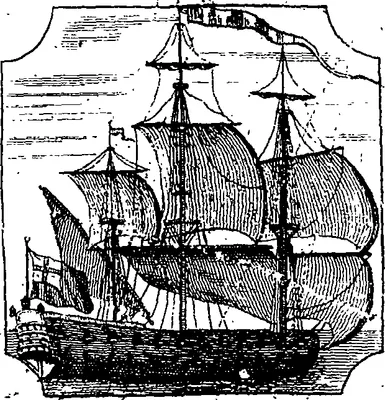
Atkins was an English naval surgeon. His book includes some useful case reports and contains the first English description of African trypanosomiasis.
1734
#6156.3
Cases in midwifry. Revised by Edward Hody.
Giffard was one of the first, after the Chamberlens, to use the forceps. His book contains, under case 14, the earliest published record of the use of the hitherto secret Chamberlen forceps, in 1726, together with ill…
1734 –1765
#7485
Locupletissimi rerum naturalium thesauri accurata descriptio et iconibus artificiosissmis expressio per universam physices historiam. 4 vols.
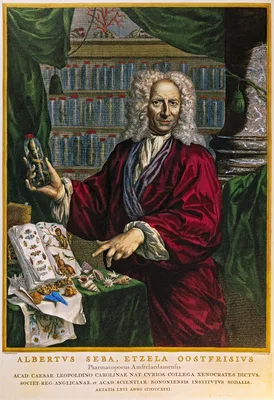
With 4 folio volumes this is probably the most elaborate catalogue of a private natural history museum, wunderkammer, or cabinet of curiosities ever published. The text is printed in Latin and Dutch. The work includes…
1734
#7552
Historia musculorum hominis.
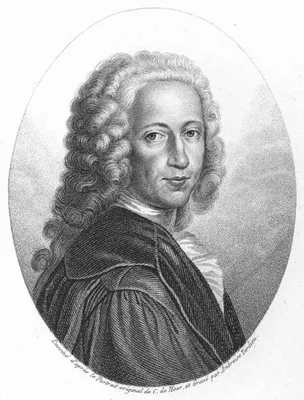
Very detailed descriptions of all the muscles of the human body, with illustrations drawn and engraved by Jan Wandelaar depicting the muscles of the hand, life-size with all the muscles, tendons, ligaments, and bones.…
1734
#9675
Every man his own doctor: or, The poor planter's physician. Prescribing plain and easy means for persons to cure themselves of all, or most of the distempers, incident to this climate, and with very little charge, the medicines being chiefly of the growth and production of this country.
The first medical hand-book for lay persons written and published in America. It is probable that this book was first published in 1734, though the earliest recorded copy or copies appear to be the "second edition" wi…
1735
#99
Systema naturae per regna tria naturae, secundum classes, ordines, genera, species, cum characteribus, differentiis, synonymis, locis.

In Systema naturae Linnaeus developed the first logical and modern classifications of plants, animals and minerals. Its most valuable feature, the binomial nomenclature (genus and species), was probably devised in the…
1735
#3051
Epistolica dissertatio altera pro spicilegio observationum de morbo maculoso haemorrhagico et noxiis nonnulis mytulis perscripta.
Behrens gave the name “morbus maculosus haemorrhagicus” to the disease purpura haemorrhagica. His paper is reprinted in Werlhof’s Opera medica, Hannover, 1775, 2,615-36.
1735
#3052
Disquisitio medica et philologica de variolis et anthracibus.
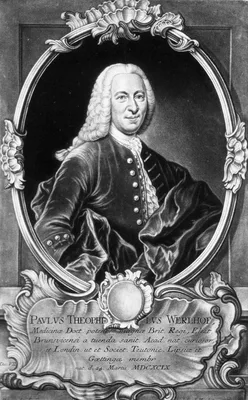
Werlhof gave a classic description of purpura haemorrhagica (“Werlhof’s disease”).
1735 –1756
#6113
Ueber die Vortheile der suprasymphysären Fascienquerschnitts für die gynäkologischen Koeliotomieen.
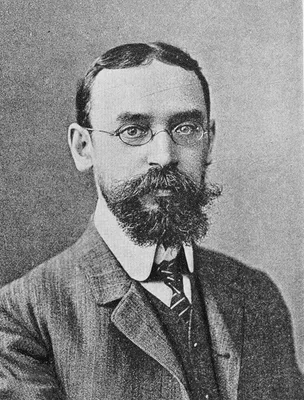
“Pfannenstiel’s incision”.
1735
#8483
A voyage to Guinea, Brasil and the West Indies; in His Majesty's ships, the Swallow and Weymouth: Describing the several islands and Settlements, viz, Madeira, the Canaries, Cape de Verd, Sierraleon, Sesthos, Cape Apollonia, Cabo Corso, and others on the Guinea coast; Barbadoes, Jamaica, &c. in the West-Indies; the colour, diet, languages, habits, manners, customs, and religions of the respective natives, and inhabitants. With remarks on the gold, ivory, and slave-trade; and on the winds, tides and currents of the several coasts.
Atkins, surgeon on the voyage, included information about the slave trade and the natural history of the Gold Coast. "Atkins describes the manatee accurately, and tells much about fetish worship. He shows that there w…
1735
#9416
Historiae Aegypti naturalis qua continentur rerum Aegyptiarum libri quatuor. Opus posthumum nunc primum ex auctoris autographo, diligentissime recognito, editum; atque ex eodem tabellis aeneis XXV illustratum et uberimmo indice auctem. (2 vols.) Vol. 2: Pars secunda, sive, de Plantis Aegypti liber auctus & emendatus. Accedunt tabella aenae LXXVII plantis summo artificio incisis; ut & dissertatio eiusdem de laserpitio, & lotoaegyptia. Cum observationibus & notis Joannis Veslingii, equitis, In Patavino Gymnasio Anatomiae & Pharmaciae professoris primarii. Accedunt Eiusdem Joannis Veslingii paraeneses ad rem herbariam & vindiciae opobalsami cum indicibus necessariis.
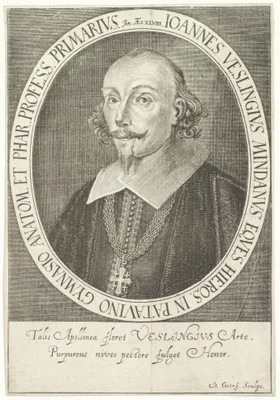
Posthumously published works of Alpini on the natural history and botany of Egypt, and Vesling on the botany of Egypt. The second volume, on botany by Alpini was edited by Johannes Vesling, with the addition of his ow…
1736
#395.1
Human osteogeny explained in two lectures.
Nesbitt pointed out that bones may develop in membrane as well as cartilage, an observation which was ignored until the 19th century. He left an outstanding description of bone growth.
1736
#3559
Of an inguinal rupture, with a pin in the appendix caeci, incrusted with stone; and some observations on wounds in the guts.
First recorded successful appendectomy. Amyand was Sergeant-Surgeon to George II and first principal surgeon to Westminster Hospital. See also the paper in Surg. Gynec. Obstet., 1953, 97, 643-52, which reproduces part…
1736
#5076
The practical history of a new epidemical eruptive miliary fever, with an angina ulcusculosa, which prevailed in Boston New England in the years 1735 and 1736.
Douglass left the first adequate clinical description of scarlet fever, which he called angina ulcusculosa, in his account of New England’s first scarlet fever epidemic. He was one of the first American physicians to …
1736
#5195
De morbis venereis libri sex.
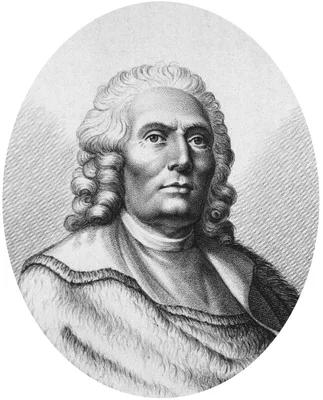
A comprehensive book on the subject, including a careful review of the existing literature. Astruc stated that syphilis first appeared in Europe in 1493. The book was translated into English in 1737. Digital facsimile…
1736
#7507
Dissertatio de arteries et venis intestinorum hominis. Adjecta icon coloribus distincta.
The small color mezzotint printed by the painter Jan Ladmiral included with this pamphlet on the arteries and veins of the human intestine was among the earliest applications of full color printing, and the first use …
1736
#10978
Aphrodisiacus. Containing a summary of the ancient writers on the venereal disease ... Extracted from the two tomes of Aloysius Luisinus, which by the direction of Dr. Boerhaave, were lately revised and reprinted at Leyden. Together with an index of all others omitted in that collection ... from the beginning of the sixteenth century down to the present time. With a large preface, by Daniel Turner.
A partial English translation of Luisinus's, De morbo gallico omnia quae extant (1566-67) as expanded by Boerhaave (1728). Digital facsimile of the 1736 work from the Internet Archive at this link.