
Latest Entries
Recently added and updated annotations in the corpus.
1938 CE
#6924
Molecular biology: origin of the term.
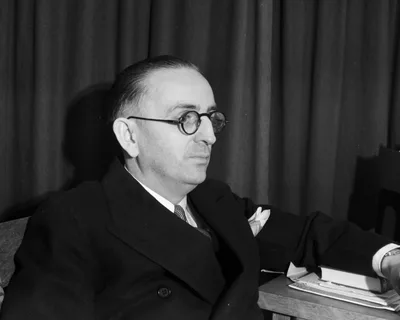
Perhaps the only mathematician to name a new biological discipline, in 1938, as Director of the Natural Sciences Division of the Rockefeller Foundation, Weaver coined the term molecular biology to describe the use of …
1934 CE
#6923
X-Ray photographs of crystalline pepsin.
Bernal and Hodgkin took the first X-ray photograph of a protein structure—crystalline pepsin. They showed that crystals of pepsin give an X-ray diffaction pattern, beginning protein crystallography. This may als…
1847 CE
#6922
Thèses de physique et de chimie, Presentées à la Faculté des Sciences de Paris.
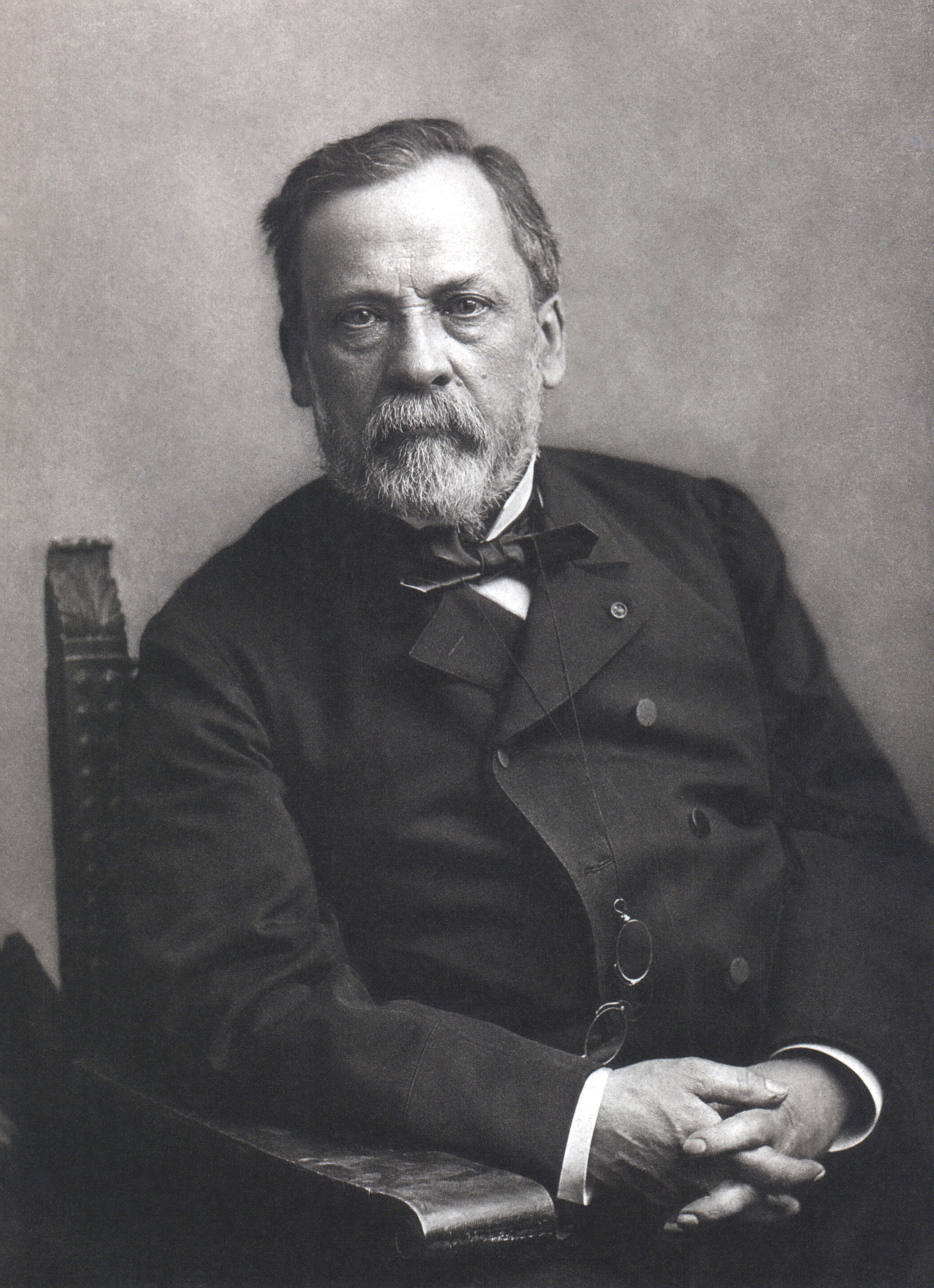
Pasteur reported a series of “investigations into the relation between optical activity, crystalline structure, and chemical composition in organic compounds, particularly tartaric and paratartaric acids. This w…
1840 CE
#6921
Der Chemismus in der thierischen Organisation.
Hünefeld accidentally observed the first protein crystals— those of hemoglobin—in partically dried samples of mammalian blood blood pressed between glass plates. On page 160 Hünefeld noted that h…
1913 CE
#6920
The reflection of x-rays by crystals.
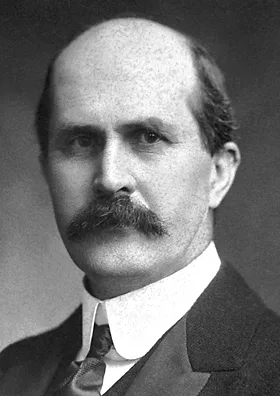
Discovery of X-ray crystallography. The father and son team of physicists, William Henry Bragg and William Lawrence Bragg, constructed the first X-ray spectrometer using crystals as gratings, using a known wavelength …
1913 CE
#6919
The diffraction of short electromagnetic waves by a crystal.
At the age of 22, Bragg discovered that the regular pattern of dots produced on a photographic plate by an X-ray beam passing through a crystal could be regarded as a reflection of electromagnetic radiation from plane…
1932 CE
#6918
X-ray studies of the structures of hair, wool, and related fibres. I. General.
Astbury, a student of William Lawrence Bragg, was the first to study proteins by X-ray analysis. He applied X-ray analysis to the structure of hair, wool, and related fibers, of which the protein keratin is the princi…
1912 CE
#6917
Interferenz-Erscheinungen bei Röntgenstrahlen. . . . Eine quantitative Prüfung der Theorie für die Interferenz-Erscheinungen bei Röntgenstrahlen
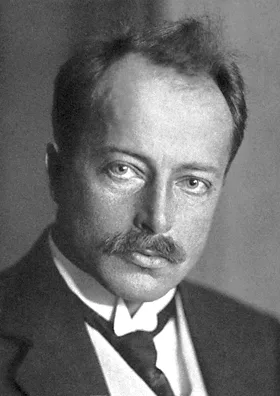
Discovery of the diffraction of X-rays in crystals. Laue’s discovery was of dual importance: it allowed the subsequent investigation of X-radiation by means of wavelength determination, and it provided the means…
1968 CE
#6916
Molecular pathology of human haemoglobin.
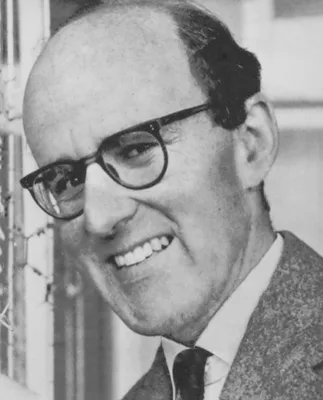
Perutz opened up "the field of 'molecular pathology,' relating a structural abnormality to a disease" (Aaron Klug, "Max Perutz 1914-2002," Science 295 ([2002] 2383). Specifically Perutz showed that hemoglobin molecule…
1938 CE
#6915
Das Gleichgewicht zwischen Hämoglobin and Sauerstoff.
Haurowitz discovered that crystalline deoxyhemoglobin changes in shape and color on reaction with oxygen, suggesting that it is a molecular lung.
1939 CE
#6914
The nature of the chemical bond and the structure of molecules and crystals: An introduction to modern structural chemistry.
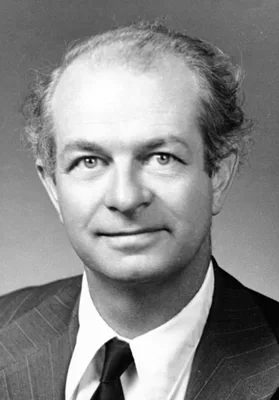
This book set forth in detail Pauling's valence-bond theory based on the quantum-mechanical concept of resonance between two energy states, which led to his highly innovative idea that the hybridization of orbitals (e…
1968 CE
#6913
Three-dimensional Fourier synthesis of horse oxyhaemoglobin at 2.8Å resolution: The atomic model.
Thirty years after beginning his research on hemoglobin Perutz solved the Fourier synthesis of hemoglobin at 2.8Å (high resolution) and built an atomic model of the molecule. With Hilary Muirhead, J. M. Cox & L.…
1960 CE
#6912
Structure of myoglobin: A three-dimensional Fourier synthesis at 2 Å resolution.
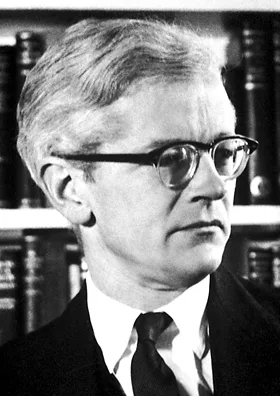
Kendrew's second paper reporting the first solution of the three-dimensional molecular structure of a protein, for which he shared the 1962 Nobel Prize in chemistry with Max Perutz, who solved the structure of the rel…
1958 CE
#6911
A three-dimensional model of the myoglobin molecule obtained by x-ray analysis.
Initial paper on the first solution of the three-dimensional molecular structure of a protein. Computing the molecular structure in 3 dimensions was possible through the use of the Cambridge EDSAC stored-program elect…
1951 CE–1952 CE
#6910
The computation of Fourier syntheses with a digital electronic calculating machine.
The first paper published in a scientific journal on the application of an electronic computer to computational biology. At the second English computer conference held in Manchester from July 9-12, 1951 computer scien…
1974 CE
#6909
Computerized transaxial x-ray tomography of the human body.
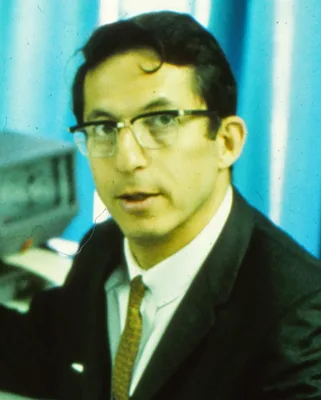
Ledley and team developed the developed the ACTA 0100 CT Scanner (Automatic Computerized Traverse Axial)— the first whole-body computed tomography scanner. With G. Di Chiro, A. J. Luessenhop, and H.L. Twigg. For…
1959 CE
#6908
Reasoning foundations of medical diagnosis.
The beginning of the development of clinical decision support systems (CDSS) — interactive computer programs, or expert systems, designed to assist physicians and other health professionals with decision making …
1996 CE
#6907
Spectacles and other vision aids: A history and guide to collecting.
The most comprehensive history of the development of spectacles and other vision aids in Europe, America, Japan, and China. With over 780 photographs, of which 310 are in color.
1997 CE
#6906
American surgical instruments: The history of their manufacture and a directory of instrument makers to 1900.
2006 CE
#6905
The evolution of surgical instruments: An illustrated history from ancient times to the twentieth century.
2000 CE
#6904
The obstetrician’s armamentarium: Historical obstetric instruments and their inventors.
2001 CE
#6903
Tarnished Idol: William Thomas Green Morton and the introduction of surgical anesthesia. A chronicle of the ether controversy
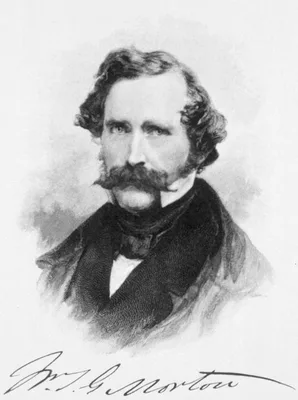
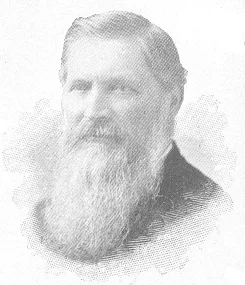
The most comprehensive biography of Morton, and the most comprehensive account of the ether controversy between Morton and Charles Thomas Jackson.
1993 CE
#6902
Orthopedics: A history and iconography.
1979 CE
#6901
Resolution of the ATP-dependent proteolytic system from reticulocytes: a component that interacts with ATP.
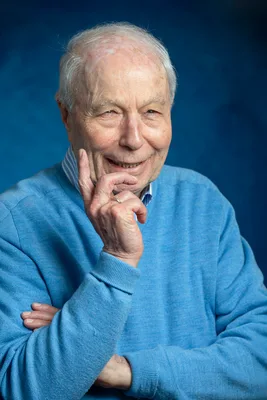
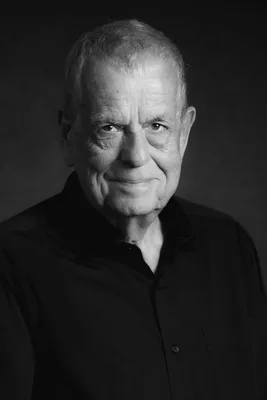
Discovery of ubiquitin-mediated protein degradation. The paper is available at doi:10.1073/pnas.76.7.3107,PMC 383772, PMID 290989. See also Hershko, A.; Ciechanover, A.; Heller, H.; Haas, A.L.; Rose, I.A. (1980), "Pro…
c. 850 CE
#6900
The Syriac Galen palimpsest.
![GALEN, [Κλαύδιος Γαληνός; Galen of Pergamon] (129 – 216)](/media/portraits/21)
This ninth century palimpsest codex contains as its undertext a text of Galen's On Simple Drugs in the Syriac translation by Sergius of Reshaina. It has not yet been formally published. For further information see the…
1941 CE
#6898
Metabolic generation and utilization of phosphate bond energy.
In this paper about group potential and the transfer of acetyl and phosphoryl groups Lipmann proposed that acetyl phosphate acted as an acetyl door in the biosynthesis of essential metabolites and that ATP functioned …
1944 CE
#6897
What is life? The physical aspect of the living cell.
This work about the physical basis of natural phenomena influenced the young James D. Watson and others. The book was a popularization of ideas developed by Max Delbrück in his paper with Timofeeff-Ressovsky in 1…
1954 CE
#6896
Possible relation between deoxyribonucleic acid and protein structures.
Gamow, a physicist, invented the concept of a genetic code. This brief 1-page paper, published in the February 13, 1954 issue of Nature was the first specific positive response to Watson and Crick's structure of DNA. …
1958 CE
#6895
On protein synthesis.
This paper proposed two general principles: 1) The Sequence Hypothesis: “The order of bases in a portion of DNA represents a code for the amino acid sequence of a specific protein. Each ‘word’ in the…
1958 CE
#6894
Sur l’expression et le rôle des allèles “inductible” et “constitutif” dans la synthèse de la β-galactosidase chez des zygotes d’ “Escherichia coli.
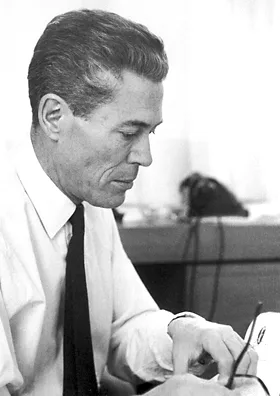
The “PaJaMo” experiment of PArdee, JAcob, and MOnod “broke the impasse in Crick and Brenner’s comprehension of how information in the sequence of bases in DNA came to be expressed as a sequence…
1980 CE
#6893
Cloning in single-stranded bacteriophage as an aid to rapid DNA sequencing.
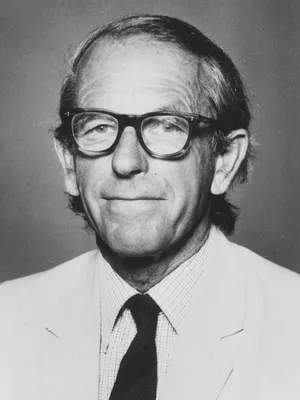
Sanger and colleagues developed the random shotgun method to prepare templates for DNA sequencing. With A. R. Coulson, B. G. Barrell, A. J. H. Smith & B. A. Roe.
2001 CE
#6892
The sequence of the human genome.
Initial draft sequence of the human genome by Venter and the staff at Celera Genomics. The full text is available from Science at this link.
2001 CE
#6891
Initial sequencing and analysis of the human genome.
Initial draft sequence of the human genome from the publically financed project, involving the coordinated efforts of 20 laboratories and hundreds of people around the world. The full text is available from Nature at …
1971 CE
#6890
Specific cleavage of simian virus 40 DNA by restriction endonuclease of Hemophilus influenzae.
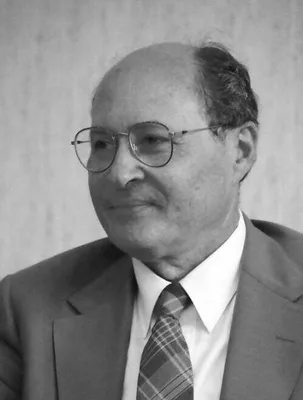
Nathans showed that the restriction enzyme discovered by Hamilton Smith cleaved SV40 DNA into 11 specific pieces. Nathans and his student Kathleen Danna wrote: "The availability of pieces of SV40 DNA from specific sit…
1970 CE
#6889
A restriction endonuclease from Hemophilus influenzae. II. Base sequence of the recognition site.
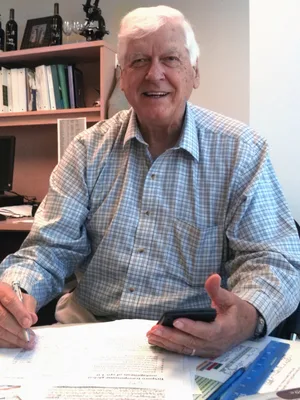
Discovery of the first type II restriction enzyme (HindII). Smith shared the 1978 Nobel Prize in Physiology or Medicine with Werner Arber and Daniel Nathans "for the discovery of restriction enzymes and their applicat…
1998 CE
#6888
Genome sequence of the nematode C. elegans: A platform for investigating biology.
Completion of the first genome of a multi-cellular organism—C. elegans. "C. elegans is a free-living nematode which is widely used as a model organism. The C. elegans genome has been fully sequenced and is there…
1991 CE
#6886
Complementary DNA sequencing: "expressed sequence tags" and the human genome project.
Expressed Sequence Tags (ESTs) for DNA sequencing. By Adams, M.D., Kelley, J.M., Gocayne, J.D., Dubnick, M., Polymeropoulos, M.H., Xiao, H., Merril, C.R., Wu, A., Olde, B., Moreno, R., Kerlavage, A.R., McCombie, W.R.,…
1982 CE
#6885
Nucleotide sequence of bacteriophage lambda.
Sanger and colleagues sequenced the entire genome of bacteriophage lambda using a random shotgun technique. This was the first whole genome shotgun (WGS) sequence.
1977 CE
#6884
The nucleotide sequence of bacteriophage phi-X174.
Sanger and colleagues sequenced the first whole DNA genome—that of bacteriophage phi-X174 (5375 bases)
1977 CE
#6883
DNA sequencing with chain-terminating inhibitors.
Sanger and colleagues developed methods for rapid sequencing of long sections of DNA molecules. Sanger’s method, and that developed by Gilbert and Maxam, made it possible to read the nucleotide sequence for enti…
1952 CE
#6882
Entwicklungsgeschichte physiologischer Probleme in Tabellenform.
1900 CE
#6881
The logic of figures, or comparative results of homoeopathic and other treatments.
A comparison of mortality rates in institutions and private practice between homeopathic and other modes of treatment. Digital facsimile from The Medical Heritage Library at the Internet Archive at this link.
1971 CE
#6880
Homeopathy in America: The rise and fall of the medical heresy.
A history of homeopathy in America, including its demise during the early to mid-20th century.
2003 CE
#6879
Huang Di Nei Jing Su Wen: Nature, knowledge, imagery in an ancient Chinese medical text.
1949 CE
#6878
Huang Ti Nei Ching Su Wen: The Yellow Emperor's classic of internal medicine. Translated by Ilza Veith.
First edition in English of the Yellow Emperor's Inner Classic (Huangdi Neijing,) , the most important ancient text in Chinese medicine as well as a major book of Daoist theory and lifestyle. According to leading scho…
1903 CE
#6877
Elektropathologie. Die Erkrankungen durch Blitzschlag und elektrischen Starkstrom in klinischer und forensischer Darstellung.
A pioneering study of diseases and death caused by lightning and electricity. Jellinek specialized in the study of electrical accidents and their prevention. Digital facsimile from Google Books at this link.
1869 CE
#6876
Atlas zur Pathologie der Zahne . . . Atlas to the Pathology of the Teeth [in German and English].
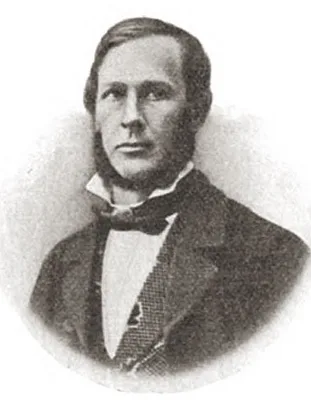
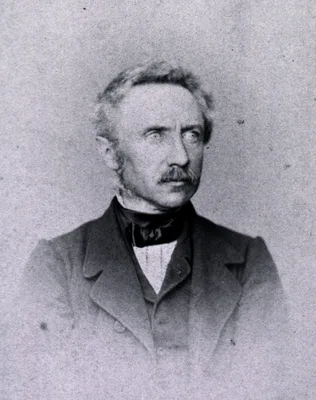
The first atlas of dental pathology, a "beautifully made, richly illustrated work" (Hoffmann-Axthelm, p. 399). "In these plates we find numerous anomalies of the teeth and jaw in delicate, clear drawings. . . . Occasi…
1841 CE
#6875
Nouveau traité théorique et pratique de l'art du dentiste.
Lefoulon introduced the term "orthodontia" in this book, and went into more detail and recorded more notable advances in the practice of orthodontics than any of his predecessors. "Lefoulon introduced treatment withou…
1880 CE
#6874
Tratado clinico iconografico de dermatologia quirurgica.
The first medical text in Spanish to use photographs as illustrations. Includes 17 lithographed plates (12 chromolithographs) and 3 original photographs (2 hand-colored). Giné y Partagás was a surgeon, d…
1865 CE
#6873
Photographs (coloured from life) of the diseases of the skin.
The first dermatologic publication illustrated with photographs.