
Facets
Browse across eight MeSH (opens in new tab) facets — era, geography, science, specialty, technology, history, culture, and reference. Select one tag per group; counts update across the others. What’s new in facet browse how facets relate to subjects and MeSH.
Clear filtersFacet filters
Geography
Specialties & Disease
- Anatomy & Pathology 2
- Cardiology & Blood 2
- Neurology & Psychiatry 4
- Obstetrics & Reproductive 0
- Infectious Disease (General) 0
- Surgery & Anesthesia 6
- Public Health 4
- Immunology & Dermatology 6
- General Clinical Medicine 4
- Military Medicine 0
- Psychology 1
- Alternative & Fringe Medicine 0
- Pediatrics 0
- Ophthalmology & Vision 0
- ENT & Hearing 0
- Urology & Nephrology 0
- Gastroenterology & Hepatology 1
- Pulmonary & Respiratory 1
- Rheumatology, Rehab & Pain 1
- Internal, Emergency & Geriatric 0
- Veterinary Medicine 0
- Epidemiology & Demography 3
- Physiology & Embryology 11
- Dentistry 0
- Plagues & Epidemics 2
- Microbiology & Virology 1
Social & Historical Studies
Institutions & Culture
Reference & Scholarly Works
110 entries match Diagnostics & Imaging [E01] · Physics, Math & Biomechanics [K01.900.400]
1982
#10046
Splicing life: A report on the social and ethical issues of genetic engineering with human beings.
Digital facsimile from the Internet Archive at this link.
1983
#13989
Expression of chimaeric genes transferred into plant cells using a Ti-plasmid-derived vector.
Schell and Montagu discovered the gene transfer mechanism between Agrobacterium and plants, which resulted in the development of methods to alter Agrobacterium into an efficient delivery system for gene engineering in…
1984
#11363
Readings in medical artificial intelligence: The first decade. Edited by William Clancey and Edward H. Shortliffe.
1986
#10201
The Visible Human Project.
https://www.nlm.nih.gov/research/visible/visible_human.html "The Visible Human Project® is an outgrowth of the NLM's 1986 Long-Range Plan. It is the creation of complete, anatomically detailed, three-dimensional repre…
1986
#13990
Fluorescence detection in automated DNA sequence analysis.

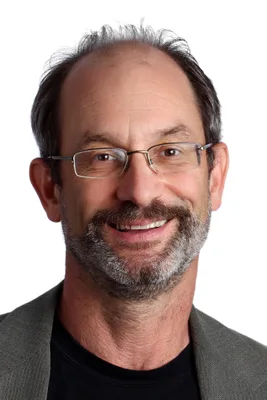
Invention of the first semi-automated DNA sequencing machine by Leroy H. Hood, Lloyd M. Smith and colleagues. Abstract of the paper: "We have developed a method for the partial automation of DNA sequence analysis. Flu…
1987
#13931
Site-directed mutagenesis by gene targeting in mouse embryo-derived stem cells.

In 2007 Capecchi shared the 2007 Nobel Prize in Physiology or Medicine with Martin J. Evans and Oliver Smithies "for their discoveries of principles for introducing specific gene modifications in mice by the use of em…
1987
#13940
Targeted correction of a mutant HPRT gene in mouse embryonic stem cells.

Smithies discovered, simultaneously with Mario Capecchi and Martin Evans, the technique of homologous recombination of transgenic DNA with genomic DNA, a much more reliable method of altering animal genomes than previ…
1990
#14340
Phage antibodies: Filamentous phage displaying antibody variable domains.

Working in the Laboratory of Molecular Biology at Cambridge University, Winter became interested in the idea that all antibodies have the same basic structure, with only small changes making them specific for one targ…
1991
#8138
Telepresence: Dextrous procedures in a virtual operating field.
The first teleoperated surgery. Funded by the U.S. Dept. of Defense, the first prototype of a telesurgery robot was developed at Stanford Research International (SRI) (Menlo Park, CA) and called the Green Telepresence…
1993
#7182
Radiological oncologists: The unfolding of a medical specialty.
1993
#8618
The uses of life: A history of biotechnology.
1994
#9718
Molecular politics: Developing American and British regulatory policy for genetic engineering, 1972-1982.
1996
#11110
Making PCR: A story of biotechnology.

1997
#7457
Viable offspring derived from fetal and adult mammalian cells.
Cloning of the lamb Dolly, the first mammal to be cloned from an adult cell. Her birth established that the nuclei of at least some adult cells can be used to produce sheep or other animals that are genetically identi…
1998
#13286
Embryonic stem cell lines derived from human blastocysts.
Thomson and collaborators first isolated embryonic stem cells from human blastocysts. Order of authorship in original publication: Thomson, Itskovitz-Eldor, Shapiro et al. Available online from science.sciencemag.org …
1998
#13977
Derivation of pluripotent stem cells from cultured human primordial germ cells.
Order of authorship in the original publication: Shamblott, Axelman,... Gearheart. Gearheart led the team that successfully developed human embryonic germ cells, pluripotent stem cells derived from primordial germ cel…
2001
#7959
Transatlantic robot-assisted telesurgery.
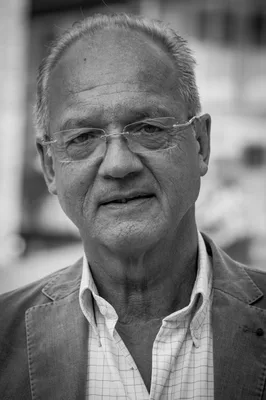
The "Lindbergh operation", a complete very long distance tele-surgical gallbladder operation carried out by a team of French surgeons located in New York on a patient in Strasbourg, France using high-spreed telecommun…
2002
#10238
BioDigital.
https://www.biodigital.com/ "The Word's First Human Visualization Platform: Anatomy, Disease & Treatments— all in interactive 3D. Web, Mobile and Augmented Reality "the virtual body as the health equivalent of Google …
2002
#13598
Stem cells and the future of regenerative medicine.
In 2001 this report cited the following diseases with high prevalence in the United States as likely candidates for stem cell research: Cardiovascular Disease: 58 million U.S. patients Automimmune Disease: 30 million …
2003
#14300
Design of a novel globular protein fold with atomic-level accuracy.

Called, "the breakthrough in computational de novo protein design." This was the proof of concept paper that computers and AI could be used to predict protein structures accurately and much faster than with convention…
2004
#8137
Primer of robotic & telerobotic surgery. Edited by Garth H. Ballantyne, Jacques Marescaux, and Pier Cristoforo Giulianotti.
2006
#8801
Biotech: The countercultural foundations of an industry.
2006
#9722
The genetics revolution: History, fears and future of a life-altering science.
2006
#13287
Induction of pluripotent stem cells from mouse embryonic and adult fibroblast cultures by defined factors.

Takahashi and Yamanaka reprogrammed mice fibroblast cells, which can produce only other fibroblast cells, to become pluripotent stem cells, which have the capacity to produce many different types of cells. This they a…
2007
#7881
Culturing life: How cells became technologies.
A history of tissue culture.
2007
#7994
Development of the Medical Literature Analysis and Retrieval System (MEDLARS).
Digital version from PubMedCentral at this link.
2007
#14063
Induction of pluripotent stem cells from adult human fibroblasts by defined factors.
Yamanaka (Nobel Prize 2012) and colleagues demonstrated the generation of Induced Pluripotent Stems Cells (iPS) from adult human dermal fibroblasts with the same 4 mice factors they used in GM 13287. By overexpressing…
2009
#7523
History of telemedicine: Evolution, context, and transformation.
2009
#10775
Long-term control of HIV by CCR5 Delta32/Delta32 stem-cell transplantation.
Gero Hütter and co-authors reported the first long-term remission or "cure" of HIV/AIDS in a human. The patient, Timothy Ray Brown also known as "The Berlin Patient" also suffered from myeloid leukemia and underwent s…
2009
#11355
The quest for artificial intelligence.

A history of artificial intelligence in general, including medical applications, from the 18th century onward by a pioneer of artificial intelligence.
2009
#11399
The coming of age of artificial intelligence in medicine.
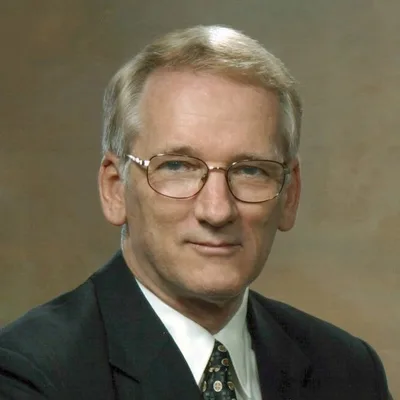
Order of authorship in the original publication: Patel, Shortliffe, Stefanelli, Szolovits, Berthold, Bellazzi, Abu-Hanna. "Abstract: This paper is based on a panel discussion held at the Artificial Intelligence in Med…
2009
#13335
Single Lgr5 stem cells build crypt-villus structures in vitro without a mesenchymal niche.
Order of authorship in the original publication: Sato, de Vries, .... Clevers. Clevers and postdoc Toshiro Sato took adult stem cells from the mouse intestine and created the first mini-guts they called organoids—thre…
2010
#9459
The introduction of numerical methods to assess the effects of medical interventions during the 18th century: a brief history.
An outstanding bibliographical survey available online from the James Lind Library at this link.
2011
#8673
Genentech: The beginnings of biotech.
2011
#10563
Visual complexity: Mapping patterns of information.
An exceptionally beautiful graphic work with many historical examples showing how data in many fields, including medicine and biology, can be mapped and visualized.
2011
#13319
The delivery of regenerative medicines and their impact on healthcare. Edited by Catherine D. Prescott and Dame Julia Polak.
2012
#12751
Eyewire: A game to map the brain.
https://eyewire.org/explore Eyewire is a game to map the brain from Sebastian Seung's Lab at Princeton University. This citizen science human-based computation game challenges players to map retinal neurons. Eyewire l…
2013
#10564
Design for information: An introduction to the histories, theories, and best practices behind effective information visualizations.
Visually splendid; includes frequent comparisons of modern computer representations with historical examples.
2013
#11978
The NCBI handbook, 2nd edition.
Available online from ncbi.nlm.nih.gov at this link. "The National Center for Biotechnology Information (NCBI), a division of the National Library of Medicine (NLM) at the U.S. National Institutes of Health, is a lead…
2013
#13284
The California Institute for Regenerative Medicine. Science, governance, and the pursuit of cures
The California Institute for Regenerative medicine was the first state-fund institution that provided stable, in-state funding on a very large scale for biomedical research. "The California Institute for Regenerative …
2013
#13729
The NCBI handbook, 2nd edition.
https://www.ncbi.nlm.nih.gov/books/NBK143764/ "The National Center for Biotechnology Information (NCBI), a division of the National Library of Medicine (NLM) at the U.S. National Institutes of Health, is a leader in t…
2015
#11368
The genealogy of a gene: Patents, HIV/AIDS, and race.
"Myles Jackson uses the story of the CCR5 gene to investigate the interrelationships among science, technology, and society. Mapping the varied “genealogy” of CCR5—intellectual property, natural selection, Big and Sma…
2016
#12234
A century of telemedicine: Curatio sine distantia et tempora.
345 pages. Available online from isfteh.org at this link.
2017
#10555
Cancer, radiation therapy, and the market.
2018
#10188
A platform for biomedical discovery and data-powered health: Strategic plan 2017-2027. Report of the NLM Board of Regents.
https://www.nlm.nih.gov/pubs/plan/lrp17/NLM_StrategicReport2017_2027.html "The strategic plan focuses on three essential, interdependent goals that will help guide the Library’s priorities over the next 10 years as it…
2018
#13049
Telemedicine and health technologies: A guide for mental health professionals.

"...Telepsychiatry and Health Technologies: A Guide for Mental Health Professionals is a practical, comprehensive, and evidence-based guide to patient-centered clinical care delivered in whole or in part by technologi…
2018
#14146
Cloning of Macaque monkeys by somatic cell nuclear transfer.
The authors at the Chinese Academy of Sciences in Shanghai reported the first cloning of a non-human primate. Full text available from cell.com at this link. Order of authorship in the original publication: Liu, Cai..…
2019
#11400
Artificial intelligence in medicine: Weighing the accomplishments, hype and promise.
2019
#12407
Can artificial intelligence reliably report chest x-rays? Radiologist validation of an algorithm trained on 2.3 million x-rays.
"Background: Chest X-rays are the most commonly performed, cost-effective diagnostic imaging tests ordered by physicians. A clinically validated AI system that can reliably separate normals from abnormals can be inval…
2019
#12970
Whole-animal connectomes of both Caenorhabditis elegans sexes.
The first whole-animal connectomes for both adult sexes of a single species. "As none of the EM series cover an entire single animal, to generate whole animal connectomes, data from different reconstruction series wer…