
Facets
Browse across eight MeSH (opens in new tab) facets — era, geography, science, specialty, technology, history, culture, and reference. Select one tag per group; counts update across the others. What’s new in facet browse how facets relate to subjects and MeSH.
Clear filtersFacet filters
Geography
Specialties & Disease
- Anatomy & Pathology 0
- Cardiology & Blood 3
- Neurology & Psychiatry 1
- Obstetrics & Reproductive 3
- Infectious Disease (General) 0
- Surgery & Anesthesia 3
- Public Health 7
- Immunology & Dermatology 3
- General Clinical Medicine 5
- Military Medicine 7
- Psychology 0
- Alternative & Fringe Medicine 7
- Pediatrics 2
- Ophthalmology & Vision 0
- ENT & Hearing 1
- Urology & Nephrology 0
- Gastroenterology & Hepatology 1
- Pulmonary & Respiratory 0
- Rheumatology, Rehab & Pain 0
- Internal, Emergency & Geriatric 0
- Veterinary Medicine 0
- Epidemiology & Demography 5
- Physiology & Embryology 1
- Dentistry 2
- Plagues & Epidemics 11
- Microbiology & Virology 0
Social & Historical Studies
Institutions & Culture
Reference & Scholarly Works
Drugs & Technology
113 entries match Zoology & Animal Sciences [K01.900.500.750] · Race, Ethnicity & Colonial Medicine [K01.900.850]
1672
#1826.1
New-Englands rarities discovered: in birds, beasts, fishes, serpents, and plants of that country. Together with the physical and chyrurgical remedies wherewith the natives constantly use to cure their distempers, wounds, and sores…
The first detailed account of the natural history and botany of North America, including the first extensive study of native North American medicine.
1764
#9509
An essay on the more common West-India diseases and the remedies which that country itself produces: To which are added some hints on the management, &c. of negroes.
Though the title suggests tropical medicine in general, this work mainly concerns the selection and medical care of slaves. Digital facsimile of the second edition (Edinburgh, 1802) expanded "with practical notes and …
1776
#1601.1
Observations sur les maladies des nègres, leurs causes, leurs traitemens et les moyens de les prévenir.
Study of the health conditions and diseases of black slaves in the Americas. Digital facsimile of the 1776 edition from Google Books at this link. Second edition, expanded to two volumes. Paris: L'Auteur, 1792.
1785
#13086
Observations générales sur les maladies des climats chauds, leurs causes, leur traitement, et les moyens de les prévenir.
Digital facsimile from BnF Gallica at this link.
1788
#8216
Observations sur le tétanos; Ses différences, ses causes, ses symptômes, avec le traitement de cette maladie & les moyens de la prévenir. Précédées d'un discours sur les moyens de perfectionner la médecine-pratique sous la zone torride. Suivies d'observations sur la santé des femmes enceintes dans ces régions; leurs maladies aux différentes époques de la grossesse; l'accouchement & les suites; la conservation des nouveau-nés jusqu'à l'adolescence. Terminées par le rapprochement des vices & des abus des hôpitaux d'entre les tropiques, & les moyens d'y remédier. Par M. Dazille. Pour servir de développement & de suite à ce que cet auteur a écrit du tétanos dans ses ouvrages sur les maladies des nègrse [sic], & sur les maladies des climats chauds.
Primarily concerning the diseases of black slaves. Digital facsimile from the Internet Archive at this link.
1788
#13163
Voyages intéressans dans différentes colonies françaises, espagnoles, anglaises, &c; contenant des observations importantes relatives à ces contrées; & un mémoire sur les maladies les plus communes à Saint-Domingue, leurs remèdes, & le moyen de s'en préserver moralement & phisiquement: Avec des anecdotes singulières, qui n'avaient jamais été publiés....
The final section addresses maladies affecting the residents of Saint-Domingue. Unlike many of his contemporaries Bourgeois assiduously recorded the medical practices of the enslaved and subjugated African and Indigen…
1793
#5451
A short account of the malignant fever, lately prevalent in Philadelphia: With a statement of the proceedings that took place on the subject in different parts of the United States.
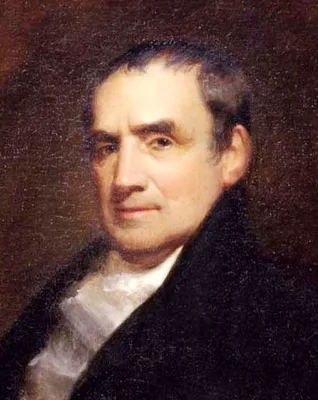
Carey was a Philadelphia publisher and economist rather than a physician. In this little book, which passed through four editions in a few months, Carey left a graphic description of the great yellow fever epidemic of…
1794
#5453.1
A narrative of the proceedings of the black people during the late awful calamity in Philadelphia, in the year 1793: and a refutation of some censures thrown upon them in some late publications.
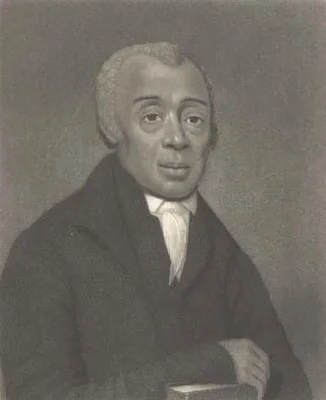
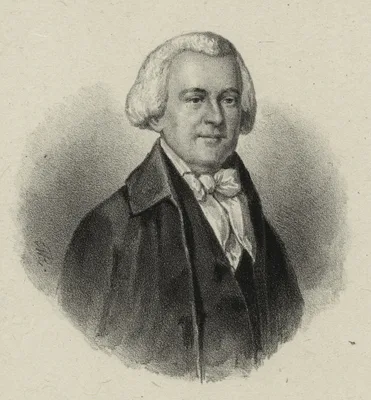
A refutation of slights by Matthew Carey in his Short account of the malignant fever, lately prevalent in Philadelphia (1793; No. 5451) to the important contributions of black people, many of whom served as nurses and…
1803
#5266
An account of the native Africans in the neighbourhood of Sierra Leone; to which is added, an account of the present state of medicine among them. 2 vols.
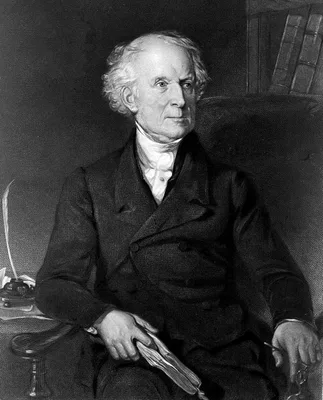
In his travels in Africa, Winterbottom, physician to the Colony of Sierra Leone (now Republic of Sierra Leone) on the west coast of Africa, saw sleeping sickness, which he described in vol. 2, pp. 29-31, as a species …
1803
#8025
Practical rules for the management and medical treatment of negro slaves in the sugar colonies
Collins, a British doctor and planter, spent fourteen years in the Caribbean island of Saint Vincent. Written from the utilitarian perspective of a master, this handbook on slave medicine was intended to maximize the …
1807
#7049
The planter's and mariner's medical companion: treating, according to the most successful practice, I. The diseases common to warm climates and on ship board. II. Common cases in surgery, as fractures, dislocations, &c. &c. III. The complaints peculiar to women and children. To which are subjoined a dispensatory, shewing how to prepare and administer family medicines, and a glossary giving an explanation of technical terms.
Ewell, then practicing in Savannah, Georgia, wrote this self-help book for southern residents, directing his book toward plantation owners. It was "the constant friend of a large number of slave-masters. In emergencie…
1820
#7055
A treatise on the diseases of Negroes, as they occur in the island of Jamaica: with observations on the country remedies.
Digital facsimile from the National Library of Medicine, Internet Archive, at this link.
1832
#10812
Observations on the epidemic now prevailing in the city of New-York; called the Asiatic or spasmodic cholera; with advice to the planters of the South, for the medical treatment of their slaves.
Digital facsimile from the Internet Archive at this link.
1835
#3440.1
A case of introsussception in which an operation was successfully resorted to…in December, 1831.
First operation for intussusception in the United States, performed in Rutherford County, Tennessee. The patient was a negro slave; the operation was a complete success. Reported by Wilson’s pupil, W.W. Thompson.
1854
#8383
The claims of the Negro, ethnologically considered: An address before the literary societies of Western Reserve College, at commencement, July 12, 1854.
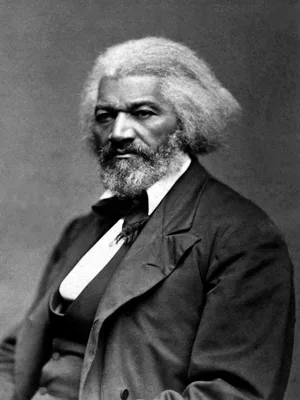
Digital facsimile from the Hathi Trust at this link.
1861
#3267
The breath of life; or mal-respiration, and its effects upon the enjoyments and life of man.
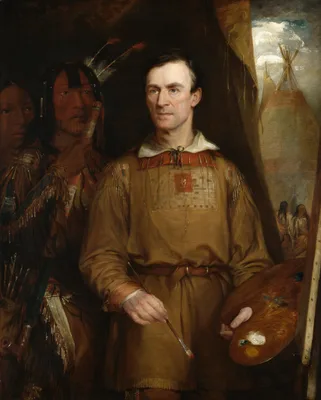
Catlin, the famous American artist, was the first in America to call attention to the bad effects of mouth-breathing. He based his book on observations of native American practices, and illustrated his book with humor…
1877
#8980
Early recollections and life of Dr. James Still.
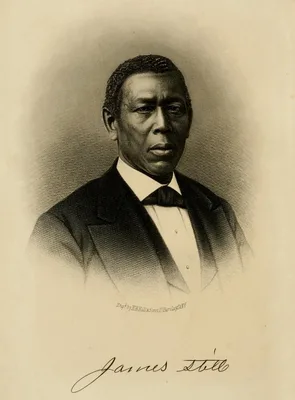
Still's autobiography is probably the first biography or autobiography of an African American physician. "James Still, medical doctor and herbalist, was born on April 9, 1812 in Burlington County, New Jersey. Still wa…
1883
#14145
A book of medical discourse in two parts. Part first: Creating of the cause, prevention, and cure of infantile bowel complains, from birth to the close of the teething period, or till after the fifth year. Part second: Containing miscellaneous information concerning the life and growth of beings; the beginning of womanhood; also, the cause, prevention, and cure of many of the most distressing compains of women and youth of both sexes.
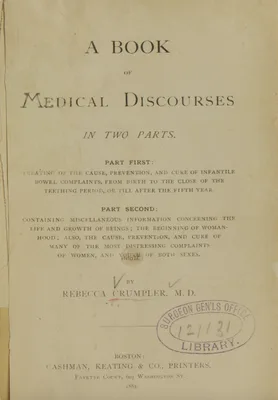
Crumpler was the first Black woman to receive a medical degree in the United States. Digital facsimile from the Internet Archive.
1896
#11823
Race traits and tendencies of the American Negro.
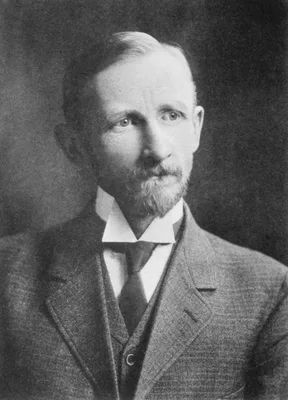
Hoffman was statistician for the Prudential Insurance Company of America. This work, "Hoffman's first, characterized African Americans as exceptionally disease-prone. The work was motivated by a concern about issues o…
1896
#13072
On the pigment of the negro's skin and hair.
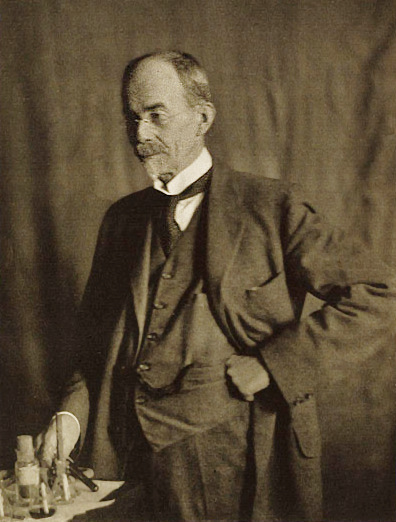
"In the present state of our knowledge we can only say that it seems highly probable that the pigment of the negro's hair is not different from the dark pigment found in the hair of the white races, and we may infer t…
1896
#13882
The surgical peculiarities of the American negro. A statistical inquiry based upon the records of the Charity Hospital of New Orleans, LA., Decennium 1884-'94.
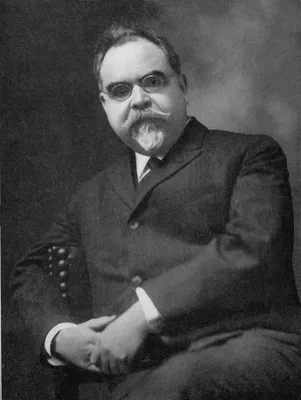
Digital facsimile from wellcomecollection.org at this link.
1906
#7051
The health and physique of the Negro American: report of a social study made under the direction of Atlanta University: together with the Proceedings of the Eleventh Conference for the Study of the Negro Problems, held at Atlanta University, on May the 29th, 1906.
Probably the earliest sociological study of the medical problems of blacks written by a black. Digital facsimile from the Internet Archive at this link.
1912
#7050
The Negro in medicine.
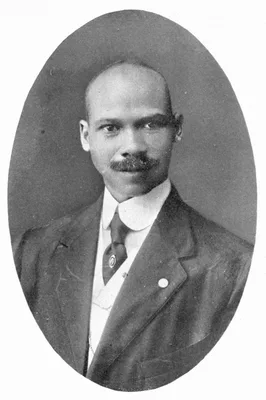
An early publication on the medical problems of blacks written by a black physician. Kenney served as school physician at Tuskegee University, was the first director of the John A. Andrew Memorial Hospital at Tuskegee…
1918
#8821
American Negro slavery: A survey of the supply, employment and control of Negro labor as determined by the plantation régime.
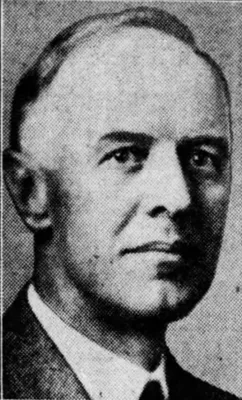
Incudes information on health and medicine. Digital facsimile from the Internet Archive at this link.
1929
#13079
Pathfinders: A history of the progress of colored graduate nurses. With biographies of many prominent nurses.
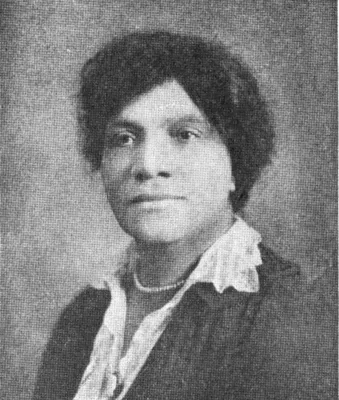
Digital facsimile from the Hathi Trust at this link.
1933
#7065
Some notes on the history of the National Medical Association.
Digital facsimile available from PubMedCental (NLM) at this link.
1934
#6229
Roentgen visualization of the placenta.
Direct radiography of the placenta. "Clilan (C.B.) Powell, longtime owner of the Amsterdam News, was born in 1894 to former Virginia slaves. Very little is known about his childhood. He received his medical degree in …
1934
#11663
The negro professional man and the community with special emphasis on the physician and lawyer.
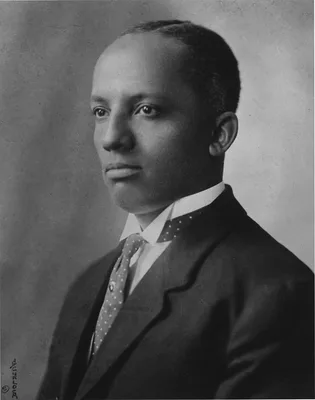
An in-depth social statistical and geographical analysis of America's black doctors including their distribution, economic links, and social activism that varied throughout the South, as well as the North and West.
1934
#12990
Meharry Medical College: A history.
The first history of an African-American medical school written by an African-American. Meharry Medical College, founded in 1876 as the Medical Department of Central Tennessee College, was the first medical college fo…
1935
#9303
The ethnobiology of the Papago Indians. Ethnological Studies in the American Southwest II.
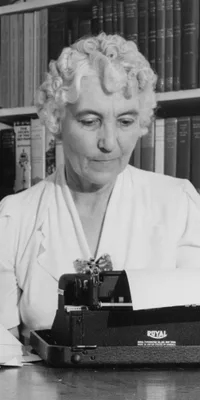
"The Tohono O’odham ... are a Native American people of the Sonoran Desert, residing primarily in the U.S. state of Arizona and the Mexican state of Sonora. Tohono O’odham means "Desert People." The federally recogniz…
1936
#9304
The ethnobiology of the Chiricahua and Mescalero Apache: A. the use of plants for food, beverages and narcotics. Ethnobiological studies in the American Southwest, Vol. 3. Biological series (Vol. 4, No. 5); Bulletin, University of New Mexico, whole, (No. 297).
1939
#6594
The first Negro medical society. A history of the Medico-Chirurgical Society of the District of Columbia.
A detailed history of the “first American Negro medical society formed in America and probably in the world”. Cobb was the first black American medical historian of note.
1941
#12823
Report of the Blood Transfusion Association concerning the Project for Supplying Blood Plasma to England, which has been carried on jointly with the American Red Cross from August, 1940, to January, 1941. Narrative account of work and medical report.
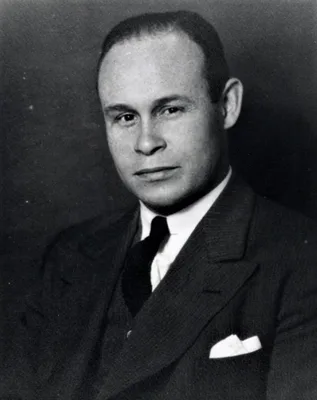
Drew discovered the method for long-term storage of blood plasma, and organized America's first large-scale blood bank. Drew's thesis for his medical degree at Columbia was entitled "Banked Blood: A Study in Blood Pre…
1944
#8385
An American dilemma: The Negro problem and modern democracy. By Gunnar Myrdal with the assistance of Richard Sterner and Arnold Rose.
Includes considerable anthropological, biological, and health data. Digital facsimile from the Internet Archive at this link.
1947
#12814
Medical care and the plight of the Negro.
1949
#3154.1
Sickle cell anemia, a molecular disease.
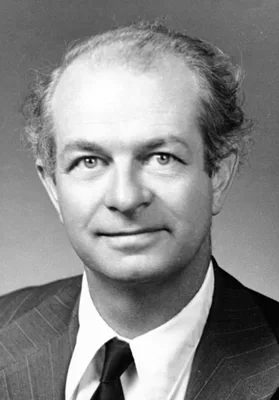
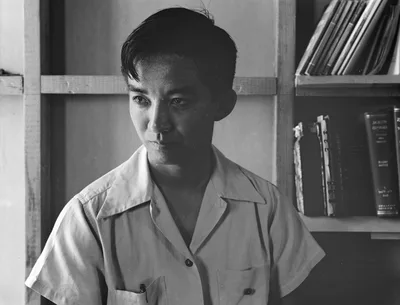
First recognition, by Pauling and colleagues, of a structural hemoglobin variant, and the beginning of the molecular approach to disease.
1949
#8084
The Negro in the medical profession.
Publications of the University of Virginia, Phelps-Stokes fellowship papers, no. 18.
1951
#6596.1
The health of slaves on southern plantations.
Chiefly from contemporary MS records.
1951
#6846
The structure of proteins: Two hydrogen-bonded configurations of the polypeptide chain.
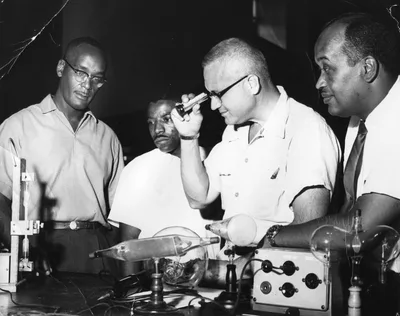
Pauling, his crystallographer R. B. Corey, and African-American physicist and chemist H.R. Branson announced the α-helix, a principal structural feature of proteins. Digital facsimile from the National Academy of Scie…
1952
#14100
Tissue culture studies of the proliferative capacity of cervical carcinoma and normal epithelium.
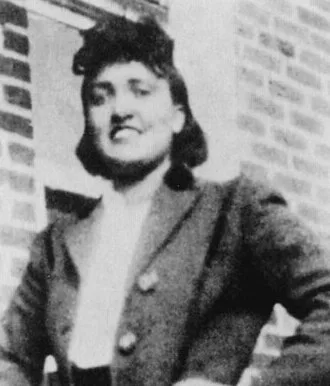
A cell biologist at Johns Hopkins Hospital, Gey propagated the HeLa cell line from Henrietta Lacks' cervical tumor. This cell line, which maintained a continuous growth phase, was the first immortal human cell line to…
1955
#14343
The Negro in science.
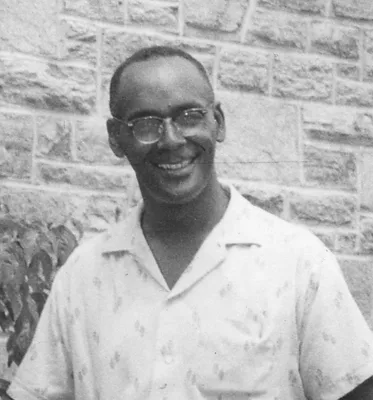
In the forward Martin D. Jenkins pointed out that while African Americans made important contributions to the natural sciences the awareness of the public and even other scientists was rather low. In the first chapter…
1958
#9297
Negroes and medicine.
1961
#12015
No time for prejudice: A story of the integration of negroes in nursing in the United States.
Primarily a history of the National Association of Colored Graduate Nurses [NACGN], which existed for the express purpose of "promoting unity within the nursing profession and furthering the cause of democracy." Integ…
1967
#7048
The history of the Negro in medicine.
International Library of Negro Life and History. Revised edition, 1968.
1971
#11665
Blacks, medical schools and society.
A study of the trends in black enrollments in the nation’s medical schools, and various public and higher education factors that limited the supply of black physicians in America through the 1960s.
1973
#8136
Final report of the Tuskegee Syphilis Study Ad Hoc Advisory Panel.
Digital facsimile from http://biotech.law.lsu.edu/ at this link.
1975
#7054
Textbook of Black-related diseases. Edited by Richard A. Williams.
The first textbook on diseases of African Americans written by African American physicians. The book set the tone for recognizing the importance of race and ethnicity in the evalutation, diagnosis, and treatment of pa…
1977
#9288
Childbirth in the ghetto: Folk beliefs of negro women in a North Philadelphia hospital ward.
1977
#10803
Medical history of a Civil War regiment: Disease in the sixty-fifth United States Colored Infantry.
1978
#7047