
Facets
Browse across eight MeSH (opens in new tab) facets — era, geography, science, specialty, technology, history, culture, and reference. Select one tag per group; counts update across the others. What’s new in facet browse how facets relate to subjects and MeSH.
Clear filtersFacet filters
Geography
Specialties & Disease
- Anatomy & Pathology 765
- Cardiology & Blood 914
- Neurology & Psychiatry 1,258
- Obstetrics & Reproductive 551
- Infectious Disease (General) 147
- Surgery & Anesthesia 1,553
- Public Health 1,129
- Immunology & Dermatology 1,405
- General Clinical Medicine 487
- Military Medicine 436
- Psychology 202
- Alternative & Fringe Medicine 383
- Pediatrics 247
- Ophthalmology & Vision 412
- ENT & Hearing 293
- Urology & Nephrology 309
- Gastroenterology & Hepatology 316
- Pulmonary & Respiratory 233
- Rheumatology, Rehab & Pain 189
- Internal, Emergency & Geriatric 123
- Veterinary Medicine 165
- Epidemiology & Demography 397
- Physiology & Embryology 924
- Dentistry 259
- Plagues & Epidemics 1,279
- Microbiology & Virology 1,080
Social & Historical Studies
Institutions & Culture
Reference & Scholarly Works
1,129 entries match Public Health [N02.500]
1642
#2263
De medicina Indorum.
Bontius was probably the first to regard tropical medicine as an independent branch of medical science. He spent the last four years of his life in the Dutch East Indies, and his book incorporates the experience he ga…
1642
#7179
Geneanthropeiae sive de hominis generatione decateuchon. Ubi ex ordine quaecunique ad humanae generationis liturgiam, ejusdemque principia, organa, tempus, usum, modum, occasionem voluptatem, aliasque omnes affectiones, quae in aphrodisiis accidere quoquomodo solent, ac possunt dedita opera plene methodice, & iucunde pertractantur.
An encyclopedic work on sexuality and physical love in all its aspects, practical and credulous, including the widest variety of possible positions, the anatomy and physiology of the sexual organs and varous aspects o…
1642
#8956
La presence des absens; ou facile moyen de rendre présent au médecin l'estat d'un malade absent. Dressé par les docteurs en médecine consultans charitablement à Paris pour les pauvres malades.
Renaudot, physician, philanthropist and journalist, published this self-diagnostic handbook so that charity patients could communicate with their physicians by correspondence. Digital facsimile from biusante.paris.des…
1645
#3727
Disputatio medica inauguralis, de morbo puerili Anglorum, quem patrio idiomate indigenae vocant The Rickets.
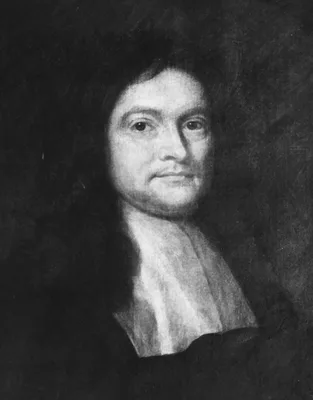
In his 26th year Whistler published his graduation thesis at Leiden; this was the first description of rickets as a definite disease manifesting itself by a more or less constant association of symptoms. Still (No. 63…
1646
#10032
Pseudodoxia epidemica, or, enquiries into very many received tenents and commonly presumed truths.
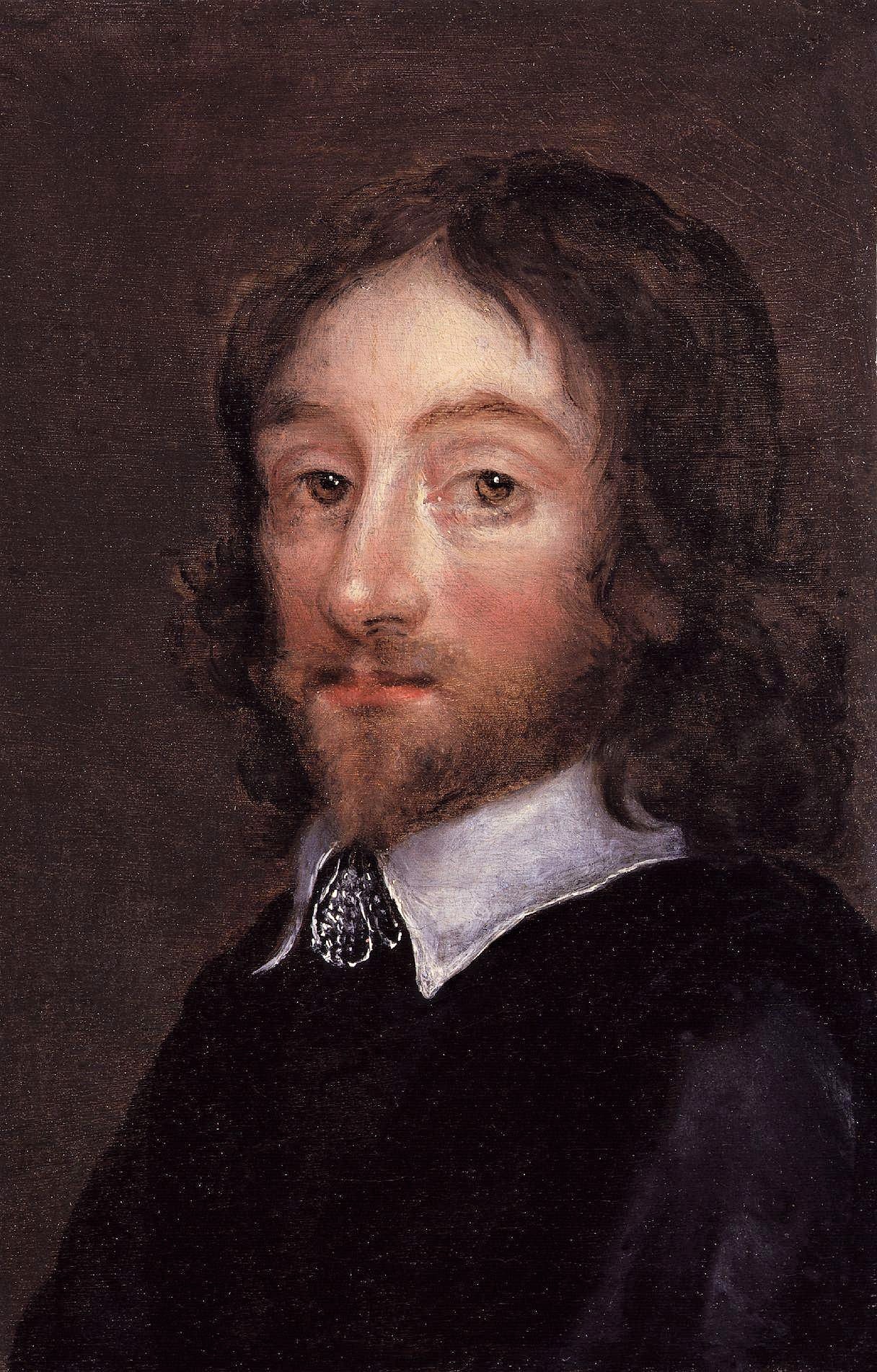
In this widely read work of popular science that underwent six editions in Browne's lifetime Browne debunked numerous quack cures, etc. Full text from quod.lib.umich.edu at this link. Digital facsimile of the 4th edit…
1649
#3728
Observationes medicae de affectibus omissis.
Boate who spent many years in Ireland, included a full first-hand account of rickets in Chapter 12 of the above book (“De tabe pectorea”). He showed how widespread the disease was at that time. Reprinted in Opuscula S…
1650
#3729
De rachitide sive morbo puerili, qui vulgo The Rickets dicitur tractatus.
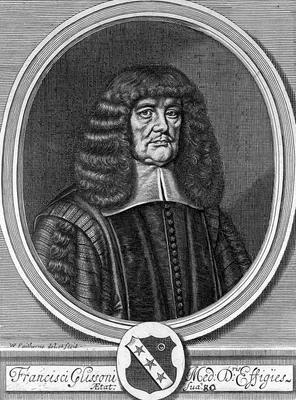
Although anticipated by Whistler and others in the description of infantile rickets, Glisson’s account was the fullest that had till then appeared. He was first (Chap. 22) to describe infantile scurvy. Glisson’s book …
1650
#10490
Anthropometamorphosis: Man transform’d, or the artificial changeling. Historically presented, in the mad and cruel gallantry, foolish bravery, ridiculous beauty, filthy fineness, and loathesome loveliness of most Nations, fashioning & altering their bodies from the mould intended by nature. With a vindication of the regular beauty and honesty of nature, and an appendix of the pedigree of the English gallant.
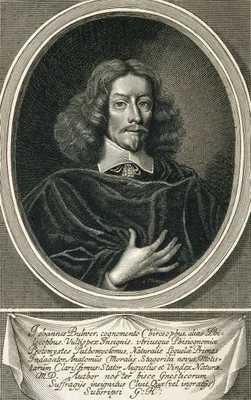
Extensively illustrated treatise on varieties of body modifications, real or imagined, includes details on hair styles, tatoos, piercing, including sexual aspects. Digital facsimile of the 1653 edition from the Intern…
1652
#3737
Observationes medicae.
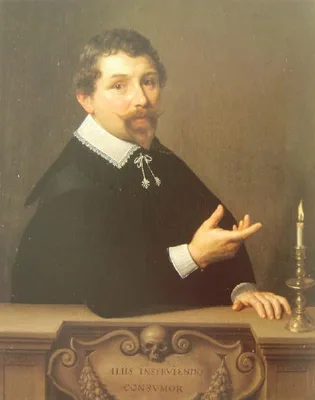
One of the earliest accounts of beri-beri is on pp. 300-05 of this work. Tulp, notable as the demonstrator in Rembrandt’s “Anatomy Lesson”, was among the first, in the same book, to describe the ileo-caecal valve (“Tu…
1655
#9324
Health's improvement, or rules for preparing all sorts of food used in this nation. Written by that ever famous Thomas Muffet, Doctor in physick: Corrected and enlarged by Christopher Bennet, Doctor in Physick, and fellow of the Colledg of Physitians in London.
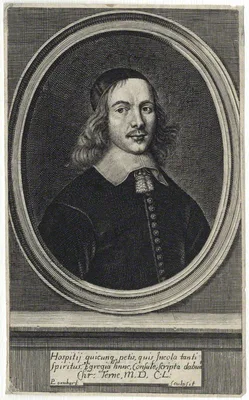
Moffet's work in nutrition was collected in his book Health's Improvement, which was designed more for the layman than for physicians. It also contains the first list of British wildfowl, recognizing for the first tim…
1656
#2120
Libellus de lithargyrii fumo noxio morbifico eiusque metallico frequentiori morbo vulgo dicto: Die Hütten Katze Oder Hütten Rauch: Cum Appendice de montano ffaectu asthmatico metallicidis familiari, quem Germanica lingua appellamus Die Bergsuche oder Berg Kranckheit.
Stockhausen had considerable experience in treating the diseases of miners. His book on industrial diseases did much to clarify contemporary knowledge regarding the relative toxicity of lead, mercury, arsenic, cobalt,…
1656
#8591
Flora sinensis, fructus floresque humillime porrigens serenissimo et potentissimo Leopoldo Ignatio, Hungariae regi florentissimo, &c. Fructus saecul promittenti Augustissimos.
The first description published in Europe of an ecosystem of the Far East, including animals as well as plants, with particular attention to Chinese fruit bearing plants, and medicinal properties of Chinese plants. Di…
1661
#145.5
Fumifugium: or the inconveniencie of the aer and smoak of London dissipated. Together with some remedies humbly proposed.
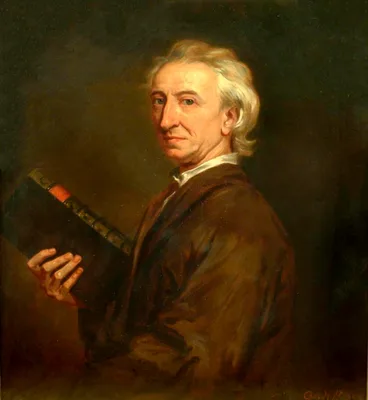
A pioneering attack on air pollution caused by “the hellish and dismall cloud of sea-coal” which perpetually enveloped London. Of course, the problems Evelyn wrote about did not go away, and the work continued to be r…
1664
#145.51
Sylva, or a discourse of forest-trees, and the preservation of timber in His Majesty’s dominions.
A protest against the careless destruction of England’s forests to fuel the furnaces of the glass and iron industries. The work was influential in establishing a much-needed program of reforestation that had a lasting…
1665
#5119
London’s dreadful visitation, or, a collection of all the Bills of Mortality for the present year: beginning the 27th of December 1664, and ending the 19th of December following…By the Company of Parish Clerks of London.
BILLS OF MORTALITY
This is a valuable statistical record of the great plague of 1665. (No. 6052 in the Bibliotheca Osleriana.)
1672
#1769
De aere, locis, et aquis terrae Angliae; deque morbis Anglorum vernaculis. Cum observationibus ratiocinatione & curandi method illustratis.
An outline of the medical topography of England.
1676
#9511
The family physician, and the house apothecary: Containing I. Medicines against all such diseases people usually advise with apothecaries to be cured of, II. Instructions, whereby to prepare at your own houses all kinds of necessary medicines that are prepared by apothecaries, or prescribed by physicians, III. The exact prices of all drugs, herbs, seeds, simple and compound medicines, as they are sold at the druggists, or may be sold by the apothecaries, IV. That it's plainly made to appear, that in preparing medicines thus at your own houses, that it's not onely a far safer way, but you shall also save nineteen shillings in twenty, comparing it with the extravagant rates of many apothecaries.
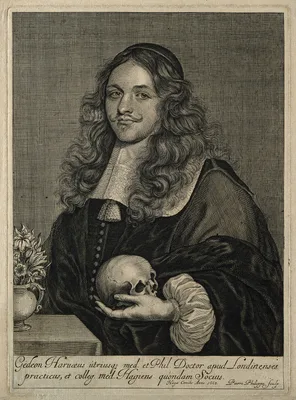
The text of the second edition (1678) is available from Early English Books Online at this link.
1682
#12612
A treatise of cleanness in meats and drinks of the preparation of food, the excellency of good airs and the benefits of clean sweet beds also of the generation of bugs and their cure : to which is added, a short discourse of the pain in the teeth shewing from what cause it does chiefly proceed, and also how to prevent it.
Digital text from Early English Books Online at this link.
1683
#9308
The way to health, long life and happiness, or, a discourse of temperance and the particular nature of all things requisit for the life of man as all sorts of meats, drinks, air, exercise, &c. with special directions how to use each of them to be the best advantage of the body and mind. Shewing from the true ground of nature whence most diseases proceed, and how to prevent them. To which is added, a treatise of most sorts of English herbs ... the like never before published / communicated to the world for a general good, by Philotheos Physiologus.
Tryon, an English merchant, was the author of popular self-help books and an early advocate of vegetarianism. Digital facsimile from the Hathi Trust at this link.
1684
#7030
Aristoteles master-piece, or the secrets of generation displayed in all the parts thereof . . .
The first sex manual in English, neither by Aristotle or a "masterpiece", provided its readers with practical advice on copulation, conception, pregnancy and birth.This anonymous, inexpensively printed work proved to …
1685
#11128
Traité des maladies particulières aux pays orientaux, et dans la route, et de leurs Remèdes. Par M.C.D.D.E.M.
At the age of 17, Dellon, who is sometimes referred to as Gabriel Dellon, embarked as second surgeon aboard the ship La Force. He arrived at Darman, in the Portuguese Indies, in 1673, where he was doctor to Luis de Me…
1687
#13624
Le bon usage du the, du caffe, et du chocolat pour la preservation & pour la guerison des maladies.
Digital facsimile from Biodiversity Heritage Library at this link.
1689
#3216
Phthisiologia, seu exercitationes de phthisi.
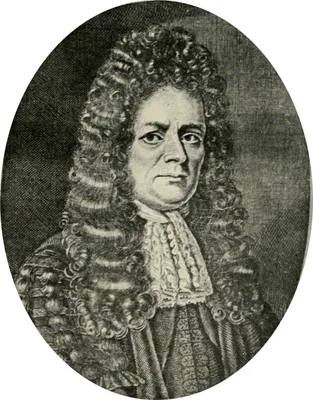
The first application of the principles of pathology to the study of pulmonary tuberculosis. Morton showed that the formation of tubercles is a necessary part of the development of this lung disease, and pointed out t…
1700
#2121
De morbis artificum diatriba.
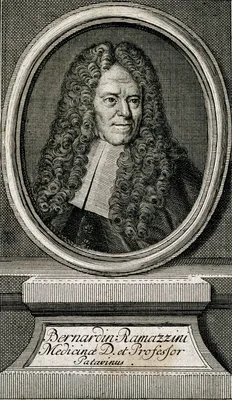
Ramazzini's study of the diseases of workers, De morbis artificium diatriba, was the first comprehensive and systematic treatise on occupational medicine; it was also the foundation work in ergonomics. It deals with p…
1714
#2529.2
Nuovo idea del male contagioso de’ buoi.
In this study of an epizootic Cogrossi formulated much of the modern theory of infection. He speculated that infection might occur at the microscopic level, and argued that infected individuals should be isolated and …
1720
#5123
A short discourse concerning pestilential contagion, and the methods to be used to prevent it.
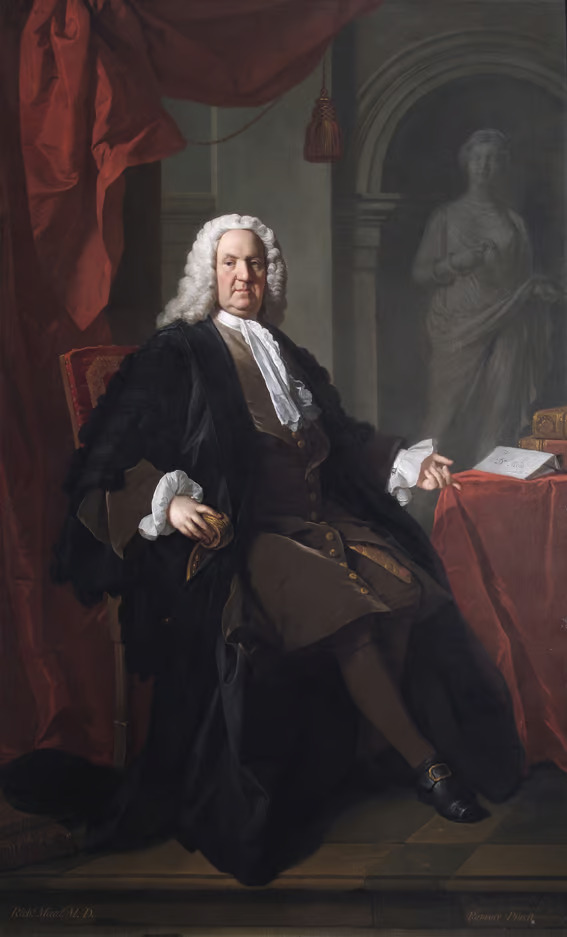
In 1719 Mead was asked for advice concerning an outbreak of plague in Marseilles, and replied with the above tract of 59 pages, which has been called the first epidemiological report produced by a physician at the com…
1722
#10703
A treatise of the hypochondriack and hysterick passions.
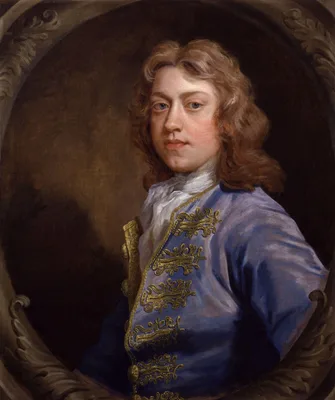
Probably the first psychiatric self-help book. Hunter and Macalpine call Mandeville's work "the first book on minor mental maladies `writ by way of Information to Patients' rather than `to teach other Practitioners' .…
1730
#13626
A dissertation upon tea, explaining its nature and properties by many new experiments; and demonstrating from philosophical principles, the various effects it has on different constitutions. To which is added the natural history of tea; and a detection of the several frauds used in preparing it. Also a discourse on the virtues of sage and water, and an enquiry into the reasons why the same food is not equally agreeable to all constitutions....
Digital facsimile from wellcomecollection.org at this link.
1733
#12499
An essay concerning the effects of air on human bodies.
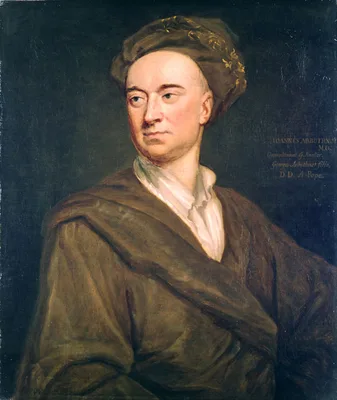
Arbuthnot believed that air had significant effects on personality, and he believed that the air of locations resulted in the characteristics of the people, as well as particular diseaes. He recommended ventilation of…
1734
#9675
Every man his own doctor: or, The poor planter's physician. Prescribing plain and easy means for persons to cure themselves of all, or most of the distempers, incident to this climate, and with very little charge, the medicines being chiefly of the growth and production of this country.
The first medical hand-book for lay persons written and published in America. It is probable that this book was first published in 1734, though the earliest recorded copy or copies appear to be the "second edition" wi…
1741
#13383
A mechanical and critical enquiry into the nature of hermaphrodites.
Digital facsimile from Google Books at this link.
1742
#13321
Religiosa hospitalidad por los hijos del piadoso coripheo patriarcha y padre de pobres S. Iuan Ð Dios en su provincia de S. Raphael de las Islas Philipinas: Compendio substancial de su fundacion progressos y estado presente que en sucinto informatibo estilo...
Maldonado de Puga, a member of the Order of San Juan Hospitalier founded in 1572, reported on the introduction and practice of Western medicine in the Philippines, the foundation of hospitals and the relationship betw…
1743
#1596
A description of ventilators.
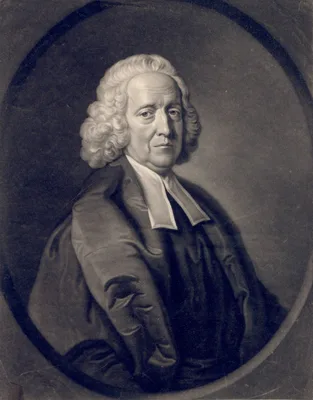
Hales devised a ventilator, by means of which fresh air could be introduced into jails, mines, hospitals, the holds of ships, etc. The invention met with immediate approval and contributed much towards health of those…
1745
#2094
An essay on the West-India dry-gripes… to which is added, an extraordinary case in physick.
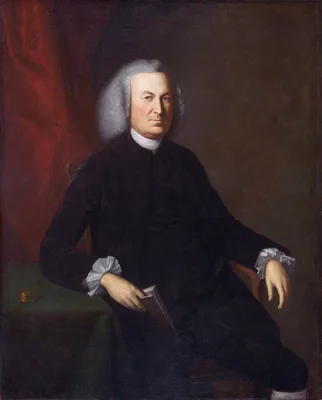
Cadwalader, an American pupil of Cheselden, left a classical account of lead colic and lead palsy. This was later shown by Benjamin Franklin, printer of the above work, to be due to the consumption of Jamaica rum whic…
1745
#10474
Berg-Raths Medicinischer Aufstand und Schmelz-Bogen Von der Bergsucht und Hütten-Katze auch einigen andern, Denen Bergleuten und Hütten-Arbeitern zustoßenden Krankheiten, Vor dieselben und diejenigen So in Stein, Erz, Metall und Feuer arbeiten, ausgestellet.
A key early work on the Bergsucht or miner's phthisis.
1746
#8869
Medicina Britannica; or, a treatise on such physical plants as are generally to be found in the fields or gardens of Great-Britain: Containing a particular account of their nature, virtues, and uses. Together with the observations of the most learned physicians, as well ancient as modern, communicated to the late ingenious Mr. Ray, and the learned Dr. Sim. Pauli. Adapted more especially to the occasions of those, whose condition or situation of life deprives them, in a great measure, of the helps of the learned. To which are added, three indexes: The first containing the England and Latin names of the plants treated of: The second of the diseases, and their remedies: The third to the notes.
Short focused his book on the medical uses of plants readily available in England. Many of the plants recommended in the traditional herbal literature were difficult to find in England. Digital facsimile from the Biod…
1747
#9149
Primitive physick; or, an easy and natural method of curing most diseases.
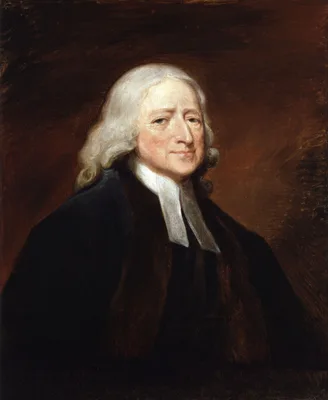
Wesley, an English cleric, theologian, and evangelist, was a leader of a revival movement within the Church of England known as Methodism. Digital facsimile of the 14th American edition, Philadelphia, 1770, from the I…
1750
#5374
Observations on the nature and cure of hospital and jayl-fevers.
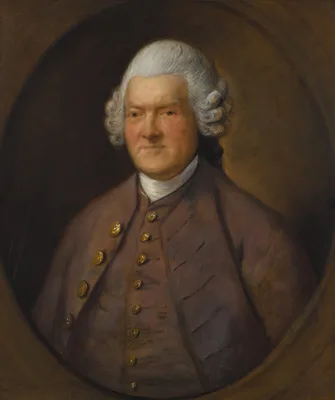
Pringle was a strong advocate of better ventilation in prisons and hospitals as a means of preventing typhus, which he showed to be identical with “hospital fever”.
1752
#2150
Observations on the diseases of the army, in camp and garrison.
Pringle, founder of modern military medicine, was Physician-General of the British Army from 1744 to 1752. His books lay down the principles of military sanitation and the ventilation of barracks, gaols, hospital ship…
1752
#11719
Sendschreiben von den Wirkungen des Kafeetranks.
Discussing the consumption and reception of coffee from Britain to Turkey, Knoll dismissed criticisms of coffee, including that it reduced beauty and virility, or that it was contrary to Islam, instead promoting the m…
1753
#3713
A treatise of the scurvy.
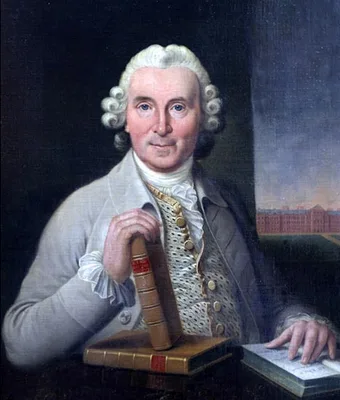
Lind, founder of naval hygiene in England, wrote a classic treatise on scurvy, in which he described many important experiments he made on the disease. These experiments have been called “the first deliberately planne…
1755
#3749
Description d’une maladie appelée mal de la rosa.
Thiérry wrote an account of pellagra from what he had seen or heard of Casal’s cases. His work antedates that of Casal in date of publication but is not a first-hand description. English translation in No. 2241.
1757
#2095
De colica pictonum.
Tronchin, sometime physician to Voltaire, showed that the so-called “Poitou colic” was caused by drinking water which had passed through lead gutters. Tronchin introduced inoculation into Holland, France, and Switzerl…
1757
#2151
An essay on the most effectual means, of preserving the health of seamen, in the Royal Navy.
Lind is regarded as the founder of naval hygiene in England. Besides his work on scurvy (see No.3713), he is notable for the above book, which deals not only with the men but also with the appalling conditions in whic…
1758
#10478
Dissertatio de febribus biliosis; seu historia epidemiae biliosae Lausannensis, An. MDCCLV. Accedit Tentamen de morbis ex manustupratione.
Tentamen de morbis ex manustupratione translated into French as L'onanisme; ou dissertation physique, sur les maladies produites par la masturbation.Traduit du Latin de Mr. Tissot. Et considerablement augementé par l'…
1759
#1770
Observations on the changes of the air and the concomitant epidemical diseases, in the Island of Barbados.
Hillary included good accounts of lead colic and infective hepatitis, and probably the first description of sprue (celiac disease).
1760
#7060
A discourse on the nature, causes, and cure of corpulency. Illustrated by a remarkable case, Read before the Royal Society, November 1757. And now first published.
Digital facsimile from Google Books at this link.
1761
#1597
Avis au peuple sur la santé.
A tract on medicine written for the lay public; it ran through many editions and was translated into all European languages. It has been called "the greatest medical best-seller of the eighteenth century" (Singy, "The…
1762
#1771
Historia natural, y medica de el Principado de Asturias.
The first recognizable description of pellagra is included on pp. 327-60 of this book, which was written in 1735 but not published until 1762, after the writer’s death. He called the disease mal de la rosa. Reprinted,…
1767
#2096
An essay concerning the cause of the endemial colic of Devonshire.
Baker demonstrated that the cider of Devonshire contained lead, while that made in other parts of England did not. He further showed that it was common practice in Devon to line cider presses with lead, and proved tha…