
Facets
Browse across eight MeSH (opens in new tab) facets — era, geography, science, specialty, technology, history, culture, and reference. Select one tag per group; counts update across the others. What’s new in facet browse how facets relate to subjects and MeSH.
Clear filtersFacet filters
Geography
Specialties & Disease
- Anatomy & Pathology 8
- Cardiology & Blood 23
- Neurology & Psychiatry 32
- Obstetrics & Reproductive 50
- Infectious Disease (General) 6
- Surgery & Anesthesia 16
- Public Health 64
- Immunology & Dermatology 57
- General Clinical Medicine 42
- Military Medicine 33
- Psychology 2
- Alternative & Fringe Medicine 14
- Pediatrics 20
- Ophthalmology & Vision 6
- ENT & Hearing 2
- Urology & Nephrology 2
- Gastroenterology & Hepatology 2
- Pulmonary & Respiratory 3
- Rheumatology, Rehab & Pain 5
- Internal, Emergency & Geriatric 3
- Veterinary Medicine 9
- Epidemiology & Demography 9
- Physiology & Embryology 33
- Dentistry 2
- Plagues & Epidemics 60
- Microbiology & Virology 70
Social & Historical Studies
Institutions & Culture
Reference & Scholarly Works
575 entries match Women & Gender [K01.700.500]
2000
#10976
Guardians of medical knowledge: The genesis of the Medical Library Association.
Traces the first 50 years of the MLA, from its inception in 1898 in response to the unprecedented expansion of medical literature during the 19th century.
2000
#11184
Acupuncture, expertise and cross-cultural medicine.
2000
#11445
The biographical dictionary of women in science: Pioneering lives from ancient times to the mid-20th century.
2000 –2015
#12260
Ladies in the laboratory. 4 vols. 1: American and British women in science, 1800-1900: A survey of their contributions to research. 2: West European women in science, 1800-1900: A survey of their contributions (2004). 3: South African, Australian, New Zealand, and Canadian women in science: Nineteenth and early twentieth centuries (2010). 4: Imperial Russia's women in science, 1800-1900: A survey of their contributions to research (2015).
2000
#13223
A new and untried course: Woman's Medical College and Medical College of Pennsylvania, 1850-1998.
2001
#10417
The technology of orgasm: "Hysteria," the vibrator, and women's sexual satisfaction.
2001
#10428
Out of the dead house: Nineteenth‐century women physicians and the writing of medicine.
2001
#10623
Don't kill your baby: Public health and the decline of breastfeeding in the 19th and 20th Centuries.
2001
#10707
Skulls and skeletons: Human bone collections and accumulations.
2001
#10799
Malaria: Poverty, race, and public health in the United States.

2001
#10934
The history of the Royal Society of Medicine.
2002
#8577
The Trotula: A medieval compendium of women's medicine, edited and translated by Monica H. Green.
A new translation of a new edition of the texts based on collation of 9 MSS from the second half of the 13th or early 14th century. "The Trotula was the most influential compendium on women's medicine in medieval Euro…
2002
#10175
Seeing her sex: Medical archives and the female body.
"Through a detailed analysis of exterior and interior images of the female body, this book examines the relationship between human reproduction and cultural representation from 1750-1910. With examples drawn from medi…
2002
#11122
Mütter Museum of the College of Physicians of Philadelphia.
A spectacular color photo-illustrated book on the Mütter Museum.
2002
#11135
A history of neuroradiology (1895-2002). XVIIth Symposium Radiologicum: Paris-France, August 18-24, 2002.
2002
#11336
Genome sequence of the human malaria parasite Plasmodium falciparum.
Order of authorship in the original paper: Gardner, Hall, Fung.... Genome of the Plasmodium falciparum parasite carried by the mosquito that causes malaria in humans. (Thanks to Juan Weiss for this reference and its i…
2002
#13828
Women in medicine: An encyclopedia.
2002
#14081
A biographical dictionary of women healers. Midwives, nurses, and physicians.
2003
#10709
Conjoined twins: An historical, biological and ethical issues encyclopedia.
2003
#11347
The invisible enemy: A natural history of viruses.
2004
#10508
Mapping the Victorian social body.
"The cholera epidemics that plagued London in the nineteenth century were a turning point in the science of epidemiology and public health, and the use of maps to pinpoint the source of the disease initiated an explos…
2004
#11244
The life and death of smallpox.
2005
#7004
Body worlds. The anatomical exhibition of real human bodies.

In 1977 Gunther von Hagens invented plastination, a technique or process used in anatomy to preserve bodies or body parts. In the process water and fat are replaced by certain plastics, yielding specimens that can be …
2005
#7146
Medieval Chinese medicine. The Dunhuang medical manuscripts, edited by Vivienne Lo and Christopher Cullen.
2005
#8787
Religion and healing in America. Edited by Linda L. Barnes and Susan S. Sered.
2005
#10415
Fever of war: The influenza epidemic in the U.S. Army during World War I.
2005
#10535
Japanese American midwives: Culture, community, and health politics, 1880-1950.
2005
#10931
Our shared legacy: Nursing education at Johns Hopkins, 1889–2006. Edited by Mame Warren in association with the Johns Hopkins Nurses' Alumni Association.
2005
#11193
Macrofilaricidal activity after doxycycline treatment of Wuchereria bancrofti: A double blind randomized placebo-controlled trial.
Order of authorship in the original paper: Taylor, Makunde, McGarry.... The authors treated infection by the parasitic worm Wuchereria bancrofti, cause of elephantiasis (lymphatic filariasis), by killing the Wolbachia…
2005
#11335
Characterization of the reconstructed 1918 Spanish Influenza Pandemic virus.
Order of authorship in the original publication: Tumpey, Basler, Aguilar... Taubenberger. Reconstruction of the genome of the 1918 Spanish Influenza virus from frozen tissue samples from a mass grave of victims of the…
2005
#11339
The genome of the African trypanosome Trypanosoma brucei.

Genome of the parasite that causes Sleeping Sickness. (Thanks to Juan Weiss for this reference and its interpretation.)
2005
#13622
Suppression of RNA recognition by toll-like receptors: The impact of nucleoside modification and the evolutionary origin of RNA.

Karikó and Weissman discovered the nucleoside modifications that suppress the immungenicity of RNA, leading to their patents for the application of non-immunogenic, nucleoside-modified RNA (modRNA). This technology wa…
2006
#7154
Visualizing medieval medicine and natural history, 1200-1550.
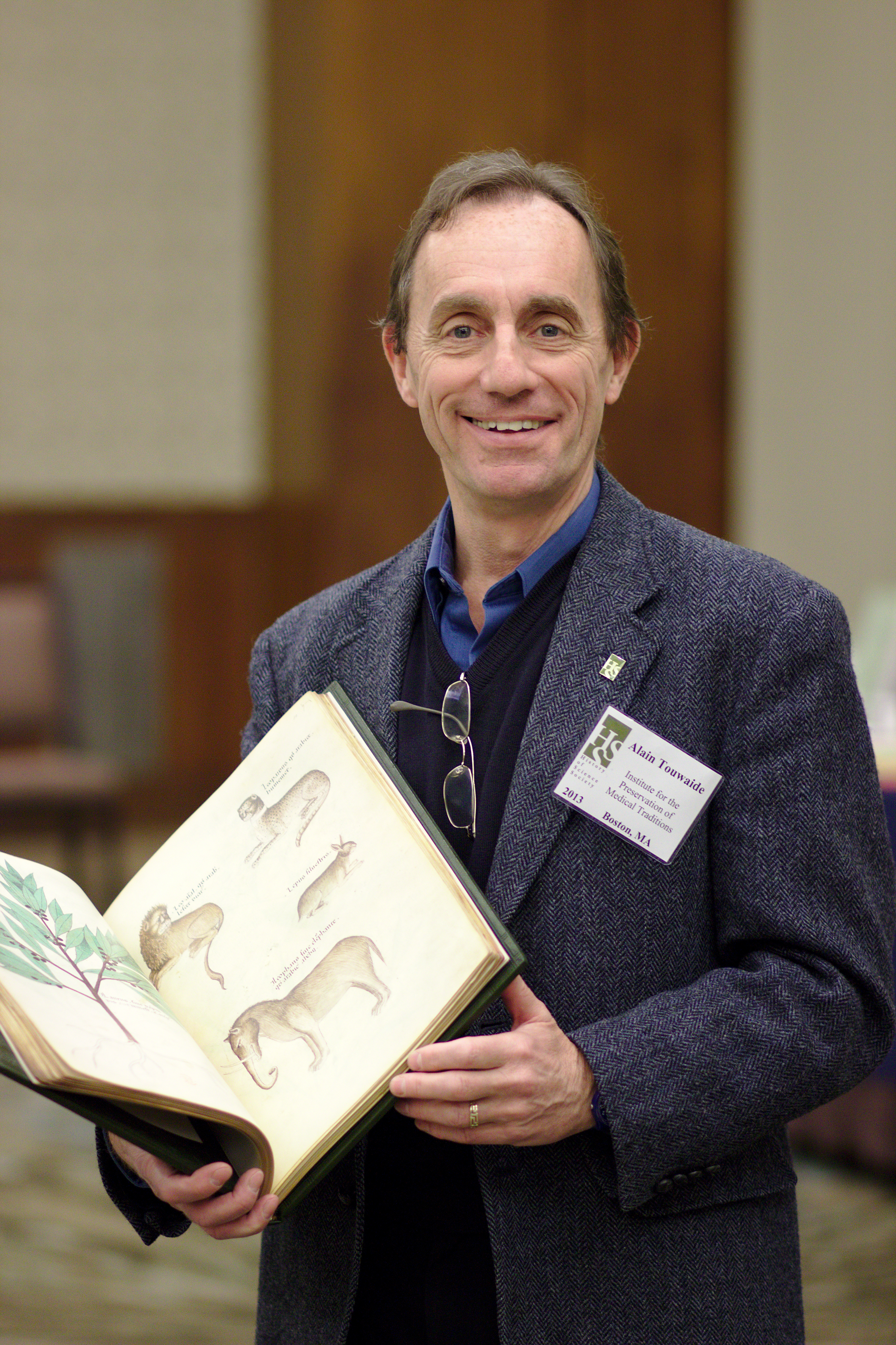
Avista Studies in the History of Medieval Technology, Science and Art Volume 5.
2006
#10910
Emily Dickinson's herbarium: A facsimile edition. Foreward by Leslie A. Morris. Essays, botanical catalogue and index by Richard B. Sewall, Judith Farr, and Ray Angelo.
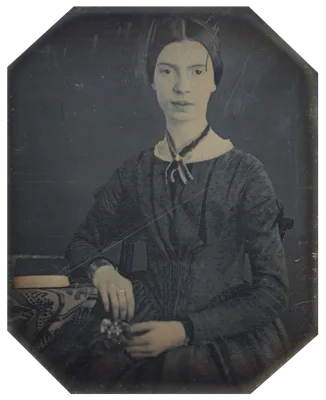
A facsimile edition of MS Am 1118.11 in Houghton Library, Harvard University. Digital facsimile of the actual herbarium from Harvard at this link.
2006
#11041
Chimpanzee reservoirs of pandemic and nonpandemic HIV-1.
Order of authorship in the original paper: Keele, Van Heuverswyn, Li, Hahn. Definitive proof that SIVcpz circulated and existed in wild chimps in a given area of Africa, and that a mutation of this specific SIV in Afr…
2006
#11062
Sex, aging, & death in a medieval medical compendium. Trinity College Cambridge MS R.14.52, its texts, language and scribe. Edited by M. Teresa Tavormina.
2007
#7155
A Byzantine encyclopaedia of horse medicine. The sources, compilation, and transmission of the Hippiatrica.
2007
#8481
Midwifery, obstetrics and the rise of gynaecology: The uses of a sixteenth century compendium.
The compendium that King studied is Caspar Wolff's Gynaeciorum (1566, 1586-1588; Nos. 6011 and 6022). She concentrated on its reception, looking at a range of different uses of the book in the history of medicine from…
2007
#8995
Pride of America, we're with you: The letters of Grace Anderson, U.S. Army Nurse Corps, World War I.
2007
#9003
Women at the front: Hospital workers in Civil War America.
"As many as 20,000 women worked in Union and Confederate hospitals during America's bloodiest war. Black and white, and from various social classes, these women served as nurses, administrators, matrons, seamstresses,…
2007
#11082
Shock and awe: The performance dimension of Galen's anatomy demonstrations. (Version 5; January 2007.)
![GALEN, [Κλαύδιος Γαληνός; Galen of Pergamon] (129 – 216)](/media/portraits/21)
Digital edition available from princeton.edu at this link: http://www.princeton.edu/~pswpc/pdfs/gleason/010702.pdf
2007
#11171
Science and the imagination: Mesmerism, media, and the mind in nineteenth-century English and American literature.
2007
#11303
Inescapable ecologies: A history of environment, disease, and knowledge.
"Among the most far-reaching effects of the modern environmental movement was the widespread acknowledgment that human beings were inescapably part of a larger ecosystem." This book provides a "history of “ecological”…
2007
#11338
Genome sequence of Aedes aegypti, a major arbovirus vector.
Order of authorship in the original publication: Nene, Wortman, Lawson.... Sequence of the genome of the mosquito that transmits Zika, Yellow fever, Dengue, Chikungunya, etc. (Thanks to Juan Weiss for this reference a…
2007
#11348
Deadly companions: How microbes shaped our history.
2007
#11361
The first man-made man: The story of two sex changes, one love affair, and a twentieth-century medical revolution.
A biography of Michael Dillon, who in the 1940s was the first successful case of female-to-male gender reassignment surgery--operations done by Sir Harold Gilles. Dillon established himself as a medical student. The b…
2007
#11843
CRISPR provides acquired resistance against viruses in prokaryotes.
Horvath and his team provided key details of the extremely complex mechanisms involved in CRISPR's function as an immune system for bacteria against bacteriophages. Analogous to Pasteur's heroic role in saving the Fre…
2007
#13645
Women, medicine and theatre, 1500-1750: Literary mountebanks and performing quacks.
2008
#7130
Making women's medicine masculine. The rise of male authority in pre-modern gynecology.
Starting with Trotula, this study concerns medieval and early modern material up to about 1600.
2008
#9004
Answering the call: The U.S. Army Nurse Corps, 1917-1919: A commemorative tribute to military nursing in World War I. edited by Lisa M. Budreau and Richard M. Prior.
Digital facsimile from the Hathi Trust at this link.