
Facets
Browse across eight MeSH (opens in new tab) facets — era, geography, science, specialty, technology, history, culture, and reference. Select one tag per group; counts update across the others. What’s new in facet browse how facets relate to subjects and MeSH.
Clear filtersFacet filters
Geography
Specialties & Disease
- Anatomy & Pathology 8
- Cardiology & Blood 7
- Neurology & Psychiatry 25
- Obstetrics & Reproductive 13
- Infectious Disease (General) 2
- Surgery & Anesthesia 30
- Public Health 99
- Immunology & Dermatology 6
- General Clinical Medicine 23
- Military Medicine 107
- Psychology 1
- Alternative & Fringe Medicine 29
- Pediatrics 6
- Ophthalmology & Vision 2
- ENT & Hearing 0
- Urology & Nephrology 0
- Gastroenterology & Hepatology 3
- Pulmonary & Respiratory 1
- Rheumatology, Rehab & Pain 2
- Internal, Emergency & Geriatric 5
- Veterinary Medicine 1
- Epidemiology & Demography 38
- Physiology & Embryology 6
- Dentistry 7
- Plagues & Epidemics 81
- Microbiology & Virology 30
Social & Historical Studies
Institutions & Culture
Reference & Scholarly Works
741 entries match United States [Z01.058]
2000
#10516
The sanitary city: Urban infrastructure in America from colonial times to the present.

2001 –2008
#7524
An annotated catalogue of the Edward C. Atwater collection of American popular medicine and health reform. 3 vols.
2001
#9280
Healing plants: Medicine of the Florida Seminole Indians.
2001
#9408
The people's doctors: Samuel Thomson and the American Botanical Movement 1790-1860.
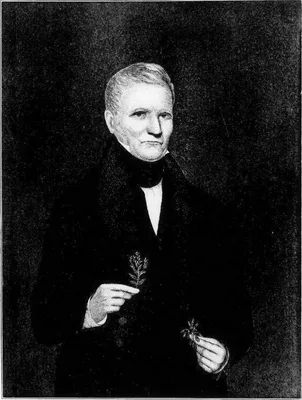
"Samuel Thomson, born in New Hampshire in 1769 to an illiterate farming family, had no formal education, but he learned the elements of botanical medicine from a "root doctor," who he met in his youth. Thomson sought …
2001
#9649
The breast cancer wars: Hope, fear, and the pursuit of a cure in twentieth-century America.
2001
#9932
No place like home: A history of nursing and home care in the United States.
2001
#10115
America's botanico-medical movements: Vox populi.
2001
#10335
Dying in the City of the Blues: Sickle cell anemia and the politics of race and health.
"Set in Memphis, home of one of the nation's first sickle cell clinics, Dying in the City of the Blues reveals how the recognition, treatment, social understanding, and symbolism of the disease evolved in the twentiet…
2001
#10534
Contagious divides: Epidemics and race in San Francisco's Chinatown.
2001
#10799
Malaria: Poverty, race, and public health in the United States.

2002
#8384
A traffic of dead bodies: Anatomy and embodied social identity in nineteenth century America.
2002
#8663
New Deal medicine: The rural health programs of the Farm Security Administration.
"Drawing on oral histories, archival records, and medical journals from the 1930s and 1940s, Grey finds the programs were both a rehearsal for more modern forms of medical organization and a lightning rod for critics …
2002
#8903
Drugs in America: A historical reader. [Compiled by] David F. Musto.
2002
#9624
Working cures: Healing, health, and power on Southern slave plantations.
2002
#10410
Native American healing: A Lacota ritual.
Medical rituals of the Lacota people.
2002
#10955
A history of Yale's School of Medicine: Passing torches to others.
2002
#12320
Stanford University School of Medicine and the predecessor schools: An historical perspective.
Digital format only, available from lane.stanford.edu at this link: https://lane.stanford.edu/med-history/wilson/chap01.html
2002
#13127
Biologists and the promise of American life: From Meriwether Lewis to Alfred Kinsey.

2003
#9631
Folk medicine in southern Appalachia.
2003
#9806
Medical mycology in the United States: A historical analysis (1894–1996).
2003
#13145
The barbary plague: The black death in Victorian San Francisco.
2003
#13646
Against the spirit of system: The French impulse in nineteenth-century American medicine.
"... the first in-depth study of a powerful intellectual and social influence: the radical empiricism of the Paris Clinical School. After the French Revolution, Paris emerged as the most vibrant center of Western medi…
2003
#13895
Saving lives, training caregivers, making discoveries: A centennial history of the University of Texas Medical Branch at Galveston.
2004
#8044
Altering American Consciousness: The history of alcohol and drug use in the United States, 1800-2000.
2004
#9766
Civil War pharmacy: A history of drugs, drug supply and provision, and therapeutics for the Union and Confederacy.
2004
#9799
American household botany: A history of useful plants 1620-1900.
2004
#9836
OnView: Curated content from the Center for the History of Medicine's extraordinary collections. The Francis A. Countway Library of Medicine: An alliance of the Boston Medical Library and Harvard Medical School.
http://collections.countway.harvard.edu/onview/collection-tree Archives for Women in Medicine Avery, Mary Ellen papers, 1929-2002 (inclusive) Baumgartner, Leona papers, 1837-1993 (inclusive) 1930-1970 (bulk) Bibring, …
2004
#10999
Doctoring the South: Southern physicians and everyday medicine in the mid-nineteenth century.
2005
#7416
Bleeding blue and gray: Civil War surgery and the evolution of American medicine.
2005
#8045
Alcoholism in America, from Reconstruction to Prohibition.
2005
#8787
Religion and healing in America. Edited by Linda L. Barnes and Susan S. Sered.
2005
#9406
The history of American homeopathy: The academic years, 1820-1935.
2005
#9750
Bleed, blister, and purge. A history of medicine on the American frontier.
2005
#10026
The modern art of dying: A history of euthanasia in the United States.
2005
#10080
Must we all die? Alaska's enduring struggle with tuberculosis.
2005
#10515
Plague and fire: Battling black death and the 1900 burning of Honolulu's Chinatown.
2005
#10931
Our shared legacy: Nursing education at Johns Hopkins, 1889–2006. Edited by Mame Warren in association with the Johns Hopkins Nurses' Alumni Association.
2006
#7176
Man, medicine, and the state: The human body as an object of government sponsored medical research in the 20th century, edited by Wolfgang U. Eckart.
Chapters on controversial government experimental programs in Senegal, in Germany under the Nazi regime, including in concentration camps and in aerospace research, and also the Tuskegee syphilis experiment in Tuskege…
2006
#7962
The Humboldt current: Nineteenth-century exploration and the roots of American environmentalism.
2006
#8090
Birthing a slave: Motherhood and medicine in the Antebellum South.
2006
#8596
Dr. Franklin's medicine
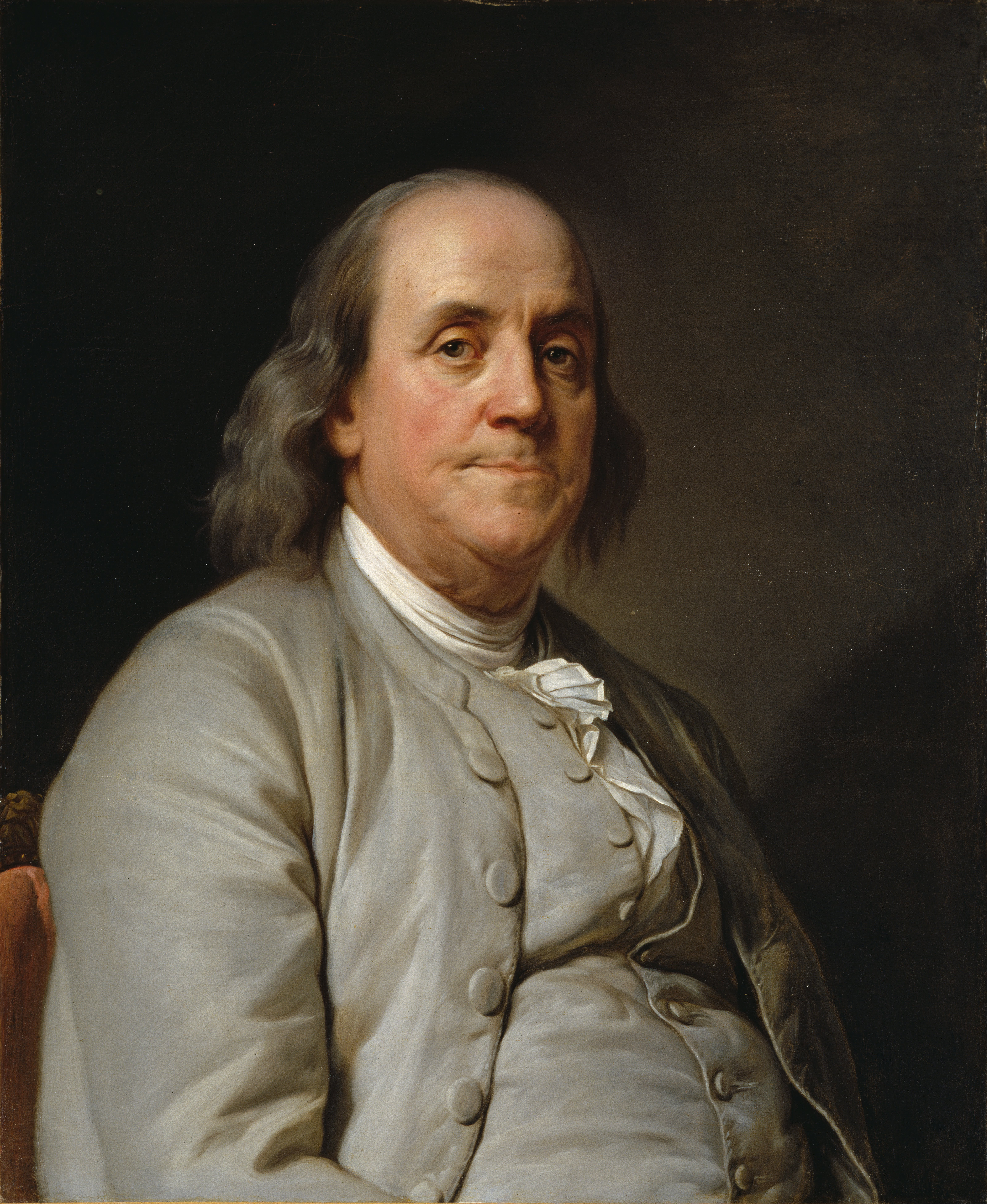
The history of medicine, and Franklin's involvements in it, within the context of his life and career.
2006
#8656
A most amazing scene of wonders: Electricity and enlightenment in early America.
"By examining the lives and visions of natural philosophers, spectacular showmen, religious preachers and medical therapists, he shows how electrical experiences of wonder, terror, and awe were connected to a broad ar…
2006
#9155
The dilemma of federal mental health policy: Radical reform or incremental change?
2006
#9749
Death rode the rails: American railroad accidents and safety 1828-1965.
2006
#10144
A perfectly striking departure: Surgeons and surgery at the Peter Bent Brigham Hospital, 1912—1980.
2006
#10148
A century of adventure in northern health: The Public Health Service Commissioned Corps in Alaska, 1879-1978.
2006
#13702
Fit to be citizens? Public health and race in Los Angeles, 1879-1939.
2007
#7506
Epidemics and enslavement: Biological catastrophe in the native Southeast, 1492-1715,
2007
#9003
Women at the front: Hospital workers in Civil War America.
"As many as 20,000 women worked in Union and Confederate hospitals during America's bloodiest war. Black and white, and from various social classes, these women served as nurses, administrators, matrons, seamstresses,…
2007
#9118