
Facets
Browse across eight MeSH (opens in new tab) facets — era, geography, science, specialty, technology, history, culture, and reference. Select one tag per group; counts update across the others. What’s new in facet browse how facets relate to subjects and MeSH.
Clear filtersFacet filters
Geography
Specialties & Disease
- Anatomy & Pathology 2
- Cardiology & Blood 2
- Neurology & Psychiatry 4
- Obstetrics & Reproductive 0
- Infectious Disease (General) 0
- Surgery & Anesthesia 6
- Public Health 4
- Immunology & Dermatology 6
- General Clinical Medicine 4
- Military Medicine 0
- Psychology 1
- Alternative & Fringe Medicine 0
- Pediatrics 0
- Ophthalmology & Vision 0
- ENT & Hearing 0
- Urology & Nephrology 0
- Gastroenterology & Hepatology 1
- Pulmonary & Respiratory 1
- Rheumatology, Rehab & Pain 1
- Internal, Emergency & Geriatric 0
- Veterinary Medicine 0
- Epidemiology & Demography 3
- Physiology & Embryology 11
- Dentistry 0
- Plagues & Epidemics 2
- Microbiology & Virology 1
Social & Historical Studies
Institutions & Culture
Reference & Scholarly Works
110 entries match Diagnostics & Imaging [E01] · Physics, Math & Biomechanics [K01.900.400]
1763
#8370
An essay towards solving a problem in the doctrine of chances
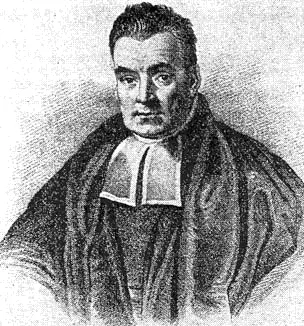
Bayes's paper enunciated Bayes's Theorem for calculating "inverse probabilities”—the basis for methods of extracting patterns from data in decision analysis, data mining, statistical learning machines, Bayesian networ…
1894
#643
Le mouvement.
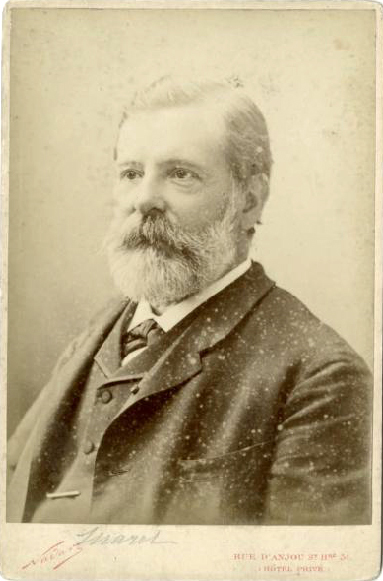
Marey, like Muybridge (No. 650-51), was a pioneer in the use of serial pictures as a method of studying the mechanics of locomotion. English translation, 1895.
1895
#9320
The mental development of the child and the race.
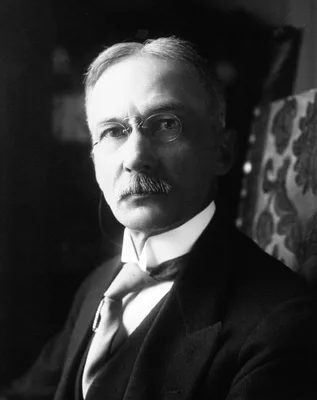
A central text in the development of social psychology in North America; now also considered a pioneering study of adaptive learning, and in this sense a precursor to research in artificial intelligence. Digital facsi…
1896
#2001
Sur les radiations émises par phosphorescence.
The discovery of radioactivity – research stimulated by Roentgen’s discovery of x rays. In 1903 Becquerel received half of the Nobel Prize in Physics 1903 "in recognition of the extraordinary services he has rendered …
1899
#650
Animals in motion.
1907
#13333
A new method by which sponges may be artificially reared.
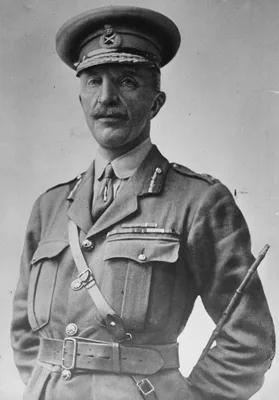
In one of the first dissociation-reaggregation experiments Wilson demonstrated that mechanically dissociated sponge cells can reaggregate and self-organize to generate a whole organism. Digital facsimile from zenodo.o…
1909
#12426
Der Lymphozyt als gemeinsame Stammzelle der verschiedenen Blutelemente in der embryonalen Entwicklung und im postfetalen Leben der Säugetiere.
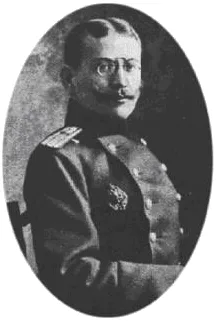
Maximow developed and introduced a unitarian theory of hematopoiesis, a theory upon which the modern concept of blood cells' origin and differentiation is based. He introduced the term "stem cell." Translated into Eng…
1916
#14094
The differentiation of cells as a criterion for cell identification, considered in relation to the small cortical cells of the thymus.
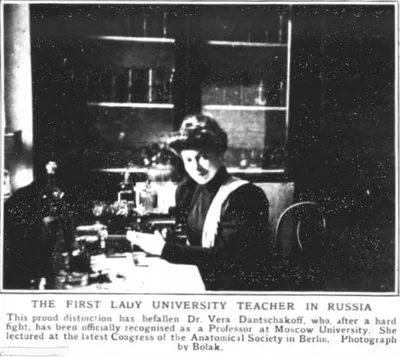
First use of the term "stem cells" in English. Digital facsimile from rupress.org at this link.
1939
#3098
Studies on leukemia with the aid of radioactive phosphorus.
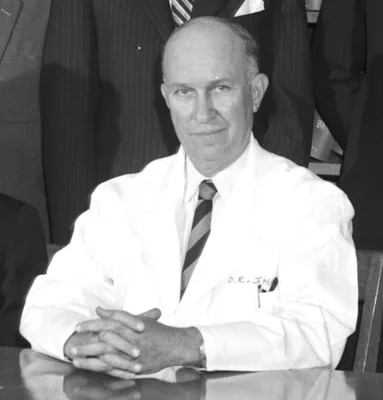
Therapeutic use of radioactive isotopes for the treatment of leukemia. John H. Lawrence was the brother of Ernest Orlando Lawrence, inventor of the cyclotron; John Lawrence also worked at the Lawrence Berkeley Nationa…
1943
#7357
A logical calculus of the ideas immanent in nervous activity.
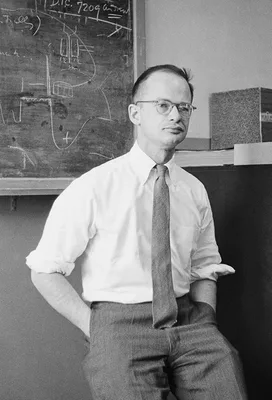
This paper described the McCulloch-Pitts neuron, the first mathematical model of a neural network. Digital text available at this link.
1949
#7992
The Army Medical Library research project at the Welch Medical Library.
One of the first reports on one of the earliest projects in automating information retrieval, the expression for which was coined by Calvin Mooers the following year. At this early date electronic computers were not y…
1949
#14289
The mind of mechanical man.
Jefferson’s paper on the differences between electronic computers and the human brain inspired Alan Turing to respond with his famous paper, “Computing machinery and intelligence” (1950), which introduced the “Turing …
1953
#7993
The Welch Medical Library indexing project.
A progress report on this pioneering information retrieval project. Digital facsimile from PubMedCentral at this link.
1953
#14290
Switching systems as mechanized brains.
Written in the earliest days of automatic switching systems when few electronic computers existed, Meszar's paper raised the question of whether certain aspects of human thought are computable and others are not. Mesz…
1959
#6908
Reasoning foundations of medical diagnosis.
The beginning of the development of clinical decision support systems (CDSS) — interactive computer programs, or expert systems, designed to assist physicians and other health professionals with decision making tasks,…
1959
#12655
Programs with Common Sense. IN: Mechanisation of thought processes, Proceedings of the Symposium of the National Physics Laboratory, pages 77-84.
"Programs with Common Sense was probably the first paper on logical AI, i.e. AI in which logic is the method of representing information in computer memory and not just the subject matter of the program. The paper was…
1959
#13334
Transfusions et greffes de moelle osseuse homologue chez des humains irradiés a haute dos accidentellement.
Order of authorship in the original publication: Mathé, Jammet, Pendic et al. Mathé performed the first bone marrow graft between unrelated donors and hosts in order to save six Yugoslavian nuclear researchers who had…
1960
#12654
Recursive functions of symbolic expressions and their computation by machine, Part 1.
The original paper on LISP, the first programming language designed for symbolic computation, which made the development of artificial intelligence programming possible. Part 2 was never published. Digital text from j…
1962
#256.12
Adult frogs derived from the nuclei of single somatic cells.
Demonstration that somatic and germinal nuclei are genetically equivalent. Using somatic cell nuclear transfer (SCNT), Gurdon (Nobel Prize 2012) transplanted cell nuclei from mature intestinal tadpole cells into enucl…
1963
#7947
The MEDLARS story at the National Library of Medicine.
Digital facsimile from the Internet Archive at this link.
1963
#8149
Representation of a Function by its Line Integrals, with Some Radiological Applications.
Cormack showed that changes in tissue density could be computed from x-ray data. Because of limitations in computing power no machine was constructed during the 1960s. Cormack's papers generated little interest until …
1963
#12427
Cytological demonstration of the clonal nature of spleen colonies derived from transplanted mouse marrow cells.
McCulloch and Till discovered the blood-forming stem cell, the hematopoietic stem cell (HSC), through their pioneering work in mice. McCulloch and Till began a series of experiments in which bone marrow cells were inj…
1963
#12428
The distribution of colony-forming cells among spleen colonies.
Evidence that stem cells are capable of self-renewal. (Order of authorship in the original publication: Siminovitch, McCullch, Till). Digital facsimile from tspace.library.utoronto.ca at this link.
1964
#8174
HPP-64-1 DENDRAL-64-A system for computer construction, enumeration and notation of organic molecules as three structures and cyclic graphs. Interim report to the National Aeronautics and Space Administration, December 15, (1964).
DENDRAL is considered the first expert system because it automated the decision-making process and problem-solving behavior of organic chemists. The project consisted of research on two main programs, Heuristic Dendra…
1965
#7356
Use of computers in biology and medicine.
1965
#8834
Computers in biomedical research. Edited by Ralph W. Stacy and Bruce Waxman. 2 vols.
Section A, Chapter 2: "New mathematical methods in the life sciences" by George B. Dantzig. Section D, Chapter 12: "The application of computers to electroencephalography" by Mary A. B. Brazier. Section E, Chapter 13:…
1966
#14064
"Fertile" intestine nuclei.
Gurdon and Uehlinger replaced the cell nucleus of frog ova with frog intestinal nuclei to generate tadpoles, some of which became fertile adult male and female frogs. In 2012 the Nobel Prize in Physiology or Medicine …
1968
#7948
Evaluation of the MEDLARS demand search service.
The first large-scale evaluation of a "major operating information system." A detailed analysis of the performance of the Medical Literature and Analysis System (MEDLARS) in relation to 300 actual "demand search" requ…
1969
#10611
Computerized mapping of disease and environmental data. A report of the Mapping of Disease (MOD) Project.
This appears to be the earliest monograph on computerized disease mapping. At the time the research was conducted both computer graphics processing and data output in mainframe computers were inadequate for drawing al…
1972
#10505
Medical geography: Techniques and field studies. Ediited by N. D. McGlashan
Chapter 5: "Computers and mapping in medical geography" by R. W. Armstrong appears to be one of the earliest reviews of this subject.
1973
#2700.4
Computerized transverse axial scanning (tomography).
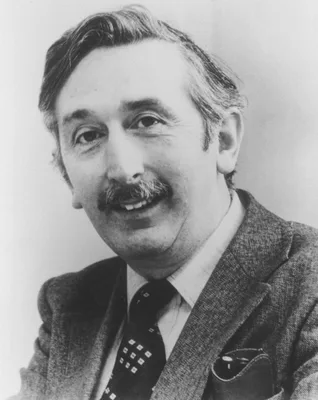
Hounsfield invented computer-assisted tomography (CAT), or computed tomography (CT). In 1979 Hounsfield shared the Nobel Prize in Physiology or Medicine with Allen M. Cormack "for the development of computer assisted …
1973
#257.5
Construction of biologically functional bacterial plasmids in vitro.
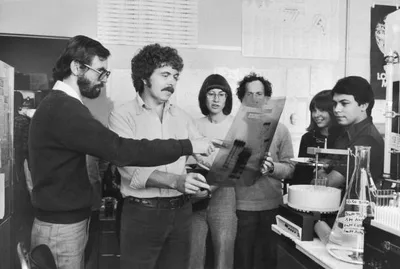
Cohen, Boyer and associates developed the first practical method for cloning genes, by the formation of recombinant plasmids which can be used to infect plasmid-free bacteria. The authors demonstrated that if DNA is f…
1974
#6909
Computerized transaxial x-ray tomography of the human body.
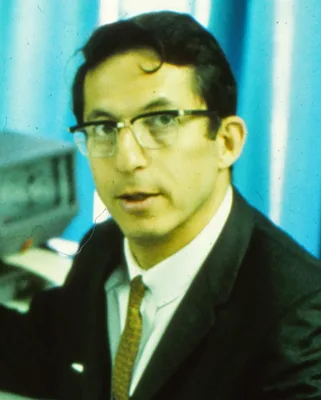
Ledley and team developed the developed the ACTA 0100 CT Scanner (Automatic Computerized Traverse Axial)— the first whole-body computed tomography scanner. With G. Di Chiro, A. J. Luessenhop, and H.L. Twigg. For furth…
1974
#7521
Telediagnosis: A new community health resource, Observations on the feasibility of telediagnosis based on 1000 patient transactions.
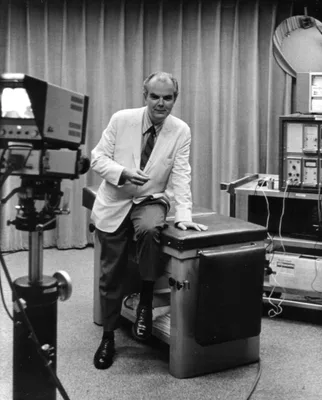
In 1968 Bird founded and directed the first "telemedicine" system, which linked a medical station at Boston's Logan Airport with doctors at Massachusetts General Hospital, who supplied remote diagnosis, treatment and …
1974
#9487
"A computer-based system for the study and control of drug interactions in hospitalized patients," P. L. Morselli, S. Garattini, and S. N. Cohen, Drug interactions, 363-373.
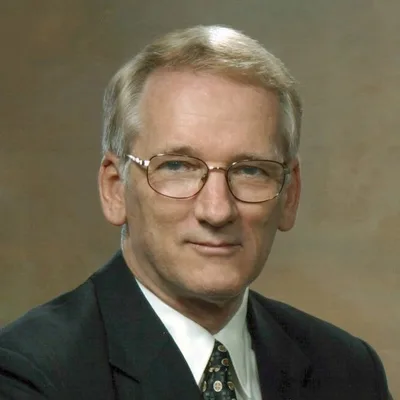
MEDIPHOR System (Monitoring and Evaluation of Drug Interactions by a Pharmacy-Oriented Reporting System) developed by Cohen, Shortliffe and colleagues at Stanford University Medical School, published as a chapter in t…
1974
#10963
Genome construction between bacterial species in vitro: Replication and expression of staphylococcus plasmid genes in Escherichia coli.
Confirmation of the success of methods outlined in No. 257.5. Abstract: "Genes carried by EcoRI endonuclease-generated fragments of Staphylococcus plasmid DNA have been covalently joined to the E. coli antibiotic-resi…
1975
#7522
Telemedicine: Explorations in the use of telecommunications in health care.
The first book on telemedicine, with contributions by 18 authors, including Kenneth T. Bird. In the final chapter the editors summarize telemedicine programs then operational in the United States. The book also includ…
1975
#9486
A model of inexact reasoning in medicine.
"MYCIN was an early backward chaining expert system that used artificial intelligence to identify bacteria causing severe infections, such as bacteremia and meningitis, and to recommend antibiotics, with the dosage ad…
1977
#10964
Expression in Escherichia coli of a chemically synthesized gene for the hormone somatostatin.
Order of authorship in the original paper: Itakura, Hirose, Crea..., Bolivar, Boyer. Synthesis of the gene for somatostatin (growth hormone-inhibiting hormone (GHIH). This was the first demonstration of a foreign gene…
1977
#12031
The construction of molecular cloning vehicles. II. A multipurpose cloning system.
Order of authorship in the original publication Bolivar, Rodriguez, Betlach...Boyer...The authors describe the composition and molecular construction of pBR-322 (named after Bolivar and Rodriguez) and call it "the mos…
1978
#9720
Recombinant DNA: The untold story.
1978
#13969
Inhibition of Rous sarcoma virus replication and cell transformation by a specific oligodeoxynucleotide (tridecamer deoxyribonucleotide/hybridization competitor/hybridon).
Zamecnick and Stephenson reported the first example of specific inhibition of gene expression by an oligonucleotide when they demonstrated that a short oligonucleotide inhibited Rous sarcoma virus replication in cell …
1979
#13929
Transformation of mammalian cells with genes from procaryotes and eucaryotes.
Axel, along with microbiologist Saul J. Silverstein and geneticist Michael H. Wigler, discovered a technique of cotransformation via transfection. This process, which allows foreign DNA to be inserted into a host cell…
1979
#13980
Expression in Escherichia coli of chemically synthesized genes for human insulin (plasmid construction / lac operon / fused proteins / radioimmunoassay / peptide purification).
Working at Genentech, Kleid and Goeddel and colleagues were the first scientists to apply genetic engineering techniques, incorporating chemically synthesized DNA encoding human insulin into E. coli, that expressed, a…
1980
#8175
Applications of artificial intelligence for organic chemistry: The Dendral project.
1980
#11488
The seeds of artificial intelligence: SUMEX-AIM.
A semi-popular and extensively illustrated summary of research on artificial intelligence in medicine at Stanford Medical School as directed by Edward A. Feigenbaum, Stanley N. Cohen, Carl Djerassi, and Elliott C. Lev…
1981
#9728
The DNA story: A documentary history of gene cloning.
1981
#13285
Establishment in culture of pluripotential cells from mouse embryos.
Evans and Kauffman were the first to identify, isolate and successfully culture embryonic stem cells using mouse blastocysts. This discovery opened the doors to the creation of “murine genetic models” -- mice that hav…
1981
#13961
Isolation of a pluripotent cell line from early mouse embryos cultured in medium conditioned by teratocarcinoma stem cells (embryonic stem cells/inner cell masses/differentiation in vitro/embryonal carcinoma cells/growth factors) .

Martin used a different approach that avoided in vivo alteration. She reasoned that an ES cell line might be obtained by culturing cells isolated from blastocysts in a medium that had previously been conditioned by an…
1982
#7431
A history of the National Library of Medicine: The nation's treasury of medical knowledge.
Digital facsimile from the National Library of Medicine at this link; from the Internet Archive at this link. Chapter XX is "Evolution of Computerized Bibliographies."