
Facets
Browse across eight MeSH (opens in new tab) facets — era, geography, science, specialty, technology, history, culture, and reference. Select one tag per group; counts update across the others. What’s new in facet browse how facets relate to subjects and MeSH.
Clear filtersFacet filters
Geography
Specialties & Disease
- Anatomy & Pathology 5
- Cardiology & Blood 1
- Neurology & Psychiatry 1
- Obstetrics & Reproductive 2
- Infectious Disease (General) 0
- Surgery & Anesthesia 0
- Public Health 10
- Immunology & Dermatology 7
- General Clinical Medicine 8
- Military Medicine 1
- Psychology 1
- Alternative & Fringe Medicine 5
- Pediatrics 0
- Ophthalmology & Vision 0
- ENT & Hearing 0
- Urology & Nephrology 0
- Gastroenterology & Hepatology 1
- Pulmonary & Respiratory 0
- Rheumatology, Rehab & Pain 0
- Internal, Emergency & Geriatric 1
- Veterinary Medicine 0
- Epidemiology & Demography 0
- Physiology & Embryology 49
- Dentistry 10
- Plagues & Epidemics 1
- Microbiology & Virology 10
Social & Historical Studies
Institutions & Culture
Reference & Scholarly Works
Drugs & Technology
150 entries match Professions & Education [M01 / N02] · Zoology & Animal Sciences [K01.900.500.750]
1469
#89
Historia naturalis, libri XXXVII.
The most ancient Western encyclopedia extant, Pliny’s Historia contained essentially all that was known in his time concerning geography, mineralogy, anthropology, botany, zoology and meteorology. Books XX-XXXII deal …
1525
#12773
Opuscula nuper in lucem aedita quorum nomina proxima habentur pagella.
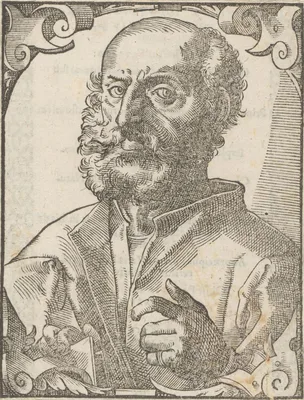
Thomaeus's commentary on Aristotle's Mechanica includes an explanation of the action of a dental forceps illustrated with two small woodcut illustrations on page XXXXI. This was the first printed dental illustration. …
1528
#149
Vier Bücher von menschlicher Proportion.
Written, designed, and illustrated by Dürer, this work is notable for its extraordinary series of anthropometrical woodcuts. The first two books deal with the proper proportions of the human form; the third changes th…
1590
#2244
Historia natural y moral de las Indias.
One of the earliest detailed and realistic descriptions of the New World. Acosta hypothesized that the indigenous peoples of Latin America had migrated from Asia. He also divided the native peoples into three barbaria…
1623
#10491
Historia vitae & mortis. Sive, titulus secundus in historia naturali & experimentali ad condendam philosophiam: Quae est instaurationis magnae pars tertia.
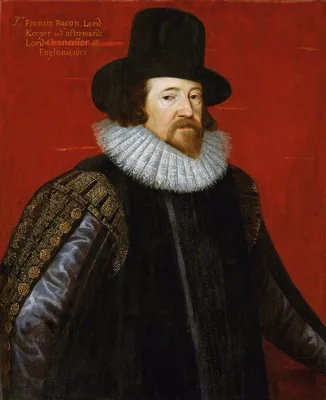
This was Bacon's direct contribution to medicine or medical philosophy, with natural and experimental observations on the prolongation of life. Translated into English as The History naturall And experimentall, of lif…
1632
#287
Thaumatographia naturalis, in decem classes distincta, in quibus admiranda 1 Coeli. 2 Elementorum. 3 Meteororum. 4 Fossilium. 5 Plantarum. 6 Avium. 7 Quadrupedum. 8 Exanguium. 9 Piscium. 10 Hominis.
A unillustrated pocket guide, issued in duodecimo format on "admiranda" or wonders of nature organized in ten categories (heaven, earth, and topics relating to meteors, fossils or minerals, plants, birds, quadrupeds, …
1642
#6612.9
Religio medici.
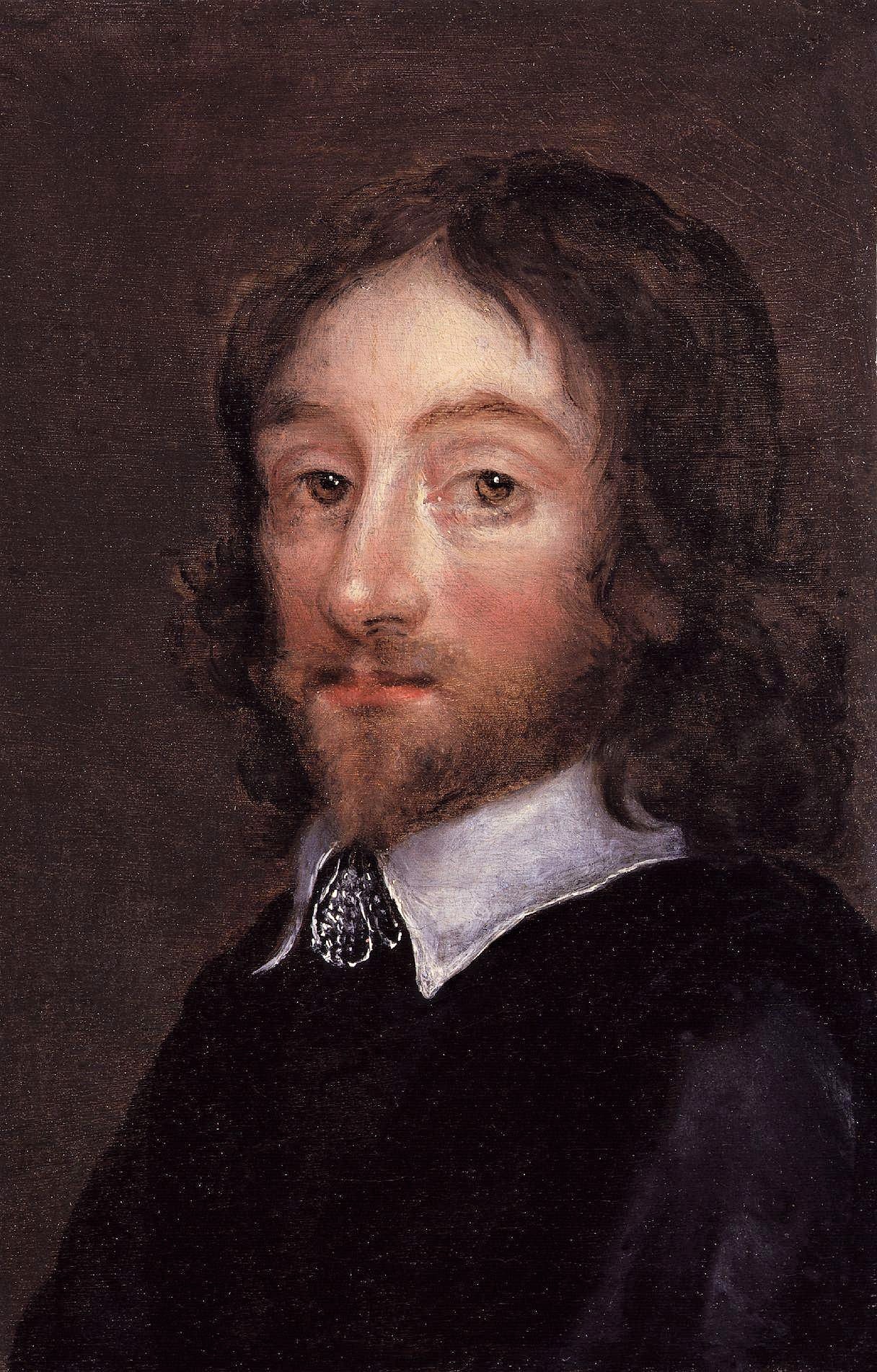
The most famous work of English literature written by a physician. Browne did not intend to have it published, but manuscripts of the work circulated privately. Two unauthorized and inaccurate editions were issued sur…
1655
#9324
Health's improvement, or rules for preparing all sorts of food used in this nation. Written by that ever famous Thomas Muffet, Doctor in physick: Corrected and enlarged by Christopher Bennet, Doctor in Physick, and fellow of the Colledg of Physitians in London.
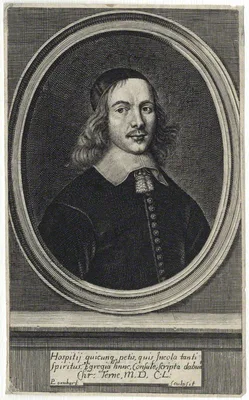
Moffet's work in nutrition was collected in his book Health's Improvement, which was designed more for the layman than for physicians. It also contains the first list of British wildfowl, recognizing for the first tim…
1677
#215
The primitive organization of mankind considered and examined according to the light of nature.
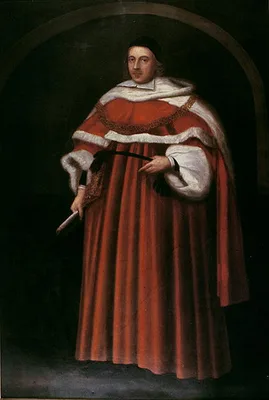
In response to Isaac de la Peyrere‘s theory of polygenesis, Hale, Chief Justice of the King’s Bench, advanced his own theory that the earth was not eternal, but rather had a spontaneous “beginning,” and defended “the …
1690
#10055
A letter to a friend, upon occasion of the death of his intimate friend.
One of the most eloquent and learned discussions of death. Full annotated text from penelope.uchicago.edu at this link.
1772
#154
Von der Physiognomik.
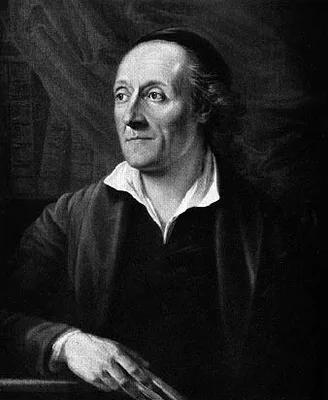
Lavater was the last of the descriptive physiognomists. He expanded the above work into Physiognomische Fragmente zur Beförderung der Menschenkenntnis und Menschenliebe, 1775-78. This was translated into English by H.…
1777
#10347
Two essays. [Essay I. Of suicide]
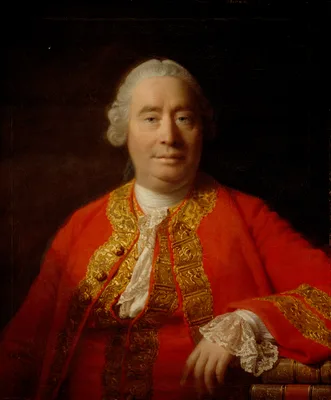
Of suicide, "probably the most widely read and most influential philosophical treatment of suicide written in modern times," was written in 1755 and originally intended to be published as one of five essays, including…
1778 –1793
#8222
Geographische Geschichte des Menschen und der allgemein verbreiteten vierfüßigen Thiere: nebst einer hieher gehörigen Zoologischen Weltcharte. 3 vols.
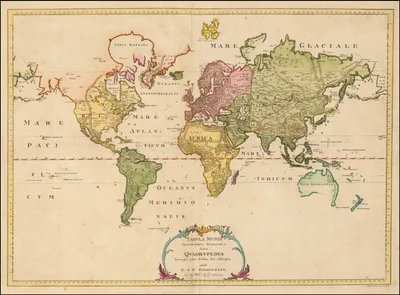
Digital facsimile from the Bayerische StaatsBibliothek at this link.
1833
#12866
Dentologia, a poem on the diseases of the teeth and their proper remedies. With notes, practical, historical, illustrative, and explanatory, by Eleazar Parmly.
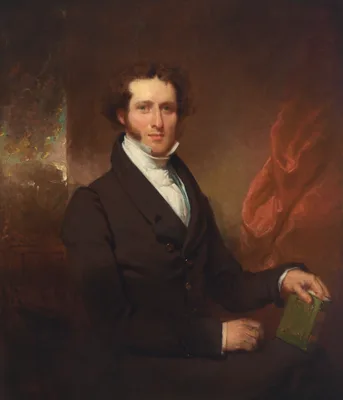
Brown founded the first US dental school, the first US national dental society, called The American Association of Dental Surgeons, and the first US dental journal, entitled the American Journal and Library of Dental …
1840
#6604.94
Némésis médicale illustrée, recueil de satires par François Fabre....contenant trente vignettes dessinées par M. Daumier... 2 vols.
The only medical book illustrated by Honoré Daumier (1808-79), and a great satire in verse on the medical profession. Digital facsimile from BnF Gallica at this link.
1841 –1854
#11902
Voyage au Pôle Sud et dans l'Océanie sur les corvettes l'Astrolabe et la Zélée, exécuté...pendant...1837-1840, sous le commandement de M. J. DUMONT D'URVILLE... publié... sour la direction supérieure de M. [C. H.] Jacquinot, &c. 23 vols. in 22.
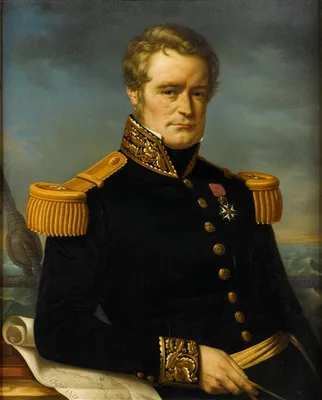
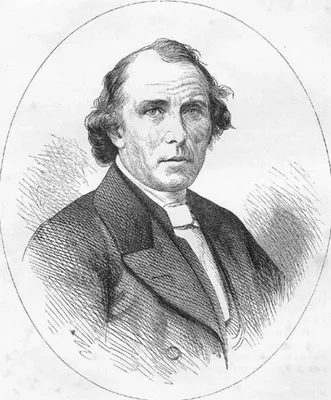
In 1836 King Louis-Philippe, enthusiastic for Southern Hemisphere exploration, sponsored Dumont d'Urville's plan for a circumnavigation focusing on the South Seas. D'Urville had already distinguished himself on two Pa…
1853
#7445
A narrative of travels on the Amazon and Rio Negro, with an account of the native tribes and observations on the climate, geology and natural history of the Amazon Valley.
Digital facsimile from Google Books at this link.
1854
#8383
The claims of the Negro, ethnologically considered: An address before the literary societies of Western Reserve College, at commencement, July 12, 1854.
Digital facsimile from the Hathi Trust at this link.
1863
#165
Evidence as to man’s place in nature.
Huxley showed that in the visible characters man differs less from the higher apes than do the latter from lower members of the same order of primates. He also provided the first thorough and detailed comparative desc…
1863
#7442
The naturalist on the river Amazons, a record of adventures, habits of animals, sketches of Brazilian and Indian life, and aspects of nature under the equator, during eleven years of travel. 2 vols.
Digital facsimile from the Internet Archive at this link.
1871
#170
The descent of man, and selection in relation to sex. 2 vols.
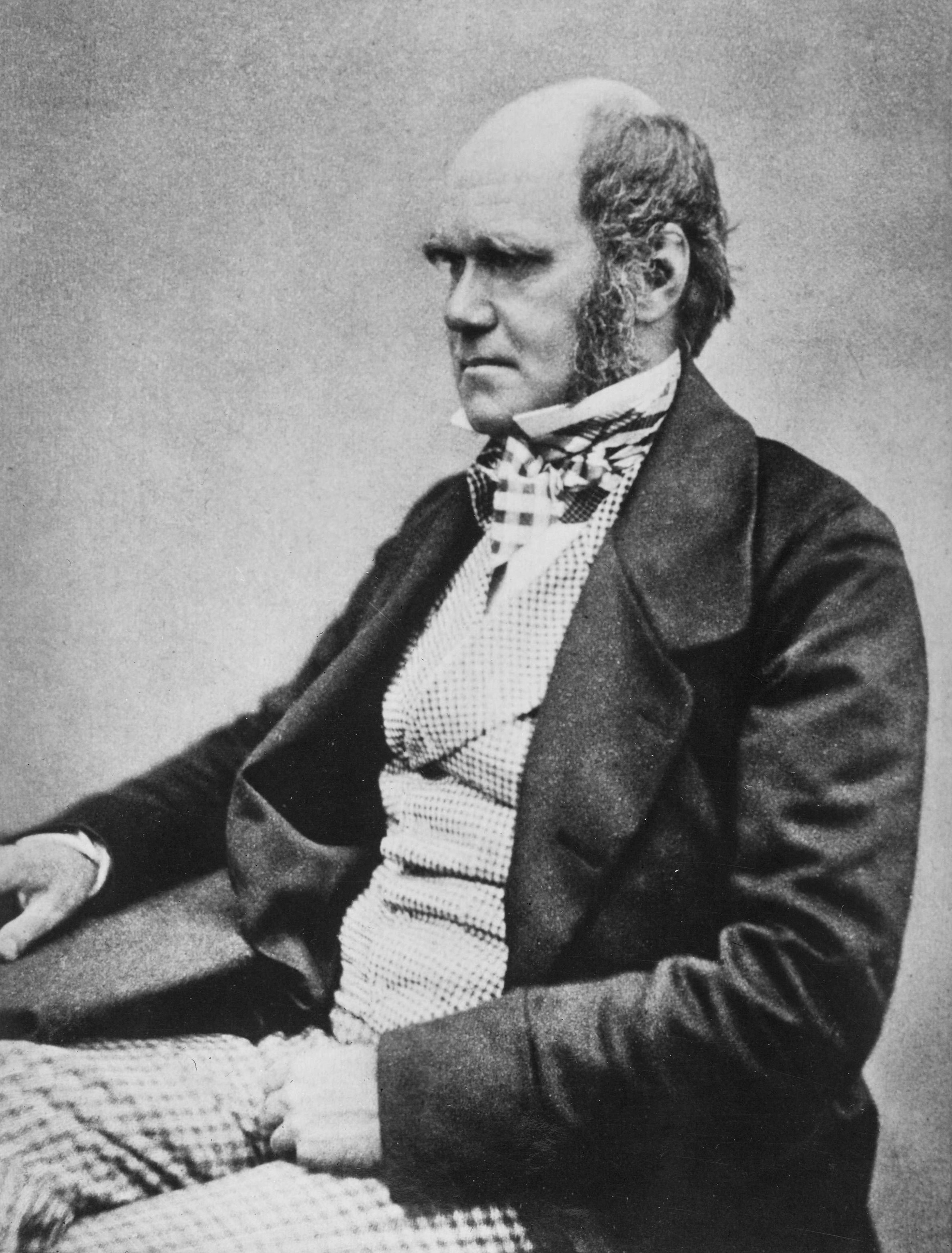
This is really two works. The first demolished the theory that the universe was created for humans while in the second Darwin presented a mass of evidence in support of his earlier hypothesis regarding sexual selectio…
1879 –1891
#7591
Catalogue of the specimens illustrating the osteology and dentition of vertebrated animals, recent and extinct, contained in the Museum of the Royal College of Surgeons of England. 3 vols.: Part 1. Man: Homo sapiens.... Part II: Class Mammalia, other than man... Part III: Class Aves.
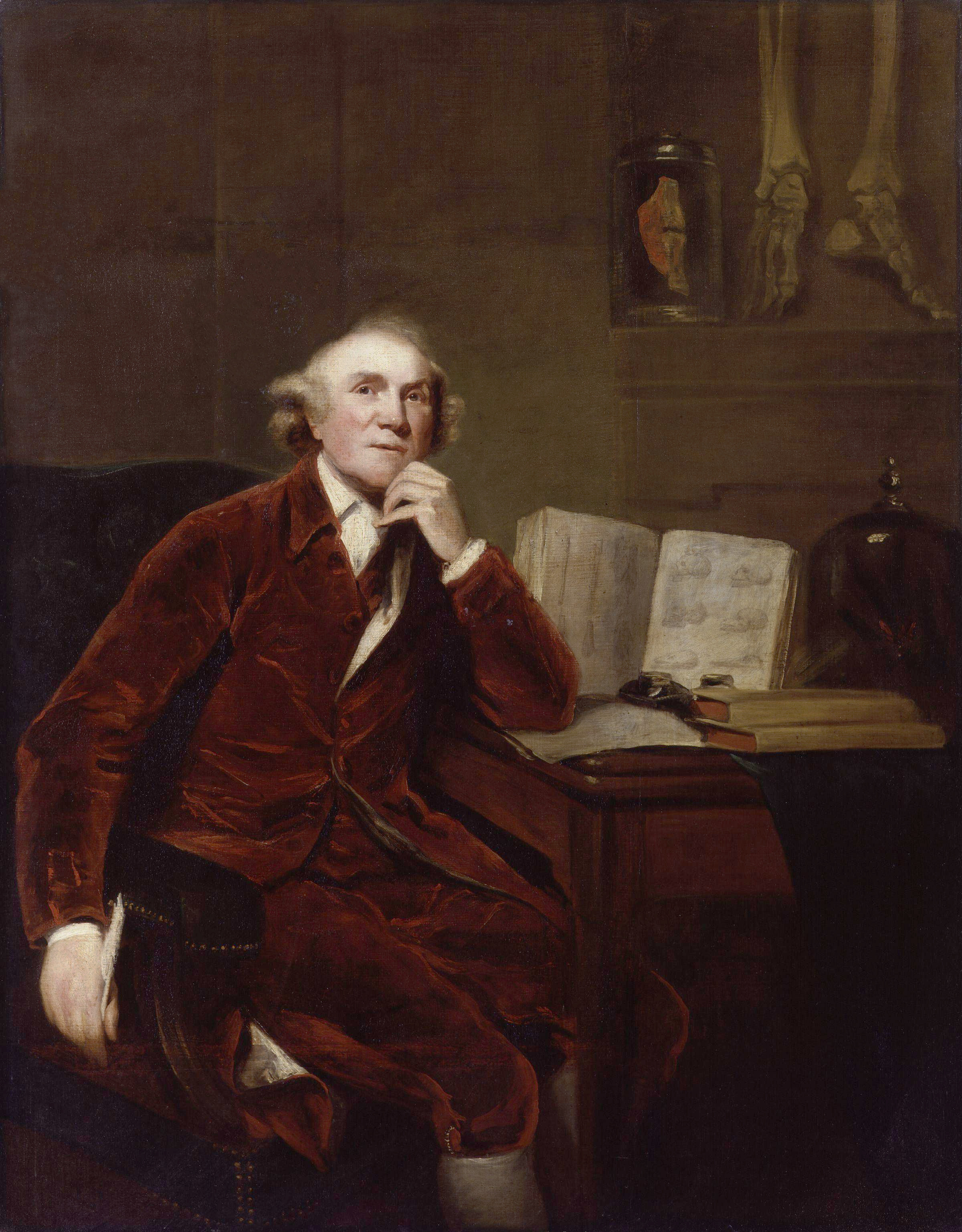
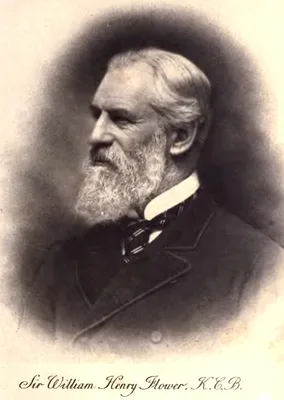
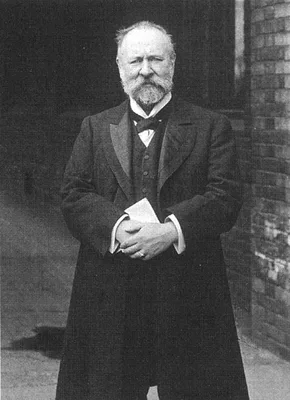
Parts 1 and 2 by Flower; part 3 by Sharpe. Digital facsimile of Part 1 from the Biodiversity Heritage Library at this link, of Part 2 at this link, and Part 3 at this link.
1882 –1883
#702
Zur Chemie des Zellkerns.
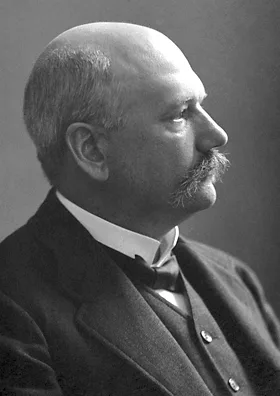
Among the many important contributions of Kossel was his study of the chemistry of the cell and cell-nucleus. Kossel correctly concluded that the function of nuclein is neither to act as a storage substance nor to fur…
1884 –1885
#11120
Le mal qu'on a dit des médecins. Première série: auteurs grecs & Latins. Deuxième série: Auteurs français jusqu'a Molière. 2 vols.
Digital facsimile from the Internet Archive at this link. Selections were translated , with annotations by T. C. Minor as The Evil that has been said of doctors: Extracts from early writers. (Cincinnati: Reprint from …
1903
#11119
Les seins dans l'histoire.
Digital facsimile from the Internet Archive at this link.
1912
#6917
Interferenz-Erscheinungen bei Röntgenstrahlen. . . . Eine quantitative Prüfung der Theorie für die Interferenz-Erscheinungen bei Röntgenstrahlen
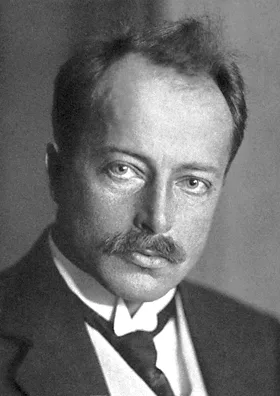
Discovery of the diffraction of X-rays in crystals. Laue’s discovery was of dual importance: it allowed the subsequent investigation of X-radiation by means of wavelength determination, and it provided the means for t…
1913
#6920
The reflection of x-rays by crystals.
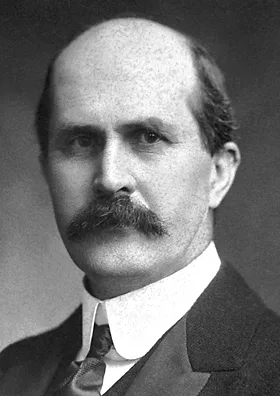
Discovery of X-ray crystallography. The father and son team of physicists, William Henry Bragg and William Lawrence Bragg, constructed the first X-ray spectrometer using crystals as gratings, using a known wavelength …
1915
#13031
Das Martyrium der heiligen Apollonia und seine Darstellung in der bildenden Kunst.
Illustrates with 100 plates various early depictions of the martyrdom of St. Apollonia, patron saint of dentistry. Saint Apollonia was one of a group of virgin martyrs who suffered in Alexandria, Egypt during a local …
1926
#14025
The isolation and crystallization of the enzyme urease.
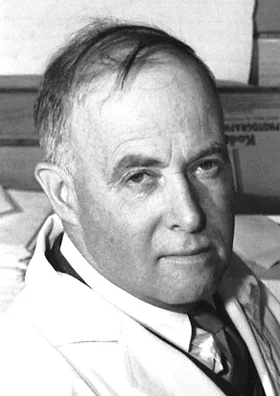
Sumner first isolated and crystallized an enzyme (urease) and proved that enzymes are proteins. One month after publication of the above paper Sumner reinforced his discovery by recrystalizing urease, publishing a fol…
1927
#251.1
Artificial transmutation of the gene.
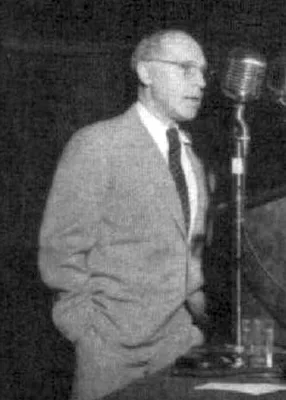
Muller showed that radiation causes mutations that are passed on from one generation to the next. This was the first suggestion that inherited traits might be altered or controlled, and it created a sensation: “Man’s …
1928
#350
The brain from ape to man: A contribution to the study of the evolution and development of the human brain by Frederick Tilney. With chapters on the reconstruction of the gray matter in the primate brain stem by Henry Alsop Riley. 2 vols.
Classic study of the evolution of the central nervous system in the higher mammals. Digital facsimile from the Internet Archive at this link.
1928
#194.1
Äskulap und Venus. Eine Kultur- und Sittengeschichte im Spiegel des Ärztes.
An exhaustive and well-illustrated survey of medical anthropology with emphasis on sexuality.
1929
#13079
Pathfinders: A history of the progress of colored graduate nurses. With biographies of many prominent nurses.
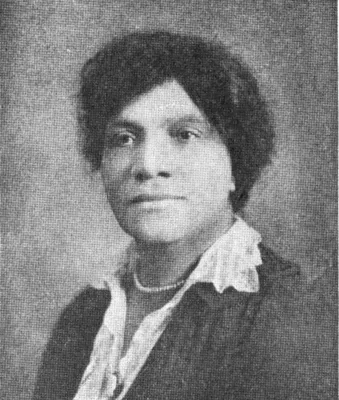
Digital facsimile from the Hathi Trust at this link.
1930
#1038.1
Crystalline pepsin.
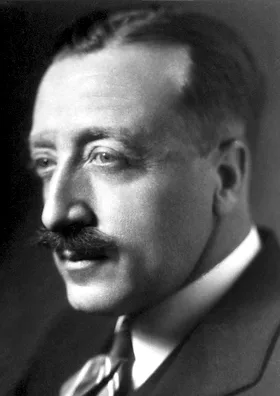
Crystallization of pepsin and its identity as a protein. In 1946 Northrop shared half of the Nobel Prize in Chemistry with Wendell Meredith Stanley "for their preparation of enzymes and virus proteins in a pure form."…
1932
#12060
Light and life. Address delivered at the opening meeting of the International Congress on Light Therapy in Copenhagen 15. August 1932.
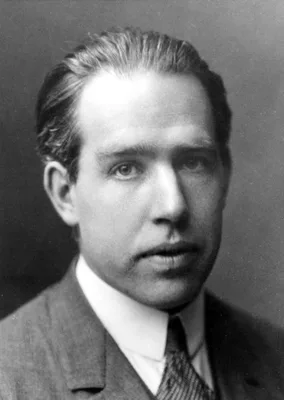
In 1922 Bohr was awarded the Nobel Prize in Physics "for his services in the investigation of the structure of atoms and of the radiation emanating from them." Including Bohr's 1932 address, Light and life, in the Nob…
1933
#6621
Bouquet poëtique des médecins, chirurgiens, dentistes et apothicaires.
1934
#12990
Meharry Medical College: A history.
The first history of an African-American medical school written by an African-American. Meharry Medical College, founded in 1876 as the Medical Department of Central Tennessee College, was the first medical college fo…
1935
#2524.5
Isolation of a crystalline protein possessing the properties of tobacco-mosaic virus.
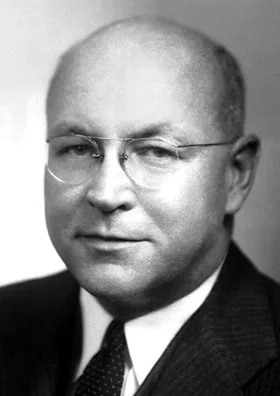
Stanley first crystallized a virus— tobacco mosaic virus. The following year Bawden, Pirie, Bernal and Fankuchen (No. 12005) showed that tobacco mosaic virus molecules are asnisometric and consist of ribonucleoprotein…
1941
#254.3
Genetic control of biochemical reactions in Neurospora.
Beadle and Tatum proposed the "one gene, one enzyme" hypothesis in 1941. This was a restatement of ideas originally proposed by Archibald Garrod (No. 244.1) in 1908. 1958 Beadle and Tatum shared the Nobel Prize in Phy…
1944
#8385
An American dilemma: The Negro problem and modern democracy. By Gunnar Myrdal with the assistance of Richard Sterner and Arnold Rose.
Includes considerable anthropological, biological, and health data. Digital facsimile from the Internet Archive at this link.
1946
#2578.5
Induced mutations in bacterial viruses.
Genetic recombination in bacteriophages. In 1969 Delbrück shared the Nobel Prize with A. D. Hershey and S. E. Luria "for their discoveries concerning the replication mechanism and the genetic structure of viruses."
1946
#14138
Die Tänze der Bienen.
Von Frisch discovered the waggle dance, a particular figure-eight dance of honey bees by which successful foragers can communicate information with other members of their colony about the direction and distance to pat…
1949
#2526.1
Genetic recombinations leading to production of active bacteriophage from ultraviolet inactivated bacteriophage particles.
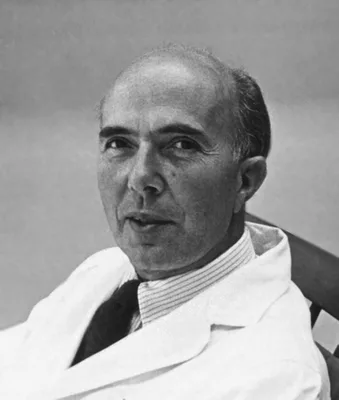
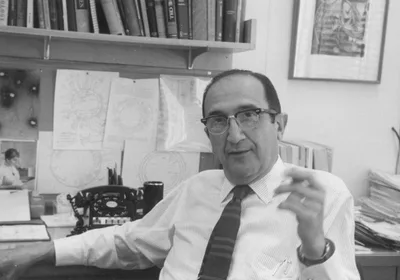
In 1969 Luria shared the Nobel Prize in Physiology or Medicine in with Delbrück (No. 2578.5) and A. D. Hershey (No. 256) "for their discoveries concerning the replication mechanism and the genetic structure of viruses."
1951
#6846
The structure of proteins: Two hydrogen-bonded configurations of the polypeptide chain.
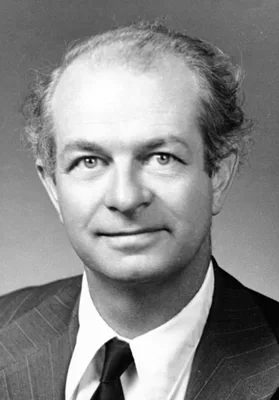
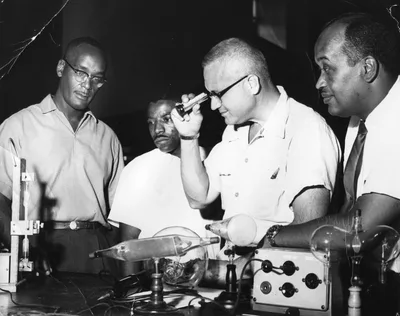
Pauling, his crystallographer R. B. Corey, and African-American physicist and chemist H.R. Branson announced the α-helix, a principal structural feature of proteins. Digital facsimile from the National Academy of Scie…
1952
#256
Independent functions of viral protein and nucleic acid in growth of bacteriophage.
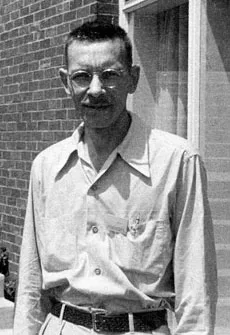
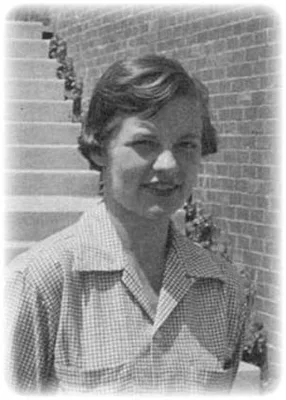
DNA shown to be the carrier of genetic information in virus reproduction. In 1969 Hershey shared the Nobel Prize in Physiology or Medicine with S. E. Luria and M. Delbrück for "for their discoveries concerning the rep…
1953
#256.3
Molecular structure of nucleic acids. A structure for deoxyribose nucleic acid.
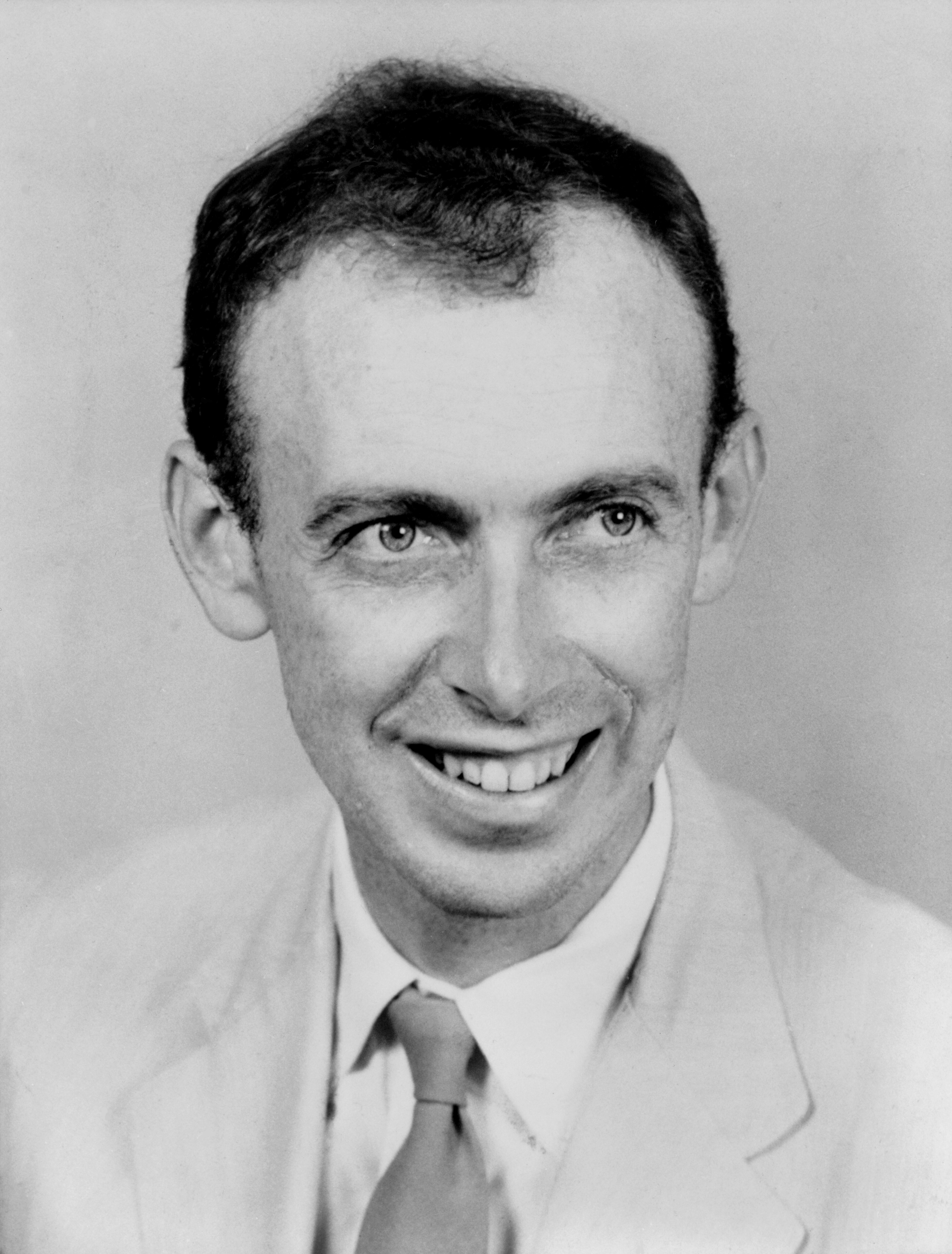
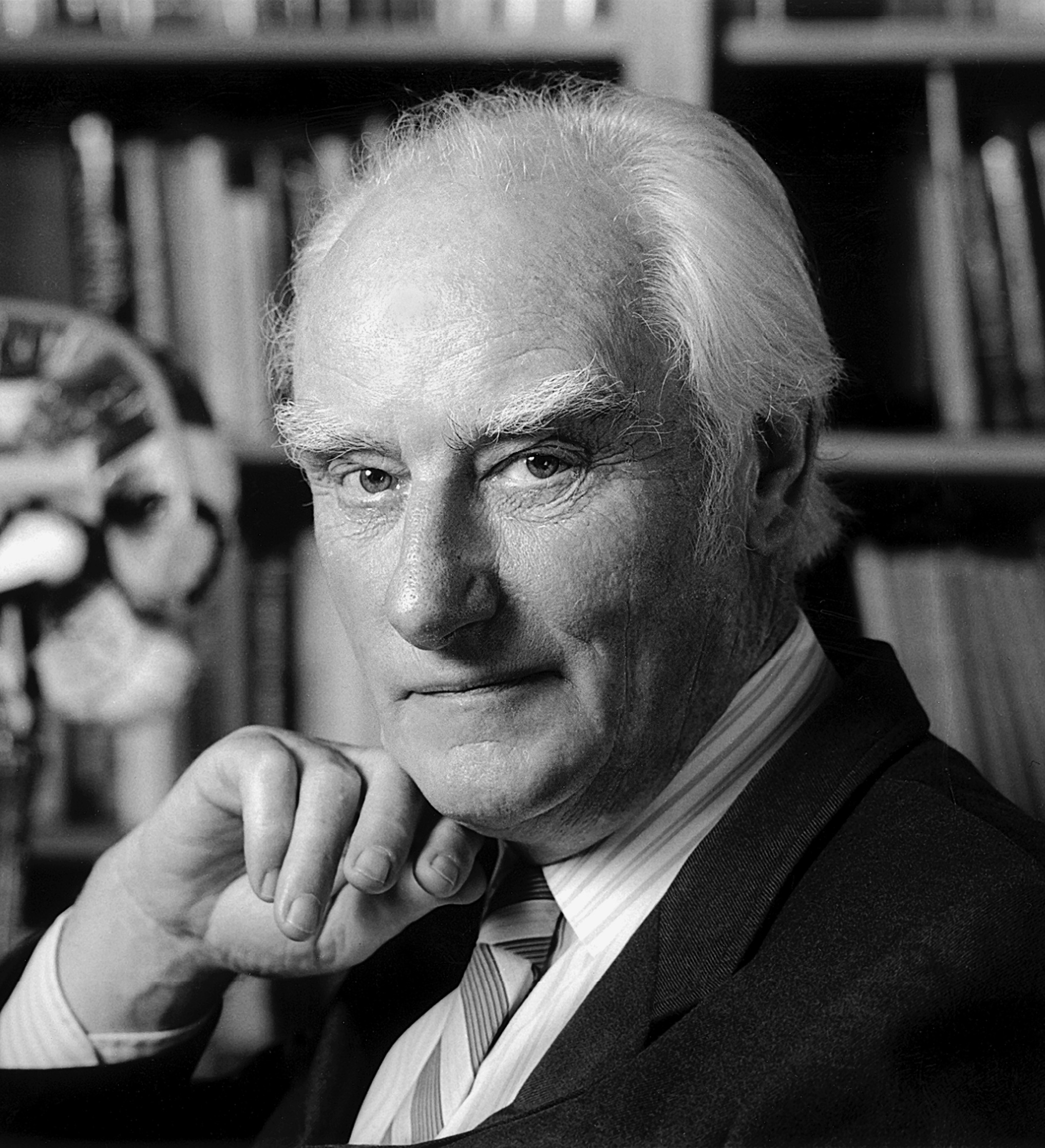
Watson and Crick shared the Nobel Prize with M. H. F. Wilkins (No. 256.4) "for their discoveries concerning the molecular structure of nucleic acids and its significance for information transfer in living material." L…
1953
#256.4
Helical structure of crystalline deoxypentose nucleic acid.
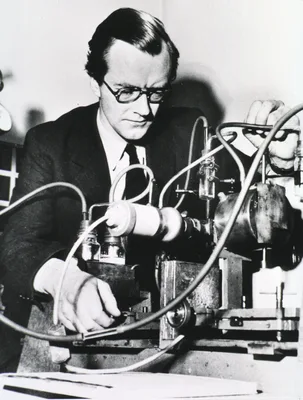
In 1962 Wilkins shared the Nobel Prize in Physiology or Medicine with Crick and Watson "for their discoveries concerning the molecular structure of nucleic acids and its significance for information transfer in living…
1955
#1207
The disulphide bonds of insulin.
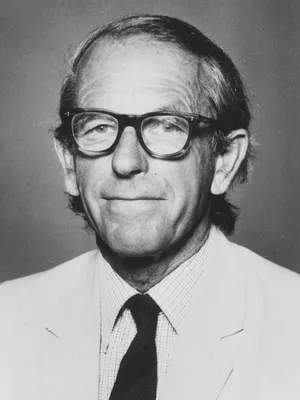
Sanger sequenced the amino acids of insulin, the first of any protein. His work “revealed that a protein has a definite constant, genetically determined sequence—and yet a sequence with no general rule for its assembl…
1955
#6928
The crystal structure of the hexacarboxylic acid derived from B12 and the molecular structure of the vitamin.
The final structure of vitamin B12. With J. Pickworth, J.H. Robertson, K.N. Trueblood, R.J. Prosen, J. G. White. In 1964 Hodgkin was awarded the Nobel Prize in Chemistry "for her determinations by X-ray techniques of …
1955
#13685
A small particulate component of the cytoplasm.
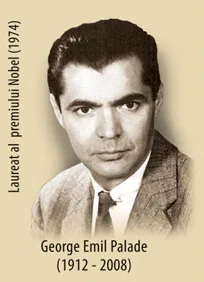
Palade first described the association of what were subsequently determined to ribosomes with membranes. He and Keith Porter subsequently named this structure the endoplasmic reticulum. Digital facsimile from PubMedCe…