
Facets
Browse across eight MeSH (opens in new tab) facets — era, geography, science, specialty, technology, history, culture, and reference. Select one tag per group; counts update across the others. What’s new in facet browse how facets relate to subjects and MeSH.
Clear filtersFacet filters
Geography
Specialties & Disease
- Anatomy & Pathology 1
- Cardiology & Blood 1
- Neurology & Psychiatry 1
- Obstetrics & Reproductive 3
- Infectious Disease (General) 0
- Surgery & Anesthesia 1
- Public Health 11
- Immunology & Dermatology 5
- General Clinical Medicine 29
- Military Medicine 13
- Psychology 1
- Alternative & Fringe Medicine 1
- Pediatrics 2
- Ophthalmology & Vision 0
- ENT & Hearing 0
- Urology & Nephrology 0
- Gastroenterology & Hepatology 0
- Pulmonary & Respiratory 0
- Rheumatology, Rehab & Pain 1
- Internal, Emergency & Geriatric 1
- Veterinary Medicine 0
- Epidemiology & Demography 0
- Physiology & Embryology 14
- Dentistry 2
- Plagues & Epidemics 3
- Microbiology & Virology 4
Social & Historical Studies
Institutions & Culture
Reference & Scholarly Works
Drugs & Technology
80 entries match Professions & Education [M01 / N02] · Women & Gender [K01.700.500]
1986
#8088
The path we tread: Blacks in nursing, 1854-1984.
1986
#10987
"For the welfare of mankind": The Commonwealth Fund and American medicine.
1988
#6639.13
Dictionary of American nursing biography.
Edited with J.W. Hawkins, L.P. Higgins, and A.H. Friedman.
1988
#9105
Wet nursing: A history from antiquity to the present.
1991
#13930
A novel multigene family may encode odorant receptors: A molecular basis for odor recognition.


"In their landmark paper published in 1991, Buck and Axel cloned olfactory receptors, showing that they belong to the family of G protein coupled receptors. By analyzing rat DNA, they estimated that there were approxi…
1992
#10283
To the ends of the earth: Women's search for education in medicine.
1993
#14341
Tuning the activity of an enzyme for unusual environments: Sequential random mutagenesis of subtilisin E for catalysis in dimethylformamide.
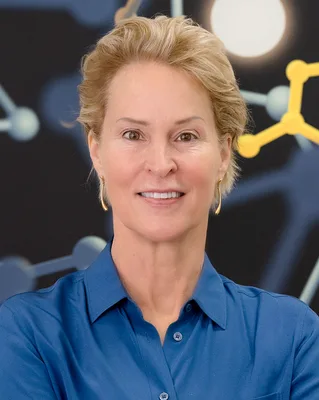
Arnold introduced a biochemical molecule manipulating technique to mimic the process of natural selection in creating new enzymes adapted to a specific catalytic reaction. She directed evolution of subtilisin E to obt…
1995
#11023
Catching babies: The professionalization of childbirth, 1870-1920.
Concerns the transition in the early 20th century in the United States from women midwives delivering most babies to professional obstetricians--mostly men--delivering almost all babies by the 1950s. It researches why…
1997
#11050
Learning to heal: The medical profession in colonial Mexico, 1767-1831.
1999
#10977
Medicine in Maryland: The practice and profession, 1799-1999.
2000
#13223
A new and untried course: Woman's Medical College and Medical College of Pennsylvania, 1850-1998.
2001
#10707
Skulls and skeletons: Human bone collections and accumulations.
2001
#10799
Malaria: Poverty, race, and public health in the United States.

2001
#10934
The history of the Royal Society of Medicine.
2005
#10931
Our shared legacy: Nursing education at Johns Hopkins, 1889–2006. Edited by Mame Warren in association with the Johns Hopkins Nurses' Alumni Association.
2005
#13622
Suppression of RNA recognition by toll-like receptors: The impact of nucleoside modification and the evolutionary origin of RNA.
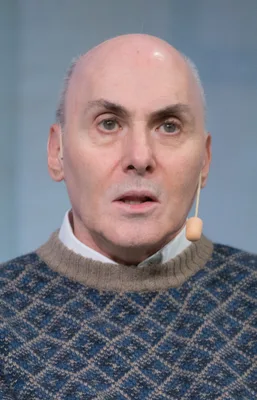
Karikó and Weissman discovered the nucleoside modifications that suppress the immungenicity of RNA, leading to their patents for the application of non-immunogenic, nucleoside-modified RNA (modRNA). This technology wa…
2007
#8995
Pride of America, we're with you: The letters of Grace Anderson, U.S. Army Nurse Corps, World War I.
2008
#9004
Answering the call: The U.S. Army Nurse Corps, 1917-1919: A commemorative tribute to military nursing in World War I. edited by Lisa M. Budreau and Richard M. Prior.
Digital facsimile from the Hathi Trust at this link.
2010
#7844
The Oxford handbook of the history of eugenics. Edited by Alison Bashford and Philippa Levine.

2010
#9002
This birth place of souls: The Civil War nursing diary of Harriet Eaton edited with an introduction by Jane E. Schultz.
2010
#10973
Educating physicians: A call for reform of medical school and residency.
"The current blueprint for medical education in North America was drawn up in 1910 by Abraham Flexner in his report Medical Education in the United States and Canada. The basic features outlined by Flexner remain in p…
2012
#11844
A programmable dual RNA-guided DNA endonuclease in adaptive bacterial immunity.
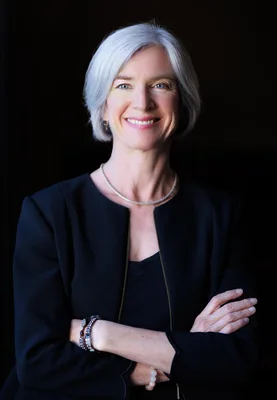

Order of authorship in the original publication: Jinek, Chylinski, Fonfar, Hauer, Doudna, Charpentier. Doudna, Charpentier and colleagues showed for the first time that the CRISPR evolutionary immune tool of bacteria …
2014
#7858
The teaching hospital: Brigham and Women's Hospital and the evolution of academic medicine. Edited by Peter V. Tishler, Christine Wenc and Joseph Loscalzo.
2016
#8997
Nurse writers of the great war.
2016
#10667
Fixing medical prices: How physicians are paid.
2017
#9908
Medical bondage: Race, gender and the origins of American gynecology.
"The accomplishments of pioneering doctors such as John Peter Mettauer, James Marion Sims, and Nathan Bozeman are well documented. It is also no secret that these nineteenth-century gynecologists performed experimenta…
2017
#10555
Cancer, radiation therapy, and the market.
2017
#10661
Irish medical education and student culture, c. 1850-1950.
2018
#11051
Carving a niche: The medical profession in Mexico 1800-1870.
2018
#11382
Rhetoric, medicine, and the woman writer, 1600–1700.
"How did physicians come to dominate the medical profession? Lyn Bennett challenges the seemingly self-evident belief that scientific competence accounts for physicians' dominance. Instead, she argues that the whole e…