
Facets
Browse across eight MeSH (opens in new tab) facets — era, geography, science, specialty, technology, history, culture, and reference. Select one tag per group; counts update across the others. What’s new in facet browse how facets relate to subjects and MeSH.
Clear filtersFacet filters
Geography
Specialties & Disease
- Anatomy & Pathology 7
- Cardiology & Blood 94
- Neurology & Psychiatry 27
- Obstetrics & Reproductive 5
- Infectious Disease (General) 1
- Surgery & Anesthesia 76
- Public Health 8
- Immunology & Dermatology 50
- General Clinical Medicine 1
- Military Medicine 0
- Psychology 3
- Alternative & Fringe Medicine 0
- Pediatrics 44
- Ophthalmology & Vision 12
- ENT & Hearing 5
- Urology & Nephrology 0
- Gastroenterology & Hepatology 9
- Pulmonary & Respiratory 5
- Rheumatology, Rehab & Pain 4
- Internal, Emergency & Geriatric 0
- Veterinary Medicine 2
- Epidemiology & Demography 4
- Physiology & Embryology 23
- Dentistry 3
- Plagues & Epidemics 27
- Microbiology & Virology 22
Social & Historical Studies
Institutions & Culture
Reference & Scholarly Works
454 entries match Genetics & Heredity [K01.900.300]
1937
#12352
Die Geschichte der angeborenen Herzkrankheiten.
A history of congenital heart disease covering cyanosis, foetal endocarditis and various malformations. Bedford 850.
1938
#3148.2
Recherches sur l’anémie érythroblastique infantile des peuples de la Méditerranée orientale. Étude anthropologique, étiologique et pathogénique. La transmission héréditaire de la maladie.
First evidence that thalassemia is genetically determined. Earlier report in Kliniki, Athens, 1936, 12, No. 5.
1938
#4962.1
A clinical and genetic study of 1,280 cases of mental defect.
In this exhaustive study Penrose showed (p. 36) the significance of maternal age in the etiology of Down syndrome.
1938
#6133
An operation for the cure of congenital absence of the vagina.
Mclndoe’s operation for the construction of an artificial vagina.
1938
#13827
Cystic fibrosis of the pancreas and its relation to celiac disease: A clinical and pathological study.
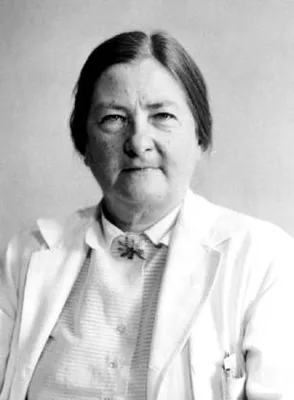
Andersen was the first to describe the characteristic cystic fibrosis of the pancreas, and to correlate it with the lung and intestinal disease prominent in CF. She also was the first to hypotheize that cystic fibrosi…
1938
#14088
Icterus gravis (erythroblastosis) neonatorum.
Darrow was the first to identify the cause of hemolytic disease of the newborn (HDN). Three years prior to the discovery of antibodies against the Rh antigen, Darrow correctly hypothesized that the disease was caused …
1939
#912
Blood groups.
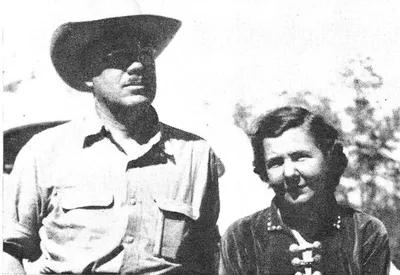
Boyd showed that blood groups are inherited and not changed by environment.
1939
#3039
Surgical ligation of a patent ductus arteriosus: Report of first successful case.
One of the earliest successful surgical repairs for congenital heart disease. See also later paper in Ann. Surg.,1939, 110, 321-56.
1939
#4403.1
Principles involved in the treatment of congenital clubfoot.
Kite’s method, involving “a series of plaster casts and wedgings, without the use of anesthetics, forcible manipulations, or operative procedures”, became standard practice.
1940
#2923
Grosse pulmonaire. Petite aorte. Affection congénitale.
Idiopathic dilatation of the pulmonary artery reported. With D. Routier and R. Heim de Balsac.
1941
#3100
The rôle of iso-immunization in the pathogenesis of erythroblastosis fetalis.
Erythroblastosis fetalis due to rhesus incompatibility (Rh disease) between mother and child. With L. Burnham, E. M. Katzin, and P. Vogel.
1941
#4404
Chondrodystrophic dwarfs in Denmark (supplemented with investigations from Sweden and Norway) with special reference to the inheritance of chondrodystrophy.
Morch established the fact that chondrodystrophy may be inherited.
1941
#5507
Congenital cataract following German measles in the mother.
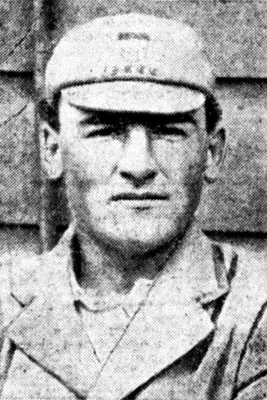
Gregg drew attention to congenital defects in infants following rubella in the mother during the early part of pregnancy.
1941
#254.3
Genetic control of biochemical reactions in Neurospora.
Beadle and Tatum proposed the "one gene, one enzyme" hypothesis in 1941. This was a restatement of ideas originally proposed by Archibald Garrod (No. 244.1) in 1908. 1958 Beadle and Tatum shared the Nobel Prize in Phy…
1942
#13316
The epigenotype.
Waddington coined the term epigenetics: "For the purpose of a study of inheritance, the relation between phenotypes and genotypes [...] is, from a wider biological point of view, of crucial importance, since it is the…
1943
#5509
Congenital defects in infants following infectious diseases during pregnancy.
Figures demonstrating that rubella in the first or second month of pregnancy always results in an abnormal infant. With A. L. Tostevin, B. Moore, H. Mayo, and G. H. B. Black.
1943
#6357.58
Congenital atresia of the esophagus with tracheo-esophageal fistula. Extrapleural ligation of fistula and end-to-end anastomosis of esophageal segments.
Ablation of the tracheo-oesophageal fistula and primary end-to-end oesophageal anastomosis, first achieved in 1941.
1944
#255.3
Studies on the chemical nature of the substance inducing transformation of pneumococcal types. Induction of transformation by a deoxyribonucleic acid fraction isolated from pneumococcus type III.
Demonstration that deoxyribonucleic acid (DNA) is the basic material responsible for genetic transformation. Digital facsimile from PubMedCentral at this link. Followed by: McCarty & Avery, "Studies on the chemical na…
1944
#11859
Congenital cardiac disease: Bibliography of 1000 cases analyzed in Maude Abbott's Atlas. Edited by Donald deF. Bauer and Effie C. Astbury.
Provides all the references used in Abbott, Atlas of congenital cardiac disease. New York: American Heart Association, 1936, but not included in the 1936 work.
1945
#3043
The surgical treatment of malformations of the heart in which there is pulmonary stenosis or pulmonary atresia.
The “Blalock-Taussig operation” for the relief of congenital defects of the pulmonary artery, Tetralogy of Fallot ("blue baby syndrome"). "The first surgical repair was carried out in 1944 at Johns Hopkins.[70] The pr…
1945
#3044
Congenital coarctation of the aorta and its surgical treatment.
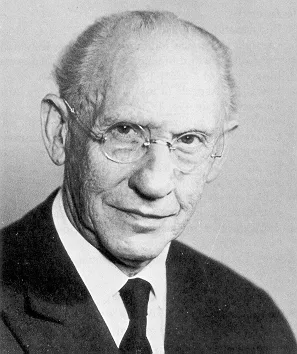
Crafoord and Gross (No. 3044.1) pioneered this basic operation in cardiac and pediatric surgery.
1945
#3044.1
Surgical correction for coarctation of the aorta.
Resection of coarctation and direct anastomosis of remaining ends. See also his report of 60 cases in J. Amer.med.Assoc.,1949, 139,285-92.
1945
#10653
Atrial septal defect: Study of hemodynamics by the technique of right heart catheterization.
The first description of the use of a cardiac catheter as a diagnostic tool, in this case a congenital heart defect. The authors worked in the laboratory of Eugene Stead, Jr. at Grady Memorial Hospital, Atlanta, Georgia.
1946
#3045
Anastomosis of the aorta to a pulmonary artery. Certain types in congenital heart disease.
With S. Smith and S. Gibson.
1946
#3924.2
Heredopathia atactica polyneuritiformis; a familial syndrome not hitherto described.
“Refsum’s syndrome”, an inherited disorder of lipid metabolism.
1946
#255.4
Gene recombination in Escherichia coli.
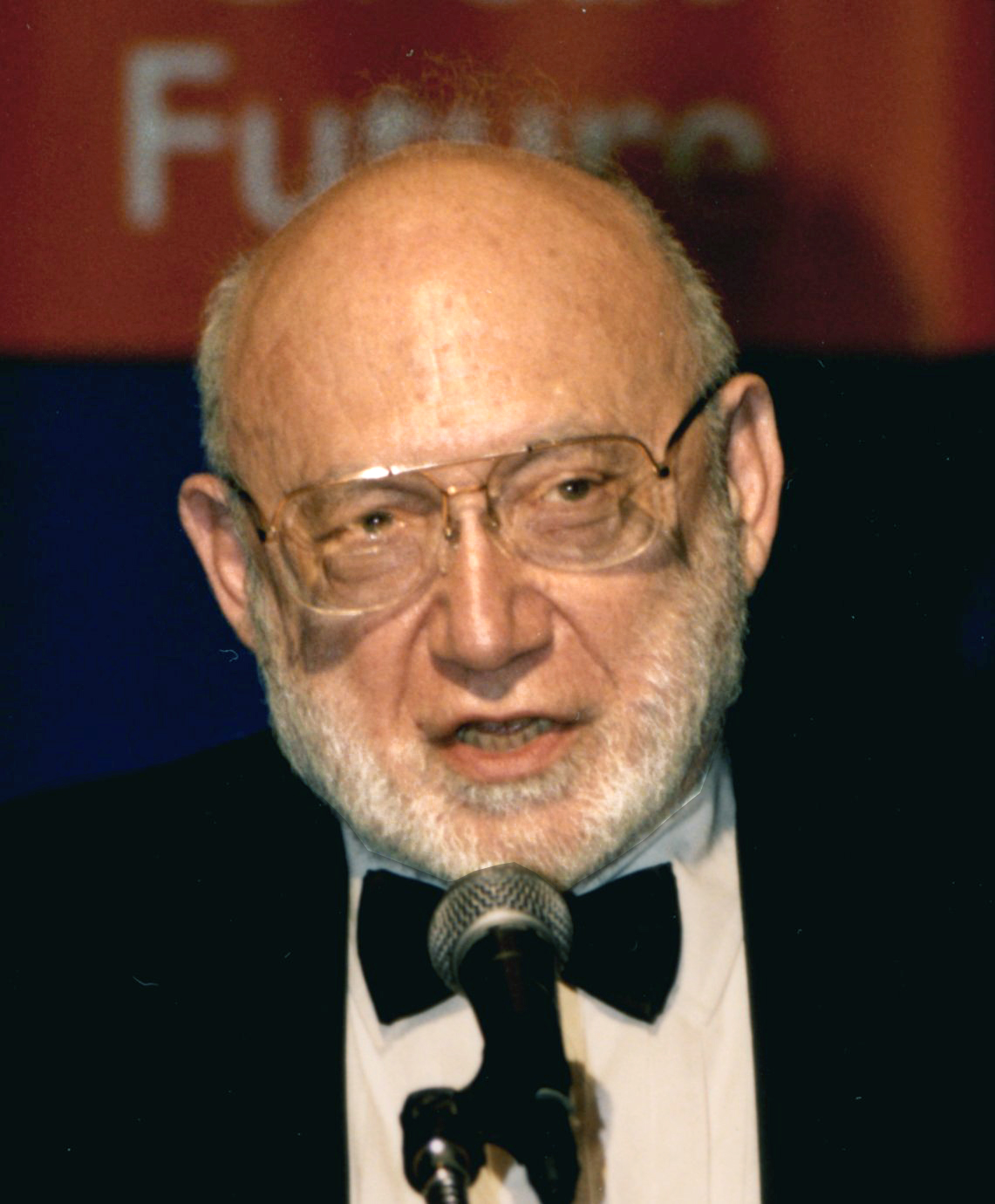
Discovery of sexual processes in the reproduction of bacteria. In 1958 Lederberg shared the Nobel Prize in Physiology or Medicine with Tatum and Beadle (No. 254.3) "for his discoveries concerning genetic recombination…
1947
#2878
Congenital malformations of the heart.
This 618-page work, which required ten years to write, was the first "definitive textbook" of congenital heart defects, a subspecialty of pediatrics that Taussig created. The second edition, published in 1960, was ess…
1948
#3046
Pulmonary valvulotomy for the relief of congenital pulmonary stenosis. Report of three cases.

"Brock performed the first successful valvotomies for isolated pulmonary stenosis in 1948. He gained access to the blood-filled beating heart through a small incision in the right ventricle through which he passed a v…
1948
#3107.1
Replacement transfusion as a treatment for erythroblastosis fetalis.
Exchange transfusion.
1948
#3107.2
The reduction of methaemoglobin in red blood cells and studies on the cause of idiopathic methaemoglobinaemia.
Cause of hereditary methemoglobinemia elucidated.
1948
#11766
Congenital anaomies of the heart and great vessels. Clinicopathologic study of 132 ases.
An extensively illustrated pathological-anatomical and physiological presentation with an historical approach.
1949
#2526.1
Genetic recombinations leading to production of active bacteriophage from ultraviolet inactivated bacteriophage particles.
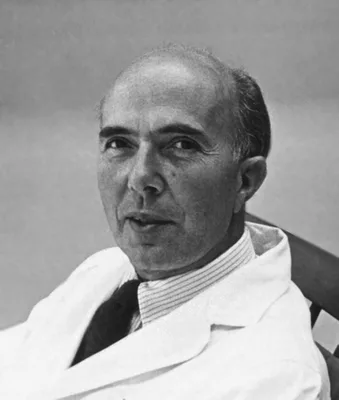
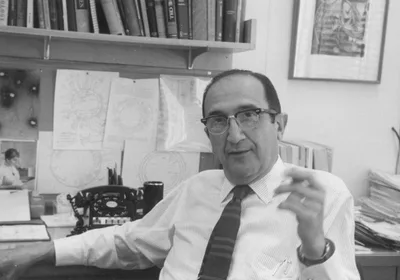
In 1969 Luria shared the Nobel Prize in Physiology or Medicine in with Delbrück (No. 2578.5) and A. D. Hershey (No. 256) "for their discoveries concerning the replication mechanism and the genetic structure of viruses."
1949
#3154.1
Sickle cell anemia, a molecular disease.
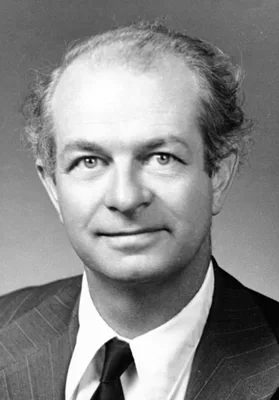
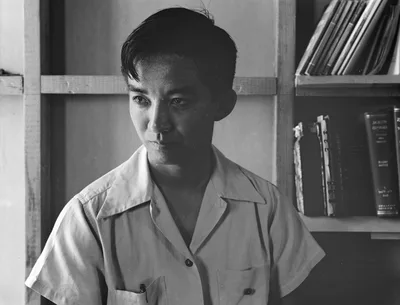
First recognition, by Pauling and colleagues, of a structural hemoglobin variant, and the beginning of the molecular approach to disease.
1949
#3154.2
The inheritance of sickle cell anemia.
Genetic evidence that sickle-cell disease is inherited in a simple Mendelian manner.
1949
#4404.1
Osteogenesis imperfecta: A study of clinical features and heredity based on 55 Danish families comprising 180 affected members.
Includes a translation of Ekman’s thesis (No. 4304.1). Also gives a case reported in 1678.
1949
#4962.2
The biology of mental defect.
1949
#12289
Complete transposition of the aorta and a levoposition of the pulmonary artery; clinical, physiological, and pathological findings.
Taussig–Bing syndrome, a cyanotic congenital heart defect[1] in which the patient has both double outlet right ventricle (DORV) and subpulmonic ventricular septal defect (VSD).[2]
1950
#2882
Congenital heart disease.
A new classification proposed.
1950
#258.1
Die Zeugungs- und Vererbungslehren der Antike und ihr Nachwirken.
A study of the earliest “scientific” theories of heredity and genetics.
1950
#12063
The origin and behavior of mutable loci in maize.
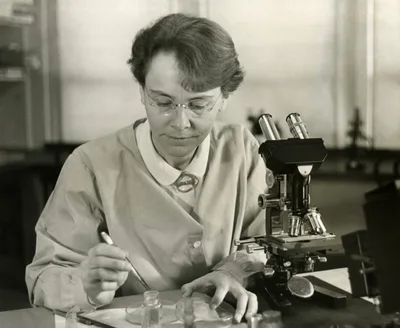
"In the summer of 1944 at Cold Spring Harbor Laboratory, McClintock systematic studies on the mechanisms of the mosaic color patterns of maize seed and the unstable inheritance of this mosaicism.[44] She identified tw…
1950
#13525
Lysogenicity in Escherichia coli strain K-12.
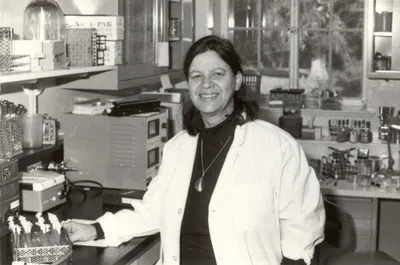
Discovery of phage λ (lambda phage). According to estherlederberg.com, only about 100 people received the first issue of Microbial Genetics Bulletin, a typed and mimeographed publication. Digital facsimile from esther…
1951
#4154.4
A new syndrome combining developmental anomalies of the eyelids, eyebrows and nose root with pigmentary defects of the iris and head hair with congenital deafness.
“Waardenburg’s syndrome”.
1951
#255.7
Studio dei gemelli.
The first truly comprehensive work on the scientific study of twins. (1381pp., 547 illustrations, 161 tables). English translation of the first half of the work, with some revisions: Twins in history and science, Spri…
1951
#12229
Development of a pump-oxygenator to replace the heart and lungs: An apparatus applicable to human patients, and application to one case.

Dennis and colleagues performed the first human cardiac operation with total heart-lung bypass. The patient was a 6-year old girl with a huge atrial septal defect. Though she did not survive, this report encouraged ot…
1951
#12238
Hydraulic formula for calculation of the area of the stenotic mitral valve; other cardiac valves, and central circulatory shunts.
In collaboration with his father, S. G. Gorlin, a mechanical engineer who designed hydraulic systems for gasoline engines at the beginning of the century, Richard Gorlin developed a formula to calculate the area of st…
1952
#3108.1
Christmas disease, a condition previously mistaken for haemophilia.
Christmas disease, hemophilia B, due to lack of Factor IX. Named after the patient whose case was the first recorded example. With six co-authors.
1952
#2578.9
Agammaglobulinemia.
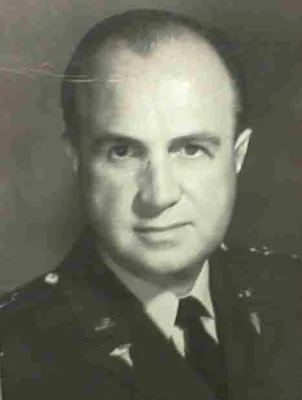
First report.
1952
#13941
Mammalian chromosomes in vitro I: The karyotype of man.
Since the turn of the twentieth century, chromosomes prepared on microscope slides formed clumps that made it extremely difficult to distinguish them. Although the preparations made the identification of individual ch…
1952
#13983
Recombination in Bact. coli K 12: Unidirectional transfer of genetic material.
Hayes "developed the concept of a donor–recipient partnership with uni-directional transfer of genetic material. The importance of this discovery was quickly emphasised and widely recognised when he found that only a …
1953
#256.2
The detection of chromosomal sex in hermaphrodites from a skin biopsy.
Sex chromatin demonstrated in humans.