
Facets
Browse across eight MeSH (opens in new tab) facets — era, geography, science, specialty, technology, history, culture, and reference. Select one tag per group; counts update across the others. What’s new in facet browse how facets relate to subjects and MeSH.
Clear filtersFacet filters
Geography
Specialties & Disease
- Anatomy & Pathology 8
- Cardiology & Blood 7
- Neurology & Psychiatry 25
- Obstetrics & Reproductive 13
- Infectious Disease (General) 2
- Surgery & Anesthesia 30
- Public Health 99
- Immunology & Dermatology 6
- General Clinical Medicine 23
- Military Medicine 107
- Psychology 1
- Alternative & Fringe Medicine 29
- Pediatrics 6
- Ophthalmology & Vision 2
- ENT & Hearing 0
- Urology & Nephrology 0
- Gastroenterology & Hepatology 3
- Pulmonary & Respiratory 1
- Rheumatology, Rehab & Pain 2
- Internal, Emergency & Geriatric 5
- Veterinary Medicine 1
- Epidemiology & Demography 38
- Physiology & Embryology 6
- Dentistry 7
- Plagues & Epidemics 81
- Microbiology & Virology 30
Social & Historical Studies
Institutions & Culture
Reference & Scholarly Works
741 entries match United States [Z01.058]
1789
#5470
An account of the bilious remitting fever. In his Medical inquiries and observations, 1, 104-21
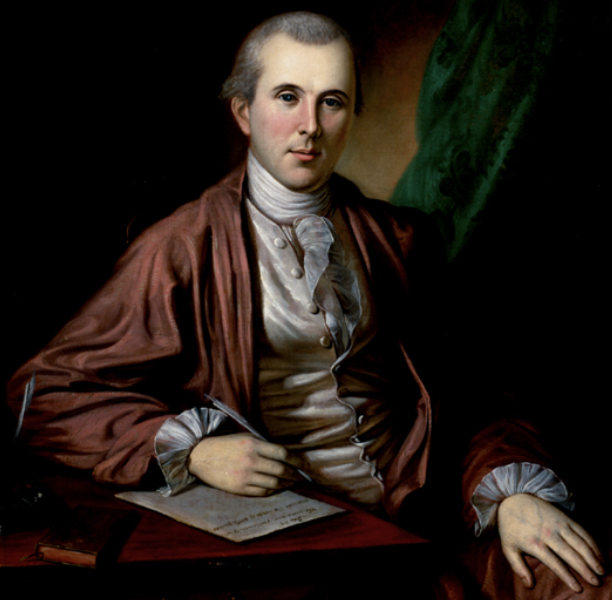
One of the first important accounts of dengue (“breakbone fever”). Rush described the Philadelphia outbreak of 1780.
1790
#2925.1
An account of an aneurism in the thigh, perfectly cured by the operation.
The first femoral ligation reported in America, and the first paper on a surgical topic to be published in an American medical periodical.
1790
#3677.1
Remarks on the diseases of the teeth.
The first "scientific" paper on dentistry to appear in an American periodical. Trained in France, Gardette accepted a commission as a surgeon in the French navy and went to America in 1778 when France sent her ships t…
1790
#11229
Viaggio negli Stati Uniti dell' America settentrionale fatto negli anni 1785, 1786, e 1787. 2 vols.
Castiglioni was one of very few Italians to make the journey to America and to produce a detailed day-to-day account of his observations in the young country. His "Viaggio" is a systematic compendium of information dr…
1791
#7770
Travels through North & South Carolina, George, East & West Florida, the Cherokee country, the extensive territories of the Muscogulges, or Creek confederacy, and the country of the Chactaws [sic]...
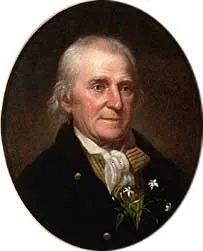
Digital facsimile of London, 1794 second edition from the Internet Archive at this link.
1791
#8580
Return of the whole number of persons with the several districts of the United States, according to "An Act Providing for the Enumeration of the Inhabitants of the United States," passed March the first, one thousand seven hundred and ninety-one.
The first Census of the United States was conducted on August 2, 1790. The results were used to allocate Congressional seats (congressional apportionment), electoral votes, and funding for government programs.The fede…
1792
#1775
An historical account of the climates and diseases of the United States of America, and of the remedies and methods of treatment, which have been found most useful and efficacious, particularly in those diseases which depend upon climate and situation: collected pricipally from personal observation, and the communications of physicians of talents and experience, residing in the several states.
Digital facsimile from the Medical Heritage Library, Internet Archive, at this link.
1793
#5451
A short account of the malignant fever, lately prevalent in Philadelphia: With a statement of the proceedings that took place on the subject in different parts of the United States.
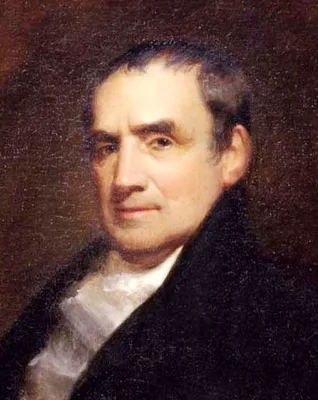
Carey was a Philadelphia publisher and economist rather than a physician. In this little book, which passed through four editions in a few months, Carey left a graphic description of the great yellow fever epidemic of…
1793
#5452
A description of the malignant, infectious fever prevailing at present in Philadelphia; with an account of the means to prevent infection, and the remedies and method of treatment, which have been found most successful.
Digital facsimile from the Internet Archive at this link.
1794
#5453
An account of the bilious remitting yellow fever, as it appeared in the city of Philadelphia in the year 1793.
Benjamin Rush was the most eminent figure in Philadelphia medicine in his day. His description of the yellow fever epidemic of 1793 is classic. He did magnificent work in treating the sick during the epidemic and in p…
1794
#5453.1
A narrative of the proceedings of the black people during the late awful calamity in Philadelphia, in the year 1793: and a refutation of some censures thrown upon them in some late publications.
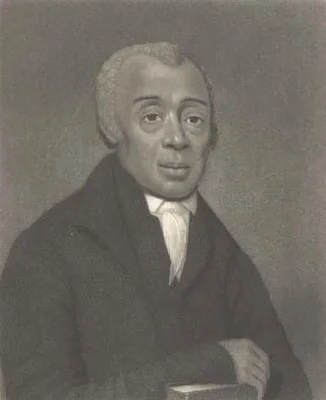
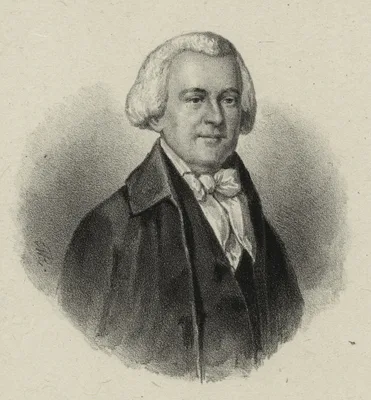
A refutation of slights by Matthew Carey in his Short account of the malignant fever, lately prevalent in Philadelphia (1793; No. 5451) to the important contributions of black people, many of whom served as nurses and…
1796
#13162
An account of the epidemic fever which prevailed in the city of New York, during part of the summer and fall of 1795.
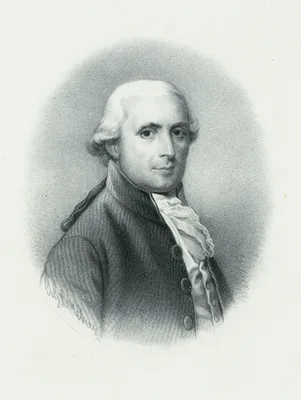
Traces the spread of yellow fever in late July, 1795, to the ship Zephyr, recently arrived from the West Indies. After spreading to nearby ships and then into the neighborhoods surrounding the port, the epidemic kille…
1797
#7687
An inquiry into the cause of the prevalence of the yellow fever in New-York.
Includes four early plot maps; Seaman was one of the first to create maps that attempted to show the spread of contagious disease.
1797
#7768
The natural history of the rarer lepidopterous insects of Georgia. Including their systematic characters, the particulars of their several metamorphoses, and the plants on which they feed. Collected from the observations of Mr. John Abbot, many years resident in that country, by James Edward Smith.
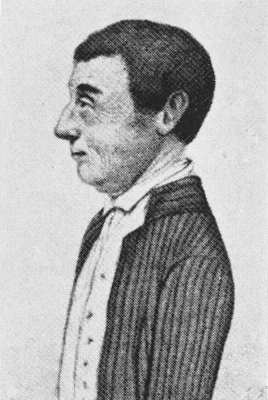
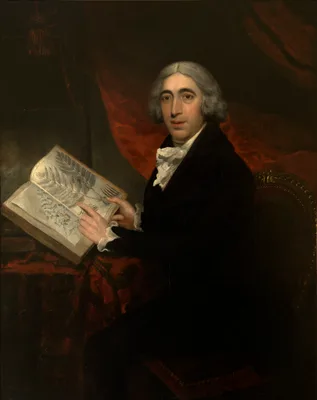
The earliest illustrated monograph on the butterflies and moths of North America. Text in English and French. 104 hand-colored plates. Digital facsimile from the Internet Archive at this link.
1798
#8654
The influence of metallic tractors on the human body, in removing various painful inflammatory diseases, such as rheumatism, pleurisy, some gouty affections, &c. &c: Lately discovered by Dr. Perkins, of North America; and demonstrated in a series of experiments and observations....by which the importance of the discovery is fully ascertained, and a new field of enquiry opened in the modern science of Galvanism, or animal electricity
In 1795 Dr. Elisha Perkins (1741-1799) of Connecticut introduced the use of “Metallic Tractors” for the treatment of a wide range of disorders, including pains in the head, face, teeth, breast, side, stomach, back, rh…
1798
#9309
Collections for an essay towards a materia medica of the United States. Read before the Philadelphia Medical Society, on the twenty-first of February, 1798.
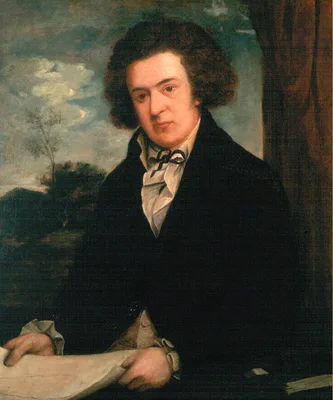
Digital facsimile of the 1798 edition from the U.S. National Library of Medicine at this link. Digital facsimile of the much-expanded third edition (1810) from Google Books at this link.
1799
#7218
Fragments of the Natural History of Pennsylvania. Part First [All Published].
This 24-page pamphlet is the first work by an American devoted entirely to American birds. It deals predominantly with migratory birds, arranged according to the dates throughout the year 1791 in which they were first…
1799
#10511
A description of the American yellow fever, which prevailed at Charleston, in South Carolina, in the year 1748.
Digital facsimile from U.S. National Library of Medicine at this link.
1800 –1802
#5424
A prospect of exterminating the small-pox, being the history of the variolae vaccinae, or kine-pox, commonly called the cow-pox; as it has appeared in England: With an account of a series of inoculations performed for the kine-pox in Massachusetts. [Part II:] A prospect of exterminating the small pox part II, being a continuation of a narrative of facts concerning the progress of the new inoculation in America; together with practical observations on the local appearance, symptoms, and mode of treating the variola vaccina, or kine pock; including some letters to the author, from distinguished characters, on the subject of this benign remedy, now passing with a rapid step through all ranks of society in Europe and America.
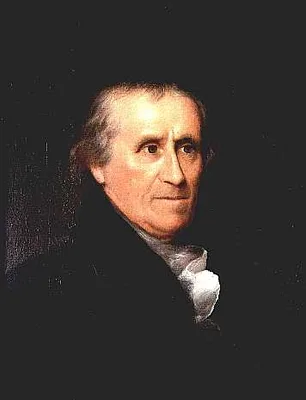
Waterhouse introduced Jennerian vaccination into the U.S.A. He vaccinated his own child as his first case. See J. B. Blake, Benjamin Waterhouse and the introduction of vaccination. A reappraisal. Philadelphia, 1957. D…
1801
#1838.2
The American herbal, or materia medica.
The first herbal both produced and printed in the United States, as opposed to those which were reprints of European works. Includes information on native American remedies. Digital facsimile from the Medical Heritage…
1801
#3678
A treatise on the human teeth, concisely explaining their structure and cause of disease and decay.
First American book on the teeth, a pamphlet of 26pp. It was intended for the lay public and listed sound rules of oral hygiene, explained the nature of dental diseases and their treatment, and stressed preventive mai…
1802
#5425
Practical observations on vaccination: or inoculation for the cow pock.
Coxe did much to destroy ignorant prejudice against vaccination; he was the first in Philadelphia to practice it. Like Waterhouse, he inoculated his own child as his first case.
1803
#9310
Elements of botany, or outlines of the natural history of vegetables.
The first American textbook of botany. Digital facsimile of the revised 1804 London edition from the Hathi Trust at this link.
1803
#10445
An epistle to a friend, on the means of preserving health, promoting happiness; and prolonging the life of man to its natural period. Being a summary view of inconsiderate and useless habits that derange the system of nature, thereby causing premature old age and death : with some thoughts on the best means of preventing and overcoming disease.
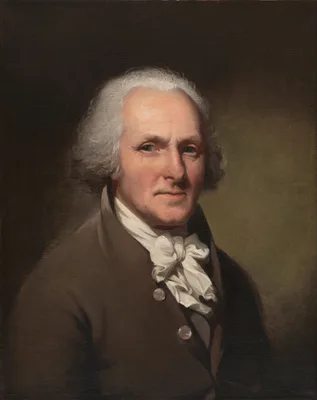
Written by the first great American painter. Digital facsimile from the Internet Archive at this link.
1803
#12399
Flora Boreali-Americana, sistens caracteres plantarum quas in America septentrionali collegit et detexit Andreas Michaux, Instituti Gallici Scientiarum, necnon Societatis Agriculturae Caroliniensis socius. Tabulis Aeneis 51 ornata [after Pierre-Joseph Redouté]. 2 vols.
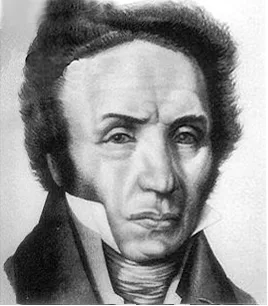
"The French government sent Michaux to the United States to collect North American seeds, shrubs, and trees ; he landed at New York City on 1 October, accompanied by his son [François-André Michaux] and a gardener. In…
1804
#4409.1
A case of fracture of the os humeri, in which the broken ends of the bone not uniting the usual manner, a cure was effected by means of a seton.
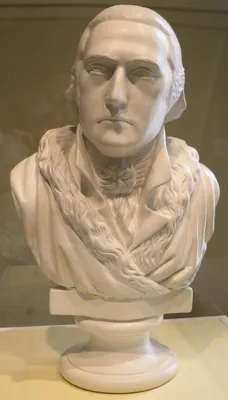
The first paper on orthopedic surgery published in the United States. Physick introduced the use of the seton in the treatment of ununited fractures.
1806
#10379
A catalogue of the medical library, belonging to the Pennsylvania Hospital; exhibiting the names of authors and editors, in alphabetical order, and an arrangement of them under distinct heads. Also, a list of articles contained in the anatomical museum; and the rules of the museum and of the library.
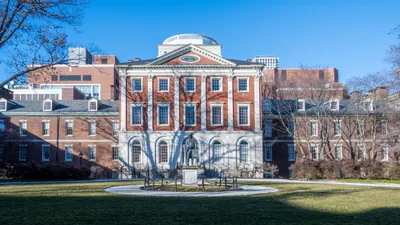
Probably the first catalogue of a medical museum in the United States and also possibly the first catalogue of an institutional medical library. The library was open to users for a one time payment of $30, later raise…
1807
#6163.1
A compendium of the theory and practice of midwifery.
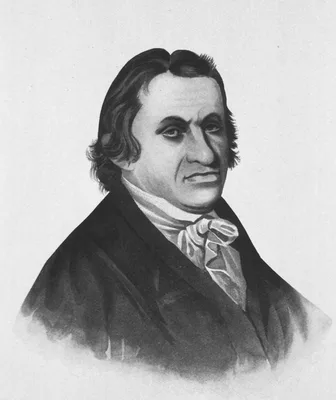
First significant textbook on obstetrics written by an American. Bard gave an excellent description of the mechanism of labor, and of pre-eclampsia. Woodcut illustrations were engraved by American physician and illust…
1807
#7049
The planter's and mariner's medical companion: treating, according to the most successful practice, I. The diseases common to warm climates and on ship board. II. Common cases in surgery, as fractures, dislocations, &c. &c. III. The complaints peculiar to women and children. To which are subjoined a dispensatory, shewing how to prepare and administer family medicines, and a glossary giving an explanation of technical terms.
Ewell, then practicing in Savannah, Georgia, wrote this self-help book for southern residents, directing his book toward plantation owners. It was "the constant friend of a large number of slave-masters. In emergencie…
1808 –1814
#9498
American ornithology; or, the natural history of the birds of the United States: Illustrated with plates engraved and colored from original drawings taken from nature. 9 vols.
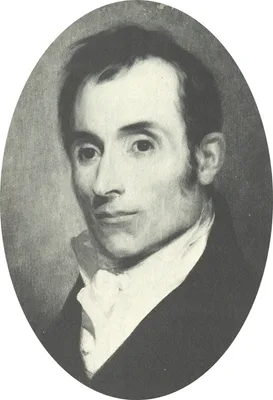
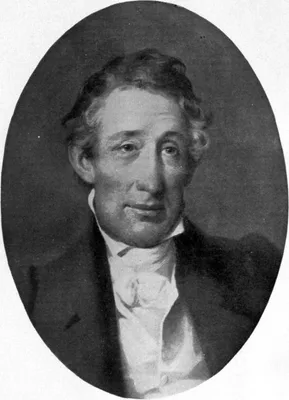
Considered the "father of American ornithology," Wilson was the greatest American ornithologist before Audubon. Wilson died with the 7th volume in press, and the 8th and 9th volumes were completed by Wilson's friend G…
1808
#10067
The pharmacopoeia of the Massachusetts Medical Society,
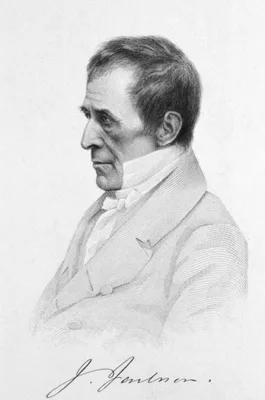
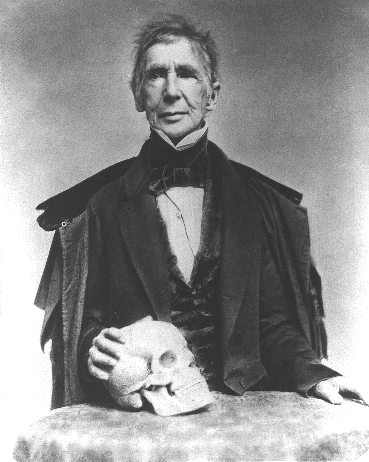
The first state pharmacopeia issued in the United States. Jackson and Warren were the "Committee for the Pharmacopoeia." Digital facsimile from the Internet Archive at this link.
1809
#10602
Cases of organic diseases of the heart. With dissections and some remarks intended to point out the distinctive symptoms of these diseases.
The first monograph on heart disease written and published in the United States. Digital text from Project Gutenberg at this link.
1810
#4675
An inaugural dissertation on the disease termed petechial, or spotted fever. Submitted to the Examining Committee of the Medical Society of Connecticut, for the county of Hartford.
This graduation dissertation was the first published brochure on cerebrospinal meningitis. Digital facsimile from U.S. National Library of Medicine at this link.
1811
#7801
The maternal physician; a treatise on the nurture and management of infants, from the birth until two years old. Being the result of sixteen years' experience in the nursery. Illustrated by extracts from the most approved medical authors
The first American book on pediatrics, in the tradition of "advice books" or childcare manuals for mothers. This was the first American printed book on a medical subject written by a woman. Pages 248-75 publish a list…
1812
#4924
Medical inquiries and observations upon the diseases of the mind.
The first American textbook on psychiatry, and, considering the state of that science in Rush’s time, one of the most noteworthy. It underwent four editions.
1814
#7876
Flora Americae septentrionalis; or, a systematic arrangement and description of the plants of North America. Containing, besides what have been described by preceding authors, many new and rare species, collected during twelve years travels and residence in that country. 2 vols.
The first survey of all plants of North America above Mexico, including more than 3,000 species and 470 genera; describes more than 100 species collected by the Lewis and Clark expedition. Digital facsimile from Botan…
1814
#9641
Botanic medicine: A new and complete American medical family herbal: Wherein is displayed the true properties and medical virtues of the plants, indigenous to the United States of America, together with Lewis' secret remedy newly discovered, which has been found infallible in the cure of that dreadful disease hydrophobia, produced by the bite of a mad dog.
Henry wrote that he had been a captive of the Indians during the Creek War and that he incorporated what he learned during his captivity. His work was one of the first illlustrated herbals published in the United Stat…
1815
#11520
Natural and statistical view, or picture of Cincinnati and the Miami country, illustrated by maps: With an appendix, containing observations on the late earthquakes, the aurora borealis, and south-west wind.
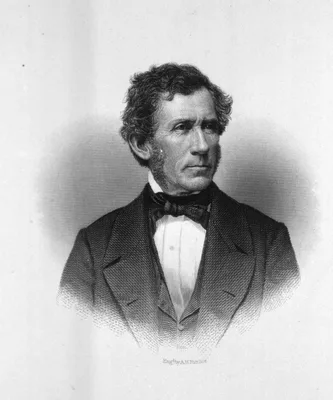
Modeled on Thomas Jefferson's Notes on the State of Virginia, this work covered the geography, antiquities, topography, medical conditions and goverment of Ohio. Digital facsimile from digital.cincinnatilibrary.org at…
1815
#13487
Sketches of epidemic diseases in the state of Vermont; from the first settlement to the year 1815, with a consideration of their causes, phenomena, and treatment. To which is added remarks on pulmonary consumption.
Digital facsimile from U.S. National Library of Medicine at this link:
1816
#2161.1
Medical sketches of the campaigns of 1812, 13, 14. To which are added, surgical cases, observations on military hospitals; and flying hospitals attached to a moving army.
The primary record of medicine during the War of 1812.
1817 –1819
#1841
Vegetable materia medica of the United States. 2 vols.
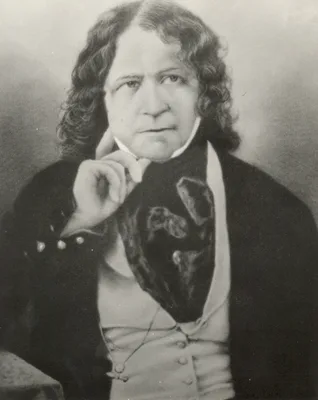
Barton served as a naval surgeon and, in 1815, became Professor of Botany at Philadelphia. Along with Bigelow (No. 1842) Barton’s work is one of the first two botanical works with colored plates issued in the United S…
1817 –1820
#1842
American medical botany, being a collection of the native medicinal plants of the United States, containing their botanical history and chemical analysis, and properties and uses in medicine, diet and the arts. 3 vols.
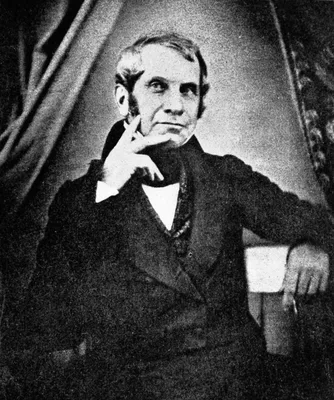
Bigelow was professor of materia medica and botany at Harvard. This work included native American remedies. It was the first book printed in the United States to include color plates printed in color. See R.J. Wolfe, …
1817
#10519
Physical observations, and medical tracts and researches, on the topography and diseases of Louisiana.
Digital facsimile from U.S. National Library of Medicine at this link.
1818
#7771
The genera of North American plants, and a catalogue of the species to the year 1817. 2 vols.
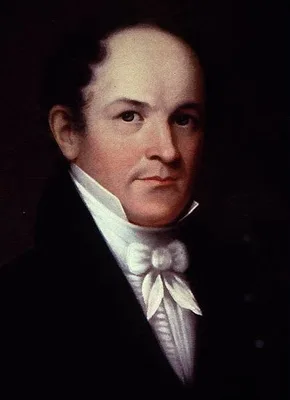
The first comprehensive botany of the United States. Digital facsimile from the Internet Archive at this link.
1819
#10456
A statement of the occurrences during a malignant yellow fever in the city of New-York, in the summer and autumnal months of 1819; and of the check given to its progress, by the measures adopted by the Board of Health. With a list of cases and names of sick persons, and a map of their places of residence within the infected and proscribed limits: With a view of ascertaining, by comparative arguments, whether the distemper was engendered by domestic causes, or communicated by human contagion from foreign ports.
Pascalis mapped this yellow fever outbreak using a method similar to Valentine Seaman, but with a more extensive and detailed list of cases. A condensation of his 60-page pamphlet with a reissue of his map appeared in…
1820
#1845
Pharmacopoeia of the United States of America. 1820
The first official US pharmacopoeia. Spalding began campaigning for a national pharmacopeia in 1815. His efforts finally bore fruit in a national convention that met in 1820 and adopted a pharmacopeia based mainly on …
1820
#10617
Ichthyologia Ohiensis, or natural history of the fishes inhabiting the river Ohio and its tributary streams, preceded by a physical description of the Ohio and its branches.
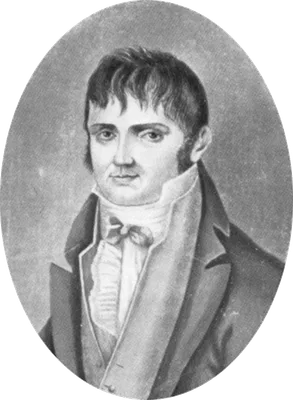
In Rafinesque's polemic style the title page includes the following statement: "The art of seeing well, or of noticing and distinguishing with accuracy the objects which we perceive, is a high faculty of the mind, unf…
1821
#7772
A journal of travels into the Arkansas territory, during the year 1819. With occasional observations on the manners of the aborigines. Illustrated by a map and other engravings.
Nuttall travelled from Philadelphia, down the Ohio and Mississippi rivers to the Arkansas. From there he travelled across Arkansas to the interior of the modern Oklahoma; returning via the Arkansas and Mississippi riv…
1821 –1824
#13911
A sketch of the botany of South-Carolina and Georgia. 2 vols.
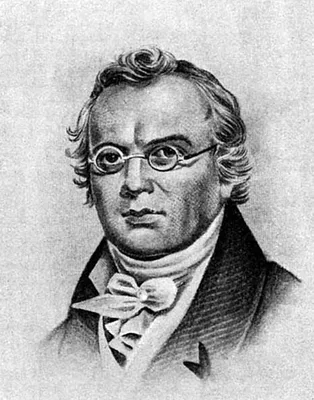
A founding work of botany of the American South, containing first botanical descriptions of many species. Initially published in parts from 1816 to 1824. Digital facsimile from Biodiversity Heritage Library at this link.
1822
#9523
An account of the yellow fever which occurred in the city of New York, in the year 1822, to which is prefixed a brief sketch of the different pestilential diseases, with which this city was afflicted, in the years 1798, 1799, 1803 & 1805, with the opinion of several of our most eminent physicians, respecting the origin of the disease, its prevention and cure.To which is added a correct list of all the deaths by yellow fever during the late season.
Digital facsimile from the Internet Archive at this link.