
Facets
Browse across eight MeSH (opens in new tab) facets — era, geography, science, specialty, technology, history, culture, and reference. Select one tag per group; counts update across the others. What’s new in facet browse how facets relate to subjects and MeSH.
Clear filtersFacet filters
Geography
Specialties & Disease
- Anatomy & Pathology 7
- Cardiology & Blood 94
- Neurology & Psychiatry 27
- Obstetrics & Reproductive 5
- Infectious Disease (General) 1
- Surgery & Anesthesia 76
- Public Health 8
- Immunology & Dermatology 50
- General Clinical Medicine 1
- Military Medicine 0
- Psychology 3
- Alternative & Fringe Medicine 0
- Pediatrics 44
- Ophthalmology & Vision 12
- ENT & Hearing 5
- Urology & Nephrology 0
- Gastroenterology & Hepatology 9
- Pulmonary & Respiratory 5
- Rheumatology, Rehab & Pain 4
- Internal, Emergency & Geriatric 0
- Veterinary Medicine 2
- Epidemiology & Demography 4
- Physiology & Embryology 23
- Dentistry 3
- Plagues & Epidemics 27
- Microbiology & Virology 22
Social & Historical Studies
Institutions & Culture
Reference & Scholarly Works
454 entries match Genetics & Heredity [K01.900.300]
1921
#4388.1
Une maladie congénitale et héréditaire de l’ossification: la pléonostéose familiale.
“Léri’s pleonosteosis” first described.
1921
#5759
A new principle in the surgical treatment of “congenital cleft palate”, and its mechanical counterpart.
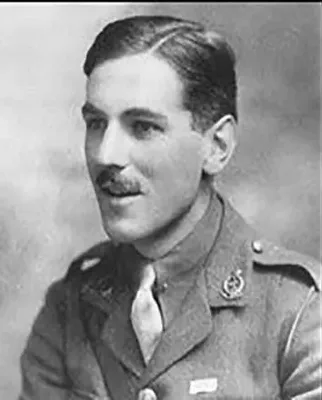
Gillies’s operation for cleft palate.
1921
#10196
Le bactériophage: Son rôle dans l'immunité.
D'Hérrelle cited several actual reports of successful treatment of bacterial infections by the injection of bacteriophages in animals and humans. These may be considered early attempts at direct gene transfer in vivo …
1921
#11677
Traité des maladies congenitales du coeur.
1922
#3136.1
Sickle-cell anemia.
Mason gave sickle-cell anemia its present name.
1922
#6348.1
Premature and congenitally diseased infants.
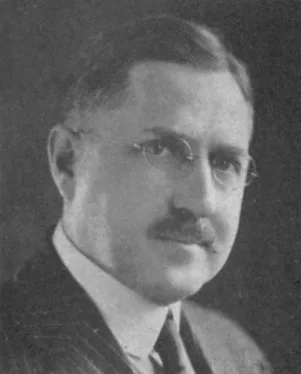
“The first book ever written dealing solely with premature and congenitally diseased infants” (Cone). Hess founded the first premature infant center in the United States at Michael Reese Hospital in Chicago.
1922
#7832
Di un raro caso di osteite simmetrica ereditaria degli arti inferior.
"Camurati-Engelmann disease", a very rare autosomal dominant genetic disorder that causes characteristic anomalies in the skeleton. It is a form of dysplasia. See No. 4395.1.
1923
#4390
Nouvelle observation d’acrocéphalosyndactylie.
With Tixier, Hue, and Kermorgant.
1923
#7407
The elephant man and other reminiscences.
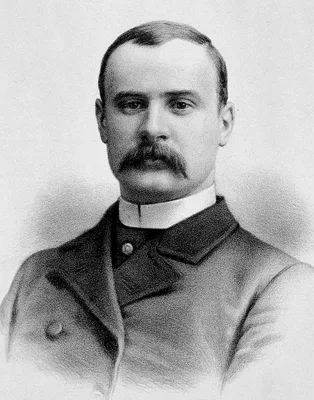
The story of Treves's patient, Joseph Carey Merrick (1862-1890), incorrected identified by Treves in these reminiscences as "John Merrick." The story was retold in The elephant man, Bernard Pomerance's 1977 play about…
1924
#907.1
Ergebniss einer biostatischen zusammenfassenden Betrachtung über die erblichen Blutstrukturen des Menschen.
Bernstein, a mathematician, determined the correct blood group inheritance pattern of multiple alleles at one locus through statistical analysis.
1924
#2573.1
The genetics of tissue transplantation in mammals.
Little established that the homograft reaction was due to genetic differences between donor and recipient.
1924
#4392
Hypertelorism. A hitherto undifferentiated congenital cranio-facial deformity.
First description of hypertelorism as a separate entity.
1925
#3087.1
Familial icterus gravis of the new-born and its treatment.
Successful exchange transfusion.
1926
#4609
Über das morphologische Wesen und die Histopathologie der hereditaersystematischen Nervenkrankheiten.
Schaffer was a pioneer Hungarian neuropathologist. He laid down a triad of criteria for judging whether or not a neurological disease is hereditary.
1926
#3087.2
Hereditär pseudohemofili.
Von Willebrand’s disease, pseudo-hemophilia type B, an hereditary bleeding disorder affecting both sexes.
1926
#3785
Der Morbus Gaucher und die ihm ähnlichen Erkrankungen. (Die lipoidzellige Splenohepatomegalie Typus Niemann und die diabetische Lipoidzellenhyperplasie der Milz.)
“Niemann-Pick disease” – a group of inherited, severe metabolic disorders, first noted by Albert Niemann in 1914, (No. 3784) in 1914. Pick’s account is of greater importance.
1926
#251
The theory of the gene.
1927
#2856
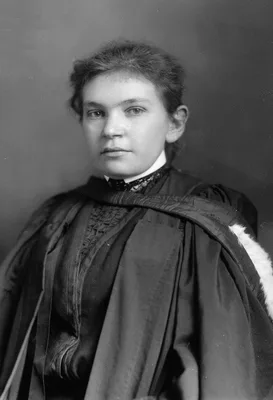
Congenital cardiac disease by Maude Abbott. IN: Modern medicine: Its theory and practice, edited by Sir William Osler, assisted by Thomas McCrae. 3rd ed., 4, 612-812.
1927
#3141
Anemia in children, with splenomegaly and peculiar changes in the bones.
“Cooley’s erythroblastic anemia”, thalassemia. With E. R. Witwer and O. P. Lee. An earlier brief account by Cooley and Lee appeared in Trans. Amer. Pediat. Soc.,1925, 37, 29.
1927
#3142
Familiäre infantile perniziösaartige Anämie (perniziöses Blutbild und Konstitution).
“Fanconi’s syndrome”, congenital hypoplasia of bone marrow with multiple congenital defects occurring as a familial disease.
1927
#251.1
Artificial transmutation of the gene.
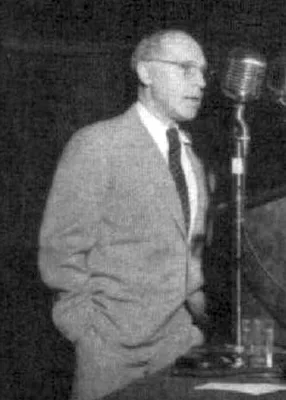
Muller showed that radiation causes mutations that are passed on from one generation to the next. This was the first suggestion that inherited traits might be altered or controlled, and it created a sensation: “Man’s …
1927
#14272
Zur Frage der Angiomatosis Retinae und Ihrer Hirncomplikation.
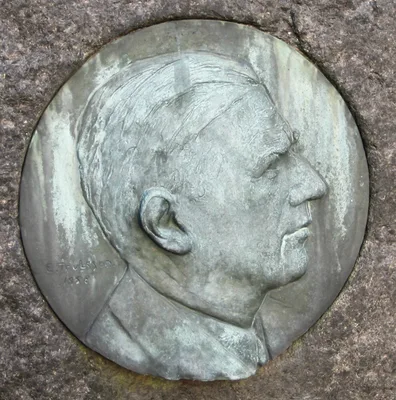
Lindau described the angiomas of the cerebellum and spine found in Von Hippel-Lindau disease (VHL).
1928
#2652
Cancer and heredity.
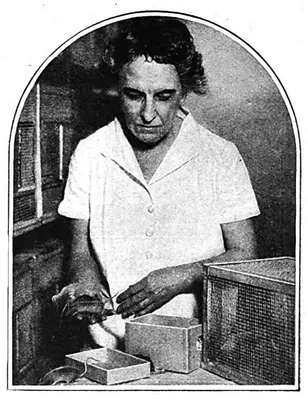
By selective breeding over a period of 15 years, Slye produced generations of mice absolutely resistant to, or particularly susceptible to, cancer. She demonstrated that resistance is a Mendelian dominant and suscepti…
1928
#2856.1
Beiträge zur Lehre von den angeborenen Herzfehlern.
Roesler described the most important roentgenologic sign of aortic coarctation.
1928
#4958
Mongolism. A study of the physical and mental characteristics of mongolian imbeciles. Revised by H. G. Brainerd.
Down syndrome.
1929
#4395.1
Ein Fall von Osteopathia hyperostotica (sclerotisans) multiplex infantilis.
“Engelmann’s disease”, also known as "Camurati-Engelmann disease" — a very rare autosomal dominant genetic disorder that causes characteristic anomalies in the skeleton. It is a form of dysplasia, causing osteoscleros…
1929
#4397
Sur une forme de dystrophie osseuse familiale.
“Morquio’s disease”, eccentro-osteochondrodysplasia.
1930
#253
The genetical theory of natural selection.
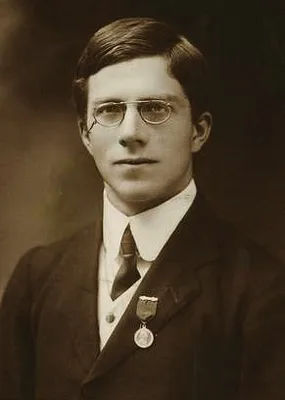
The first coherent general algebraic analysis of Mendelian population behavior. The work contains Fisher’s rigorous development of his “fundamental theorem of natural selection”–”the rate of increase in fitness of any…
1931
#6372.1
Ueber Arachnodaktylie (Dystrophia mesodermalis congenita, Typus Marfan).
Weve of Utrecht first clearly demonstrated the heritable nature of the Marfan syndrome (see No. 4365.1).
1931
#253.1
Evolution in Mendelian populations.
First detailed presentation of Wright’s quantitative theory of the effects of mutation, migration, selection, and population size on changes in gene frequencies in populations. Digital facsimile from Genetics.org at t…
1931
#253.2
The inborn factors in disease.
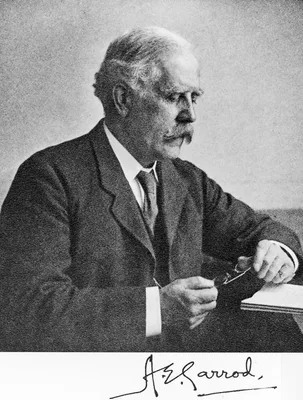
Garrod argued that chemical individuality could result in individuals having a predisposition to certain diseases. This view has become particularly significant in light of the establishment of recombinant DNA methods…
1932
#254
The causes of evolution.
Haldane’s summary of his mathematical theory of natural selection. The detailed mathematical theory appeared as Mathematical theory of natural and artificial selection, first published (Pt. I) in Trans. Camb. philos. …
1932
#14087
Erythroblastosis fetalis and its association with universal edema of the fetus, icterus gravis neonatorum and anemia of the newborn.
The authors described and named this syndrome/illness of newborns for the first time, including pathological findings, clinical data, lab abnormalities, presentation and course of illness. Order of authorship in the o…
1933
#3206
Zur Pathogenese der Bronchiektasien. I. Mitteilung: Bronchiektasien bei Situs viscerum inversus.
Bronchiectasis and sinus maldevelopment associated with transposition of viscera – “Kartageners syndrome”.
1933
#4008
Inherited abnormalities of the skin and its appendages.
1934
#3093
The haemostatic possibilities of snake-venom.
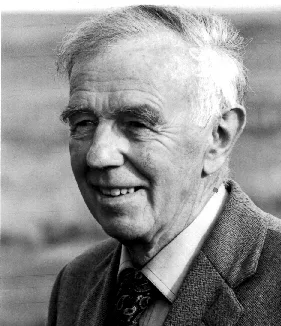
Snake venom used in the treatment of hemophilia.
1934
#3924
Utskillelse av fenylpyrodruesyre i urinen som stoffskifteanomali i forbindelse med imbecilletet.
Phenylketonuria (PKU) first described. This was the first hereditary metabolic disorder shown to be responsible for mental retardation. German translation in Hoppe-Seyl. Z. physiol. Chem., 1934, 227, 169-76. English t…
1935
#3095
The prothrombin in hemophilia and in obstructive jaundice.
Quick’s method for determination of prothrombin clotting time. See also Amer. J. med. Sci.,1935, 190,501-11.
1935
#254.1
Ueber die Natur der Genmutation und der Genstruktur.
This paper is divided into four sections. The first, by Timofeev-Ressovskij, describes the mutagenic effects of x-rays and gamma rays on Drosophila melanogaster; the second part, by Zimmer, analyzes Timofeev-Ressovski…
1935
#7798
Anatomia della lussazione congenita dell'anca.
Putti made many contributions to the understanding of congenital dislocation of the hip, a condition which was then endemic in Northern Italy.
1936
#3148.1
Mediterranean disease – thalassemia (erythroblastic anemia of Cooley); associated pigment abnormalities simulating hemochromatosis.
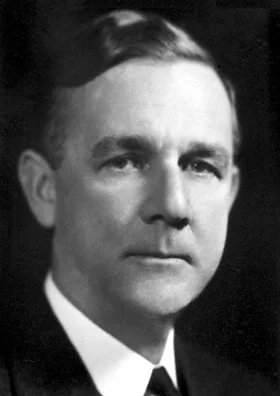
Whipple and Bradford contributed a classic paper on the pathology of thalassemia, a name introduced by them.
1936
#2576.4
Immunogenetic studies of species and of species hybrids in doves, and the separation of species-specific substances in the backcross.
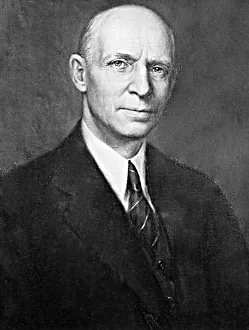
Irwin coined the term, “immunogenetics” to describe the union of immunology with genetics. He attempted to determine the genetic control of antigenicity through genetic cross matings.
1936
#2865
Atlas of congenital cardiac disease.
1936
#3659.2
Das Coeliakiesyndrom bei angeborener zysticher Pankreasfibromatose und Bronchiektasien.
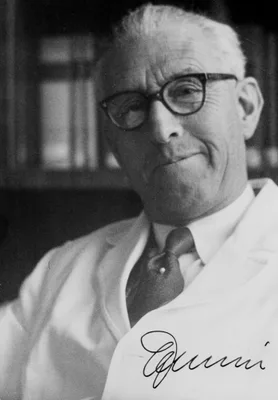
Cystic fibrosis (mucoviscidosis) described. With E. Uehlinger and C. Knauer.
1937
#3096.1
Hemophilia. II. Some properties of a substance obtained from normal human plasma effective in accelerating the coagulation of hemophilic blood.
Antihemophilic globulin (factor VIII).
1937
#2576.5
The genetic and antigenic basis of tumour transplantation.
Gorer made the initial discoveries which formed the basis of transplantation genetics. He studied mouse blood groups and described an antigen in erythrocytes (antigen II). His studies established the laws of transplan…
1937
#6374
Über rezidivierende, aphthöse, durch ein Virus verursachte Geschwüre am Mund, am Auge und an den Genitalien.
Behçet’s disease, previously described by H. Planner and F. Remenovsky, Arch. Derm. Syph. (Berlin), 1922, 140, 162-88.
1937
#254.2
Genetics and the origin of species.
Dobzhansky, an emigrant from the Soviet Union to the United States, and a postdoctoral worker in Thomas Hunt Morgan's fruit fly lab, was one of the first to apply genetics to natural populations. He worked mostly with…
1937
#11568
La angio-cardiografía radio-opaca.
Intravenous angiocardiography. This was the first publication that dealt with the normal cardiac structure and the changes seen in ventricular septal defect and pulmonary stenosis.
1937
#11797
A sex starved world.
A eugenic utopian fantasy, in which we accompany a doctor in his dream journey to the liberated land of Amor. Pritcher presents an impassioned argument for free universal health care, contraception, no-fault divorce, …