
Facets
Browse across eight MeSH (opens in new tab) facets — era, geography, science, specialty, technology, history, culture, and reference. Select one tag per group; counts update across the others. What’s new in facet browse how facets relate to subjects and MeSH.
Clear filtersFacet filters
Geography
Specialties & Disease
- Anatomy & Pathology 765
- Cardiology & Blood 914
- Neurology & Psychiatry 1,258
- Obstetrics & Reproductive 551
- Infectious Disease (General) 147
- Surgery & Anesthesia 1,553
- Public Health 1,129
- Immunology & Dermatology 1,405
- General Clinical Medicine 487
- Military Medicine 436
- Psychology 202
- Alternative & Fringe Medicine 383
- Pediatrics 247
- Ophthalmology & Vision 412
- ENT & Hearing 293
- Urology & Nephrology 309
- Gastroenterology & Hepatology 316
- Pulmonary & Respiratory 233
- Rheumatology, Rehab & Pain 189
- Internal, Emergency & Geriatric 123
- Veterinary Medicine 165
- Epidemiology & Demography 397
- Physiology & Embryology 924
- Dentistry 259
- Plagues & Epidemics 1,279
- Microbiology & Virology 1,080
Social & Historical Studies
Institutions & Culture
Reference & Scholarly Works
1,080 entries match Microbiology & Virology [C01.748]
1994
#10880
Identification of herpesvirus-like DNA sequences in AIDS-associated Kaposi's sarcoma.


Dated December 16, 1994. Order of authorship in the original paper was Chang, Cesarman, Pessin,...Moore. The authors reported a new human herpesvirus associated with Kaposi's sarcoma, and gave it the descriptive name …
1994
#10901
Human granulocytic Ehrlichiosis in the Upper Midwest United States. A new species emerging?
Order of authorship in the original paper: Bakken, Dumler, Chen. First description of the Ehrlichia ewingii species of Ehrlichiosis (HGE) from a patient in Duluth, Minnesota, though the infectious agent was not yet na…
1994
#12436
A new coccidian parasite (Apicomplexa: Eimeriidae) from humans.
Based on very high magnification electron transmission micrographs and contrast microscopy, Ortega and colleagues fully characterized the parasite and named it Cyclospora cayetanensis n. sp., naming it after Universid…
1995
#10881
Detection of herpesvirus-like DNA sequences in Kaposi's sarcoma in patients with and those without HIV infection.
Dated May 4, 1995. Order of authorship in the original publication was Moore, Chang. That the virus causing Kaposi's sarcoma appeared in healthy as well as HIV patients suggested that this virus causes cancer only in …
1995
#10889
Infection with a Babesia-like organism in Northern California.
Order of authorship in the original paper was Persing, Herwaldt, Glaser. First report of a Basisa duncani infection in humans (4 patients). The authors designated the infection as Babesia (WA1) strain transmitted by I…
1995
#10902
Ixodes dammini as a potential vector of human granulocytic Ehrlichiosis.
Order of authorship in the original paper was Pancholi,Kolbert, Mitchell. The authors provided convincing evidence that the tick Ixodes dammini is a common vector for the transmission of HGE (Ehrlichia ewingii). (Than…
1995
#10914
Kaposi's Sarcoma-associated herpesvirus-like DNA sequences in AIDS-related body-cavity-based lymphomas.
Chang, Moore and colleagues showed that the virus causing Kaposi's Sarcoma also causes body cavity lymphomas and lymphomatous effusions in humans. (Thanks to Juan Weiss for this reference and its interpretation.)
1995
#11019
The private science of Louis Pasteur.
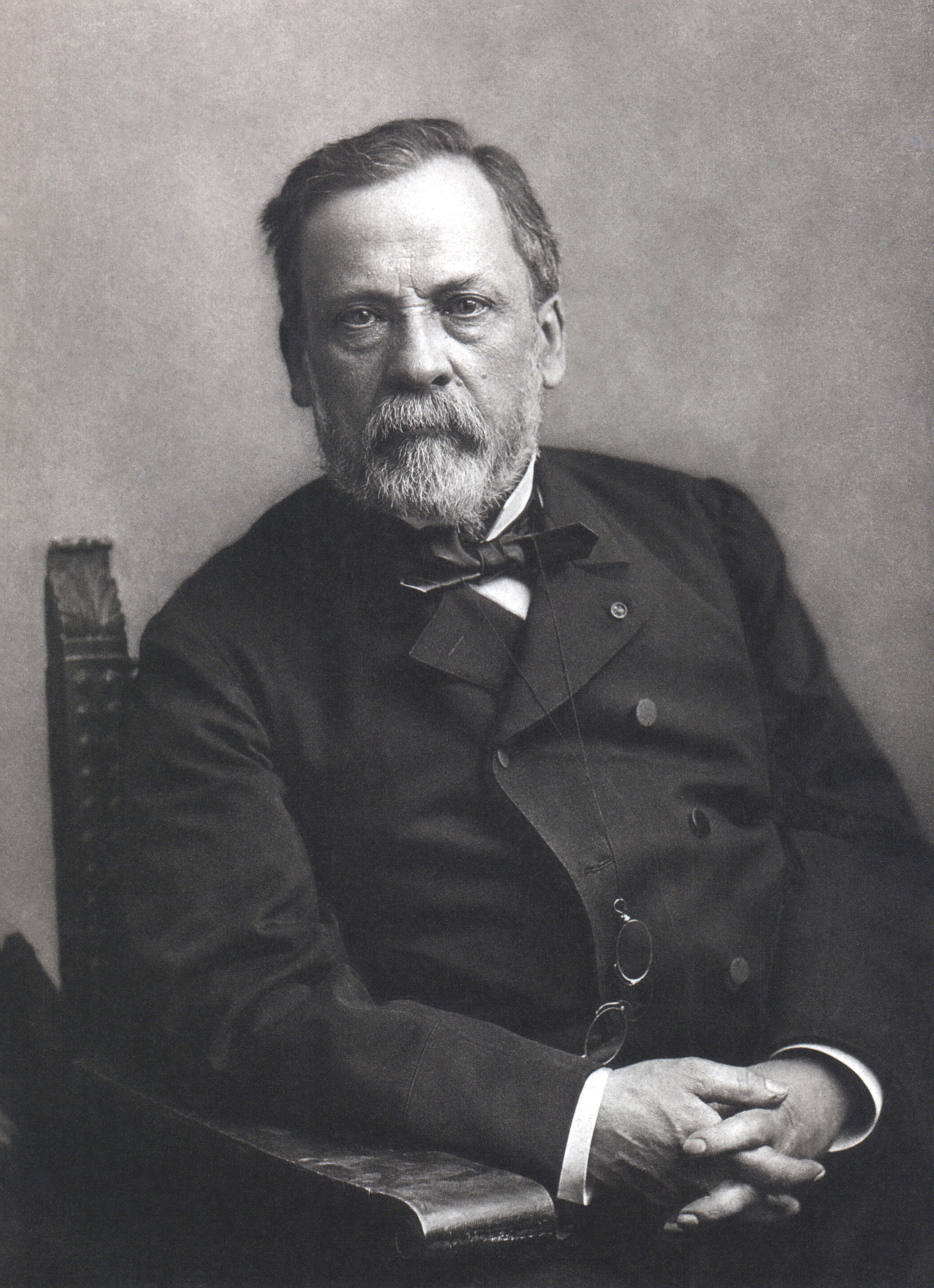
"His biography of Pasteur was viewed as an outstanding work of scholarship which penetrated the secrecy that had surrounded much of the legendary scientist's laboratory work. Geison used Pasteur's laboratory notebooks…
1995
#11343
Whole-genome random sequencing and assembly of Haemophilus influenzae Rd.

First sequence of the complete genome of a free-living non-viral organism—Haemophilus influenzae—the bacterium that causes lower respiratory tract infections and meningitis in infants and young children. This genome c…
1995
#11997
Purification and characterization of a low-molecular-mass T-cell antigen secreted by Mycobacterium tuberculosis.
Andersen and colleagues found that a protein fraction obtained from M. tuberculosis was immunologically active in mice, suggesting that it was one of the proteins recognized by T cells. In this paper the authors ident…
1996
#10844
A new variant of Creutzfeldt-Jakob disease in the UK.
During the 1990s England was plagued with cases of Bovine Spongiform Encephalopathy (BSE) seen in cows, popularly known as "Mad Cow Disease." Then physicians in England started noticing an uptick in cases of what look…
1996
#10882
Human herpesvirus 8 Is present in the lymphoid system of healthy persons and can reactivate in the course of AIDS.
Dated June 22, 1995. Order of authorship in the original paper was Bigoni, Dolcetti, de Lellis....By this time Kaposi sarcoma-associated herpesvirus (KSHV) was also known as human herpesvirus-8 (HHV-8). The authors wr…
1996
#11933
Experimenal transmission of Bartonella henselae by the cat flea.
Order of authorship in the original publication: Chomel, Kasten, Floyd-Hawkins.... Chomel and colleagues studied 47 cattery cats from a private home for 12 months. They found that such cats typically are bacteremic. S…
1996
#11995
Molecular analysis of genetic differences between Mycobacterium bovis BCG and virulent M. bovis.
Order of authorship in the original publication: Mahairas, Sabo, Hickey.... From the Abstract: "The live attenuated bacillus Calmette-Guérin (BCG) vaccine for the prevention of disease associated with Mycobacterium tu…
1996
#12835
Evidence for the conformation of the pathologic isoform of the prion protein enciphering and propagating prion diversity.

The authors showed that the " 'normal prion protein' in the brains of living mice can be converted into different forms depending on the type of abnormal human prion that initiated the conversion. The result is differ…
1997
#13541
Transmission of hepatitis C by intrahepatic inoculation with transcribed RNA.

Rice and colleagues constructed a viral RNA genome with the 3’ region and a consensus region to exclude potential inactivating mutations, which was then injected into the liver of chimps. That RNA, specifically encode…
1998
#7960
Viruses, plagues & history: Past, present, and future.
Revised and updated edition, 2010.
1998
#10900
Ehrlichia chaffeensis in Missouri ticks.
Order of authorship in the original paper: Roland, Everett, Cyr. Using PCR, the authors demonstrated that the tick Amblyoma americanum (the Lone Star Tick) was the insect vector of Ehrlichia chaffeensis. Digital facsi…
1998
#11342
Complete genome sequence of treponema pallidum, the syphilis spirochete.

Order of authorship in the original publication: Fraser, Norris, Weinstock....Smith, Venter. Sequence of the genome of the bacterium that causes syphilis. (Thanks to Juan Weiss for this reference and its interpretation.)
1998
#11998
Deciphering the biology of Mycobacterium tuberculosis from the complete genome sequence.
Abstract: "Countless millions of people have died from tuberculosis, a chronic infectious disease caused by the tubercle bacillus. The complete genome sequence of the best-characterized strain of Mycobacterium tubercu…
1999
#10903
Ehrlichia ewingii, a newly recognized agent of human Ehrlichiosis.
Order of authorship in the original publication: Buller, Arens, Hmiel. The authors confirmed that the agent of human granulocytic ehrlichiosis (HGE), is Ehrlichia ewingii, a pathogen carried by dogs and known in that …
1999
#10953
Outbreak of West Nile-like viral encephalitis -- New York, 1999.
On October 1, 1999 the CDC reported a cluster of human encephalitis cases; prior to these cases many crows had been dying. The "sentinel event" in this outbreak was the report to the New York Health Dept. by Dr. D. As…
1999
#10954
Isolation of West Nile virus from mosquitoes, crows, and a Cooper's hawk in Connecticut.
First definite identification of the West Nile virus in the Western hemisphere. This paper was immediately followed in the same issue of Science by Lanciott, R.S., Roehrig, J.T., Deubet, V. et al, "Origin of the West …
1999
#11071
Tobacco mosaic virus: Pioneering research for a century. A theme issue edited by B. D. Harrison and T. M. A. Wilson.
1999
#11234
Microbiology: A centenary perspective. Edited by Wolfgang K. Joklik, Lars G. Ljungdahl, Alison D. O'Brien, Alexander von Graevenitz, Charles Yanofsky.
Classic 20th century papers presented with introductory notes and Prefaces to the following 5 sections: 1. Diagnostic Microbiology and Epidemiology, 2. Pathogenesis and Host Response Mechanisms, 3. General and Applied…
2000
#11981
Cultivation of the bacillus of Whipple's disease.

Order of authorship in the original publication: Raoult, Birg, La Scola. Raoult and colleagues cultured the bacterium causing the systemic digestive tract infection Whipple's disease from a mitral valve of a patient w…
2001
#9337
The life of a virus: Tobacco mosaic virus as an experimental model, 1930-1965.

Tobacco mosaic virus was the first virus isolated and crystallized.
2002
#8476
Helicobacter pioneers: Firsthand accounts from the scientists who discovered helicobacters 1892-1982. Edited by Barry Marshall.

RE the history of this discovery see this Wikipedia timeline: https://en.wikipedia.org/wiki/Timeline_of_peptic_ulcer_disease_and_Helicobacter_pylori .
2002
#10221
History of human parasitology.
Full text, with extensive bibliography, from PubMedCentral at this link.
2002
#11336
Genome sequence of the human malaria parasite Plasmodium falciparum.
Order of authorship in the original paper: Gardner, Hall, Fung.... Genome of the Plasmodium falciparum parasite carried by the mosquito that causes malaria in humans. (Thanks to Juan Weiss for this reference and its i…
2002
#11337
The genome sequence of the malaria mosquito Anopheles gambiae.
Order of authorship in the original publication: Holt, Subramanian, Halpern.... Sequence of the genome of Anopheles gambiae, the mosquito that carries the malaria parasite, Plasmodium falciparum. (Thanks to Juan Weiss…
2002
#12439
Microarray-based detection and genotyping of viral pathogens.

First publication of DeRisi's microarray assay for the detection and genotyping of viral pathogens. "To address the limitations of existing viral detection methodologies, we have developed a genomic approach to virus …
2002
#12901
History of human parasitology.
Digital facsimile from PubMedCentral at this link.
2003
#9806
Medical mycology in the United States: A historical analysis (1894–1996).
2003
#10860
Coronavirus as a possible cause of severe acute respiratory syndrome.
Dated April 19, 2003, this paper identified and reproduced microscopic images of the novel viral agent. It was the first official journal publication on SARS. Order of authorship in the published paper was Peiris, Lai…
2003
#10861
A novel coronavirus associated with severe acute respiratory syndrome.
Ksiazek and over 40 co-authors around the world published the lead article in the May 15, 2003 issue of the New England Journal of Medicine that was nearly entirely devoted to SARS. Order of authorship in the publishe…
2003
#10862
Characterization of a novel coronavirus associated with severe acute respiratory syndrome.
Dated May 30, 2003. Rota and team at the CDC determined the sequence of the complete genome of SARS-CoV, and characterized the viral genome. Order of authorship in the published paper was Rota, Oberste, Monroe....DeRi…
2003
#10863
The genome sequence of the SARS-associated coronavirus.

Dated May 30, 2003 and published immediately after No. 10862 in the same issue of Science, this reported the work of Marco Marra and his team in Canada. Order of authorship in the published paper was Marra, Jones, Ast…
2003
#11347
The invisible enemy: A natural history of viruses.
2003
#12009
Angiotensin-converting enzyme 2 is a functional receptor for the SARS coronavirus.
The authors showed that the angiontensin-converting enzyme 2, abbreviated ACE2, is the obligative cell receptor for the SARS coronavirus (SARS-CoV). (Thanks to Juan Weiss for this reference and its interpretation.)
2004
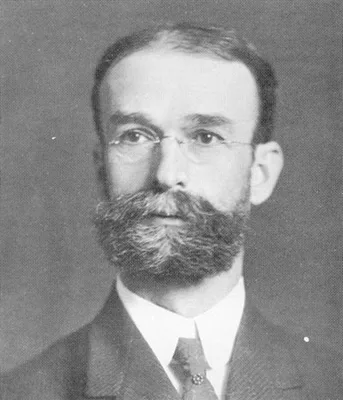
#7648
Suppressing the diseases of animals and man: Theobald Smith, microbiologist
2004
#9974
The great influenza: The epic story of the greatest plague in history.
2004
#12836
Synthetic mammalian prions.
The authors modified Koch's Postulates within the context of prion disease. To do so the followed these steps: 1) They created recombinant mouse prion proteins in an E. coli and polymerized them. 2) They proved that t…
2005
#10864
Bats are natural reservoirs of SARS-like coronaviruses.
Dated October 28, 2005, roughly two years after the outbreak of SARS, the natural reservoirs of this class of coronaviruses was discovered. (Thanks to Juan Weiss for this entry and its interpretation.)
2005
#10927
Fruit bats as reservoirs of Ebola virus.
Order of authorship in the original paper: Leroy, Kumulungui, Pourrut. The authors showed that fruit bats, while asymptomatic, act as reservoirs and potential carriers of Ebola virus in Africa. These bats are eaten by…
2005
#11193
Macrofilaricidal activity after doxycycline treatment of Wuchereria bancrofti: A double blind randomized placebo-controlled trial.
Order of authorship in the original paper: Taylor, Makunde, McGarry.... The authors treated infection by the parasitic worm Wuchereria bancrofti, cause of elephantiasis (lymphatic filariasis), by killing the Wolbachia…
2005
#11335
Characterization of the reconstructed 1918 Spanish Influenza Pandemic virus.
Order of authorship in the original publication: Tumpey, Basler, Aguilar... Taubenberger. Reconstruction of the genome of the 1918 Spanish Influenza virus from frozen tissue samples from a mass grave of victims of the…
2005
#11339
The genome of the African trypanosome Trypanosoma brucei.

Genome of the parasite that causes Sleeping Sickness. (Thanks to Juan Weiss for this reference and its interpretation.)
2005
#11396
Molecular identification of bacteria associated with bacterial vaginosis.

Order of authorship in the original publication: Fredricks, Fiedler, Marrazzo. Using molecular methods, the authors confirmed that absence or greatly reduced number of Lactobacilli was associated with vaginosis. They …
2005
#11481
Glycan foraging in vivo by an intestine adapted bacterial symbiont.
Order of authorship in the original publication: Sonnenberg, Xu, Leip....The authors showed that complex plant carbohydrates (glycans), which the human body cannot digest, provide food for benign bacteria in the micro…