
Facets
Browse across eight MeSH (opens in new tab) facets — era, geography, science, specialty, technology, history, culture, and reference. Select one tag per group; counts update across the others. What’s new in facet browse how facets relate to subjects and MeSH.
Clear filtersFacet filters
Geography
Specialties & Disease
- Anatomy & Pathology 6
- Cardiology & Blood 0
- Neurology & Psychiatry 2
- Obstetrics & Reproductive 0
- Infectious Disease (General) 0
- Surgery & Anesthesia 0
- Public Health 3
- Immunology & Dermatology 0
- General Clinical Medicine 0
- Military Medicine 1
- Psychology 0
- Alternative & Fringe Medicine 0
- Pediatrics 0
- Ophthalmology & Vision 0
- ENT & Hearing 1
- Urology & Nephrology 0
- Gastroenterology & Hepatology 0
- Pulmonary & Respiratory 0
- Rheumatology, Rehab & Pain 0
- Internal, Emergency & Geriatric 0
- Veterinary Medicine 0
- Epidemiology & Demography 2
- Physiology & Embryology 2
- Dentistry 3
- Plagues & Epidemics 1
- Microbiology & Virology 2
Social & Historical Studies
Institutions & Culture
Reference & Scholarly Works
Drugs & Technology
95 entries match Professions & Education [M01 / N02] · Natural History & Evolution [K01.900.500]
1927
#7255
The lower molar hominid tooth from the Chou Kou Tien deposit.
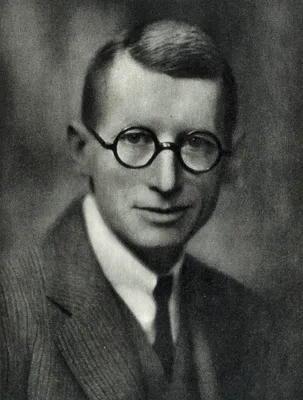
In this report on a single hominid tooth found by Swedish archeologist Birger Bohlin at the Zhoukoudian site in 1927 Black named a new genus and species of hominid, Sinanthropus pekinensis. He characterized the specim…
1928
#350
The brain from ape to man: A contribution to the study of the evolution and development of the human brain by Frederick Tilney. With chapters on the reconstruction of the gray matter in the primate brain stem by Henry Alsop Riley. 2 vols.
Classic study of the evolution of the central nervous system in the higher mammals. Digital facsimile from the Internet Archive at this link.
1929
#1933
On the antibacterial action of cultures of a penicillium, with special reference to their use in the isolation of B. influenzae.
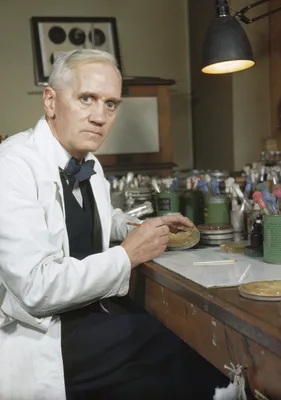
Discovery of the growth-inhibiting action of Penicillium on certain bacteria. In 1945 Fleming shared the Nobel Prize in Physiology or Medicine with Ernst Boris Chain and Sir Howard Walter Florey "for the discovery of …
1931
#213
Sinanthropus – Peking Man, its discovery and significance.
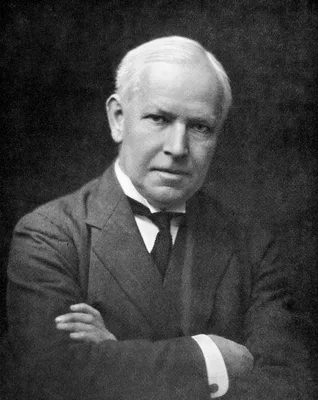
Elliot Smith visited Peking to view the skull of Sinanthropus pekinensis, discovered by W. C. Pei on December 2, 1929. A preliminary description by Pei is to be found in Bull. geol. Soc. China, 1929, 8, 3.
1937 –1939
#7259
The stone age of Mount Carmel. Volume I: Excavations at the Wady el-Mughara. Volume II: The fossil remains from the Lavalloiso-Mousterian.
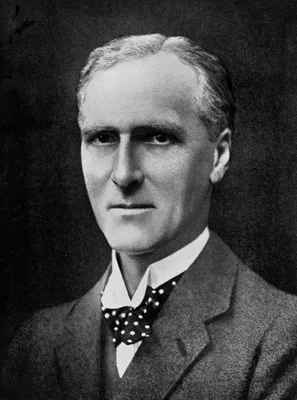
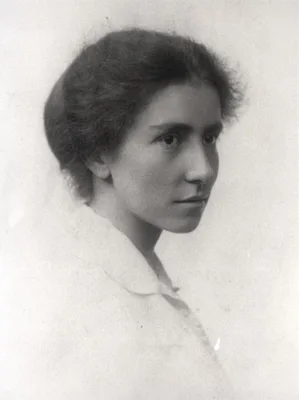
Garrod carried out her landmark excavations of the el-Wad, el-Tabun and es-Skhul caves on the hills of Mount Carmel, close to Wadi el-Mugharah (Valley of the Caves) between 1929 and 1934. Her monograph on the subject …
1938
#7281
The Pleistocene anthropoid apes of South Africa.
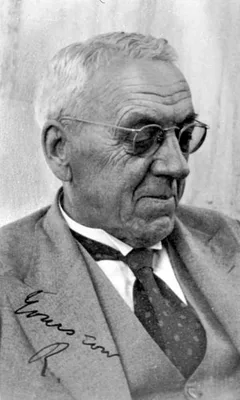
Paranthropus robustus, discovered by Broom in Kromdraal, South Africa, in 1938. The species is generally dated from about 2 million to 1.2 million years before present.
1943
#214
The skull of Sinanthropus pekinensis: A comparative study on a primitive hominid skull.
Digital facsimile from the Internet Archive at this link.
1946
#214.1
Pretoria: The South African fossil ape-men. The Australopithecinae. Part I. The occurrence and general structure of the South African ape-men.
With this comprehensive report Broom presented his case to the scientific establishment that Australopithecus probably represented the stock from which mankind had evolved.
1950
#13912
Catalogue of an exhibition illustrating prehistoric man in health and sickness. With an introduction by E. Ashworth Underwood.
1959
#7288
A new fossil from Olduvai.
In 1959 Mary Leakey discovered the "Zinj" skull (OH 5) at Olduvai Gorge. This became the type specimen for Paranthropus boisei, arguably the most famous early human fossil from Olduvai in Northern Tanzania. The specie…
1961
#214.2
Age of Bed I, Olduvai Gorge, Tanganyika.
Introduction of the potassium-argon dating method to paleoanthropology, showing that lava at the base of the site of Olduvai Gorge was about 1.8 million years old, and proving that fossils, Australopithecus (Zinjanthr…
1964
#7270
A new species of the genus Homo from Olduvai Gorge.
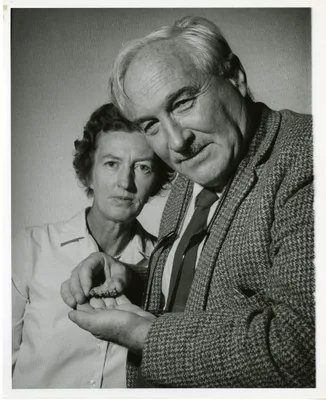
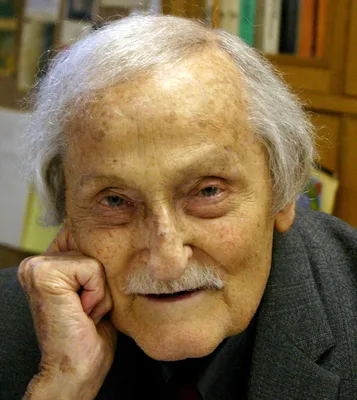
First report on Homo habilis.
1968
#7282
Sur la decouverte dans le Pleistocene inferieur de la valle de l'Omo (Ethiopie) d'une mandibule d'Australopithecien.
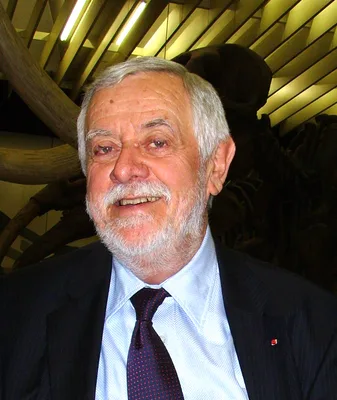
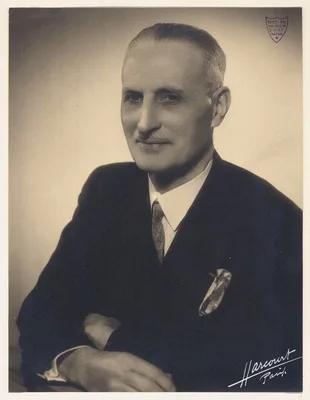
In 1967 Arambourg and Coppens discovered Omo 18, the first specimen of Paranthropus aethiopicus, also known as Paraustralopithecus aethiopicus; however it's classification as a new species was initially dismissed. In …
1971
#9469
Outcasts from evolution: Scientific attitudes of racial inferiority, 1859 - 1900.
1976
#214.3
Plio-Pleistocene hominid discoveries in Hadar, Ethiopia.
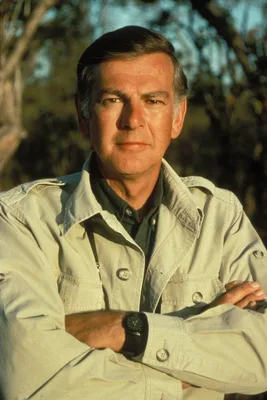
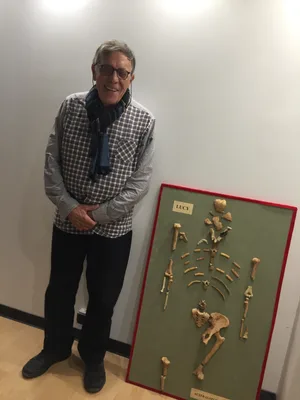
Report on the Afar fossils (formally classified and named Australopithiecus afaranesis in 1998) representing a minimum of 35 and a maximum of 65 individuals, all about 3,000,000 years old. The most famous of these, AL…
1978
#7277
A new species of the genus Australopithecus (Primates: Hominidae) from the Pliocene of Eastern Africa.
Johanson and colleagues formally named the species Afarensis of the genus Australopithecus in 1978.
1984
#7272
The origins of modern humans: A world survey of the fossil evidence.
An historical and analytical review of the literature up to 1984, with detailed bibliographies, by several outstanding authorities, edited by Smith and Spencer. Includes, pp. 411-483, Milford H. Wolpott, Wu Xin Zhi, a…
1985
#7273
History of physical anthropology in Southern Africa.
1985
#7284
Early Homo erectus skeleton from west Lake Turkana, Kenya.

The Turkana Boy, (KNM-WT 15000) now called Nariokotome Boy, a Homo erectus fossil which was in 2016 the most complete early human skeleton found. It is a nearly complete skeleton of a hominin youth believed to be 1.5 …
1986
#6979
Ecce Homo: An annotated bibliographic history of physical anthropology.
1986
#7283
The origin of the human race.
First publication in English by Alekseyev of Homo rudolfensis, primarily known from KNM-ER 1470, discovered in Koobi Fora in the Lake Turkana basin, Kenya. Alekseyev (Alexeev) first proposed the species in 1978, initi…
1994
#6980
Pour une histoire de la préhistoire. Le paléolithique.
1994
#7276
Australopithecus ramidus, a new species of early hominid from Aramis, Ethiopia.
Between 1992 and 1994 White and his team discovered the first Ardipithecus ramidus fossils in the Middle Awash area of Ethiopia. They named their discovery Ardipithecus ramidus (‘ramid’ means ‘root’ in the Afar langua…
1994
#8538
The history and geography of human genes.
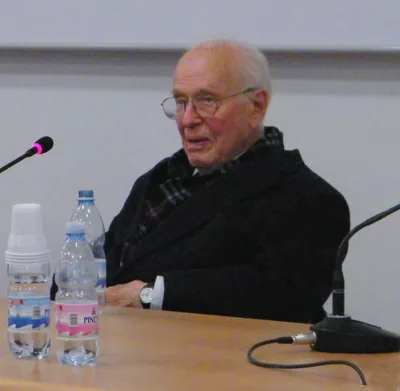
The first full-scale attempt to reconstruct where human populations originated and the paths by which they spread throughout the world, using genetic data integrated with data from geography, ecology, archaeology, phy…
1995
#7278
New four-million-year-old hominid species from Kanapoi and Allia Bay, Kenya.
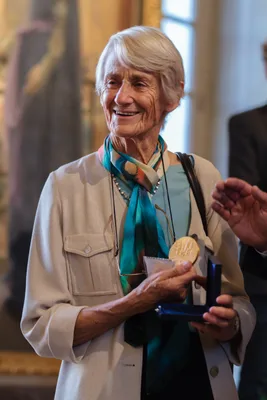
In 1965, a research team led by Bryan Patterson from Harvard University discovered a single arm bone (KNM-KP 271) of an early human at Kanapoi in northern Kenya, but without additional fossils Patterson could not conf…
1995
#7525
The earliest occupation of Europe. Proceedings of the European Science Foundation workshop at Tautavel (France) 1993.
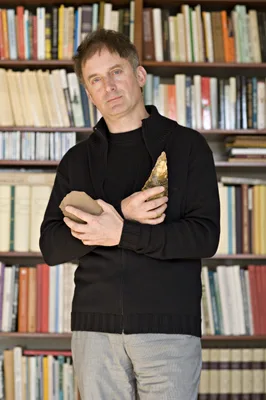
The first effort to present summaries of the evidence for earliest occupation in all the regions of Europe including Russia, edited by Roebroeks and van Kolfschoten.
1997
#6978
History of physical anthropology: An encyclopedia edited by Frank Spencer. 2 vols.
1997
#7285
A hominid from the Lower Pleistocene of Atapuerca, Spain: possible ancestor to Neandertals and modern humans.
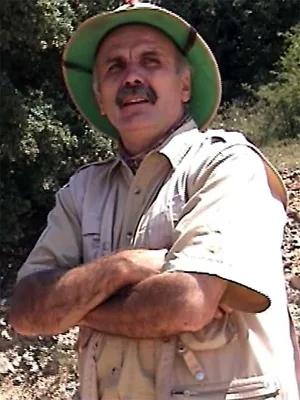
Homo antecessor, an extinct human species (or subspecies) dating from 1.2 million to 800,000 years ago, discovered in the Sierra de Atapuerca region of Northern Spain. With A. Rosas, I Martinez and M. Mosquera.
2000
#10339
Science, race, and religion in the American South. John Bachman and the Charleston circle of naturalists, 1815-1895.
2001
#7275
'Millennium Ancestor', a 6-million-year-old bipedal hominid from Kenya - Recent discoveries push back human origins by 1.5 million years.

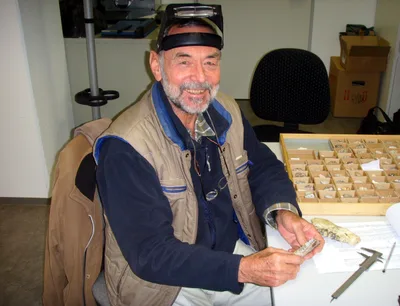
Living around 6 million years ago, in the Tugen hills region of central Kenya, this species, named Orrorin tugenensis, had small teeth with thick enamel similar to modern humans. It climbed trees, but also probably wa…
2001
#7279
New hominin genus from eastern Africa shows diverse middle Pliocene lineages.
In 1998 and 1999, working in the Lake Turkana region of northern Kenya, Meave Leakey and her team found a cranium and other fossil remains of a 3.5 million year old hominin with a mixture of features unseen in other e…
2002
#7274
A new hominid from the Upper Miocene of Chad, central Africa.
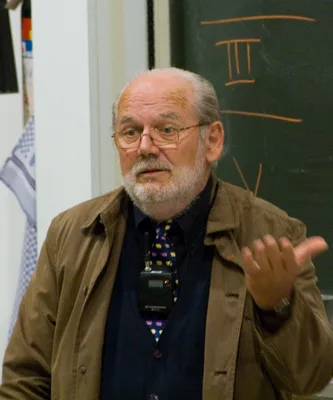
The first paper on Sahelanthropus tchadensis, dating from between 7 and 6 million years ago in West Central Africa (northern Chad). This species had a combination of ape-like and human-like features. Ape-like elements…
2002
#8706
Darwin Online. The complete works of Charles Darwin, edited by John van Wyhe.
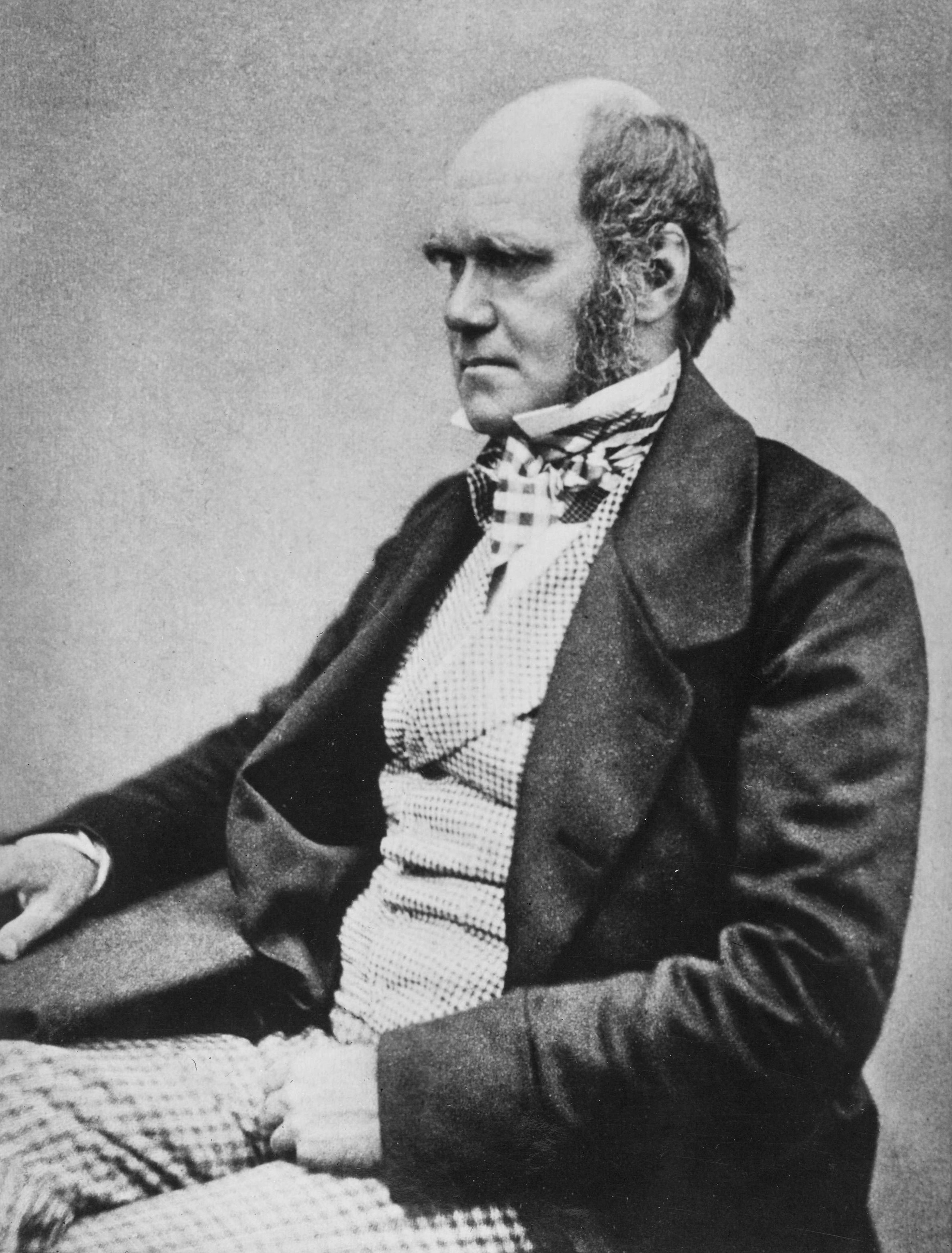
http://darwin-online.org.uk/AboutUs.html Darwin's Complete Publications Books Origin of Species, Voyage of the Beagle, Descent of Man... Articles Volcanic, Darwin-Wallace paper... Published Letters Life and letters, D…
2002 –2005
#11243
The human fossil record. 4 vols.

Vol. 1: Terminology and Craniodental Morphology of Genus Homo (Europe). Vol. 2: Craniodental morphology of Genus Homo (Africa and Asia). Vol. 3: Brain endocasts—the paleoneurological evidence. Vol. 4: Crandiodental mo…
2003
#7261
The bony labyrinth of Neanderthals.

Computed tomography of the inner ear of 20 Neanderthal specimens directed by Spoor showed that the Neanderthal semicircular canal is subtly distinct in size, shape, and orientation from that of modern humans. With Mar…
2004
#7286
A new small-bodied hominin from the Late Pleistocene of Flores, Indonesia.

In 2003 a joint Indonesian-Australian research team led by Michael Morwood found LB-1—a nearly complete female skeleton of a tiny human that lived about 80,000 years ago—in Liang Bua cave on the island of Flores, Indo…
2006
#14041
Race and the odd history of human paleontology.
Abstract: "Although the late 17th century witnessed the recognition of fossils as the remains of extinct organisms—because they could be incorporated into the creation story embodied in the Great Chain of Being—accept…
2009
#14083
Ardipithecus ramidus and the paleobiology of early hominids.
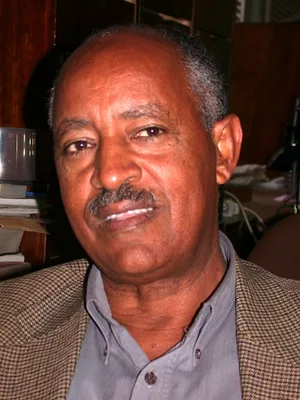
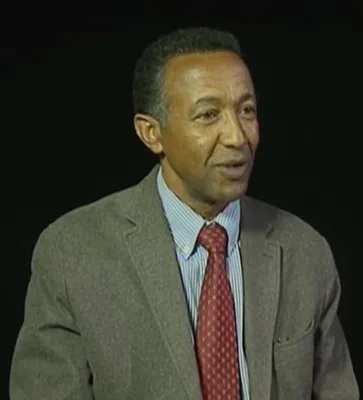
The authors provide evidence that Ardipithecus may be the beginning of the evolutionary pathway that eventually led to hominids. This pathway was distinct from the evolutionary pathway that led to extant African apes.…
2010
#7280
Australopithecus sediba: A New Species of Homo-Like Australopith from South Africa.
Matthew Berger, the young son of Lee Berger, discovered the first specimen of Australopithecus sediba, the right clavicle of MH1, on the 15th of August in 2008. This species of Australopithecus dates to about 2 millio…
2014
#7289
The complete genome sequence of a Neanderthal from the Altai Mountains.
First complete sequence of a Neanderthal genome. With more than 20 co-authors. In 2022 Pääbo was awarded the Nobel Prize in Physiology or Medicine "for his discoveries concerning the genomes of extinct hominins and hu…
2014
#10087
Kennewick man: The scientific investigation of an ancient American skeleton. Edited by Douglas W. Owsley and Richard L. Jantz.

" This volume resents the results of the most comprehensive scientific study of one of the most complete ancient human skeletons ever found in North America" (from the introduction). "Kennewick Man is the name general…
2014
#13210
Il Museo di storia naturale dell'Università degli studi di Firenze. Vol. 5, Le collezioni antropologiche ed etnologiche.
2016
#8539
History within: The science, culture, and politics of bones, organisms, and molecules.
2018
#14099
The genome of the offspring of a Neanderthal mother and a Denisovan father.
Paleogenomic study of a single bone fragment from a female hominin found in the Denisova Cave in the Altai mountains of Russia provided "direct evidence for genetic mixture between Neanderthals and Denisovans on at le…
2020
#14098
The major genetic risk factor for severe COVID-19 is inherited from Neanderthals.
Expanding on previous findings by a genome wide association study of severe COVID-19, specifically with respiratory failure which had found that a gene cluster residing on chromosome 3 had a significant association wi…