
Facets
Browse across eight MeSH (opens in new tab) facets — era, geography, science, specialty, technology, history, culture, and reference. Select one tag per group; counts update across the others. What’s new in facet browse how facets relate to subjects and MeSH.
Clear filtersFacet filters
Geography
Specialties & Disease
- Anatomy & Pathology 2
- Cardiology & Blood 0
- Neurology & Psychiatry 0
- Obstetrics & Reproductive 0
- Infectious Disease (General) 1
- Surgery & Anesthesia 0
- Public Health 3
- Immunology & Dermatology 0
- General Clinical Medicine 1
- Military Medicine 0
- Psychology 0
- Alternative & Fringe Medicine 1
- Pediatrics 0
- Ophthalmology & Vision 0
- ENT & Hearing 0
- Urology & Nephrology 0
- Gastroenterology & Hepatology 0
- Pulmonary & Respiratory 1
- Rheumatology, Rehab & Pain 0
- Internal, Emergency & Geriatric 0
- Veterinary Medicine 0
- Epidemiology & Demography 2
- Physiology & Embryology 0
- Dentistry 0
- Plagues & Epidemics 1
- Microbiology & Virology 0
Social & Historical Studies
Institutions & Culture
Reference & Scholarly Works
Drugs & Technology
57 entries match Europe & United Kingdom [Z01.542] · Natural History & Evolution [K01.900.500]
1467
#2190
De sermonum proprietate sive Opus de universo.
Also known as De rerum naturis. This dictionary or encyclopedia is the earliest known printed book to include a section dealing with medicine, and this brief section, Book 18, Chap. V concerning medicine and diseases,…
1475
#276.1
Buch der Natur.
The first printed book to contain illustrations of animals, and the first notable scientific book in German. It discusses animals, birds, fish, anatomy, physiology, plagues, the medicinal value of plants and stones, e…
1478
#1959.2
Von Bewahrung und Bereitung der Weine.
The first printed book on wine, its production and preservation, translated from the Latin by Wilhelm von Hirnkofen. It discusses the value of wine in diet and as a medication. Wine has been called the oldest document…
c. 1481 –c. 1482
#6811
Herbarium Apulei.
The first printed herbal with illustrations was an illustrated edition of the Herbarium Apulei by Apuleius Platonicus or Pseudo-Apuleius, originally compiled circa 400 CE or earlier, and issued in Rome by the printer …
1509
#8445
Medicinae Pliniae libri quinque finiunt foeliciter.
The Medicina Plinii was an anonymous compilation of remedies dating to the early 4th century CE ."The excerptor, saying that he speaks from experience, offers the work as a compact resource for travelers in dealing wi…
1553
#8982
Les observations de plusieurs singularitez et choses memorables, trouuées en Grece, Asie, Iudée, Egypte, Arabie, & autres pays estranges, redigées en trois livres.
![BELON, Pierre [Pierre Belon du Mans; Petrus Bellonius Cenomanus] (1517 – 1564)](/media/portraits/9632)
Belon was first trained as an apothecary, and worked in that capacity for the bishop of Clermont, Guillaume Duprat. Around 1542 he studied medicine In Paris, and obtained a licentiate in medicine, though he never took…
1766 –1767
#7365
Travels through France and Italy. Containing observations on character, customs, religion, government, police, commerce, arts, and antiquities. With a particularly description of the town, territory, and climate of Nice: to which is added a register of the weather, kept during a residence of eighteen months in that city. 2 vols.
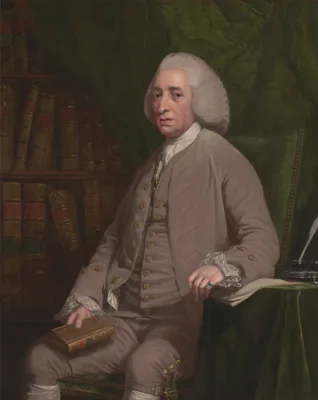
Digital facsimile from Google Books at this link.
1770
#1772
A chronological history of the weather and seasons and of the prevailing diseases in Dublin. With their various periods, successions, and revolutions, during the space of forty years. With a comparative view of the difference of the Irish climate and diseases, and those of England and other countries ...
Rutty kept continuous records of weather and diseases in Dublin from 1724-64. On page 75 of this work is the first clear description of relapsing fever. Digital facsimile from the Hathi Trust at this link.
1771
#13011
Aldrovandus Lotharingiae, ou catalogue des animaux, quardupedes, reptiles, oseaux, poissons, insectes, vermisseaux et coquillages qui habitent la Lorraine et les Trois-Évechés.
A catalogue of "over 1100 quadrupeds, birds, reptiles, amphibians, fish, insects, worms and mollusks native to Lorraine. Buc’hoz follows the classification schemes of Argenville, Brisson, Buffon, Daubenton and Geoffro…
1774
#203.7
Ausfürliche Nachricht von neuentdeckten Zoolithen, unbekannter vierfüsiger Thiere…
Esper was the first to record the finding, in Gailenreuth Cave, of human bones alongside the remains of unknown and probably extinct animals. The implications of this dramatic observation published in a color plate bo…
1775
#7505
The history of the American Indians; particularly those nations adjoining to the Missisippi [sic] East and West Florida, Georgia, South and North Carolina, and Virginia: containing an account of their origin, language, manners, religious and civil customs, laws, form of government, punishments, conduct in war and domestic life, their habits, diet, agriculture, manufactures, diseases and method of cure... With observations on former historians, the conduct of our colony governors, superintendents, missionaries, & c. Also an appendix, containing a description of the Floridas, and the Missisippi [sic] lands, with their productions--the benefits of colonizing Georgiana, and civilizing the Indians--and the way to make all the colonies more valuable to the mother country....
The author characterized himself on the title page as "a Trader with the Indians and a Resident in their Country for Forty Years." Digital facsimile from the Internet Archive at this link.
1776 –1778
#12272
(1) Observations sur les maladies épidemiques, Année 1770, ouvrage rédigé d'après le tableau des epidémiques d'Hippocrate, et dans lequel on indique la meilleure méthode d'observer ce genre de maladies ... Publié par ordre du gouvernement, et aux fraix du roi. (2) Collection d'observations sur les maladies et constitutions épidémiques; ouvrage qui expose une suite de quinze années d'observations, & dans lequel les épidémies, les constitutions régnantes & intercurrentes, sont liées, selon le voeu d'Hippocrate, avec les causes météorologiques, locales & relatives aux différens climats, ainsi qu'avec l'histoire naturelle & médicale de la Normandie. On y a joint un appendix sur l'ordre des constitutions épidémiques ... Pub. par ordre du gouvernement .… 3 vols.
The first title, in 1 volume, was published in 1776; the second work in 2 vols., supplementing the first work, was published in 1778. In these two bioclimatological and biogeographical studies of disease in Normandy, …
1783
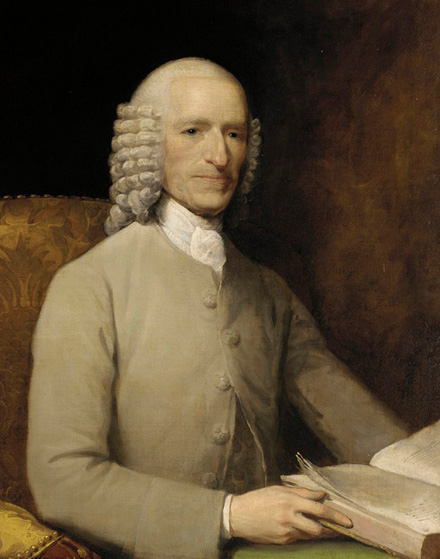
#1774
Observations on the weather and diseases of London. In his Works, 1, 145-240
1792 –1813
#9087
The natural history of British insects; explaining them in their several states, with the periods of their transformations, their food, oeconomy, &c. Together with the history of such minute insects as require investigation by the microscope. The whole illustrated by coloured figures, designed and executed from living specimens. 16 vols.
Includes a total of 576 plates, of which 568 were colored.
1794 –1819
#9086
The natural history of British birds; or, a selection of the most rare, beautiful and interesting birds which inhabit this country: The descriptions from the Systema naturae of Linnaeus; with general observations, either original or collected from the latest and most esteemed English ornithologists; and embellished with figures, drawn, engraved, and coloured from the original specimens. 10 vols.
The first 5 volumes were issued in monthly parts, each consisting of 2 plates and accompanying text. A volume came out each year between 1794 and 1798; the fifth volume stated: "This work being now completed." However…
1797
#7768
The natural history of the rarer lepidopterous insects of Georgia. Including their systematic characters, the particulars of their several metamorphoses, and the plants on which they feed. Collected from the observations of Mr. John Abbot, many years resident in that country, by James Edward Smith.
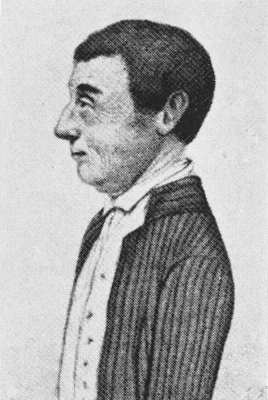
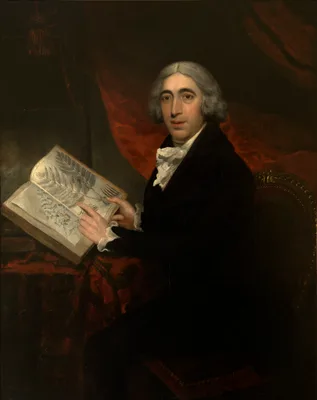
The earliest illustrated monograph on the butterflies and moths of North America. Text in English and French. 104 hand-colored plates. Digital facsimile from the Internet Archive at this link.
1800
#7291
Account of flint weapons discovered at Hoxne in Suffolk.
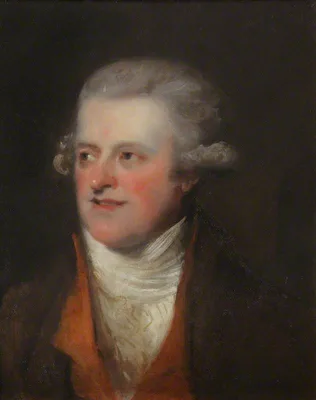
Frere described the discovery of several flint artifacts, which he believed to be “weapons of war,” associated with “some extraordinary bones, particularly a jaw-bone of enormous size of some unknown animal” (p. 204).…
1819
#10065
Reports on the diseases of London, and the state of the weather, from 1804-1816; including practical remarks on the causes and treatment of the former; and preceded by a historical view of the state of health and disease in the metropolis in past times.
1823
#7254
Reliquiae diluvianae; or, observations on the organic remains contained in caves, fissures, and diluvial gravel, and on other geological phenomena, attesting the action of an universal deluge.
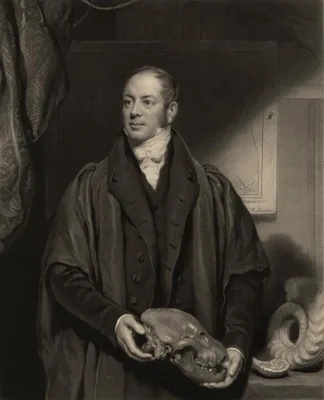
Buckland’s elaborately illustrated Reliquiae diluvianae (Relics of the Flood) describes his geological and paleontological researches of the early 1820s, including his investigations of the Kirkdale and Paviland caves…
1829
#7293
Notice sur les ossemens humains fossiles des cavernes du Département du Gard, présentée à l’Académie des Sciences le 29 juin 1829.
Christol excavated of the caverns of Pondres and Souvignarges, northeast of Montpellier in the department of Gard. These caverns, which showed no evidence of accidental disturbance, contained human remains intermixed …
1830
#9713
Sketches of the medical topography of the Mediterranean; comprising an account of Gibraltar, the Ionian Islands, and Malta. To which is prefixed a sketch of a plan for memoirs on medical topography
Digital facsimile from Google Books at this link.
1833 –1834
#203.8
Recherches sur les ossemens fossiles découvertes dans les cavernes de la province de Liège. 2 vols. and atlas.
A physician from Delft, Schmerling found extensive human remains and artifacts associated with the remains of extinct animals in the caverns around Liège. These human remains were distinctively different anatomically …
1843
#10234
Ensaio sobre a topographia medica de Lisboa. ou consideraçoens especiaes relativas a' sua historia; meteorologia; geognosia; agoas potaveis; zoologia, quanto aos animaes mais utei, e em quanto ao homem sua parte hygienica e medica; a população, e suas respectivas observaçoens, &c.
1847 –1864
#203.9
Antiquités celtiques et antédiluviennes. Mémoire sur l'industrie primitive et les arts à leur origine. 3 vols.
Customs inspector at Abbéville and a prolific writer on diverse subjects, Boucher de Perthes found extensive deposits of flint implements in association with the bones of mammoths and other fossil animals. His work pr…
1847 –1847
#10336
Southern ichthyology; or a description of the fishes inhabiting the waters of South Carolina, Georgia, and Florida. Pt. 2, 1847, Pt. 3, 1848.
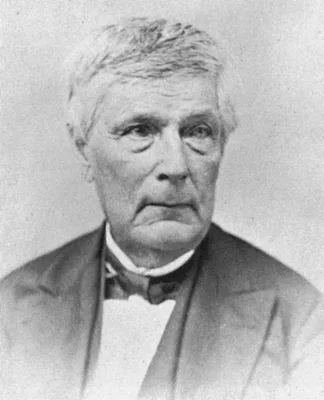
Holbrook never published part one of this work.
1850 –1851
#10517
Southern medical reports: Consisting of general and special reports, on the medical topography, meteorology, and prevalent diseases, in the following states: Louisiana, Alabama, Mississippi, North Carolina, South Carolina, Georgia, Florida, Arkansas, Tennessee, Texas. Edited by E. D. Fenner. 2 vols.
Regarding Fenner see, John Duffy, "Erasmus Darwin Fenner (1807–1866) Journalist, Educator, and Sanitarian," Academic Medicine. 35 (1960) 819-831. Digital facsimile of the 1850-51 edition from the Internet Archive at t…
1853
#10235
Change of climate considered as a remedy in dyspetic, pulmonary, and other chronic affections; with an account of the most eligible places of residence for invalids in Spain, Portugal, Algeria, etc., at different seasons of the year; and an appendix on the mineral springs of the Pyrenees, Vichy, and Aix les Bains.
The author, a pulmonary specialist at Cavendish Square, London, provides a detailed manual for invalid travellers, seeking cures for tuberculosis, and indigestion and "nervous affections." It may be one of the first t…
1857
#7250
[On the Feldhofer Neanderthal.]
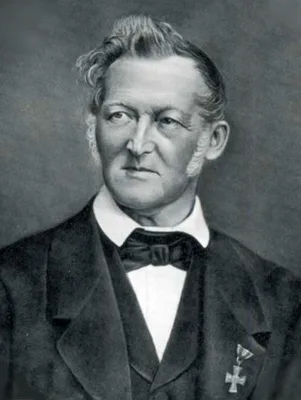
The first account of the Neanderthal remains (Neanderthal 1), discovered in 1856 in the the Feldhofer cave of the Neander valley. The remains, which consist of a partial skull, pelvis and assorted long bones, were sen…
1858
#204
Zur Kenntniss der ältesten Rassenschädel.
The first comprehensive description of the Neanderthal skull, following Schaaffhausen’s and Fuhlrott’s preliminary announcements of the discovery in the Verhandlungen des naturhistorischen Vereines der preussischen Rh…
1859
#7251
Menschliche Ueberreste aus einer Felsengrotte des Düssenthals. Ein Beitrag zur Frage über die Existenz fossiler Menschen.
Fuhlrott’s first detailed account of the “Neanderthal 1” skeleton discovered in 1856 in the Kleine Feldhofer Grotte, located in the Düssel River gorge in southwestern Germany.
1860
#7262
On the occurrence of flint-implements, associated with the remains of animals of extinct species in beds of a late geological period, in France at Amiens and Abbeville, and in England at Hoxne.
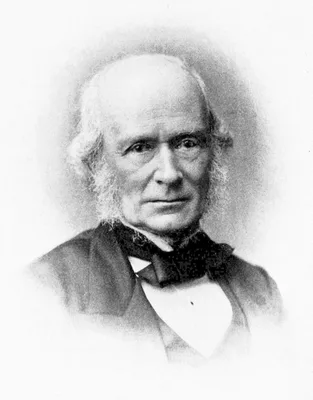
This paper is a key record of the early recognition of the antiquity of man by the scientific establishment. Having returned from a visit to Abbeville, France, in May 1859, where he viewed the evidence for the antiqui…
1864
#7258
Cavernes du Périgord. Objets gravés et sculptés des temps pré-historiques dans l’Europe occidentale.
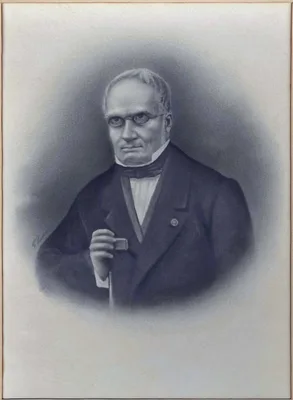
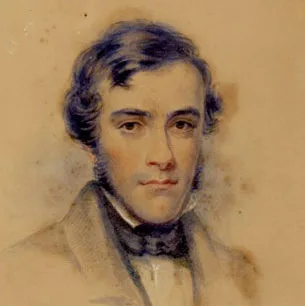
In 1863 Lartet and Christy began systematically examining the caves in the Périgord (Dordogne) region of France. This study of mobiliary or portable art, such as carved stones, carved ivory, carved bones, or carved re…
1868
#7252
Mémoire sur une sépulture des anciens troglodytes du Périgord.
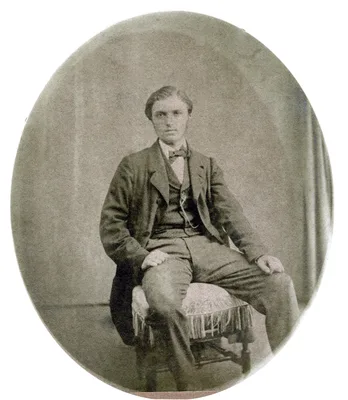
In March 1868, railway workers clearing away debris from a rock shelter known locally as the Abri de Crô-Magnon (shelter of Crô-Magnon) at Les Eyzies, Dordogne, noticed stone tools and pieces of skeleton imbedded in t…
1872
#7609
Origen, naturaleza y antigüedad del hombre.
The first book on human origins or human evolution published in Spanish. Digital facsimile from Google Books at this link.
1875
#9492
Reliquiae Aquitanicae; being contributions to the archaeology and palaeontology of Périgord and the adjoining provinces of southern France. Edited by Thomas Rupert Jones.
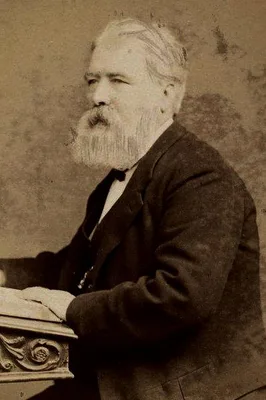
This beautiful and bibliographically complicated work was issued in 17 parts from 1865 to 1875. It includes 82 tinted lithographic plates, and is the first visually spectacular large extensively illustrated publicatio…
1880
#7287
Breves apuntes sobre algunos objetos prehistóricos de la provincia de Santander
![SANZ DE SAUTUOLA, Marcelino [Marcelino DE SAUTUOLA] (1831 – 1888)](/media/portraits/10315)
Privately printed pamphlet asserting the prehistoric origin of cave paintings discovered in the cave of Altamira, Cantabria, Spain by Maria Sanz de Sautuola, daughter of the author. These were first prehistoric cave p…
1882
#203.2
Crania ethnica. Les crânes des races humaines décrits et figurés d 'après les collections du Muséum d'Histoire Naturelle de Paris, de la Société d'Anthropologie de Paris et les principales collections de la France et de l'étranger par A. de Quatrefages et Ernest T. Hamy: Ouvrage accompagné de planches lithographiées d'après nature par H. Formant et illustré de nombreuses figures intercalées. 2 vols.
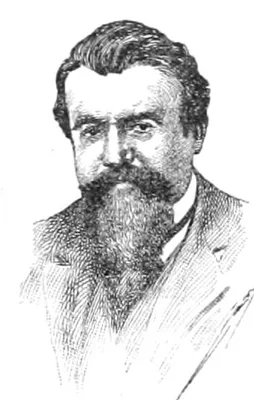
Digital facsimile from the Bayerische StaatsBibliothek at this link.
1893
#9540
Centenaire de la fondation de Muséum d'Histoire Naturelle 10 juin 1793 - 10 juin 1893. Volume commemoratif publiée par les professeurs du muséum.
Digital facsimile from the Internet Archive at this link.
1908
#7253
Der Unterkiefer des Homo heidelbergensis aus den Sanden von Mauer bei Heidelberg. Ein Beitrag zur Paläontologie des Menschens.
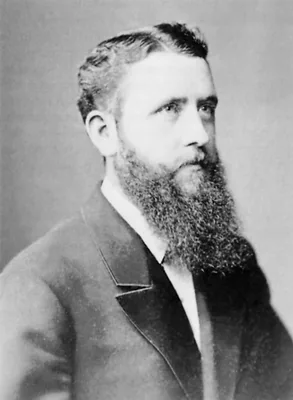
First report on the Mauer jaw discovered by Schoetensack in a sandpit or quarry in the environs of Heidelberg. This was the first fossil specimen unearthed of an extinct hominin species which Schoetensack named Homo h…
1912
#11254
Die diluviale Vorzeit Deutschlands. Archäologischer Teil, von R. R. Schmidt; II. Geologischer Teil, von Ernest Koken, Die Geologie und Tierweld der paläolithischen Kulturstätten Deutschlands; III. Anthropologischer Teil von A. Schliz, Die diluvialen Menschenreste Deutschlands.
This splendidly produced and illustrated large folio volume was the first major book on paleolithic research published in Germany. Schmidt described systematic investigations of the caves in the Swabian Alps, and was …
1913
#211
On the discovery of a palaeolithic skull and mandible in a flint-bearing gravel overlying the Wealden (Hastings Beds) at Piltdown, Fletching (Sussex). With appendix by Grafton Elliot Smith.
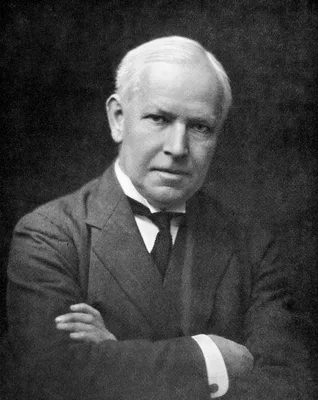
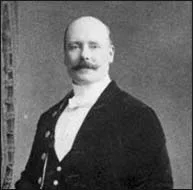
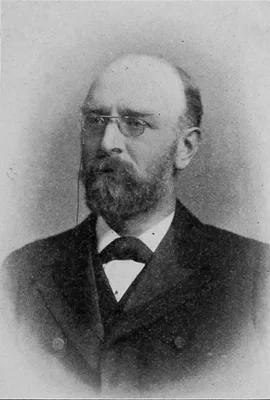
Order of authorship in the original publication: Dawson, Woodward. The first "scientific" report on “Piltdown man” (Eoanthropus dawsoni,) one of the longest-lasting and most influential hoaxes ever perpetrated in scie…
1923
#1767
On airs, waters, and places. IN: his [Works] with an English translation by W. H. S. Jones, 1, pp. 65-137
![HIPPOCRATES, [Ἱπποκράτης; Hippocrates of Kos] (-460 – -370)](/media/portraits/50)
“The first book ever written on medical geography, climatology, and anthropology” (Garrison). The Latin translation of this text was first published in Rhazes’ Liber ad Almansorem, Milan, 1481. See No. 39.1. The stand…
1939
#8527
Les manuscrits arabes de l'Escurial. Vol. 2, Fascicule 2: Médecine et histoire naturelle. Compiled by Hartwig Derenbourg, edited by Henri Paul Joseph Renaud.
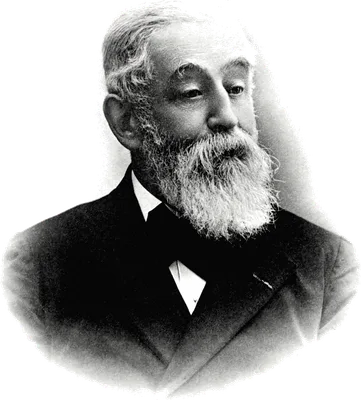
1960
#10569
A bibliography of British Lepidoptera, 1608-1799.
Bibliography of British works on butterflies and moths from the early seventeenth to late eighteenth centuries. Includes biographical information on the authors covered. Plates are mainly portraits of the authors.
1976
#8055
The naturalist in Britain: A social history.
1980
#11209
British natural history books, 1495-1900: A handlist.
A partially annotated listing of all principal natural history books published in the UK from 1495 to 1900.
1986
#12999
Hendrik Engel's alphabetical list of Dutch zoological cabinets and menageries . Second, enlarged edition prepared by Pieter Smith with the assistance of A. P. M. Sanders and J. P. F. van der Veer.
Digital facsimile from dwc.knaw.nl at this link. Originally published in Bijdragen tot de dierkunde, v. 27, 1939.
1987
#10897
Natural science collections in Scotland: Botany, geology, zoology.
1995
#7525
The earliest occupation of Europe. Proceedings of the European Science Foundation workshop at Tautavel (France) 1993.
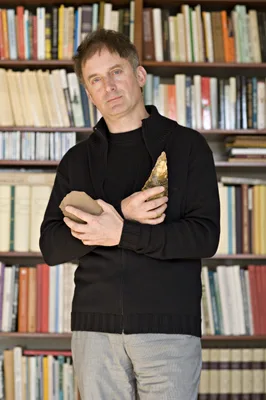
The first effort to present summaries of the evidence for earliest occupation in all the regions of Europe including Russia, edited by Roebroeks and van Kolfschoten.
1996
#10019