
Latest Entries
Recently added and updated annotations in the corpus.
1995 CE
#7278
New four-million-year-old hominid species from Kanapoi and Allia Bay, Kenya.
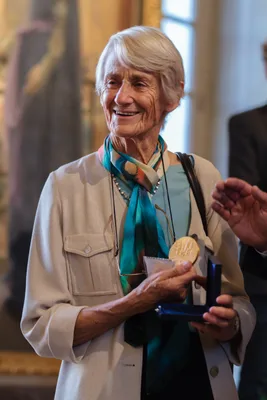
In 1965, a research team led by Bryan Patterson from Harvard University discovered a single arm bone (KNM-KP 271) of an early human at Kanapoi in northern Kenya, but without additional fossils Patterson could not conf…
1978 CE
#7277
A new species of the genus Australopithecus (Primates: Hominidae) from the Pliocene of Eastern Africa.

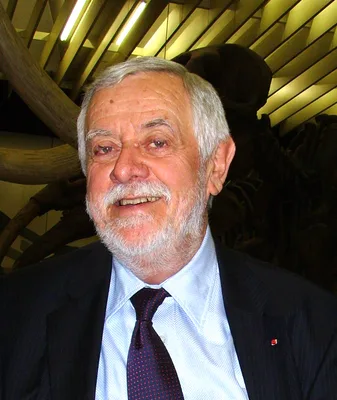
Johanson and colleagues formally named the species Afarensis of the genus Australopithecus in 1978.
1994 CE
#7276
Australopithecus ramidus, a new species of early hominid from Aramis, Ethiopia.

Between 1992 and 1994 White and his team discovered the first Ardipithecus ramidus fossils in the Middle Awash area of Ethiopia. They named their discovery Ardipithecus ramidus (‘ramid’ means ‘root&r…
2001 CE
#7275
'Millennium Ancestor', a 6-million-year-old bipedal hominid from Kenya - Recent discoveries push back human origins by 1.5 million years.

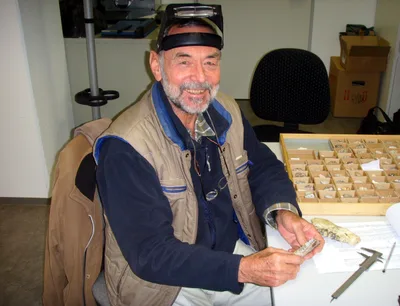
Living around 6 million years ago, in the Tugen hills region of central Kenya, this species, named Orrorin tugenensis, had small teeth with thick enamel similar to modern humans. It climbed trees, but also probably wa…
2002 CE
#7274
A new hominid from the Upper Miocene of Chad, central Africa.
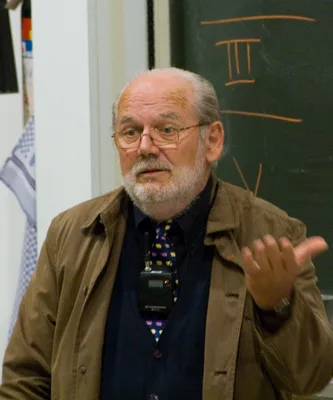
The first paper on Sahelanthropus tchadensis, dating from between 7 and 6 million years ago in West Central Africa (northern Chad). This species had a combination of ape-like and human-like features. Ape-like elements…
1985 CE
#7273
History of physical anthropology in Southern Africa.
1984 CE
#7272
The origins of modern humans: A world survey of the fossil evidence.
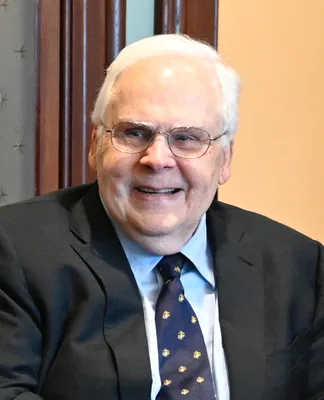
An historical and analytical review of the literature up to 1984, with detailed bibliographies, by several outstanding authorities, edited by Smith and Spencer. Includes, pp. 411-483, Milford H. Wolpott, Wu Xin Zhi, a…
2002 CE
#7271
The primate fossil record.
A comprehensive collaborative study edited by Hartwig. Includes an extensive historical bibliography.
1964 CE
#7270
A new species of the genus Homo from Olduvai Gorge.
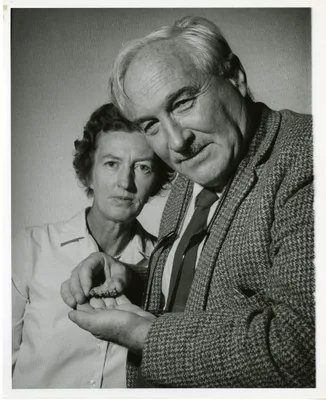
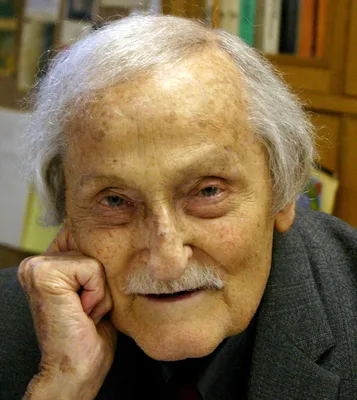
First report on Homo habilis.
1998 CE
#7269
Ancestral images: The iconography of human origins.
2002 CE
#7268
Biographisches Lexikon der hervorragenden Ärzte der letzten fünfzig Jahre von Isidor Fischer. Nachträge und Ergänzungen: Aba-Kom.
Supplement to Fischer's work (No. 6732), with additions covering last names beginning from Aba to Kom.
2012 CE
#7267
Dissent with modification. Human origins, palaeolithic archaeology and evolutionary anthropology in Britain 1859-1901
2008 CE
#7266
Pantheon der Dermatologie. Herausragende historische Persönlichkeiten.
Probably the largest and most comprehensive history of a medical specialty published in the 21st century. Expanded and revised English translation: Pantheon of Dermatology: outstanding historical figures by Löser…
2000 CE
#7265
Science and Civilisation in China. Volume 6: Biology and Biological Technology. Part VI: Medicine. By Joseph Needham with the collaboration of Lu Gwei-Djen, edited and with an introduction by Nathan Sivin.
1953 CE
#7264
The Piltdown Forgery.
Fiftieth anniversary edition with a new introduction and afterward by Chris Stringer (Oxford University Press, 2003).
1964 CE
#7263
The problem of man's antiquity. An historical survey.
1860 CE
#7262
On the occurrence of flint-implements, associated with the remains of animals of extinct species in beds of a late geological period, in France at Amiens and Abbeville, and in England at Hoxne.
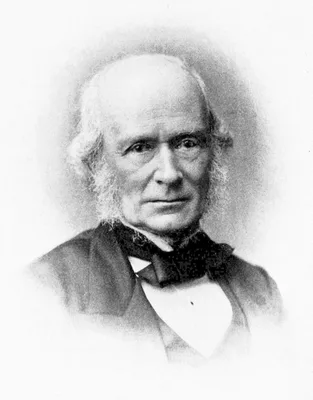
This paper is a key record of the early recognition of the antiquity of man by the scientific establishment. Having returned from a visit to Abbeville, France, in May 1859, where he viewed the evidence for the antiqui…
2003 CE
#7261
The bony labyrinth of Neanderthals.

Computed tomography of the inner ear of 20 Neanderthal specimens directed by Spoor showed that the Neanderthal semicircular canal is subtly distinct in size, shape, and orientation from that of modern humans. With Mar…
1833 CE
#7260
Ueber den Zustand der Heilkunde und über die Volkskrankheiten in der europäischen und asiatischen Türkei. Ein Beitrag zur Kultur- und Sittengeschichte.
Digital facsimile from Google Books at this link.
1937 CE–1939 CE
#7259
The stone age of Mount Carmel. Volume I: Excavations at the Wady el-Mughara. Volume II: The fossil remains from the Lavalloiso-Mousterian.
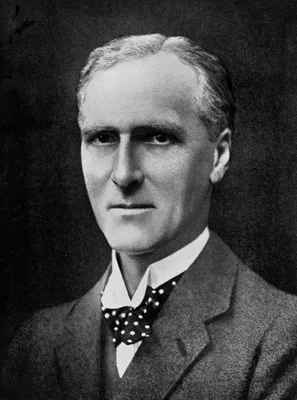
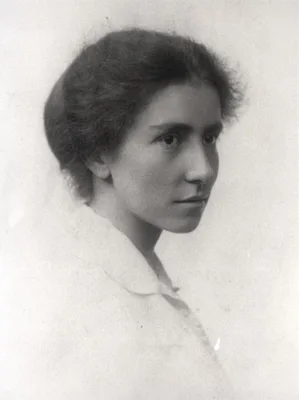
Garrod carried out her landmark excavations of the el-Wad, el-Tabun and es-Skhul caves on the hills of Mount Carmel, close to Wadi el-Mugharah (Valley of the Caves) between 1929 and 1934. Her monograph on the subject …
1864 CE
#7258
Cavernes du Périgord. Objets gravés et sculptés des temps pré-historiques dans l’Europe occidentale.
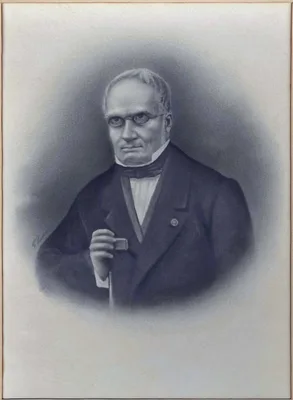
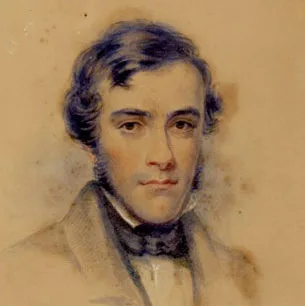
In 1863 Lartet and Christy began systematically examining the caves in the Périgord (Dordogne) region of France. This study of mobiliary or portable art, such as carved stones, carved ivory, carved bones, or ca…
1865 CE
#7257
Pre-historic times, as illustrated by ancient remains, and the manners and customs of modern savages.
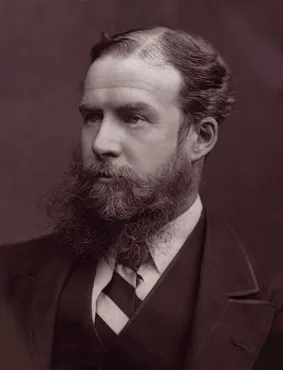
Lubbock introduced the terms "Paleolithic" and "Neolithic". His work addressed not only the topic of human antiquity but also the lives and cultures of people in the Stone Age. In contrast to researchers who focused o…
1987 CE
#7256
Mitochondrial DNA and human evolution.
Cann's discovery that all living humans are genetically descended from a single African mother, known as Mitochrondrial Eve, who lived <200,000 years ago, became the foundation of the Out of Africa theory, the most wi…
1927 CE
#7255
The lower molar hominid tooth from the Chou Kou Tien deposit.
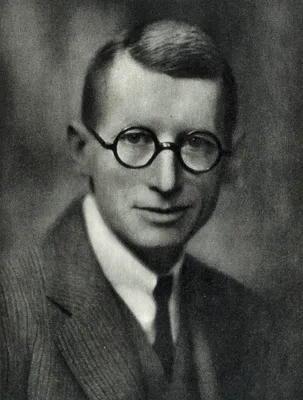
In this report on a single hominid tooth found by Swedish archeologist Birger Bohlin at the Zhoukoudian site in 1927 Black named a new genus and species of hominid, Sinanthropus pekinensis. He characterized the specim…
1823 CE
#7254
Reliquiae diluvianae; or, observations on the organic remains contained in caves, fissures, and diluvial gravel, and on other geological phenomena, attesting the action of an universal deluge.
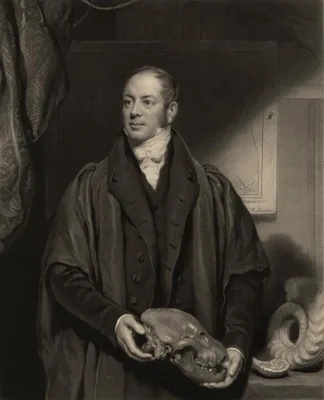
Buckland’s elaborately illustrated Reliquiae diluvianae (Relics of the Flood) describes his geological and paleontological researches of the early 1820s, including his investigations of the Kirkdale and Paviland…
1908 CE
#7253
Der Unterkiefer des Homo heidelbergensis aus den Sanden von Mauer bei Heidelberg. Ein Beitrag zur Paläontologie des Menschens.
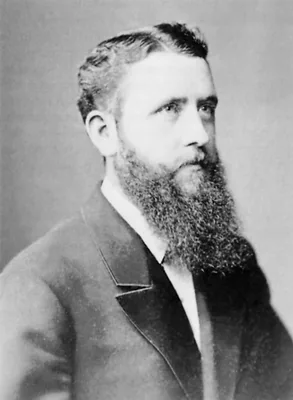
First report on the Mauer jaw discovered by Schoetensack in a sandpit or quarry in the environs of Heidelberg. This was the first fossil specimen unearthed of an extinct hominin species which Schoetensack named Homo h…
1868 CE
#7252
Mémoire sur une sépulture des anciens troglodytes du Périgord.
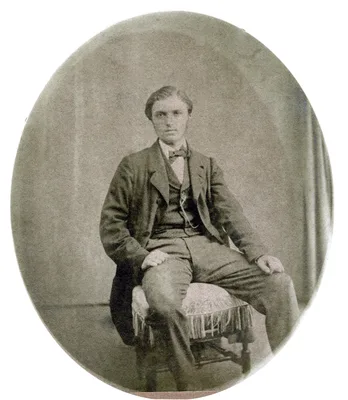
In March 1868, railway workers clearing away debris from a rock shelter known locally as the Abri de Crô-Magnon (shelter of Crô-Magnon) at Les Eyzies, Dordogne, noticed stone tools and pieces of skeleton i…
1859 CE
#7251
Menschliche Ueberreste aus einer Felsengrotte des Düssenthals. Ein Beitrag zur Frage über die Existenz fossiler Menschen.
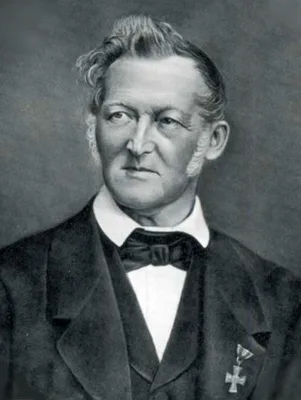
Fuhlrott’s first detailed account of the “Neanderthal 1” skeleton discovered in 1856 in the Kleine Feldhofer Grotte, located in the Düssel River gorge in southwestern Germany.
1857 CE
#7250
[On the Feldhofer Neanderthal.]
The first account of the Neanderthal remains (Neanderthal 1), discovered in 1856 in the the Feldhofer cave of the Neander valley. The remains, which consist of a partial skull, pelvis and assorted long bones, were sen…
1847 CE
#7249
Première Lettre. Boston, le 13 november 1846.
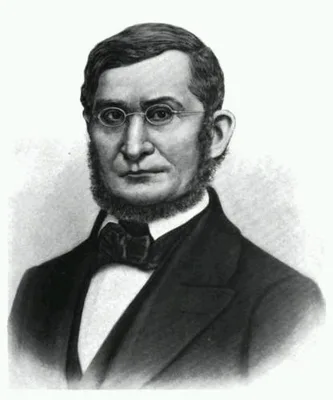
Jackson, a physician, geologist and chemist in Boston, wrote this letter to Élie de Beaumont in Paris on November 13, 1846, the day after he and William T. G. Morton jointly received U.S. Patent No. 4848 for Im…
2010 CE
#7248
Early Medicine, from the body to the stars.
Extensively annotated, magnificently printed catalogue (590pp. in 4to) entirely illustrated in color, of an exhibition of 250 early medical manuscripts, printed books, and related objects from the ancient world to the…
1715 CE
#7247
Traité nouveau de la structure et des causes du mouvement naturel du coeur. IN: Oeuvres françoises de M. Vieussens dédiées a nosseigneurs des états de la province de Languedoc.
The first work on cardiac anatomy and pathology. Vieussens was the first to describe the course of the coronary arteries and the coronary sinus. He also described collateral vessels connecting the left anterior descen…
1831 CE–1854 CE
#7246
Traité complet de l'anatomie de l'homme, comprenant la médecine opératoire. 16 vols.
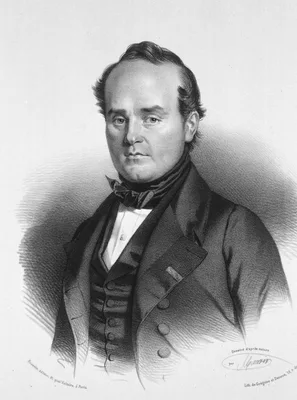
With over 2000 pages of text and 726 lithographed plates (incorporating 3604 individual figures), this work is the most comprehensive, and perhaps the most beautiful anatomical surgical atlas of the 19th century. It w…
1934 CE
#7245
Prolonging the life span.
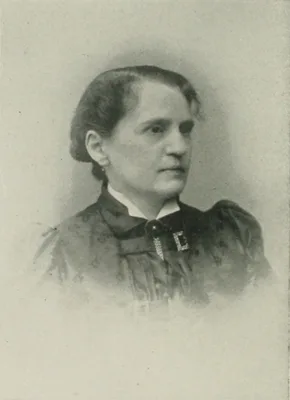
McCay proved that caloric restriction increases the life span of rats, a discovery that triggered extensive further research and experiments in the field of nutrition and longevity.
2003 CE
#7244
A history of ideas about the prolongation of life: The evolution of prolongevity hypotheses to 1800.
1891 CE
#7243
Entsefalometriya mozga cheloveka v otnoshenii k polu, vozrastu i cherepnomu ukazatelyu [in Cyrillic].
In 1889, nearly 20 years before Horsley and Clarke published their paper on the use of stereotaxy to examine the brain, Dmitrii Zernov, a professor of anatomy at Moscow University, invented the first prototype of a st…
1823 CE–1826 CE
#7242
Planches anatomiques du corps humain executes d’après les dimensions naturelles. Double elephant folio atlas and small folio text.
Considering that it is among the rarest of all anatomies, and certainly the largest and probably the most spectacular, it is remarkable that two nearly identical editions of Mascagni’s posthumous life-size anato…
1853 CE
#7241
Ueber einen neuen Muskel am Duodenum des Menschens, über elastische Sehnnen, und einige andere anatomische Verhãltnisse.
Treitz, a Czech pathologist, discovered the muscle at the duodenojejunal junction, later called “muscle of Treitz”; the fold of peritoneum over the muscle of Treitz is known as the "ligament of Treitz."
1559 CE
#7240
Michaelis Ephesii scholia, idest, brevis sed erudita atque utilis interpretatio in IIII. libros Aristotelis De Partibus Animalium. Dominico Monthesauro Veronensi interprete. Nunc primmùm [sic.] in lucem edita.
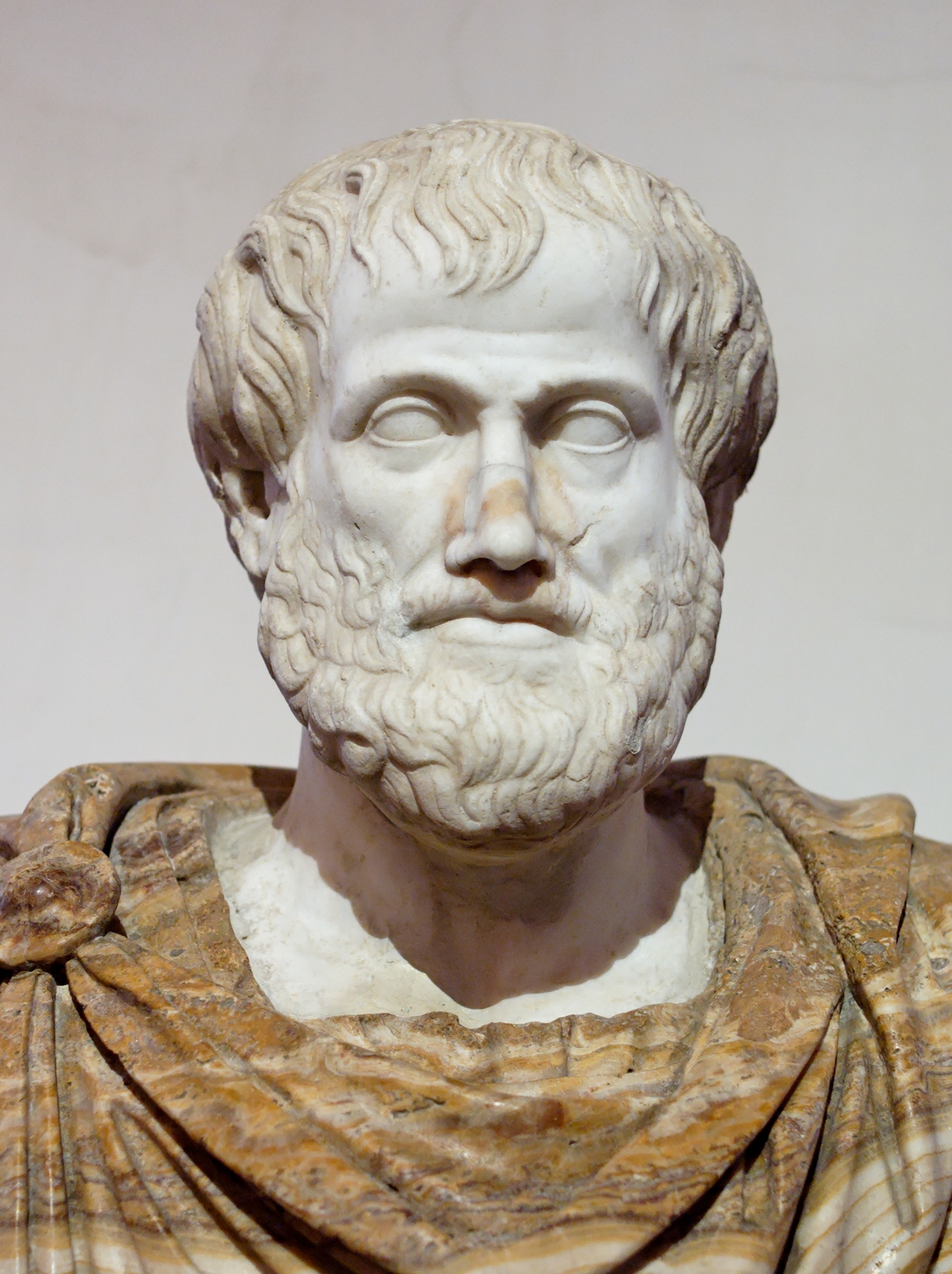
Michael of Ephesus, who completed his commentaries in or after 1138, was one of the principal Aristotelian scholars in a group organized in Constantinople by the Empress Anna Komnena. His commentary was translated int…
1994 CE
#7239
Jews, medicine and medieval society.
1956 CE
#7238
Botanical exploration of the trans-Mississippi West 1790-1850.
Reprinted with a new introduction and bibliographical supplement by Stephen Dow Beckham, Corvallis, OR: Oregon State University Press, 1991.
2014 CE
#7237
Jewish medical resistance in the holocaust. Edited by Michael A. Grodin.
1946 CE
#7236
Choroba glodowa: Badania kliniczne nad glodem wykonane w getcie warszawskim z roku 1942.
A series of articles by Jewish physicians working in the Bersohn and Bauman Jewish Children's Hospital and "Czyste" Hospital in the Warsaw ghetto, who conducted independent research between November 1941 and August 19…
2013 CE
#7235
The early history of the cochlear implant: A retrospective.
1966 CE
#7234
Electrical Stimulation of the Auditory Nerve in Man.
This detailed psychophysical and electrophysiological analysis of one patient proved that a cochlear implant provided sufficient information to the central nervous system for the understanding of speech.
1965 CE
#7233
Auditory nerve.
Describes the first "chronically" implanted or permanent cochlear implant. With John M. Epley of Stanford; Robert C. Lummis, Newman Guttman, Lawrence C. Frishkopf of Bell Telephone Laboratories; and Leon D. Harmon and…
2011 CE
#7232
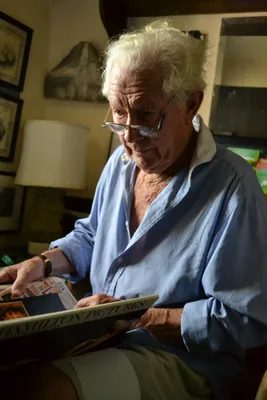
Scottish Medicine: An Illustrated History.

2002 CE
#7231
Hear, Hear! Six Centuries of Otology, from the Collection of Robert J. Ruben.
Very well annotated descriptions of over 100 classics in the history of otology.
1648 CE
#7230
Philocophus: or the deafe and dumbe mans friend.
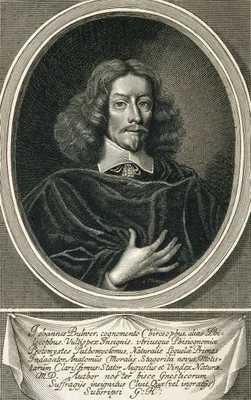
"Bulmer promoted what we would call today 'central nervous system plasticity,' in describing how one sense could take over the duties of another. This is well illustrated in the frontispiece of this work, which is the…
1890 CE
#7229
The deaf soldier: A brief synopsis of one hundred and two cases of deafness. Prepared for the consideration of the Senate and House of Representatives of the United States.

One of the earliest accounts of the recognition of loss of hearing due to firearms and explosions during war. Foster, secretary and treasurer of the Silent Army of Deaf Soldiers, Sailors and Marines, presented 100 cas…