
Latest Entries
Recently added and updated annotations in the corpus.
1673 CE
#7328
A Brief Account of Some Travels in Hungaria, Servia, Bulgaria, Macedonia, Thessaly, Austria, Styria, Carinthia, Carniola, and Friuli.
Digital facsimile from Google Books at this link.
1582 CE
#7327
Aigentlich Beschreibung der Raiss, so er vor diser Zeit gegen Auffgang inn die Morgenländer, fürnemlich Syriam, Iudaeam, Arabiam, Mesopotamiam, Babyloniam, Assyriam, Armeniam etc....
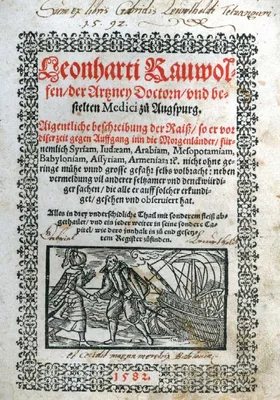
Rauwolf provided the first modern descriptions of the flora of the area east of the Levantine coast. He was also the first to describe the riparian flora of the Euphrates, and the first European to publish an account …
1992 CE
#7326
Systemic pathology. / Volume 9, The Skin.
1970 CE
#7325
Thickness, cross-sectional areas and depth of invasion in the prognosis of cutaneous melanoma.
Classic paper on the prognosis of melanoma. Digital facsimile available from PubMedCentral at this link.
1979 CE
#7324
Immunopathology of the skin.
A classic on immunofluorescence of the skin.
2003 CE
#7323
An atlas of hair pathology—with clinical correlations.
1998 CE
#7322
An illustrated guide to skin lymphoma.
1811 CE
#7321
Lachesis Lapponica, or a tour in Lapland, now first published from the original manuscript journal of the celebrated Linnaeus; by James Edward Smith. 2 vols.

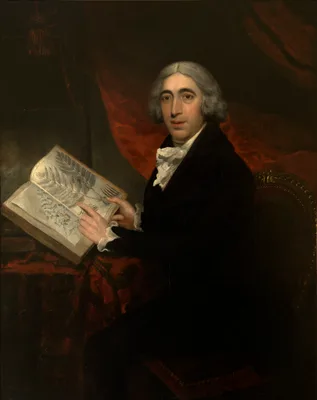
Digital facsimile from the Internet Archive at this link.
1825 CE
#7320
Observations on Italy.
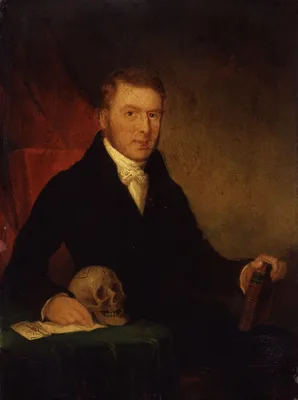
Digital facsimile of the 1825 edition from the Internet Archive at this link. The second, posthumous, edition published in English in Naples by Fibreno in 1834 includes additional chapters by Bell that were not includ…
1818 CE
#7319
Travels from Vienna through Lower Hungary; with remarks on the state of Vienna during the congress in the year 1814.
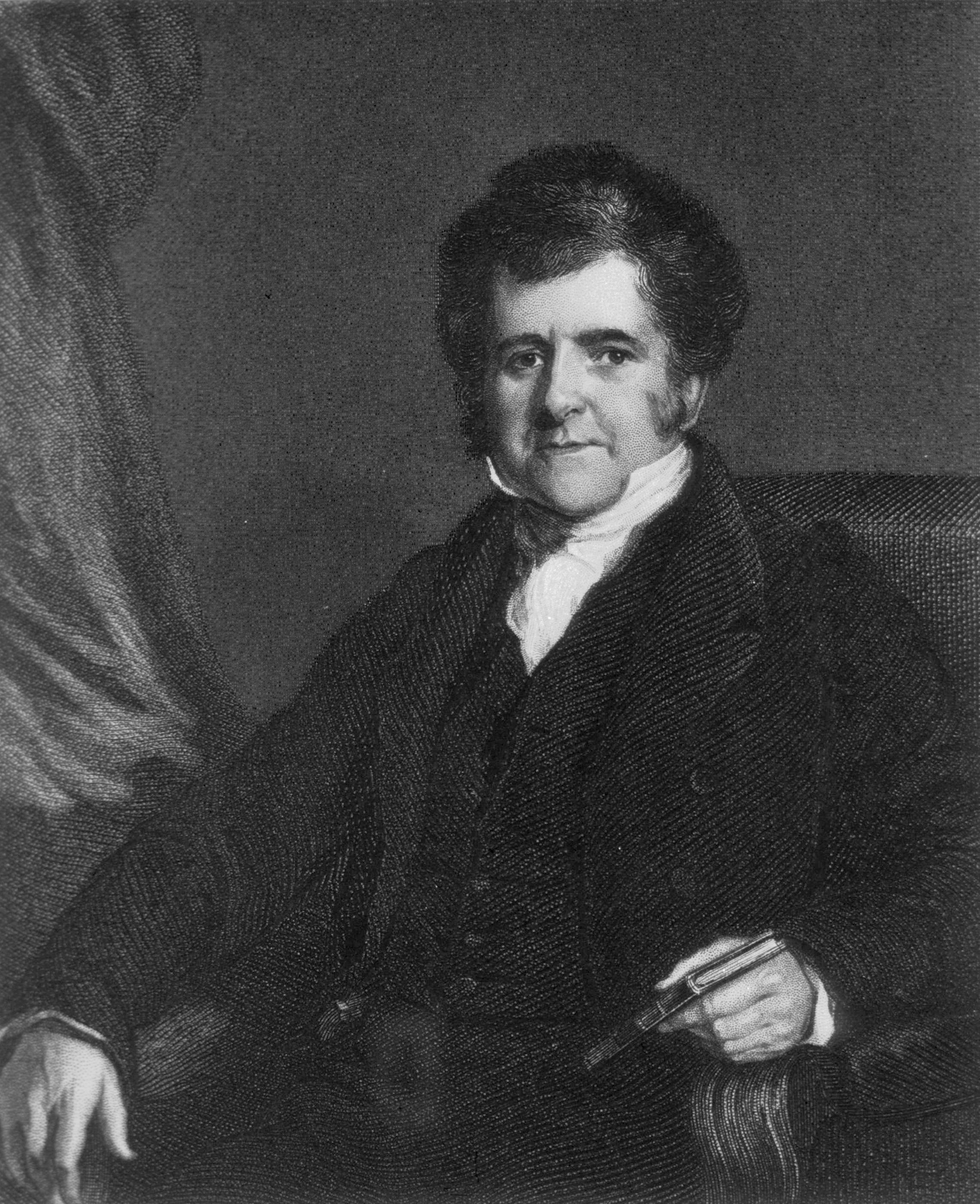
Digital facsimile from Google Books at this link.
1848 CE
#7318
Beiträge zur Anatomie und Pathologie der menschlichen Haut.
Digital facsimile from the Hathi Trust at this link.
1978 CE
#7317
Histologic diagnosis of inflammatory skin diseases: A method by pattern analysis.
1949 CE
#7316
Histopathology of the skin.
1903 CE
#7315
Practical handbook of the pathology of the skin. An introduction to the histology, pathology, and bacteriology of the skin, with special reference to technique.
The first textbook on dermatopathology in English. Digital facsimile from Internet Archive at this link.
1848 CE
#7314
Die Hautkrankheiten durch anatomische Untersuchungen erläutert.
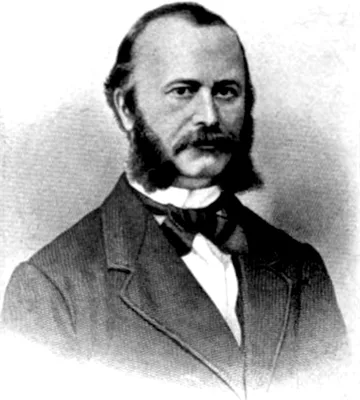
The first textbook of dermatopathology. "Simon dated the preface of his book April 1st, 1848 and wrote (p. vi and vii) that much has been achieved by meticulous clinical description of diseases of the skin but now att…
1853 CE
#7313
Recherches sur la nature et le traitement des teignes.
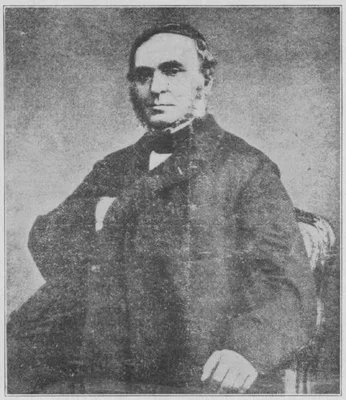
Bazin proved the fungal origin of favus and tinea; this was the first work to incorporate mycotic skin diseases into dermatological literature. Digital facsimile from BnF Gallica at this link.
2004 CE
#7312
British naturalists in Qing China: science, empire and cultural encounter.
1837 CE
#7311
Note sur les ossements fossiles des terrains tertiaires de Simorre, de Sansan, etc., dans le département du Gers, et sur la découverte récente d’une mâchoire de singe fossile.
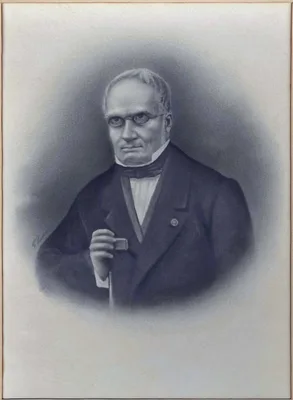
First published account of the discovery of the first anthropomorphic fossil ape. Lartet's discovery, made in 1836 at Sansan, was the first to challenge Cuvier’s assertion that both humans and apes were products…
1846 CE
#7310
U. S. Patent No. 4848. The United States of America. To all to whom these Letters Patent shall come.... November 12, 1846.
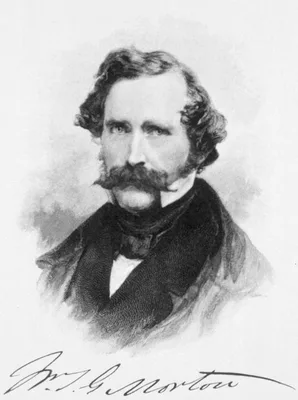
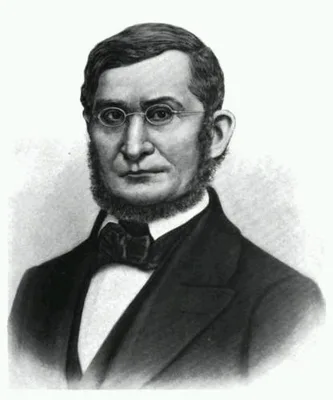
U.S. Patent No. 4848, issued to Charles T. Jackson and William T. G. Morton on November 12, 1846 for the discovery of sulfuric ether as a surgical anesthetic. This was the first truly significant medical patent ever i…
1921 CE
#7309
A new cave man from Rhodesia, South Africa.
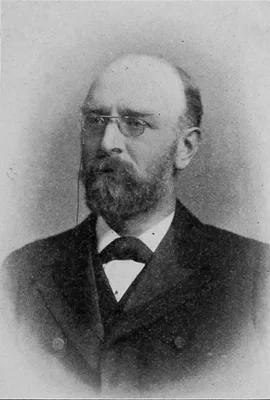
The first fossil human discovered in Africa: Homo rhodesiensis, commonly referred to as the Broken Hill Skull or the Kabwe Cranium.The skull, which most current experts classify as Homo heidelbergensis, was discovered…
1930 CE
#7308
Mathematische Klimalehre und astronomische Theorie der Klimaschwankungen. Handbuch der Klimatologie, Bd. 1, Teil A.
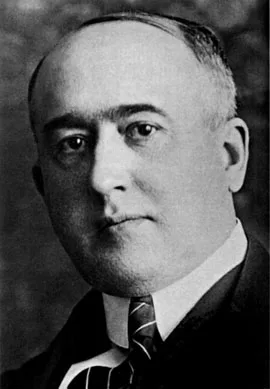
Milankovitch cycles, first exposition (176 pages). Milankovitch theorized that variations in eccentricity, axial tilt, and precession of the Earth's orbit determined climatic patterns on Earth through orbital forcing,…
1926 CE
#7307
Human origins: A manual of prehistory. 2 vols.
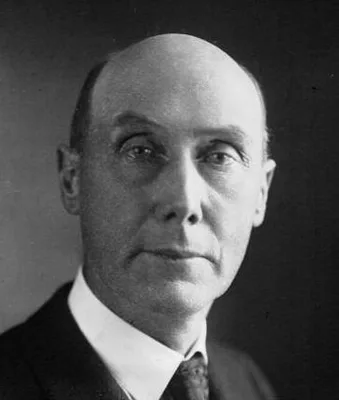
A detailed and extensively illustrated summary, with detailed bibliographical references, of the state of knowledge of prehistory in Europe as of 1926. Appendix 1: "Stratigraphic Study of Paleolithic Sites" is a very …
1993 CE
#7306
Man and mouse: Animals in medical research. Second edition.

1847 CE
#7305
Notice sur des ossements humains fossiles, trouvés dans une caverne du Brésil.
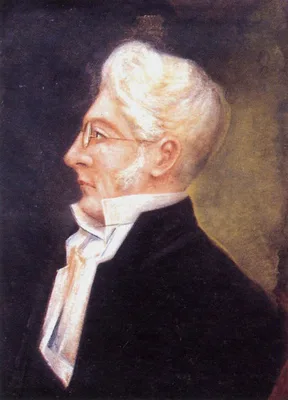
Lund, a student of Cuvier, excavated extensively in the region of Lagoa Santa, an area rich in caves and karst formations comprising the northern part of Greater Belo Horizonte in Brazil. Between 1835 and 1843 he coll…
1987 CE
#7304
Nucleotide sequence of the iap gene, responsible for alkaline phosphatase isozyme conversion in Escherichia coli, and identification of the gene product.
The DNA sequence of CRISPR (Clustered Regularly Interspaced Short Palindromic Repeats) discovered. The function of the interrupted clustered repeats was not known at the time. With H. Shinagawa, K Makino, M Amemura, a…
1715 CE
#7303
A letter to the publisher, written by the ingenious Mr. John Bagford, in which are many curious remarks relating to the city of London, and some things about Leland. In: John Leland, Joannis Lelandi antiquarii de rebus britannicis collectanea, ed. Thomas Hearne, I, pp. lviii-lxxxvi.
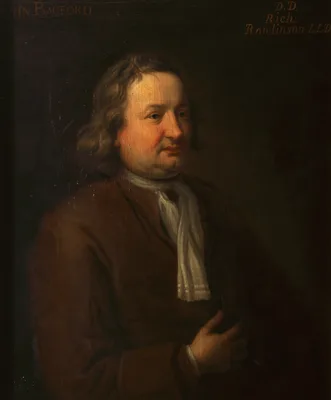
Includes an account of the discovery by Bagford’s friend and fellow antiquarian John Conyers of a flint handaxe in London, unearthed circa 1680 near the bones of what was then thought to be an elephant, as neith…
1975 CE
#7302
Dating a stalactite by electron paramagnetic resonance.
Ikeya introduced electron spin resonance dating; the first application dated a speleothem in Akiyoshi Cave, Japan. See R. Grün and C. B. Stringer, "Electron spin resonance dating and the evolution of modern human…
1953 CE
#7301
The solution of the Piltdown problem.
Exposure of the Piltdown fraud. Weiner, Oakley and Le Gros Clark found ample evidence of forgery in the Piltdown remains, including the use of artificial abrasion and staining; they also applied fluorine and nitrogen …
1844 CE
#7300
Comparative analysis of recent and fossil bones.

The presence of fluorine in fossil bones was first reported in 1803 by Italian chemist Domenico Morichini, and by the 1840s scientists had determined that (a) fluorine occurs in teeth and bone; (b) the fluorine conten…
1966 CE
#7299
Potassium-Argon dating by activation with fast neutrons.
Argon 40-argon 39 dating (Argon-argon dating). Astrophysicist Merrihue died in a mount-climbing accident at the age of 32.
2008 CE
#7298
Worlds before Adam: The reconstruction of geohistory in the age of reform.
1949 CE
#7297
Age determinations by radiocarbon content: checks with samples of known age.
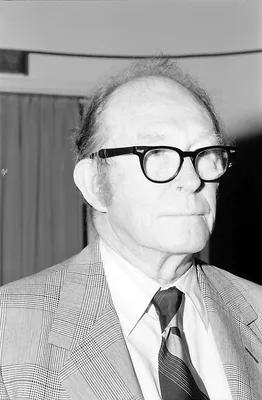
Introduction of radiocarbon dating for dating organic materials, including fossils (maximum 50,000 to 60,000 years old). With J. R. Arnold.
2007 CE
#7296
Le cercle d'Abbeville: Paléontologie et préhistoire dans la France romantique. Edition établie par Marie-Françoise Aufrère.
In May 1940 the Boucher de Perthes Museum in Abbeville was destroyed by bombing. However, in the years before the war Leon Aufrère made copies of archives and correspondence, which became the source material fo…
2007 CE
#7295
Finding time for the old stone age: A History of palaeolithic archaeology and quaternary geology in Britain, 1860-1960.

1878 CE
#7294
La méthode graphique dans les sciences expérimentales et particulièrement en physiologie et en médecine.
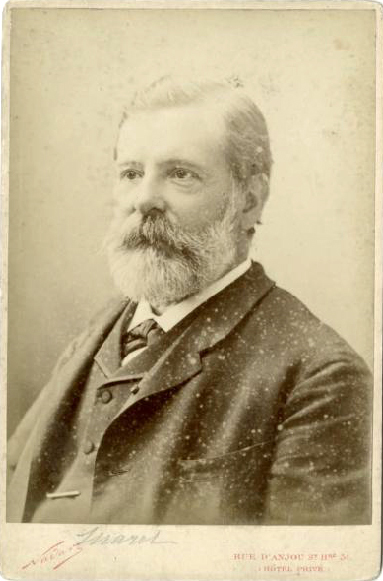
Marey pioneered the use of graphical recording in the experimental sciences, using instruments (many of his own invention) to capture and display data impossible to observe with the senses alone, and to record the pro…
1829 CE
#7293
Notice sur les ossemens humains fossiles des cavernes du Département du Gard, présentée à l’Académie des Sciences le 29 juin 1829.
Christol excavated of the caverns of Pondres and Souvignarges, northeast of Montpellier in the department of Gard. These caverns, which showed no evidence of accidental disturbance, contained human remains intermixed …
1799 CE
#7292
Mémoire sur les espèces d’éléphans vivantes et fossiles.
Using comparative anatomy, Cuvier demonstrated that the African elephant was a separate species from the Indian elephant, and that the fossil or “mammoth” elephant was yet another species distinct from the…
1800 CE
#7291
Account of flint weapons discovered at Hoxne in Suffolk.
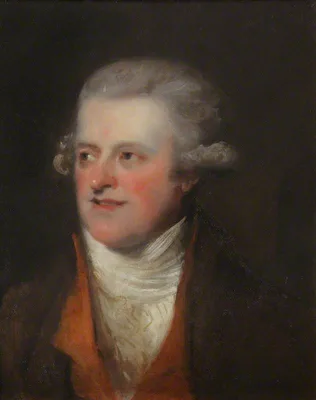
Frere described the discovery of several flint artifacts, which he believed to be “weapons of war,” associated with “some extraordinary bones, particularly a jaw-bone of enormous size of some unknown…
2010 CE
#7290
The complete mitochondrial DNA genome of an unknown hominin from southern Siberia.
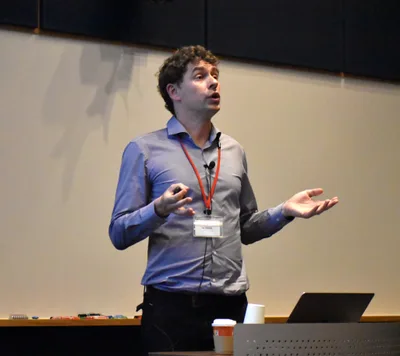
Svante Pääbo and collaborators reconstructed the genome of the Denisova hominins and announced that they were a new species, that they interbred with our species, and that the DNA results suggest that they h…
2014 CE
#7289
The complete genome sequence of a Neanderthal from the Altai Mountains.
First complete sequence of a Neanderthal genome. With more than 20 co-authors. In 2022 Pääbo was awarded the Nobel Prize in Physiology or Medicine "for his discoveries concerning the genomes of extinct homin…
1959 CE
#7288
A new fossil from Olduvai.
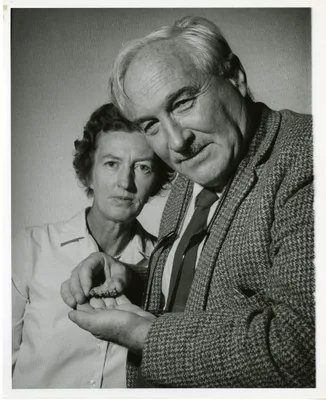
In 1959 Mary Leakey discovered the "Zinj" skull (OH 5) at Olduvai Gorge. This became the type specimen for Paranthropus boisei, arguably the most famous early human fossil from Olduvai in Northern Tanzania. The specie…
1880 CE
#7287
Breves apuntes sobre algunos objetos prehistóricos de la provincia de Santander
![SANZ DE SAUTUOLA, Marcelino [Marcelino DE SAUTUOLA] (1831 – 1888)](/media/portraits/10315)
Privately printed pamphlet asserting the prehistoric origin of cave paintings discovered in the cave of Altamira, Cantabria, Spain by Maria Sanz de Sautuola, daughter of the author. These were first prehistoric cave p…
2004 CE
#7286
A new small-bodied hominin from the Late Pleistocene of Flores, Indonesia.

In 2003 a joint Indonesian-Australian research team led by Michael Morwood found LB-1—a nearly complete female skeleton of a tiny human that lived about 80,000 years ago—in Liang Bua cave on the island of …
1997 CE
#7285
A hominid from the Lower Pleistocene of Atapuerca, Spain: possible ancestor to Neandertals and modern humans.
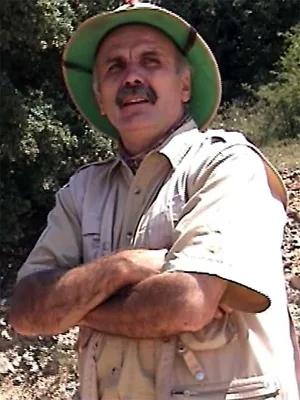

Homo antecessor, an extinct human species (or subspecies) dating from 1.2 million to 800,000 years ago, discovered in the Sierra de Atapuerca region of Northern Spain. With A. Rosas, I Martinez and M. Mosquera.
1985 CE
#7284
Early Homo erectus skeleton from west Lake Turkana, Kenya.
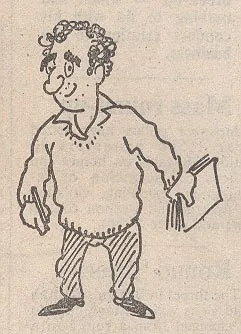

The Turkana Boy, (KNM-WT 15000) now called Nariokotome Boy, a Homo erectus fossil which was in 2016 the most complete early human skeleton found. It is a nearly complete skeleton of a hominin youth believed to be 1.5 …
1986 CE
#7283
The origin of the human race.
First publication in English by Alekseyev of Homo rudolfensis, primarily known from KNM-ER 1470, discovered in Koobi Fora in the Lake Turkana basin, Kenya. Alekseyev (Alexeev) first proposed the species in 1978, initi…
1968 CE
#7282
Sur la decouverte dans le Pleistocene inferieur de la valle de l'Omo (Ethiopie) d'une mandibule d'Australopithecien.
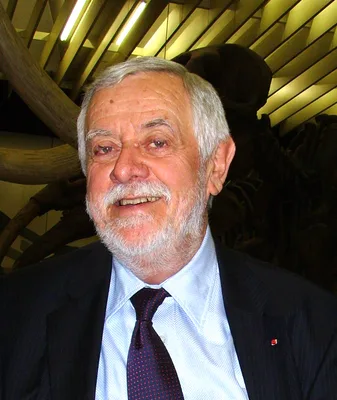
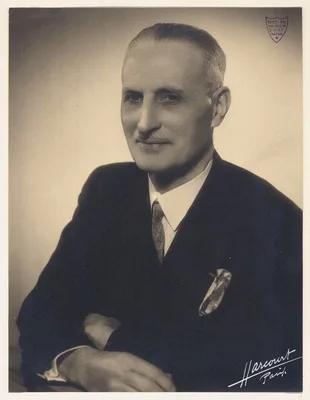
In 1967 Arambourg and Coppens discovered Omo 18, the first specimen of Paranthropus aethiopicus, also known as Paraustralopithecus aethiopicus; however it's classification as a new species was initially dismissed. In …
1938 CE
#7281
The Pleistocene anthropoid apes of South Africa.
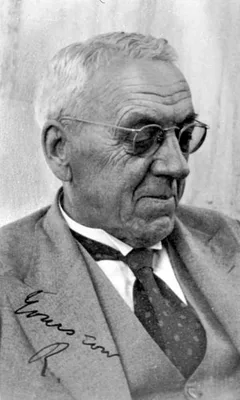
Paranthropus robustus, discovered by Broom in Kromdraal, South Africa, in 1938. The species is generally dated from about 2 million to 1.2 million years before present.
2010 CE
#7280
Australopithecus sediba: A New Species of Homo-Like Australopith from South Africa.
Matthew Berger, the young son of Lee Berger, discovered the first specimen of Australopithecus sediba, the right clavicle of MH1, on the 15th of August in 2008. This species of Australopithecus dates to about 2 millio…
2001 CE
#7279
New hominin genus from eastern Africa shows diverse middle Pliocene lineages.
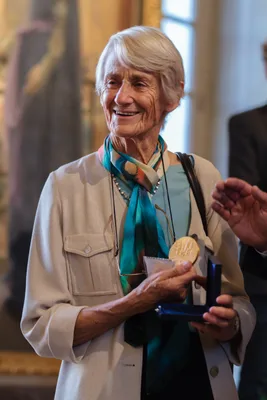
In 1998 and 1999, working in the Lake Turkana region of northern Kenya, Meave Leakey and her team found a cranium and other fossil remains of a 3.5 million year old hominin with a mixture of features unseen in other e…