
Facets
Browse across eight MeSH (opens in new tab) facets — era, geography, science, specialty, technology, history, culture, and reference. Select one tag per group; counts update across the others. What’s new in facet browse how facets relate to subjects and MeSH.
Clear filtersFacet filters
Geography
Specialties & Disease
- Anatomy & Pathology 765
- Cardiology & Blood 914
- Neurology & Psychiatry 1,258
- Obstetrics & Reproductive 551
- Infectious Disease (General) 147
- Surgery & Anesthesia 1,553
- Public Health 1,129
- Immunology & Dermatology 1,405
- General Clinical Medicine 487
- Military Medicine 436
- Psychology 202
- Alternative & Fringe Medicine 383
- Pediatrics 247
- Ophthalmology & Vision 412
- ENT & Hearing 293
- Urology & Nephrology 309
- Gastroenterology & Hepatology 316
- Pulmonary & Respiratory 233
- Rheumatology, Rehab & Pain 189
- Internal, Emergency & Geriatric 123
- Veterinary Medicine 165
- Epidemiology & Demography 397
- Physiology & Embryology 924
- Dentistry 259
- Plagues & Epidemics 1,279
- Microbiology & Virology 1,080
Social & Historical Studies
Institutions & Culture
Reference & Scholarly Works
397 entries match Epidemiology & Demography [N02.350 / K01.400.680]
1945
#9891
On the use of matrices in certain population mathematics.
"... the Leslie matrix is a discrete, age-structured model of population growth that is very popular in population ecology.... The Leslie matrix (also called the Leslie model) is one of the most well known ways to des…
1947
#10216
The ranks of death: A medical history of the conquest of America
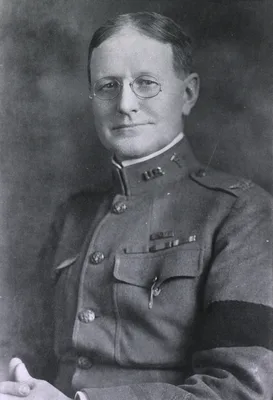
Digital facsimile from the Hathi Trust at this link.
1948
#1716
Medical statistics from Graunt to Farr.
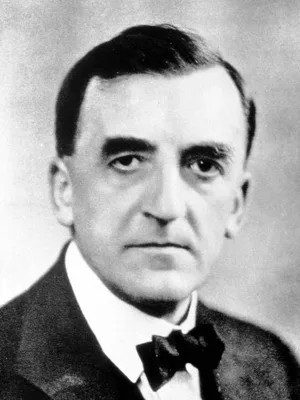
FitzPatrick Lectures, 1941 and 1943.
1950
#3215.2
Smoking and carcinoma of the lung. Preliminary report.
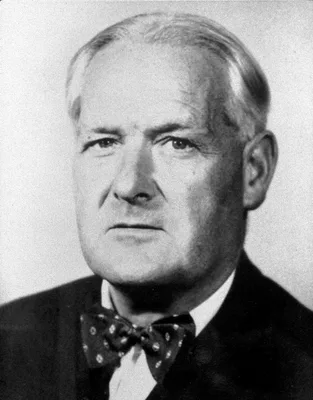
A study of 1,465 cases of lung cancer and 1,465 matched controls, which confirmed and extended the studies of Wynder and Graham, and others. See also later papers by the same authors in Brit. med. J., 1952, 2,1271-86;…
1950
#11571
The burden of diseases in the United States. 2 vols. (text + portfolio of color charts).
In this very attractively produced publication the authors called attention to the decreasing trend of death rates from infectious diseases and the increasing trend of death from chronic diseases such as cancer, cephr…
1950
#13804
The early smallpox epidemics in Europe and the plague of Athens after Thucydides.
1952
#1685
Man and epidemics.
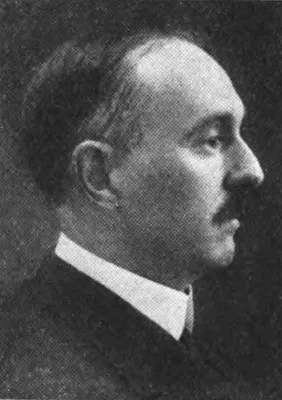
1952 –1961
#9033
World-atlas of epidemic diseases. Welt-Seuchen-Atlas: Weltatlas der Seuchenverbreitung und Seuchenbeweng. In collaboration with Richard-Ernst Bader ... [et al.]. Edited by Ernst Rodenwaldt; assistant scientific editors: Ludwig Bachmann, Helmut J. Jusatz. Organization, Heinz Dörrfuss. Cartography, Konrad Voppel, in cooperation with Fritz Hölzel and Henry Petersen. Sponsorship, Bureau of Medicine and Surgery, Navy Dept., Washington, D.C. 3 vols.
In English and German.
1953
#10504
Pest in Venedig 1575-1577. Ein Beitrag zur Frage der Infektkette bei den Pestepidemien West-Europas.
Rodenwaldt studied of the course of plague in Venice from 1575-1577 and the measures taken to combat the epidemic, considering symptoms, transmitter, environment, climatic influences, and the success and failure of th…
1955
#5500.1
Vergleichende sero-immunologische Untersuchungen über die Viren der Influenza und klassischen Geflügelpest.
Schäfer showed the close serological relationship between human influenza viruses and their avian counterparts and suggested that members of this group might change their host specificity.
1955
#10852
The epidemic of 1830-1833 in California and Oregon.
Digital facsimile from the Hathi Trust at this link.
1958
#4661.2
St. Louis encephalitis in 1933; observations on epidemiological features.
In a report to the Surgeon General in 1933, Lumsden concluded that the Culex mosquito was the vector of the St. Louis encephalitis virus. His report was not published until 1958.
1958
#9110
Late ancient and medieval population.
Digital facsimile from JSTOR at this link.
1959
#5111.4
Cholera.
Includes a section on the history of cholera. WHO Monograph Series,No. 43.
1964
#10363
Veterinary medicine and human health.
Foundational work on veterinary epidemiology. At the University of California, Davis in 1966 Schwabe founded the first epidemiology department and graduate program in a school of veterinary medicine. Unusually extensi…
1965
#1685.1
History and geography of the most important diseases.

Originally published in German, 1963.
1965
#7933
Epidemic disease in Mexico City 1761-1813: An administrative, social, and medical study.
1965
#10680
Epidemic disease in Ghana 1901-1960.
1965
#10883
The Environment and disease: Association or causation?
"In 1965, the English statistician Sir Austin Bradford Hill proposed a set of nine criteria to provide epidemiologic evidence of a causal relationship between a presumed cause and an observed effect. (For example, he …
1967
#7699
Sémiologie graphique: Les diagrammes. Les reseaux. Les cartes.

Foundational work in design and cartography concerning the graphic display of quantitative information. Includes display of medical or statistical information. Translated into English by William J. Berg as Semiology o…
1967
#10679
The sleeping sickness epidemic of Uganda 1900-1920: A study in historical geography.
1968
#10213
The Framingham Study: An epidemiological investigation of cardiovascular disease.
"The Framingham Heart Study is a long-term, ongoing cardiovascular cohort study on residents of the town of Framingham, Massachusetts. The study began in 1948 with 5,209 adult subjects from Framingham, and is now on i…
1968
#10802
Disease in the Civil War: Natural biological warfare in 1861-1865.
1968
#14303
Oral maintenance therapy for cholera in adults.


Abstract: "An oral solution containing glucose, sodium chloride, sodium bicarbonate, and potassium chloride or citrate was used as maintenance therapy for acute cholera. In comparison with control patients who receive…
1969
#8936
História da febre-amarela no Brasil.
Digital facsimile from bvsms.saude.gov.br at this link.
1969
#11322
Demography in early America: Beginnings of the statistical mind 1600-1800.
Covering the period 1600–1800, the author deals with demography in its economic, political, and social aspects. The work is particularly concerned with the development of health-related and scientific aspects of demog…
1970
#8380
George A Sacher, Life table modification and life prolongation. IN: Handbook of the biology of aging, edited by Caleb E. Finch and Leonard Hayflick, pp. 582–638.
"The building of a connection between the Gompertz equation and the biology of ageing owes much to the work of biophysicist George Sacher [10] of the Argonne National Laboratory, whose introduction to ageing stemmed f…
1970
#9099
History of human life span and mortality. Translated by K. Balás.
A particularly valuable collection of reviews ot his work published in Current Anthropology, I5 (1974) 495-507 is available from JSTOR at this link.
1971
#4672.5
A history of poliomyelitis.
1971
#10678
The role of the trypanosomiases in African ecology: A study of the Tsetse fly problem.
1971
#11818
A bibliography of Sir William Petty F.R.S. and of Observations on the bills of mortality by John Graunt F.R.S

1971
#13787
Selective epidemiologic control in smallpox eradication.

Foege showed that "ring containment", selective vaccination of those at greatest risk, in closest proximity to an outbreak, was more effective in eradicating smallpox than mass vaccination.
1971
#14304
Oral or nasogastric maintenance therapy in pediatric cholera patients.
1972
#9189
Disease and society in provincial Massachusetts: Collected accounts, 1736-1939.
Includes Caulfield's "A history of the terrible epidemic, vulgarly called the throat distemper, as it occurred in His Majesty's New England colonies between 1735 and 1740," Yale J Biol Med. 11 (1939) 219–272. availabl…
1973
#9131
Awakenings.

Revised editions, 1976 and 1991. "It recounts the life histories of those who had been victims of the 1920s encephalitis lethargica epidemic.[2] Sacks chronicles his efforts in the late 1960s to help these patients at…
1975
#7982
Historical statistics of the United States: Colonial times to 1970. Bicentennial edition. 2 vols.
Chapter B, "Vital statistics and health and medical care." Digital facsimile from the Internet Archive at this link; from the U. S. Census Bureau at this link.
1976
#9689
Plagues and peoples.

1977
#3215.7
Legionnaires’ disease. Description of an epidemic of pneumonia.
First major scientific account. With 11 co-authors. Legionnaire's disease acquired its name after an outbreak of a then-unknown "mystery disease" sickened 221 persons, causing 34 deaths. The people affected were atten…
1977
#7977
The native population of the Americas in 1492. Edited by William M. Devevan.
"The discovery of America was followed by possibly the greatest demographic disaster in the history of the world." Research by some scholars provides population estimates of the pre-contact Americas to be as high as 1…
1978
#8122
Graphic presentation of statistical information: Papers presented at the 136th annual meeting of the American Statistical Association, Social Statistics Section: Session of Graphical Methods for Presenting Statistical Data: Boston, Massachusetts, August 23-26, 1976, Vol. 3.
Digital facsimile from Google Books at this link.
1978
#10783
Erythema chronicum migrans and Lyme arthritis: Epidemiologic evidence for a tick vector.
The authors showed that a tick was the insect vector for Lyme disease. The tick (the "Deer Tick") is named lxodes dammini. Order of authorship in the original paper was Steere, Broderick, and Malawista. (Thanks to Jua…
1978
#13020
Epidemic disease in fifteenth century England: The medical response and the demographic consequences.
1979 –1984
#11817
Johann Peter Süssmilch. L'Ordre divin aux origines de la démographie. Traduction originale avec des études et commentaires rassemblés par Jacqueline Hecht. Vol. I: Études critiques, biographie, correspondance, bibliographie. Vol. 2: L' Oeuvre de J.P. Süssmilch, L'Ordre divin. Traduction de M. Kriegel. Vol. 3: Index des auteurs, des lieux et des matières. 3 vols.
A three-volume critical edition including the first edition in French.
1980
#11579
The Framingham Study: The epidemiology of atherosclerotic disease.
"The twenty-four year Framingham Study is a landmark in epidemiological investigation. Largely as a result of this study of the life habits and health of almost 6,000 men and women, atherosclerosis is no longer viewed…
1982
#10572
Demographic collapse: Indian Peru, 1520-1620.
The first in depth study of the demographic effects of the Spanish conquest. Cook estimated population size on the basis of archaeology, carrying capacity of the agricultural systems, disease mortality, depopulation r…
1983
#11376
Hemorrhagic colitis associated with a rare Escherichia coli serotype.
Order of authorship in the original publication: Riley, Remis, Helgerson. First description in print of a particularly virulent E.coli (0157-H7) infection, for which no antibiotics were effective; the only treatment b…
1983
#11814
U.S. cancer mortality rates and trends, 1950-1979. 4 vols.
Riggan supervised this long-term project of calculating and publishing cancer mortality rates and trends for every county in the United States over several decades. The last 30 of the 40 years of the underlying data b…
1984
#8622
American medicine and statistical thinking, 1800-1860.
1985
#8820
Doctors and slaves: A medical and demographic history of slavery in the British West Indies.
1985
#9104
Histoire de la démographie: La statique de la population des origines à 1914.
Digital facsimile from BnF Gallica at this link.