
Facets
Browse across eight MeSH (opens in new tab) facets — era, geography, science, specialty, technology, history, culture, and reference. Select one tag per group; counts update across the others. What’s new in facet browse how facets relate to subjects and MeSH.
Clear filtersFacet filters
Geography
Specialties & Disease
- Anatomy & Pathology 765
- Cardiology & Blood 914
- Neurology & Psychiatry 1,258
- Obstetrics & Reproductive 551
- Infectious Disease (General) 147
- Surgery & Anesthesia 1,553
- Public Health 1,129
- Immunology & Dermatology 1,405
- General Clinical Medicine 487
- Military Medicine 436
- Psychology 202
- Alternative & Fringe Medicine 383
- Pediatrics 247
- Ophthalmology & Vision 412
- ENT & Hearing 293
- Urology & Nephrology 309
- Gastroenterology & Hepatology 316
- Pulmonary & Respiratory 233
- Rheumatology, Rehab & Pain 189
- Internal, Emergency & Geriatric 123
- Veterinary Medicine 165
- Epidemiology & Demography 397
- Physiology & Embryology 924
- Dentistry 259
- Plagues & Epidemics 1,279
- Microbiology & Virology 1,080
Social & Historical Studies
Institutions & Culture
Reference & Scholarly Works
412 entries match Ophthalmology & Vision [C11]
1777
#5832
An account of persons who could not distinguish colours.
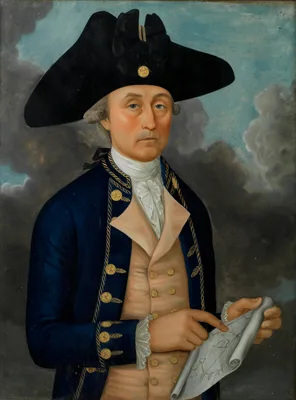
First reliable record of color blindness. Written in the form of a letter to Joseph Priestley, who communicated it to the Royal Society. Huddart was a British hydrographer, engineer and inventor.
1783
#5992
Bibliothecae ophthalmicae specimen primum eruditorum examini subjicit.
The earliest bibliography and history of ophthalmology.
1786
#5833
Essai sur l’éducation des aveugles, ou exposé des différens moyens, vérifiés par l'expérience, pour les mettre en état de lire, à l'aide du tact, d'imprimer des livres dans lesquels ils puissent prendre des connoissances, de langues, d'histoire, de géographie, de musique, &c., d'exécuter différens travaux relatifs aux métiers, &c.
Haüy founded the first school for the blind. To him belongs the honor of being the first to emboss paper as a means of creating raised type that could be read by the blind. His Essai originated modern methods of teach…
1789 –1790
#5833.1
Précis ou cours d’ opérations sur la chirurgie des yeux. 2 vols.,
The first separate book on ophthalmic surgery.
1791
#5833.2
Praktische Beobachtungen über verschiedene, vorzüglich aber über jene Augenkrankheiten, welche aus allgemeinen Krankheiten des Körpers entspringen.
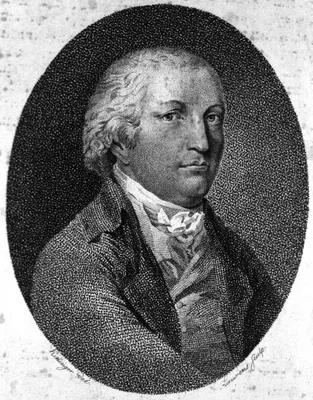
“This is the first monograph ever published dealing with ocular signs of systemic disease. It deals with lacrimal fistulas, trichiasis, adhesions of the lids, lid ulcers, ephiphora, and ocular inflammations. He illust…
1793
#1486
Observations on vision.
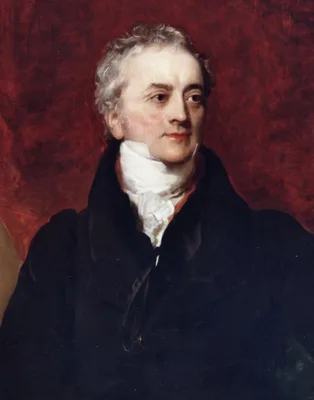
Thomas Young is regarded as one of the most versatile of all scientists. In the above work he showed that the act of accommodation is due to a change of curvature of the crystalline lens, whereby light rays of various…
1793
#9074
Elementos de cirurgia ocular offerecidos a Sua Alteza Real o Senhor D. João Principe do Brazil.
The first Portuguese book on ophthalmology. Santa Ana was the first Portuguese physician to specialize in ophthalmology. "He acknowledges (pp. vii-viii) that the section of the Elementos on anatomy and physiology is a…
1798
#5834
Extraordinary facts relating to the vision of colours.
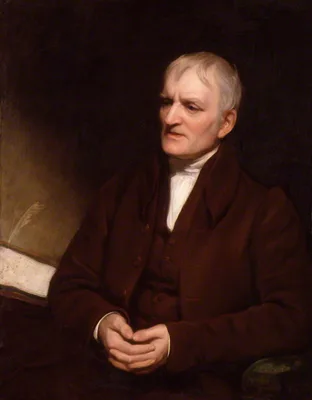
First scientific description of color-blindness, or “Daltonism”. Dalton himself suffered from red–green blindness. His paper was read to the Society in 1794.
1801
#1487
On the mechanism of the eye.
Includes the first description of astigmatism, with measurements and optical constants.
1801
#1489
Abbildungen des menschlichen Auges.
Soemmerring is best remembered for his fine anatomical illustrations, of which those devoted to the human eye are a good example. In 1791 he made important observations on the macula lutea: "De foramine centrali limbo…
1801
#5834.1
Ophthalmologische Beobachtungen und Untersuchungen oder Beyträge zur richtigen Kenntniss und Behandlung der Augen im gesunden und kranken Zustande. Erstes Stück.
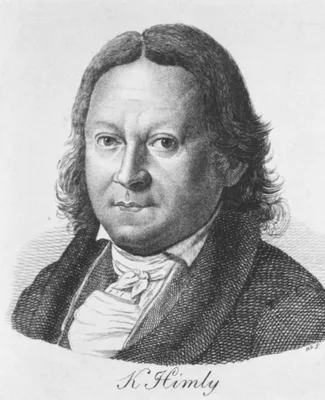
Himly used hyoscyamine to dilate the pupil to facilitate removal of the lens. (p. 97).
1801
#5835
Saggio di osservazioni e d’esperienze sulle principali malattie degli occhi.
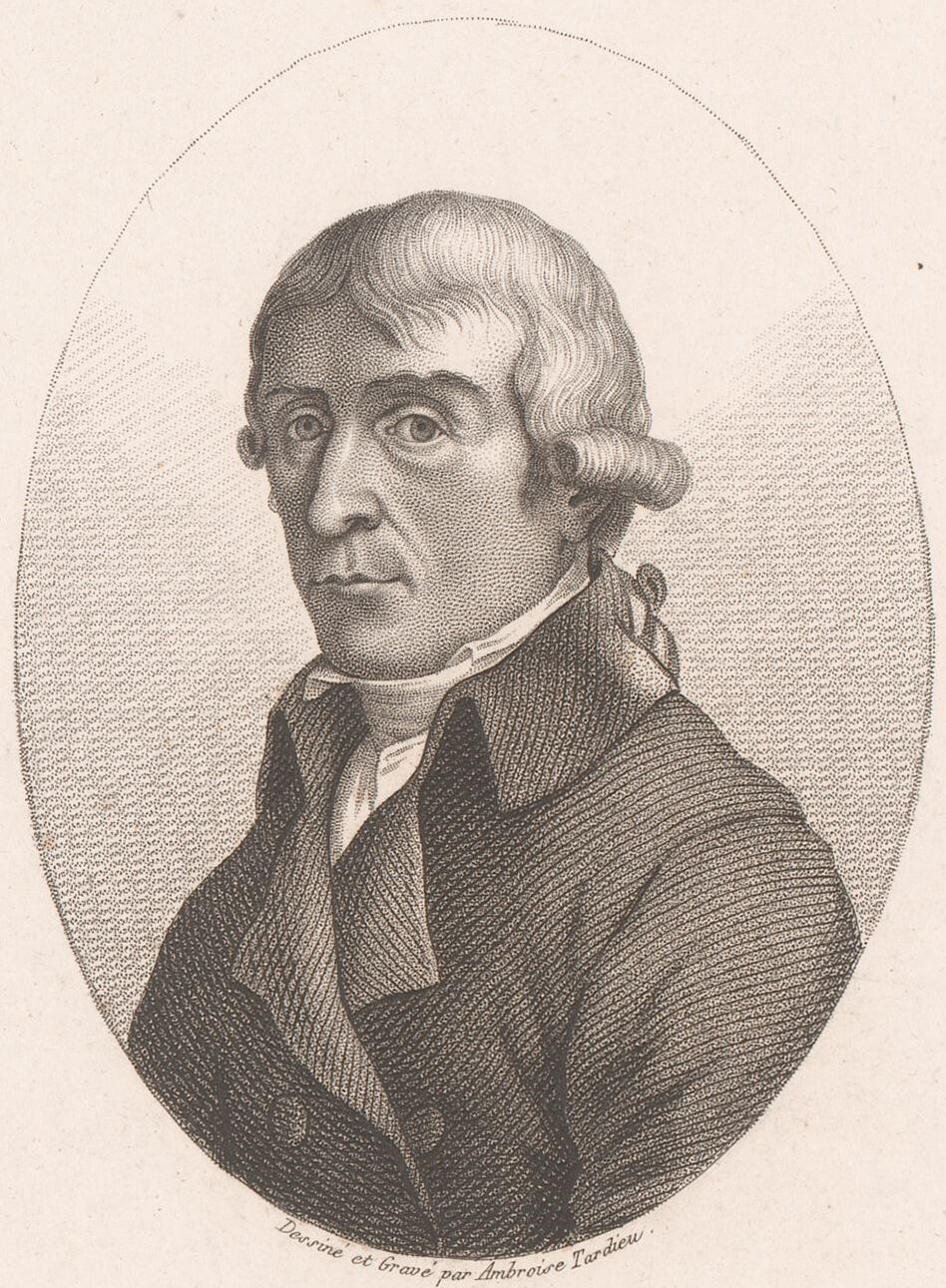
This beautifully illustrated work was the first textbook on the subject to be published in the Italian language. Its author has been called “the father of Italian ophthalmology”. English translation, London, 1806.
1801
#5836
Ueber Nachstaar und Iritis nach Staaroperationen.
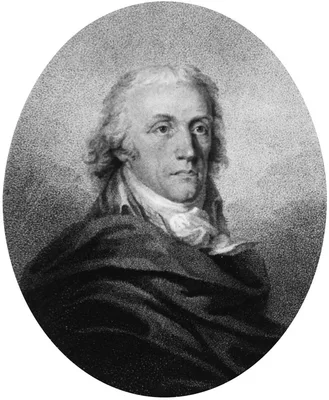
Inflammation of the iris was named iritis by Schmidt. In 1801, with Himly, he founded the first journal devoted to ophthalmology, the Ophthalmologische Bibliothek. Digital facsimile of Schmidt's 1801 work from the Int…
1802
#1488
On the theory of light and colours.
Young, the “Father of physiological optics”, established the wave theory of light, explaining the phenomena of interference and dispersion.
1803
#5838
Ueber die Krankheiten des Thränenorgans.
Schmidt was Professor of Ophthalmology at Vienna. Digital facsimile from Google Books at this link.
1806
#1490
Observations anatomiques sur quelques parties de l’oeil et des paupières. IN: Mémoires et observations sur l’anatomie, la pathologie, et la chirurgerie, pp. 193-207.
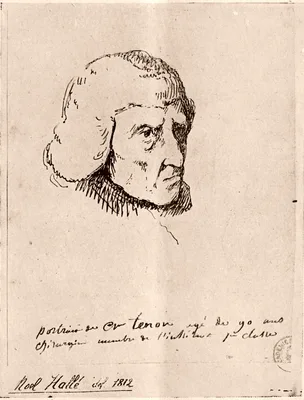
Although Tenon did not discover the fibrous capsule and the interfascial space of the orbit, they are named after him.
1808 –1818
#5840
Essays on the morbid anatomy of the human eye. 2 vols.
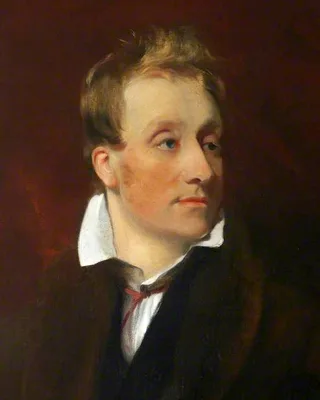
Wardrop was the first to classify the various inflammations of the eye according to the structures attacked. He was also the first to use the term “keratitis”.
1811
#5841
Prüfung der Keratonyxis, einer neuen Methode den grauen Staar durch die Homhaut zu recliniren oder zu zerstückeln.
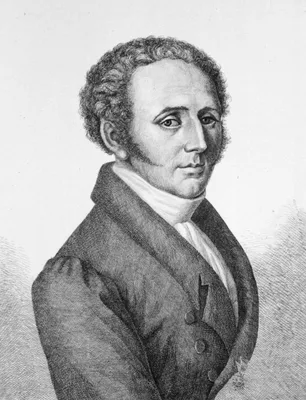
Langenbeck’s operation of iridencleisis for construction of artificial pupil. He was Professor of Anatomy and Surgery at Göttingen.
1813 –1817
#5842
Lehre von den Augenkrankheiten. 2 vols.
Beer is remembered for his textbook; the doctrines in it dominated practice for many years. He described the symptoms of glaucoma and noted the luminosity of the fundus in aniridia. He also presented for the first tim…
1817
#13247
Notice historique sur l'Institution Royale des Jeunes Aveugles.
The first book printed in heavily embossed type for the blind. In 1819 Sebastien Guillé issued a second edition of this work identifying himself as the author.
1818
#5842.1
Traité des maladies des yeux. 3 vols. and atlas.
Includes the first description of glaucoma in which heightened intraocular pressure is recognized, credit for which goes to the author’s father, Pierre Demours (1702-95), whose portrait appears in the atlas in recogni…
1819
#1491
An account of a membrane in the eye, now first described.
“Jacob’s membrane”, the layer of the retina containing the rods and cones.
1819
#1492
Beiträge zur Kenntniss des Sehens in subjectiver Hinsicht.
Purkynĕ’s graduation dissertation on the subjective visual phenomena earned for him the appreciation of Goethe and the chair of physiology at Breslau. Reprinted in his Opera omnia, vol. 1, pp. 1-56,1918. There were tw…
1820
#5843
A synopsis of the diseases of the eye.
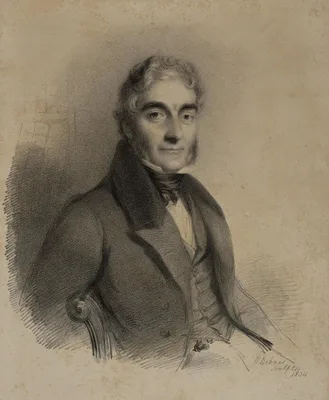
The earliest systematic treatise in English on diseases of the eye. The book became the authority in Europe and America. Travers, a pupil of Sir Astley Cooper, became surgeon to St. Thomas’s Hospital.
1823
#5844
A treatise on the diseases of the eye.
First American textbook of ophthalmology by the first American who is believed to have restricted his practice to diseases of the eye. Frick studied under Georg Beer in Vienna.
1823
#5845
Lectures on the operative surgery of the eye.
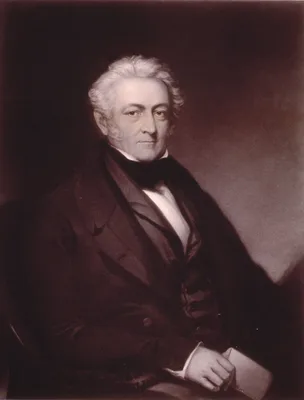
Guthrie founded the Royal Westminster Ophthalmic Hospital, London, in 1816. He was the earliest teacher of the subject in the British Isles. The above includes important work on the artificial pupil.
1823
#1492.1
Commentatio de examine physiologico organi visus et systematis cutanei.
Purkynĕ was first to examine the interior of the human eye and the dog eye, using only a candle and a concave spherical lens. He thus invented the ophthalmoscope three decades before Helmholtz (1851; No. 5866). Reprin…
1824
#1493
Recherches expérimentales sur les propriétés et les fonctions du système nerveux, dans les animaux vertébrés.
Experimental proof that vision depends on the integrity of the cerebral cortex. See No. 1391 for his first paper on the subject. Partial English translation in von Bonin, Some papers on the cerebral cortex, Springfiel…
1824
#1494
Description of a small muscle of the internal commissure of the eyelids.
Homer described the tensor tarsi (Horner’s) muscle, supplying the lacrimal apparatus. It was first described by Du Verney in 1749
1825
#1494.1
Beobachtungen und Versuche zur Physiologie der Sinne. Neue Beiträge zur Kenntniss des Sehens in subjectiver Hinsicht. 2 vols.
“Purkynĕ phenomenon” or “Purkynĕ shift”, a change in the apparent relative luminosity of colors in a dim light (scotopic vision) compared with that in full daylight (photopic vision). Also published in Rust’s Mag. ges…
1826
#1257
Zur vergleichenden Physiologie des Gesichtssinnes des Menschen und der Thiere.
Includes Müller’s law of specific nerve energies. For an English translation, see his Elements of physiology, transl. W. Baly, London, 1838, vol. 1, pp. 766-67. Includes (p. 73) his explanation of the color sensations…
1827
#5847
On a peculiar defect in the eye, and a mode of correcting it.
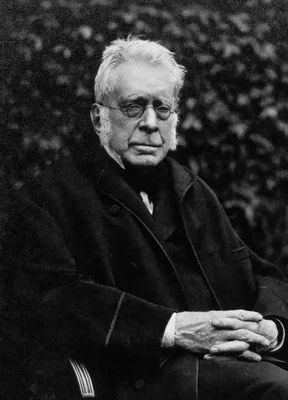
Airy, Britain's Astronomer Royal from 1835 to 1881, was the first to devise a sphereocylindrical lens for correcting astigmatism, a condition from which he himself suffered in his left eye. Airy's method is still used…
1829
#5742.1
Die Bildung neuer Augenlider (Blepharoplastik) nach Zerstörungen und dadurch hervorgebrachten Auswärtsweundungen derselben.
First extensive treatise on the use of pedicle grafts from the temple and cheek for supplying necessary skin for the reconstruction of deformed eyelids.
1829
#8925
Procede pour écrire les paroles, la musique et le plain-chant au moyen de points, a l’usage des aveugles et dispose pour eux.
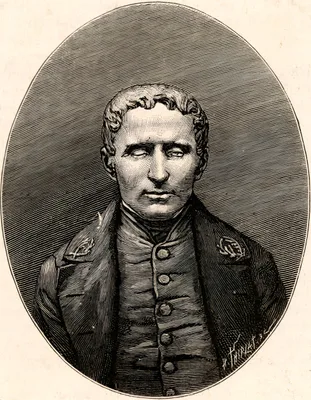
This large quarto volume of 4 preliminary leaves and 32 pages included the first presentation of the Braille system of printing and reading for the blind, which represents letters and numbers by combinations of six do…
1830
#1456.1
Arteriarum capitis superficialium icon nova.
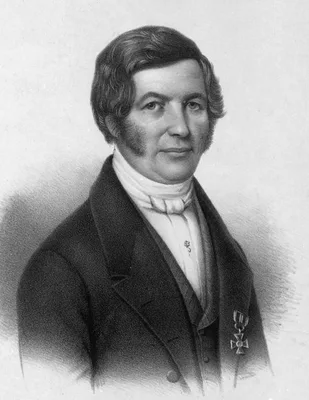
Includes description of the “canal of Schlemm”, the circular canal at the junction of the cornea and the sclerotic.
1830
#5848
A practical treatise on diseases of the eye.
In this book Mackenzie, one of the foremost ophthalmologists of his time, included a classic description of the symptomatology of glaucoma, and was probably the first to draw attention to the increase of intra-ocular …
1832
#1496
On a new membrane in the eye.
“Fielding’s membrane”, the tapetum of the retina.
1833
#5849
A treatise on the diseases of the eye.
Based on lectures delivered by Lawrence at the London Ophthalmic Infirmary. He was a surgeon to St. Bartholomew’s Hospital; he succeeded Abernethy as lecturer on surgery and did much to advance the surgery of the eye.
1834
#1497
The anatomy of the human eye.
First English work on ocular anatomy.
1835
#5850
De l’emploi de l’excision et de la cautérisation à l’aide du nitrate d’argent fondu dans l’ophthalmie blennorrhagique.
Silver nitrate for treatment of gonococcal ophthalmia. Digital facsimile from wellcomecollection.org at this link.
1836
#11430
Discoveries in light and vision; with a short memoir containing discoveries in the mental faculties.
The first work on vision written by a woman and published in the United States. Griffith published the work anonymously. "Griffith’s work had its start in print in 1834, when she published two articles on vision in Da…
1837
#5850.1
An inquiry into the possibility of transplanting the cornea, with the view of relieving blindness…
Bigger, a Dublin surgeon, successfully grafted a cornea of one gazelle onto that of another. According to this paper, he first performed this operation in 1835 while he was “a prisoner with a Nomadic tribe of Arabs, a…
1837
#5851
Procéde pour écrire au moyen des points.
Braille, himself blind, modified the system of elevated points first suggested by Charles Barbier in 1820 for enabling the blind to read. In 1837 he added symbols for mathematics and music to his six dot system.
1838
#1498
Contributions to the physiology of vision.
1838 –1847
#5852
Klinische Darstellungen der Krankheiten und Bildungsfehler des menschlichen Auges, der Augenlider und der Thränenwerkzeuge nach eigenen Beobachtungen und Untersuchungen. 4 pts.
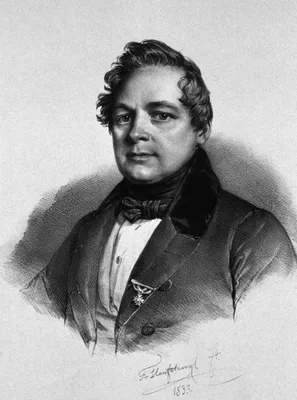
This great color-plate atlas is probably the best summary of the knowledge of diseases of the eye prior to the introduction of the ophthalmoscope.
1838
#5853
Guide pratique pour l’étude et le traitement des maladies des yeux. 2 vols.
Carron du Villards taught ophthalmology in Paris; his book is one of the best of the period.
1840 –1844
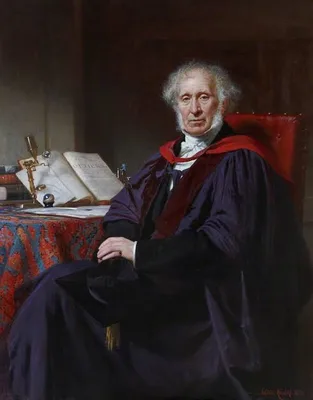
#1499
On the conversion of relief by inverted vision.
1840 –1844
#1500
On the knowledge of distance given by binocular vision.
1841
#5854
On the anatomy and pathology of certain structures in the orbit not previously described.
Ferrall’s operation for enucleation of the eyeball (p. 354).
1842
#5856
Ueber das Schielen und die Heilung desselben durch eine Operation.
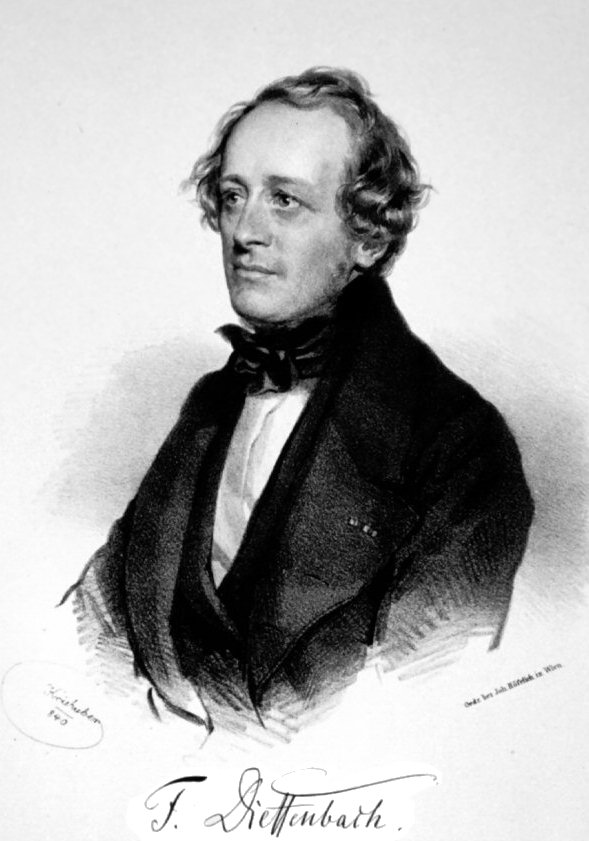
The first successful attempt at treating strabismus by myotomy. The operation was later abandoned owing to the frequently disastrous final effects. A preliminary paper appeared in Med. Ztg., 1839, 8, 227.