
Facets
Browse across eight MeSH (opens in new tab) facets — era, geography, science, specialty, technology, history, culture, and reference. Select one tag per group; counts update across the others. What’s new in facet browse how facets relate to subjects and MeSH.
Clear filtersFacet filters
Geography
Specialties & Disease
- Anatomy & Pathology 7
- Cardiology & Blood 94
- Neurology & Psychiatry 27
- Obstetrics & Reproductive 5
- Infectious Disease (General) 1
- Surgery & Anesthesia 76
- Public Health 8
- Immunology & Dermatology 50
- General Clinical Medicine 1
- Military Medicine 0
- Psychology 3
- Alternative & Fringe Medicine 0
- Pediatrics 44
- Ophthalmology & Vision 12
- ENT & Hearing 5
- Urology & Nephrology 0
- Gastroenterology & Hepatology 9
- Pulmonary & Respiratory 5
- Rheumatology, Rehab & Pain 4
- Internal, Emergency & Geriatric 0
- Veterinary Medicine 2
- Epidemiology & Demography 4
- Physiology & Embryology 23
- Dentistry 3
- Plagues & Epidemics 27
- Microbiology & Virology 22
Social & Historical Studies
Institutions & Culture
Reference & Scholarly Works
Drugs & Technology
94 entries match Cardiology & Blood [C14 / C15] · Genetics & Heredity [K01.900.300]
1937
#3096.1
Hemophilia. II. Some properties of a substance obtained from normal human plasma effective in accelerating the coagulation of hemophilic blood.
Antihemophilic globulin (factor VIII).
1937
#2576.5
The genetic and antigenic basis of tumour transplantation.
Gorer made the initial discoveries which formed the basis of transplantation genetics. He studied mouse blood groups and described an antigen in erythrocytes (antigen II). His studies established the laws of transplan…
1937
#11568
La angio-cardiografía radio-opaca.
Intravenous angiocardiography. This was the first publication that dealt with the normal cardiac structure and the changes seen in ventricular septal defect and pulmonary stenosis.
1937
#12352
Die Geschichte der angeborenen Herzkrankheiten.
A history of congenital heart disease covering cyanosis, foetal endocarditis and various malformations. Bedford 850.
1938
#3148.2
Recherches sur l’anémie érythroblastique infantile des peuples de la Méditerranée orientale. Étude anthropologique, étiologique et pathogénique. La transmission héréditaire de la maladie.
First evidence that thalassemia is genetically determined. Earlier report in Kliniki, Athens, 1936, 12, No. 5.
1938
#14088
Icterus gravis (erythroblastosis) neonatorum.
Darrow was the first to identify the cause of hemolytic disease of the newborn (HDN). Three years prior to the discovery of antibodies against the Rh antigen, Darrow correctly hypothesized that the disease was caused …
1939
#912
Blood groups.
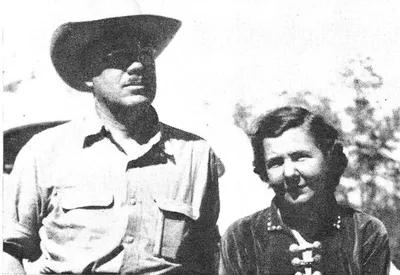
Boyd showed that blood groups are inherited and not changed by environment.
1939
#3039
Surgical ligation of a patent ductus arteriosus: Report of first successful case.
One of the earliest successful surgical repairs for congenital heart disease. See also later paper in Ann. Surg.,1939, 110, 321-56.
1940
#2923
Grosse pulmonaire. Petite aorte. Affection congénitale.
Idiopathic dilatation of the pulmonary artery reported. With D. Routier and R. Heim de Balsac.
1941
#3100
The rôle of iso-immunization in the pathogenesis of erythroblastosis fetalis.
Erythroblastosis fetalis due to rhesus incompatibility (Rh disease) between mother and child. With L. Burnham, E. M. Katzin, and P. Vogel.
1945
#3043
The surgical treatment of malformations of the heart in which there is pulmonary stenosis or pulmonary atresia.
The “Blalock-Taussig operation” for the relief of congenital defects of the pulmonary artery, Tetralogy of Fallot ("blue baby syndrome"). "The first surgical repair was carried out in 1944 at Johns Hopkins.[70] The pr…
1945
#3044
Congenital coarctation of the aorta and its surgical treatment.
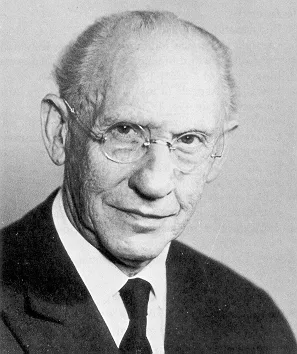
Crafoord and Gross (No. 3044.1) pioneered this basic operation in cardiac and pediatric surgery.
1945
#3044.1
Surgical correction for coarctation of the aorta.
Resection of coarctation and direct anastomosis of remaining ends. See also his report of 60 cases in J. Amer.med.Assoc.,1949, 139,285-92.
1945
#10653
Atrial septal defect: Study of hemodynamics by the technique of right heart catheterization.
The first description of the use of a cardiac catheter as a diagnostic tool, in this case a congenital heart defect. The authors worked in the laboratory of Eugene Stead, Jr. at Grady Memorial Hospital, Atlanta, Georgia.
1946
#3045
Anastomosis of the aorta to a pulmonary artery. Certain types in congenital heart disease.
With S. Smith and S. Gibson.
1947
#2878
Congenital malformations of the heart.
This 618-page work, which required ten years to write, was the first "definitive textbook" of congenital heart defects, a subspecialty of pediatrics that Taussig created. The second edition, published in 1960, was ess…
1948
#3046
Pulmonary valvulotomy for the relief of congenital pulmonary stenosis. Report of three cases.

"Brock performed the first successful valvotomies for isolated pulmonary stenosis in 1948. He gained access to the blood-filled beating heart through a small incision in the right ventricle through which he passed a v…
1948
#3107.1
Replacement transfusion as a treatment for erythroblastosis fetalis.
Exchange transfusion.
1948
#3107.2
The reduction of methaemoglobin in red blood cells and studies on the cause of idiopathic methaemoglobinaemia.
Cause of hereditary methemoglobinemia elucidated.
1948
#11766
Congenital anaomies of the heart and great vessels. Clinicopathologic study of 132 ases.
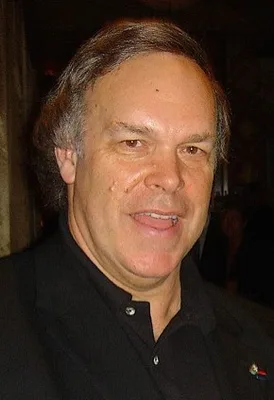
An extensively illustrated pathological-anatomical and physiological presentation with an historical approach.
1949
#3154.1
Sickle cell anemia, a molecular disease.
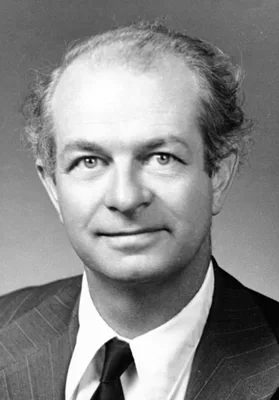
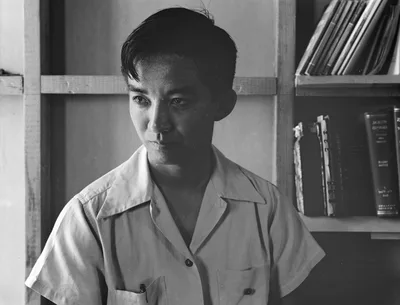
First recognition, by Pauling and colleagues, of a structural hemoglobin variant, and the beginning of the molecular approach to disease.
1949
#3154.2
The inheritance of sickle cell anemia.
Genetic evidence that sickle-cell disease is inherited in a simple Mendelian manner.
1949
#12289
Complete transposition of the aorta and a levoposition of the pulmonary artery; clinical, physiological, and pathological findings.
Taussig–Bing syndrome, a cyanotic congenital heart defect[1] in which the patient has both double outlet right ventricle (DORV) and subpulmonic ventricular septal defect (VSD).[2]
1950
#2882
Congenital heart disease.
A new classification proposed.
1951
#12238
Hydraulic formula for calculation of the area of the stenotic mitral valve; other cardiac valves, and central circulatory shunts.
In collaboration with his father, S. G. Gorlin, a mechanical engineer who designed hydraulic systems for gasoline engines at the beginning of the century, Richard Gorlin developed a formula to calculate the area of st…
1952
#3108.1
Christmas disease, a condition previously mistaken for haemophilia.
Christmas disease, hemophilia B, due to lack of Factor IX. Named after the patient whose case was the first recorded example. With six co-authors.
1954
#3047.6
Controlled cross circulation for open intracardiac surgery; physiologic studies and results of creation and closure of ventricular septal defects.
Warden and colleagues undertook the first repair of various cardiac anomalies. With M. Cohen, and R.C. Read.
1954
#11887
Protection afforded by sickle-cell trait against subtertian malarial infection.
Allison was the first to connect a hereditary disease (sickle cell disease) to an infectious disease (malaria). He proved that heterozygous and homozygous individuals to the sickle cell trait or disease respectively s…
1955
#3047.7
Controlled cross circulation for direct-vision intracardiac surgery; correction of ventricular septal defects, atrioventricularis communis, and tetralogy of Fallot.
Controlled cross circulation (human heart–lung “machine”) for intracardiac surgery.
1957
#3155.1
Gene mutations in human haemoglobin: the chemical difference between normal and sickle cell haemoglobin.
Sickle-cell hemoglobin differs from normal hemoglobin by a single amino acid (valine for glutamic acid).
1959
#3155.2
Genetic basis of the thalassaemia diseases.
1961
#3155.3
Stomatocytosis: a hereditary red cell anomaly associated with haemolytic anaemia.
With R. Sephton Smith and R. M. Hardisty.
1965
#11587
Congenital heart disease: Correlation of pathologic anatomy and angiography. 2 vols.
With Lewis Carey and Richard Lester.
1966
#3155.4
Man’s haemoglobins: including the haemoglobinopathies and their investigation.
Explains the current distribution of sickling throughout the world.
1966
#12369
Creation of an atrial septal defect without thoracotomy. A palliative approach to complete transposition of the great arteries.
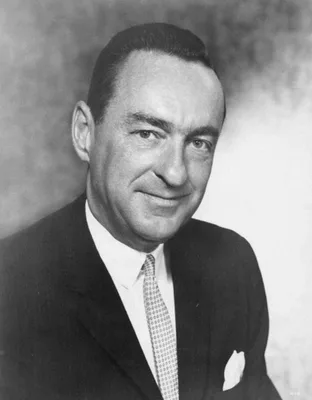
Rashkind balloon atrial septostomy to treat transposition of the great vessels.
1968
#6916
Molecular pathology of human haemoglobin.
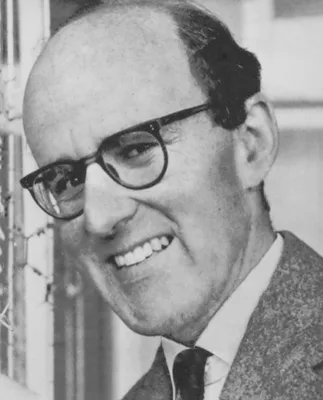
Perutz opened up "the field of 'molecular pathology,' relating a structural abnormality to a disease" (Aaron Klug, "Max Perutz 1914-2002," Science 295 ([2002] 2383). Specifically Perutz showed that hemoglobin molecule…
1973
#14089
Rh: The intimate history of a disease and its conquest.
1974
#12245
Diagnosis of cyanotic congenital heart malformations in infants by real-time, two-dimensional echocardiography.
Two-dimensional (cross-sectional) echocardiography.
1982
#12368
Congenital heart disease: Benchmark papers in human physiology.
1985
#10785
Enzymatic amplication of B-globin genomic sequences and restriction site analysis for diagnosis of sickle cell anemia.
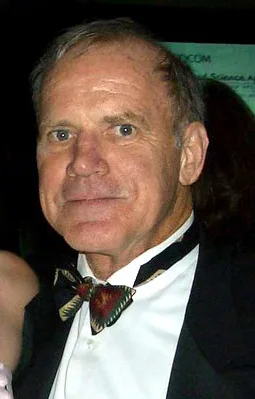
Polymerase chain reaction first published. With Randall K. Saiki, Stephen Scharf, Fred Faloona et al. Order of authorship in the original paper was Saiki, Scharf, Faloona, Mullis.... In 1993 the Nobel Prize in Chemist…
1995
#12364
The developing heart: A "history" of pediatric cardiology.
A memoir, largely from personal experience, of the developments in embryology, pathology, clinical features, treatment of congenital heart disease.
2001
#10335
Dying in the City of the Blues: Sickle cell anemia and the politics of race and health.
"Set in Memphis, home of one of the nation's first sickle cell clinics, Dying in the City of the Blues reveals how the recognition, treatment, social understanding, and symbolism of the disease evolved in the twentiet…
2011
#10972
The bleeding disease: Hemophilia and the unintended consequences of medical progress.
2021
#13478
CRISPR-Cas9 gene editing for sickle cell disease and ß-thalassemia.

First application of CRISPR gene editing in the successful cure of diseases. Order of authorship in the original publication: Frangoul, Altshuler, Cappellini. (Thanks to Juan Weiss for this reference and its interpret…