
Facets
Browse across eight MeSH (opens in new tab) facets — era, geography, science, specialty, technology, history, culture, and reference. Select one tag per group; counts update across the others. What’s new in facet browse how facets relate to subjects and MeSH.
Clear filtersFacet filters
Geography
Specialties & Disease
- Anatomy & Pathology 7
- Cardiology & Blood 6
- Neurology & Psychiatry 9
- Obstetrics & Reproductive 0
- Infectious Disease (General) 1
- Surgery & Anesthesia 17
- Public Health 11
- Immunology & Dermatology 13
- General Clinical Medicine 5
- Military Medicine 1
- Psychology 8
- Alternative & Fringe Medicine 0
- Pediatrics 0
- Ophthalmology & Vision 0
- ENT & Hearing 0
- Urology & Nephrology 1
- Gastroenterology & Hepatology 1
- Pulmonary & Respiratory 1
- Rheumatology, Rehab & Pain 7
- Internal, Emergency & Geriatric 3
- Veterinary Medicine 0
- Epidemiology & Demography 24
- Physiology & Embryology 24
- Dentistry 1
- Plagues & Epidemics 8
- Microbiology & Virology 6
Social & Historical Studies
Institutions & Culture
Reference & Scholarly Works
Drugs & Technology
24 entries match Physiology & Embryology [G07 / G02.149] · Physics, Math & Biomechanics [K01.900.400]
1667
#577
Elementorum myologiae specimen.
In this work Stensen, in collaboration with the mathematician Vincenzio Viviani (1622-1703), a pupil of Galileo, developed a geometrical description of muscular contraction, and attempted to show theoretically that mu…
1680 –1681
#3669.3
De motu animalium. 2 pts.
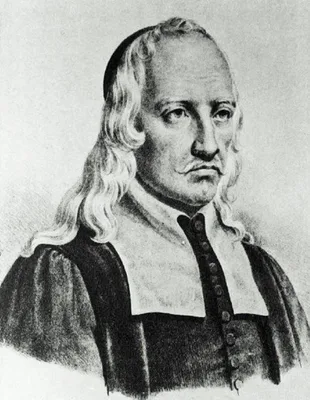
Borelli originated the neurogenic theory of the heart’s action and first suggested that the circulation resembled a simple hydraulic system. He was the first to insist that the heart beat was a simple muscular contrac…
1683
#4162
De urinis et pulsibus de missione sanguinis de febribus de morbis capitis, et pectoris.
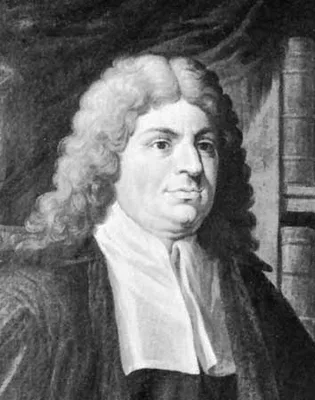
Bellini began to develop his hydraulic iatromechanics in this work, in which he considered the blood as a physical fluid with simple mechanical and mathematicizable properties. He realized the value of the urine as an…
1708
#11673
An account of animal secretion, the quantity of blood in the humane body, and muscular motion.
Keill applied measurement and mathematics in his researches, claiming the "first calculations of the absolute velocity at which blood travels through the aorta and smaller vessels; he also recognized that the blood's …
1738
#11713
Dissertatio de structura et motu musculari.
This was the text of the first Croonian Lecture at the Royal Society. In it Stuart promoted a strictly hydraulic iatromechanism as a theory of muscular motion. This work was translated into English in 1739. Digital fa…
1833
#411.1
The hand: Its mechanism and vital endowments as evincing design.
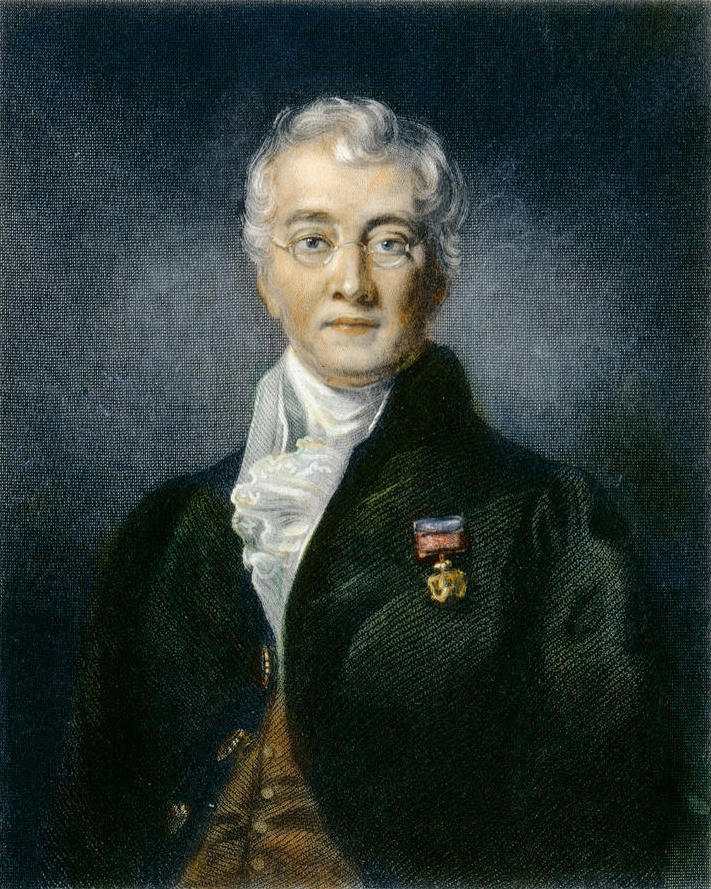
Classic work on the anatomy, physiology, bio-mechanics, comparative anatomy, and adaptive importance of the hand. Issued as a volume in a series entitled the "Bridgewater Treatises." The first edition has 288pp. An en…
1836
#604
Mechanik der menschlichen Gehwerkzeuge. 1 vol. and atlas.
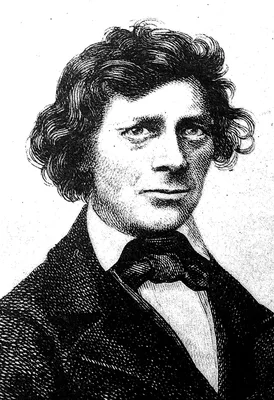
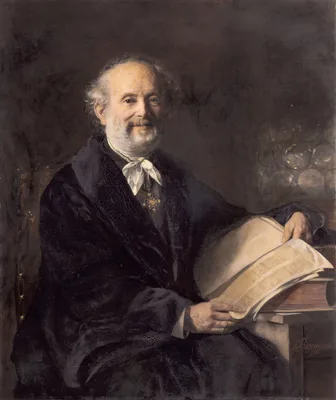
A pioneering study of the physiology and biomechanics of motion and locomotion. The atlas contains four illustrations that were printed directly from actual bones embedded in plaster of Paris. This is one of the only …
1891
#637
Die Bewegungen des Kniegelenkes.
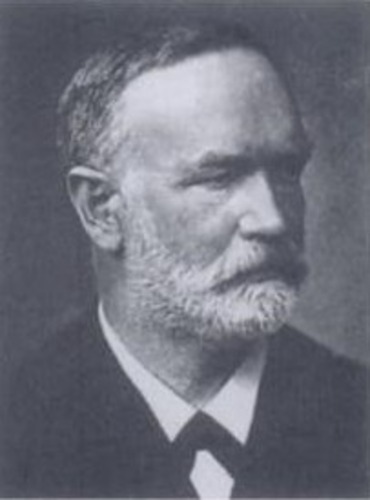
Investigation of the mechanics of motion of the knee joint on mathematical lines. See also No. 645.
1891
#638
Le travail musculaire et l’énergie qu’il représente.
Important studies on thermodynamics of muscular work.
1892
#641
Das Gesetz der Transformation der Knochen.
“Wolff’s law” stated that every change in form and function of a bone, or in its function alone, is followed by certain definite changes in its internal architecture and equally definite secondary alterations in its m…
1895 –1904
#645
Der Gang des Menschen. 1-6 Abt. (All published.)
Classic study of the human gait. The authors calculated the external and internal forces involved in walking and described the kinematics and kinetics of the movement. Because of Braune's death in 1892 he could only c…
1899
#12286
Die Grundform des arteriellen Pulses.
"The First Mathematical Description of the Pressure-Volume Diagram "Not until 60 years after 1899 Otto Frank's mathematical formulation of the volume-pressure diagram and his concept of the mechanism of the cardiac wo…
1963
#8149
Representation of a Function by its Line Integrals, with Some Radiological Applications.
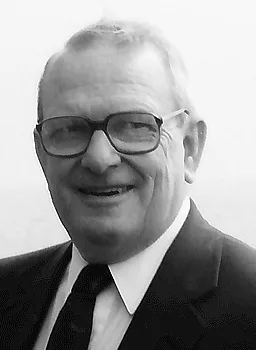
Cormack showed that changes in tissue density could be computed from x-ray data. Because of limitations in computing power no machine was constructed during the 1960s. Cormack's papers generated little interest until …
1965
#8834
Computers in biomedical research. Edited by Ralph W. Stacy and Bruce Waxman. 2 vols.

Section A, Chapter 2: "New mathematical methods in the life sciences" by George B. Dantzig. Section D, Chapter 12: "The application of computers to electroencephalography" by Mary A. B. Brazier. Section E, Chapter 13:…
1966
#14064
"Fertile" intestine nuclei.
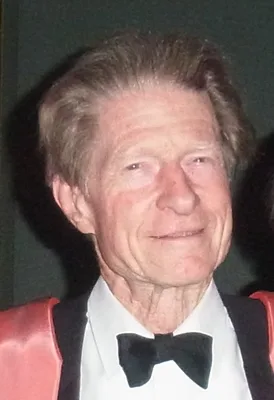
Gurdon and Uehlinger replaced the cell nucleus of frog ova with frog intestinal nuclei to generate tadpoles, some of which became fertile adult male and female frogs. In 2012 the Nobel Prize in Physiology or Medicine …
1968
#11551
Hydrodynamics and hydraulics by Daniel Bernoulli and Johann Bernoulli. Translated by Thomas Carmody and Helmut Kobus.
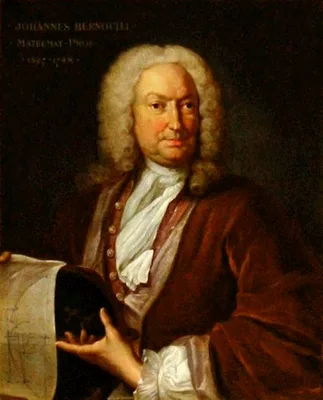
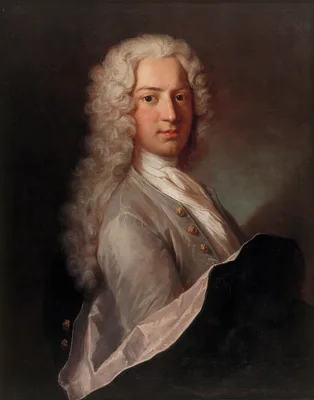
Daniel Bernoulli’s Hydrodynamica, published in 1738, marks the first appearance of many topics central to modern science - from the kinetic theory of gases to the principles of jet propulsion. John Bernoulli’s Hydraul…
1973
#2700.4
Computerized transverse axial scanning (tomography).
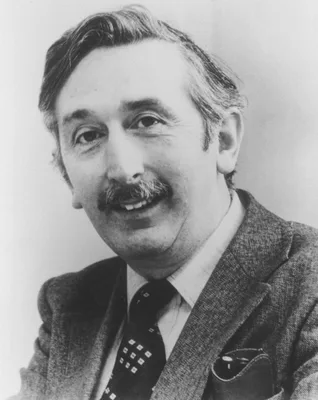
Hounsfield invented computer-assisted tomography (CAT), or computed tomography (CT). In 1979 Hounsfield shared the Nobel Prize in Physiology or Medicine with Allen M. Cormack "for the development of computer assisted …
1981
#13285
Establishment in culture of pluripotential cells from mouse embryos.
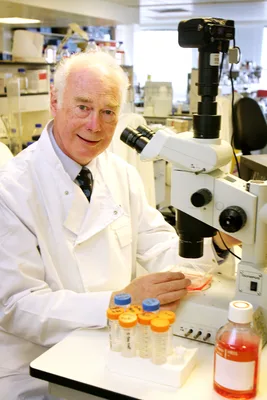
Evans and Kauffman were the first to identify, isolate and successfully culture embryonic stem cells using mouse blastocysts. This discovery opened the doors to the creation of “murine genetic models” -- mice that hav…
1987
#13931
Site-directed mutagenesis by gene targeting in mouse embryo-derived stem cells.
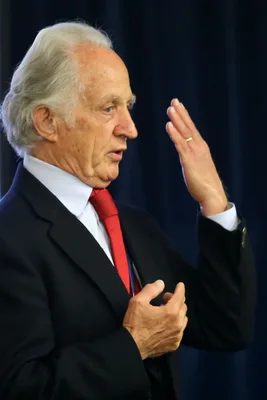
In 2007 Capecchi shared the 2007 Nobel Prize in Physiology or Medicine with Martin J. Evans and Oliver Smithies "for their discoveries of principles for introducing specific gene modifications in mice by the use of em…
1987
#13940
Targeted correction of a mutant HPRT gene in mouse embryonic stem cells.
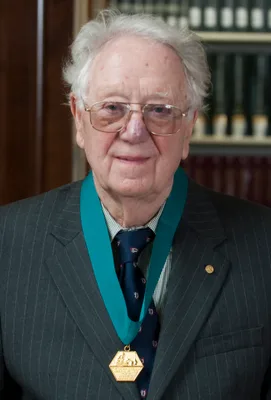
Smithies discovered, simultaneously with Mario Capecchi and Martin Evans, the technique of homologous recombination of transgenic DNA with genomic DNA, a much more reliable method of altering animal genomes than previ…
1997
#7457
Viable offspring derived from fetal and adult mammalian cells.
Cloning of the lamb Dolly, the first mammal to be cloned from an adult cell. Her birth established that the nuclei of at least some adult cells can be used to produce sheep or other animals that are genetically identi…
1998
#13286
Embryonic stem cell lines derived from human blastocysts.
Thomson and collaborators first isolated embryonic stem cells from human blastocysts. Order of authorship in original publication: Thomson, Itskovitz-Eldor, Shapiro et al. Available online from science.sciencemag.org …
2006
#13287
Induction of pluripotent stem cells from mouse embryonic and adult fibroblast cultures by defined factors.

Takahashi and Yamanaka reprogrammed mice fibroblast cells, which can produce only other fibroblast cells, to become pluripotent stem cells, which have the capacity to produce many different types of cells. This they a…
2018
#14146
Cloning of Macaque monkeys by somatic cell nuclear transfer.
The authors at the Chinese Academy of Sciences in Shanghai reported the first cloning of a non-human primate. Full text available from cell.com at this link. Order of authorship in the original publication: Liu, Cai..…