
Facets
Browse across eight MeSH (opens in new tab) facets — era, geography, science, specialty, technology, history, culture, and reference. Select one tag per group; counts update across the others. What’s new in facet browse how facets relate to subjects and MeSH.
Clear filtersFacet filters
Geography
Specialties & Disease
- Anatomy & Pathology 765
- Cardiology & Blood 914
- Neurology & Psychiatry 1,258
- Obstetrics & Reproductive 551
- Infectious Disease (General) 147
- Surgery & Anesthesia 1,553
- Public Health 1,129
- Immunology & Dermatology 1,405
- General Clinical Medicine 487
- Military Medicine 436
- Psychology 202
- Alternative & Fringe Medicine 383
- Pediatrics 247
- Ophthalmology & Vision 412
- ENT & Hearing 293
- Urology & Nephrology 309
- Gastroenterology & Hepatology 316
- Pulmonary & Respiratory 233
- Rheumatology, Rehab & Pain 189
- Internal, Emergency & Geriatric 123
- Veterinary Medicine 165
- Epidemiology & Demography 397
- Physiology & Embryology 924
- Dentistry 259
- Plagues & Epidemics 1,279
- Microbiology & Virology 1,080
Social & Historical Studies
Institutions & Culture
Reference & Scholarly Works
397 entries match Epidemiology & Demography [N02.350 / K01.400.680]
1907
#5321
The part played by Pediculus corporis in the transmission of relapsing fever.
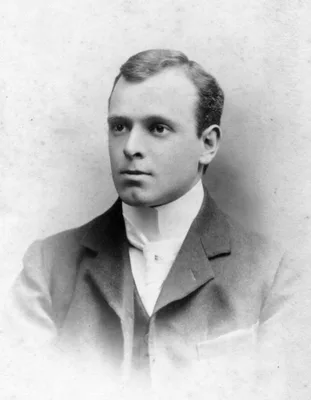
Proof that relapsing fever is conveyed by the body louse, Pediculus corporis.
1907
#12138
Plague in Queensland, 1900-1907.
Ham was Queensland's first Commissioner of Public Health. Extensively illustrated. Digital facsimile from the Internet Archive at this link.
1908 –1912
#1681
Abhandlungen aus der Seuchengeschichte und Seuchenlehre. Pt. 1: Die Pest. Pt. 2: Die Cholera. 2 vols. in 3.
1908
#5477
Ueber ein neues invisibles Virus.
Doerr showed the relation of phlebotomus fever to the sandfly, Phlebotomus.
1911
#1710
La dépopulation de la France: Ses conséquences, ses causes, mésures à prendre pour la combattre.
Digital facsimile from the Internet Archive at this link.
1911
#5460.1
Fiebre amarilla y fiebre espiroquetal; endemias y epidemias en Muzo, de 1907 a 1910.
Franco, J. Martínez-Santamaria, and G. Toro-Villa described epidemics of yellow fever spread by mosquitoes other than Ae. aegypti. Later F. L. Soper, et al., Amer. J. Hyg., 1933, 18, 555-87, substantiated this.
1911
#7762
Observations upon the natural history of epidemic diarrhoea.
Diarrhoea was one of the chief causes of child mortality in Great Britain at the turn of the century. Peters begins with a statistical study of age incidence, prevalence, and fatality of the condition and then in succ…
1912
#8407
On mortality and the causes of death according to occupations. IN: Transactions of the 15th International Congress on Hygiene Demography, pp. 336-339.
Bertillon, brother of Alphonse Bertillon, was Chief of Statistical Services for the city of Paris. His classification of diseases was based on the principle, adopted by Farr, of distinguishing between general diseases…
1913
#1641
Preventive medicine and hygiene by Milton J. Rosenau. With chapters on sewage and garbage by George C. Whipple...Vital statistics by Cressy L. Wilbur...The prevention of mental diseases by Thomas W. Salmon.
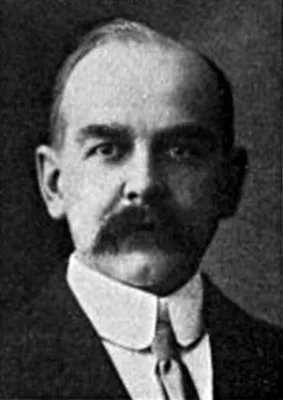
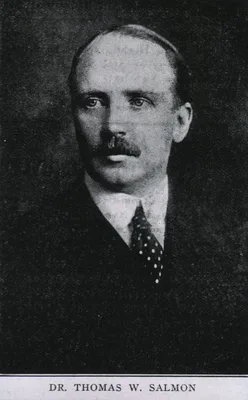
Digital facsimile of the 1913 edition from the Internet Archive at this link. There were numerous later revised editions.
1915
#2641
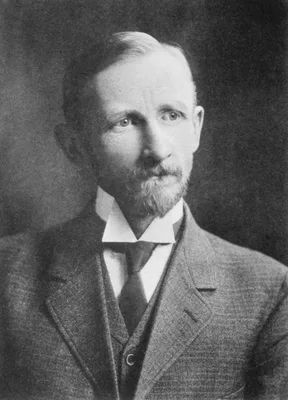
The mortality from cancer throughout the world.
1916
#1682
Epidemics resulting from wars. Edited by Harald Westergaard.
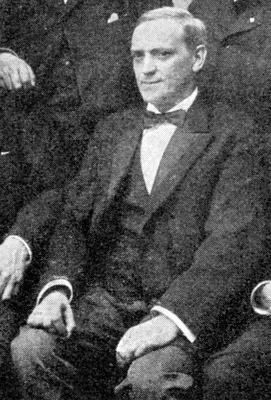
Digital facsimile from the Internet Archive at this link.
1917
#4648
The Australian epidemics of an acute polio-encephalomyelitis (X disease).
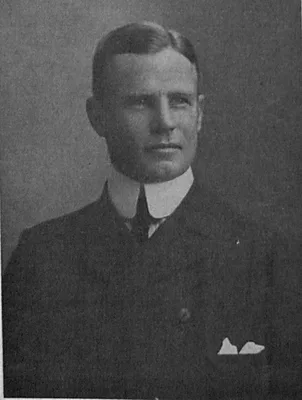
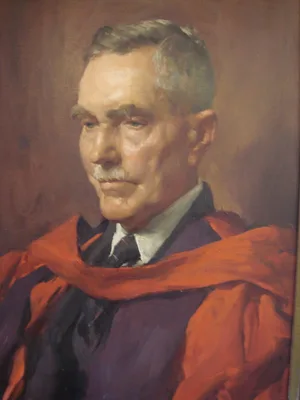
Campbell was Australia's first neurologist. This paper described Murray Valley encephalitis (Australian X disease). Cleland and Campbell isolated a virus from the cerebral tissue of three patients.
1917
#4649
Quarante cas d’encéphalo-myélite subaiguë.
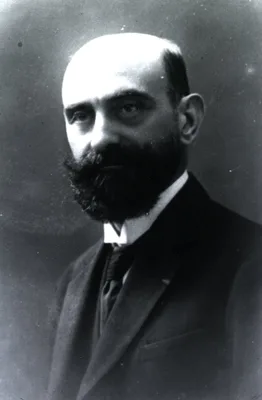
Cruchet’s account of epidemic encephalitis was given on 27 April 1917, preceding that of Economo by 13 days. With F. Moutier
1917
#4650
Encephalitis lethargica.
Economo’s classic description of epidemic encephalitis (“von Economo’s disease”) was published on 10 May 1917; see No. 4649.
1918
#11922
"Spanish influenza," "Three-day fever," "The flu".
Public health advice from the U.S. Public Health Service published during the pandemic.
1919
#4651
Etiology of epidemic (lethargic) encephalitis. Preliminary note.
Experimental transmission of encephalitis lethargica.
1920
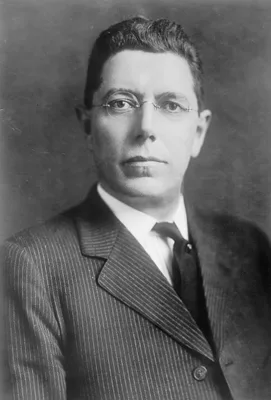
#1712
On the rate of growth of the population of the United States since 1790 and its mathematical representation.
1920
#5492
Report on the pandemic of influenza 1918-19.
Reports on Public Health and Medical Subjects, No. 4. The most widespread and serious pandemic of influenza occurred in 1918-19. It spread throughout Europe, Russia, Canada, S. America, New Zealand, Australia, Africa,…
1920
#11921
Special tables of mortality from influenza and pneumonia in Indiana, Kansas, and Philadelphia, Pa., September 1 to December 31, 1918.
Digital facsimile from the Hathi Trust at this link.
1920
#12068
Mortality Statistics 1918. Nineteenth Annual Report.
From Causes of Death, p. 27: "Influenza and pneumonia (All forms). "In 1918 the registration area (exclusive of Hawaii) 477,467 deaths wee assigned to influenza and pneumonia (all forms). In the latter part of that ye…
1921
#11920
Influenza: An epidemiological study. The American Journal of Hygiene. Monographic Series No. 1.
A comprehensive survey written two years after the pandemic, including historical information back to 1893. Digital facsimile from Google Books at this link.
1921
#12069
Mortality statistics 1919. Twentieth annual report.
From "Influenza and pneumonia (All forms)" p. 28: "In the later part of 1918 a pandemic of influenza swept over the country and did not fully spend its force until well into 1919.... "In the registration area (exclusi…
1922
#137
The biology of death.
Raymond Pearl did important work on the subject of vital statistics.
1922
#1713
The population problem: A study in human evolution.
1922
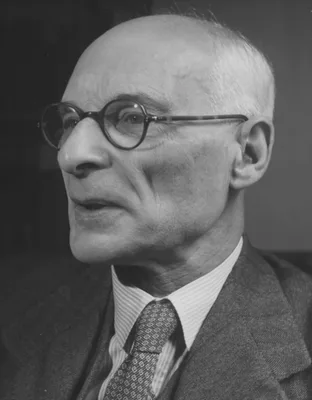
#11919
The etiology and epidemiology of influenza.
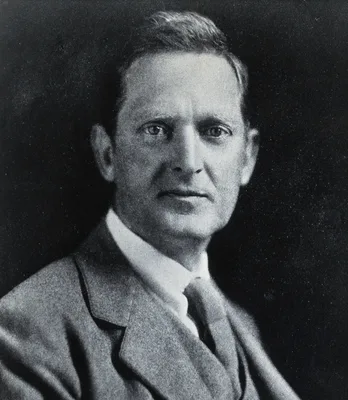
Digital facsimile from Harvard Library at this link.
1922
#12637
Die epidemische Encephalitis. (Monographien aus dem Gesamtgebiete der Neurologie und Psychiatrie. Bd. 30).
Felix Stern was the leading German specialist in encephalitis lethargica . No national statistics for this disease, first described in Vienna in 1916, were kept in Germany. For this reason, the data collected by Stern…
1923
#5228
Epidemics I and III. In [Works] with English translation by W.H.S. Jones, 1, 139-287
![HIPPOCRATES, [Ἱπποκράτης; Hippocrates of Kos] (-460 – -370)](/media/portraits/50)
Hippocrates may be regarded as the first malariologist; he clearly and fully described the intermittent fevers; he was acquainted with seasonal and topographical variations in the distribution of malaria; and he recog…
1923
#1672
Epidemics I and III. In: [Works] with an English translation by W.H.S. Jones.
Hippocrates introduced the inductive method of studying epidemics.
1923
#12109
A treatise on influenza, with special reference to the pandemic of 1918.
Sen, company doctor on the Hurmutty Tea Estate in Assam, estimated that the pandemic killed about 15,000,000 people in India.
1923
#12588
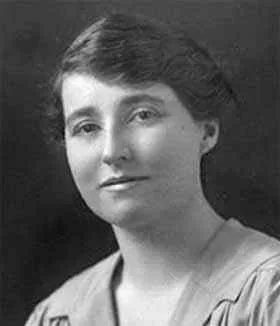
The relation between home conditions and the intelligence of school children. From data collected by the late Mrs. Frances Wood. Privy Council. Medical Report Council. Special reports series No. 74.
1926
#10468
Population problems of the age of Malthus.
Includes chapters on birth and marriage rates relating to conditions of employment, also the influence of the Poor Laws on these rates. Other chapters concern agriculture and food and health of towns and factores, and…
1928
#4654
Ueber die Encephalitis epidemica in Japan.
Japanese encephalitis distinguished from encephalitis lethargica.
1929
#12642
Die Encephalitis lethargica, ihre Nachkrankheiten und ihre Behandlung.
Translated and adapted by K. O. Newman as Encephalitis lethargica its sequelae and treatment. London: Oxford University Press, 1931.
1930
#5540
En Bornholmsk epidemi-myositis epidemica.
First full description of epidemic myositis, “Bornholm disease”. See also Sylvest’s monograph on the subject, London, 1934.
1931
#5468
Yellow fever: an epidemiological and historical study of its place of origin. Edited by Laura Armistead Carter and Wade Hampton Frost.
Digital facsimile from the Internet Archive at this link.
1932
#1683
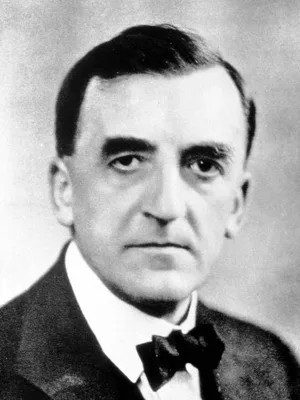
Epidemiology, historical and experimental.
1932
#12051
Le pèlerinage de la Mecque au point de vue religieux, social et sanitaire par le docteur Duguet. Avec un préface de Justin Godart.
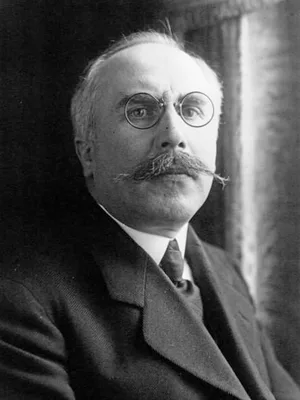
"Duguet also served as inspector general of health services of Lebanon and Syria under the French Mandate and was responsible for the medical supervision of the pilgrimage to Mecca. The first part of the book gives so…
1934
#4657
Übertragung des Virus von Encephalitis epidemica auf Affen.
Experimental transmission of Japanese B encephalitis.
1934
#4688
Experimental lymphocytic choriomeningitis of monkeys and mice produced by a virus encountered in studies of the 1933 St. Louis encephalitis epidemic.
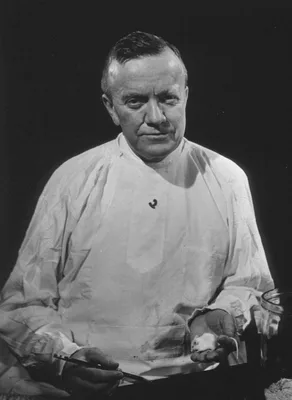
Isolation of the virus of benign lymphocytic choriomeningits.
1934
#5396.4
Varieties of typhus virus and the epidemiology of the American form of European typhus fever (Brill’s disease).
Zinsser advanced the theory that Brill’s disease is a recrudescence of epidemic typhus in persons who have contracted the typhus some time previously. The condition has subsequently been renamed “Brill-Zinsser disease”.
1935
#1683.1
Epidemics and crowd diseases: An introduction to the history of epidemiology.
1936
#4659
A virus isolated in 1935 epidemic of summer encephalitis in Japan.
T. Taniguchi, M. Hosokawa, and S. Kuga established a virus etiology for Japanese B encephalitis.
1939
#1714
The natural history of population.
1941
#1684
War and disease.
1941
#5301.2
The transmission of Leishmania tropica by the bite of Phlebotomus papatasii.
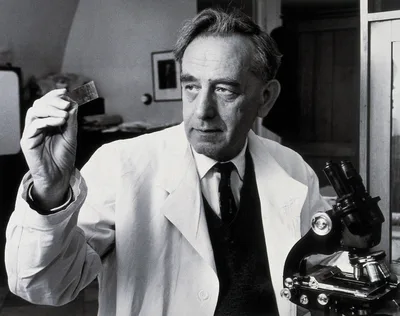
Proof of the transmission of L. tropica by P. papatasii.
1941
#10769
Jak zapobiegać chorobom zakaźnym i jak je zwalczać? Biblioteczka Zydowskiej Samopomocy Spolecznej. Nr. 1.
A 14-page pamphlet on epidemiology published by the Żydowska Samopomoc Społeczna, Prezydium (Jewish Social Self-Help Organization) in the Kraków Ghetto to educate Jewish activists and physicians. The author perished a…
1942
#5302
Transmission of Indian kala-azar to man by the bites of Phlebotomus argentipes, Ann. and Brun.
Successful transmission of kala-azar to man by the bite of Phlebotomus argentipes reported, showing it to be the vector of Leishmania. With H. E. Shortt and L. A. P. Anderson.
1942
#12108
Influenza: A survey of the last fifty years in the light of modern work on the virus of epidemic influenza.
1943
#5990
Epidemic keratoconjunctivitis. I. Isolation and identification of a filterable virus.
1944
#9032