
Facets
Browse across eight MeSH (opens in new tab) facets — era, geography, science, specialty, technology, history, culture, and reference. Select one tag per group; counts update across the others. What’s new in facet browse how facets relate to subjects and MeSH.
Clear filtersFacet filters
Geography
Specialties & Disease
- Anatomy & Pathology 765
- Cardiology & Blood 914
- Neurology & Psychiatry 1,258
- Obstetrics & Reproductive 551
- Infectious Disease (General) 147
- Surgery & Anesthesia 1,553
- Public Health 1,129
- Immunology & Dermatology 1,405
- General Clinical Medicine 487
- Military Medicine 436
- Psychology 202
- Alternative & Fringe Medicine 383
- Pediatrics 247
- Ophthalmology & Vision 412
- ENT & Hearing 293
- Urology & Nephrology 309
- Gastroenterology & Hepatology 316
- Pulmonary & Respiratory 233
- Rheumatology, Rehab & Pain 189
- Internal, Emergency & Geriatric 123
- Veterinary Medicine 165
- Epidemiology & Demography 397
- Physiology & Embryology 924
- Dentistry 259
- Plagues & Epidemics 1,279
- Microbiology & Virology 1,080
Social & Historical Studies
Institutions & Culture
Reference & Scholarly Works
1,080 entries match Microbiology & Virology [C01.748]
1931
#5072
On the existence of two forms of diphtheria bacillus B. diphtheria gravis and B. diphtheriae mitis.
J. S. Anderson, F. C. Happold, J. W. McLeod, and J. G. Thomson were the first to distinguish the gravis, mitis, and intermediate types of C. diphtheriae.
1931
#5087.1
The phases of Haemophilus pertussis.
Leslie and Gardner classified H. pertussis cultures into four types and established an experimental basis for the development of an effective vaccine.
1931
#5493
Swine influenza. III. Filtration experiments and etiology.
Isolation in pigs of influenzavirus A or influenza A virus. Full text available from PubMedCentral at this link.
1931
#5541
Enzootic hepatitis or Rift Valley fever. An undescribed virus disease of sheep, cattle and man from East Africa.
First description.
1931
#5352
The bibliography of schistosomiasis (bilharziasis).
1931
#5396.2
Typhus fever. A virus of the typhus type derived from fleas collected from wild rats.
Murine typhus shown to be caused by an organism later named Rickettsia mooseri, transmitted by fleas from rats to man. With A. Rumreich and L. F. Badger.
1931
#5396.3
Aetiologie der Tsutsugamushi-Kiankheit: Rickettsia tsutsugamushi.
Ogata isolated the causal agent of tsutsugamushi disease, Orientia Tsutsugamushi, in 1927.
1932
#2656
A transmissible tumor-like condition in rabbits.
Shope papilloma virus (SPV), a benign infectious tumor due to a virus. This was the first mammalian tumor virus discovered. Full text from PubMedCentral at this link. See also Shope, "Infectious Papillomatosis of Rabb…
1932
#3551
Regional ileitis. A pathologic and clinical entity.
“Crohn’s disease” – regional ileitis. With L. Ginzburg and G. D. Oppenheimer. "Some of Crohn's initial research into the causes of the Crohn's disease was centered around his personal conviction that it was caused by …
1932
#3204
The common cold, with special reference to the part played by streptococci, pneumococci, and other organisms.
Annals of the Pickett-Thomson Research Lab., Vol. 8.
1932
#5159.2
Melioidosis.
Studies from the Institute for Medical Research, F.M.S., No. 21. Stanton gave melioidosis its present name and, with Fletcher, wrote the authoritative work on the subject.
1932
#5487
The presence of heterophile antibodies in infectious mononucleosis.
The Paul–Bunnell test for the diagnosis of infectious mononucleosis.
1932
#5541.1
A morphological study of psittacosis virus, with the description of a developmental cycle.
Conclusive proof of the causal relationship of the psittacosis agent to the infection.
1932
#5351.1
Precipitin and skin tests as aids in diagnosing trichinosis.
Intradermal test for trichinosis.
1932
#5194.2
Carbarsone in the treatment of amebiasis.
With H. H. Anderson and N. A. David.
1932
#5465
Vaccination against yellow fever with immune serum and virus fixed for mice.
These workers devised an immune serum for prophylactic inoculation against yellow fever. With S. F. Kitchen and W. D. M. Lloyd.
1932
#5465.1
Untersuchungen über das Verhalten des Gelbfiebervirus in der Gewebekultur. Mit besonderer Berücksichtigung seiner Kultivierbarkeit.
Yellow fever virus grown in tissue culture.
1932
#10784
On the specific antibacterial properties of penicillin and potassium tellurite. Incorporating a method of demonstrating some bacterial antagonisms.
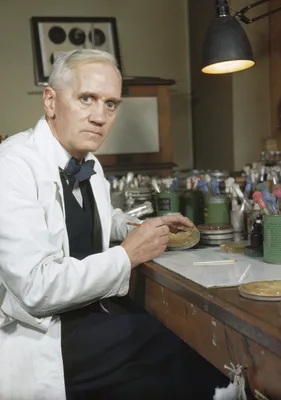
In this paper Fleming first described the use of penicillin as an antibacterial agent in man, and reported on experiments using it as a wound dressing for septic wounds. He also corrected the species name from Penicil…
1932
#12586
A study of monkey-malaria, and its experimental transmission to man.
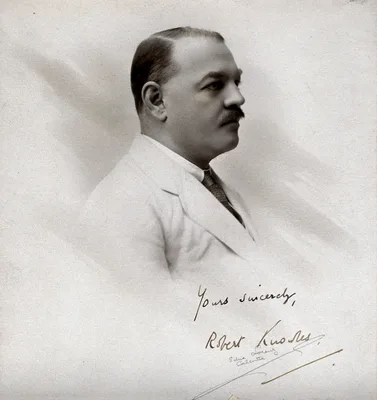
Das Gupta and his supervisor Robert Knowles first described Plasmodium knowlesi as a distinct species, and as a potential cause of human malaria in 1932 when they described the morphology of the parasite in macaque bl…
1933
#4656
Encephalitis: studies on experimental transmission.
Isolation of the St. Louis encephalitis virus. With C. Armstrong and H. A. McCordock.
1933
#2524.2
A serological differentiation of human and other groups of hemolytic streptococci.
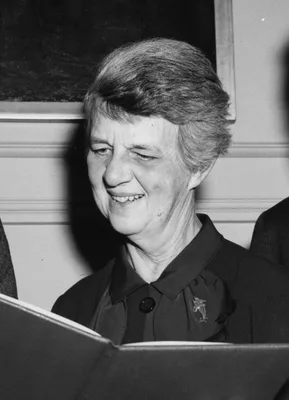
Lancefield determined the principal pathogenic strains of hemolytic streptococci and subdivided them into types. All important strains pathogenic to humans fall into Lancefield’s Group A.
1933
#5494
A virus obtained from influenza patients.
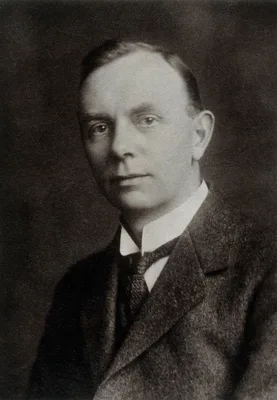
Smith, Andrewes, and Laidlaw first isolated the influenza A virus in humans. They successfully infected ferrets with filtered throat-washings from influenzal patients by intranasal instillation.
1933 –1934
#5495
Influenza. 2 vols.
Annals of the Pickett Thomson Research Lab., Monograph 16. "In two massive volumes Thomson and Thomson reviewed the literature on influenza up to 1934" (Spink).
1933
#5335
Het voorkomen van een afwijkend Leptospira-ras in Nederland.
Leptospira canicola first isolated (1913) from the urine of a dog.
1933
#5335.1
Ueber die Prophylaxe der Spirochaetosis icterohaemorrhagica Inada (Weilschen Krankheit) durch Schutzimpfung.
Prophylactic vaccination against leptospirosis.
1933 –1937
#35.1
Médecine et thérapeutique byzantines: Oeuvres médicales d’Alexander de Tralles, le dernier auteur classique des grands médecins grecs de l’antiquité. Ed. F. Brunet. 4 vols.
1934
#4658
Acute ascending myelitis following a monkey bite, with the isolation of a virus capable of reproducing the disease.
Herpesvirus simiae (B virus) infection; isolation of the virus.
1934
#4688
Experimental lymphocytic choriomeningitis of monkeys and mice produced by a virus encountered in studies of the 1933 St. Louis encephalitis epidemic.
Isolation of the virus of benign lymphocytic choriomeningits.
1934
#2524.3
The serological classification of Streptococcus pyogenes.
Griffith’s classification of streptococci. Digital facsimile from PubMedCentral at this link.
1934
#5336
De leptospiroses bij den hond, en de beteekenis der Leptospira canicola.
First reported cases of human infection with L. canicola. With A. Klarenbeek, W. A. P. Schüffner, and J. Voet.
1934
#5541.2
A unique infection in man caused by a new yeast-like organism, a pathogenic member of the genus Sepedomum.
Cultivation of Histoplasma capsulatum before DeMonbreun (No. 5542); preliminary announcement in Science, 1933, 77, Suppl. 2002, p. 8. DeMonbreun and Hansmann & Schenken independently and almost simultaneously demonstr…
1934
#5542
The cultivation and cultural characteristics of Darling’s Histoplasma capsulatum.
Demonstration of the fungal nature of the pathogen.
1934
#5543
An investigation of the etiology of mumps.
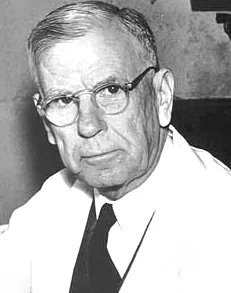
Isolation of mumps virus.
1934
#12387
The isolation and properties of the purified protein derivative of tuberculin
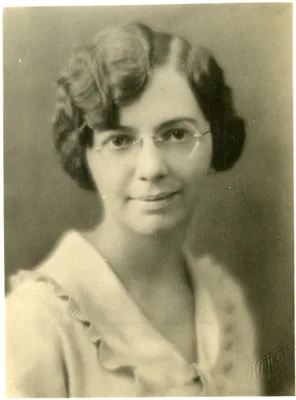
Purification of tuberculin (PPD). By the 1940s Seibert's PPD was the international standard for tuberculin tests.
1935
#2524.4
The natural occurrence of pleuropneumonia-like organisms in apparent symbiosis with Streptobacillus moniliformis and other bacteria.
Klieneberger isolated typical strains of pleuropneumonia-like organisms from Strep, moniliformis.
1935
#2524.5
Isolation of a crystalline protein possessing the properties of tobacco-mosaic virus.
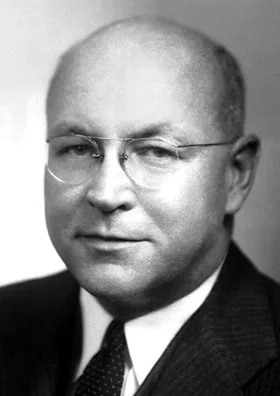
Stanley first crystallized a virus— tobacco mosaic virus. The following year Bawden, Pirie, Bernal and Fankuchen (No. 12005) showed that tobacco mosaic virus molecules are asnisometric and consist of ribonucleoprotein…
1935
#2576.3
A protective action of neurotropic against viscerotropic yellow fever virus in Macacus rhesus.
One of the first examples of an animal virus interference phenomenon was demonstrated by Hoskins.
1935
#5496
Propagation of the virus of epidemic influenza on the developing egg.
Cultivation of the influenza virus.
1935
#5544
Diagnosis of psittacosis in man by means of injections of sputum into white mice.
1935
#5403
Rats, lice and history: being a study in biography, which, after 12 preliminary chapters indispensable for the preparation of the lay reader, deals with the life history of typhus fever.
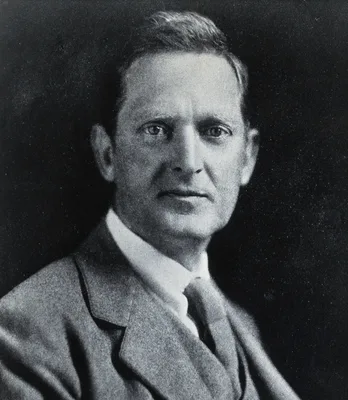
1936
#4659
A virus isolated in 1935 epidemic of summer encephalitis in Japan.
T. Taniguchi, M. Hosokawa, and S. Kuga established a virus etiology for Japanese B encephalitis.
1936
#4670.6
Cultivation of poliomyelitis virus in vitro in human embryonic nervous tissue.
Isolation and propagation of the poliomyelitis virus in pure culture.
1936
#2524.6
The Feulgen reaction of the bacteriophage substance.
Schlesinger showed that the fundamental constituents of bacteriophages consist mainly of approximately equal amounts of protein and DNA.
1936
#5480
Cultivation of the viruses of sandfly fever and dengue fever on the chorioallantoic membrane of the chick-embryo.
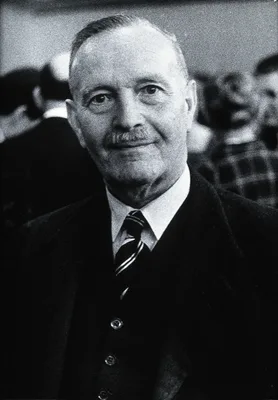
Cultivation of the virus of phlebotomus fever. With R. S. Rao and C. S. Swaminath.
1936
#5484.2
Propagation of rabies virus in tissue culture and the successful use of culture virus as antirabic vaccine.
Webster and Clow succeeded in growing rabies virus in tissue culture.
1936
#9893
On certain septicemias due to anaerobic organisms.
"Lemierre's syndrome (or Lemierre's disease, also known as postanginal shock including sepsis and human necrobacillosis) refers to infectious thrombophlebitis of the internal jugular vein. It most often develops as a …
1936
#12005
Liquid crystalline substances from virus infected plants.
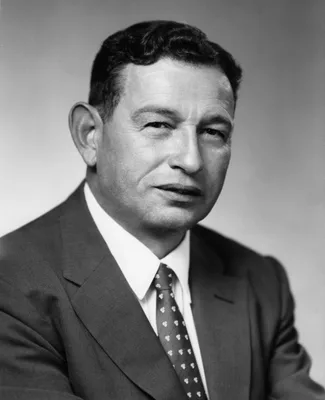
Order of authorship in the original publication: Bawden, Pirie, Bernal, Fankuchen. The authors isolated and crystallized tobacco mosaic virus, finding for the first time that a virus contained nucleic acids, when othe…
1937
#3215
Observations on L-organism of Kleineberger.
Isolation of a mycoplasma from man.
1937
#5329
Sur une nouvelle fièvre par morsure de rat.
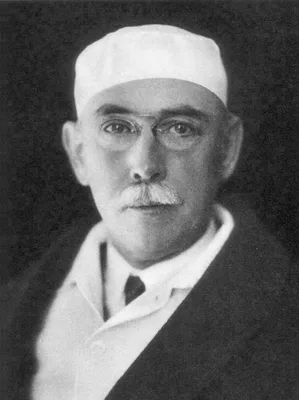
A. Lemierre, J. Reilly, A. Laporte, and M. Morin isolated Streptobacillus moniliformis from a case of rat-bite fever.
1937
#5544.1
Granulomatous encephalomyelitis due to an encephalitozoon (encephalitozoic encephalomyelitis), a new protozoon disease of man.
Definite recognition of human toxoplasmosis. See also their later paper in the same journal, 1938, 7, 266-83.