
Facets
Browse across eight MeSH (opens in new tab) facets — era, geography, science, specialty, technology, history, culture, and reference. Select one tag per group; counts update across the others. What’s new in facet browse how facets relate to subjects and MeSH.
Clear filtersFacet filters
Geography
Specialties & Disease
- Alternative & Fringe Medicine 0
- Anatomy & Pathology 1
- Cardiology & Blood 9
- Dentistry 0
- ENT & Hearing 2
- Epidemiology & Demography 2
- Gastroenterology & Hepatology 6
- General Clinical Medicine 4
- Immunology & Dermatology 39
- Infectious Disease (General) 1
- Internal, Emergency & Geriatric 2
- Microbiology & Virology 33
- Military Medicine 1
- Neurology & Psychiatry 23
- Obstetrics & Reproductive 1
- Oncology & Cancer 13
- Ophthalmology & Vision 4
- Pediatrics 0
- Physiology & Embryology 195
- Plagues & Epidemics 11
- Psychology 2
- Public Health 12
- Pulmonary & Respiratory 2
- Rheumatology, Rehab & Pain 1
- Surgery & Anesthesia 7
- Urology & Nephrology 3
- Veterinary Medicine 2
Social & Historical Studies
Institutions & Culture
Reference & Scholarly Works
Drugs & Technology
12 entries match Public Health [N02.500] · Nobel Prizes [K01.150.567]
1862
#2166
Un souvenir de Solferino.
Dunant’s account of the great sufferings endured by the wounded at Solferino inspired the creation of the International Committee of the Red Cross (ICRC) in 1863, and resulted in the Geneva Convention of 1864. In 1901…
1890
#3741
Polyneuritis bij hoenders.
Eijkman produced beriberi experimentally in fowls; from this he was led to conclude that a diet of over-milled rice was the chief cause, both in fowls and humans. Thus his work was of great importance in determining t…
1912
#1048
Feeding experiments illustrating the importance of accessory factors in normal dietaries.
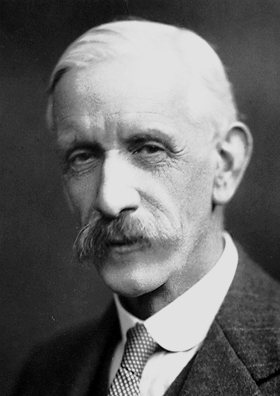
In 1929 Hopkins shared the Nobel Prize in Physiology or Medicine with Eijkman "for his discovery of the growth-stimulating vitamins."
1928
#1059
Observations on the function of peroxidase systems and the chemistry of the adrenal cortex. Description of a new carbohydrate derivative.
Isolation of vitamin C, ascorbic acid. In 1937 Szent-Györgyi was awarded the Nobel Prize in Physiology or Medicine "for his discoveries in connexion with the biological combustion process with special reference to vit…
1929
#1062
Cholesterinstoffwechsel in Hühnereiern und Hühnchen.
In 1943 Dam shared the Nobel Prize with Doisy "for discovery of vitamin K, the blood coagulating factor."
1931
#14238
Zur Kenntnis des Vitamins-A aus Fischtranen.
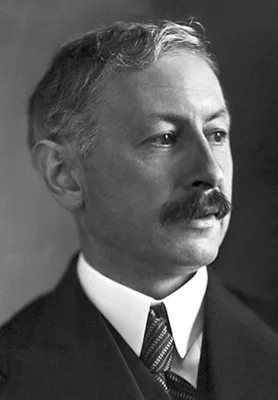
In 1930 Karrer established the correct formula for carotene (the chief precursor of vitamin A), the first demonstration of the chemical structure of a vitamin. Shortly thereafter, he was able to determine the formula …
1933
#14280
Synthesis of ascorbic acid.
Haworth and Hirst successfully synthesized vitamin C in the laboratory. This was the first vitamin to be artificially produced. Their breakthrough made it possible for vitamin C, or ascorbic acid as Haworth called it,…
1939
#1081
The isolation of vitamin K1.
Order of authorship in the original publication: Binkley, MacCorquodale, Thayer, Doisy. In 1943 Doisy received half of the Nobel Prize in Physiology or Medicine "for his discovery of the chemical nature of vitamin K."…
1955
#6928
The crystal structure of the hexacarboxylic acid derived from B12 and the molecular structure of the vitamin.
The final structure of vitamin B12. With J. Pickworth, J.H. Robertson, K.N. Trueblood, R.J. Prosen, J. G. White. In 1964 Hodgkin was awarded the Nobel Prize in Chemistry "for her determinations by X-ray techniques of …
1957
#7386
The path of carbon in photosynthesis.
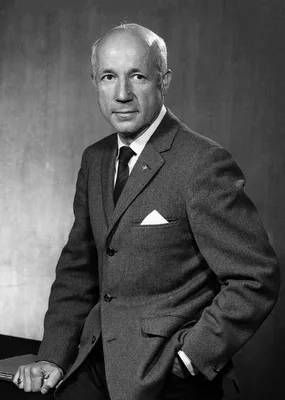
Discovery of the Calvin cycle, also known as the Calvin–Benson–Bassham (CBB) cycle, or reductive pentose phosphate cycle or C3 cycle — a series of biochemical redox reactions that take place in the stroma of chloropla…
1985
#11060
Structure of the protein subunit in the photosynthetic reaction centre of Rhodopseudomonas viridis at 3 Å resolution.
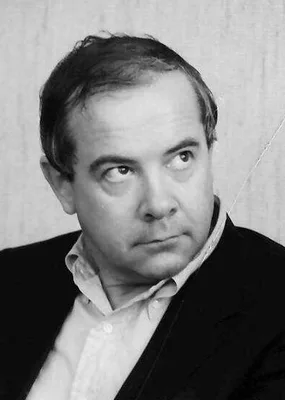

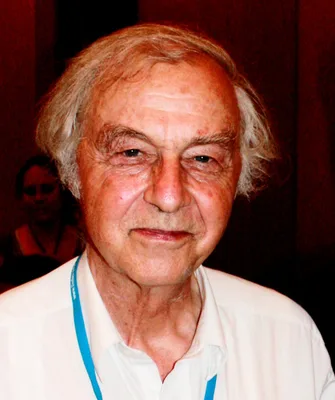
Discovery of the three-dimensional structure of a protein complex found in certain photosynthetic bacteria, called the photosynthetic reaction center. This was the first elucidation of the 3D crystal structure of any …
2006
#14048
An inconvenient truth. The planetary emergency of global warming and what we can do about it.
A politician, Gore was one of the first to draw popular attention to climate change. He supplemented the best-selling book with a film and DVD with the same title. Ten years later, recognizing that in spite of its wid…