
Facets
Browse across eight MeSH (opens in new tab) facets — era, geography, science, specialty, technology, history, culture, and reference. Select one tag per group; counts update across the others. What’s new in facet browse how facets relate to subjects and MeSH.
Clear filtersFacet filters
Geography
Specialties & Disease
- Anatomy & Pathology 3
- Cardiology & Blood 5
- Neurology & Psychiatry 7
- Obstetrics & Reproductive 3
- Infectious Disease (General) 3
- Surgery & Anesthesia 13
- Public Health 30
- Immunology & Dermatology 13
- General Clinical Medicine 0
- Military Medicine 10
- Psychology 0
- Alternative & Fringe Medicine 25
- Pediatrics 2
- Ophthalmology & Vision 2
- ENT & Hearing 0
- Urology & Nephrology 2
- Gastroenterology & Hepatology 4
- Pulmonary & Respiratory 1
- Rheumatology, Rehab & Pain 0
- Internal, Emergency & Geriatric 1
- Veterinary Medicine 2
- Epidemiology & Demography 21
- Physiology & Embryology 4
- Dentistry 8
- Plagues & Epidemics 79
- Microbiology & Virology 33
Social & Historical Studies
Institutions & Culture
Reference & Scholarly Works
Drugs & Technology
79 entries match Americas (non-U.S.) [Z01.107] · Plagues & Epidemics [C01.252]
1539
#2367
Tractado cótra el mal serpentino.
Diaz de Isla, a Barcelonese surgeon, wrote of a disease “previously unknown, unseen and undescribed”, which appeared in Barcelona in 1493 and which was obviously syphilis. This is probably the earliest reference to th…
1567
#9053
Secretos de chirurgia, en especial de la enfermedades de morbo-galico y lamparones, y asimismo la manera como se curan los indos las llgas y heridas, y otras pasiones en las Indias, muy útil y provechoso par España, y otros muchos secretos de chirugia hasta ahora no escritos.
Arias de Benevides travelled to the New World where he observed native remedies and reported them in this book. In the book he also described his performance in Mexico City (1561) of the first neurosurgical interventi…
1570
#5372
Opera medicinalia.
Opera medicinalia was the first medical book printed in the Western Hemisphere, and its botanical images were the first illustrations of plants printed in the Western Hemisphere. Of the original edition only two copie…
1648
#2263.1
Historia naturalis Brasiliae.
Piso's study of the natural history of Brazil was also a pioneer work on tropical medicine, and also the largest work from the standpoint of format published by the Elzeviers. The folio includes De medicina brasiliens…
1658
#1825
De Indiae utriusque re naturali et medica libri quatuordecim.
This is an extensively revised and enlarged second edition of Piso’s Historia naturalis Brasiliae (1648). In this edition Piso reprinted Bontius's De medicina Indorum (1642) with two additional books on Asian flora an…
1663
#1826
Anastasis corticis Peruviae, seu chinae defensio
A defence of the virtues of Jesuit's bark or Peruvian bark (cinchona, chinchona), the most celebrated specific remedy for malaria. It was obtained from the bark of several species of the genus Cinchona, of the Rubiace…
1667
#5450
Histoire générale des Antilles habités par les Français. Tom. 1.
Du Tertre, a priest, described (pp. 81, 99, 423) the outbreaks of yellow fever at Guadeloupe in 1635, 1640, and 1648.
1679
#9909
A discourse of the state of health in the island of Jamaica. With a provision therefore calculated from the air, the place, and the water: the customs and manners of living, &c.
The first English book on tropical medicine. Digital facsimile from Google Books at this link.
1683
#8934
Trattado unico das bexigas, e sarampo, offerecido a D. João de Sousa, composto por Romaõ Mõsia Reinhipo.
One of the first works on medicine practiced in Brazil, published by Mourão under the pseudonym Romaõ Mõsia Reinhipo. Mourão distinguished clearly between smallpox and measles. There was still much confusion in the se…
1694
#8930
Trattado unico da constituiçam pestilencial de Pernambuco, offerecido a ElRey N.S. por ser servido ordenar por seu Governador aos Medicos da America, que assistem aonde ha este contagio, que o compusessem para se conferirem pelos Coripheos da Medicina aos dictames com que he trattada esta pestilencial febre.
The first scientific description of yellow fever in Brazil by the first European physician to treat the disease in Brazil, and perhaps in all of Latin America. It includes the description of the first autopsy of a yel…
1707
#8938
Noticias do que he o achaque do bicho, diffiniçam do seu crestame[n]to, subimento corrupçaõ, sinaes, & cura atè, o quinto grao, ou intensaõ delle, suas differenças, & co[m]plicaços, com que se ajunta.
This book has been "considered by some authors to be the first reference to the chagasic megaesophagus and megacolon that appeared in history. In descriptions considered to refer megaesophagus, although dysphagia, the…
1756
#13448
The civil and natural history of Jamaica. In three parts, containing 1. An accurate description of that Island, its situation and soil; with a brief account of its former and present state, government, revenues, produce, and trade. II. A history of the natural productions, including the various sorts of native fossils, perfect and imperfect vegetables, quadrupedes, birds, fishes, reptiles and insects; with their properties and uses in mechanics, diet, and physic. III. An account of the nature of climate in general, and their different effects upon the human body; with a detail of the diseases arising from this source, particularly within the tropics....illustrated with fifty copper-plates...in natural size....
Digital facsimile from Google Books at this link.
1764
#9509
An essay on the more common West-India diseases and the remedies which that country itself produces: To which are added some hints on the management, &c. of negroes.
Though the title suggests tropical medicine in general, this work mainly concerns the selection and medical care of slaves. Digital facsimile of the second edition (Edinburgh, 1802) expanded "with practical notes and …
1769
#5304
Essay on the natural history of Guiana, in South America. Containing a description of many curious productions in the animal and vegetable systems of that country. Together with an account of the religion, manners, and customs of several tribes of its Indian inhabitants. Interspersed with a variety of literary and medical observations. In several letters....
Bancroft was an English physician who lived for many years in South America. He noted the transmission of yaws by flies (p. 385 of his book). Digital facsimile from the Internet Archive at this link.
1770
#5336.2
Sur un ver trouvé sous la conjunctive, à Maribou, isle Saint-Domingue.
First description of the worm Loa loa. Mongin was a French surgeon working in the West Indies. English translation in Kean (No. 2268.1).
1770
#9913
Histoire des maladies de S. Domingue. 3 vols. Title of vol. 3: Traité ou abregé des plantes usuelles de S. Dominique.
Posthmously published; vol. 1 contains a life of the author. Digital facsimile from Google Books at this link.
1779
#9501
A physical journal kept on board H. M. Ship Rainbow during three voyages to the coast of Africa and the West Indies, in the years 1772, 1773, and 1774: To which is prefixed, a particular account of the remitting fever which happened on board of His Majesty's Sloop Weasel, on that coast, in 1769.
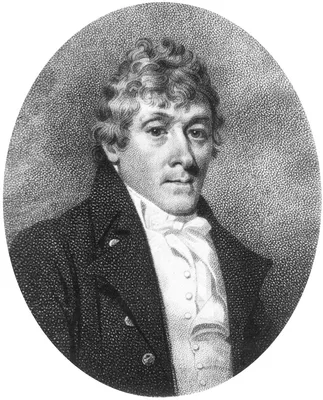
1780
#9466
Observations on the diseases which appeared in the army on St. Lucia....To which are prefixed remarks calculated to assist in ascertaining the causes, and in explaining the treatment of those diseases.
Digital facsimile from Google Books at this link. Revised and expanded edition, 1781; digital facsimile of the 1781 edition from Google Books at this link.
1784
#13363
Des maladies des créoles en Europe avec la maniere de les traiter et des observations sur celles des gens de mer et sur quelques autres plus fréquemment observées dans les climats chauds.
Digital facsimile from Google Books at this link.
1784
#13467
A treatise on the glandular disease of Barbadoes: Proving it to be seated in the lymphatic system.
Digital facsimile from Google Books at this link.
1788
#13366
Les eaux minérales et thermales de Saint-Dominique. Tome 1 (All Published).
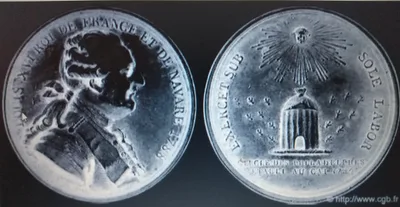
One of the earliest medical publications printed in Haiti. Duvivier, Bibliographie générale et méthodique d'Haiti, 2, p. 206.
1791
#10111
A treatise on the fevers of Jamaica, with some observations on the intermitting fever of America, and an appendix containing some hints on the means of preserving the health of soldiers in hot climates.
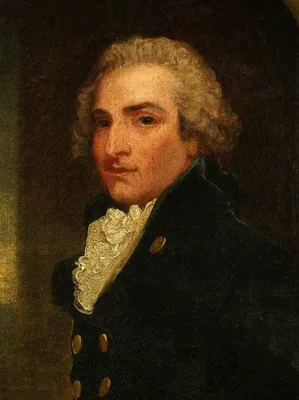
Digital facsimile from the Internet Archive at this link.
1794
#8004
Demostracion de las eficaces virtudes nuevamente descubiertas en las raices de dos plantas de Nueva-España, especies de ágave y de begónia, para la curacion del vicio venéreo y escrofuloso ...
Balmis conducted experimental trials on the effectiveness of two Mexican plants, agave and begonia, which were believed, according to folk medicine practices in Mexico, to cure syphilis and scrofula. The trials confir…
1795
#5336.3
An essay on the malignant pestilential fever introduced into the West Indian Islands from Boullam, on the coast of Guinea, as it appeared in 1793 and 1794.
Chisholm, "Surgeon to his Majesty's Ordnance in Grenada," was apparently the first to observe the mode of transmission of the Guinea worm, Dracunculus medinensis. Chishom was also one of the first to recognize that th…
1799
#9070
Ensaios sobre algumas enfermidades d'Angola....
Azeredo noted that the tropical fevers found in Brazil and Angola were very similar. He claimed to have achieved excellent results with his “new method” of treatment, which included the use of quinine, nux vomica, ars…
1802
#13356
Instruction des Officiers de Santé en Chef de l'Armée sur les maladies internes et externes des troupes à Sainte-Domingue, et sur leur traitement.
The date of this undated work has been inferred. The 40-page pamphlet issued during the early stages of the French expedition to the island, provided instructions by the chief medical officers of the army for medical …
1803
#8006
Tratado histórico y práctico de la vacuna que contiene en compendio el orígen y los resultados de las observaciones y experimentos sobre la vacuna, con un exámen imparcial de sus ventajas, y de las objeciones que se le han puesto, con todo lo demás que concierne á la práctica del nuevo modo de inocular. [Translated From the French by] Francisco Xavier de Balmis.
On November 30, 1803 Spanish physician Francisco Javier de Balmis and his team embarked from Spain, on an expedition to vaccinate the people of Spanish America against smallpox. This three year voyage, which became kn…
1803
#9657
Histoire médicale de l'Armée Française, a Saint-Domingue, en l'an dix; ou mémoire sur la fièvre jaune, avec un apperçu de la topographie médicale de cette colonie.
Digital facsimile from Google Books at this link.
1814
#8219
Coup-d'oeil sur Saint-Domingue; observations sur le caractère des négres et sur la fièvre jaune; moyens de recouvrer cette colonie, et de se préserver des maladies qui y règnent.
Digital facsimile from patrimoines-martinique.org at this link.
1822
#9071
Memoria sobre a virtude toenifuga da romeira, com observações zoologicas e zoonomicas relativas á toenea, e com huma estampa.
On the use of a root medicine to treat tapeworms, roundworms and similar parasites. The author refers to cases from Portuguese Africa, India and Brazil, and gives clinical observations based on his own case studies, s…
1854
#5454.1
Fiebre amarilla.
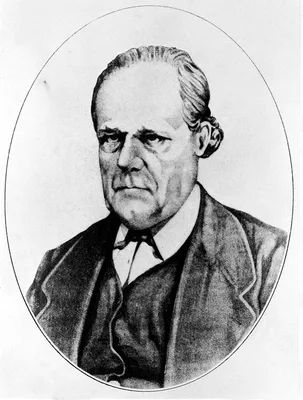
Beauperthuy was the first protagonist of the mosquito theory of the transmission of yellow fever. Reprinted in Beauperthuy’s La Obra, Caracas, 1963, pp. 260-70; French translation in Travaux scientifiques de Louis-Dan…
1858
#5525
Historia de la verrugas.
Verruga peruana.
1861
#935.2
Les altitudes de l’Amérique tropicale comparées au niveau des mers au point de vue de la constitution médicale.
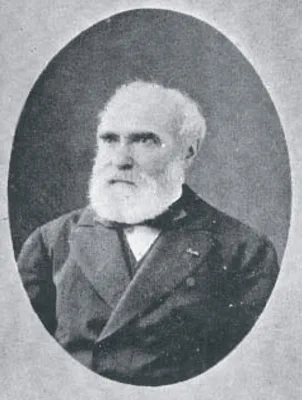
Jourdanet discovered the anoxemia theory of high altitude sickness. See No. 943.1. Digital facsimile of the 1861 edition from bibliotecavirtual.ranm.es at this link.
1864
#8109
Le Mexique et l'Amérique tropicale: climats, hygiène et maladies.
Digital facsimile from the Internet Archive at this link.
1868
#5344.6
Noticiar preliminar sobre vermes de uma especie ainda nao descripta, encontrados na urina de doentes de hematuria intertropical no Brazil.
In 1866 Wucherer saw the embryo form of the filaria worm. Later the name Wuchereria bancrofti was applied to it. English translation in Kean (No. 2268.1).
1881 –1882
#5455
El mosquito hipoteticamente considerado como agente de transmisión de la fiebre amarilla.
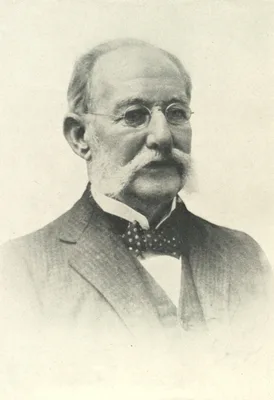
Finlay was the first to suggest that the Aedes aegypti mosquito was the vector of yellow fever. Digital facsimile from Google Books at this link. English translation by Rudolph Matas as "The mosquito hypothetically co…
1881
#13045
Leprosy in British Guiana. An account of West Indian Leprosy. Illustrated with twenty lithographic plates, coloured and plain, from original drawings and photographs of patients at the asylum, and several engravings from camera-lucida drawings, by E. Noble Smith, of pathological specimens, mounted and prepared, with explanatory remarks by P. S. Abraham....
The author was medical superintendent of the General Leper Asylum, British Guiana, West Indies. Digital facsimile from the Internet Archive at this link.
1885
#13805
La viruela en la América del Sud y principalmente en la República Argentina: Historia, estadística, clínica, y profilaxia.
Digital facsimile from wellcomecollection.org at this link.
1895
#5293.1
Beitrag zum klinischen und bacteriologischen Studium der brasilianischen Framboesie oder “Boubas”.
“Breda’s disease” – Brazilian yaws. English translation New Sydenham Society, 1897.
1895
#5530
La erupción en la enfermedad de Carrión (verruga peruana).
“Carrion’s disease” (Oroya fever) was named by the Peruvian physician Ernesto Odriozola, after Daniel Alcides Carrión Garcia (1859-85), a student. In order to prove or disprove the connection between Oroya fever and v…
1896
#5205.1
The lupoid form of the so-called “groin ulceration” of this colony.
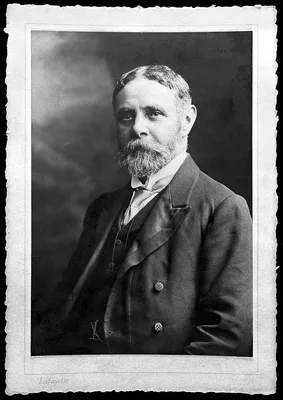
Granuloma inguinale distinguished from other similar lesions in the genital region.
1900
#5457
The etiology of yellow fever. A preliminary note.
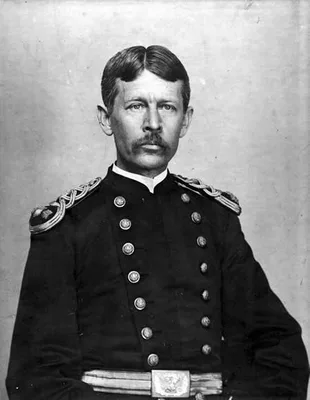
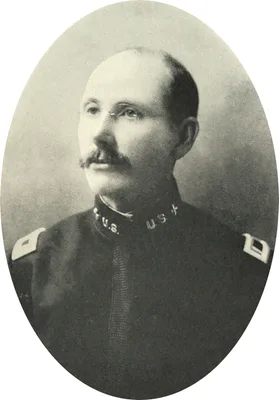
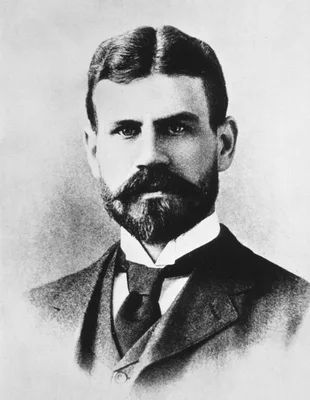
First definite proof that the organism causing yellow fever is transmitted to man by the mosquito Aëdes aegypti. During the period spent by these workers in the investigation of the disease in Cuba Lazear and Carroll …
1901
#9372
The etiology of yellow fever: An additional note.
"The article describes a series of experiments conducted to explore how yellow fever is propagated from individual to individual and how the contagium is spread within households. The study was conducted in an experim…
1903
#13923
Notes on the treatment of yellow fever at Las Animas Hospital, the hospital of the Sanitary Department, during the epidemic of 1900 at Havana, Cuba.
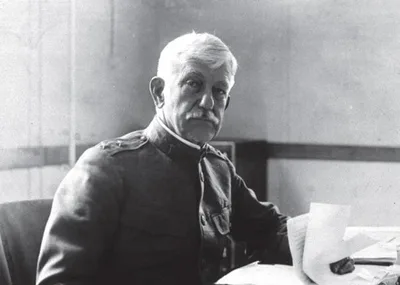
In 1901 Gorgas was sent to Havana to undertake a special campaign against the yellow fever mosquito Aëdes aegypti. His methods of sanitation were so successful that in three months yellow fever was practically eradica…
1904
#5299
Note on the occurrence of Leishman–Donovan bodies in “cachexial fevers” including kala-azar.
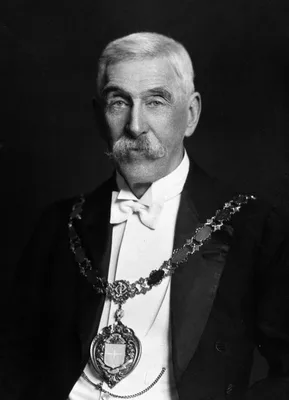
Rogers demonstrated the Leishman–Donovan bodies in kala-azar. See also the same journal, 1904, 2, 645-50. At about the same time Bentley reported similar findings in India.
1904
#13362
Pathologie intertropicale. Doctrines et clinique.
Digital facsimile from BnF Gallaica at this link.
1909
#5283
Nova tripanozomiaze humana. Estudos sobre a morfolojia e o ciclo evolutivo do Schizotrypanum cruzi n.gen., n.sp., ajente etiolojico de nova entidade morbida do homen.
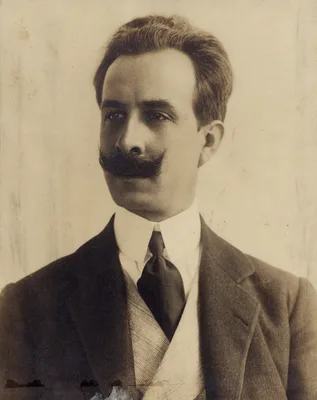
Chagas discovered T. cruzi, causal organism in American trypanosomiasis (“Chagas’s disease”). Partial English translation in Kean (No. 2268.1).
1909
#5299.1
L’ulcère de Bauru ou le bouton d’orientau Brésil.
Muco-cutaneous leishmaniasis of South America. English translation in Kean (No. 2268.1).
1909
#5533
Descripción de elementos endo-globulares hallados en las enfermos de fiebre verrucosa.
The causal organism of Oroya fever and verruga peruana, endemic in Peru, was named Bartonella bacilliformis after Barton, who was one of the first to observe it.
1909
#5460