
Facets
Browse across eight MeSH (opens in new tab) facets — era, geography, science, specialty, technology, history, culture, and reference. Select one tag per group; counts update across the others. What’s new in facet browse how facets relate to subjects and MeSH.
Clear filtersFacet filters
Geography
Specialties & Disease
- Anatomy & Pathology 49
- Cardiology & Blood 10
- Neurology & Psychiatry 26
- Obstetrics & Reproductive 24
- Infectious Disease (General) 8
- Surgery & Anesthesia 67
- Public Health 94
- Immunology & Dermatology 22
- General Clinical Medicine 33
- Military Medicine 38
- Psychology 10
- Alternative & Fringe Medicine 49
- Pediatrics 10
- Ophthalmology & Vision 8
- ENT & Hearing 2
- Urology & Nephrology 8
- Gastroenterology & Hepatology 4
- Pulmonary & Respiratory 3
- Rheumatology, Rehab & Pain 6
- Internal, Emergency & Geriatric 9
- Veterinary Medicine 8
- Epidemiology & Demography 28
- Physiology & Embryology 13
- Dentistry 15
- Plagues & Epidemics 60
- Microbiology & Virology 24
Social & Historical Studies
Institutions & Culture
Reference & Scholarly Works
Drugs & Technology
60 entries match Europe & United Kingdom [Z01.542] · Plagues & Epidemics [C01.252]
c. 1474
#5113
De epidemia et peste.
One of the earliest works written on public health, and one of the earliest printed medical books. It was first printed in Arnaldus de Villanova’s De arte cognoscendi venena (Padua, 1473; Mantua, 1473). Above is the f…
1478 –1482
#5115
Tractatus de pestilentia.
The most widely disseminated of all plague tracts from the time of the Black Death, of which 33 printed editions appeared in the 15th century. A French rhymed version appeared in 1476, but this version is very differe…
1480
#8369
Practica, seu Lilium medicinae.
Includes descriptions of plague, tuberculosis, scabies, epilepsy, anthrax, and leprosy. ISTC No. ib00447000.
1483
#6812
Regimen contra pestilentiam [English] Treatise on the Pestilence.
The earliest medical work printed in English. It was published without printer's name or date, but has been attributed to the press of William Machlinia, in London, and estimated to have been published in 1483."Althou…
1565
#6318
Cinq livres, de la manière de nourrir et gouverner les enfans dès leur naissance.
The first French work on pediatrics. Vallambert considered a wider range of diseases than any previous writer, including the first reference to syphilis in children, and gave the best commentary up to his time on infa…
1567
#9053
Secretos de chirurgia, en especial de la enfermedades de morbo-galico y lamparones, y asimismo la manera como se curan los indos las llgas y heridas, y otras pasiones en las Indias, muy útil y provechoso par España, y otros muchos secretos de chirugia hasta ahora no escritos.
Arias de Benevides travelled to the New World where he observed native remedies and reported them in this book. In the book he also described his performance in Mexico City (1561) of the first neurosurgical interventi…
1603
#6821
True bill of the vvhole number that hath died at London.
BILL OF MORTALITY
The collection, recording, and publishing of medical statistics in the form of Bills of Mortality began in England as a result of the epidemic of plague in 1592-93. The earliest surviving copy of the Bills of Mortalit…
1623
#2262.1
Tratado de las siete enfermedades, de la inflammacion universal del higado, zirbo, pyloron, y riñones, y de la obstrucion, de la satiriasi, de la terciana y febre maligna, y passion hipocondriaca. Lleva otros tres tratados, del mal de Loanda, del guzano, y de las fuentes y sedales.
The first important work on tropical diseases. Only six copies of the original edition of this book are known. It includes full accounts of malaria, typhoid, and scurvy, and the first accurate descriptions of yellow f…
1665
#5119
London’s dreadful visitation, or, a collection of all the Bills of Mortality for the present year: beginning the 27th of December 1664, and ending the 19th of December following…By the Company of Parish Clerks of London.
BILLS OF MORTALITY
This is a valuable statistical record of the great plague of 1665. (No. 6052 in the Bibliotheca Osleriana.)
1677
#5122
De postrema Melitensi lue praxis historica.
This work, recording the epidemic of plague in Malta in 1675-76, was the first medical work published by a Maltese.
1685
#5373
Observationum medicarum Castrensium Hungaricarum.
Pp. 49-51: Cober, a German physician, reported the relationship between typhus and pediculosis.
1694
#8930
Trattado unico da constituiçam pestilencial de Pernambuco, offerecido a ElRey N.S. por ser servido ordenar por seu Governador aos Medicos da America, que assistem aonde ha este contagio, que o compusessem para se conferirem pelos Coripheos da Medicina aos dictames com que he trattada esta pestilencial febre.
The first scientific description of yellow fever in Brazil by the first European physician to treat the disease in Brazil, and perhaps in all of Latin America. It includes the description of the first autopsy of a yel…
1694
#10455
Raguaglio historico del contaggio occorso nella provincia di Bari negli anni 1690, 1691 e 1692.
Arrieta published two very early disease maps in this work showing locations of plague in the province of Bari, Italy, and his employment of troops to isolate those areas. Digital facsimile from the Internet Archive a…
1717
#10530
Syphilis: A practical dissertation on the venereal disease. In which, after a short account of its nature and original; the diagnostick and prognostick signs, with the best ways of curing the several degrees of that distemper, together with some historical observations relating to the same, are candidly and without reserve, communicated. In two parts.
The first work published in English to include the word syphilis, and also the first English work to include the word condom. Digital facsimile from the Internet Archive at this link.
1721
#10651
Relation des différentes espèces de peste qui reconnaissent les orientaux, des précautions & des remèdes qu'ils prennent pour empêcher la communication & le progrès; et ce que nous devons faire à leur exemple pour nous en préserver, & nous en guérir.
Gaudereau worked as a missionary in Turkey, Armenia, Persia, and India, facing plague outbreaks several times. In Turkey he almost succumbed to the plague, himself, but was cured using local remedies. These remedies a…
1722
#10199
A journal of the plague year: Being observatrions or memorials, of the most remarkable occurrences, as well publick as private, which happened in London during the last great visitation in 1665. Written by a citizen who continued all the while in London. Never made publick before.

Though he may be most widely remembered as a novelist--especially for Robinson Crusoe, Defoe was an English trader, writer of non-fiction as well as fiction, journalist, pamphleteer and spy. This book is an account of…
1770
#1772
A chronological history of the weather and seasons and of the prevailing diseases in Dublin. With their various periods, successions, and revolutions, during the space of forty years. With a comparative view of the difference of the Irish climate and diseases, and those of England and other countries ...
Rutty kept continuous records of weather and diseases in Dublin from 1724-64. On page 75 of this work is the first clear description of relapsing fever. Digital facsimile from the Hathi Trust at this link.
1776
#9520
Thoughts on general and partial inoculations: Containing a translation of two treatises written when the author was at Petersburg, and published there in the Russian language; also outlines of two plans: One, for the general inoculation of the poor in small towns and villages. The other, for the general inoculation of the poor in London and other large and populous places.
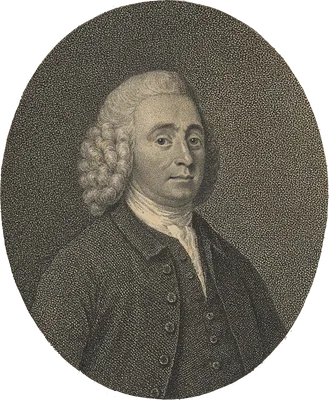
Digital facsimile from the Internet Archive at this link.
1780
#2205
Observations on fevers, especially those of the continued type, and on the scarlet fever attended with ulcerated sore-throat, as it appeared at Newcastle upon Tyne in the year 1778: Together with a comparative view of that epidemic with the scarlet fever as described by authors, and the angina maligna.
Digital facsimile from the Intenet Archive at this link.
1805
#4674
Mémoire sur la maladie qui a régné à Genève au printemps de 1805.
First definite description of cerebrospinal meningitis. Partial English translation in No. 2241.
1816
#11143
A practical account of the Mediterranean fever, as it appeared in the ships and hospitals of His Majesty's fleet on that station: With cases and dissections. To which are added facts and observations, illustrative of the causes, symptoms and treatment comprehending the history of the fever in the fleet, during the years 1810, 1811, 1813, and of the Gibraltar and Carthagena fevers.
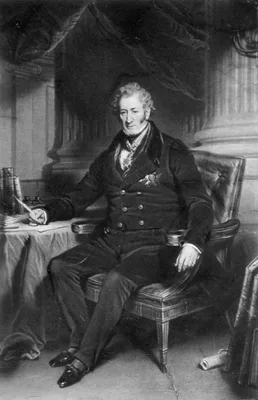
"Burnett in 1816 described an epidemic of a short term fever occurring among the Naval Forces engaged in the Siege of Malta in 1799, and this fever was almost certainly phlebotomus" (Coulter, The Royal Naval Medical S…
1820
#8948
Observations sur la fièvre jaune, faites à Cadix, en 1819 par MM. Pariset et Mazet, docteurs en médecine de la Faculté de Paris, et rédigées par M. Pariset.
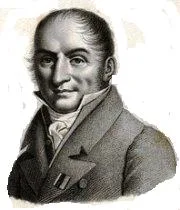
Pariset and Mazet distinguished themselves combating an outbreak of yellow fever in Spain. Pariset's colleague was apparently not involved with publication of the book, and died in a yellow fever outbreak in Barcelona…
1821
#12757
The history of plague, as it has lately appeared in the islands of Malta, Gozo, Corfu, Cephalonia, &c. detailing specific contagion of that disease, with particulars of the means adeopted for its eradication.
Concerns the Maltese plague,. 1813-1814. Digital facsimile from the Internet Archive at this link.
1832
#10457
Relation historique et médicale du choléra-morbus de Pologne, comprenant l'apparition de la maladie, sa march, ses progrès, ses symptômes, son mode de traitement et les moyens préservatifs. Avec une carte.
In his study of the spread of cholera in Poland in 1831 Brière de Boismont used a map to show the progression of the disease from a central point through the country along a red line through principal towns and the da…
1832
#10462
The substance of the official medical reports upon the epidemic, called cholera: Which prevailed among the poor at Dantzick, between the end of May and the first part of September, 1831, as transmitted to their lordships; being an analysis of the said epidemic disease in that city--founded upon actual observation and accurate inquiry: With important and well-authenticated facts relative to the same disease, as it prevailed among the poor in other parts of the North of Europe.
Hamett privately published this report after it was rejected for publication by the British government. He included hospital admission tables in his book and produced perhaps the first map based on hospital reports of…
1839
#12011
Anatomical, pathological and therapeutic researches on the yellow fever of Gibraltar of 1828, by P. Ch. A. Louis. From observations taken by himself and M. Trousseau as memebers of the French Commission at Gibraltar. Translated from the manuscript by G. C. Shattuck.
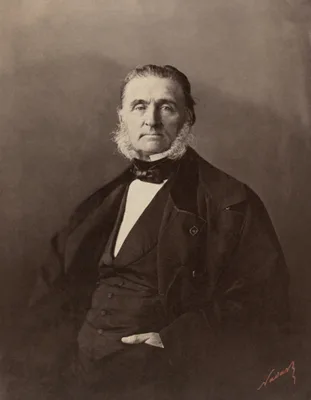
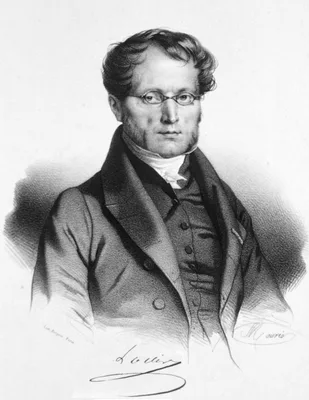
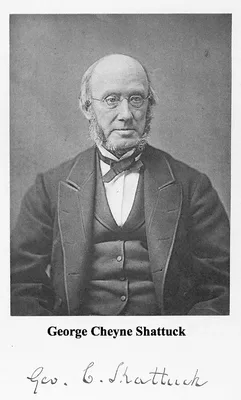
The Translator's Introduction begins as follows: "The work now presented to the public has heretofore existed in manuscript only. Circumstances have delayed its publication in France, and some years may yet elapse bef…
1845
#2421
Geschichte der Lustseuche. Erster Theil. Die Lustseuche im Alterthume.
French translation, 1847; English translation as The plague of lust, being a history of venereal disease in classical antiquity, and including: Detailed investigations into the cult of Venus, and phallic worship, brot…
1847
#2434
Om spedalskhed. Udgivet efter Foranstaltning af den Kongelige Norske Regjerings Department for det Indre. 1 vol. and atlas.
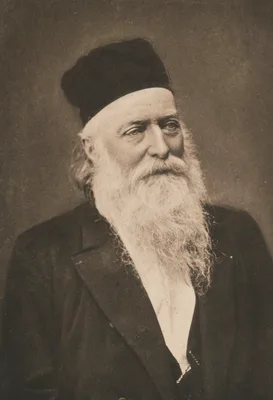
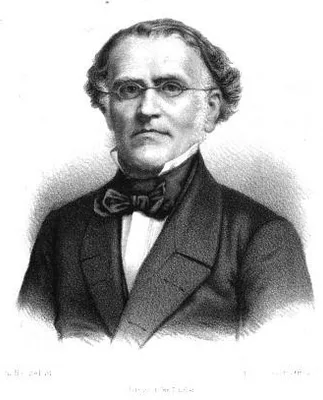
First modern description of leprosy (“Danielssen-Boeck disease’’). Danielssen, physician to the leprosy hospital at Bergen, was the founder of scientific leprology. The extremely rare Atlas consists of 24 plates and t…
1847
#5443
Iagttagelser, anstillede under Maeslinge-Epidemien paa Faerøerne i Aaret 1846.
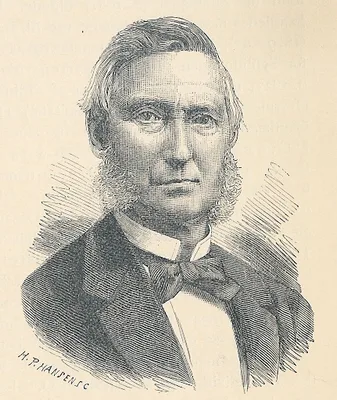
When only 26 years of age, Panum was sent by the Danish Government to investigate the epidemic of measles then raging in the Faroe Islands. His report on the subject was a valuable contribution to medical literature. …
1856
#22
Тα ∑ωζομενα. The extant works of Aretaeus, the Cappadocian. Edited and translated by Francis Adams.
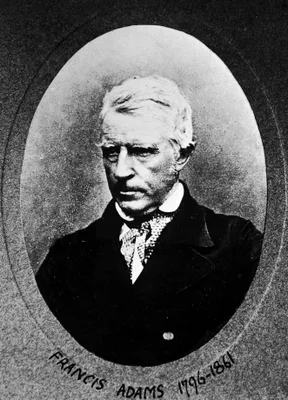
Aretaeus left many fine descriptions of disease; in fact Garrison ranks him second only to Hippocrates in this respect. In the printed editions of this bibliography, before the present online version, the Adams editio…
1875
#10451
The geographical distribution of heart disease and dropsy, cancer in females & phthisis in females, in England and Wales. Illustrated by six small and three large coloured maps.
Haviland used the national mortality statistics for England and Wales to develop an elaborate geographical explanation based on map analysis for the cause of heart, cancer, and tuberculosis deaths. He found that femal…
1884
#9237
Die grosse Sterben in Deutschland in den Jahren 1348 bis 1351 und die folgenden Pestepidemien bis zum Schluss des 14. Jahrhunderts.
Digital facsimile from the Internet Archive at this link.
1886 –1890
#7744
Klinicheskii sbornik po dermatologii i sifilologii. 4 vols.
Mansurov was the first dermatologist in Russia, and one of the first physicians to use photography systematically in medical illustration. This was a periodical, illustrated with original photographs, of which Manusro…
1887
#5503
Lektsii ob ostrikh infektsionnîkh bolieznyakh u dietei. [Lectures on acute infectious diseases of children.] Vol. 2
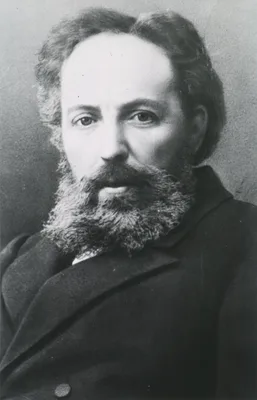
On p. 113 is Filatov’s account of a form of rubella with a scarlatiniform rash. To this he gave the name “rubeola scarlatinosa”. (See also No. 5505.)
1891 –1894
#1680
A history of epidemics in Britain. Vol. 1: From A. D. 664 to the extinction of plague. Vol. 2: From the extinction of plague to the present time.
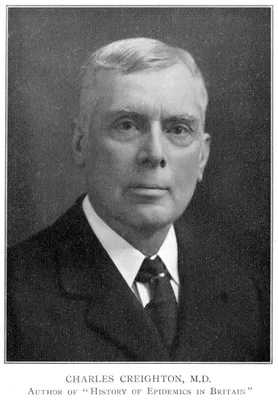
A classical contribution to modern epidemiology, of which Creighton may be said to have been the founder. Reprinted with new introductory material, 1965. Digital facsimile from the Internet Archive at this link.
1898
#5294
On sart sore.
First description of the protozoon later named Leishmania tropica. The paper is in Russian; for a translation, see C. A. Hoare, in Trans. roy. Soc. trop. Med. Hyg., 1938, 32, 78-90.
1909
#5263
Malaria and Greek history. To which is added the history of Greek therapeutics and the malaria theory by E.T. Withington.
The view is put forward by the writer that malarial infection was the cause of the decadence of the Greeks. Digital facsimile from the Internet Archive at this link.
1911
#5137
La peste de 1720 à Marseille et en France d’après des documents inédits.
1915
#5384.1
Ätiologische Untersuchungen über den Flecktyphus in Serbien 1913 und in Hamburg 1914.
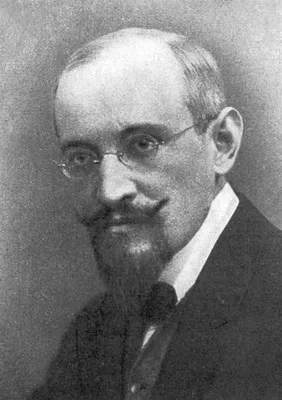
Prowazek, like Ricketts and Wilder, demonstrated the specific causal agent in typhus. Like Ricketts he died of the disease.
1927
#5219
Contribución al estudio de la linfogranulomatosis inguinal subaguda o ulcera venérea adenógena de Nicolás y Favre.
Gay Prieto was the first actually to see the infective agent of lymphogranuloma venereum.
1939
#4660.1
Vesennij (vesenne-letnij) endemiceskij klescevoj encefalit. [Vernal (verno-aestival) endemic tick-borne encephalitis.]
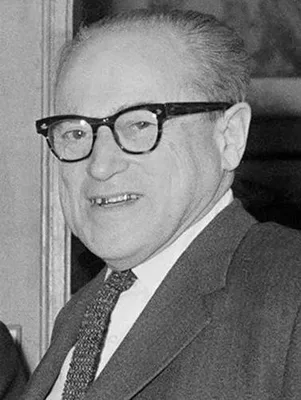
Isolation of the virus of spring–summer (Russian Far East) encephalitis.
1949
#5402.1
Serological evidence of Q fever in Great Britain.

Relationship of primary atypical pneumonia and Q fever.
1950
#13804
The early smallpox epidemics in Europe and the plague of Athens after Thucydides.
1953
#10504
Pest in Venedig 1575-1577. Ein Beitrag zur Frage der Infektkette bei den Pestepidemien West-Europas.
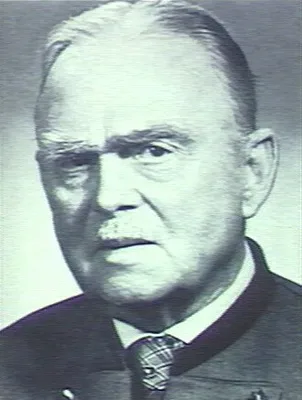
Rodenwaldt studied of the course of plague in Venice from 1575-1577 and the measures taken to combat the epidemic, considering symptoms, transmitter, environment, climatic influences, and the success and failure of th…
1954
#12968
The anaesthetist's viewpoint on the treatment of respiratory complications in poliomyelitis during the epidemic in Copenhagen, 1952.
Ibsen developed the first Intensive Care Unit (ICU) during the polio epidemic in Copenhagen in 1952, formally setting up the unit in 1953 in a converted student nurse classroom in the Municipal Hospital in Copenhagen.…
1957
#10886
Piroplasmosis in man: Report on a case.
Order of authorship in the original paper was Škrabalo, Deanovic. First report of a case of babesiosis in a human, in this case an immunocompromised patient in Zagreb, (now Croatia). Piroplasmosis is another term for …
1966
#12125
Plague and plague control in the Soviet Union: History and bibliography through 1964.
1970
#5145
A history of bubonic plague in the British Isles.
From The Great Pestilence of 1348 to the Plague of London in 1665, discussing efforts to control the disease, and its impacts on social and economic life.
1978
#13020
Epidemic disease in fifteenth century England: The medical response and the demographic consequences.
1980
#5145.2