
Facets
Browse across eight MeSH (opens in new tab) facets — era, geography, science, specialty, technology, history, culture, and reference. Select one tag per group; counts update across the others. What’s new in facet browse how facets relate to subjects and MeSH.
Clear filtersFacet filters
Geography
Specialties & Disease
- Anatomy & Pathology 1
- Cardiology & Blood 0
- Neurology & Psychiatry 0
- Obstetrics & Reproductive 0
- Infectious Disease (General) 0
- Surgery & Anesthesia 2
- Public Health 4
- Immunology & Dermatology 0
- General Clinical Medicine 0
- Military Medicine 18
- Psychology 0
- Alternative & Fringe Medicine 0
- Pediatrics 0
- Ophthalmology & Vision 0
- ENT & Hearing 0
- Urology & Nephrology 0
- Gastroenterology & Hepatology 0
- Pulmonary & Respiratory 0
- Rheumatology, Rehab & Pain 0
- Internal, Emergency & Geriatric 0
- Veterinary Medicine 0
- Epidemiology & Demography 0
- Physiology & Embryology 0
- Dentistry 0
- Plagues & Epidemics 1
- Microbiology & Virology 3
Social & Historical Studies
Institutions & Culture
Reference & Scholarly Works
Drugs & Technology
68 entries match United States [Z01.058] · Natural History & Evolution [K01.900.500]
1672
#13878
New-Englands rarities discovered: In birds, beasts, fishes, serpents, and plants of that country. Together with the physical and chyrurgical remedies wherewith the natives constantly use to cure their distempers, wounds, and sores; also A perfect description of an Indian squa, in all her bravery, with a poem not improperly conferr'd upon her; lastly, a chronological table of the most remarkable passage in that country amongst the English.
Josselyn's books give some of the earliest and most complete information on New England flora and fauna in colonial times, and his outlook was later praised by Henry Thoreau, among others. Digital facsimile from Biodi…
1674
#13261
An account of two voyages to New-England. Wherein you have the setting out of a ship, with the charges; The prices of all necessaries for furnishing a planter and his family at his first coming: a description of the countrey [sic], natives, and creatures; with their merchantil [sic] and physical use; the government of the countrey as it is now possessed by the English, &c. A large chronological table of the most remarkable passages, from the first discovering of the continent of America, to the year 1673.
Josselyn first visited America in 1638-39 and returned from 1663 to 1671. His second and more extensive book includes an herbal, with numerous botanical as well as medical and surgical descriptions, and is considered …
1731 –1747
#9571
The natural history of Carolina, Florida and the Bahama Islands: Containing the figures of birds, beasts, fishes, serpents, insects, and plants: Particularly, the forest-trees, shrubs, and other plants, not hitherto described, or very incorrectly figured by authors. Together with their descriptions in English and French. To which are added observations on the air, soil and waters: With remarks on agriculture, grain, pulse, roots &c. To the whole is prefixed a new and complete map of the countries treated of. 2 vols.
The only attempt to record the natural history of a region of America during the colonial period. Includes 220 fine handcolored etched plates after and by Catesby and mostly signed with his cipher, excepting plates 61…
1737
#12473
The natural history of North Carolina. With an account of the trade, manners and customs of the Christian and Indian inhabitants. Illustrated with copper-plates, whereon are curiously engraved the map of the country, several strange beasts, birds, fishes, snakes, insects, trees, and plants, &c.
Brickell accompanied provincial governor George Burrington to North Carolina in 1724, remaining in the region for six years and becoming one of the first medical doctors in North Carolina. Brickell took the material o…
1751
#7677
Observations on the inhabitants, climate, soil, rivers, productions, animals, and other matter worthy of notice. Made by Mr. John Bartram, in his travels from Pensilvania to Onondago, Oswego and the Lake Ontario, in Canada. To which is annex'd, a curious account of the cataracts at Niagara, by Mr. Peter Kalm....
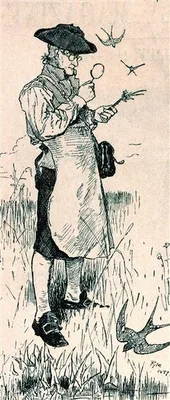
Digital facsimile from Biodiversity Heritage Library at this link.
1753 –1761
#9923
En Resa til Norra America. 2 vols.
Between 1748 and 1749, Kalm, a Swedish naturalist and student of Linnaeus, traveled throughout northeast America, specifically in Pennsylvania, Delaware, New Jersey, New York, and Canada, surveying the countryside, an…
1754
#7678
The natural history of Carolina, Florida, and the Bahama Islands, containing the figures of birds, beasts, fishes, serpents, insects, and plants, particulary the forest trees, shrubs, and other plants, not hitherto described, or very incorrectly figured by authors. Together with their descriptions in English and French. To which are added, observations on the air, soil, and waters with remarks upon agriculture, grain, pulse, roots, &c. To the whole is prefixed a new and correct map of the countries treated of / by the late Mark Catesby; revised by Mr. [George] Edwards. 2 vols.
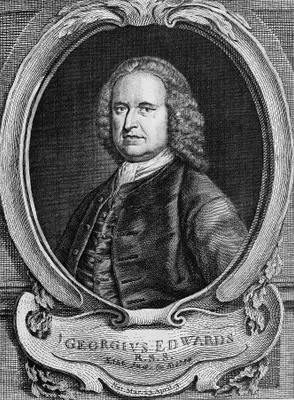
Second edition, edited by ornithologist George Edwards. Digital facsimile from the Internet Archive at this link.
1767
#7679
Hortus Europae americanus, or, A collection of 85 curious trees and shrubs: the produce of North America, adapted to the climates and soils of Great-Britain, Ireland, and most parts of Europe, &c together with their blossoms, fruits and seeds, observations on their culture, growth, constitution and virtues, with directions how to collect, pack up and secure them in their passage.
Digital facsimile from the Biodiversity Heritage Library at this link. First published as Hortus Britanno-Americanus (1763).
1775
#2155
Plain, concise, practical remarks, on the treatment of wounds and fractures; to which is added an appendix, on camp and military hospitals; principally designed for the use of young military surgeons in North America.
The first surgical work written by an American and printed in North America. Jones’s work was the accepted guide to surgical practice during the American Revolutionary War.
1775
#7505
The history of the American Indians; particularly those nations adjoining to the Missisippi [sic] East and West Florida, Georgia, South and North Carolina, and Virginia: containing an account of their origin, language, manners, religious and civil customs, laws, form of government, punishments, conduct in war and domestic life, their habits, diet, agriculture, manufactures, diseases and method of cure... With observations on former historians, the conduct of our colony governors, superintendents, missionaries, & c. Also an appendix, containing a description of the Floridas, and the Missisippi [sic] lands, with their productions--the benefits of colonizing Georgiana, and civilizing the Indians--and the way to make all the colonies more valuable to the mother country....
The author characterized himself on the title page as "a Trader with the Indians and a Resident in their Country for Forty Years." Digital facsimile from the Internet Archive at this link.
1776
#1773
An account of the weather and diseases of South-Carolina. 2 vols.
Originally published in the Gentleman’s Magazine, 1751-54.
1777
#13452
Geschichte der Mission der Evangelischen Brüder auf den Caraibischen Inseln. Herausgegeben durch Johan Jakob Bossart. 2 vols.
Digital facsimile from Biodiversity Heritage Library at this link.
1778
#2157
Directions for preserving the health of soldiers: recommended to the consideration of the officers of the Army of the United States. Published by order of the Board of War.
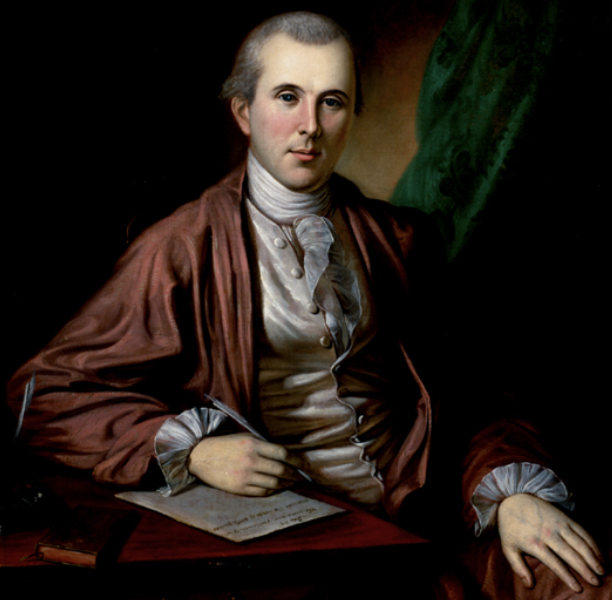
A reprint from the Philadelphia Packet, No. 284. The pamphlet was reprinted by the Massachusetts Temperance Alliance in Boston, 1865, for distribution to the Union soldiers.
1785
#11450
Notes on the State of Virginia; written in the year 1781, somewhat corrected and enlarged in the winter of 1782, for the use of a foreigner of distinction, in answer to certain queries proposed by him.
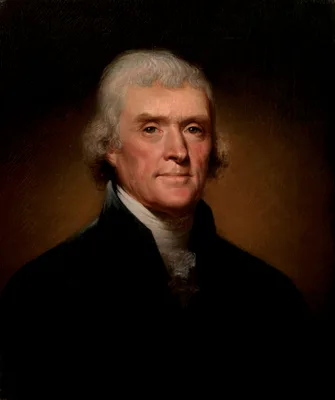
Jefferson wrote Notes on the State of Virginia in response to a series of questions sent in 1781 to various members of the Continental Congress by François Barbé-Marbois, then secretary to the French legation at Phila…
1789 –1793
#80
Medical inquiries and observations. 2 vols.
Rush was considered the ablest American clinician of his time. He was a friend of Benjamin Franklin and one of the signers of the Declaration of Independence. His many writings are distinguished for their classical st…
1790
#11229
Viaggio negli Stati Uniti dell' America settentrionale fatto negli anni 1785, 1786, e 1787. 2 vols.
Castiglioni was one of very few Italians to make the journey to America and to produce a detailed day-to-day account of his observations in the young country. His "Viaggio" is a systematic compendium of information dr…
1791
#7770
Travels through North & South Carolina, George, East & West Florida, the Cherokee country, the extensive territories of the Muscogulges, or Creek confederacy, and the country of the Chactaws [sic]...
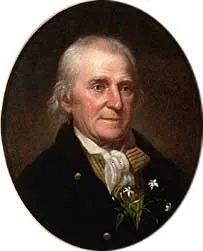
Digital facsimile of London, 1794 second edition from the Internet Archive at this link.
1792
#1775
An historical account of the climates and diseases of the United States of America, and of the remedies and methods of treatment, which have been found most useful and efficacious, particularly in those diseases which depend upon climate and situation: collected pricipally from personal observation, and the communications of physicians of talents and experience, residing in the several states.
Digital facsimile from the Medical Heritage Library, Internet Archive, at this link.
1797
#7768
The natural history of the rarer lepidopterous insects of Georgia. Including their systematic characters, the particulars of their several metamorphoses, and the plants on which they feed. Collected from the observations of Mr. John Abbot, many years resident in that country, by James Edward Smith.
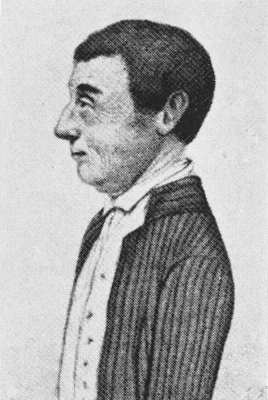
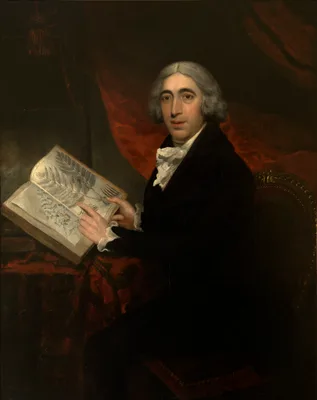
The earliest illustrated monograph on the butterflies and moths of North America. Text in English and French. 104 hand-colored plates. Digital facsimile from the Internet Archive at this link.
1808 –1814
#9498
American ornithology; or, the natural history of the birds of the United States: Illustrated with plates engraved and colored from original drawings taken from nature. 9 vols.
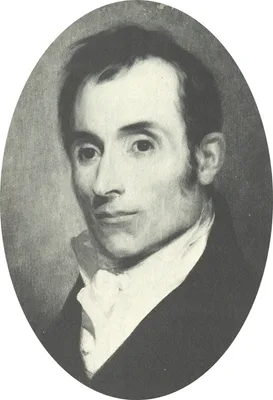
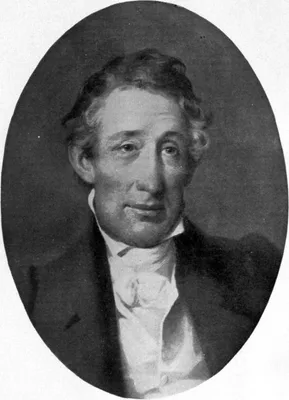
Considered the "father of American ornithology," Wilson was the greatest American ornithologist before Audubon. Wilson died with the 7th volume in press, and the 8th and 9th volumes were completed by Wilson's friend G…
1814
#7876
Flora Americae septentrionalis; or, a systematic arrangement and description of the plants of North America. Containing, besides what have been described by preceding authors, many new and rare species, collected during twelve years travels and residence in that country. 2 vols.
The first survey of all plants of North America above Mexico, including more than 3,000 species and 470 genera; describes more than 100 species collected by the Lewis and Clark expedition. Digital facsimile from Botan…
1815
#11520
Natural and statistical view, or picture of Cincinnati and the Miami country, illustrated by maps: With an appendix, containing observations on the late earthquakes, the aurora borealis, and south-west wind.
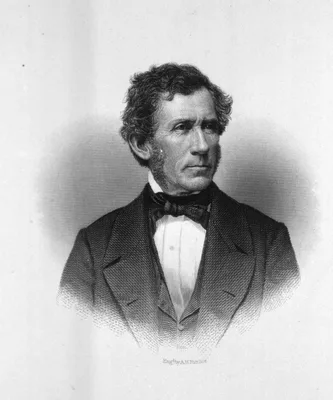
Modeled on Thomas Jefferson's Notes on the State of Virginia, this work covered the geography, antiquities, topography, medical conditions and goverment of Ohio. Digital facsimile from digital.cincinnatilibrary.org at…
1817
#10519
Physical observations, and medical tracts and researches, on the topography and diseases of Louisiana.
Digital facsimile from U.S. National Library of Medicine at this link.
1821
#7772
A journal of travels into the Arkansas territory, during the year 1819. With occasional observations on the manners of the aborigines. Illustrated by a map and other engravings.
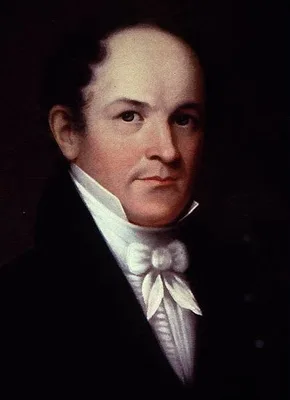
Nuttall travelled from Philadelphia, down the Ohio and Mississippi rivers to the Arkansas. From there he travelled across Arkansas to the interior of the modern Oklahoma; returning via the Arkansas and Mississippi riv…
1823
#6584.9
A military journal during the American Revolutionary War, from 1775-1783…
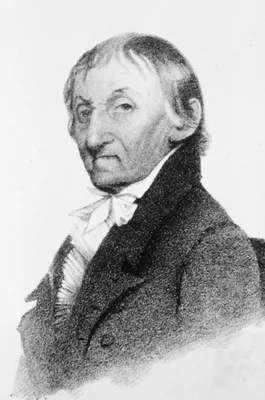
The first American medical historian, Thacher gave the best contemporary account of medicine during the Revolutionary War, as well as an important history of the war in general. See No. 6710.
1824 –1828
#9484
American entomology, or descriptions of the insects of North America. Illustrated by coloured figures from original drawings executed from nature. 3 vols.
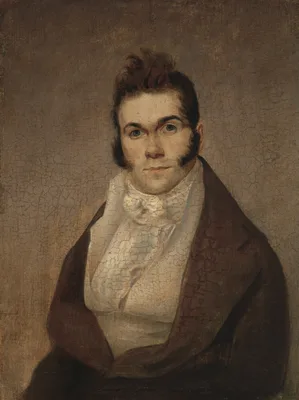
Plates by Titian Ramsay Peale, H. Bridport, C. A. Lesueur, W. W. Wood, and C. Tiebout; engraved by Tiebout, G. Lang, and Longacre. Digital facsimile from the Internet Archive at this link.
1826
#11415
Observations on the May-Bug, and its ravages on plum and other trees, and also on the means of preventing the mischief.
Griffth was probably the first American woman to publish in the sciences outside of materia medica and childcare. This article was probably her earliest non-geological publication. See Robt S. Cox, "A spontaneous flow…
1828
#6710
American medical biography. 2 vols.
Thacher was the first American medical historian. The above biography is a valuable source of information on the early medical history of the United States. Reprinted, New York, Da Capo Press, 1967.
1830 –1836
#9485
American conchology, or descriptions of the shells of North America illustrated from coloured figures from original drawings executed from nature. 7 parts. Parts 1–6: New Harmony, 1830–1834; Part 7: Philadelphia, 1836.
The printer or publisher of part 7 is not identified. Digital facsimile from the Biodiversity Heritage Library at this link.
1831
#10441
Circular of the Philadelphia Museum: Containing directions for the preparation and preservation of objects of natural history.
1832 –1834
#7773
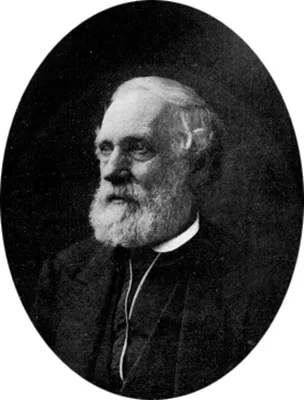
A manual of the ornithology of the United States and of Canada. Vol. 1: The land birds. Vol. 2: The water birds.
Digital facsimile from the Internet Archive at this link.
1842 –1894
#12480
[New York Natural History and Geological Survey.] Natural history of New York. 30 vols.
The New York Natural History and Geological Survey was established by the state legislature in 1836 under the direction of James Ellsworth DeKay. By far the most ambitious scientific project undertaken in the United S…
1845 –1854
#7769
The viviparous quadrupeds of North America. 2 vols. of plates in folio; 3 vols. 8vo text.
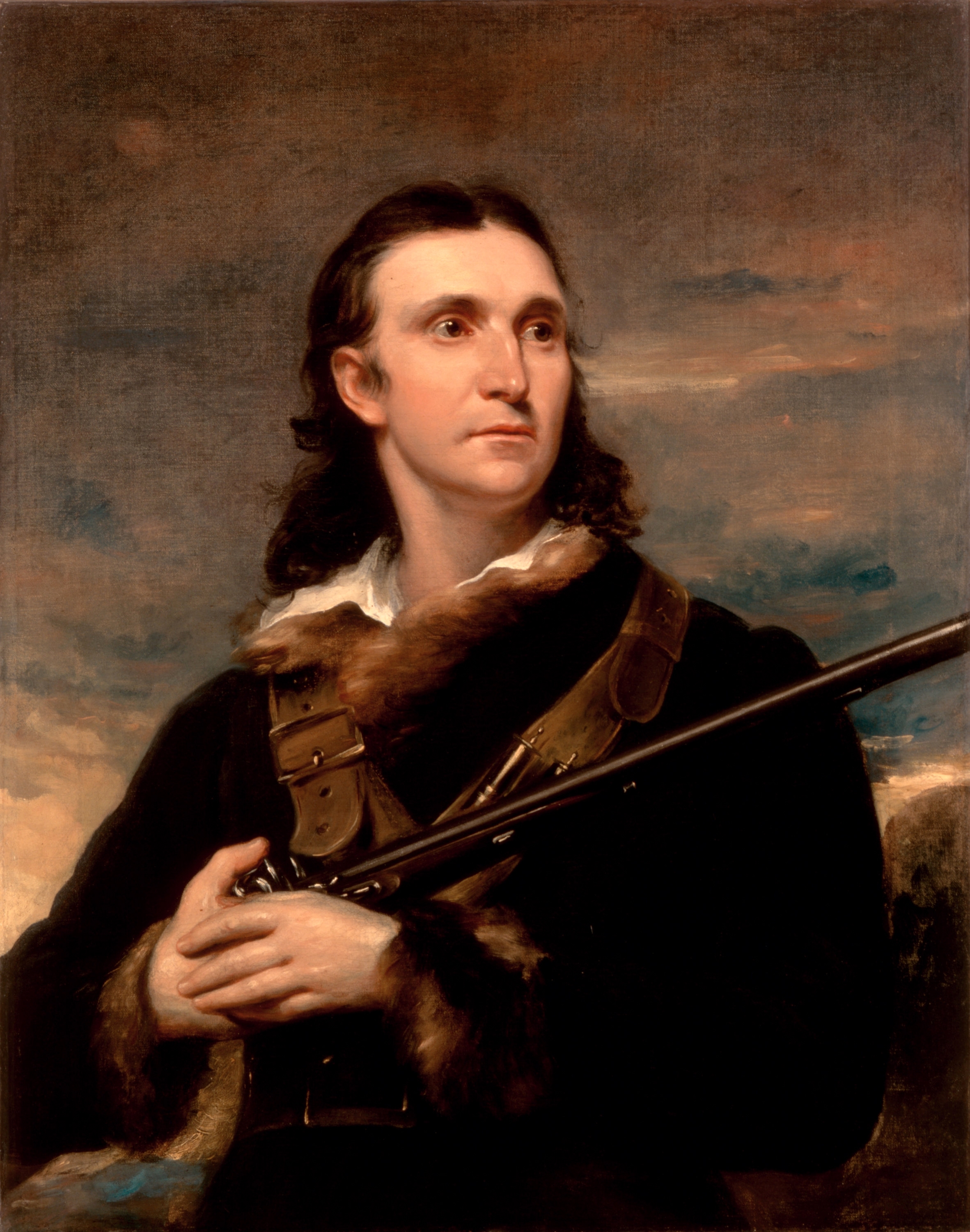
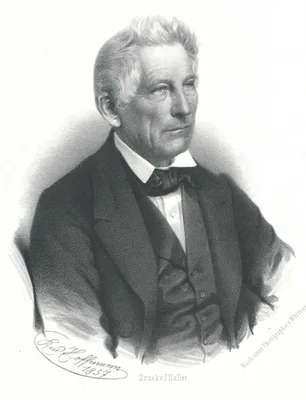
The largest and most significant color plate book produced in America during the 19th century.
1847 –1847
#10336
Southern ichthyology; or a description of the fishes inhabiting the waters of South Carolina, Georgia, and Florida. Pt. 2, 1847, Pt. 3, 1848.
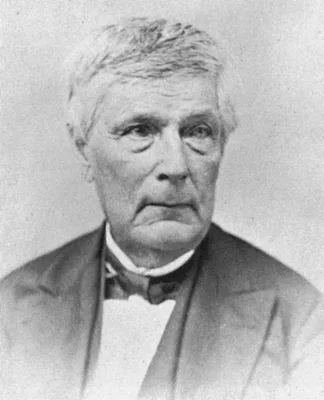
Holbrook never published part one of this work.
1850 –1854
#1777
A systematic treatise, historical, etiological, and practical, on the principal diseases of the interior valley of North America as they appear in the Causcasian, African, Indian, and Esquimaux varieties of Its population. 2 vols.
This classical contribution to the social / medical history of North America includes the most important work on the natural history of malaria published up to that time. Digital facsimile of vol. 1 from the Internet …
1850
#10295
An historical sketch of the state of medicine in the American Colonies, from their first settlement to the period of the Revolution.
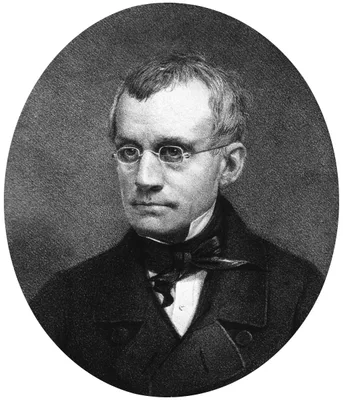
A pioneering historical interpretation of the development of medicine in the 13 colonies up to the American Revolution. Digital facsimile from the Internet Archive at this link. This is the second, significantly expan…
1850 –1851
#10517
Southern medical reports: Consisting of general and special reports, on the medical topography, meteorology, and prevalent diseases, in the following states: Louisiana, Alabama, Mississippi, North Carolina, South Carolina, Georgia, Florida, Arkansas, Tennessee, Texas. Edited by E. D. Fenner. 2 vols.
Regarding Fenner see, John Duffy, "Erasmus Darwin Fenner (1807–1866) Journalist, Educator, and Sanitarian," Academic Medicine. 35 (1960) 819-831. Digital facsimile of the 1850-51 edition from the Internet Archive at t…
1851
#12086
Observations on the medical topography and diseases (especially diarrhoea) of the Sacramento Valley, California, during the Years 1849, 1850.
Stillman was personal physician to Leland Stanford, the first governor of California, and was a partner of railroad magnate Mark Hopkins from their days on board a ship to California in 1849. Stillman was also co-foun…
1856
#7875
Illustrations of the birds of California, Texas, Oregon, British and Russian America. Intended to contain descriptions and figures of North American birds not given by former American authors, and a general synopsis of North American ornithology. 1853 to 1855.
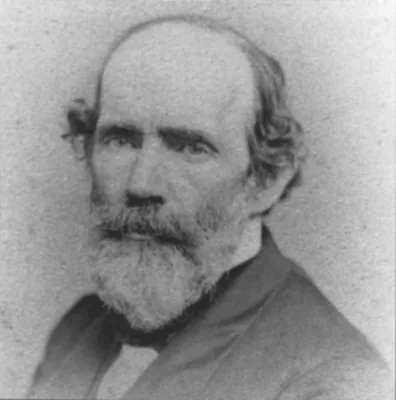
Originally issued in ten parts from 1853 to 1855. Cassin ran an engraving and lithographing firm in Philadelphia, which produced illustrations for government and scientific publications. He pursued ornithology as an a…
1857 –1877
#333
Contributions to the natural history of the United States. 5 vols.
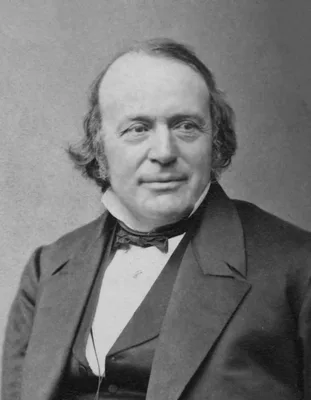
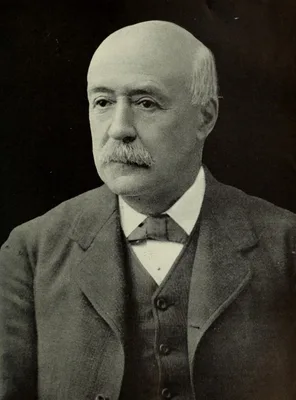
Vols. 1-4 by Louis Agassiz were published from 1857-1862; Vol. 5, North American starfishes by Alexander Agassiz, appeared in 1877. Louis Agassiz was, for his time, the leading comparative anatomist in America and a v…
1857
#10427
Der Staat Californien in medicinisch-geographischer Hinsicht.
Dr. Praslow practiced medicine in San Francisco from 1849-1856, after which he returned to Germany. His book provides information concerning health and epidemics in San Francisco during this early period. Translated i…
1857 –1859
#10514
Report on the United States and Mexican boundary survey: Made under the direction of the secretary of the Interior
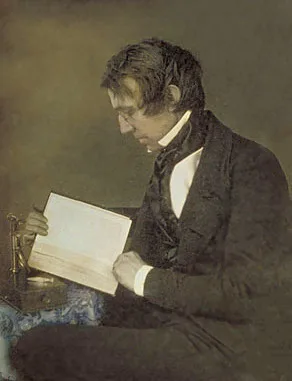
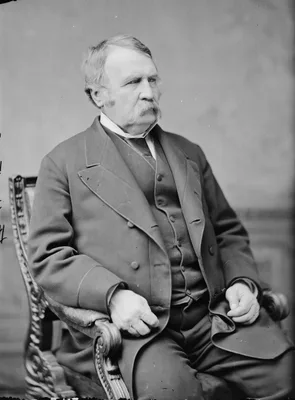
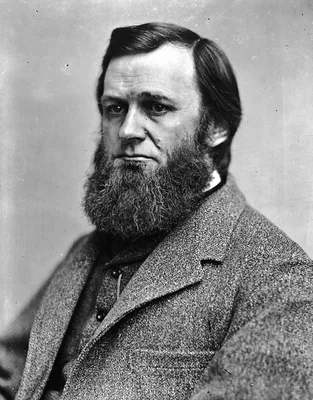
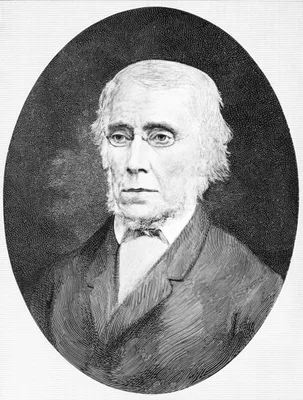
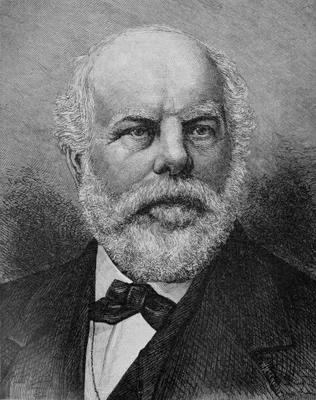
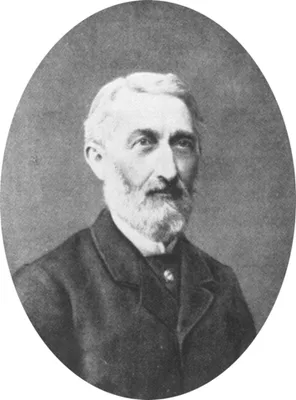
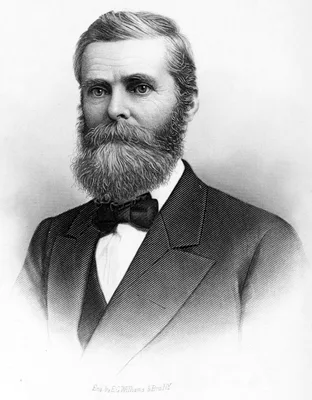
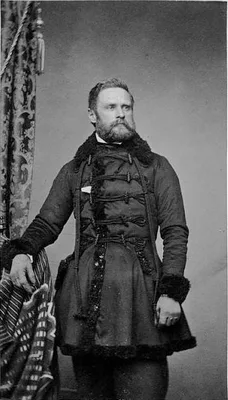
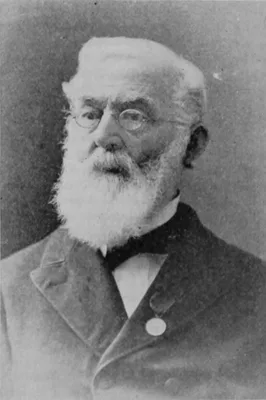
Vol. 1, pt. by W. H. Emory. Vol. 1, pt. 2: Geological reports by C.C. Parry and Arthur Schott, notes by W. H. Emory; Paleontology and geology of the boundary by James Hall; Description of cretaceous and tertiary fossi…
1860
#10337
Ichthyology of South Carolina. Vol. 1 (All Published).
Digital facsimile from BnF Gallica at this link.
1874
#6585
Contributions to the annals of medical progress and medical education in the United States before and during the War of Independence.
Digital facsimile from the Hathi Trust at this link.
1875
#11307
Something about California: Being a description of its climate, health, wealth and resources, compressed into small compass: Marin County: Its industries, roads, appearance, health and population, also, a series of carefully written and well considered articles and paragraphs describing the sanatarium of San Rafael in which the mildness and equability of its climate are explained.
This 32-page pamphlet was probably the first separate publication concerning health matters in Marin County, California, my county of residence during the years in which I wrote this online bibliography-- J.M.N. Digit…
1900
#5530.3
A new pathogenic mould (formerly described as a protozoon: Coccidioides immitis pyogenes). Preliminary report.
Recognition that the protozoan was the pathogenic phase of a mycelial fungus.
1924 –1929
#7097
A bibliography of American natural history. The pioneer century. The role played by the scientific societies; scientific journals; natural history museums and botanic gardens; state geological and natural history surveys; federal exploriing expeditions in the rise and progress of American botany, geology, mineralogy, paleontology and zoology. 3 vols.
Digital facsimile from the Internet Archive at this link.
1930 –1933
#6588
Medicine in Virginia in the seventeenth (eighteenth, nineteenth) century. 3 vols.
1931
#9213
Medical men in the American Revolution 1775-1783.
Digital edition from U.S. Army Medical Department Office of Medical History at this link.
1937
#8594
Dr. Bodo Otto and the medical background of the American revolution by James E. Gibson.
Oddo, born in Germany, is one of the better-known American surgeons in the American revolutionary war; however he published nothing and is primarily known from this biography.