
Facets
Browse across eight MeSH (opens in new tab) facets — era, geography, science, specialty, technology, history, culture, and reference. Select one tag per group; counts update across the others. What’s new in facet browse how facets relate to subjects and MeSH.
Clear filtersFacet filters
Geography
Specialties & Disease
- Anatomy & Pathology 0
- Cardiology & Blood 0
- Neurology & Psychiatry 1
- Obstetrics & Reproductive 1
- Infectious Disease (General) 0
- Surgery & Anesthesia 1
- Public Health 2
- Immunology & Dermatology 0
- General Clinical Medicine 1
- Military Medicine 0
- Psychology 0
- Alternative & Fringe Medicine 1
- Pediatrics 0
- Ophthalmology & Vision 0
- ENT & Hearing 0
- Urology & Nephrology 0
- Gastroenterology & Hepatology 0
- Pulmonary & Respiratory 0
- Rheumatology, Rehab & Pain 0
- Internal, Emergency & Geriatric 0
- Veterinary Medicine 0
- Epidemiology & Demography 0
- Physiology & Embryology 0
- Dentistry 0
- Plagues & Epidemics 0
- Microbiology & Virology 0
Social & Historical Studies
Institutions & Culture
Reference & Scholarly Works
Drugs & Technology
22 entries match Ancient [K01.400.470] · Arts, Literature & Humanities [K01.090]
1478
#7086
Halieutica, sive de piscatu. [Translated by Lorenzo Lippi, with recipes for cooking added by Lippi.]
The didactic poem on fish and fishing by Oppian of Anazarbus, a 2nd-century Greco-Roman poet, survived the Middle Ages essentially in its entirety, consisting of 3500 lines in Greek. The poem was dedicated to the empe…
1544
#4406.1
Chirurgia e graeco in latinum conversa.
This elegantly printed and illustrated small folio included 210 text woodcuts, most probably after drawings by the school of Francesco Salviati (Francesco de'Rossi). It was issued from the press operated by Pierre Gau…
1865
#6474
La médecine dans Homère, our études d'archéologique sur les médecins, l'anatomie, la physiologie, la chirugie et la médecine dans les poèmes Homériques.
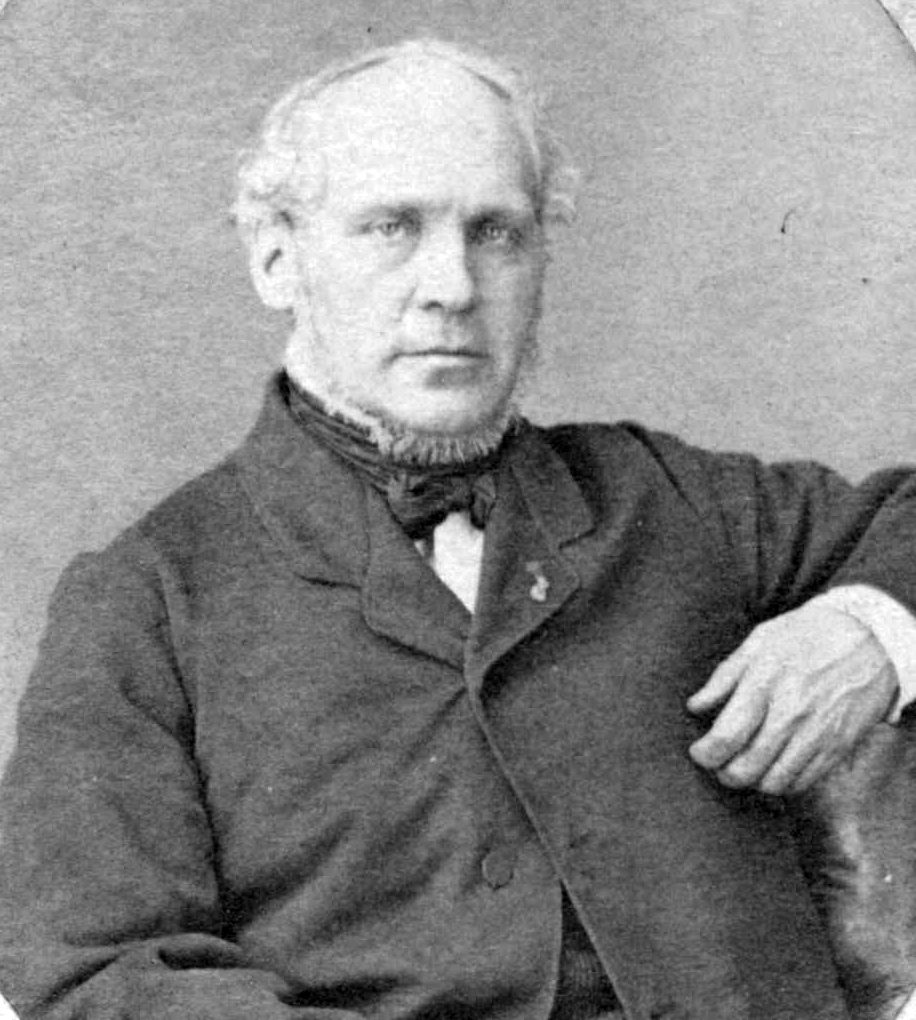
Digital facsimile from the Internet Archive at this link.
1867
#8210
Review of the history of medicine. 2 vols.
Vol. 1, Part 1: "Primitive period among the Asiatic nations," i.e. Hindus. Vol. 2, Part 1: "Ancient state of medicine among the Hindus (continued)". Part 1: "Review of the Buddhist systems of medicine." Part 3: "Revie…
1885
#13835
Médecine et moeurs de l'ancienne Rome d'après les poètes latins.
Translated into English as Medicine and morals of ancient Rome according to the Latin poets (Cincinnati: Cincinnati Lancet-clinic, 1901). Digital facsimile of the 1885 edition from Google Books at this link. Facsimile…
1907
#87
The fragments of Empedocles. Translated into English verse by William Ellergy Leonard.
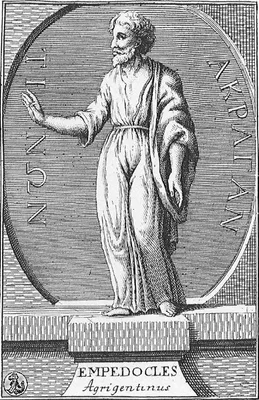
Empedocles was a Greek philosopher, statesman, physician and reformer. His poem on Nature originally ran to 5,000 lines, of which only 400 are now left. He believed in four ultimate elements—fire, air, water and earth…
1917
#9988
Das homerische Tiersystem und seine Bedeutung für die zoologische Systematik des Aristoteles.
Digital facsimile from the Biodiversity Heritage Library at this link.
1922
#9985
Die homerische Medizin. Eine medizin-kulturhistorische Skizze.
Medicine in Homer.
1929
#9987
Die Ärƶtlichen Kenntnisse in Ilias und Odyssee.
Medical knowledge in the Iliad and Odyssey. Digital facsimile from Google Books at this link.
1951
#7164
Der Arzneikunde der Kopten.
1981 –1986
#8324
The complete works, translated into English by Charles Allison Behr. 2 vols.
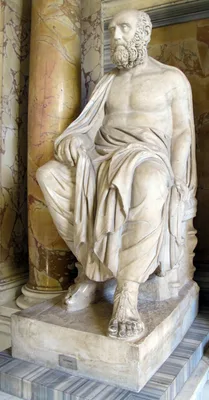
"The six books of Sacred Tales “ are in a class apart. A record of revelations made to Aristides in dreams by the healing god Asclepius…they are of major importance, both as evidence for the practices associated with …
1988
#8837
The body and society: Men, women, and sexual renunciation in early Christianity.

"A groundbreaking study of the marriage and sexual practices of early Christians in the ancient Mediterranean and Near East. Brown focuses on the practice of permanent sexual renunciation-continence, celibacy, and lif…
1991
#8125
Hippocrates in a world of pagans and Christians.
1991
#8343
A Hellenistic treatise on poisonous animals (the "Theriaca" of Nicander of Colophon): A contribution to the history of toxicology.
"... the authors review all the ancient treatises, ranged in chronological order, that cite Nicander at greater or lesser length, from Celsus up to Paul of Aegina - not less than thirteen authors. . . . Next follows a…
1996
#9435
Medicine, society and faith in the ancient and medieval worlds.
1998
#8183
Les maladies dans l'art antique.
1999
#9810
Medicina antiqua. Codex Vindobonensis 93. Vienna, Österreichische Nationalbibliothek. Introduction by Peter Murray Jones, commentary by Franz Unterkircher. Manuscripts in Miniature, No. 4.
Color reproduction, reduced in size by one-third, of "a compendium of popular Late Antique texts brought together in the 6th century. It contains writings on herbs and materia medica by authors heavily reliant on the …
2000
#8314
Cuneiform Monographs 14: Birth in Babylonia and the Bible: Its Mediterranean setting. by M. Stol with a chapter by F.A.M. Wiggermann.
2000
#11092
Asclepius, the god of medicine.
2004
#8312
Magic and rationality in ancient Near Eastern and Graeco-Roman medicine. Edited by Manfred Horstmanshoff and Marten Stol.
The first comparison of medical systems of the Ancient Near East and the Greek and Roman world. The authors treat early medicine in Babylonia, Egypt, the Minoan and Mycenean world; later medicine in Hippocrates, Galen…
2005
#8295
From monastery to hospital: Christian monasticism and the transformation of health care in Late Antiquity.
2012
#11048