Facets
Browse across eight MeSH (opens in new tab) facets — era, geography, science, specialty, technology, history, culture, and reference. Select one tag per group; counts update across the others. What’s new in facet browse how facets relate to subjects and MeSH.
Clear filtersFacet filters
Geography
Specialties & Disease
- Anatomy & Pathology 765
- Cardiology & Blood 914
- Neurology & Psychiatry 1,258
- Obstetrics & Reproductive 551
- Infectious Disease (General) 147
- Surgery & Anesthesia 1,553
- Public Health 1,129
- Immunology & Dermatology 1,405
- General Clinical Medicine 487
- Military Medicine 436
- Psychology 202
- Alternative & Fringe Medicine 383
- Pediatrics 247
- Ophthalmology & Vision 412
- ENT & Hearing 293
- Urology & Nephrology 309
- Gastroenterology & Hepatology 316
- Pulmonary & Respiratory 233
- Rheumatology, Rehab & Pain 189
- Internal, Emergency & Geriatric 123
- Veterinary Medicine 165
- Epidemiology & Demography 397
- Physiology & Embryology 924
- Dentistry 259
- Plagues & Epidemics 1,279
- Microbiology & Virology 1,080
Social & Historical Studies
Institutions & Culture
Reference & Scholarly Works
1,080 entries match Microbiology & Virology [C01.748]
1892
#5243
Azione della chinina sui parasite malarici e sui corrispondente accessi febbrili.
French translation in Arch. ital. Biol., 1892, 17, 456-71.
1892
#6279
Das Scheidensekret und seine Bedeutung für das Puerperalfieber.
Döderlein's study of the vaginal secretion in relation to puerperal fever includes the first description of “Döderlein’s bacillus” (Lactobacillus). Döderlein introduced the concept of normal body bacteria or "normal b…
1893
#5188
Ueber Amöben-Enteritis.
Entamoeba histolytica distinguished from Entamoeba coli. English translation in Kean (No. 2268.1).
1893
#5529
Investigations into the nature, causation and prevention of Texas or Southern cattle fever.
U.S. Bureau of Animal Industry, Bulletin No. 1. Discovery of the parasite of Texas cattle fever, Pyrosoma bigeminum, and proof that its transmission is due to the cattle tick, Boöphilus bovis. This was the first demon…
1893
#5360
A case of ankylostomiasis.
First recognition of ankylostomiasis in America. It had previously been reported and described under various names.
1893
#5428
Ricerche sulla patogenesi ed etiologia dell’ infezione vaccinica e vaiolosa.
Guamieri described bodies found in the specific lesions of smallpox. Cytorrhyctes variolae guarnieri, which he believed to be the causative organism of the disease. Guarnieri bodies are found in all poxvirus infection…
1894
#2546
Ueber die specifische Bedeutung der Choleraimmunität (Bakteriolyse).
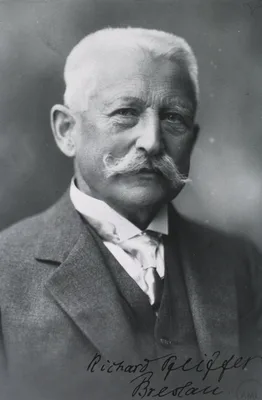
Pfeiffer and Isayev recorded the occurrence of bacteriolysis in cholera vibrios under certain conditions: immune bacteriolysis, “Pfeiffer’s phenomenon”. Abridged English translation of second part in Bibel, Milestones…
1894
#3307
Le microbe de l’ozène.
Loewenberg found a bacillus of the Friedländer group in ozena.
1894
#3308.1
Studien zur bacteriellen Diagnostik der Diphtherie und der Anginen.
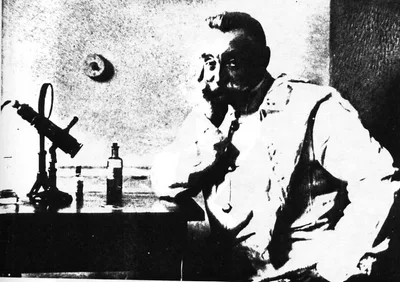
“Plaut’s angina” (necrotizing ulcerative gingivostomatitis). He noted the association of fusiform bacilli in ulcerating lesions of the tonsils. Vincent (see No. 3309) gave the first comprehensive description of this c…
1894
#4000
Die Histopathologie der Hautkrankheiten.
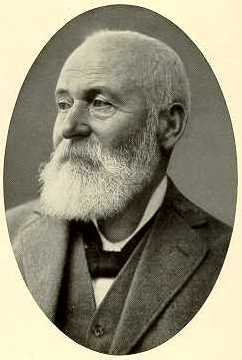
This monumental work is a landmark in dermatological history. Sir Norman Walker translated it into English in 1896. Unna, short in stature but a giant among dermatologists, initiated the study of the skin by means of …
1894
#4117
Étude sur le parasite du “pied de Madura”.
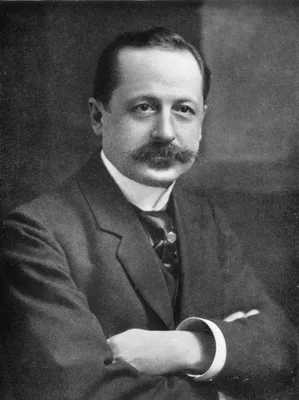
Isolation of Streptothrix (Actinomyces) madurae.
1894
#5125
La peste bubonique à Hong-Kong.
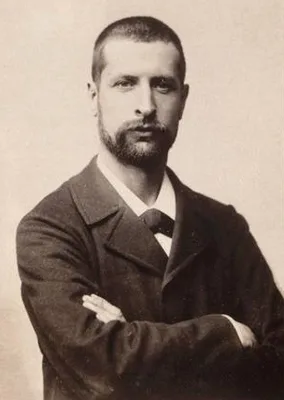
Yersin discovered the plague bacillus Pasteurella (Yersinia) pestis, isolating it from excised buboes. He published the first account of this organism. Preliminary note in C. R. Acad. Sci. (Paris), 1894, 119, 356.
1894
#5245
On the nature and significance of the crescentic and flagellated bodies in malarial blood.
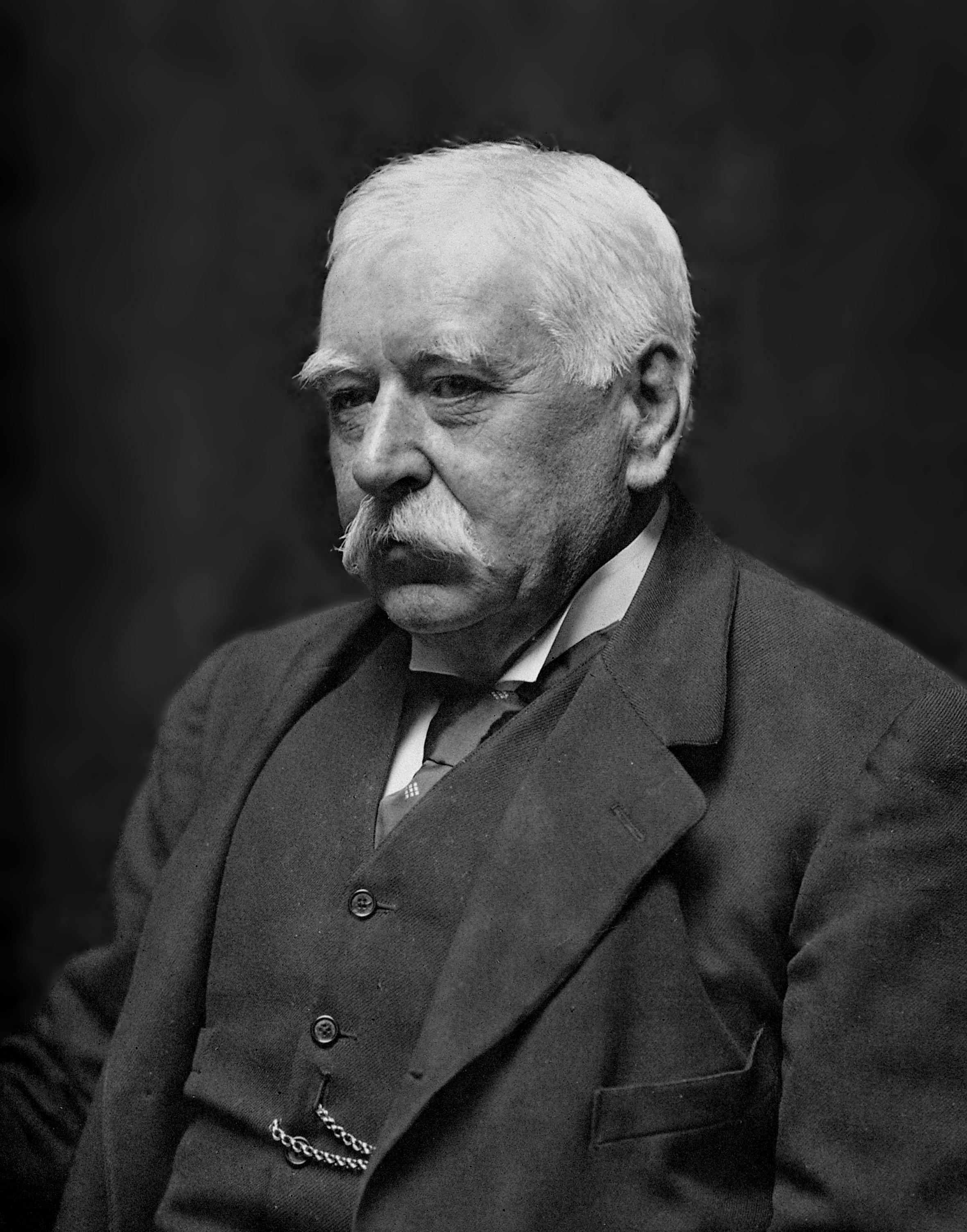
Manson’s mosquito–malaria hypothesis. See also his Gulstonian Lectures in Lancet, 1896, 1, 695-98, 751-55, 831-33.
1895 –1896
#1020
Thierisches Leben ohne Bakterien im Verdauungskanal.
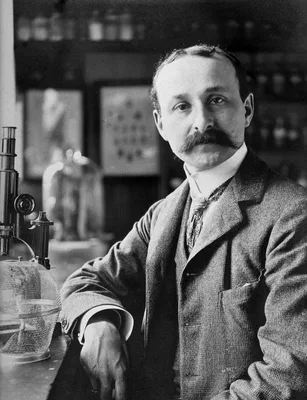
Proof that healthy life and perfect digestion are possible without the presence of bacteria in the digestive tract.
1895
#2547
Contribution à l’ étude du sérum chez les animaux vaccinés.
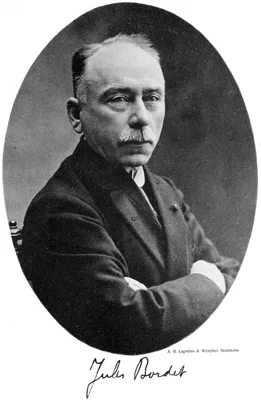
In Bordet’s classic paper on the properties of the sera of immunized animals he showed that two different substances (now known as sensitizing antibody and complement) are involved in the phenomenon of bacteriolysis. …
1895
#5170
Sulla preparazione del siero anti-carbonchioso.
Specific anti-anthrax serum. German translation in Zbl. Bakt., 1895, 1 Abt., 18, 744-45.
1895
#5293.1
Beitrag zum klinischen und bacteriologischen Studium der brasilianischen Framboesie oder “Boubas”.
“Breda’s disease” – Brazilian yaws. English translation New Sydenham Society, 1897.
1895
#5529.1
Ueber parasitäre Zelleinschlüsse und ihre Züchtung.
“Busse–Buschke disease” –blastomycosis of the skin due to Cryptococcus neoformans. See also No. 5529.2. Busse first described it in Zbl. Bakt., 1894, 16, 175-80.
1895
#5529.2
Ueber eine durch Coccidien hervorgerufene Krankheit des Menschen.
See No. 5529.1.
1895
#5530
La erupción en la enfermedad de Carrión (verruga peruana).
“Carrion’s disease” (Oroya fever) was named by the Peruvian physician Ernesto Odriozola, after Daniel Alcides Carrión Garcia (1859-85), a student. In order to prove or disprove the connection between Oroya fever and v…
1895
#5347.1
Case of Filaria loa in which the parasite was removed from under the conjunctiva.
First detailed description of Loa loa. See also Trans. ophthal. Soc. U.K., 1897, 17, 227-32. Robertson first briefly mentioned this procedure and the Loa Loa worm in a brief article written for him by the editor of La…
1896
#2549
Eine neue Methode zur raschen Erkennung des Choleravibrio und des Typhusbacillus.
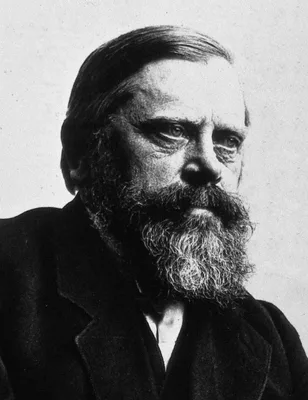
The discovery of bacterial agglutination. Gruber and Durham discovered the agglutinating action of the serum of typhoid patients upon the typhoid bacillus. First briefly reported by Durham: On a special action of seru…
1896
#2550
Recherches de la réaction agglutinante dans le sang et le sérum desséchés des typhiques et dans la sérosité des vesicatoires.
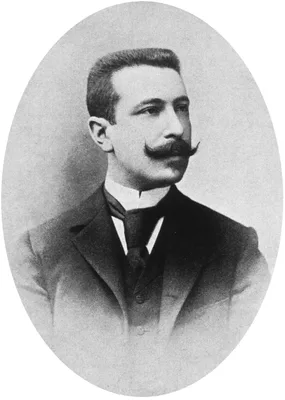
Developing the work of Gruber and Durham, Widal noted that a patient’s serum could be tested with bacteria of known type and his disease identified by this means. They demonstrated specific agglutinins in the blood of…
1896
#3309
Sur l’étiologie et sur les lésions anatomo-pathologiques de la pourriture d’hôpital.
Vincent described a fusiform bacillus and a spirillum which, in association, were responsible for hospital gangrene. Later, in Arch. int. Laryng., 1898, 11, 44-48, he showed these two organisms to be present in “Vince…
1896
#5035
Infections paratyphoïdiques.
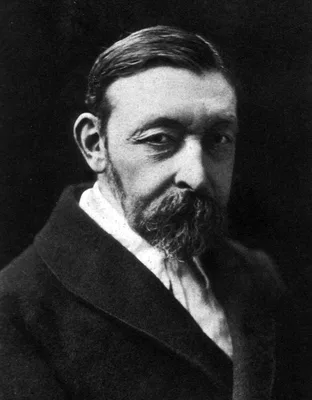
Isolation of Salmonella paratyphi B. First use of the term “paratyphoid fever”.
1896
#5530.1
A case of blastomycetic dermatitis in man.
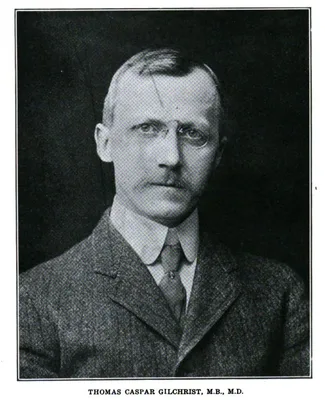
Gilchrist’s description of blastomycosis (“Gilchrist’s disease”, “Busse-Buschke disease”, Nos. 5529.1 and 5529.2), is an important contribution to the knowledge of the infectious granulomata involving the skin.
1896
#5942
Note sur un diplobacille pathogène pour la conjunctiva humaine.
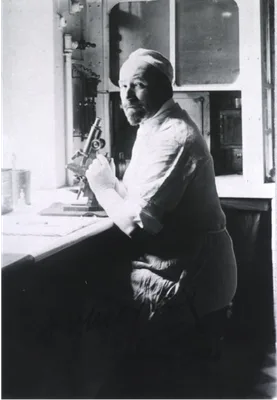
Morax and Axenfeld (No. 5941) independently isolated a diplobacillus which causes a chronic conjunctivitis – the Morax – Axenfeld haemophilus.
1896
#5361
Notizen zur Helminthologie Aegyptens. Die Lebensgeschichte des Anchylostomum duodenale (Dub.).
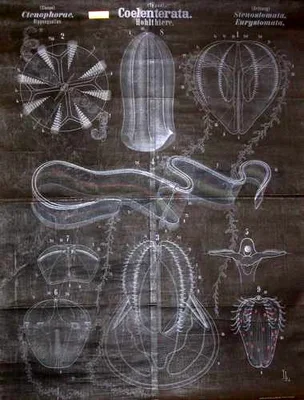
Looss elucidated the life cycle and mode of transmission of the hookworm. See also No. 5365. English translation in Kean (No. 2268.1).
1896
#11380
L'action bactericide des eaux de la Jumna et du Gange sur le vibrion du cholera.
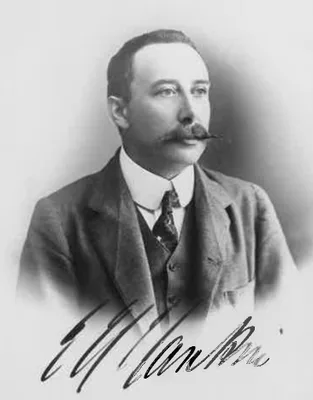
Hankin described the antibacterial activity of a then-unknown source in the Ganges and Jumna Rivers in India. He noted that "It is seen that the unboiled water of the Ganges kills the cholera germ in less than 3 hours…
1897
#2510
Contribution à l’ètude des intoxications alimentaires. Recherches sur des accidents à caractères botuliniques provoqués par du jambon.
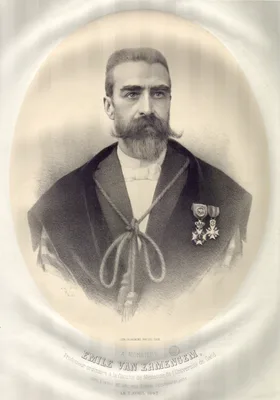
Cl. botulinum was discovered by van Ermengem in cases of food poisoning.
1897
#4126
La séborrhée grasse et la pelade.
Acne bacillus first cultivated.
1897
#5099
Die Aetiologie des seuchenhaften (“infectiösen”) Verwerfens.
Discovery of Brucella abortus.
1897
#5100
Mediterranean, Malta, or undulant fever.
An authoritative summary of current knowledge of Malta fever.
1897
#5101
On the application of the serum test to the differential diagnosis of typhoid and Malta fever.
Agglutination test for the diagnosis of undulant fever.
1897
#6106
Bakteriologie des weiblichen Genital-Kanales. 2 vols.
1897
#5246
On the flagellated form of the malarial parasite.
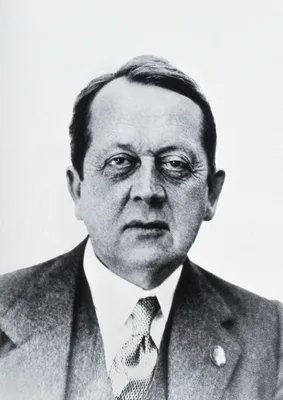
MacCallum reported at a meeting of the British Association his observation of the mode of fertilization of the malarial parasite of birds; two months later he announced that he had found the same to hold good for the …
1897
#5247
On some peculiar pigmented cells found in two mosquitoes fed on malarial blood.
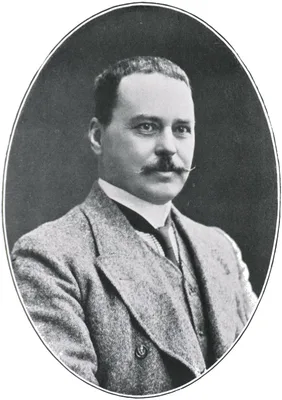
Ross proved that the mosquito was responsible for the transmission of malaria. On 20 August 1897, he found Laveran’s Plasmodium in the stomach of the Anopheles mosquito after it had fed on the blood of malaria patient…
1898
#4504.1
Bactériologie du rhumatisme articulaire. Endocardite végétante mitrale provoquée chez le lapin par inoculation intra-veineuse d’un cocco-bacille en points doubles extraits du sang du rhumatisme articulaire aigu de l’homme.
Isolation of streptococci from patients with acute rheumatism reported.
1898
#2335
A comparative study of bovine tubercle bacilli and of human bacilli from sputum.
First clear differentiation between the bovine and human types of tubercle bacillus.
1898
#2511
Bericht der Kommission zur Erforschung der Maul-und Klauenseuche bei dem Institut für Infektionskrankheiten.
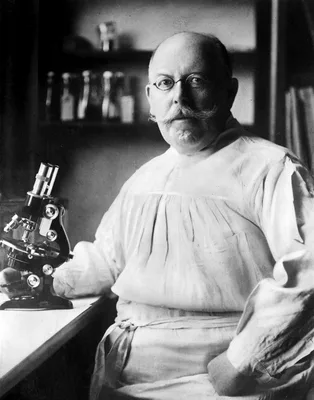
Loeffler and Frosch proved that foot-and-mouth disease is caused by a filter-passing virus; this was the first recognition that a virus causes disease.
1898
#2512
Ueber ein Contagium vivum fluidum als Ursache der Fleckenkrankheit der Tabaksblätter.
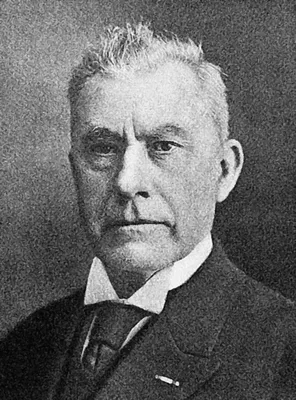
Beijerinck confirmed the findings of Ivanovski. He showed that the tobacco mosaic virus would diffuse through agar. "Like Ivanovsky before him and Adolf Mayer, predecessor at Wageningen, Beijerinck could not culture t…
1898
#2513
On an epidemic of gastro-enteritis associated with the presence of a variety of the Bacillus enteritidis (Gaertner), and with positive sero-diagnostic evidence (in vivo and in vitro).
Discovery of Salm. Aertrycke in patients suffering from food poisoning.
1898
#2514
Du séro-diagnostic dans les affections gastro-intestinales d’origine alimentaire.
Discovery of Salmonella aertrycke, independently of Durham.
1898
#3182
Le microbe de la péripneumonie.
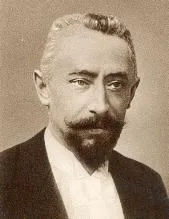
Discovery of the causal organism of bovine pleuropneumonia, also known as lung plague. Nocard and Roux considered it a filterable virus but now known to be a mycoplasma.
1898
#4127
On refractory subcutaneous abscesses caused by a fungus possibly related to the sporotricha.
Schenck first described a form of sporotrichosis, due to a pathogenic fungus, which later became known as Sporotrichum beurmanni, after more thorough studies upon it by de Beurmann in 1903.
1898
#5038
On infection with a para-colon bacillus in a case with all the clinical features of typhoid fever.
Isolation of Salmonella paratyphi A.
1898
#5091
Ueber den Dysenteriebacillus (Bacillus dysenteriae).
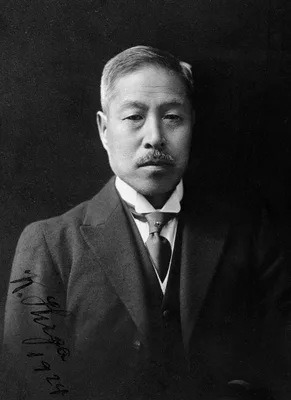
Discovery of the dysentery bacillus, Shigella. Preliminary paper in the same journal, 1898, 23, 599-600.
1898
#5294
On sart sore.
First description of the protozoon later named Leishmania tropica. The paper is in Russian; for a translation, see C. A. Hoare, in Trans. roy. Soc. trop. Med. Hyg., 1938, 32, 78-90.
1898
#5348
Studies on trichinosis, with especial reference to the increase of the eosinophilic cells in the blood and muscle, the origin of these cells and their diagnostic importance.
Brown pointed out the occurrence of eosinophilia in trichinosis. A preliminary communication upon the subject, by W. S. Thayer, was published in C. R. XII Congr. int. Med., Moscou, 1897, 126-31.
1898
#5248