
Facets
Browse across eight MeSH (opens in new tab) facets — era, geography, science, specialty, technology, history, culture, and reference. Select one tag per group; counts update across the others. What’s new in facet browse how facets relate to subjects and MeSH.
Clear filtersFacet filters
Geography
Specialties & Disease
- Anatomy & Pathology 134
- Cardiology & Blood 11
- Neurology & Psychiatry 35
- Obstetrics & Reproductive 26
- Infectious Disease (General) 5
- Surgery & Anesthesia 14
- Public Health 129
- Immunology & Dermatology 38
- General Clinical Medicine 28
- Military Medicine 11
- Psychology 16
- Alternative & Fringe Medicine 17
- Pediatrics 5
- Ophthalmology & Vision 2
- ENT & Hearing 3
- Urology & Nephrology 4
- Gastroenterology & Hepatology 4
- Pulmonary & Respiratory 3
- Rheumatology, Rehab & Pain 0
- Internal, Emergency & Geriatric 7
- Veterinary Medicine 11
- Epidemiology & Demography 12
- Physiology & Embryology 94
- Dentistry 10
- Plagues & Epidemics 44
- Microbiology & Virology 92
Social & Historical Studies
Institutions & Culture
Reference & Scholarly Works
Drugs & Technology
92 entries match Microbiology & Virology [C01.748] · Zoology & Animal Sciences [K01.900.500.750]
1938
#5467.1
Yellow fever virus in jungle mosquitoes.
Haemagogus sp. shown to be vectors of yellow fever. With L. Whitman and M. Frania.
1946
#2578.5
Induced mutations in bacterial viruses.
Genetic recombination in bacteriophages. In 1969 Delbrück shared the Nobel Prize with A. D. Hershey and S. E. Luria "for their discoveries concerning the replication mechanism and the genetic structure of viruses."
1949
#2526.1
Genetic recombinations leading to production of active bacteriophage from ultraviolet inactivated bacteriophage particles.
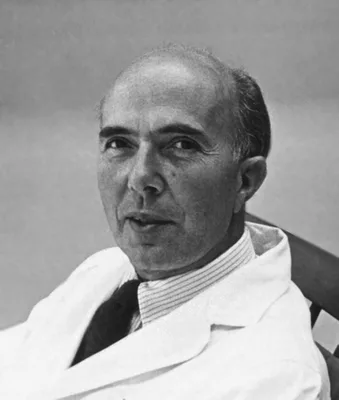
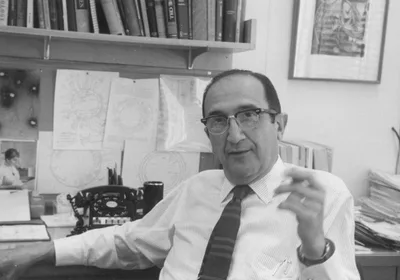
In 1969 Luria shared the Nobel Prize in Physiology or Medicine in with Delbrück (No. 2578.5) and A. D. Hershey (No. 256) "for their discoveries concerning the replication mechanism and the genetic structure of viruses."
1952
#256
Independent functions of viral protein and nucleic acid in growth of bacteriophage.
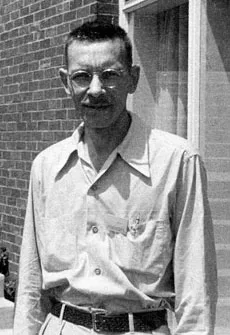
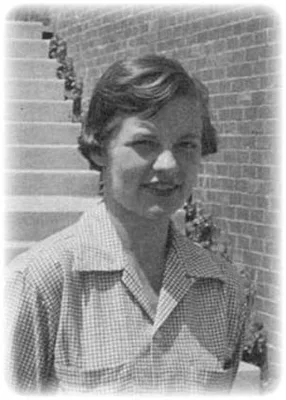
DNA shown to be the carrier of genetic information in virus reproduction. In 1969 Hershey shared the Nobel Prize in Physiology or Medicine with S. E. Luria and M. Delbrück for "for their discoveries concerning the rep…
1952
#256.1
Genetic exchange in Salmonella.

Description of a new mechanism (“transduction”) for the transfer of genetic characters from one bacterial strain to another.
1952
#12032
A nonhereditary, host-induced variation of bacterial viruses.
Order of authorship in the original publication: Luria, Human. Luria and Human discovered the restriction modification system found in bacteria and other prokaryotic organisms. This system provides a defense against f…
1955
#2527
Reconstitution of active tobacco mosaic virus from its inactive protein and nucleic acid components.
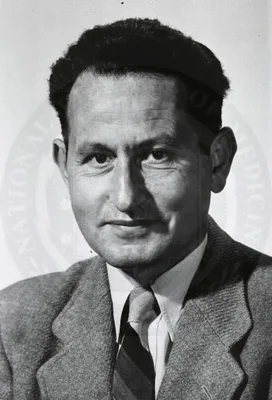
First reconstitution of a virus.
1955
#14001
Structure of tobacco mosaic virus.
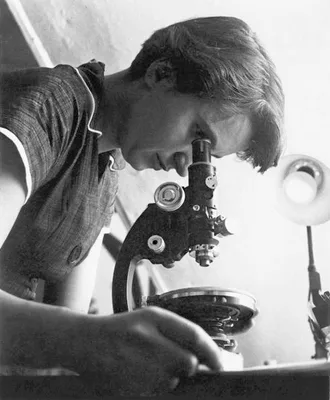
The first discovery of the geometry of a protein structure. Franklin, whose X-ray photographs of DNA were crucial to Watson and Crick's discovery of the molecule's double helix structure in 1953, began researching the…
1956
#2578.17
Infectivity of ribonucleic acid from tobacco mosaic virus.
Proof that nucleic acid produces infectivity. See also Z. Naturf., 1956, 11b, 138-42.
1962
#12033
Host specificity of DNA produced by escherichia coli. II. Control over acceptance of DNA from infecting phage lambda.


Order of authorship in the original publication: Dussoix, Arber. The authors discovered that restriction of DNA from infecting bacteriophage was due to the attack and breakdown of the modified bacteriophage's DNA by s…
1962
#12034
The concept of a bacterium.
Order of authorship in the original publication: Stanier, Niel. For much of the 20th centurty prokaryotes were regarded as a single group of organisms, classified on the basis of their biochemistry, morphology and met…
1964
#13944
On the colinearity of gene structure and protein structure.
Yanofsky and colleagues established that gene sequences and protein sequences are colinear in bacteria. Order of authorship in the original publication: Yanofsky, Carlton, ... Henning. In genetics, coliniarity is a pr…
1967
#12833
Self replication and scrapie.
Griffith discussed complex physical chemistry mechanisms by which the scrapie agent could arise from information encoded in protein structure which could then be transferred to other protein molecules. He also conside…
1967
#12834
Does the agent of scrapie replicate without nucleic acids?
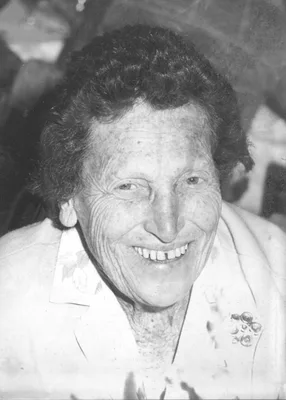
This paper, which predated Griffith's' paper (No. 12833), demonstrated that the scrapie agent replicates without nucleic acids. Alper and colleagues irradiated scrapie infected mouse brain extracts with lethal ultravi…
1969
#7967
Thermus aquaticus gen. n. and sp. n., a nonsporulating extreme thermophile.
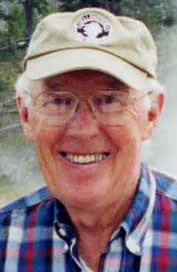
Discovery of Thermus aquaticus, a species of bacteria that can tolerate high temperatures. This is one of several thermophilic bacteria that belong to the Deinococcus–Thermus group, and the source of the heat-resistan…
1970
#2660.22
Viral RNA-dependent DNA polymerase: RNA-dependent DNA polymerase in virions of RNA tumour viruses.

In 1970 Baltimore and Temin discovered that certain viruses that have their genes in the form of RNA can copy the RNA "backward" into DNA in infected cells. The enyzme, reverse transcriptase, enables the manufacture o…
1970
#2660.23
RNA-dependent DNA polymerase in virions of Rous sarcoma virus.
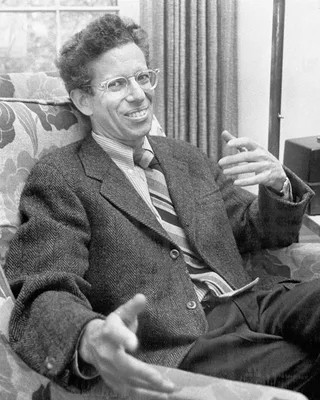
Discovery of reverse transcriptase. "In 1969, Temin and a postdoctoral fellow, Satoshi Mizutani, began searching for the enzyme that was responsible for the phenomenon of viral RNA being transferred into proviral DNA.…
1975
#2660.27
From the molecular biology of oncogenic DNA viruses to cancer. Les Prix Nobel en 1975, pp. 172-80.
In 1975 Dulbecco shared the Nobel Prize in Physiology or Medicine with David Baltimore and Howard Martin Temin "for their discoveries concerning the interaction between tumour viruses and the genetic material of the c…
1976
#11104
Deoxyribonucleic acid polymerase from the extreme thermophile Thermus aquaticus.
The authors showed that the heat resistant bacteria Thermus aquaticus discovered by Thomas Brock contained a vital polymerase enzyme that had evolved in this bacteria to allow it to metabolize and survive in exception…
1977
#11043
An amazing sequence arrangement at the 5' ends of adenovirus 2 messenger RNA.

Discovery of introns. In 1993 Roberts shared the Nobel Prize in Physiology or Medicine with Phillip A. Sharp "for their discoveries of split genes." It was frequently suggested that Chow deserved a share of that prize…
1977
#11044
Spliced segments at the 5' terminus of adenovirus 2 late mRNA.
Discovery of introns simultaneously with Roberts, Chow, Broker (No. 11043). Sharp's electron microscopist, Berget, visualized the introns in the electron microscope. James D. Watson took note of the profound significa…
1977
#12300
Phylogenetic structure of the prokaryotic domain: The primary kingdoms.
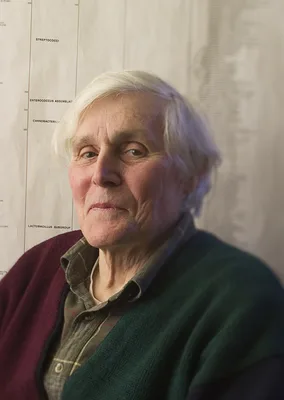
(Order of authorship in the original publication: Woese, Fox.) Woese and Fox discovered a "third kingdom" in microbial life that they called "archaebacteria" (Archaea) as distinct from bacteria and eukaryotes. In thei…
1978
#13969
Inhibition of Rous sarcoma virus replication and cell transformation by a specific oligodeoxynucleotide (tridecamer deoxyribonucleotide/hybridization competitor/hybridon).
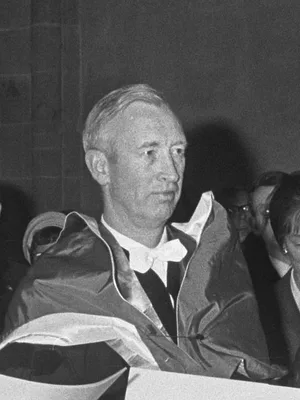
Zamecnick and Stephenson reported the first example of specific inhibition of gene expression by an oligonucleotide when they demonstrated that a short oligonucleotide inhibited Rous sarcoma virus replication in cell …
1979
#10888
Human babesiosis on Nantucket Island, USA: Description of the vector, Ixodes dammini, N. Sp. (Acarina: Ixodidae)
Order of authorship in the original paper was Spielman, Clifford, Piesman. The authors identified and described the insect vector of Babesiosis. This was a new species; the same species causes Lyme disease. (Thanks to…
1981
#9175
Molecular cloning of poliovirus cDNA and determination of the complete nucleotide sequence of the viral genome.

The poliovirus genome. Digital facsimile from PNAS through PubMedCentral at this link.
1981
#9176
Primary structure, gene organization and polypeptide expression of poliovirus RNA.
The poliovirus genome. With around 10 co-authors. "The primary structure of the poliovirus genome has been determined. The RNA molecule is 7,433 nucleotides long, polyadenylated at the 3′ terminus, and covalently link…
1985
#11060
Structure of the protein subunit in the photosynthetic reaction centre of Rhodopseudomonas viridis at 3 Å resolution.


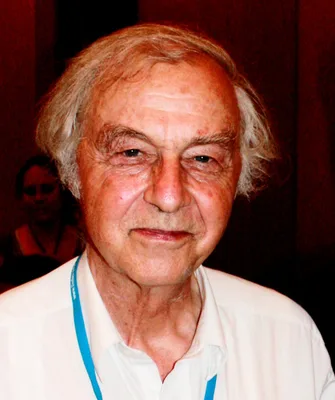
Discovery of the three-dimensional structure of a protein complex found in certain photosynthetic bacteria, called the photosynthetic reaction center. This was the first elucidation of the 3D crystal structure of any …
1986
#11042
The T4 glycoprotein is a cell-surface receptor for the AIDS virus.

Order of authorship in the original paper: McDougal, Maddon, Dalgleish. The authors discovered that the T4 lymphocyte cell has an outer glycoprotein on its surface that specifically acts as the receptor for HIV. Witho…
1989
#10926
Ebola virus infection in imported primates - Virginia, 1989.
Also published with same title in Morbidity and Mortality Weekly Report, 38 (1989) 831, 832-837. Discovery of the "Ebola Reston" strain of the Ebola virus. The strain is lethal in monkeys; it turned out to be non-path…
1990
#12301
Towards a natural system of organisms: Proposal for the domains Archaea, Bacteria, and Eucarya.
(Order of authorship in the original publication: Woese, Kandler, Wheelis.) Introduction of the three-domain biological classification system that divides cellular life into three forms or domains: Archaea, Bacteria, …
1996
#12835
Evidence for the conformation of the pathologic isoform of the prion protein enciphering and propagating prion diversity.

The authors showed that the " 'normal prion protein' in the brains of living mice can be converted into different forms depending on the type of abnormal human prion that initiated the conversion. The result is differ…
1999
#11071
Tobacco mosaic virus: Pioneering research for a century. A theme issue edited by B. D. Harrison and T. M. A. Wilson.
2002
#11337
The genome sequence of the malaria mosquito Anopheles gambiae.
Order of authorship in the original publication: Holt, Subramanian, Halpern.... Sequence of the genome of Anopheles gambiae, the mosquito that carries the malaria parasite, Plasmodium falciparum. (Thanks to Juan Weiss…
2007
#11338
Genome sequence of Aedes aegypti, a major arbovirus vector.
Order of authorship in the original publication: Nene, Wortman, Lawson.... Sequence of the genome of the mosquito that transmits Zika, Yellow fever, Dengue, Chikungunya, etc. (Thanks to Juan Weiss for this reference a…
2013
#8683
Leech.
Published in the "Animal" series. Seemingly a definitive work on the natural history and medical application of leeches.
2014
#11341
Presence of extensive Wolbachia symbiont insertions discovered in the genome of its host Glossina morsitans morsitans.
Order of authorship in the original publication: Brelsfoard, Tsiamis, Falchetto....The authors suggested that infection by Wolbachia may give a reproductive advantage to the fly that carries the parasite causing Sleep…
2015
#11848
Gene-edited pigs are protected from porcine reproductive and respiratory syndrome virus.
Order of authorship in the original publication: Whitworth, Rowland, Ewen, ... Prather. Using the CRISPR Cas molecular gene-editing tool, Prather and colleagues edited the gene that codes for the CD163 protein in adul…
2015
#13186
Insects, hygiene and history.
2020
#11868
The arms race between bacteria and their phage foes.
Order of authorship in the original publication: Hampton, Watson, Fineran. Summarizes, and documents with 173 references, the extensive research on the multitude of methods that bacteriophages use to disable the CRISP…
2020
#11876
A bacteriophage nucleus like compartment shields DNA from CRISPR nucleases.
Order of authorship in the original publication: Mendoza, Nieweglowska, Govindarajan. The authors showed that the large phage that specifically infects a Pseudomonas bacterium segregates its DNA, which the phage CRISP…
2020
#11877
Clades of huge phages from across Earth's ecosystems.

Order of authorship in the original publication: Al-Shayeb, Sachdeva, Chen.... Doudna. Open access, available from nature.com at this link. This paper was a collaboration of about 50 scientists of diverse regions and …
2020
#12302
Isolation of an archeon at the prokaryote eukaryote interface.
(Order of authorship in the original publication: Imachi, Nobu, Nakahara...Takai.) The authors report that after 12 years of research they have cultured a microorganism that may be the transitional species between pro…