
Facets
Browse across eight MeSH (opens in new tab) facets — era, geography, science, specialty, technology, history, culture, and reference. Select one tag per group; counts update across the others. What’s new in facet browse how facets relate to subjects and MeSH.
Clear filtersFacet filters
Geography
Specialties & Disease
- Anatomy & Pathology 765
- Cardiology & Blood 914
- Neurology & Psychiatry 1,258
- Obstetrics & Reproductive 551
- Infectious Disease (General) 147
- Surgery & Anesthesia 1,553
- Public Health 1,129
- Immunology & Dermatology 1,405
- General Clinical Medicine 487
- Military Medicine 436
- Psychology 202
- Alternative & Fringe Medicine 383
- Pediatrics 247
- Ophthalmology & Vision 412
- ENT & Hearing 293
- Urology & Nephrology 309
- Gastroenterology & Hepatology 316
- Pulmonary & Respiratory 233
- Rheumatology, Rehab & Pain 189
- Internal, Emergency & Geriatric 123
- Veterinary Medicine 165
- Epidemiology & Demography 397
- Physiology & Embryology 924
- Dentistry 259
- Plagues & Epidemics 1,279
- Microbiology & Virology 1,080
Social & Historical Studies
Institutions & Culture
Reference & Scholarly Works
1,080 entries match Microbiology & Virology [C01.748]
1957
#2660.10
The induction of neoplasms with a substance released from mouse tumors by tissue culture.
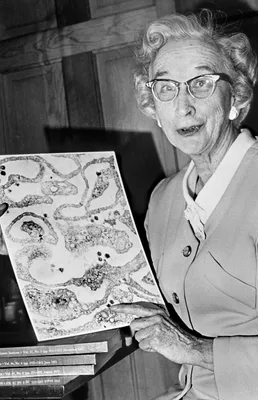
Isolation of polymavirus (papovavirus). With B. E. Eddy, A. M. Gochenour, N. G. Borgese, and G E. Grubbs.
1957
#2578.22
Virus interference. I. The interferon.
Discovery of interferon type I, a protein that interferes with viral replication. "While working together at the NIMR, Lindenmann and Isaacs noticed that if they killed viruses using heat and applied the dead viruses …
1957
#3215.4
Recovery from infants with respiratory illness of a virus related to chimpanzee coryza agent (CCA).
Respiratory syncytial virus. With B. Roizman and R. Myers.
1957
#5991.1
Studies on the etiology of trachoma with special reference to isolation of the virus in chick embryo.
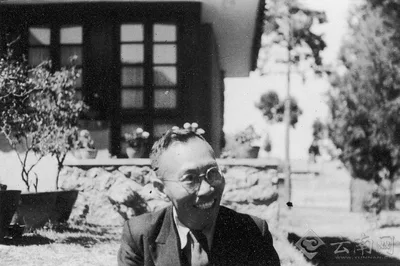
Isolation of trachoma agent, Chlamydia trachomatis. With H. L. Chang, Y. T. Huang, and K. C. Wang.
1957
#10886
Piroplasmosis in man: Report on a case.
Order of authorship in the original paper was Škrabalo, Deanovic. First report of a case of babesiosis in a human, in this case an immunocompromised patient in Zagreb, (now Croatia). Piroplasmosis is another term for …
1958
#4661.2
St. Louis encephalitis in 1933; observations on epidemiological features.
In a report to the Surgeon General in 1933, Lumsden concluded that the Culex mosquito was the vector of the St. Louis encephalitis virus. His report was not published until 1958.
1958
#2581.1
A guide to the history of bacteriology.
A selective annotated bibliography.
1958
#4011.1
Experimental ringworm in guinea pigs: oral treatment with griseofulvin.
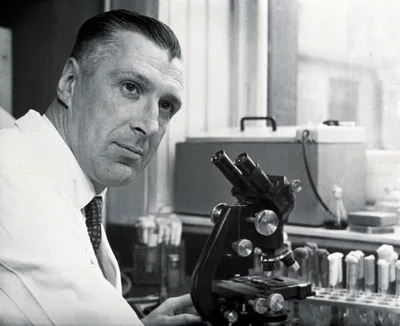
Use of griseofulvin in the treatment of ringworm.
1958
#5289.1
Factors that may influence the infection rate of Glossina palpalis with Trypanomosoma gambiense. 1. The age of the fly at the time of the infected feed.
Wijers showed that the tsetse fly is infected during its first or second blood meal, but not afterwards, information of considerable importance in determining the criteria for the transmission of trypanosomiasis.
1958
#11458
Fecal enema as an adjunct in the treatment of pseudomembranous enterocolitis.
Order of authorship in the original publication: Eiseman, Silen, Bascom.... Report of the first "fecal transplant / fecal therapy," also known as "faecal microbiota transplanation," for recurrent / resistant C. diffic…
1958
#12215
Les champignons hallucinogenes du Mexique. Études ethnologiques, taxinomiques, biologiques, physiologiques et chimiques.
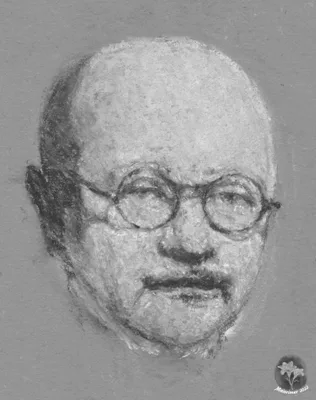
1959
#10676
Parasites and parasitic infections in early medicine and science.
1959
#10840
Scrapie and Kuru.
In 1959 Hadlow, a veterinarian, visited a medical exposition in England where Carlton Gajdusek posted pathological slides of autopsied Kuru brains and a clinical description of the illness. He realized that Gajdusek's…
1960
#2660.13
Virus-cell interaction with a tumour-producing virus.
Polyomavirus (papovavirus) shown to be capable of transforming cells in culture. Full text from PubMedCentral at this link.
1960
#2527.3
The vacuolating virus SV40.
Simian virus type 40, a polyomavirus found in both monkeys and humans.
1960
#2581.2
Microbiology. Historical contributions from 1776-1908.
1960
#5352.4
Bibliography of bilharziasis, 1949-1958.
Continues and supplements Nos. 5352 and 5352.1
1960
#11219
A bibliography of internal medicine: Selected diseases.
Literature on "selected diseases" presented in chronological order, beginning with auricular fibrillation and ending with trichinosis, emphasizing cardiovascular and metabolic diseases.
1961
#2581.3
Milestones in microbiology.
Readings from primary sources, with commentary.
1961
#11979
Combined electron and light microscopy in Whipple's disease. Demonstration of "bacillary bodies" in the intestine.
Order of authorship in the original publication: Yardley, Hendrix. The authors made the first observations of previously uncultured, unseen and unidentified bacilli associated with Whipple's disease, suggesting that i…
1962
#3215.5
Growth on artificial medium of an agent associated with atypical pneumonia and its identification as a PPLO.
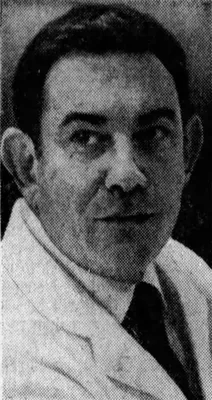
Using a novel agar and fluid medium formulation he had devised, Hayflick isolated a unique mycoplasma Mycoplasma pneumoniae, a mycoplasma shown to be the cause of some cases of primary atypical pneumonia, or "walking …
1962
#5509.1
Propagation in tissue culture of cytopathic agents from patients with rubella-like illness.
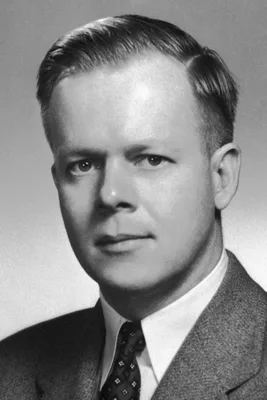
Isolation of rubella virus. It was simultaneously isolated by P. D. Parkman, et al. (No. 5509.2.)
1962
#5509.2
Recovery of rubella virus from army recruits.

Isolation of the rubella virus.
1962
#10920
Powassan virus: Field investigations in Northern Ontario, 1959-1961.
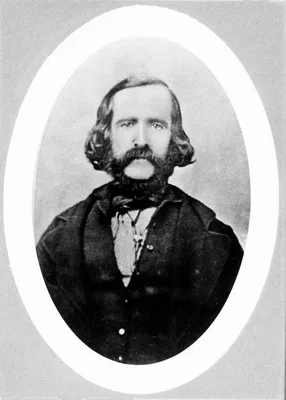
The authors isolated a virus from the brain of a child who died of encephalitis in Powassan, Ontario, and named it the Powassan virus. They posited a tick vector and possible rodent natural hosts. (Thanks to Juan Weis…
1962
#12033
Host specificity of DNA produced by escherichia coli. II. Control over acceptance of DNA from infecting phage lambda.

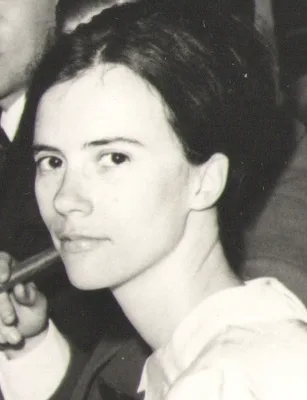
Order of authorship in the original publication: Dussoix, Arber. The authors discovered that restriction of DNA from infecting bacteriophage was due to the attack and breakdown of the modified bacteriophage's DNA by s…
1962
#12034
The concept of a bacterium.
Order of authorship in the original publication: Stanier, Niel. For much of the 20th centurty prokaryotes were regarded as a single group of organisms, classified on the basis of their biochemistry, morphology and met…
1963
#5308.2
On the origin of the human treponematoses (pinta, yaws, endemic syphilis and venereal syphilis).
“Perhaps the most scholarly investigation of the origin of syphilis” (Wesley Spink).
1963
#5308.3
Bibliography of yaws, 1905-62.
Over 1,700 items.
1964
#2660.17
Cultivation in vitro of human lymphoblasts from Burkitt’s malignant lymphoma.
Order of authorship in the original publication: Epstein, Barr. Discovery of the Epstein-Barr virus, a human herpes virus causing infectious mononucleosis, and implicated in Burkitt’s lymphoma and other forms of cance…
1964
#2660.18
Virus particles in cultured lymphoblasts from Burkitt’s lymphoma.
Order of authorship in the original publication: Epstein, Achong, Barr. Presence of herpes-like virus particles in Burkitt’s tumor cells reported. The Epstein-Barr virus was the first human cancer-causing virus to be …
1964
#2581.4
Selected papers on virology.
1964
#5351.6
Chemotherapy of experimental Schistosoma mansoni infections with a nitro-thiazole derivative, CIBA 32, 644-Ba.
Introduction of niridazole (Ambilhar).
1964
#11672
Parasites of the human heart.
1964
#13944
On the colinearity of gene structure and protein structure.
Yanofsky and colleagues established that gene sequences and protein sequences are colinear in bacteria. Order of authorship in the original publication: Yanofsky, Carlton, ... Henning. In genetics, coliniarity is a pr…
1965
#2463.1
A history of parasitology.
1965
#2581.5
Three centuries of microbiology.
1965
#3666.4
A “new” antigen in leukemia sera.
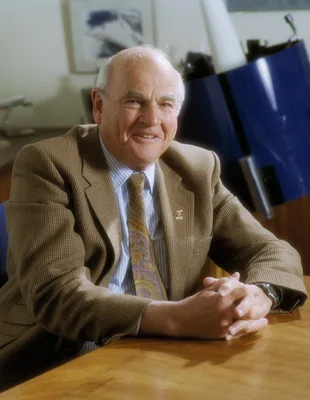

(Order of authorship in the original publication: Blumberg, Alter, Visnich.) Discovery of Australia antigen, hepatitis B antigen, Aa, later called HBsAg. Blumberg received half of the Nobel Prize for Medicine in Biolo…
1965
#5351.5
A new, active metabolite of ‘Miracil D’.
Lucanthone. With five co-authors.
1965
#5369.1
Bibliography of hookworm disease (ancylostomiasis) 1920-62.
1965
#13914
Attempts to demonstrate a transmissible agent in Kuru, Amyotrophic Lateral Sclerosis, and other subacute and chronic progressive nervous system degenerations in man. Addendum p. 46 in: Slow, latent, and temperate virus infections. NINDB Monograph No. 2. Edited by D. Carleton Gajdusek, Clarence J. Gibbs, Jr., and Michael Alpers.
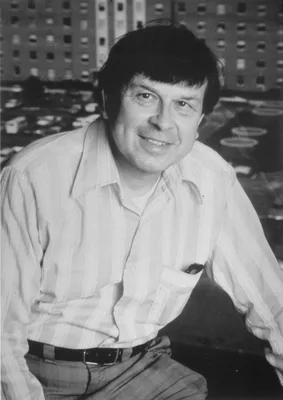
In their Addendum on p. 46 the authors stated that 20 and 21 months post innocculation in the brain with brain material from Kuru patients two chimpanzees showed symptoms of an illness suggestive of Kuru. Digital facs…
1965
#14035
The nature of the Negri Body.
The first visual proof, by publication of electron micrographs at 25,000 magnification, that Negri bodies contain enormous numbers of rabies virus particles. Digital facsimile from rupress.org at this link. (Thanks to…
1966
#5509.3
Attenuated rubella virus. II. Production of an experimental live-virus vaccine and clinical trial.
With T. C. Panos.
1966
#11105
Antibiotic susceptibility testing by a standardized single disk method.
The disk diffusion test, or agar diffusion test, or Kirby–Bauer test (disc-diffusion antibiotic susceptibility test, disc-diffusion antibiotic sensitivity test, KB test), for the antibiotic sensitivity of bacteria. (T…
1966
#11918
Cultivation of viruses from a high proportion of patients with colds.
"The history of human coronaviruses began in 1965 when Tyrrell and Bynoe found that they could passage a virus named B814. It was found in human embryonic tracheal organ cultures obtained from the respiratory tract of…
1967
#5509.4
Rubella-virus hemagglutination-inhibition test.
With five co-authors.
1967
#5352.5
Schistosomiasis. A bibliography of the world’s literature from 1852 to 1962. 2 vols.
1967
#7865
Zur Ätiologie einer unbekannten, von Affen ausgegangenen menschlichen Infektionskrankheit.
Isolation, identification and structure of the Marburg virus. WITH H. L. Shu, W. Sienczka, D. Peters, and G. Müller.
1967
#12662
Herpes-type virus and chromosome marker in normal leukocytes after growth with irradiated Burkitt cells.
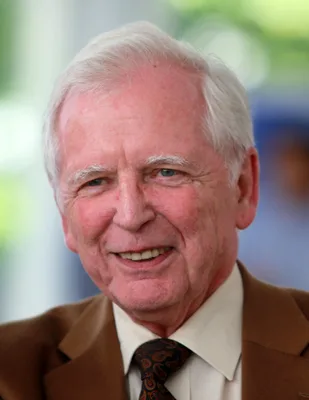
Hausen and colleagues showed for the first time that a cancer virus (Epstein-Barr virus) can transform healthy cells (lymphocytes) into cancer cells. This showed that viruses can cause cancer cell formation. (Order of…
1967
#12833
Self replication and scrapie.
Griffith discussed complex physical chemistry mechanisms by which the scrapie agent could arise from information encoded in protein structure which could then be transferred to other protein molecules. He also conside…
1967
#12834
Does the agent of scrapie replicate without nucleic acids?
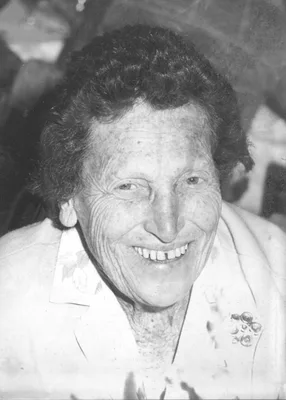
This paper, which predated Griffith's' paper (No. 12833), demonstrated that the scrapie agent replicates without nucleic acids. Alper and colleagues irradiated scrapie infected mouse brain extracts with lethal ultravi…