
Facets
Browse across eight MeSH (opens in new tab) facets — era, geography, science, specialty, technology, history, culture, and reference. Select one tag per group; counts update across the others. What’s new in facet browse how facets relate to subjects and MeSH.
Clear filtersFacet filters
Geography
Specialties & Disease
- Anatomy & Pathology 5
- Cardiology & Blood 1
- Neurology & Psychiatry 1
- Obstetrics & Reproductive 2
- Infectious Disease (General) 0
- Surgery & Anesthesia 0
- Public Health 10
- Immunology & Dermatology 7
- General Clinical Medicine 8
- Military Medicine 1
- Psychology 1
- Alternative & Fringe Medicine 5
- Pediatrics 0
- Ophthalmology & Vision 0
- ENT & Hearing 0
- Urology & Nephrology 0
- Gastroenterology & Hepatology 1
- Pulmonary & Respiratory 0
- Rheumatology, Rehab & Pain 0
- Internal, Emergency & Geriatric 1
- Veterinary Medicine 0
- Epidemiology & Demography 0
- Physiology & Embryology 49
- Dentistry 10
- Plagues & Epidemics 1
- Microbiology & Virology 10
Social & Historical Studies
Institutions & Culture
Reference & Scholarly Works
Drugs & Technology
150 entries match Professions & Education [M01 / N02] · Zoology & Animal Sciences [K01.900.500.750]
1956
#752.4
Enzymic synthesis of deoxyribonucleic acid.
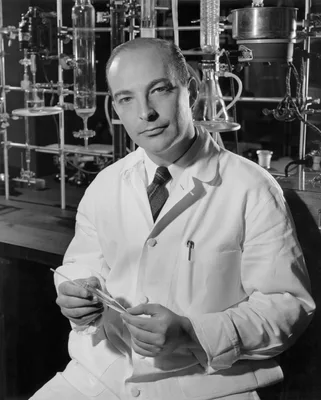
In 1959 Kornberg shared the Nobel Prize in Physiology or Medicine with Severo Ochoa "for their discovery of the mechanisms in the biological synthesis of ribonucleic acid and deoxyribonucleic acid." Order of authorshi…
1957
#7386
The path of carbon in photosynthesis.
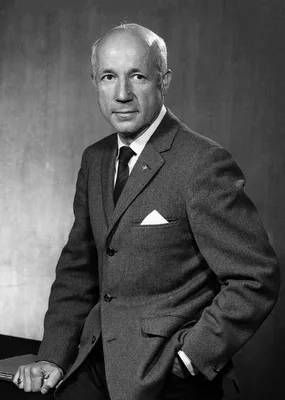
Discovery of the Calvin cycle, also known as the Calvin–Benson–Bassham (CBB) cycle, or reductive pentose phosphate cycle or C3 cycle — a series of biochemical redox reactions that take place in the stroma of chloropla…
1958
#752.6
Studies on polynucleotides. I. A new and general method for the chemical synthesis of the C5'-C3' intemucleotide linkage. Synthesis of deoxyribo-dinucleotides.
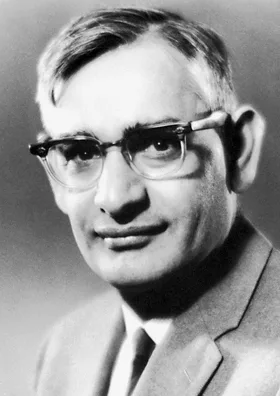
In 1968 Khorana shared the Nobel Prize in Physiology or Medicine with R. W. Holley and M. W. Nirenberg "for their interpretation of the genetic code and its function in protein synthesis." H. G. Khorana, T. M. Jacob, …
1958
#6911
A three-dimensional model of the myoglobin molecule obtained by x-ray analysis.
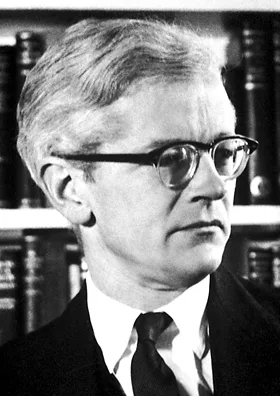
Initial paper on the first solution of the three-dimensional molecular structure of a protein. Computing the molecular structure in 3 dimensions was possible through the use of the Cambridge EDSAC stored-program elect…
1959
#14141
Factors affecting the activity of muscle phosphorylase b kinase.
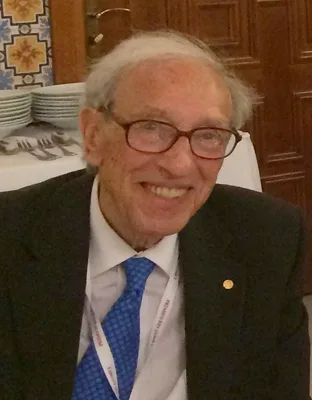
In 1992 Krebs and Fischer were awarded the Nobel Prize in Physiology or Medicine "for their discoveries concerning reversible protein phosphorylation as a biological regulatory mechanism." Digital facsimile from PubMe…
1960
#14283
Structure of haemoglobin: A three-dimensional Fourier synthesis at 5.5-A. resolution, obtained by X-ray analysis.
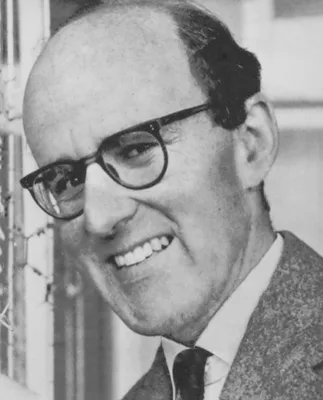
Solution of the structure of hemoglobin, a protein with 10,000 atoms. This was the culmination of 30 years of research by Perutz. Order of authorship in the original paper: Perutz, Rossmann, Culis, Muirhead, Will, Nor…
1960
#14306
The sequence of the amino acid residues in performic acid-oxidized ribonuclease.
In 1959 Moore and Stein announced the first determination of the complete amino acid sequence of an enzyme, ribonuclease. In 1972 Moore and Stein shared half of the Nobel Prize in Chemistry with Christian B. Anfinsen …
1961
#256.9
Genetic regulatory mechanisms in the synthesis of proteins.
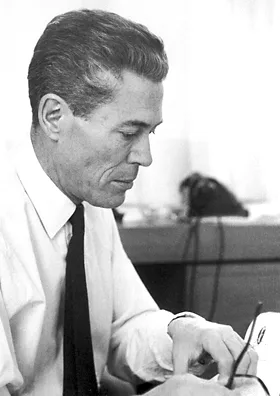
In 1965 Jacob, Monod, and André Lwoff shared the Nobel Prize in Physiology or Medicine "for their discoveries concerning genetic control of enzyme and virus synthesis."
1961
#256.11
Characteristics and stabilization of DNAase-sensitive protein synthesis in E. coli extracts.
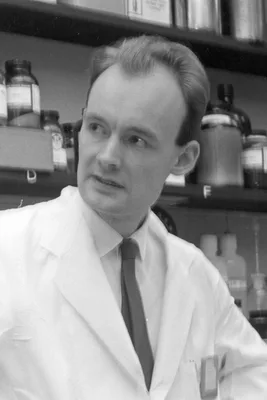
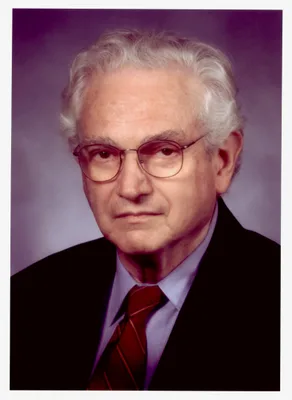
With Matthaei, Nirenberg demonstrated that messenger RNA is required for protein synthesis, and that synthetic messenger RNA preparations can be used to decipher various aspects of the genetic code. Nirenberg first re…
1961
#12015
No time for prejudice: A story of the integration of negroes in nursing in the United States.
Primarily a history of the National Association of Colored Graduate Nurses [NACGN], which existed for the express purpose of "promoting unity within the nursing profession and furthering the cause of democracy." Integ…
1962
#13562
Extraction, purification and properties of Aequorin, a bioluminescent protein from the luminous hydromedusan, Aequorea.
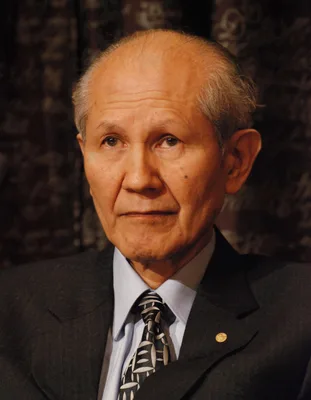
Shimomura reported the discovery of green fluorescent protein (GFP) in a single footnote in this paper that was otherwise devoted to an entirely different bioluminescent protein: photoprotein aequorin. This may be the…
1963
#14305
The genetic control of tertiary protein structure studies with mode systems.
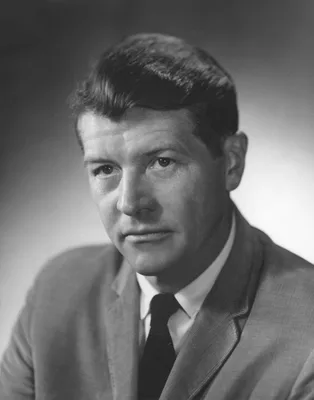
In 1972 Anfinsen shared half of the Nobel Prize in Chemistry with Stanford Moore and William H. Stein for "for his work on ribonuclease, especially concerning the connection between the amino acid sequence and biologi…
1965
#257.2
Structure of a ribonucleic acid.
The complete sequence of an alanine transfer RNA determined – the first nucleic acid structure to be determined. With seven co-authors. In 1968 Holley shared the Nobel Prize in Physiology or Medicine with Har Gobind K…
1966
#14064
"Fertile" intestine nuclei.
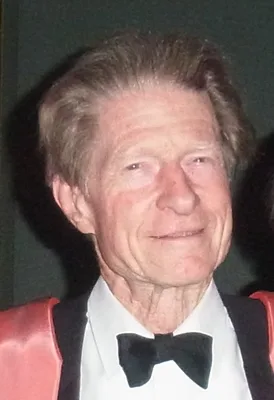
Gurdon and Uehlinger replaced the cell nucleus of frog ova with frog intestinal nuclei to generate tadpoles, some of which became fertile adult male and female frogs. In 2012 the Nobel Prize in Physiology or Medicine …
1970
#2660.22
Viral RNA-dependent DNA polymerase: RNA-dependent DNA polymerase in virions of RNA tumour viruses.
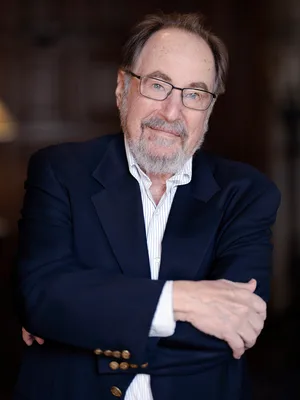
In 1970 Baltimore and Temin discovered that certain viruses that have their genes in the form of RNA can copy the RNA "backward" into DNA in infected cells. The enyzme, reverse transcriptase, enables the manufacture o…
1970
#2660.23
RNA-dependent DNA polymerase in virions of Rous sarcoma virus.
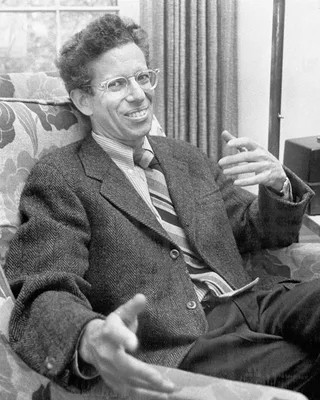
Discovery of reverse transcriptase. "In 1969, Temin and a postdoctoral fellow, Satoshi Mizutani, began searching for the enzyme that was responsible for the phenomenon of viral RNA being transferred into proviral DNA.…
1970
#6889
A restriction endonuclease from Hemophilus influenzae. II. Base sequence of the recognition site.
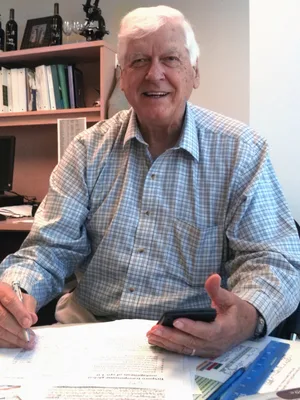
Discovery of the first type II restriction enzyme (HindII). Smith shared the 1978 Nobel Prize in Physiology or Medicine with Werner Arber and Daniel Nathans "for the discovery of restriction enzymes and their applicat…
1971
#6890
Specific cleavage of simian virus 40 DNA by restriction endonuclease of Hemophilus influenzae.
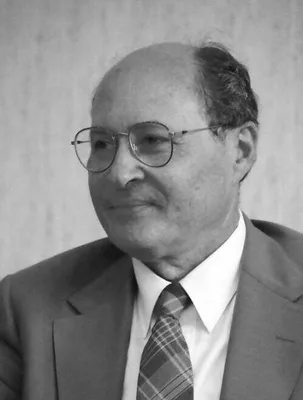
Nathans showed that the restriction enzyme discovered by Hamilton Smith cleaved SV40 DNA into 11 specific pieces. Nathans and his student Kathleen Danna wrote: "The availability of pieces of SV40 DNA from specific sit…
1971
#11665
Blacks, medical schools and society.
A study of the trends in black enrollments in the nation’s medical schools, and various public and higher education factors that limited the supply of black physicians in America through the 1960s.
1972
#257.3
Biochemical method for inserting new genetic information into DNA of simian virus 40: Circular SV40 DNA molecules containing Lambda phage genes and the galactose operon of Escherichia coli.
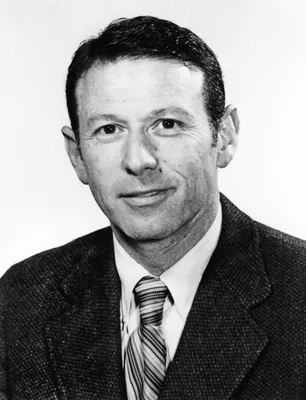
First recombinant DNA molecules generated. Digital facsimile from PubMedCentral at this link. In 1980 Berg was awarded half of the Nobel Prize in Chemistry "for his fundamental studies of the biochemistry of nucleic a…
1973
#11074
Identification of a novel cell type in peripheral lymphoid organs in mice. I. Morphology, quantitation, tissue distribution.
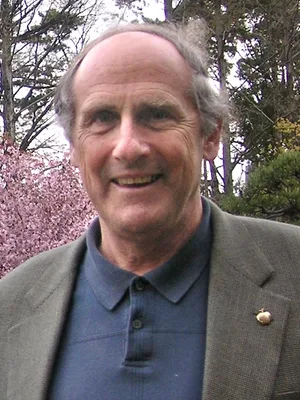
Order of authorship in the original publication: Steinman, Cohn. In this paper Steinman announced his discovery of the dendritic cell. Digital facsimile from PubMedCentral at this link. In 2011 Steinman received half …
1974
#9941
The genetics of CAENORHABDITIS ELEGANS.
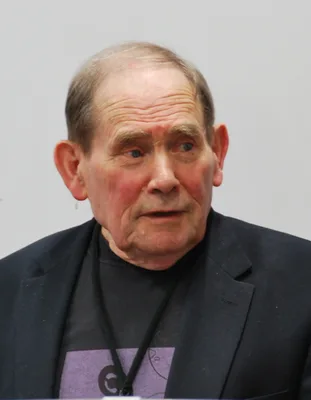
In 2002 Brenner shared the Nobel Prize in Physiology or Medicine in Physiology or Medicine with H. Robert Horvitz and John Sulston "for their discoveries concerning genetic regulation of organ development and programm…
1974
#9942
The DNA of CAENORHABDITIS ELEGANS.
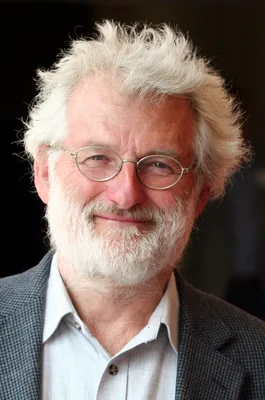
Digital facsimile from PubMedCentral at this link.
1974
#13934
Genetic control of the cell division cycle in yeast.
In 2001 Hartwell shared the Nobel Prize in Physiology or Medicine with Tim Hunt and Sir Paul M. Nurse "for their discoveries of key regulators of the cell cycle." See also No. 13933. In this paper the authors demonstr…
1974
#14315
"Conformational Coupling in Biological Energy Transductions." In L. Ernster et al. (eds.), Dynamics of Energy-Transducing Membranes, pp. 289-301.
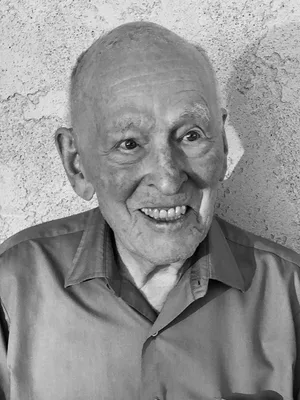
In 1997 Boyer shared the Nobel Prize in Chemistry with John Walker and Jens C. Skou “for their elucidation of the enzymatic mechanism underlying the synthesis of adenosine triphosphate (ATP).” The Nobel Prize committe…
1975
#2660.27
From the molecular biology of oncogenic DNA viruses to cancer. Les Prix Nobel en 1975, pp. 172-80.
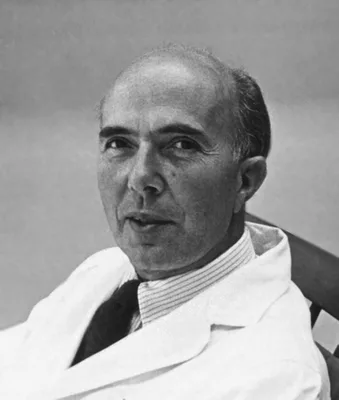
In 1975 Dulbecco shared the Nobel Prize in Physiology or Medicine with David Baltimore and Howard Martin Temin "for their discoveries concerning the interaction between tumour viruses and the genetic material of the c…
1975
#14182
Three-dimensional model of purple membrane obtained by electron microscopy.
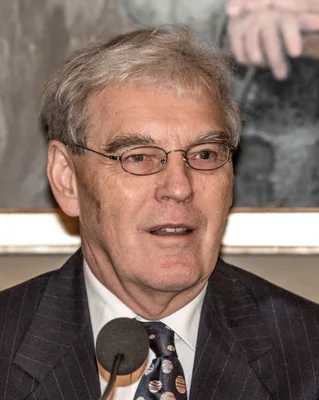
The invention of Cryogenic electron microscopy (cryo-EM). The novel technique was achieved by "by applying the method to tilted specimens, and using the principles put forward by De Rosier and Klug (GM - 13935), for t…
1975
#14249
Transfer of proteins across membranes. I. Presence of proteolytically processed and unprocessed nascent immunoglobulin light chains on membrane-bound ribosomes of murine myeloma. II. Reconstitution of functional rough microsomes from heterologous components.
"In 1975 Günther Blobel showed that in certain cases amino acids in a protein serve as an address label that determines where a protein is to be delivered. Amino acid sequences determine whether a protein is to be pas…
1976
#2660.28
DNA related to the transforming gene(s) of avian sarcoma viruses is present in normal avian DNA.
Discovery of the first “oncogene. In 1989 Varmus and Bishop shared the Nobel Prize for in Physiology or Medicine "for their discovery of the cellular origin of retroviral oncogenes."
1976
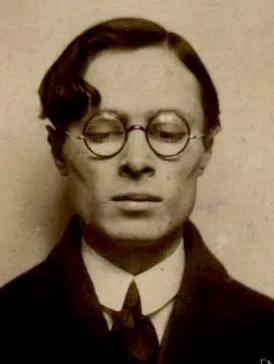
#9731
Dreams in Greek tragedy: An ethno-psycho-analytical study.
1976
#14253
Genetic control of the cell division cycle in the fission yeast Schizosaccharomyces pombe.
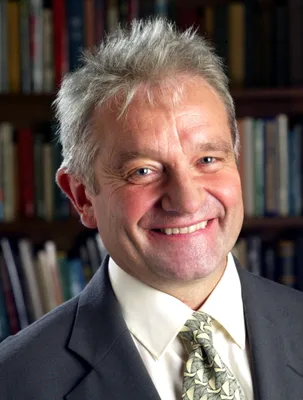
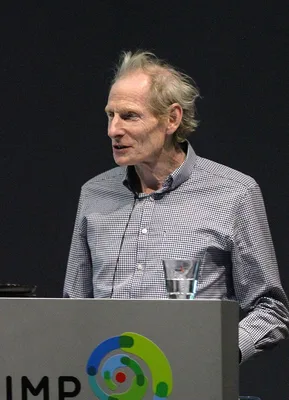
"Beginning in 1976, Nurse identified the gene cdc2 in fission yeast (Schizosaccharomyces pombe). This gene controls the progression of the cell cycle from G1 phase to S phase and the transition from G2 phase to mitosi…
1977
#6883
DNA sequencing with chain-terminating inhibitors.
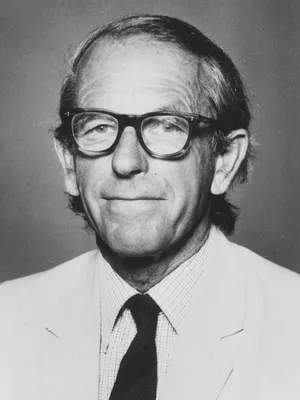
Sanger and colleagues developed methods for rapid sequencing of long sections of DNA molecules. Sanger’s method, and that developed by Gilbert and Maxam, made it possible to read the nucleotide sequence for entire gen…
1977
#6926
A new method for sequencing DNA.
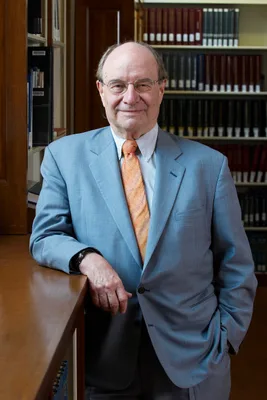
The Gilbert-Maxam method for sequencing DNA. This paper is available from PNAS at this link. In 1980 Gilbert shared the 1980 Nobel Prize in Chemistry with Frederick Sanger and Paul Berg. Berg received half of the priz…
1977
#11043
An amazing sequence arrangement at the 5' ends of adenovirus 2 messenger RNA.
Discovery of introns. In 1993 Roberts shared the Nobel Prize in Physiology or Medicine with Phillip A. Sharp "for their discoveries of split genes." It was frequently suggested that Chow deserved a share of that prize…
1977
#11044
Spliced segments at the 5' terminus of adenovirus 2 late mRNA.
Discovery of introns simultaneously with Roberts, Chow, Broker (No. 11043). Sharp's electron microscopist, Berget, visualized the introns in the electron microscope. James D. Watson took note of the profound significa…
1977
#14143
Resolution of some components of adenylate cyclase necessary for catalytic activity.
Goodman shared the 1994 Nobel Prize in Physiology or Medicine with Martin Rodbell "for their discovery of G-proteins and the role of these proteins in signal transduction in cells." In this paper Goodman and Ross show…
1978
#13986
Mutagenesis at a specific position in a DNA sequence.
Smith and Hutchison introduced site-directed mutagenesis, or oligonucleotide-directed mutagenesis, into molecular biology, resolving the problem of how to determine the effect of a single mutant gene with efficiency. …
1979
#6901
Resolution of the ATP-dependent proteolytic system from reticulocytes: a component that interacts with ATP.
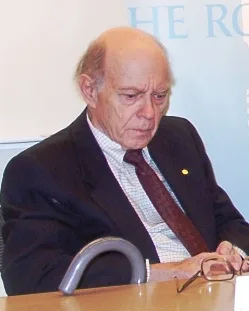
Discovery of ubiquitin-mediated protein degradation. The paper is available at doi:10.1073/pnas.76.7.3107,PMC 383772, PMID 290989. See also Hershko, A.; Ciechanover, A.; Heller, H.; Haas, A.L.; Rose, I.A. (1980), "Pro…
1980
#3705.2
Manners and customs of dentistry in Ukiyoe
Reproduces all the classic Japanese prints that concern the teeth or dentistry. By Nakahara, Yoshihisa Shindo, and Kuninori Homma.
1980
#14255
Transport of vesicular stomatitis virus glycoprotein in a cell-free extract.
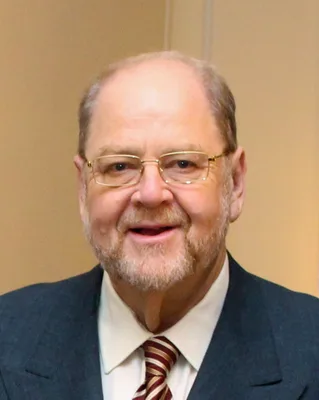
See also: Fries & Rothman, "Transient activity of Golgi-like membranes as donors of vescular stomatitis viral glycoprotein in vitro," J. Cell. Biol., 90, 1981, 697-704. "Rothman's research[15] details how vesicles—tin…
1980
#14256
The identification of 23 complementation groups required for post-translational events in the yeast secretory pathway.
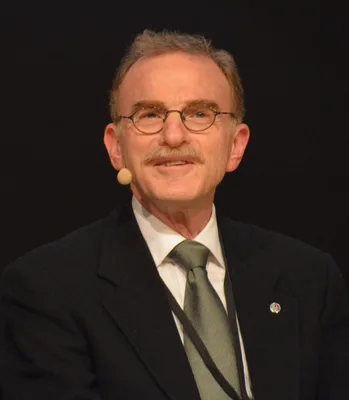
See also: Novick, P., Ferro, S. and Schekman, R. "Order of events in the yeast secretory pathway," Cell, 25, 1981, 461-469. In 1979 Schekman devised a genetic selection for temperature-conditional secretion-defective …
1981
#13285
Establishment in culture of pluripotential cells from mouse embryos.
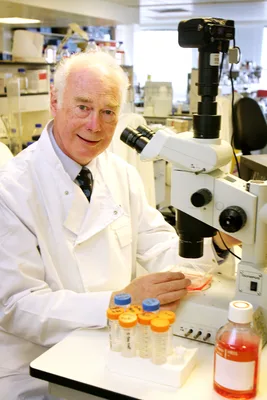
Evans and Kauffman were the first to identify, isolate and successfully culture embryonic stem cells using mouse blastocysts. This discovery opened the doors to the creation of “murine genetic models” -- mice that hav…
1981
#14183
Computer averaging of electron micrographs of the 405 ribosomal subunit.
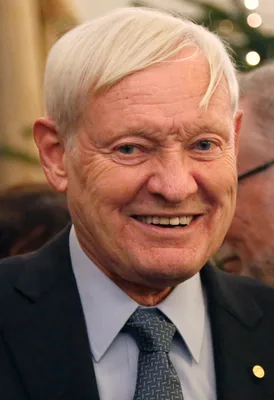
Frank and colleagues developed a method that allows sorting of particle images into classes based on their orientation, as well as their structural features. Specifically Frank developed mathematical tools used for im…
1981
#14224
The crystallization of ribsomal proteins from the 50 S subunit of the Escherichia coli and Bacillus stearothermophilus ribosome.
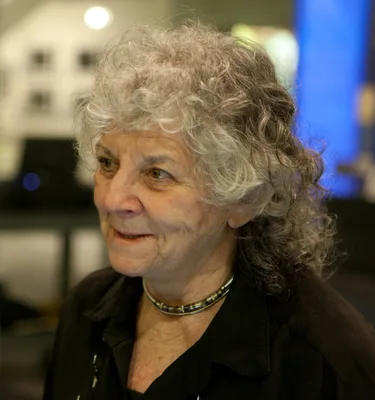
The authors crystallized fragments of the 50S subunit of a thermophile bacterium’s ribosome to 3 angstroms resolution. Order of authorship in the original publication: Appelt, Dyck, et al., Yonath. Digital facsimile f…
1982
#13932
Self-splicing RNA: Autoexcision and autocyclization of the ribosomal RNA intervening sequence of tetrahymena.
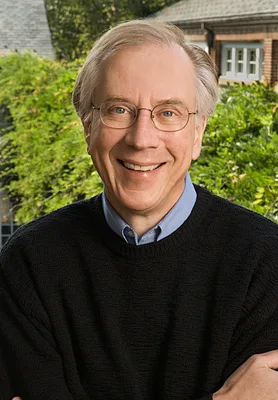
Discovery of ribozymes (ribonucleic acid enzymes). Cech discovered that RNA itself could cut strands of RNA, suggesting that life might have started as RNA. "In the 1970s, Cech had been studying the splicing of RNA in…
1983
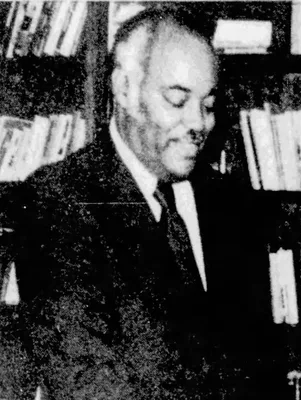
#8082
Educating black doctors: A history of Meharry Medical College.
1983
#9313
Preparation of the Haitian zombi poison.
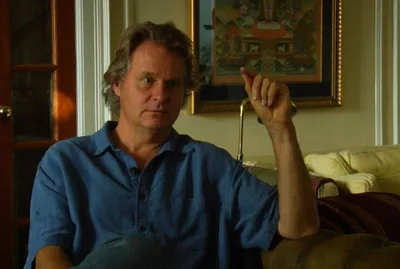
According to popular accounts, zombies are innocent victims, raised in a comatose trance from their graves by malevolent Voodoo priests (bokors), and forced to toil indefinitely as slaves. Davis traced the material ba…
1983
#10407
Changes in the land: Indians, colonists and the ecology of New England.
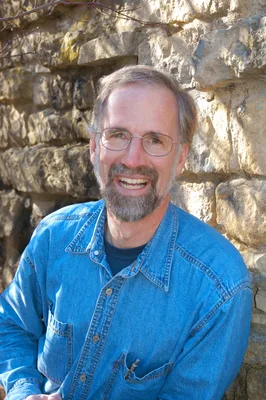
"In this work, Cronon demonstrated the impact on the land of the widely disparate conceptions of ownership held by Native Americans and English colonists. English law objectified land, making it an object of which the…
1983
#14140
Mammalian beta-adrenergic receptors. Structural differences in beta 1 and beta 2 subtypes revealed by peptide maps.
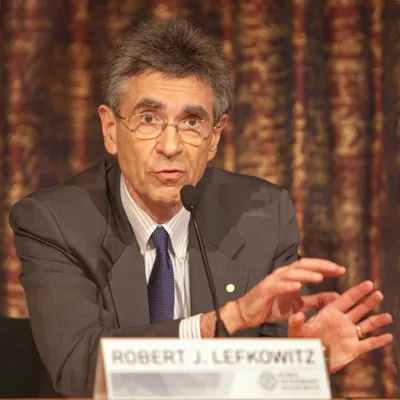
Lefkowitz and colleagues showed that there are two different types of beta receptors, distinguishing them as Beta-1 and Beta-2. They noticed that each has specific pharmacological characteristics. Order of authorship …
1983
#14254
Cyclin: A protein specified by maternal mRNA in sea urchin eggs that is destroyed at each cleavage division.
"It was at Woods Hole around July 1982, using Arbacia sea urchin eggs as his model organism, that he discovered cyclin proteins.[12] Cyclins play a key role in regulating the cell-division cycle.[16] Hunt was observin…