
Facets
Browse across eight MeSH (opens in new tab) facets — era, geography, science, specialty, technology, history, culture, and reference. Select one tag per group; counts update across the others. What’s new in facet browse how facets relate to subjects and MeSH.
Clear filtersFacet filters
Geography
Specialties & Disease
- Anatomy & Pathology 8
- Cardiology & Blood 2
- Neurology & Psychiatry 12
- Obstetrics & Reproductive 3
- Infectious Disease (General) 5
- Surgery & Anesthesia 13
- Public Health 38
- Immunology & Dermatology 10
- General Clinical Medicine 78
- Military Medicine 25
- Psychology 3
- Alternative & Fringe Medicine 16
- Pediatrics 4
- Ophthalmology & Vision 6
- ENT & Hearing 0
- Urology & Nephrology 0
- Gastroenterology & Hepatology 1
- Pulmonary & Respiratory 2
- Rheumatology, Rehab & Pain 1
- Internal, Emergency & Geriatric 2
- Veterinary Medicine 7
- Epidemiology & Demography 18
- Physiology & Embryology 1
- Dentistry 5
- Plagues & Epidemics 90
- Microbiology & Virology 42
Social & Historical Studies
Institutions & Culture
Reference & Scholarly Works
Drugs & Technology
90 entries match Asia & Pacific [Z01.586] · Plagues & Epidemics [C01.252]
1563
#1815
Colóquios dos simples, e drogas he cousas mediçinais da Índia e assi dalgũas frutas achadas nella onde se tratam algũas cousas tocantes a medicina, pratica, e outras cousas boas pera saber.
![ORTA, Garcia de [Garcia d'Orta] (1501 – 1568)](/media/portraits/2236)
The first account of Indian materia medica and the first textbook on tropical medicine written by a European. It includes a classic account of Asiatic cholera, the first account of this disease by a European. This is …
1642
#2263
De medicina Indorum.
Bontius was probably the first to regard tropical medicine as an independent branch of medical science. He spent the last four years of his life in the Dutch East Indies, and his book incorporates the experience he ga…
1658
#1825
De Indiae utriusque re naturali et medica libri quatuordecim.
This is an extensively revised and enlarged second edition of Piso’s Historia naturalis Brasiliae (1648). In this edition Piso reprinted Bontius's De medicina Indorum (1642) with two additional books on Asian flora an…
1685
#11128
Traité des maladies particulières aux pays orientaux, et dans la route, et de leurs Remèdes. Par M.C.D.D.E.M.
At the age of 17, Dellon, who is sometimes referred to as Gabriel Dellon, embarked as second surgeon aboard the ship La Force. He arrived at Darman, in the Portuguese Indies, in 1673, where he was doctor to Luis de Me…
1721
#10651
Relation des différentes espèces de peste qui reconnaissent les orientaux, des précautions & des remèdes qu'ils prennent pour empêcher la communication & le progrès; et ce que nous devons faire à leur exemple pour nous en préserver, & nous en guérir.
Gaudereau worked as a missionary in Turkey, Armenia, Persia, and India, facing plague outbreaks several times. In Turkey he almost succumbed to the plague, himself, but was cured using local remedies. These remedies a…
1767
#12397
An account of the manner of inoculating for the small pox in the East Indies: With some observations on the practice and mode of treating that disease in those parts.
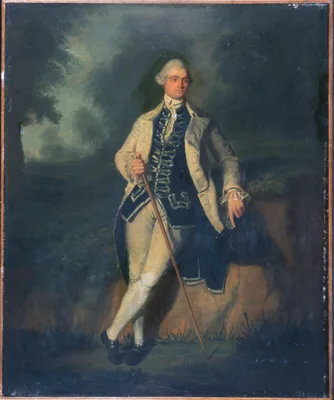
Holwell's account of smallpox variolation in India prior to Jenner has been disputed by historians. Digital facsimile from the Internet Archive at this link.
1773
#8813
Observations on the diseases in long voyages to hot countries, and particularly on those which prevail in the East Indies.
Digital facsimile of the third edition, "revised and enlarged" (1793) from the Internet Archive at this link.
1780
#5469
Korte aantekening wegens eene algemeene ziekte, doorgaans genaamd knokkel-koorts.
Bylon described an epidemic of dengue which appeared in the Dutch East Indies in 1779, the first definite description of the disease. O. H. P. Pepper published a photographic reproduction of the article in Ann. med. H…
1782
#5104.1
Voyage aux Indes Orientales et à la Chine, fait par ordre du Roi depuis 1774 jusqu’en 1781. 2 vols.
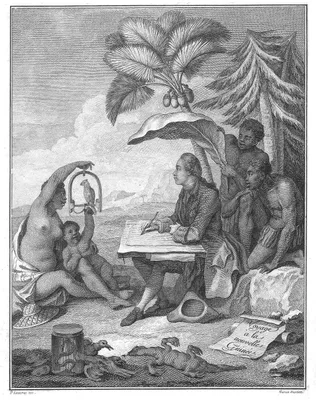
Vol. 1, pp. 113-16, “No author before the time of Sonnerat gives us so distinct an account of the epidemic prevalence of cholera, so full a description of its varieties or has attributed it so positively to the physic…
1807
#8814
An account of the diseases of India, as they appeared in the English fleet, and in the naval hospital at Madras, in 1782 and 1783; with observations on ulcers, and the hospital sores of that country, &c. & c. To which is prefixed a view of the diseases of an expedition and passage of a fleet and armament to India, in 1781.
Digital facsimile from Google Books at this link.
1813
#8211
The influence of tropical climates, more especially the climate of India, on European constitutions; the principal effects and diseases thereby induced, their prevention or removal, and the means of preserving health in hot climates, rendered obvious to to Europeans in every capacity: An essay .
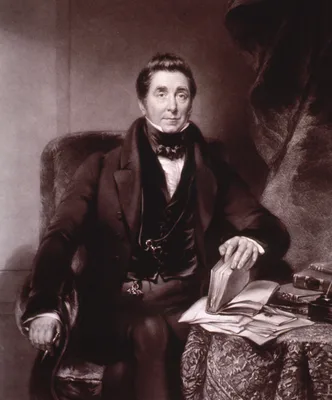
Digital facsimile from the Internet Archive at this link. Enlarged and retitled second edition: The influence of tropical climates on European constitutions: to which is added tropical hygiene, or the preservation of …
1817
#8816
Results of an investigation, respecting epidemic and pestilential diseases; including researches in the Levant, concerning the plague. 2 vols.
"From 1815 to 1817 Maclean travelled in Spain, Turkey, and the Levant, and he studied the plague at the Greek Pest Hospital at Constantinople, in the service of the Levant Company. His experiences in the Levant and in…
1828
#1776.1
Researches into the causes, nature and treatment of the more prevalent diseases of India, and of warm climates generally. Illustrated with cases, post mortem examinations, and numerous coloured engravings of morbid structures. 2 vols.
A landmark in geographical pathology, superbly illustrated. Annesley’s cases, collected over many years’ service throughout India, represented the most complete treatment of diseases on the sub-continent to date. Digi…
1832
#10463
A treatise on the epidemic cholera, as it has prevailed in India; together with the reports of the medical officers, made to the medical boards of the presidencies of Bengal, Madras, and Bombay, for the purpose of ascertaining a successful mode of treating that destructive disease; And a critical examination of all the works that have hitherto appeared on the subject.
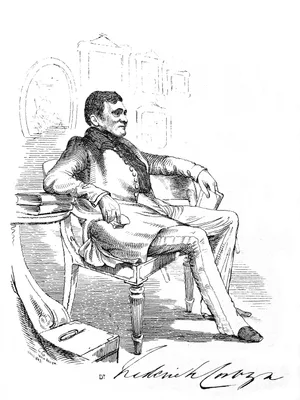
Corbyn mapped the history of cholera in India within British regimental stations. He included the date of each reported outbreak in a table of British regimental locations to describe the temporal progression of the d…
1837
#8803
Notes on the medical topography of Calcutta.
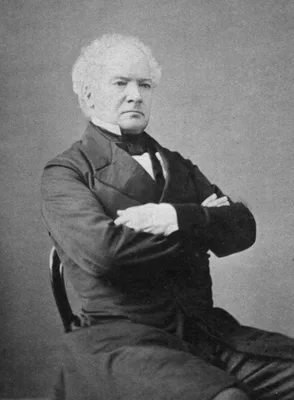
Digital facsimile from the Internet Archive at this link.
1844
#8810
Pathologia Indica, or, The anatomy of Indian diseases, medical and surgical: Based upon morbid specimens from all parts of India in the museum of the Calcutta Medical College; illustrated by detailed cases, with the prescriptions and treatment employed, and comments, physiological, practical and historical.
Significantly expanded second edition, in two parts (Calcutta: Thacker & Co., 1848). Digital facsimile of the 1848 edition from the Internet Archive at this link.
1846
#13739
Medical notes on China.
Wilson served as Inspector of Hospitals and Fleets from 1841 to 1843 onboard the Minden, a British hospital ship deployed in China at Chusan and Hong Kong at the end of 1841 to treat casualties in the First Opium War …
1855
#8809
Elephantiasis orientalis, and especially elephantiasis genitalis in Bengal.
Digital facsimile from Google Books at this link.
1856
#10112
Clinical researches on disease in India. 2 vols.
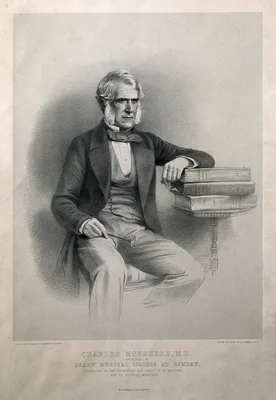
One of the most comprehensive studies of disease in India during the mid-19th century; includes 556 case reports. Digital facsimile from the Internet Archive at this link
1860
#2249
Contributions to the natural history of insolatio.
Barclay, an army surgeon in India, wrote an important paper on heat-stroke.
1861
#4047
On a new and striking form of fungus disease, principally affecting the foot, and prevailing endemically in many parts of India.
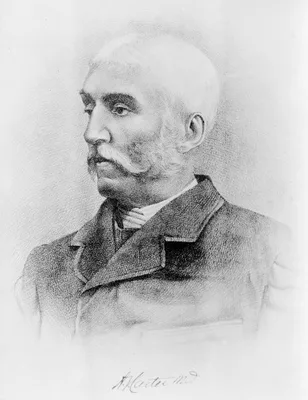
First modern description of mycetoma of the foot – “Madura foot”, “Carter’s mycetoma”. It was mentioned by E. Kaempfer in his Amoenitates exoticae, Lemgo, 1712, p. 561. Colebrook at the Madura Dispensary is said to ha…
1869
#10890
Syphilis: Its nature & diffusion popularly considered.
The first work on dermatology or syphilology written, printed and published in Australia. This work is illustrated with chromolithographed plates printed in Australia. This may be the earliest medical book printed in …
1870
#5292
Kala azar.
Kala azar is mentioned briefly in the Proceedings in 1869 (No. 34, p. 19) but the above is the first full description, given by Briscoe in a report dated 1 Dec 1869.
1874
#4066
On mycetoma, or the fungus disease of India.
See No. 4047.
1877
#10722
Leprosy in India. A report.
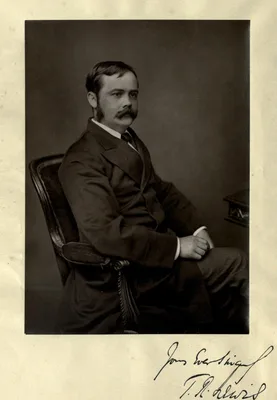
The first quantitative study of leprosy in India. Leprosy first appeared in India at least 2,000 years ago and continued to exist throughout the subcontinent over the succeeding centuries. Upon the establishment of th…
1877
#10787
Filiaria sanguinis hominis - mature form.
Lewis made the critical connection/association of the worm, Filaria sanguinis,(Wuchereria bancrofti ) to Elephantiasis. This brief account appears to be a third person account summarizing Lewis's work written by an ed…
1878
#5270.1
The microscopic organisms found in the blood of man and animals, and their relation to disease.
First description of a trypanosome (T. lewisi) in a mammal. Seoarate edition in book form with the same title: Calcutta: Office of the Superintendent of Government Printing, 1879.
1879
#11248
Additional notes on filaria sanguinis hominis and filiaria disease.
On p. 36 of this paper Manson first described nocturnal periodicity in Filaria Bancrofti, an adaptation to the nocturnal biting habits of their mosquito vector. (Thanks to Juan Weiss for this reference and its interpr…
1881
#5271
On a horse disease in India known as “surra”, probably due to a haematozoon.
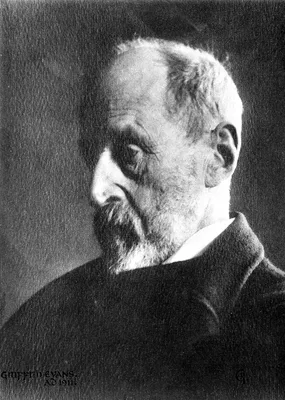
While serving in India as a veterinary surgeon, Evans discovered parasites in the blood of horses suffering from surra; this was the first pathogenic trypanosome to be described.
1882
#5204.1
Precis of operations performed in the wards of the first surgeon, Medical College Hospital, during the year 1881.
MacLeod was first to draw attention to granuloma inguinale.
1883
#2455
The Filaria sanguinis hominis and certain new form of parasitic disease in India, China and warm countries.
A collection of several papers written by Manson.
1885
#5293
On the presence of peculiar parasitic organisms in the tissue of a specimen of Delhi boil.
Cunningham saw and described bodies in Delhi boil; these were almost certainly Leishman–Donovan bodies.
1894
#5125
La peste bubonique à Hong-Kong.
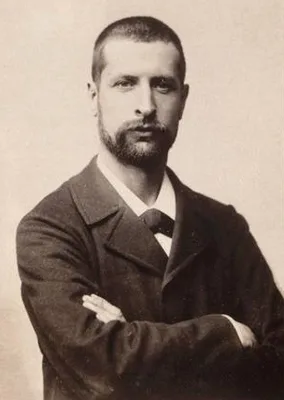
Yersin discovered the plague bacillus Pasteurella (Yersinia) pestis, isolating it from excised buboes. He published the first account of this organism. Preliminary note in C. R. Acad. Sci. (Paris), 1894, 119, 356.
1896
#11380
L'action bactericide des eaux de la Jumna et du Gange sur le vibrion du cholera.
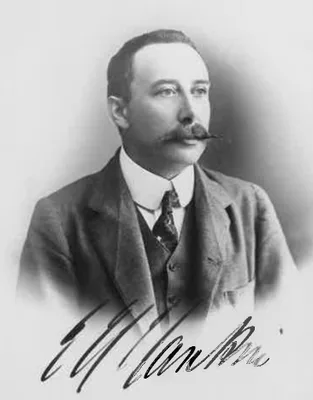
Hankin described the antibacterial activity of a then-unknown source in the Ganges and Jumna Rivers in India. He noted that "It is seen that the unboiled water of the Ganges kills the cholera germ in less than 3 hours…
1897
#5128
Ueber die Pestepidemie in Formosa.
Ogata considered the flea (principally Xenopsylla cheopis) to be the principal, if not the sole, vector of bubonic plague infection.
1898
#2457
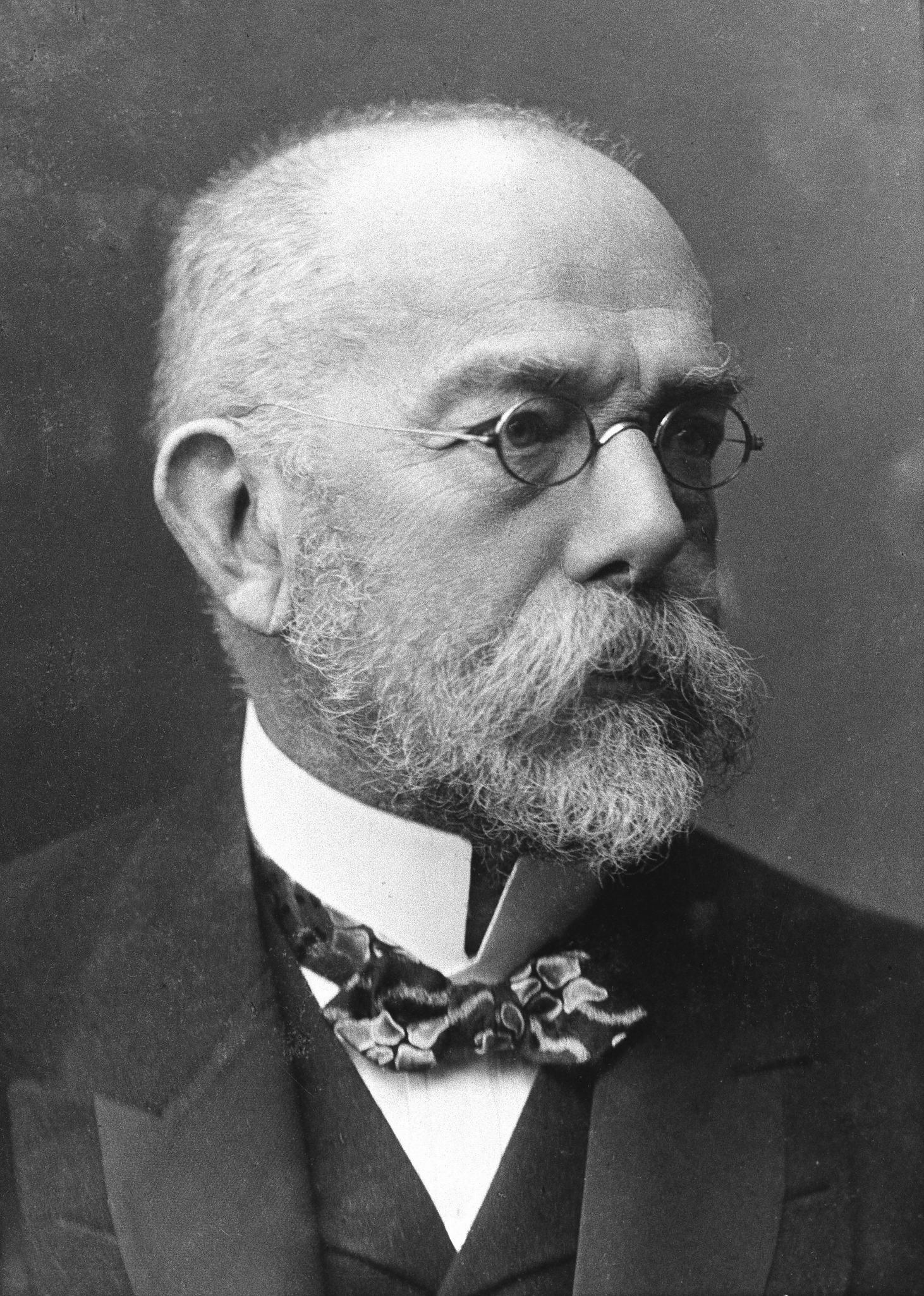
Reise-Bericht über Rinderpest, Bubonenpest in Indien und Afrika, Tsetse-oder Surrakrankheit, Texasfieber, tropische Malaria, Schwarzwasserfieber.
1898 –1900
#11394
Über die Beulenpest in Bombay im Jahre 1897. Gesamtbericht von der Kaiserlichen Akademie der Wissenschaften in Wien zur Studium der Beulenpest nach Indien entsendeten Commission. 2 vols. in 3.
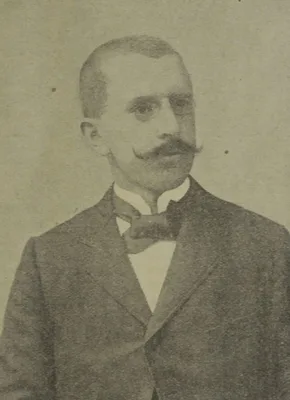
Müller died at the age of 32 as a result of exposure to this plague.
1903
#5297
Protozoa in a case of tropical ulcer (Delhi sore).
Wright found Leishmania tropica in Delhi sore. He was unaware of Borovskii’s paper (No. 5294).
1903
#5296
On the possibility of the occurrence of typanosomiasis in India.
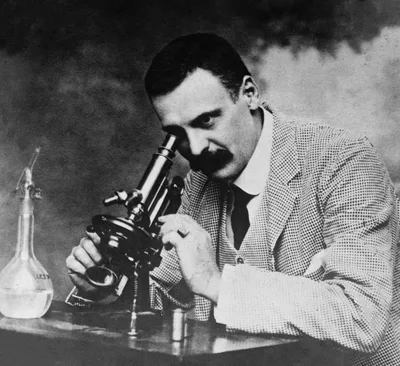
Leishimania donovani, independently discovered by two British medical officers William Boog Leishman in Netley, England, and Donovan in Madras, India, in 1903. However, the correct taxonomy was provided by Ronald Ross…
1904
#2437
The constituents of chaulmoogra seeds.
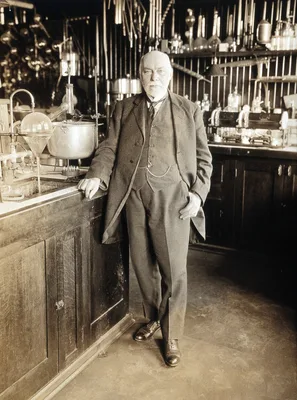
Hydnocarpus wightiana or Chaulmoogra is a tree in the Achariaceae family. The oil from seeds of Hydnocarpus wightiana or Chaulmoogra, a tree in the Achariaceae family, was widely used in Indian medicine and Chinese tr…
1904
#2438
The cultivation of the Bacillus leprae.
Rost cultivated the leprosy bacillus, and he prepared leprolin, formerly used in treating leprosy.
1904
#5349.1
The aetiology of a parasitic disease (in Japanese)
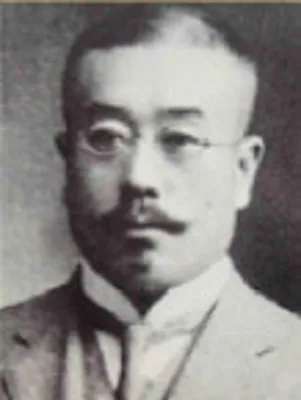
First description of Schistosoma japonicum. Translation in Kean (No. 2368.1), p. 518.
1906
#5472
On the etiology of dengue fever.
Bancroft was the first to produce evidence that Aëdes aegypti is a vector of dengue.
1907
#5350.1
Ueber den Wohnort von Schistosomum japonicum. [Japanese text.]
Fujinami and Nakamura identified the intermediate host of S. japonicum. Abstract in Arch. Schiffs-u. Tropenhyg., 1908, 12,471. Later (1909, 6, 224-52) they demonstrated that infection occurred by skin penetration. Eng…
1909
#13795
Smallpox and vaccination in British India.
Includes the history of the introduction of vaccination in India from 1799 onward. Digital facsimile from the Internet Archive at this link.
1912
#12582
Report of the International Plague Conference held at Mukden [Shenyang], April, 1911.
Report on the epidemic of pneumonic plague that raged in Manchuria and north China during the winter months of 1910-11, causing the death of nearly 50,000 people. This was the first outbreak of epidemic pneumonic plag…
1914
#5350.2
Der Zwischenwirt des Schistosomum japonicum Katsurada.
Miyairi and Suzuki confirmed that snails are the intermediate hosts of S. japonicum, and their paper completed the description of the life cycle from ova to snail intermediate host. Translation in Kean (No. 2268.1), p…
1914
#13802
The history of small-pox in Australia 1788-1908.
A second volume, The history of small-pox in Australia, 1909-1923 by J.H.L. Compston and F. McCallum was published in Melbourne: H. J. Green, govt. printer, 1925.
1916
#5474
On the transmission of Australian dengue by the mosquito Stegomyia fasciata.
These workers proved that Aëdes aegypti (Stegomyia fasciata) is capable of transmitting dengue fever. See also J. Hyg. (Camb.), 1918, 16, 317-418. With C. H. Bradley and W. McDonald.
1917
#4648
The Australian epidemics of an acute polio-encephalomyelitis (X disease).
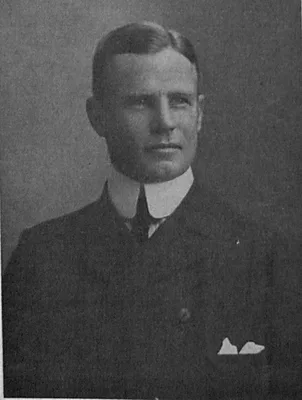
Campbell was Australia's first neurologist. This paper described Murray Valley encephalitis (Australian X disease). Cleland and Campbell isolated a virus from the cerebral tissue of three patients.