
Facets
Browse across eight MeSH (opens in new tab) facets — era, geography, science, specialty, technology, history, culture, and reference. Select one tag per group; counts update across the others. What’s new in facet browse how facets relate to subjects and MeSH.
Clear filtersFacet filters
Geography
Specialties & Disease
- Anatomy & Pathology 765
- Cardiology & Blood 914
- Neurology & Psychiatry 1,258
- Obstetrics & Reproductive 551
- Infectious Disease (General) 147
- Surgery & Anesthesia 1,553
- Public Health 1,129
- Immunology & Dermatology 1,405
- General Clinical Medicine 487
- Military Medicine 436
- Psychology 202
- Alternative & Fringe Medicine 383
- Pediatrics 247
- Ophthalmology & Vision 412
- ENT & Hearing 293
- Urology & Nephrology 309
- Gastroenterology & Hepatology 316
- Pulmonary & Respiratory 233
- Rheumatology, Rehab & Pain 189
- Internal, Emergency & Geriatric 123
- Veterinary Medicine 165
- Epidemiology & Demography 397
- Physiology & Embryology 924
- Dentistry 259
- Plagues & Epidemics 1,279
- Microbiology & Virology 1,080
Social & Historical Studies
Institutions & Culture
Reference & Scholarly Works
1,080 entries match Microbiology & Virology [C01.748]
1980
#11057
Detection and isolation of type C retrovirus particles from fresh and cultured lymphocytes of a patient with cutaneous T-cell lymphoma.
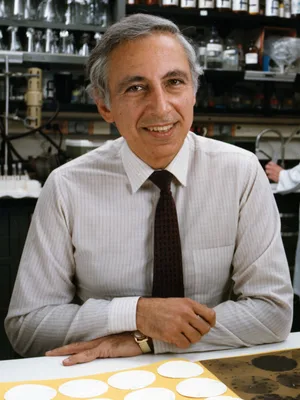
Order of authorship in the original publication: Poiesz, Ruscetti,... Gallo. Gallo and associates announced the discovery of a human retrovirus with type C morphology causing a cutaneous T-cell lymphoma. Gallo named t…
1980
#11257
Preliminary report on the pathogenicity of Legionella pneumophila for freshwater and soil amoebae.
Discovery of the pathogenic relationship between amoebas and Legionella bacteria--a key step in understanding how this bacteria infects mankind. Legionella bacteria, along with amoeba, live in the organic contaminatio…
1981
#9175
Molecular cloning of poliovirus cDNA and determination of the complete nucleotide sequence of the viral genome.


The poliovirus genome. Digital facsimile from PNAS through PubMedCentral at this link.
1981
#9176
Primary structure, gene organization and polypeptide expression of poliovirus RNA.
The poliovirus genome. With around 10 co-authors. "The primary structure of the poliovirus genome has been determined. The RNA molecule is 7,433 nucleotides long, polyadenylated at the 3′ terminus, and covalently link…
1982
#10140
Novel proteinaceous infectious particles cause Scrapie.

In 1997 Prusiner was awarded the Nobel Prize in Physiology or Medicine "for his discovery of Prions - a new biological principle of infection." In his 1982 paper Prusiner proposed a completely novel explanation for th…
1982
#10782
Lyme disease - a tick-borne spirochetosis?
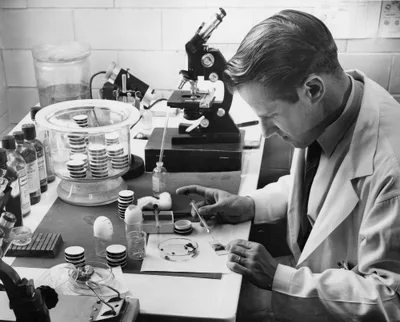
Discovery of the agent causing Lyme disease. Though the authors initially thought the disease might be a spirochetosis, the agent was attributed to a bacterium Borrelia burgdorferi, named for Burgdorfer who discovered…
1982
#10842
Identification of a protein that purifies with the Scrapie prion.
Research with the biochemist Bolton enabled Prusiner to discover and characterize the specific protein causing prion disease. This paper was dated December 24, 1982. Nearly simultaneously, Prusiner and the same co-aut…
1982
#11058
A new subtype of human T-cell leukemia virus (HTLV-II) associated with a T-cell variant of hairy cell leukemia.
Order of authorship in the original publication: Kalyanaraman, Sarngadharan,... Gallo. Discovery by Gallo of HTLV-II, which like HTLV-I, is carcinogenic. (Thanks to Juan Weiss for this entry and its interpretation.)
1982
#12595
The spectrum of Creutzfeldt-Jakob disease and the virus-induced subacute spongiform encephalopathies. IN: Smith & Cavanagh, editors, Recent advances in neuropathology, Vol. 2., Chapter 6, pp. 129-163.
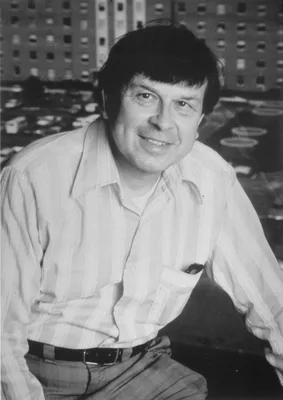
The authors reported a detailed and complete analysis of the original slides of the brain done by Afons Jakob, and provided a partial translation into English, with a detailed analysis of Jakob's clinical description,…
1983
#6996
Isolation of a T-lymphotropic retrovirus from a patient at risk for acquired immune deficiency syndrome (AIDS).
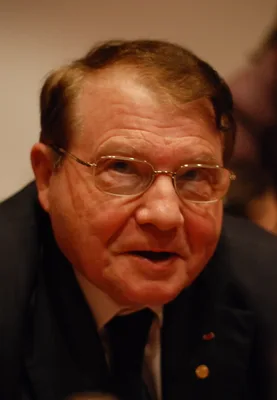
Isolation of the human immunodeficiency virus (HIV-1). In 2008 Barré-Sinoussi and Montagnier shared half of the Nobel Prize in Physiology and Medicine "for their discovery of human immunodeficiency virus." The other h…
1983
#8475
Unidentified curved bacilli on gastric epithelium in active chronic gastritis.

In 2005 Marshall and Warren shared the Nobel prize in Physiology or Medicine "for their discovery of the bacterium Helicobacter pylori and its role in gastritis and peptic ulcer disease." See also their follow-up pape…
1983
#11191
Human parvovirus, the cause of erythema infectiosum (Fifth disease)?
This single page document was published as a Letter to the Editor of The Lancet. Order of authorship of the letter: Anderson, Jones, Fisher-Hoch.... Identification of human parvovirus as the cause of "Fifth disease". …
1983
#12658
Trichinella and trichinosis. Edited by William C. Campbell.

The first chapter of this authoritative study is a very detailed historical introduction by William C. Campbell, with a comprehensive bibliography. Campbell also authored Chapter 10: Chemotherapy and Chapter 13: Epide…
1983
#12663
A papillomavirus DNA from a cervical carcinoma and its prevalence in cancer biopsy samples from different geographic regions,
Zur Hausen and colleageus identified HPV 16 DNA in cervical cancer tumors by Southern blot hybridization. Digital facsimile from PubMedCentral at this link.
1983
#14212
Evidence for plasmid mediated toxin production in Bacillus anthracis.
The authors illustrated and proved that “heating V770-NPI-R containing anthrax strains, to exactly 42.5 degrees centigrade, as Pasteur and colleagues reported in GM 14211, essentially ‘cured’ these strains of their pl…
1984
#6997
Detection, isolation, and continuous production of cytopathic retroviruses (HTLV-III) from patients with AIDS and pre-AIDS.
Gallo, Popovic, and colleagues demonstrated that a retrovirus they had isolated, called HTLV-III, was the cause of AIDS. M. G. Sarngadharan, and E. Read. Bibcode:1984Sci...224..497P. doi:10.1126/science.6200935. PMID …
1984
#11059
A new type of retrovirus isolated from patients presenting with lymphadenopathy and acquired immune deficiency syndrome: Structural and antigenic relatedness with equine infectious anemia virus.
Order of authorship in the original publication: Montagnier, Dauguet,... Barré-Sinoussi. In this paper Montagnier and colleagues showed that, contrary to the views of Gallo and his group, LAV (Lymphadenopathy Associat…
1984
#12664
A new type of papillomavirus DNA, its presence in genital cancer biopsies and in cell lines derived from cervical cancer.

Zur Hausen and colleagues discovered HPV18 as a cause of cervical cancer. With the discovery of HPV18, and HPV16, which zur Hausen and team discovered in 1983, zur Hausen discovered the viruses causing about 75% of hu…
1985
#10789
Serological evidence for virus related to Simian T-Lymphotropic retrovirus III in residents of West Africa.
First report of the discovery of what became known as HIV-2 by the U.S. research group led by Kanki. This group published before the French group, but the French group had reported their data one day prior to the U.S.…
1985
#10965
Serologic identification and characterization of a macaque T-lymphotropic retrovirus closely related to HTLV-III.
Order of authorship in the original paper: Kanki, McLane... Essex. This paper was followed in the issue of Science by: Daniel, M., Letvi, N. L., King, N.W., "Isolation of T-cell tropic HTLV-3 - like retrovirus from ma…
1985
#11060
Structure of the protein subunit in the photosynthetic reaction centre of Rhodopseudomonas viridis at 3 Å resolution.


Discovery of the three-dimensional structure of a protein complex found in certain photosynthetic bacteria, called the photosynthetic reaction center. This was the first elucidation of the 3D crystal structure of any …
1985
#11377
The association between idiopathic hemolytic uremic syndrome and infection by Verotoxin-producing Escherichia coli.
Order of authorship in the original publication: Karmali, Petric, Lim. The authors discovered that a hemolytic uremic syndrome, associated with E. coli 0157-H7 (first described in No. 11376), and which could not be cu…
1986
#4158.3
Introduction to the history of medical and veterinary mycology.
Authoritative and well-illustrated history with excellent chronological bibliography.
1986
#9331
Evidence for human infection with an HTLV III/LAV-like virus in Central Africa, 1959.
Order of authorship in the original paper: Nahmias, Weiss, Yao...Kanki, Essex. The authors presented evidence for the first or earliest infection with HIV in a human. This paper reported on a patient from Kinshasa, Za…
1986
#10788
Isolation of a new human retrovirus from West African patients with AIDS.
HIV-2 was discovered essentially simultaneously by French and U.S. teams. This was the first publication by the French team. Order of authorship of the original publication was Clavel, Guettard, Brun-Vezinet. See thei…
1986
#10843
Fatal familial insomnia and dysautonomia with selective degeneration of thalamic nuclei.
The authors coined the name Fatal Familial Insomnia to describe a family cohort of individuals who were dying from a prion illness causing an inability to sleep. This disease has been characterized as one of the most …
1986
#11042
The T4 glycoprotein is a cell-surface receptor for the AIDS virus.

Order of authorship in the original paper: McDougal, Maddon, Dalgleish. The authors discovered that the T4 lymphocyte cell has an outer glycoprotein on its surface that specifically acts as the receptor for HIV. Witho…
1986
#11106
Administration of 3'-Azido-3'-Deoxythmymidine, an inhibitor of HTLV-III/LAV replication, to patients with AIDS or AIDS-related complex.
Order of authorship in the original publication: Yarchoan, Weinhold, Lyerly. The first antiviral AIDS drug, later named "Retrovir"/ Zidovudine/AZT. (Thanks to Juan Weiss for this reference and its interpretation.)
1987
#10899
Human infection with Ehrlichia canis, a leukocytic rickettsia.
Order of authorship in the original publication: Maeda, Markowitz, Hawley. First description of Ehrlichiosis in humans, description of the organism, and successful drug treatment with doxycycline. The pathogen was lat…
1987
#11192
Human parvovirus infection in pregnancy and hydrops fetalis.
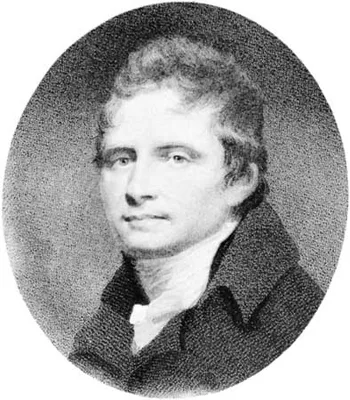
Demonstration of the devastating effect of human parvovirus B19 on the human fetus. (Thanks to Juan Weiss for this reference and its interpretation.)
1987
#11246
DF-2 bacteremia following cat bites. Report of two cases.
Order of authorship in the original paper: Carpenter, Heppner, Gnann. Report of two cases of infection from cat bites by the bacterium then identified by the CDC as DF-2 (later called Capnocytophaga canimorsus) in non…
1988
#2581.13
Portraits of viruses: A history of virology.
Well-documented essays on specific families of viruses by expert researchers, reprinted from Intervirology, 1979, 11-1986, 26.
1988
#7549
Smallpox and its eradication.
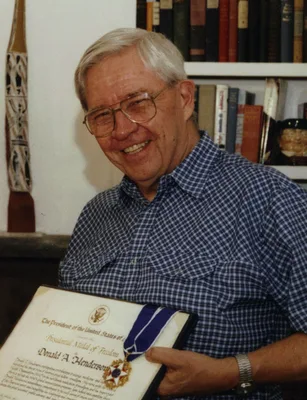
The definitive archival history in 1460 pages. In 2016 a PDF of this entire book could be downloaded from the W.H.O. at this link.
1988
#11780
Molecular Koch's postulates applied to microbial pathogenicity.
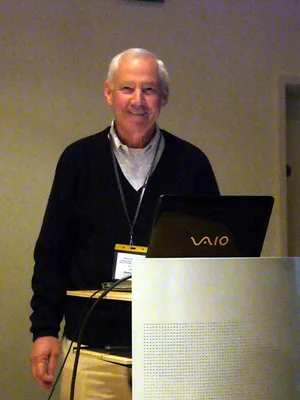
"Molecular Koch's postulates are a set of experimental criteria that must be satisfied to show that a gene found in a pathogenic microorganism encodes a product that contributes to the disease caused by the pathogen. …
1989
#10926
Ebola virus infection in imported primates - Virginia, 1989.
Also published with same title in Morbidity and Mortality Weekly Report, 38 (1989) 831, 832-837. Discovery of the "Ebola Reston" strain of the Ebola virus. The strain is lethal in monkeys; it turned out to be non-path…
1989
#11247
Capnocytophaga canimorsus sp. nov. (formerly CDC group DF-2), a cause of septicemia following dog bite, and C. cynodegmi sp. nov., a cause of localized wound infection following dog bite.
Order of authorship in the original publication: Brenner, Hollis, Fanning....The authors defined the genus and species of previously unclassified bacteria that infect dog and cat bites, previous identified as DF-2, an…
1989
#12653
Isolation of a cDNA clone derived from a blood-borne non-A, non-B viral hepatitis genome.
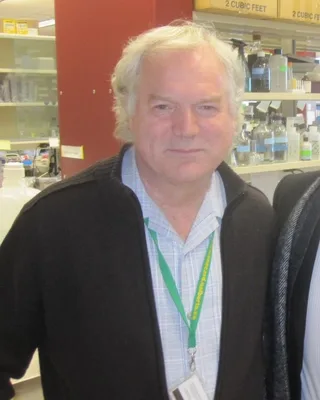
In this paper Houghton and colleagues named “hepatitis C” for the first time. They cloned and isolated the viral RNA genome and demonstrated that a patient who had high antibodies to a ‘native/wild strain’, reacted sp…
1990
#7966
The emergence of bacterial genetics.
1990
#11929
The agent of bacillary angiomatosis - An approach to the identification of uncultured pathogens.

To identify an uncultured and unidentified pathogen that was often visualized in tissue sections of lesions of bacillary angiomatosis with Warthin-Starry staining, the authors utilized two different techniques that we…
1990
#11930
A newly recognized fastidious gram-negative pathogen as a cause of fever and bacteremia.
Order of authorship in the original publication: Slater, Welch, Hensel.... Hensel, a medical technologist working in the clinical microbiology laboratory, University Hospitals, Oklahoma City, used innovative culture m…
1990
#12301
Towards a natural system of organisms: Proposal for the domains Archaea, Bacteria, and Eucarya.
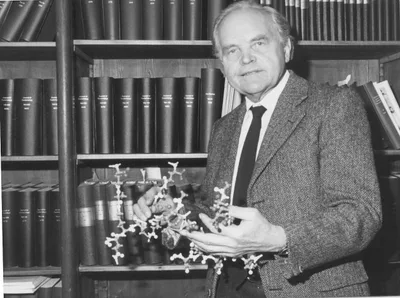
(Order of authorship in the original publication: Woese, Kandler, Wheelis.) Introduction of the three-domain biological classification system that divides cellular life into three forms or domains: Archaea, Bacteria, …
1990
#12649
One doctor's adventures among the famous and infamous from the jungles of Panama to a Park Avenue practice. With Tracy Dahlby.
1990
#13514
A history of human helminthology.
1991
#9262
Bilharzia: A history of imperial tropical medicine.
1991
#9851
A history of experimental virology. Translated by Elvira Reckendorf.
1991
#12650
Color atlas/text of ophthalmic parasitology. Edited by B. H. Kean, Tsieh Sun, and Robert M. Ellsworth.
Probably the first ophthalmic textbook devoted exclusively to parasitic infections, discussing diseases caused by protozoa, nematodes, cestodes, trematodes, and arthropods.
1992
#11931
Characterization of a novel Rochalimaea species, R. henselae sp. nov., isolated from blood of a febrile, human immunodeficiency virus-positive patient.
Order of authorship in the original publication: Regnery, Anderson, Clarridge....The authors paid homage to the innovative work of medical technologist Diane Hensel by naming the species after her. It was initially gr…
1992
#11980
Identification of the uncultured bacillus of Whipple's disease.
Order of authorship in the original publication: Relman, Schmidt, MacDermott....The authors used 16S ribosomal RNA sequencing to identify the bacillus associated with Whipple's disease that had resisted culturing meth…
1993
#11932
Syndrome of Rochalimea henselae adenitis suggesting cat scratch disease.
Order of authorship in the original publication: Dolan, Wong, Regnery....The authors demonstrated that Rochalimea henselae (now Bartonella henselae) is the infectious agent causing cat scratch fever. (Thanks to Juan W…
1993
#12435
Cyclospora species - A new protozoan pathogen of humans.
Ortega and colleagues identified a novel parasite resembling C. muris in the feces of Peruvian patients and 2 U.S. patients, with symptoms resembling those of infections with Cryptosporidium. The parasite infected bot…