
Facets
Browse across eight MeSH (opens in new tab) facets — era, geography, science, specialty, technology, history, culture, and reference. Select one tag per group; counts update across the others. What’s new in facet browse how facets relate to subjects and MeSH.
Clear filtersFacet filters
Geography
Specialties & Disease
- Anatomy & Pathology 49
- Cardiology & Blood 10
- Neurology & Psychiatry 26
- Obstetrics & Reproductive 24
- Infectious Disease (General) 8
- Surgery & Anesthesia 67
- Public Health 94
- Immunology & Dermatology 22
- General Clinical Medicine 33
- Military Medicine 38
- Psychology 10
- Alternative & Fringe Medicine 49
- Pediatrics 10
- Ophthalmology & Vision 8
- ENT & Hearing 2
- Urology & Nephrology 8
- Gastroenterology & Hepatology 4
- Pulmonary & Respiratory 3
- Rheumatology, Rehab & Pain 6
- Internal, Emergency & Geriatric 9
- Veterinary Medicine 8
- Epidemiology & Demography 28
- Physiology & Embryology 13
- Dentistry 15
- Plagues & Epidemics 60
- Microbiology & Virology 24
Social & Historical Studies
Institutions & Culture
Reference & Scholarly Works
Drugs & Technology
24 entries match Europe & United Kingdom [Z01.542] · Microbiology & Virology [C01.748]
1490
#47
Liber Teisir, sive rectificatio medicationis et regiminis. Antidotarium. Translated from Arabic into Hebrew by Jacobus Hebraeus; into Latin by Paravicius. Add: Averroes: Colliget.
This is a Latin translation from a Hebrew version dating from 1280. Avenzoar, the greatest Muslim physician of the Western Caliphate, described the itch-mite, Sarcoptes scabiei, serous pericarditis, mediastinal absces…
1623
#2262.1
Tratado de las siete enfermedades, de la inflammacion universal del higado, zirbo, pyloron, y riñones, y de la obstrucion, de la satiriasi, de la terciana y febre maligna, y passion hipocondriaca. Lleva otros tres tratados, del mal de Loanda, del guzano, y de las fuentes y sedales.
The first important work on tropical diseases. Only six copies of the original edition of this book are known. It includes full accounts of malaria, typhoid, and scurvy, and the first accurate descriptions of yellow f…
1685
#5373
Observationum medicarum Castrensium Hungaricarum.
Pp. 49-51: Cober, a German physician, reported the relationship between typhus and pediculosis.
1856
#22
Тα ∑ωζομενα. The extant works of Aretaeus, the Cappadocian. Edited and translated by Francis Adams.
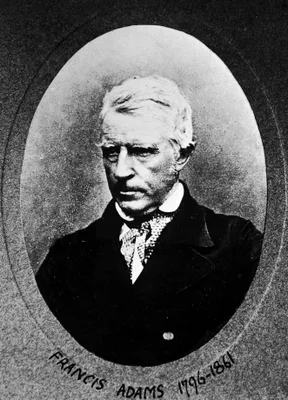
Aretaeus left many fine descriptions of disease; in fact Garrison ranks him second only to Hippocrates in this respect. In the printed editions of this bibliography, before the present online version, the Adams editio…
1863
#5097
Report on fever (Malta).
Marston wrote the first description of Malta fever as a distinct disease. He contracted the disease while serving in the Mediterranean area and described his own case. Marston was apparently the first to describe “Wei…
1869 –1870
#5344.7
On the structure and reproduction of Filaria medinensis L.
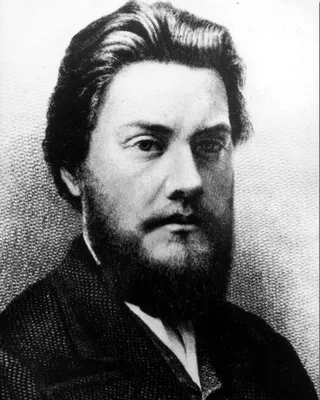
Fedchenko, a Russian naturalist and explorer of central Asia, elucidated the life cycle of Dracunculus medinensis, the parasite of dracunculiasis. He discovered its means of transmission via copepod intermediate hosts…
1879
#5527
Beitrag zur Frage des Pneumotyphus. (Eine Hausepidemie in Uster[Schweiz] betreffend.)
First description of psittacosis in a human.
1885 –1887
#5485
Lektsii ob ostrikh infektsionnîkh bolierznyakh u dietei. [Lectures on acute infectious diseases of children.] 2 vols.
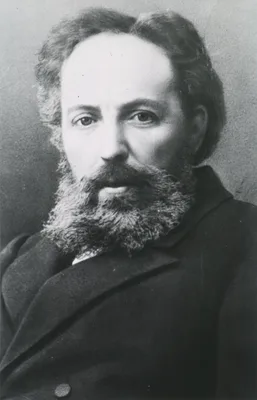
Glandular fever (infectious mononucleosis) was first described by Filatov under the name of idiopathic adenitis (“Filatov’s disease”). A German translation of his book appeared in 1895-97.
1887
#5098
Note on the discovery of a micro-organism in Malta fever.
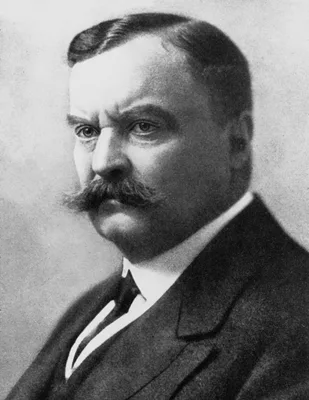
Malta fever was shown by Bruce to be due to Micrococcus (Brucella) melitensis. The disease was later named Brucellosis.
1897
#5100
Mediterranean, Malta, or undulant fever.
An authoritative summary of current knowledge of Malta fever.
1898
#5294
On sart sore.
First description of the protozoon later named Leishmania tropica. The paper is in Russian; for a translation, see C. A. Hoare, in Trans. roy. Soc. trop. Med. Hyg., 1938, 32, 78-90.
1905 –1907
#5102
REPORTS of the Commission appointed by the Admiralty, the War Office, and the Civil Government of Malta, for the investigation of Mediterranean fever, under the supervision of an advisory committee of the Royal Society. 7 pts.
The important findings of the Mediterranean Fever Commission are summarized in Topley & Wilson’s Bacteriology,1975, p. 2173; probably the most valuable was that of T. Zammit, who showed goat’s milk to be the main sour…
1905
#10780
A preliminary note on the susceptibility of goats to Malta fever.
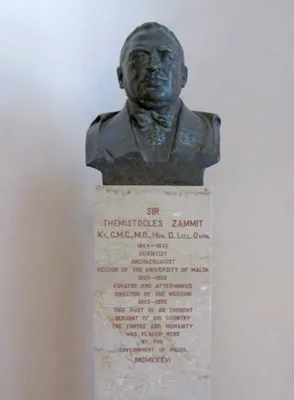
Zammit discovered that contaminated goat milk was the vector for transmission to humans of the Malta fever bacterium, Brucellosis melitensis. At the time goat milk was a primary source of milk in Malta and other parts…
1915
#5384.1
Ätiologische Untersuchungen über den Flecktyphus in Serbien 1913 und in Hamburg 1914.
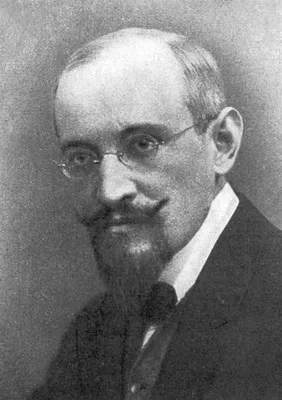
Prowazek, like Ricketts and Wilder, demonstrated the specific causal agent in typhus. Like Ricketts he died of the disease.
1915
#5386
Intermittent fever of obscure origin, occurring among British soldiers in France. The so-called “trench-fever”.
In this paper trench fever is so named for the first time.
1916
#5387
Ueber eine neue periodische Fiebererkrankung (Febris Wolhynica).
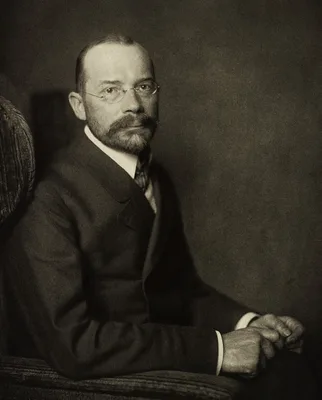
His encountered a form of “trench fever” in Volhynia, Russia, and named it after that district.
1930
#5540
En Bornholmsk epidemi-myositis epidemica.
First full description of epidemic myositis, “Bornholm disease”. See also Sylvest’s monograph on the subject, London, 1934.
1939
#4660.1
Vesennij (vesenne-letnij) endemiceskij klescevoj encefalit. [Vernal (verno-aestival) endemic tick-borne encephalitis.]

Isolation of the virus of spring–summer (Russian Far East) encephalitis.
1949
#5402.1
Serological evidence of Q fever in Great Britain.

Relationship of primary atypical pneumonia and Q fever.
1957
#10886
Piroplasmosis in man: Report on a case.
Order of authorship in the original paper was Škrabalo, Deanovic. First report of a case of babesiosis in a human, in this case an immunocompromised patient in Zagreb, (now Croatia). Piroplasmosis is another term for …
1996
#10844
A new variant of Creutzfeldt-Jakob disease in the UK.
During the 1990s England was plagued with cases of Bovine Spongiform Encephalopathy (BSE) seen in cows, popularly known as "Mad Cow Disease." Then physicians in England started noticing an uptick in cases of what look…
2007
#9777
Rabies in Britain: Dogs, disease and culture, 1830-2000.
Also published as Mad dogs and Englishmen: Rabies in Britain, 1830-2000.
2009
#12012
Bacterien in Krieg und Frieden: Eine Geschichte der medizinischen Bakteriologie in Deutschland 1890-1933.

2015
#11442