
Historical Bibliography Updated: July 14, 2026
Corporis humani disquisitio anatomica.
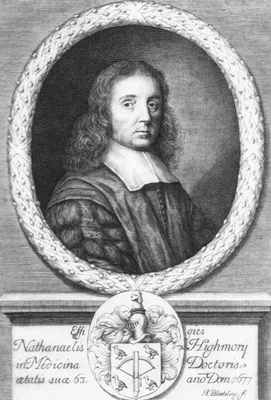
The Hague: S. Broun, 1651.
Highmore is remembered for his description of the maxillary sinus, known eponymically as the “antrum of Highmore” (already noticed by Casserius and figured by Leonardo da Vinci), the seminal ducts and the epididymis. This was also the first English work to accept Harvey’s ideas on the circulation. The interesting engraved title page compares the body allegorically to a garden, with the heart as a pump irrigating the garden. Digital facsimile from the Medical Heritage Library, Internet Archive, at this link.
Facet Tags
| Catalog Metadata | Reference Information |
|---|---|
| Entry Number | #382 |
| Permanent Link | https://beta.historyofmedicine.com/id/581 |
| Author Bio Link | Wikipedia ↗ |
| External URL | corporis-humani-disquisitio-anatomica |
Geographic Context
Publication place: The Hague